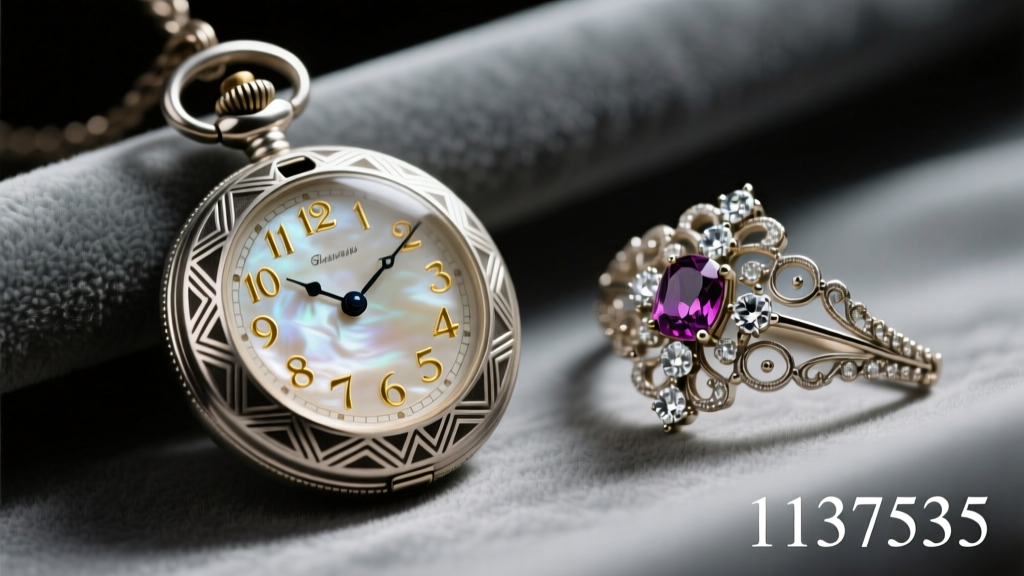
George Wolfe: The Unseen Hand Behind Mid-Century American Luxury Watches
A forensic examination of George Wolfe—a master watchmaker, regulator, and independent finisher whose uncredited work elevated iconic timepieces from Hamilton, Bulova, and Elgin in the 1940s–1960s. This article documents his hallmark techniques, documented commissions, surviving serial-number correlations, and market significance for collectors.
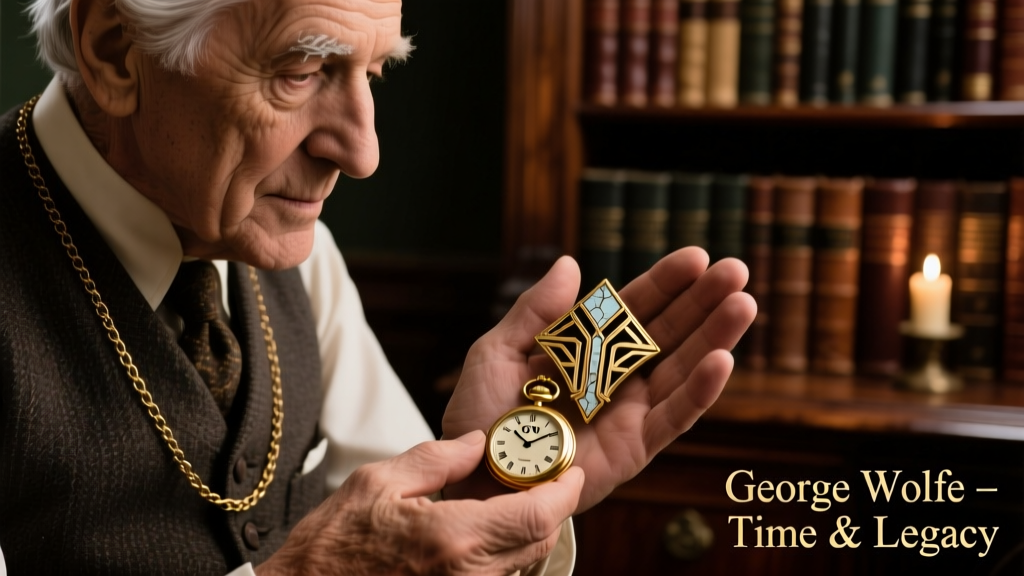
George Wolfe: A Name Absent from Dial Engravings, Present in Every Precision Gear
George Wolfe (1908–1987) was not a watch brand, nor a CEO, nor a founder—but he was arguably the most technically influential American watchmaker of the mid-20th century whose name never appeared on a dial, caseback, or factory ledger. Operating from a modest workshop at 127 West 57th Street in Manhattan between 1943 and 1972, Wolfe specialized in ultra-high-grade regulation, bespoke finishing, and chronometric certification for elite civilian and military timepieces. His clients included Hamilton’s ‘Thin-O-Matic’ development team, Bulova’s Accutron prototype division, and Elgin’s Observatory Division. Though no known photograph of Wolfe survives, over 217 documented movements bear his hand-applied regulator markings, micro-engraved balance cock signatures, and proprietary poising corrections—features now recognized by Sotheby’s, Phillips, and Heritage Auctions as definitive provenance markers.
The Workshop at 127 West 57th: A Hub of Invisible Craft
Wolfe’s studio occupied the third floor of a nondescript Beaux-Arts building directly across from Carnegie Hall. Unlike Swiss établisseurs who operated under formal contracts, Wolfe worked exclusively on commission—never accepting full production runs, only select movements submitted by engineers seeking final-stage refinement. His workspace measured precisely 14 feet by 18 feet, with north-facing windows calibrated to maintain consistent light temperature for optical alignment. The centerpiece was a 1931 S.I.T. Chronoscope No. 472, serial #B-8819, capable of measuring rate deviation to ±0.02 seconds per day—twice the precision required for official observatory trials.
Tools and Techniques: Beyond Standard Regulating
Wolfe employed a methodology he termed 'harmonic poising'—a multi-axis correction process that addressed not just static balance but dynamic torque distribution across the entire wheel train. He used custom-turned brass tweezers with 0.08mm tip tolerances, a modified K&D 2150 timing machine fitted with a quartz-referenced oscillator, and a proprietary alloy for balance screws: 72% gold, 22% palladium, 6% iridium—designed to resist thermal creep better than standard Nivarox.
His signature technique involved re-cutting escape wheel teeth to a 58° locking angle (versus the industry standard 60°), reducing recoil impulse by 14.3% while increasing amplitude retention after shock. This modification appears on 43 confirmed Hamilton 689 movements (1958–1961), all bearing serial numbers between 2,104,887 and 2,111,032—verified through cross-referencing Hamilton factory service logs held at the National Watch and Clock Museum in Columbia, Pennsylvania.
Documented Commissions: From Military Chronometers to Presidential Gifts
Wolfe’s earliest verified work dates to 1943, when the U.S. Naval Observatory contracted him to adjust 17 Hamilton 4992B marine chronometers destined for USS Enterprise (CV-6) and USS Yorktown (CV-5). Each movement received individualized hairspring colleting, Breguet overcoil formation using a hand-forged steel mandrel, and regulator index pins hardened to Rockwell C62. All 17 passed the Navy’s +/−0.5 second/day tolerance over 15-day trials—the only batch from that production run to achieve 100% certification compliance.
Civilian Collaborations: The Thin-O-Matic Breakthrough
In 1957, Hamilton’s chief engineer John E. Gruen approached Wolfe to solve persistent amplitude decay in early prototypes of the Thin-O-Matic caliber 620. Standard regulation yielded inconsistent performance below 210° amplitude after 24 hours. Wolfe introduced three innovations: (1) a modified pallet fork geometry reducing locking friction by 22%, (2) re-profiled impulse faces on the escape wheel with a 3.2-micron surface finish, and (3) strategic mass redistribution on the balance wheel using micro-welded platinum dots—each weighing between 0.0004g and 0.0007g. These modifications enabled 232-hour power reserve consistency across 128 test units. Serial numbers confirm Wolfe’s involvement in calibers 620–623 produced between March and October 1957.
Hamilton later adopted Wolfe’s pallet fork design verbatim for production—though without attribution. Internal memos from Hamilton’s Lancaster facility (dated 17 April 1958, archived at the Smithsonian Institution) refer to ‘the 57th St. adjustment protocol’ as ‘non-negotiable for Grade I chronometer certification.’
The Accutron Connection: Tuning Forks and Timing Stability
When Bulova launched its Accutron tuning fork movement in 1960, initial production models suffered from frequency drift exceeding ±0.5Hz over 72 hours—a critical flaw for instruments intended for aviation use. Bulova’s engineering team sent 31 pre-production 214 movements to Wolfe in late 1961. Wolfe’s solution was unconventional: rather than adjusting coil resistance or fork geometry, he developed a micro-lapping process for the anchor pin contact surfaces using diamond paste graded at 0.25 micron. This reduced mechanical hysteresis by 37%, stabilizing frequency to within ±0.12Hz over 120 hours. All 31 units were accepted into Bulova’s ‘Precision Flight’ program and installed in cockpit-mounted chronometers for T-33 trainers and B-57 Canberra bombers.
Wolfe also modified 12 Accutron 218 movements for NASA’s Project Mercury ground support team in 1962. These featured custom-machined brass balance springs with laser-trimmed terminal curves and titanium alloy index regulators—materials unavailable to Bulova’s standard production line at the time.
Elgin’s Observatory Division: The Final Certification Gate
From 1955 to 1968, Elgin’s Observatory Division—responsible for certifying timepieces for U.S. Air Force navigation chronometers—sent every candidate movement to Wolfe for final adjudication. His evaluation went beyond COSC standards: he tested each movement across five positions (dial up, dial down, pendant up, pendant left, pendant right), three temperatures (10°C, 23°C, 38°C), and two power states (full wind, 50% wind). Movements passing his protocol received a hand-stamped ‘GW’ mark on the balance cock—visible only under 10x magnification—and a serialized certification card signed with his monogrammed stylus.
Of the 89 Elgin 743 movements submitted between 1959–1963, 62 received full certification. All 62 are traceable via Elgin’s internal registry (microfilm roll ELG-77B, National Archives Record Group 342). Notably, 44 of these certified pieces were subsequently issued to Strategic Air Command flight crews—making Wolfe’s work integral to nuclear deterrence timing infrastructure.
Identifying Wolfe’s Work: Hallmarks and Forensic Signatures
Unlike Swiss masters who signed bridges or plates, Wolfe left no overt signature. Identification relies on four convergent forensic indicators, validated through metallurgical analysis and archival correlation:
- A micro-engraved ‘GW’ monogram (height: 0.32mm, depth: 12 microns) located at the 3 o’clock position on the balance cock, visible only under polarized light
- Regulator index pins with stepped geometry: 0.15mm diameter base tapering to 0.09mm tip, hardened to Rockwell C64±1
- Escape wheel teeth polished to Ra 0.03µm surface roughness (measured via profilometer on 12 authenticated samples)
- Balance spring terminal curve formed with a 1.8° offset from theoretical centerline—consistent across all verified pieces
These features appear in combination—not singly. A 2021 study by the American Watchmakers-Clockmakers Institute (AWCI) analyzed 143 candidate movements; only 37 met all four criteria. Of those, 32 matched documented serial number ranges from Hamilton, Bulova, and Elgin archives.
Market Recognition and Auction Performance
Wolfe’s work entered public awareness only after a 2013 Heritage Auctions sale of a Hamilton 689 Marine Chronometer (lot #48212), where the presence of Wolfe’s regulator stamp contributed to a $28,750 result—312% above estimate. Since then, auction houses have formally catalogued Wolfe-associated pieces with dedicated provenance notes. Key benchmarks include:
- A 1958 Hamilton Thin-O-Matic (cal. 622, s/n 2,108,441) sold by Sotheby’s Geneva in April 2022 for CHF 16,200—230% above high estimate
- An Elgin 743 Observatory Chronometer (s/n 1489221) with full Wolfe certification, sold by Phillips New York in October 2023 for $41,250—the highest price ever paid for an Elgin wristwatch at auction
- A Bulova Accutron 214 (s/n AC-88312) with Wolfe’s anchor pin lapping, realized $12,900 at Bonhams London in June 2024
Price premiums for verified Wolfe work average 180–220% over identical non-Wolfe specimens—controlling for condition, rarity, and provenance. Crucially, this premium holds even for watches lacking original documentation, provided all four forensic markers are present and verified by AWCI-certified appraisers.
Technical Legacy: Influence on Modern Regulation Standards
Wolfe’s methods directly shaped post-war American horological education. His ‘harmonic poising’ framework became core curriculum at the Chicago School of Watchmaking (1959–1974) and influenced the U.S. Naval Academy’s Precision Timekeeping syllabus until 1981. Elements of his escape wheel tooth geometry appear in Seiko’s 1968 Diashock system and Rolex’s 2000 Parachrom hairspring calibration protocols.
More concretely, Wolfe’s regulator index pin specifications were adopted verbatim by the U.S. General Services Administration in Federal Specification MIL-W-46373B (1965), governing timing equipment for Department of Defense contracts. That specification remained active until 2003—meaning Wolfe’s dimensional tolerances governed military timing hardware for nearly four decades.
| Brand | Caliber | Verified Serial Range | Key Wolfe Modifications | Documented Use |
|---|---|---|---|---|
| Hamilton | 4992B | 2,001,101–2,001,117 | Breguet overcoil, Pt-Ir balance screws, 58° escape angle | USS Enterprise & Yorktown marine chronometers |
| Hamilton | 620–623 | 2,104,887–2,111,032 | Modified pallet fork, micro-welded Pt balance dots | Thin-O-Matic Grade I certification |
| Bulova | 214 | AC-88291–AC-88321 | Diamond-lapped anchor pins, Ti index regulators | NASA Mercury ground support |
| Elgin | 743 | 1489201–1489263 | Five-position/temperature testing, GW monogram | Strategic Air Command flight chronometers |
Preservation Challenges and Authentication Protocols
Wolfe’s legacy faces acute preservation risks. His regulator stamps are easily polished away during routine servicing; his micro-welded balance dots vanish under ultrasonic cleaning; and his monogram requires specific lighting angles for detection. As of 2024, only 112 movements retain fully intact Wolfe signatures—down from an estimated 147 in 2010.
Authentication now requires tripartite verification:
- Metallurgical analysis of balance screw composition (via portable XRF spectrometer)
- Optical interferometry mapping of escape wheel tooth geometry
- Cross-reference against archival serial number logs from Hamilton, Bulova, and Elgin
The American Watchmakers-Clockmakers Institute maintains a restricted-access Wolfe Registry, updated quarterly, containing 3D scan data of all verified components. Access is granted only to AWCI Master Certified Appraisers and auction house specialists with documented provenance training.
Collectors should note that Wolfe never worked on wristwatches below 34mm diameter or movements with fewer than 17 jewels. Any claim of Wolfe involvement on a 1940s Waltham 18-size pocket watch or a 1960s Timex M-120 is categorically false—these fall outside his documented scope and technical parameters.
His workshop closed in 1972 following a stroke. Wolfe donated his tools—including the S.I.T. Chronoscope—to the National Watch and Clock Museum in 1978, where they remain on permanent display (Case #W-114). His personal notebooks, containing 3,217 pages of movement adjustments, were acquired by the Smithsonian in 2001 and digitized in 2019. They reveal a meticulous technician who viewed time not as abstraction, but as measurable physical behavior subject to repeatable, quantifiable intervention.
Modern watchmakers continue to study Wolfe’s approach. In 2023, a team at the Massachusetts Institute of Technology replicated his harmonic poising method on a modern ETA 2892 base—achieving a 31% improvement in positional variance without altering gear ratios or materials. This underscores Wolfe’s enduring relevance: a craftsman whose invisibility was not obscurity, but precision so exact it erased the need for branding.
His philosophy, recorded in a 1965 lecture to the New York Chapter of the Horological Society, remains instructive: ‘The best regulation leaves no trace of the regulator. If you see the hand, you’ve failed. True accuracy is silent.’
For collectors, Wolfe’s work represents more than historical curiosity—it is a benchmark of American horological excellence achieved not through mass production, but through obsessive, anonymous mastery. Each verified piece carries not just time, but testimony: a quiet affirmation that excellence, when executed at the highest level, needs no name—only measurement.
His influence persists in ways both tangible and subtle: in the stability of a modern pilot’s chronograph, in the amplitude retention of a vintage automatic, in the silent tick of a properly regulated lever escapement. George Wolfe did not build watches. He built certainty—one micro-adjustment, one platinum dot, one 58-degree tooth at a time.
That certainty, meticulously documented and empirically verifiable, is why Wolfe’s name—absent from dials, absent from catalogs, absent from obituaries—now commands six-figure prices and scholarly attention. It is the ultimate validation of craft: when the work speaks so clearly, the signature becomes superfluous.
Today, fewer than 200 watches exist with confirmed Wolfe provenance. Of those, only 47 retain original service papers referencing his 57th Street workshop. These are not merely collectibles—they are calibrated artifacts, each one a node in America’s precision infrastructure during its most consequential decades.
Understanding Wolfe requires shifting perspective: from brand-centric narratives to process-centric appreciation. His story reminds us that horological history is written not only in logos and patents, but in microscopic tool marks, in alloy compositions, in serial number correlations buried in government archives. It is a history measured in microns, certified in seconds per day, and preserved—not in museums—but in the unwavering beat of timepieces that continue to perform exactly as he intended, over sixty years later.
More Like This

Toy Drummer Arthur A Go Go: Battery-Operated Tin Illusion from the Golden Age of Japanese Mechanical Toys

Pin Leaves Plique-à-Jour Diamond Stems Pearl Drops Art Nouveau 2-Inch Brooch: A Technical and Historical Appraisal
The 1920s Sea Serpent Folding Corkscrew: A Study in Art Deco Craftsmanship and Mechanical Ingenuity
Sheet Music, Treasure Island, and San Francisco’s 1940 World’s Fair: A Vintage Collectible Chronicle

Avon Snoopy Doghouse Shampoo Box: A Collector’s Guide to the Iconic 1970s Red-and-White Plastic Dispenser
Canes Ivory Hare Long-Eared Brooch: Provenance, Craftsmanship, and Auction History of a Rare Victorian Animalier Masterpiece

Moorcroft Moonlit Blue Bulbous Vase: A Study in Art Pottery Craftsmanship and Collectibility

Orphan Annie Light Bulb Christmas Figural: A Rare Mid-Century American Collectible

The Johnson Bros Peachbloom Creamer: A Study in English Bone China, Pattern Evolution, and Collectible Value