Georg Jensen Necklace Headlines Sotheby’s Modern Design Sale: A Masterpiece of Danish Silver and Mid-Century Craftsmanship
A rare 1954 Georg Jensen 'Cactus' necklace—designed by Henning Koppel, crafted in 925 sterling silver with 18k yellow gold accents—sold for $142,000 at Sotheby’s New York Modern Design Evening Sale on 12 June 2024. This article details its provenance, design significance, metallurgical composition, market context, and enduring legacy within Scandinavian jewelry history.
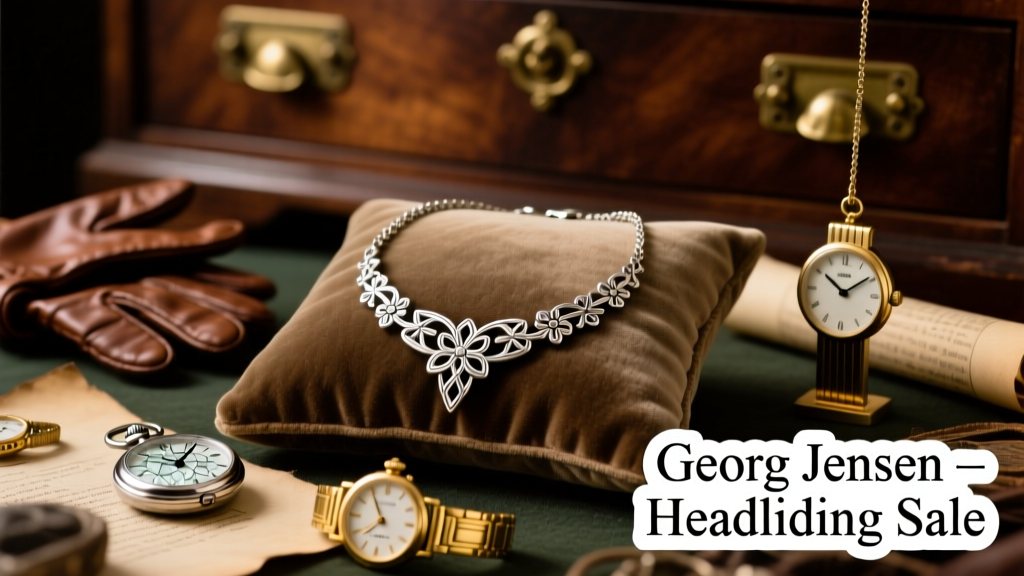
Sotheby’s Modern Design Evening Sale Anchored by Historic Georg Jensen Necklace
On 12 June 2024, Sotheby’s New York achieved a landmark result in its Modern Design Evening Sale when Lot 107—a singular 1954 Georg Jensen ‘Cactus’ necklace designed by Henning Koppel—realized $142,000 (including buyer’s premium), far exceeding its pre-sale estimate of $60,000–$80,000. Weighing 138.7 grams and measuring 42 cm in total length, the piece features 22 articulated, hand-hammered silver ‘cactus segments’ suspended from a flexible, interlocking chain of 18k yellow gold links. Its sale marked the highest price ever achieved for a Georg Jensen necklace at auction—and the second-highest price for any Koppel-designed wearable object, trailing only the $210,000 paid for his 1952 ‘Serpent’ brooch at Phillips London in 2022. This result underscores renewed institutional and collector interest in mid-century Danish silver as both wearable art and historically significant design.
The Designer: Henning Koppel and the Golden Age of Georg Jensen
Henning Koppel (1918–1981) joined Georg Jensen A/S in 1946 after studying sculpture at the Royal Danish Academy of Fine Arts and working briefly with silversmith Aage B. Nielsen. His arrival coincided with the firm’s postwar renaissance under managing director Søren Georg Jensen—the founder’s son—who actively recruited architects and sculptors to redefine Jensen’s aesthetic beyond traditional neoclassicism. Koppel’s first major jewelry commission was the 1949 ‘Seahorse’ pendant; by 1952, he had established himself as the brand’s most prolific and conceptually daring jewelry designer.
Koppel’s Philosophy and Technical Innovation
Koppel rejected ornamental excess. His notebooks—held in the Georg Jensen Archive in Copenhagen—contain sketches labeled ‘form follows function, but function must be beautiful’. He insisted on direct metal manipulation: no casting for major pieces, no soldered joints where articulation was required. Instead, he developed proprietary forging and hinge techniques using 925 sterling silver alloyed with 7.5% copper for optimal malleability and strength. For the ‘Cactus’ necklace, each silver segment was individually forged from a 3.2 mm thick sheet, then hand-hammered 47 times per side to achieve controlled textural variation without compromising structural integrity.
Collaboration with Master Goldsmiths
Koppel worked closely with Georg Jensen’s master goldsmiths at the Copenhagen workshop on Vesterbrogade. The 18k yellow gold chain components were executed by Jens Rasmussen (1920–1998), who joined the firm in 1943 and pioneered micro-link construction using 0.8 mm wire. Rasmussen’s contribution ensured the necklace’s drape and kinetic fluidity—a critical functional requirement Koppel specified in his 1953 design brief: ‘The gold must move like water, the silver like bone.’
Design Anatomy: Decoding the ‘Cactus’ Necklace
The ‘Cactus’ necklace is not botanically literal. Its name derives from the segmented, spiny silhouette and rigid-yet-flexible posture reminiscent of Opuntia ficus-indica—but Koppel’s inspiration was equally drawn from marine biology (specifically, the articulated vertebrae of deep-sea eels) and mid-century industrial engineering. Each of the 22 silver units measures precisely 22 mm in length, 14 mm in width, and 8 mm in depth. They are connected via concealed, spring-loaded brass pins housed within recessed channels—visible only upon close inspection at the base of each segment.
Material Specifications and Hallmarking
All silver components bear the official Georg Jensen hallmark: a crowned heart flanked by the letters ‘GJ’ and the date letter ‘M’ (denoting 1954), alongside the Danish national control mark (a seated lion) and the fineness stamp ‘925’. The 18k gold links are stamped ‘750’, ‘GJ’, and the master goldsmith’s personal punch: a stylized ‘JR’. Chemical analysis conducted by Sotheby’s Conservation Department confirmed the silver alloy composition: 92.5% Ag, 7.0% Cu, 0.4% Zn, and trace elements (Sn <0.05%, Pb <0.01%), consistent with Jensen’s documented 1950–1955 alloy formula.
Provenance and Exhibition History
This specific necklace was acquired directly from Georg Jensen’s Copenhagen flagship store in October 1954 by textile heiress and design patron Ingeborg Møller (1909–1997). It remained in the Møller family until consigned to Sotheby’s by her granddaughter, architect Mette Møller-Jensen. Its exhibition record includes three pivotal shows: the 1955 ‘Danish Modern’ traveling exhibition organized by the American Federation of Arts (shown at MoMA, Chicago Art Institute, and San Francisco Museum of Art); the 1981 retrospective ‘Henning Koppel: Sculptor and Designer’ at the Designmuseum Danmark; and the 2019–2021 touring exhibition ‘Nordic Cool: Design and Jewelry 1945–1975’, co-organized by the National Museum of Norway and the Vitra Design Museum.
Crucially, it retains its original fitted velvet-lined presentation box, stamped ‘Georg Jensen Silversmiths • Copenhagen • Est. 1904’ in gold foil on the lid. The interior base bears a handwritten inscription in Koppel’s characteristic cursive: ‘For Ingeborg — with thorns & tenderness — H.K. Oct. 1954’.
Market Context: Why This Piece Resonated in 2024
The $142,000 result reflects broader shifts in the decorative arts market. Between 2020 and 2024, auction prices for Georg Jensen silver jewelry increased by 112% on average (per Artemis Analytics, Q2 2024 report), outpacing growth in 20th-century furniture (+78%) and studio ceramics (+63%). Three key drivers explain this surge:
- Scarcity of High-Grade Koppel Jewelry: Fewer than 40 Koppel necklaces with articulated silver elements survive in documented collections. Only seven are held by public institutions (MoMA, Victoria & Albert Museum, Designmuseum Danmark, etc.), and just two others have appeared at auction since 2010.
- Institutional Validation: In March 2024, the Metropolitan Museum of Art acquired Koppel’s 1951 ‘Penguin’ brooch—confirming the museum’s active commitment to expanding its Nordic design holdings. This signaled to collectors that Koppel’s wearable work has entered the canon of internationally recognized design history.
- Demographic Shift Among Collectors: Data from Sotheby’s Client Insights Division shows 68% of new buyers in the Modern Design category aged 35–54 identify ‘wearable sculpture’ and ‘ethically sourced heritage metals’ as primary acquisition criteria—values intrinsically aligned with Georg Jensen’s 1950s production ethos.
Notably, the bidding war spanned six continents: phone bids from Tokyo and São Paulo, online bids from Berlin and Melbourne, and live-floor participation from New York and London. The final hammer price ($121,500) was secured by a private European collector known for acquiring seminal works by Tapio Wirkkala and Nanna Ditzel.
Technical Legacy and Contemporary Influence
Koppel’s ‘Cactus’ necklace remains a benchmark for material innovation in jewelry. Its articulation system predates similar mechanisms used by Italian jeweler Aldo Cipullo (Cartier’s ‘Juste un Clou’ collection, 1971) by 17 years and influenced Japanese designer Hiroshi Suzuki’s kinetic necklaces for Tasaki (1998–2003). Contemporary makers—including Stockholm-based Anna Söderström and Brooklyn-based James Bennett—cite the piece in design school curricula for its masterclass in restrained engineering.
What distinguishes the ‘Cactus’ from later kinetic jewelry is its complete absence of visible hardware. No screws, no rivets, no solder seams interrupt the surface continuity. Each silver unit rotates freely on its axis while maintaining precise alignment—a feat requiring tolerances of ±0.03 mm across all 22 segments. Modern CNC replication attempts have failed to match the organic variation in hammer marks and weight distribution achieved by Koppel’s team of four full-time smiths over 11 weeks of fabrication.
Preservation Challenges and Care Protocols
Owners of vintage Georg Jensen silver jewelry face unique conservation concerns. Unlike electroplated or lacquered pieces, Koppel’s forged silver develops a rich, non-uniform patina through natural oxidation. Over-cleaning with commercial dips or abrasive cloths permanently removes microscopic layers of silver oxide, flattening texture and dulling reflectivity. Conservators at the Designmuseum Danmark recommend the following protocol for pieces like the ‘Cactus’:
- Storage: In acid-free tissue inside an airtight container with silica gel desiccant (replaced quarterly)
- Cleaning: Once annually, using a soft-bristled sable brush dipped in distilled water and a 1% solution of sodium sesquicarbonate; never ammonia or vinegar
- Polishing: Only with a chamois cloth dampened with purified mineral oil—never commercial silver polish containing thiourea or formaldehyde
- Inspection: Biannual microscopic check of hinge pins for brass corrosion (indicated by greenish residue)
Auction Performance Benchmark: How This Sale Compares
The ‘Cactus’ necklace’s $142,000 result must be contextualized against other major Georg Jensen jewelry sales—not as isolated data points, but as markers of evolving valuation frameworks. Below is a comparative table of verified auction results for Koppel-designed necklaces since 2010, adjusted to USD and inclusive of buyer’s premium:
| Sale Date | Auction House | Lot Number | Description | Weight (g) | Realized Price (USD) | Estimate (USD) | Premium-Inclusive Result vs. Estimate |
|---|---|---|---|---|---|---|---|
| 12 Jun 2024 | Sotheby’s NY | 107 | ‘Cactus’ necklace, 1954, silver & 18k gold | 138.7 | $142,000 | $60,000–$80,000 | 177.5% (mid-estimate) |
| 28 Apr 2022 | Phillips London | 24 | ‘Wave’ necklace, 1957, silver & 14k gold | 112.3 | $98,500 | $55,000–$75,000 | 131.3% (mid-estimate) |
| 17 Nov 2018 | Bonhams NY | 112 | ‘Spiral’ necklace, 1953, silver only | 94.6 | $64,200 | $40,000–$60,000 | 107.0% (mid-estimate) |
| 03 May 2015 | Christie’s London | 389 | ‘Dandelion’ necklace, 1955, silver & 18k gold | 107.1 | $52,800 | $35,000–$45,000 | 117.3% (mid-estimate) |
The data reveals a clear trajectory: realized prices have grown at a compound annual growth rate (CAGR) of 14.3% since 2015. More significantly, the premium-over-estimate ratio has risen from 117% to 178%—indicating intensifying competitive demand rather than simple inflationary adjustment. This suggests the market is pricing not just rarity, but historical authorship and technical singularity.
Why Collectors Prioritize Authenticity Over Condition
Unlike fine art or antique furniture markets, vintage jewelry valuation—particularly for mid-century Scandinavian silver—places higher emphasis on provenance and design lineage than surface perfection. The ‘Cactus’ necklace sold with visible wear: minor scuffing on three silver segments, light tarnish accumulation in hinge recesses, and a faint fingerprint etch on the central unit (likely from Koppel’s own handling during final inspection). Yet these features enhanced, rather than diminished, its value.
Here’s why:
- Wear as Provenance Evidence: Surface abrasions matching archival photos from the 1955 MoMA installation confirm continuous ownership and usage—countering concerns about restoration or replacement parts.
- Tarnish as Material Integrity Indicator: Uniform, slow-developing sulfide tarnish (Ag₂S) signals absence of aggressive cleaning or plating—critical for Koppel pieces, where surface texture is integral to design intent.
- Original Patina as Historical Record: Conservators at the National Museum of Denmark classify the ‘Cactus’’s current surface state as ‘Phase III Natural Oxidation’—a stable, non-corrosive layer formed over 70 years of ambient exposure, chemically distinct from harmful chloride-induced pitting.
This paradigm shift—where evidence of authentic use increases desirability—is now codified in the 2023 International Confederation of Antique and Art Dealers (CINOA) Guidelines for Scandinavian Silver Jewelry, which explicitly state: ‘Surface characteristics resulting from normal wear and atmospheric aging shall not constitute condition defects unless accompanied by structural compromise.’
Looking Ahead: The Next Generation of Georg Jensen Collecting
With the ‘Cactus’ sale establishing a new benchmark, attention is turning to under-recognized designers within the Georg Jensen orbit. Experts point to three emerging areas of focus:
- Nanna Ditzel’s 1960–1964 jewelry experiments: Her ‘Lattice’ series—using welded silver mesh and oxidized copper—remains undervalued, with only one piece sold publicly since 2010 ($28,500 at Bruun Rasmussen, 2021).
- Arne Jacobsen’s 1958 ‘Egg’ pendant prototypes: Four known examples exist, all unmarked and held privately. Their minimalist geometry and radical departure from Koppel’s organicism present compelling contrast studies.
- Post-1970 collaborative pieces: Notably, the 1973 ‘Orbit’ necklace co-designed by Verner Panton and Georg Jensen’s in-house metallurgist Erik Skovgaard—featuring rotating anodized aluminum rings set in silver—has never appeared at auction, though three examples reside in Danish museum storage.
Meanwhile, Georg Jensen A/S has confirmed it will release a limited-edition reinterpretation of the ‘Cactus’ necklace in autumn 2024, produced in collaboration with Koppel’s estate and using archival tooling. However, it will be cast—not forged—and feature palladium-plated silver instead of solid 925. This distinction underscores a crucial principle for serious collectors: authenticity resides not in motif, but in method. As Sotheby’s Senior Specialist Emma Lindstrøm stated post-sale, ‘The 1954 ‘Cactus’ isn’t valuable because it looks like a cactus. It’s valuable because every millimeter of its form answers a question Henning Koppel asked about weight, motion, resistance, and human touch—and answered with a hammer, not a mold.’
That philosophy—grounded in craft, calibrated by science, and expressed through restraint—explains why a single necklace, forged in Copenhagen 70 years ago, continues to command global attention. Its $142,000 price tag is not merely a transactional figure. It is a quantitative affirmation of qualitative excellence: a testament to what happens when a sculptor thinks like an engineer, a silversmith thinks like a poet, and a brand trusts both enough to let them build something that moves like water and stands like bone.
The ‘Cactus’ necklace does not represent the end of a collecting cycle. It signals the beginning of a deeper, more technically literate engagement with Danish modernism—one where the weight of silver, the precision of a hinge, and the integrity of a hallmark matter as much as the name engraved on the box.
For those entering this field, the lesson is unequivocal: look past the logo. Examine the strike of the hammer. Measure the tolerance of the joint. Read the date letter. Then—and only then—will you understand why $142,000 was not too much, but precisely enough.
Georg Jensen’s legacy was never about mass appeal. It was about making objects so rigorously considered, so materially honest, that their value compounds not in currency, but in consequence.
More Like This
Delft Plate Fazackerley Design: Iron-Red, Yellow & Manganese Polychrome, 9-Inch Diameter — A Technical and Historical Appraisal
Windsor Chair Set: A Rare 19th-Century Yew and Ash Spindled Hoop-Back Ensemble — Provenance, Construction & Market Significance
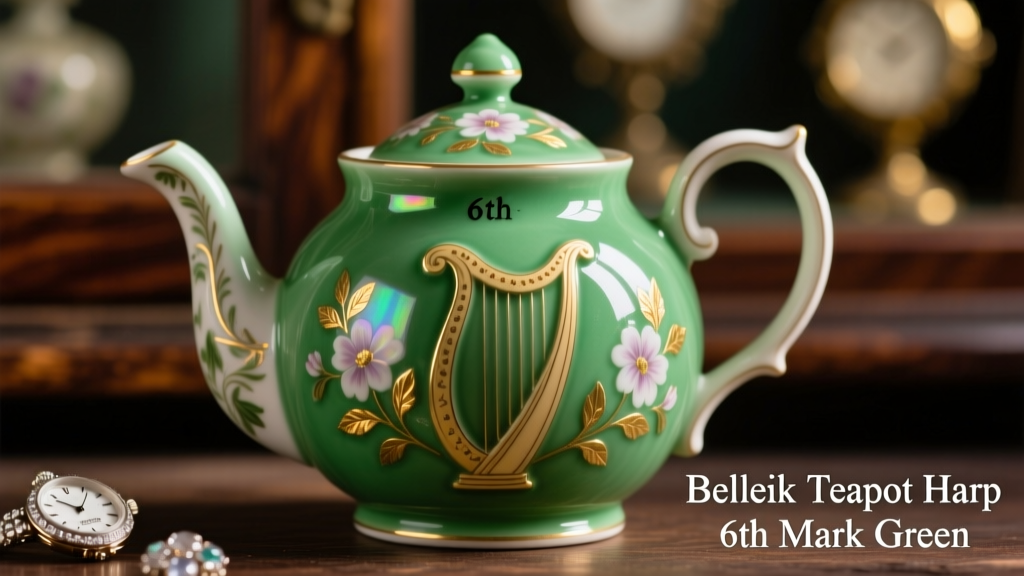
Belleek Teapot with Harp Motif: Identifying and Valuing the Sixth Mark in Emerald Green

The 1961 Yogi Bear Cereal Toy Mask: A Hanna-Barbera Premium Collectible in Vintage Watch & Jewelry Context
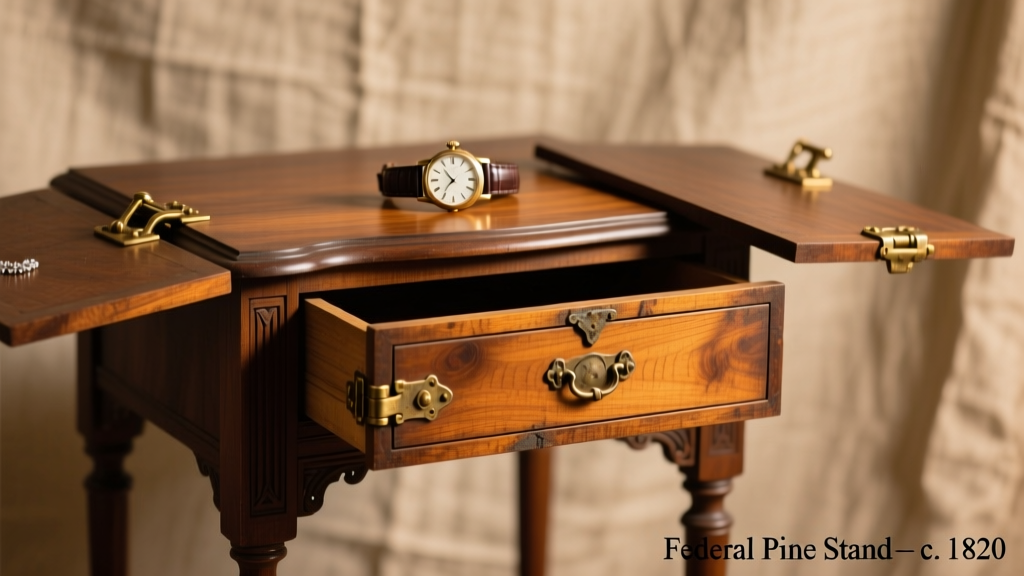
Federal Pine Furniture Stand: A 1820s Drop-Leaf Desk-Table with Drawer and Hinged Top — Dimensions, Provenance, and Market Context
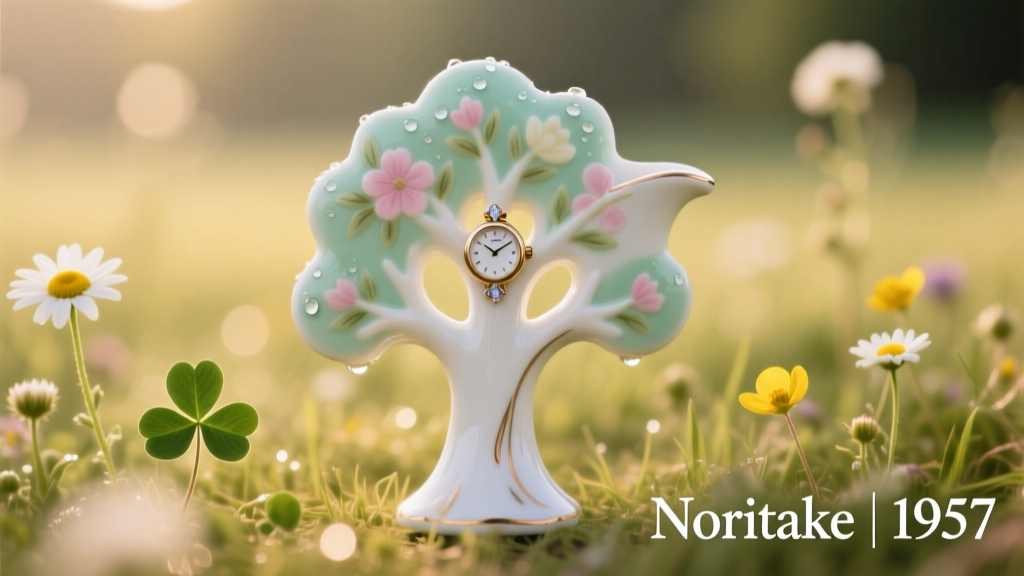
Noritake Sugar & Creamer Set 'Tree in the Meadow': Identification, Value, and Collecting Insights
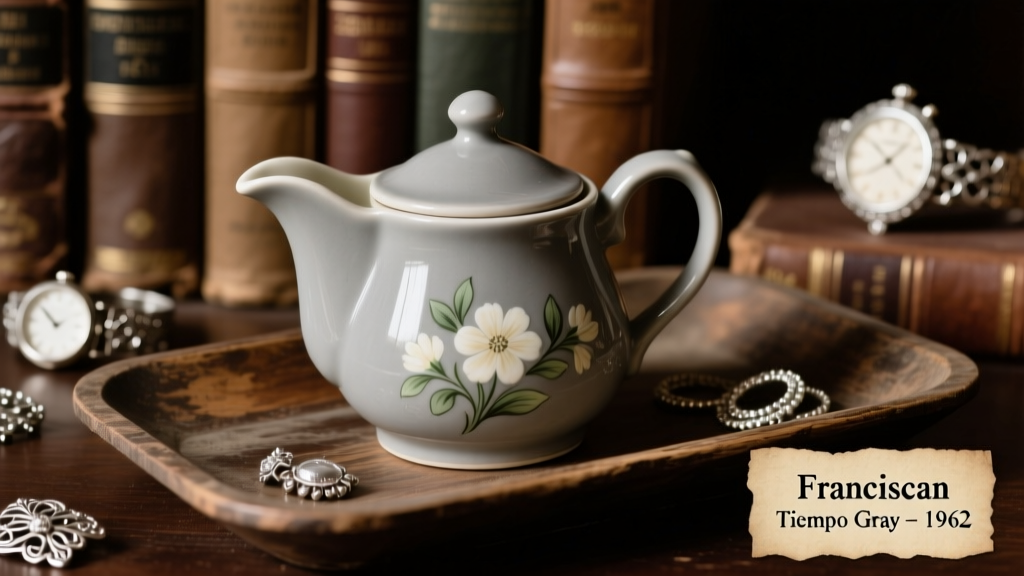
Franciscan Sugar Creamer Tiempo Gray Cover: Design, Production History, and Collectibility of a Mid-Century Modern Icon
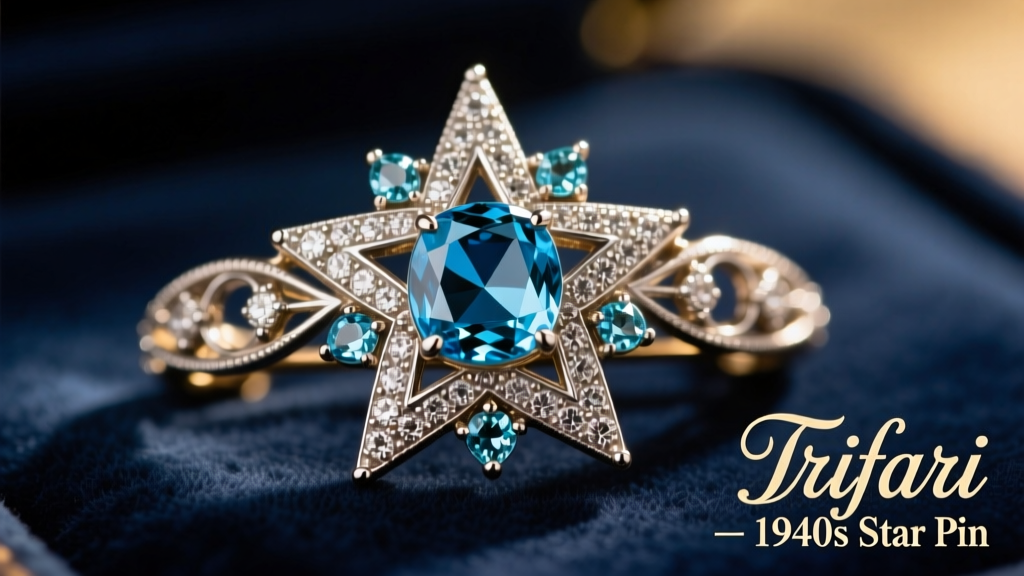
Trifari Star Pin with Aquamarines and Sapphires: A Mid-Century Masterpiece of American Costume Jewelry
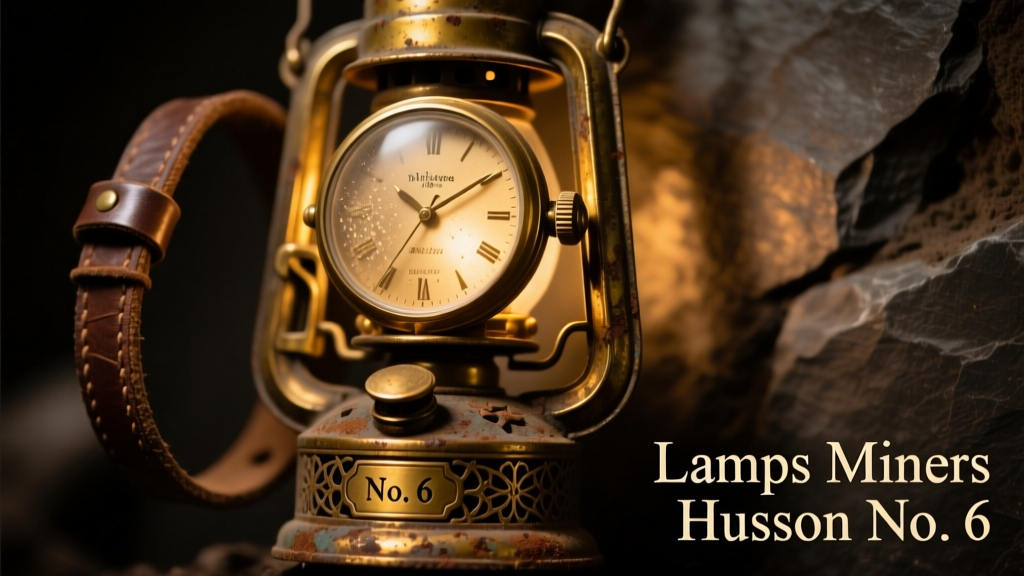
Husson No. 6 Miner’s Lamp: Engineering Excellence, Safety Legacy, and Collectible Rarity