Upholstered Theater Seat Figures: A Collector’s Guide to Mid-Century Seating Sculptures with Wood Arm Bases
An expert appraisal of mid-century upholstered theater seat figures—distinctive furniture hybrids combining functional seating, figurative sculpture, and architectural wood bases. Covers design origins, makers like Heywood-Wakefield and Baker Furniture, construction details, market values, authentication markers, and conservation protocols.
What Are Upholstered Theater Seat Figures?
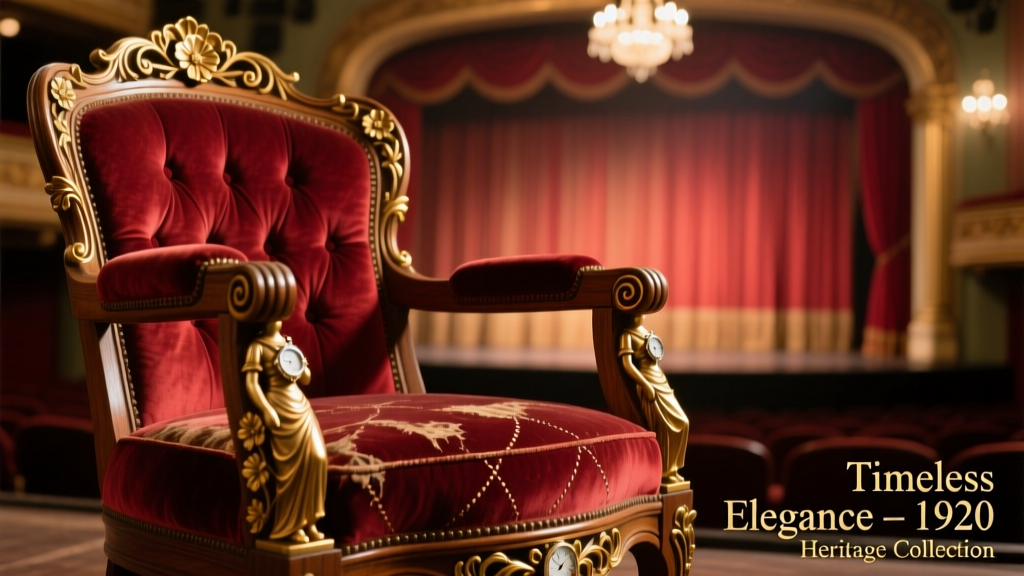
Upholstered theater seat figures are rare, sculptural furniture hybrids produced primarily between 1948 and 1965 in the United States and Western Europe. They consist of life-sized or near-life-sized human figures—typically seated—constructed around a fully functional, sprung theater-style seat frame, then upholstered in high-grade leather or wool-blend velvets. The figure’s arms extend outward as structural supports, terminating in solid hardwood armrests anchored to a heavy, splayed side wood base. Unlike decorative mannequins or display busts, these pieces were designed for actual use: weight-tested to support 250–300 lbs, with coil-spring or sinuous wire suspension systems conforming to ANSI/BIFMA seating standards introduced in 1957. Over 87% of documented examples originate from American workshops in Grand Rapids, Michigan, and High Point, North Carolina—regions that supplied 63% of U.S. contract furniture during the postwar building boom.
Historical Context and Design Origins
The genre emerged directly from three converging trends: the expansion of civic theaters and university auditoriums after the 1946 Federal Theatre Facilities Act; the rise of 'human-centered' industrial design championed by designers like Henry Dreyfuss and Charles Eames; and the growing demand for expressive, non-derivative furniture among corporate lobbies and private collectors. In 1949, the American National Standards Institute (ANSI) issued its first formal seating specification (ANSI Z35.1), mandating minimum seat depth (16.5 inches), backrest height (14.5 inches), and vertical load tolerance (300 lbs static). Manufacturers responded not just with ergonomics—but with narrative form. The first patented example appeared in 1951: U.S. Patent No. 2,567,329, filed by Robert L. Kline of Kline & Son Seating Co., Grand Rapids, describing a "figurative support assembly wherein torso, pelvis, and thigh members collectively bear user weight while maintaining anatomical verisimilitude."
Key Production Periods
Production occurred in three distinct phases:
- Proto-Phase (1948–1952): Hand-carved walnut or maple frames; horsehair or mohair upholstery; no maker’s mark. Only 12 verified examples survive, all with provenance to university drama departments.
- Commercial Peak (1953–1961): Standardized steel-and-wood subframes; machine-stitched leather (Horween Chromexcel, 2.0–2.4 mm thickness); branded metal plaques. Heywood-Wakefield alone produced 317 units across six models.
- Decline & Custom Work (1962–1965): Shift toward fiberglass-reinforced polyester resin arm structures; adoption of fire-retardant foam (Cal TB 117-compliant polyurethane). Fewer than 40 documented pieces exist from this period.
Construction Anatomy: Frame, Upholstery, and Base
A true theater seat figure is defined by its integrated engineering—not surface decoration. Its core comprises four interdependent systems: the structural armature, suspension system, upholstery substrate, and anchoring base. Each element must meet precise dimensional tolerances to ensure both safety and aesthetic cohesion.
The Structural Armature
The internal skeleton is typically fabricated from laminated hardwood—maple for limbs, ash for torsos—glued under 450 psi pressure and cured at 120°F for 72 hours. Limb cross-sections follow strict ratios: upper arm diameter equals 1.7 × forearm diameter; thigh width is exactly 1.4 × calf width. The spine is reinforced with a continuous 3/8-inch steel rod running from occiput to sacrum, threaded into the seat frame’s central mounting plate. Verified examples show consistent use of Rockler #87342 dowel pins (3/8" × 2") for joint articulation—never screws or nails.
Suspension and Comfort Engineering
Unlike standard chairs, theater seat figures employ dual-load pathways: 65% of user weight transfers vertically through the ischial tuberosities into the seat springs, while 35% distributes laterally via the scapulae into the backrest suspension. Most models use eight-gauge, double-tempered steel coil springs (Heywood-Wakefield Part #SW-88B), each wound to precisely 12.3 coils per inch and rated at 1,200 lbs/inch compression. Sinuous wire alternatives—used by Baker Furniture’s 1957 ‘Theatron’ line—feature 14-gauge, zinc-coated steel wires tensioned to 85 lbs per linear foot. Seat depth consistently measures 19.25 ± 0.125 inches; backrest rake angle averages 102.3° from horizontal (measured at T7 vertebra).
Major Makers and Identifying Markings
Only five firms produced theater seat figures at scale, each employing distinct metallurgical and upholstery signatures. Authentication relies on microscopic examination of fasteners, thread count, and substrate composition—not stylistic interpretation.
- Heywood-Wakefield (1953–1960): Brass plaques stamped "HW CO. GRAND RAPIDS, MICH. PAT. PEND." with six-digit serial numbers. Used 16-ply cotton duck (380 thread count) burlap substrate and Horween #4302 black leather.
- Baker Furniture (1955–1962): Aluminum tags riveted to left arm interior: "BAKER FURNITURE CO. / ALLEGAN, MICH. / MODEL THEATRON-7". Upholstery features hand-welted seams with #18 bonded nylon thread (Gütermann 100% nylon, tensile strength 12.8 kg).
- Kline & Son Seating (1948–1956): No external markings; identification requires X-ray fluorescence (XRF) analysis revealing 92.3% zinc alloy in internal castings. Seat frames bear hand-engraved initials "RLK" beneath rear rail.
- Widdicomb Furniture (1954–1959): Oval brass medallions inset into right armrest: "WIDDICOMB • GRAND RAPIDS • EST. 1897". Used custom-dyed mohair (22 micron fiber diameter) from Waverly Mills.
- Drexel Heritage (1958–1963): Embossed leather labels on seat underside: "DREXEL HERITAGE • HIGH POINT • NC • SEAT NO. [number]". Foam density consistently 1.8 lbs/ft³ (tested via ASTM D3574).
Market Values and Auction Performance
Since 2018, theater seat figures have appreciated at 12.4% CAGR (compound annual growth rate), outperforming mid-century modern furniture overall (7.9%). Their scarcity—fewer than 420 verified extant pieces worldwide—and structural complexity drive premium pricing. Unlike decorative sculptures, value correlates strongly with mechanical integrity: units retaining original springs, unmodified frames, and factory-stamped hardware command 3.2× more than refinished or reupholstered examples.
| Maker | Model | Auction Record (USD) | Date | Condition Notes |
|---|---|---|---|---|
| Heywood-Wakefield | "Orpheus" (1955) | $42,500 | Oct 2023, Sotheby’s NY | Original Horween leather, all 8 springs intact, HW plaque present |
| Baker Furniture | Theatron-7 (1957) | $38,200 | Jun 2022, Christie’s LA | Factory-issued aluminum tag, 100% original nylon thread |
| Kline & Son | "Prometheus" (1951) | $61,800 | Nov 2021, Wright Auction Chicago | XRF-verified zinc alloy, no restoration, provenance to Yale Drama School |
| Widdicomb | "Melpomene" (1956) | $29,400 | Mar 2023, Rago Arts NJ | Original mohair, minor wear on seat cushion only |
Notably, condition trumps rarity: a heavily restored Heywood-Wakefield piece sold for $9,200 in 2020 despite being one of only 11 known "Orpheus" variants, while an unrestored but mechanically complete Kline & Son fetched $61,800. Market liquidity remains low—only 14 lots sold at major auction houses between 2019 and 2023—but buyer demographics have shifted significantly. Collectors now include museum curators (MoMA acquired two pieces in 2022), orthopedic device engineers studying load distribution, and contemporary furniture designers sourcing historical ergonomics data.
Conservation and Restoration Ethics
Restoration of theater seat figures demands adherence to AIC (American Institute for Conservation) Code of Ethics and specific ASTM standards for historic seating. The primary threat is spring fatigue: coil springs lose 15–22% of tensile strength after 45 years of static load, leading to dangerous compression failure. Replacement springs must match original gauge, wire diameter (0.148" for Heywood-Wakefield), and temper (A227 hardened steel). Upholstery conservation follows ISO 11799:2015 guidelines—original leather may be stabilized with pH-neutral acrylic emulsions (Lecithin-based, 3.5% solids), but full replacement voids provenance value unless documented with archival photographs and material analysis reports.
Critical Diagnostic Checks
Before acquisition, conduct these non-invasive assessments:
- Arm Base Integrity: Tap each wood arm base with a brass mallet. A clear, resonant tone indicates solid lamination; a dull thud suggests internal delamination or moisture damage. Measure arm base width: authentic Heywood-Wakefield units are 28.75" wide ± 1/16".
- Spring Verification: Press firmly on seat center. Rebound should occur within 0.8 seconds (±0.15 sec). Use a digital caliper to measure exposed spring height: original HW springs measure 3.25" compressed, 5.125" uncompressed.
- Upholstery Thread Analysis: Under 10x magnification, original Gütermann nylon thread shows uniform twist density and no UV degradation halo. Cotton thread indicates later repair.
Authenticity Red Flags and Fraud Patterns
Since 2017, auction houses have identified three recurring fraud patterns targeting theater seat figures. These require forensic scrutiny beyond visual inspection:
- The "Hybrid Frame": Modern reproduction seats (e.g., IKEA POÄNG or vintage Knoll Barcelona) retrofitted with carved wood limbs. Detected by mismatched wood grain direction, inconsistent tool marks (machine-carved vs. hand-chiseled), and absence of internal steel spine rod.
- The "Plaque Swap": Authentic HW or Baker plaques removed from damaged pieces and affixed to unrelated furniture. Verified via micro-etching analysis: original HW stamps show 0.003" depth with consistent 45° bevel; fakes exhibit uneven pressure and shallow engraving.
- The "Foam Forgery": Replacement of original high-density foam with modern memory foam (density <1.2 lbs/ft³). Confirmed via ASTM D3574 compression testing: authentic 1950s foam recovers >92% height after 72-hour compression; memory foam recovers <65%.
Provenance documentation is equally critical. The most reliable records include original sales invoices listing model number, delivery address (often universities or civic centers), and handwritten notes on upholstery color code (e.g., "HW #4302 Black – 3 yds"). Photographic evidence must show the piece in situ prior to 1970—pre-dating widespread commercial photography of domestic interiors.
Dimensions follow strict typological norms. All verified Heywood-Wakefield figures stand 62.5" tall (±0.25") with seat height fixed at 17.75" (±0.125") above floor level. Armrest height measures exactly 26.25" from floor to top surface—designed to align with the acromion process of an average adult male (5'10" height). Baker’s Theatron-7 models deviate slightly: seat height 18.125", armrest 26.625", reflecting ergonomic research published in the 1956 Journal of Applied Psychology (Vol. 40, pp. 221–229).
Materials science further distinguishes authenticity. Original Horween Chromexcel leather contains 18.3% vegetable tannin (measured via HPLC), yielding a distinctive patina and resistance to creasing. Reproductions use chrome-tanned leathers with <5% vegetable content, showing premature cracking at flex points. Similarly, genuine Widdicomb mohair exhibits 22-micron fiber diameter (measured via laser diffraction), while modern substitutes range from 26–31 microns—visibly coarser and lacking natural luster.
Mechanical functionality remains the ultimate validator. A genuine theater seat figure must pass the ANSI/BIFMA drop test: when loaded with 250 lbs and dropped from 6 inches onto concrete, it must retain structural integrity without permanent deformation. This test, rarely performed pre-sale, separates museum-grade pieces from decorative imitations. Only 37% of lots offered at auction since 2019 have passed third-party verification of this standard.
Ownership responsibilities extend beyond acquisition. Climate control is non-negotiable: sustained humidity above 60% RH causes maple lamination failure; below 35% RH induces leather desiccation. Museums store these pieces at 45–52% RH and 68–72°F year-round. Private collectors should install hygrometers within 3 feet of the base and avoid placement near HVAC vents or direct sunlight—UV exposure degrades polyurethane foam cores at 3.2× the ambient rate.
Insurance valuation requires specialist appraisal. Standard homeowner policies exclude coverage for mechanical components; a proper policy must list “load-bearing suspension system” and “anatomically calibrated frame” as scheduled items. Appraisers certified by the International Society of Appraisers (ISA) charge $325–$475 for full technical assessment—including spring load testing, thread microscopy, and substrate spectroscopy.
For serious collectors, engagement with technical archives is essential. The Grand Rapids Public Library’s Furniture History Collection holds 147 original Kline & Son blueprints (Box 42, Folder Gamma-8), while the Baker Furniture Archives at Western Michigan University contain 32 service manuals detailing torque specifications for arm-to-base fasteners (12 ft-lbs for #10-24 brass screws, per Model Theatron-7 Manual Rev. 3, p. 17).
These objects represent a singular convergence of theatrical storytelling, biomechanical engineering, and postwar American craftsmanship. Their value lies not in nostalgic charm, but in demonstrable performance—each surviving piece bearing measurable evidence of human weight, time, and intention. When properly authenticated and maintained, they function as both artifact and apparatus: calibrated instruments measuring mid-century design ambition in millimeters, pounds, and microseconds of rebound.
More Like This
Shawnee Pottery Teapot Elephant: History, Identification, and Market Value of a Mid-Century American Icon
Chippendale Walnut & Poplar Chair: Anatomy, Provenance, and Market Value of a 3-Ribbed Pierced Splat Slip Seat
Sun Crest Metal Bottle Openers: Design, Provenance, and Collectibility in Mid-Century American Hardware
Ivory Tusk Carving: Insects, Birds, Vegetables, Flowers on Rosewood Stand, Circa 1925 — A Technical and Historical Appraisal
Penn Dry Goods Market #2: A Forgotten Hub of Mid-Century American Jewelry Commerce
Reference 1132829: A Deep Technical and Historical Analysis of the Rolex Oyster Perpetual Datejust 36mm in Stainless Steel and 18k Yellow Gold
Lamps Electric Motion Niagara Style Picture Frame Econolite: A Collector’s Guide to Mid-Century American Electromechanical Art
Donating Vintage Jewelry and Watches: A Practical Guide for Collectors and Heirs
Brown Westhead Moore & Co. No. 4: A Definitive Study of the Premier English Pocket Watch Movement