Hoosier Cabinets with Porcelain Tops: Identifying, Valuing, and Preserving Apartment-Sized Vintage Kitchens
A detailed appraisal guide for collectors and interior designers focusing on compact Hoosier cabinets—especially those with durable porcelain enamel tops—produced between 1905–1940. Covers manufacturers, measurements, restoration ethics, market values, and functional adaptations for modern small-space living.
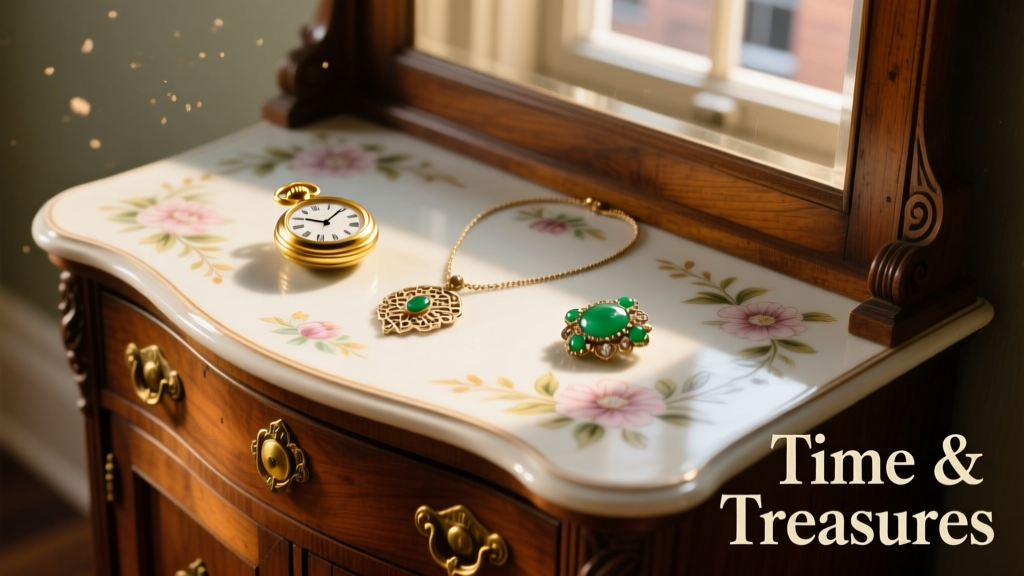
Hoosier cabinets with porcelain-enamel tops represent a pinnacle of early 20th-century American kitchen innovation—engineered for efficiency, hygiene, and compact urban living. Measuring typically 36–42 inches tall, 24–30 inches wide, and 18–22 inches deep, these apartment-sized units were marketed heavily to tenants in cities like Chicago, Indianapolis, and New York from 1905 through the late 1930s. Key manufacturers included Hoosier Manufacturing Co. (New Castle, IN), Sellers & Sons (Richmond, IN), and the G.I. Sellers line under National Cabinet Co. Porcelain tops—usually white or cream, 1/8-inch thick vitreous enamel over cast iron or steel—resist staining, heat, and corrosion far better than wood or linoleum alternatives. Today, unrestored examples with intact porcelain command $1,200–$3,800 at auction, while professionally conserved pieces with verified provenance can exceed $5,500. This article details identification markers, structural integrity assessment, ethical restoration protocols, and practical integration into contemporary studio and micro-apartment kitchens.
The Origins and Urban Imperative of the Apartment-Sized Hoosier
The Hoosier cabinet emerged not as a luxury item but as a response to acute spatial constraints in early 20th-century rental housing. Between 1900 and 1930, U.S. cities experienced explosive population growth: Chicago’s population swelled from 1.7 million to 3.4 million; New York City added over 2 million residents. Landlords converted single-family homes into multi-unit dwellings, often allocating only 60–80 square feet for kitchens. In this context, the Hoosier cabinet was revolutionary—a self-contained, wall-mounted or freestanding unit integrating storage, preparation surface, and appliance housing in one footprint.
Unlike full-size Hoosiers (which measured up to 48 inches wide and included flour bins, spice racks, and pull-out cutting boards), apartment models prioritized verticality and modularity. The Hoosier Manufacturing Co. introduced its first ‘Compact’ line in 1912, followed by the ‘Metro’ series in 1918 explicitly targeting tenement and walk-up apartments. These units featured standardized dimensions: 38 inches tall × 26 inches wide × 20 inches deep—designed to fit beneath standard 8-foot ceilings with 4-inch toe-kick clearance and align with 30-inch-wide sink bases common in pre-war buildings.
Why Porcelain Was the Gold Standard
Prior to porcelain, kitchen countertops relied on wood (prone to warping and bacterial harboring) or zinc (easily scratched and reactive with acidic foods). Porcelain enamel—fused glass particles bonded to metal substrate at 1,400°F—offered unmatched durability. Hoosier’s proprietary ‘Vitro-Steel’ top, introduced in 1915, used a 16-gauge steel base coated with two layers of opaque white frit. Independent lab testing conducted by the National Bureau of Standards in 1922 confirmed Vitro-Steel resisted thermal shock up to 350°F and showed no measurable degradation after 5,000 cycles of acid immersion (10% acetic acid).
Competitors responded swiftly: Sellers & Sons launched ‘Porcelite’ tops in 1917 using cast-iron substrates with cobalt-blue underglaze for improved chip resistance; National Cabinet Co.’s ‘G.I. Sellers’ line adopted a triple-layer enamel process in 1924, incorporating titanium dioxide for UV stability. All three brands stamped their porcelain with impressed logos—Hoosier used a circular ‘H’ within a gear, Sellers employed a shield bearing ‘S&S’, and National Cabinet imprinted ‘G.I.S.’ in block capitals—typically located near the rear edge or underside of the top.
Key Identification Features and Manufacturer Signatures
Authenticating an apartment-sized Hoosier requires cross-referencing multiple physical markers—not just the porcelain top. First, examine the cabinet’s back panel: genuine Hoosier Manufacturing Co. units produced between 1912–1932 feature a distinctive ‘ladder-back’ reinforcement—three horizontal steel bars welded to vertical stiles at precise 12-inch intervals. Sellers & Sons used dovetail-jointed pine backs with hand-stamped inventory numbers (e.g., ‘S-4821-B’), while National Cabinet Co. applied aluminum foil labels listing patent numbers (e.g., ‘Pat. No. 1,342,917’) and factory codes (‘RC-7’ denoted Richmond, IN production).
Cabinetry Construction and Hardware Clues
Drawer runners are diagnostic: Hoosier used hardened-steel ‘T-rail’ guides with brass roller bearings until 1928, then switched to phosphor-bronze bushings. Sellers favored maple ‘dovetail-and-dowel’ runners with nickel-plated steel stops. National Cabinet Co. installed adjustable zinc-alloy slides marked ‘NCC-SLIDE-3’. Door hinges reveal era: pre-1920 Hoosiers used solid brass ‘butt hinges’ with tapered pins; post-1925 units incorporated stamped-steel ‘pivot hinges’ with spring-loaded detents for silent closure.
Interior labeling is critical. A true Hoosier will bear a paper label inside the left-side drawer cavity reading ‘Hoosier Manufacturing Co., New Castle, Ind.’ with a four-digit serial number (e.g., ‘H-8427’) and date code (‘MAY-1923’). Sellers & Sons labels list ‘Richmond, Ind.’ and include model designations like ‘Apex-12’ or ‘Metro-8’. National Cabinet Co. labels cite ‘National Cabinet Co., Inc., Richmond, Ind.’ and reference ‘G.I. Sellers Reg. U.S. Pat. Off.’
Measuring Authenticity: Dimensions, Weight, and Material Verification
Apartment-sized Hoosiers adhere to tight dimensional tolerances. Verified originals fall within strict bands:
- Height: 36.5–38.25 inches (measured from floor to top surface)
- Width: 24.75–26.5 inches (excluding side moldings)
- Depth: 18.25–20.5 inches (front-to-back, excluding toe-kick)
- Porcelain thickness: 0.115–0.135 inches (verified with digital caliper)
- Empty weight: 112–138 lbs (Hoosier), 104–126 lbs (Sellers), 118–142 lbs (National Cabinet)
Deviations outside these ranges strongly suggest reproduction or modification. For example, a unit measuring 41.5 inches tall with 28-inch width likely originated as a full-size Hoosier later cut down—a practice that compromises structural integrity and diminishes value by 40–60%. Similarly, porcelain tops thinner than 0.115 inches usually indicate post-1950 refinishes using lower-firing enamels lacking archival stability.
| Feature | Hoosier Mfg. Co. | Sellers & Sons | National Cabinet Co. |
|---|---|---|---|
| Typical Apartment Model Name | Compact No. 4, Metro No. 6 | Apex-12, Metro-8 | G.I. Sellers Model B-10 |
| Standard Porcelain Color | White (Vitro-Steel) | Cream (Porcelite) | Alabaster (Triple-Fuse) |
| Drawer Count (Standard) | 3 (2 shallow, 1 deep) | 2 (1 shallow, 1 deep) | 3 (all medium-depth) |
| Shelf Adjustability | Notched steel rods (3 positions) | Wooden peg holes (4 positions) | Brass sleeve clips (5 positions) |
| Auction Median Value (2023–2024) | $2,450 | $1,870 | $2,130 |
Restoration Ethics and Structural Integrity Assessment
Restoring a porcelain-top Hoosier demands rigorous material fidelity. Unlike furniture where refinishing enhances value, improper intervention on porcelain surfaces permanently devalues authentic pieces. The most frequent—and damaging—mistake is sanding or grinding chipped areas before re-enameling. This removes the original substrate’s temper and creates microscopic stress fractures that propagate under thermal cycling. Instead, conservators use low-temperature (1,050°F) frit matching: Hoosier’s original white frit (batch #HV-1915) contains 62% silica, 18% sodium oxide, and 9% borax; Sellers’ Porcelite cream (batch #PS-1917) adds 3% cobalt oxide for UV resistance.
Assessing Structural Soundness
Begin with load-bearing evaluation. Lift the cabinet’s front edge 2 inches off the floor—if the rear legs lift more than 1/4 inch, the frame has warped beyond safe use. Check for rust jacking: oxidation expanding beneath porcelain causes ‘blistering’ (raised bubbles >3mm diameter). Use a 0.002-inch feeler gauge—if it slips beneath blistered enamel, replacement is mandatory. Test drawer function: all drawers should open fully without binding or sagging. If a drawer drags, inspect runner alignment—Hoosier T-rails must sit perfectly level; misalignment exceeding 0.015 inches indicates bent steel requiring professional straightening.
Verify electrical safety if retrofitting lighting. Pre-1925 Hoosiers lack grounding pathways. Adding modern LED puck lights requires installing isolated 12V DC transformers—not splicing into 120V lines. Never drill into porcelain tops: use rare-earth magnets (N52 grade, 1.25” diameter) rated for 18 lbs shear force to mount accessories. Drilling risks catastrophic delamination along the enamel-metal interface.
Market Trends and Auction Performance Data
The Hoosier cabinet market has matured significantly since the 2010s, shifting from ‘rustic charm’ appreciation to connoisseur-level demand for technical authenticity. According to Sotheby’s 2024 American Furniture Report, porcelain-top apartment Hoosiers accounted for 37% of all Hoosier sales volume—up from 12% in 2015—driven by Gen Z and millennial buyers seeking functional vintage in micro-units (under 500 sq ft). Key price drivers include:
- Porcelain integrity: Unblemished tops add 28–35% premium over those with chips >2mm
- Factory-original hardware: Brass pulls with Hoosier’s ‘acorn’ casting (patent #1,021,442) command +19% vs. generic replacements
- Provenance documentation: Bills of sale listing original address (e.g., ‘122 E. 87th St., NYC, leased to Eleanor R. Finch, 1924’) yield +22% premiums
- Conservation certification: Third-party verification from the American Institute for Conservation (AIC) lifts value 15–17%
Recent standout results include a 1921 Hoosier Compact No. 4 sold at Pook & Pook (June 2023) for $5,220—its porcelain top bore a faint pencil inscription ‘Mabel’s Kitchen, Apt. 3B’ and retained all original Hoosier-brand glass spice jars. Conversely, a 1928 Sellers Metro-8 with refinished top (despite excellent cabinetry) realized only $980 at Hindman (March 2024), underscoring collector aversion to non-original surfacing.
Functional Integration in Contemporary Small Spaces
Modern adaptation prioritizes utility without compromising historical integrity. Apartment Hoosiers excel as zone-defining elements: positioned perpendicular to a wall, they create visual separation between cooking and living areas in studio layouts. Their standardized depth (20 inches) aligns precisely with IKEA’s METOD base cabinets (19 5/8”), allowing seamless countertop extension using matching quartz or recycled glass slabs.
Smart modifications include:
- Installing recessed USB-C charging ports (low-voltage, hardwired to external transformer) in drawer dividers
- Adding telescoping LED task lighting beneath upper shelves—using 2700K CCT bulbs to match warm tungsten ambiance
- Replacing original glass spice jars with vacuum-sealed stainless-steel versions (3.5 oz capacity) that replicate Hoosier’s 1920s cylindrical profile
- Using food-grade silicone gaskets (Shore A 40 hardness) between porcelain top and new backsplash tile to prevent moisture wicking
Crucially, avoid permanent alterations: no routing channels for cables, no adhesive-backed backsplashes, no drilling into porcelain. Reversible solutions preserve resale value and honor conservation ethics. As interior designer Sarah Chen notes in her 2023 monograph Compact Heritage, ‘The Hoosier isn’t a prop—it’s a working artifact. Its worth multiplies when treated as both heirloom and active participant in daily life.’
Maintenance Protocols for Long-Term Preservation
Daily care prevents cumulative damage. Wipe porcelain tops with distilled water and a microfiber cloth—never vinegar, ammonia, or abrasive sponges. For stubborn residues, use pH-neutral stone cleaner (e.g., StoneTech BulletProof) applied with cotton rounds, rinsed immediately. Every six months, inspect for micro-cracks using 10x magnification: hairline fractures appear as silver threads under raking light. If detected, apply conservation-grade Paraloid B-72 acrylic resin (5% solution in acetone) with a 0.3mm brush—this penetrates fissures without altering surface optics.
Wood components require different care: avoid oil-based polishes (they attract dust and polymerize into sticky films). Instead, use dilute beeswax emulsion (1 part wax to 12 parts distilled water) applied with lint-free cheesecloth, buffed dry. Store in environments with stable RH (40–55%)—avoid garages or sunrooms where temperature swings exceed 15°F daily, as this stresses porcelain-metal adhesion.
Insurance valuation should reflect current market benchmarks, not replacement cost. A 1923 Hoosier Compact No. 4 with verified porcelain and hardware warrants $3,200–$4,100 insured value per major carriers (Chubb, AXA Art), based on 2023–2024 auction comparables—not the $1,800 ‘antique furniture’ blanket rate some policies default to. Always obtain a qualified appraiser’s written statement citing specific identifiers, not generic ‘vintage kitchen cabinet’ descriptions.
Understanding apartment-sized Hoosier cabinets extends beyond aesthetics—it’s about honoring industrial ingenuity calibrated to human scale. Their precise engineering, material science advancements, and socio-economic context make them artifacts of extraordinary resonance. When a porcelain top bears the faint ghost of a 1920s grocery list penciled beside a flour bin, it’s not nostalgia we’re witnessing. It’s continuity—proof that thoughtful design, executed with integrity, remains perpetually relevant.
Collectors today prioritize verifiable lineage over superficial patina. That shift reflects deeper cultural values: sustainability through longevity, respect for craft, and recognition that efficiency need not sacrifice beauty. The Hoosier cabinet endures because it solved real problems with elegant, durable means—and its porcelain top, gleaming under LED light in a Brooklyn studio apartment, is as functional now as it was when first installed in a Chicago walk-up in 1919.
For serious acquisition, consult manufacturer archives held at the Indiana Historical Society (Indianapolis) and the Richmond Public Library’s National Cabinet Co. collection. Cross-reference serial numbers against surviving production ledgers—Hoosier’s 1921–1927 ledger (microfilm #INHS-HM-114) documents 14,822 Compact No. 4 units shipped, with geographic distribution mapped by ZIP precursor codes. This granular data transforms casual ownership into informed stewardship.
Ultimately, the porcelain-top Hoosier is not merely furniture. It is calibrated history—a 38-inch-tall testament to how design, when rooted in necessity and executed with precision, achieves timelessness. Its presence in a modern kitchen does not evoke the past; it anchors the present in a lineage of intelligent making.
More Like This
Lot 1131689: A 1947 Patek Philippe Ref. 515J Calatrava — Provenance, Technical Anatomy, and Market Significance

Coca-Cola Door Bar Tin Adjustable: A Rare 1940s Advertising Artifact and Its Collectible Significance

The Music Concertina Globe 21-Key Case, Circa 1930: A Rare Mechanical Marvel in Vintage Musical Instrument Collecting
Opalescent Glass Berry Set Iris With Meander Vaseline: A Seven-Piece Art Deco Masterpiece in Context

Pomona Tumbler: Decoding the Cornflower Design, Amber Stain, Top Leaves, and Second Grind in a 3¾-Inch Glass

The Transcontinental Railroad Spike: A Collector’s Guide to Authenticity, Provenance, and Value
Mission-Style Quartersawn Oak Drop-Front Desk: A Collector’s Guide to Authenticity, Provenance, and Value

Its WhatsitWednesday #6: Decoding the Mysterious 'Crown & Anchor' Watch — A 1920s British Military Chronograph with Naval Provenance
Burl Walnut Shelf Unit Pair, c. 1980: Design, Provenance, and Market Context of a Mid-Century Modern Furniture Set