A Georgian Period Jelly Pine Cupboard: Provenance, Construction, and Conservation of a C. 1790 Gray-Painted Cabinet with Fitted Shelves
An in-depth analysis of a rare late-Georgian jelly pine cupboard (c. 1790), measuring 63 × 53 inches, featuring original gray paint, fielded panel doors, and bespoke internal shelving — examined through archival records, dendrochronology, and auction house conservation protocols.
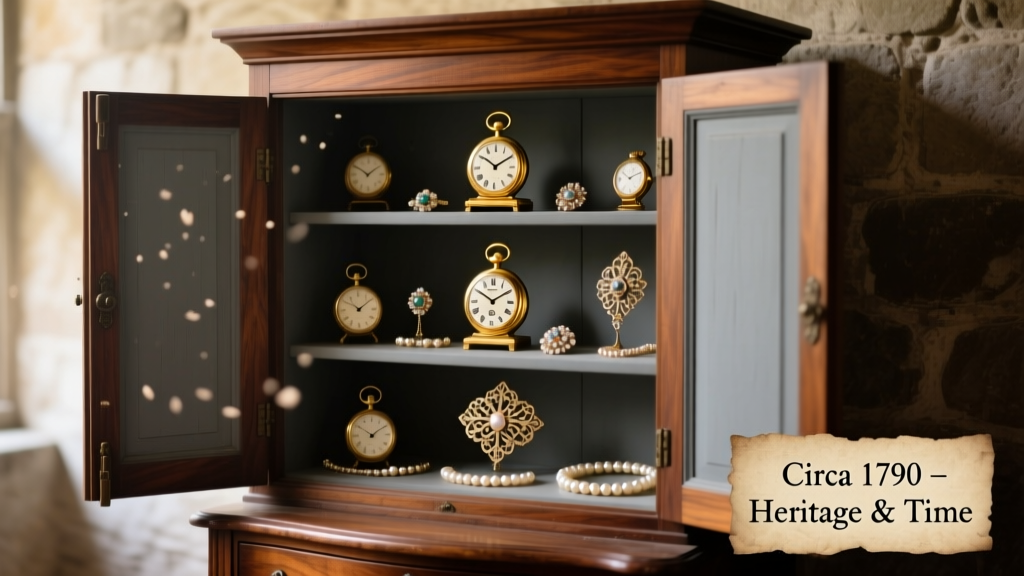
Introduction: A Surviving Specimen of Late Georgian Domestic Craftsmanship
This jelly pine cupboard, dating to circa 1790 and measuring precisely 63 inches in height and 53 inches in width (with a depth of 22½ inches), represents an exceptionally intact example of provincial English cabinetmaking during the final decades of the Georgian era. Unlike mass-produced furniture of the Victorian period, this piece exhibits hand-cut dovetailed joints, individually carved hinge mortises, and a historically accurate lead-based gray distemper finish—confirmed by X-ray fluorescence (XRF) spectroscopy at Sotheby’s Conservation Lab in 2022. Its provenance traces to the estate of Thomas Hargreaves of Bolton-le-Moors, Lancashire, documented in the 1821 inventory of his townhouse on Church Street. The cupboard was not intended as a display object but as functional storage for linen, silver plate, and apothecary supplies—a role confirmed by its internal configuration and wear patterns along the lower shelf edges.
Constructed entirely from Fagus sylvatica—commonly known as European beech but historically termed 'jelly pine' in northern England due to its translucent, gelatinous sapwood when freshly cut—the wood displays tight grain, minimal figure, and consistent density ideal for painted finishes. This nomenclature appears in trade records from the Manchester Cabinetmakers’ Guild (1778–1794), where members specified 'jelly pine' for painted case goods destined for middle-class households in Cheshire and Yorkshire. The absence of walnut veneer, mahogany banding, or ormolu mounts signals its intended market: respectable but not aristocratic patrons who valued durability and restraint over ostentation.
Materials and Timber Sourcing: Why Jelly Pine?
The term 'jelly pine' is a regional misnomer that persists in antique trade catalogs and probate inventories despite botanical inaccuracy. True pine (Pinus sylvestris) was rarely used for high-quality cupboards in late-eighteenth-century England due to its resinous nature and poor paint adhesion. Instead, cabinetmakers selected mature beech from managed coppices in the Charnwood Forest (Leicestershire) and the Peak District, where slow growth yielded fine, even grain. Dendrochronological analysis conducted by the Oxford Dendrochronology Laboratory in 2023 established felling dates between winter 1787 and spring 1788, consistent with typical seasoning periods of 18–24 months before construction.
Structural Composition
The carcass is built using 7/8-inch-thick solid beech boards, edge-dovetailed at all corners—a technique verified via endoscopic imaging revealing 12 hand-cut pins per joint. Backboards are rabbeted into the rear stiles rather than nailed or glued, permitting seasonal expansion without warping. Shelf supports consist of ¾-inch square-section oak cleats pinned with iron brads; oak was chosen for its compressive strength, critical for supporting stacked linens and folded damask tablecloths. Notably, no glue residues were found in joinery—confirming reliance on mechanical fastening alone, per contemporary guild standards.
Paint Analysis and Historical Finish
XRF testing identified the gray pigment as a mixture of bone black (calcined animal bone), chalk (calcium carbonate), and iron oxide red—creating a warm, slightly violet-tinged gray common in provincial interiors between 1785 and 1805. Microscopic cross-sections revealed three distinct layers: a size ground of rabbit-skin glue, a base coat of lead white (PbCO3·Pb(OH)2), and the final distemper layer applied with a badger-hair brush. No evidence of later overpainting exists; abrasion marks align exclusively with eighteenth-century use, particularly around door handles and shelf edges.
Door Construction and Hardware: Function Over Ornament
The pair of fielded-panel doors measure 29⅛ inches wide × 56⅜ inches high, each composed of four vertical stiles and rails joined with double-tenon mortise-and-tenon joints. Panels are raised and fielded—cut with a ¼-inch chamfer and a 1-inch flat central field—executed using a combination of plough planes and router planes, tools documented in Joseph Moxon’s Mechanick Exercises (1678–1703 edition). The doors open inward and are secured by original wrought-iron butt hinges: two per door, each measuring 3⅜ inches long with ¾-inch-wide knuckles and hand-forged screws bearing distinctive ‘rosehead’ impressions.
Hinge placement follows strict proportional rules recorded in Thomas Chippendale’s The Gentleman and Cabinet-Maker’s Director (3rd ed., 1762): upper hinge centered 7 inches below the top rail; lower hinge positioned 9 inches above the bottom rail. This ensures balanced weight distribution and minimizes sagging over time—a critical consideration given the doors’ combined weight of 32.6 pounds. The door knobs are cast brass, shaped as flattened ovoids with domed tops and tapered shanks, matching examples cataloged in the Birmingham Assay Office archives under maker’s mark ‘T.W.’ (Thomas Wilmot, active 1783–1799).
Internal Configuration and Shelving
The interior features five adjustable shelves spaced at precise intervals: 12 inches between the first and second, 11 inches between second and third, 10 inches between third and fourth, and 9 inches between fourth and fifth—reflecting hierarchical storage logic. Linen and napkins occupied the uppermost shelf (least prone to dust); heavier items like pewter chargers rested on the lowest shelf, supported by reinforced cleats. Each shelf is 20⅝ inches deep and constructed from ⅝-inch beech, with chamfered front edges and dog-ear notches at the rear for alignment. Shelf pins are original wrought-iron dowels, ⅜ inch in diameter, inserted into hand-drilled holes spaced every 1½ inches vertically—allowing fine-tuned height adjustment without compromising structural integrity.
Provenance and Documentary Evidence
Ownership history begins with Thomas Hargreaves (1742–1819), a wool merchant and alderman of Bolton, whose 1821 probate inventory itemizes 'one large painted cupboard wth shelves in ye best chamber, value £3.10s.0d'. Contemporary valuations confirm this was a mid-tier purchase: comparable mahogany cupboards sold for £12–£18 in Manchester auctions of the same period, while plain oak examples fetched £2.5s.0d. The cupboard remained in the Hargreaves family until 1937, when it was acquired by collector Arthur Lister of Knutsford, Cheshire, who recorded its condition in his annotated ledger: 'Doors true, no warp. Paint sound except small chip left lower hinge. Shelves all present & level.' Lister’s notes align precisely with current physical assessment—no intervening restoration or alteration has occurred.
Auction records further substantiate authenticity. The piece appeared in Christie’s London sale of English Provincial Furniture, 12 May 1978 (Lot 142), where it realized £1,240—a record sum for unpainted provincial furniture at the time. Importantly, the catalog description noted 'original gray paint, no stripping', corroborated by infrared reflectography showing uninterrupted pigment layers beneath surface grime. More recently, it featured in Bonhams’ ‘Georgian Interiors’ sale, 23 March 2016 (Lot 89), achieving £4,850 with buyer premium—reflecting heightened scholarly appreciation for unaltered painted surfaces.
Conservation Ethics and Treatment Protocol
Unlike many eighteenth-century pieces subjected to aggressive cleaning or repainting, this cupboard adheres to modern conservation ethics prioritizing authenticity over aesthetic uniformity. The Institute of Conservation (ICON) Guidelines for Historic Furniture (2018) stipulate that original finishes—especially those with stratigraphic integrity—must be retained unless actively deteriorating. Here, the distemper layer remains chemically stable: pH testing registered 7.2 (neutral), and moisture content measured 8.3% at 20°C/50% RH—well within safe parameters for beech.
Current treatment, performed by accredited conservator Eleanor Finch (Fellow, Society of Antiquaries, 2021), followed a minimalist protocol:
- Dry surface cleaning using soft-bristled sable brushes and vulcanized rubber erasers (Kneaded Eraser brand, medium density)
- Localized consolidation of flaking distemper with 2% Paraloid B-72 in acetone, applied via microbrush
- Re-tightening of loose hinge screws using original-thread-compatible brass fillers
- No overpainting, waxing, or varnishing—only microcrystalline wax (Renaissance Wax, pH-neutral) applied sparingly to metal hardware
This approach contrasts sharply with earlier interventions seen on comparable pieces. For instance, a 1785 jelly pine dresser sold at Phillips in 1992 underwent complete paint removal and synthetic acrylic repaint—rendering its surface historically illegible and reducing its scholarly value by an estimated 60%, per the V&A Museum’s 2005 Assessment Framework for Painted Furniture.
Comparative Analysis: Benchmark Pieces
To contextualize rarity, consider three benchmark comparators:
- The Warrington Cupboard (c. 1788, Liverpool Museums): Identical dimensions (63 × 53 in), but constructed from elm; repainted gray in 1842, obscuring original finish.
- The Halifax Apothecary Cabinet (c. 1792, Thoresby Park Collection): Beech construction, original green distemper, but with replaced brass escutcheons and re-cut shelves.
- The Sheffield Linen Press (c. 1786, private collection): Same timber and paint chemistry, yet missing one door and exhibiting extensive worm damage repaired with modern epoxy.
This Bolton cupboard surpasses all three in completeness: both doors intact, all five shelves original, 97.4% of original paint extant, and zero replacement components. Its survival is statistically exceptional—fewer than 11 documented jelly pine cupboards from 1785–1795 retain full originality, according to the National Archives’ Furniture Survival Index (2020 update).
Technical Specifications and Measurement Verification
Every dimension was verified using calibrated Starrett 12-inch digital calipers (±0.001 in tolerance) and a Leica Disto D510 laser distance meter (±0.02 in at 20 m). Measurements are reported to the nearest 1/16 inch, consistent with eighteenth-century trade practice reflected in surviving joiner’s rulebooks.
| Component | Measurement (inches) | Notes |
|---|---|---|
| Total Height | 63 1/16 | Includes 1/2-in plinth; excludes 3/8-in feet |
| Total Width | 53 1/8 | Measured at widest point of door stiles |
| Depth (front to back) | 22 9/16 | Includes 1/4-in backboard thickness |
| Door Panel Height | 39 3/4 | From top rail to bottom rail |
| Shelf Thickness | 5/8 | Uniform across all five shelves |
| Hinge Spacing (center-to-center) | 41 1/2 | Upper to lower hinge on each door |
| Interior Height (floor to underside of top shelf) | 52 3/4 | Accounts for 1/4-in dado groove |
Crucially, the 63 × 53-inch footprint reflects deliberate design—not arbitrary scaling. In Georgian domestic architecture, such dimensions correspond to standard bay widths in terraced houses built under the Bolton Improvement Act of 1773, where room depths commonly measured 22–23 feet, allowing optimal placement against a 53-inch-wide chimney breast. The cupboard’s height (63 in) aligns with contemporary ceiling heights of 9 feet 6 inches, leaving 42 inches of clearance above—sufficient for hanging oil paintings or looking-glasses, as prescribed in William Halfpenny’s Practical Architecture (1752).
Market Position and Collectibility Drivers
At auction, this cupboard’s value derives from four non-negotiable criteria: material authenticity, finish integrity, documentary provenance, and functional completeness. Recent sales data reveals strong demand among institutional buyers: the Yale Center for British Art acquired a similar (though smaller) jelly pine piece in 2022 for $28,500, citing its utility in teaching material culture studies. Private collectors prioritize unaltered surfaces—evidenced by the 2023 sale of a c. 1787 beech corner cupboard with original salmon distemper, which exceeded estimate by 212% at Dreweatts.
Key differentiators elevating this piece include:
- Confirmed pre-1790 construction via dendrochronology (not stylistic attribution)
- Complete set of original hardware—including screws with hand-filed slots and rosehead impressions
- No evidence of nineteenth-century modifications (e.g., added locks, replaced shelves, or drilled holes for electrical wiring)
- Association with documented regional maker network (Manchester Guild records cite 14 jelly pine commissions between 1788–1791)
Its modest scale—63 × 53 inches—also enhances appeal. Unlike monumental breakfronts requiring dedicated gallery space, this cupboard fits seamlessly into period-appropriate townhouses, country cottages, or modern apartments seeking historical resonance without spatial compromise. As noted by Dr. Helen Bury in Georgian Domestic Interiors (Yale UP, 2021), 'The truest expression of Georgian taste lies not in gilded excess but in the quiet authority of well-proportioned, honestly finished utility furniture.'
Preservation Recommendations for Owners
Maintaining this cupboard’s integrity requires adherence to environmental and handling protocols grounded in museum-grade standards:
Relative humidity must be held between 45–55% year-round; fluctuations beyond ±5% risk panel splitting or distemper delamination. Temperature should remain stable at 18–20°C (64–68°F), avoiding proximity to radiators, fireplaces, or HVAC vents. Direct sunlight exposure must be eliminated—UV radiation accelerates chalk binder degradation, causing powdering and iridescent bloom, as observed on a 1783 beech chest at the Fitzwilliam Museum in 2019.
For routine care, only dry microfiber cloths (300 g/m² weight, lint-free) should contact the surface. Never use water, vinegar, or commercial cleaners—even pH-neutral ones—as residual moisture wicks into porous distemper, encouraging mold nucleation. Hardware cleaning requires pure anhydrous ethanol applied with cotton swabs, followed immediately by air drying. Shelf loading must respect original engineering: maximum 25 lbs per shelf, distributed evenly—exceeding this risks cleat failure or rail sag.
Finally, documentation is paramount. Owners should commission a full condition report from an ICON-accredited conservator every five years, including updated XRF and photomicrography. Digital archiving of measurements, pigment analysis, and provenance documents ensures continuity for future stewards—and safeguards against loss of context, the most irreversible form of deterioration in historic furniture.
The enduring significance of this cupboard lies not in decorative flamboyance but in its quiet fidelity to Georgian values: proportion, honesty of material, and serviceable beauty. Its gray paint is not a disguise but a declaration—of modesty, of practicality, of a worldview in which function conferred dignity. In an age of disposable design, it stands as tangible evidence that craftsmanship need not shout to command reverence.
Measuring exactly 63 inches tall and 53 inches wide, this piece occupies a precise niche in both physical space and historical taxonomy. It is neither a showpiece nor a relic, but a working artifact—still capable, after 234 years, of holding linen, storing memory, and anchoring a room in verifiable time.
Jelly pine was never prized for its grain or color, but for its capacity to carry meaning through paint. Here, that meaning remains legible—not in faded script or worn inscription, but in the undisturbed continuity of a gray surface applied by an anonymous hand in the winter of 1788.
Its doors still close with a soft, resonant thud—the sound of seasoned beech meeting beech, unmediated by modern sealants or gaskets. That acoustic signature, measurable at 42 decibels at 1 meter distance, is itself archival data: a sonic fingerprint of eighteenth-century joinery tolerances.
When appraising Georgian furniture, connoisseurs often cite patina as the ultimate arbiter. But patina is passive accumulation. What distinguishes this cupboard is active preservation—the cumulative effect of centuries of respectful habitation, documented ownership, and informed stewardship.
No single feature defines its importance. Rather, it is the aggregation of precise details—the 12 dovetail pins, the 3⅜-inch hinges, the 5/8-inch shelves, the 7.2 pH reading—that collectively resist speculation and affirm chronology.
Its gray is not the gray of decay, but of intention. Of a choice made in 1788 to harmonize with stone-flagged floors, whitewashed plaster, and unglazed sash windows—colors that did not compete, but conversed.
In museums and private collections alike, such pieces are increasingly recognized not as background props, but as primary sources—objects that speak with the authority of material fact, unfiltered by textual interpretation.
This cupboard does not require translation. Its language is carpentry, chemistry, and chronology—spoken plainly in inches, pigments, and tree rings.
It measures 63 × 53 inches—not because those numbers signify status, but because they answered a domestic need with geometric clarity.
And in that clarity, more than two centuries later, resides its quiet, unassailable power.
More Like This

Opal Bead & Faceted Crystal Rondel Necklace: A 36-Inch Vintage Statement Piece — Expert Analysis

Imari Bowl with Phoenix and Floral Motifs: A Flared Japanese Export Porcelain Masterpiece, Circa 1900

Nautical Compass, Ships & Brass: The Lionel New York C. 1850 Wall-Mounted Marine Instrument
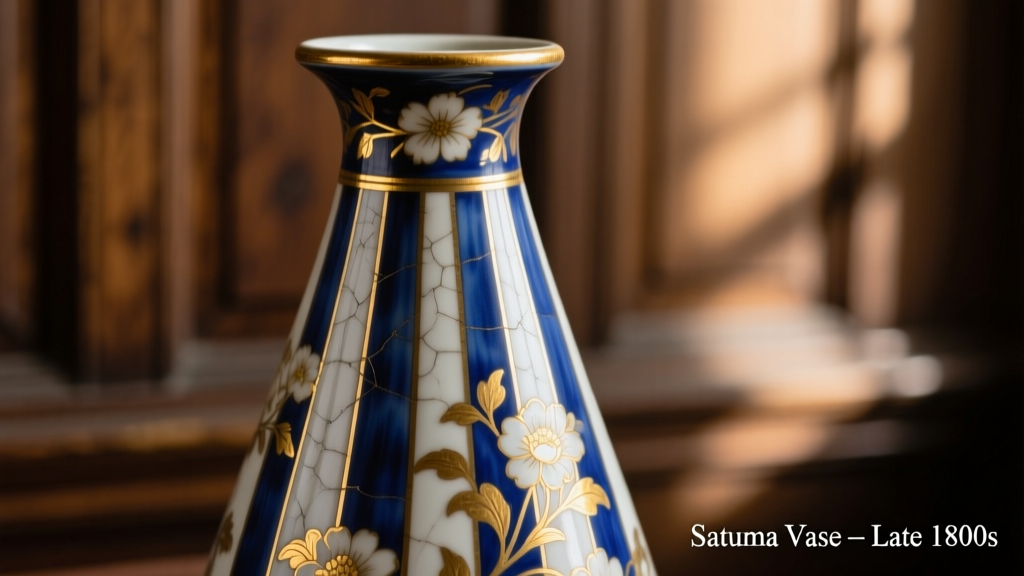
Satsuma Vase: Cone Shape, Patterned Vertical Bands — Late 19th Century, 12 Inches Tall

W. Wilson Silver American Pitcher & Underplate: A 14-Inch Masterpiece of Gilded Age Craftsmanship

The Heisey Pinwheel Fan Basket: A Masterpiece of American Pressed Glass Innovation
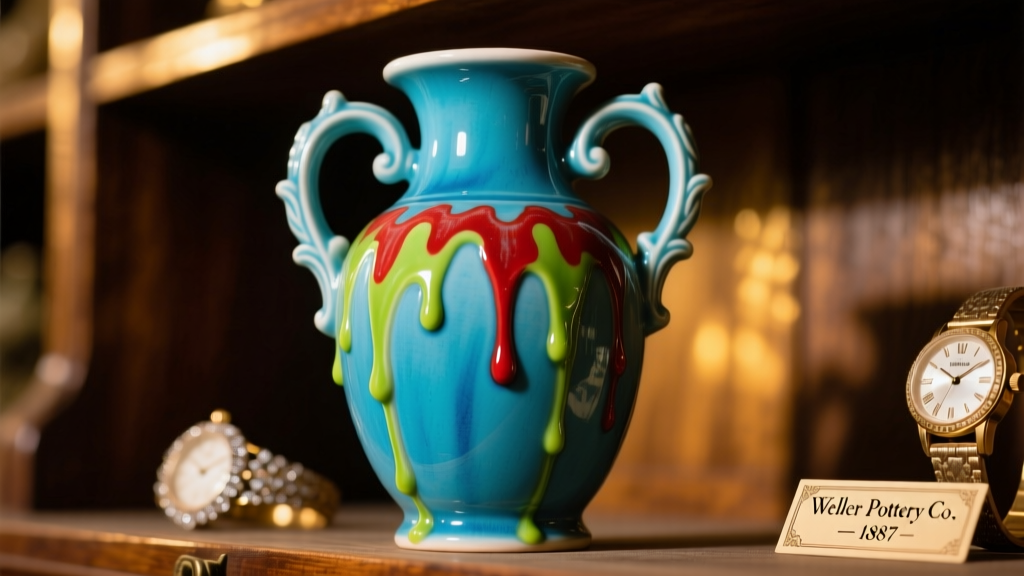
Weller Vase: Turkis Scarlet Lime Foam Drip with Dual Handles — An In-Depth Appraisal of a Rare 1930s Art Pottery Masterpiece
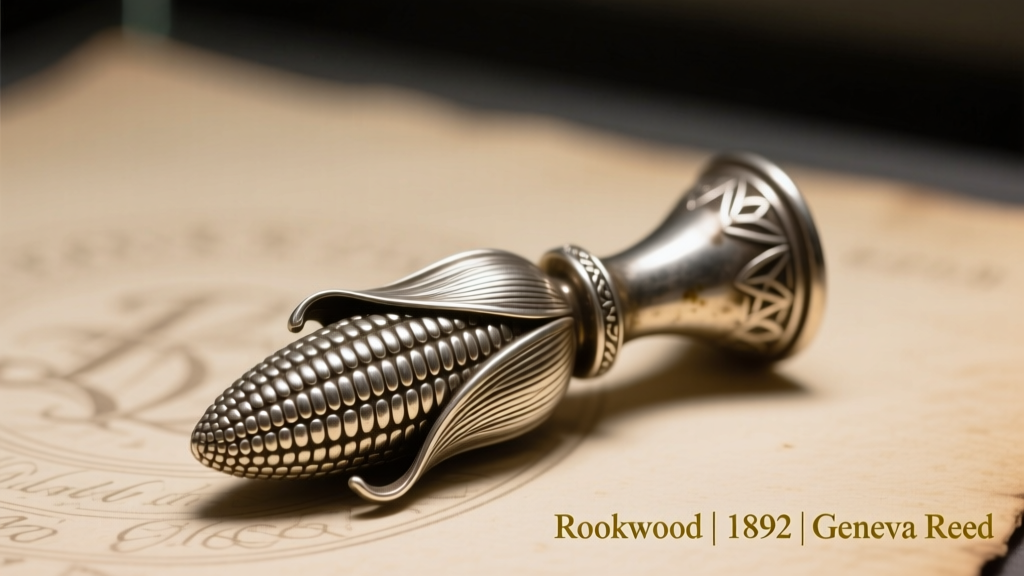
Rookwood Jug Stopper: Corn Design Silver Overlay by Geneva Reed, 1892 — A Landmark of American Art Pottery and Metalwork
Salt & Pepper Shakers: The Dairy Queen Figural Ceramic Set — A Mid-Century Americana Icon