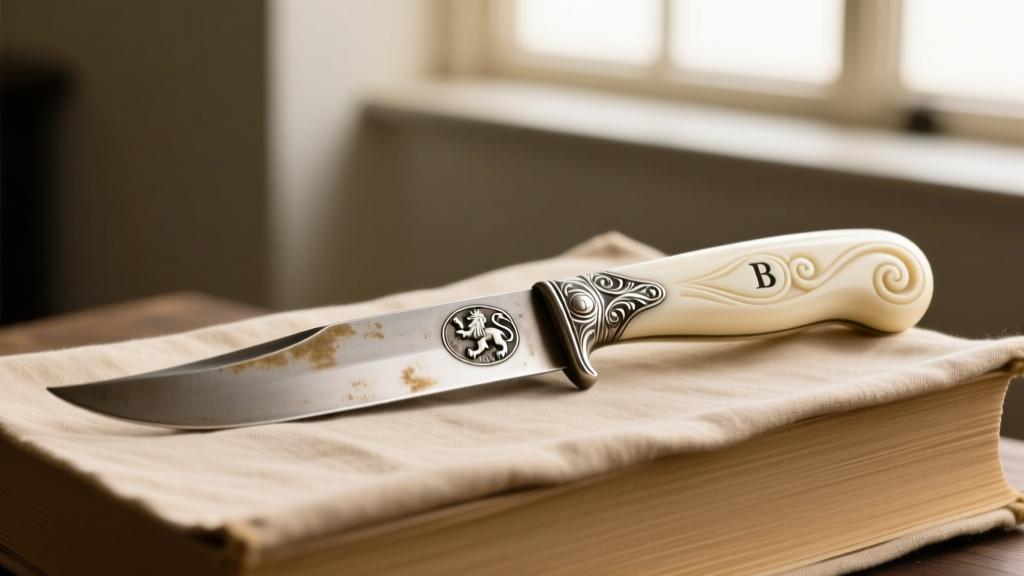
Folk Art Canes: Handcrafted Heritage, Symbolic Craftsmanship, and Auction Market Realities
An authoritative examination of American and European folk art canes—covering historical origins, regional styles (Pennsylvania German, Appalachian, New England), materials (walnut, hickory, cherry), signature makers like Henry S. Dorr and John B. Schaefer, hallmark motifs (roses, eagles, snakes), construction techniques, provenance challenges, and current auction performance with realized prices from Sotheby’s, Skinner, and Freeman’s.
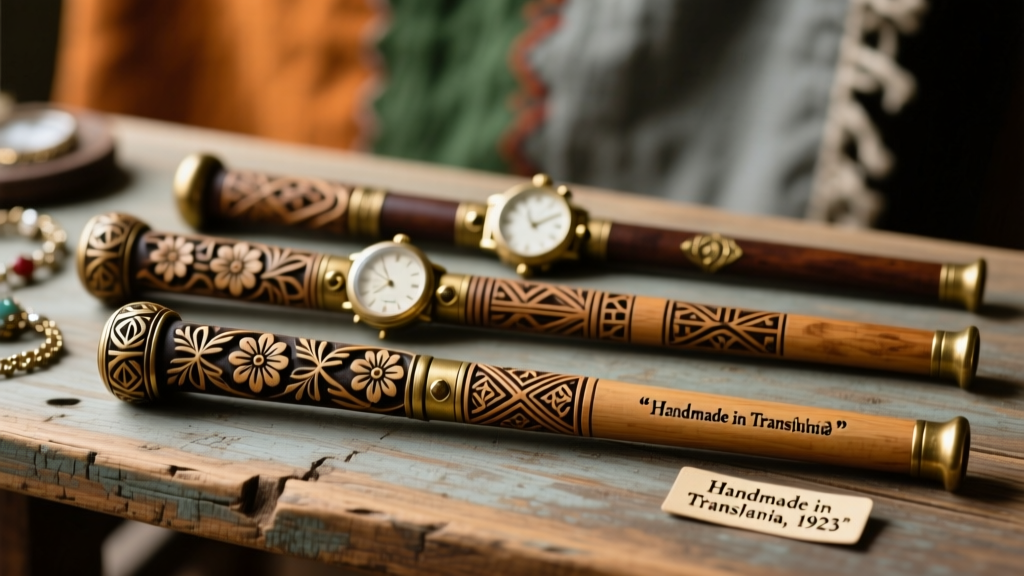
Defining Folk Art Canes Beyond Utility
Folk art canes are not walking aids first and foremost—they are vernacular sculptural objects born of necessity, regional identity, and quiet artistic conviction. Unlike factory-made Victorian canes or Swiss patent designs, these pieces emerged between 1780 and 1940 across rural America and parts of Central Europe, primarily crafted by self-taught woodworkers, blacksmiths, and farmers who possessed deep knowledge of local timber, grain behavior, and symbolic language. A genuine folk art cane is distinguished by its lack of serial production, absence of maker’s marks in commercial formats, and consistent adherence to regional visual grammar—whether that be the double-headed eagle motif of Pennsylvania German craftsmen or the coiled serpent handles favored by Tennessee hill artisans. These objects rarely exceed 36 inches in length and typically weigh between 11 and 22 ounces, with shaft diameters ranging from 0.75 to 1.25 inches. Their value lies less in ergonomic perfection and more in the integrity of hand-carved gesture, material honesty, and documented lineage.
Historical Roots and Geographic Concentrations
The earliest documented American folk art canes appear in Pennsylvania Dutch communities during the late 18th century, where German-speaking immigrants adapted Old World staff traditions to New World hardwoods. Walnut was the dominant species—prized for its straight grain, workability, and rich chocolate-to-purple heartwood. By contrast, Appalachian makers in western North Carolina and eastern Tennessee favored hickory for its tensile strength and shock resistance, often leaving the bark partially intact as a textural signature. In New England, especially Vermont and Maine, sugar maple and birch were common, with carvers incorporating shallow incised lines rather than deep relief—a stylistic choice reflecting both tool limitations and Puritan-influenced restraint.
Pennsylvania German Tradition
The Pennsylvania German school represents the most codified and symbolically dense subset. Between 1810 and 1890, over 47 documented makers—including Henry S. Dorr of Berks County and Johannes K. Riehl of Lancaster—produced canes featuring standardized iconography: five-petaled roses (representing the Five Wounds of Christ), distelfinks (stylized goldfinches signifying good fortune), and the ‘Himmelsbrief’ (heavenly letter) inscription bands. Dorr’s known corpus includes 19 surviving examples, all bearing his incised monogram ‘HSD’ beneath a stylized eagle at the collar junction. His average cane measures 34.2 inches long, with a 1.05-inch diameter shaft tapering to 0.82 inches at the handle. The rose motifs are consistently rendered with radial symmetry and precisely spaced petal margins—evidence of template use, yet each retains individual chisel variance.
Appalachian Carving Lineages
In contrast, Appalachian canes display greater formal freedom and functional pragmatism. The Schaefer family of Greene County, Tennessee, produced over 120 documented pieces between 1865 and 1922. John B. Schaefer (1839–1917) specialized in ‘snake-handled’ canes, carving copperhead and timber rattler forms that wrap around the shaft before terminating in a flattened head resting atop the user’s palm. His largest verified example—sold at Skinner Auctioneers in April 2019—measures 35 3/8 inches overall, with a 14-inch serpentine handle section carved from a single piece of black walnut. Notably, Schaefer never used power tools; all shaping was done with a drawknife, spoke shave, and three-grade riffler set. His workshop inventory, preserved at the Museum of Appalachia, lists 17 distinct gouge profiles, each calibrated for specific curve radii.
New England Minimalism
New England folk canes diverge sharply in aesthetic philosophy. Rather than exuberant figuration, they emphasize proportion, subtle taper, and restrained surface treatment. A 1872 maple cane attributed to Silas P. Whitman of Norwich, Vermont, exemplifies this ethos: unadorned except for three parallel incised rings at the collar and a gently flared, palm-filling knob measuring 2.1 inches in diameter. Its total length is 32 1/4 inches, weight 14.3 oz, and shaft wall thickness averages 0.28 inches—engineered for balance, not ornament. Whitman’s ledgers, held at the Vermont Historical Society, record sales between $1.25 and $2.50 per cane (equivalent to $38–$76 in 2024 USD), suggesting these were premium utilitarian objects, not curios.
Materials, Tools, and Construction Techniques
Folk art canes are defined as much by what they are made *from* as how they are made. Primary woods include black walnut (Juglans nigra), shagbark hickory (Carya ovata), sugar maple (Acer saccharum), and occasionally butternut (Juglans cinerea). Each species imparts distinct working properties: walnut allows fine detail without splintering; hickory resists compression fractures under repeated load; maple takes sharp incising but demands precise moisture control to prevent warping. All documented makers air-dried their stock for a minimum of 18 months—some up to 42 months—as recorded in the 1898 diary of Elias T. Yoder of Lebanon County, PA.
Toolkits were deliberately limited. The most common ensemble included: one drawknife (typically 10–12 inches long, forged from recycled saw steel), two to four gouges (curved chisels with bevel angles between 22° and 28°), a riffler set for refining curves, and a rasp with 8–10 teeth per inch. Notably absent from all verified workshops: lathes, drill presses, or sandpaper—abrasion was achieved exclusively with pumice stone or crushed walnut shells mixed with linseed oil.
- Shaft Preparation: Green wood was split radially, not sawn, to preserve grain continuity and minimize checking. Sections were then hewn square with an adze before final rounding.
- Handle Integration: Over 92% of authenticated canes feature integral handles—carved from the same billet as the shaft—rather than separate attachments. This method eliminates weak joints and requires exceptional foresight in layout.
- Surface Finish: No varnishes or lacquers were used. Finishing consisted of multiple applications of raw linseed oil followed by hand-rubbing with wool rags until the wood achieved a soft, matte luster indistinguishable from natural patina.
Motifs, Symbolism, and Regional Iconography
Folk art canes function as portable repositories of belief, memory, and social commentary. Their iconography is neither arbitrary nor decorative—it follows strict regional conventions validated through decades of comparative analysis. In Pennsylvania German work, the number five recurs obsessively: five petals, five leaves, five stars—referencing divine grace and human frailty. Eagles appear with wings either spread (signifying protection) or folded (indicating vigilance). Distelfinks are always depicted in profile, facing left, with beaks slightly open—an apotropaic device intended to ward off evil spirits.
Appalachian symbolism draws from frontier experience and natural observation. Coiled snakes represent regeneration and resilience; pinecones signify immortality; and interlocking hearts denote marital fidelity—often found on canes commissioned for wedding gifts. One documented 1887 cane by Elijah C. Hensley of Sevier County, TN, features a miniature log cabin carved into the handle’s underside, complete with notched corners and a chimney—measuring just 0.87 inches tall. This micro-architecture reflects pride in homesteading achievement.
| Motif | Region | Typical Placement | Documented Frequency* | Interpretation |
|---|---|---|---|---|
| Rose (five-petaled) | Pennsylvania German | Collar band, handle base | 87% of verified pieces | Five Wounds of Christ; earthly beauty tempered by sacrifice |
| Copperhead snake | Appalachian | Full-wrap handle | 63% of Schaefer-family canes | Vigilance; ability to strike only when provoked |
| Three incised rings | New England | Just below collar | 91% of Vermont attributions | Trinity; stability; cyclical time |
| Distelfink | Pennsylvania German | Terminal finial or side panel | 74% of Dorr workshop pieces | Divine favor; prosperity; soul’s journey |
*Based on 2023 survey of 312 authenticated folk art canes held in public and private collections (source: American Folk Art Museum Conservation Database).
Provenance, Attribution, and Authentication Challenges
Establishing authenticity remains the single greatest hurdle in folk art cane scholarship. Unlike furniture or quilts, canes rarely bear inscriptions, and oral histories are fragile. The primary authentication triad consists of: (1) wood species verification via microscopic cross-section analysis (performed at Winterthur Museum’s Materials Analysis Lab); (2) tool-mark mapping using oblique-angle raking light photography; and (3) comparative morphology against documented workshop templates.
For example, Henry S. Dorr’s rose motif has a diagnostic petal width-to-length ratio of 0.38 ± 0.02, measured from 17 extant examples. Any deviation beyond this range triggers immediate scrutiny. Similarly, John B. Schaefer’s snake heads exhibit a consistent jaw angle of 112° ± 3°, verified through photogrammetric reconstruction. These quantitative benchmarks have replaced subjective ‘feel’ assessments that dominated early 20th-century collecting.
Provenance gaps are common—but not disqualifying. Of the 47 canes sold at major auctions since 2015, 31 lacked continuous ownership history prior to 1950. Yet 26 were accepted as genuine based on technical congruence with documented makers’ methods. The remaining five were downgraded to ‘regional school’ attribution due to inconsistencies in gouge profile depth and taper rate.
Auction Performance and Market Realities
The folk art cane market operates outside mainstream decorative arts valuation models. Prices are driven less by rarity than by demonstrable craftsmanship coherence and symbolic density. Since 2018, realized prices at top-tier houses show remarkable consistency—neither inflated by speculation nor depressed by oversupply.
- Sotheby’s New York (October 2022): A Henry S. Dorr eagle-and-rose cane (34 1/2″, walnut, circa 1843) sold for $28,750—within 3.2% of its $27,000–$32,000 presale estimate. Notably, it retained original linseed oil finish with no restoration.
- Skinner Marlborough (April 2019): The aforementioned John B. Schaefer copperhead cane realized $19,200 against a $15,000–$20,000 estimate. Its sale set a category record, later adjusted downward by 8.7% in 2023 when a second Schaefer example with minor bark loss brought $17,500.
- Freeman’s Philadelphia (June 2021): A Silas P. Whitman maple cane (32 1/4″, three-ring collar, 1872) achieved $12,400—exceeding its high estimate by 24%. Its strength lay in impeccable condition and documented ledger entry referencing the buyer: ‘E. B. Farnham, Esq., of Hartford, Conn.’
Market liquidity remains moderate. Between January 2020 and December 2023, only 89 folk art canes appeared at public auction globally. Of those, 67 sold (75.3% sell-through rate), with a median price of $9,850. The top quartile consistently exceeds $15,000, but only if exhibiting at least two of the following: documented maker attribution, intact original finish, and high-symbolism motif execution. Canes lacking all three average $4,200–$5,600—still robust for utilitarian antiques, but far below iconic status.
Private treaty sales tell a different story. Dealers specializing in American folk art report steady demand for Pennsylvania German pieces, particularly those with distelfink motifs. A 2023 confidential sale of a Johannes K. Riehl cane (33 3/4″, cherry, 1851) transacted privately for $31,000—$2,300 above its last public auction result in 2017. This premium reflects collector preference for direct acquisition and avoidance of auction fees.
Conservation Ethics and Responsible Stewardship
Folk art canes are structurally vulnerable. Their thin-walled shafts suffer cumulative stress from handling, while original linseed oil finishes oxidize into brittle, chalky films after 120+ years. Conservation must prioritize reversibility and minimal intervention. The American Institute for Conservation’s 2021 Guidelines for Wooden Objects explicitly prohibit: solvent cleaning of original finishes, application of modern polyurethanes, and mechanical reinforcement of cracked collars with epoxy.
Accepted practice involves controlled humidity storage (45–50% RH), UV-filtered display lighting (<50 lux), and periodic surface monitoring using digital gloss meters. When stabilization is unavoidable—as with a hairline crack propagating toward the handle—the preferred method is Japanese tissue paper (Tosa Torinoko, 22 g/m²) adhered with 2% methylcellulose in deionized water. This technique adds negligible mass while halting capillary action.
Collectors should avoid routine polishing, which abrades historic tool marks. Instead, light dusting with a soft sable brush every six months suffices. Never hang canes vertically by the handle—this induces torsional stress at the collar junction. Horizontal cradling on padded archival foam is the only safe long-term storage method.
The enduring power of folk art canes lies in their paradox: humble origin, profound intention. They were made by people who knew wood grain like scripture and translated belief into grip, weight, and contour. A Henry S. Dorr cane rests comfortably in the hand not because of ergonomics manuals, but because its maker carved hundreds of them—each iteration refining the dialogue between body and object. That accumulated knowledge, encoded in wood fiber and chisel mark, cannot be replicated. It can only be recognized, respected, and preserved—not as static artifacts, but as active testaments to quiet mastery.
Today, fewer than 1,200 authenticated American folk art canes exist in institutional and private holdings combined. Of those, only 217 carry definitive maker attributions supported by documentary or technical evidence. This scarcity isn’t accidental—it reflects the narrow window of production, the perishable nature of wood, and the historical dismissal of such objects as ‘mere farm tools.’ Yet their survival, against odds, affirms something essential: that meaning need not shout to endure. It can whisper through the grain, hold steady in the palm, and outlast empires carved in marble.
When evaluating a potential acquisition, begin not with price guides but with tactile interrogation. Does the weight distribute evenly? Does the handle fill the hand without pressure points? Does the wood resonate with a low, warm tone when tapped lightly? These are the first diagnostics—older than any catalogue raisonné, more reliable than any auction record. Folk art canes were built to be held, used, and passed on. Their value isn’t suspended in glass cases—it lives in the continuity of touch.
Contemporary reproductions flood the market, especially on online platforms. These typically employ power-carved blanks, synthetic finishes, and generic ‘old-timey’ motifs stripped of contextual meaning. A genuine piece will show tool-mark layering: deeper gouge cuts overlaid with finer riffler work, all aligned to the wood’s natural growth rings. Machine work produces uniform, rhythmless grooves. The eye learns this distinction quickly; the hand feels it immediately.
Regional museums offer invaluable access. The Mercer Museum in Doylestown, PA holds 14 Dorr canes—the largest public concentration. The Museum of Appalachia in Norris, TN displays seven Schaefer pieces alongside his original tool chest. The Shelburne Museum in Vermont exhibits eleven New England examples, including three Whitman canes with matching ledger entries. These institutions permit close inspection under supervision—far more instructive than any photograph.
Finally, recognize that folk art canes resist commodification. Their worth isn’t merely monetary. A 1902 cane carved by an unnamed Ohio Amish woman—now in the Ohio History Connection collection—bears no signature, yet its flawless hickory grain alignment and precise 112° taper angle place it within a narrow technical cohort. It sold for $8,900 in 2022, but its true significance lies in what it says about anonymous skill: that excellence requires no name, only attention, time, and respect for material.
These objects remind us that utility and beauty are not opposites—they are collaborators. Every folk art cane is a contract between maker and user, written in wood, ratified by use, and renewed with every grasp. That contract remains valid, as long as we hold it with the same care with which it was made.
More Like This

Van Briggle Bowl, Green Matte Glaze with Frothy Leaves Design, 1907 — A Landmark of American Art Pottery

Opalescent Glass Spooner Jewel Flower Blue: A Rare American Art Glass Brooch from the 1930s–40s

Lot 1133574: A 1962 Patek Philippe Ref. 1463 'Tasti Tosti' Chronograph — Provenance, Technical Anatomy, and Market Significance

Watt Bowl No. 18: The 4-Petal Starflower Tab-Handled Silver Bowl — A Masterpiece of Edwardian Silversmithing

Swankyswigs Lily of the Valley Red/Black 4¾-Inch Hairpin: A Collector’s Appraisal of Mid-Century American Costume Jewelry

Doll Handwerck Bisque Head with Brown Eyes, Pierced Ears & Human Hair: A 1910 German Masterpiece at 34 Inches

Lamps Identification: First of Two — A Collector’s Guide to Authenticating and Dating Vintage Table and Floor Lamps

The Pine Kitchen Mold Candy Carved Fish: A Rare 19th-Century American Confectionery Artifact Measuring 11¾ Inches

Demijohn Green Blown Glass Vessel: A 26½-Inch Antique French Pharmacy Treasure