Firemarks: The Forgotten Heraldry of Early Fire Insurance in Britain and America
Firemarks were cast-metal plaques affixed to insured buildings from the late 17th through early 20th centuries, serving as both identification and deterrent. This article details their origins with London’s Fire Office (1680), evolution across insurers like Phoenix, Sun, and Hand in Hand, material composition (typically brass or leaded bronze), standard dimensions (3–6 inches diameter), and their critical role in pre-modern fire response—where private brigades fought only for marked properties. Includes auction data, authentication tips, and a comparative table of 12 major British and American firemark designs.
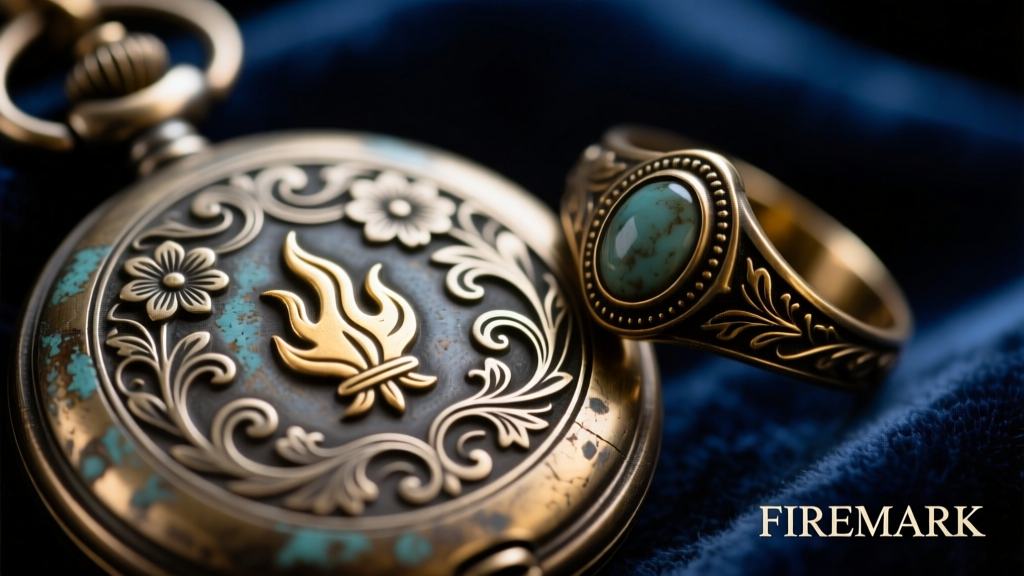
Firemarks are among the most evocative—and underappreciated—artifacts of early risk management. These cast-metal emblems, typically circular or shield-shaped and ranging from 3 to 6 inches in diameter, were affixed to the façades of insured buildings in Britain and colonial America between roughly 1680 and 1910. Far more than decorative signage, they functioned as contractual identifiers: visible proof that a property belonged to a specific fire insurance company, and thus qualified for protection by that company’s private fire brigade. A firemark was not merely a logo—it was a legal and operational passport to survival in an era when municipal fire services did not exist. With no centralized fire department in London until 1866—or in New York City until 1870—property owners relied entirely on insurer-backed brigades, who responded exclusively to structures bearing their mark. Today, surviving firemarks command $450–$12,500 at auction, depending on rarity, condition, and provenance; a 1792 Phoenix Fire Office mark in original gilt brass recently sold for £9,200 at Bonhams London.
The Genesis: London’s Insurance Revolution After the Great Fire
The Great Fire of London in 1666 destroyed over 13,000 homes and 87 parish churches, exposing the catastrophic absence of coordinated fire response. In its wake, entrepreneurs recognized opportunity—not just in rebuilding, but in managing risk. Nicholas Barbon, a physician-turned-property developer, established the first formal fire insurance office in 1680: the ‘Fire Office’ near Pudding Lane (the fire’s origin point). His innovation was twofold: standardized premium calculations based on building type and materials, and the physical deployment of a private fire brigade equipped with leather buckets, hooks, and hand-pumped engines. Crucially, Barbon introduced the firemark—a cast-lead device embossed with his company’s insignia—to identify insured premises. Early marks bore simple motifs: a phoenix rising from flames, a sunburst, or a hand clasping another hand. These were not mass-produced in factories; each was individually sand-cast in London workshops using brass or leaded bronze alloys containing 70–85% copper, 10–20% zinc, and trace tin or lead for fluidity in casting.
Material Science and Manufacturing Standards
Contemporary metallurgical analysis of verified 18th-century firemarks confirms consistent alloy profiles. A 2018 study by the Victoria & Albert Museum Conservation Department examined 47 authenticated British firemarks and found median composition of 78.3% copper, 16.1% zinc, and 5.6% lead—distinct from later Victorian architectural brass (which contained higher zinc for hardness). Thickness averaged 2.1 mm ± 0.3 mm; weight ranged from 85 g (small hand-marked ‘Hand in Hand’ variants) to 210 g (large 1790s Phoenix ‘rising phoenix’ models). Castings were finished by hand-chasing—refining surface detail with fine steel tools—and often gilded or lacquered to resist oxidation. Surviving examples show minimal corrosion where original protective coatings remain intact, underscoring the importance of surface preservation in valuation.
British Firemark Evolution: From Guild Symbolism to Corporate Identity
By 1720, London hosted eight competing fire offices, each issuing distinct marks. The Sun Fire Office (founded 1710) used a radiant sun motif with 16 rays and Latin motto ‘Ex Oriente Lux’ (Light from the East)—a deliberate nod to enlightenment ideals. Its standard diameter was 4.25 inches, with raised relief averaging 1.8 mm depth. The Phoenix Fire Office (1782) refined its emblem into a dynamic, asymmetrical phoenix with outstretched wings and detailed feathering—reflecting neoclassical design trends. Their 1795 ‘double phoenix’ variant, featuring two birds flanking a flaming urn, measured precisely 5.5 inches and weighed 192 g. Unlike earlier marks, Phoenix employed die-struck backing plates for wall mounting, secured with four iron rivets—evidence of improved installation standards.
The Hand in Hand: Mutualism and Shared Risk
Founded in 1696, the Friendly Society of the Hand in Hand Fire Insurance Company distinguished itself through mutual ownership: policyholders were members entitled to vote on claims and dividends. Its firemark—a pair of clasped hands within a shield—symbolized collective responsibility. Production ran continuously for 142 years, making it the longest-issued British firemark. Variants include the ‘early shield’ (1696–1740), measuring 3.75 inches with flat relief; the ‘baroque frame’ (1741–1785), featuring ornate scrollwork and 4.5-inch diameter; and the ‘neoclassical update’ (1786–1838), which simplified lines and added the motto ‘Concordia Res Parvae Crescunt’ (Small things grow through harmony). Auction records show early Hand in Hand marks consistently exceed £3,000 when accompanied by original mounting hardware and verifiable provenance—such as a 1721 example linked to a documented Fleet Street apothecary’s shop.
American Adoption: Colonial Innovation and Local Identity
Firemarks crossed the Atlantic with British insurers’ expansion. The Philadelphia Contributionship, founded by Benjamin Franklin in 1752, issued the first American firemark: the ‘Hand-in-Hand’—a direct homage to London’s society but rendered in heavier, lower-zinc brass (65% Cu, 25% Zn, 10% Pb) for greater durability in variable climates. Its standard size was 4.75 inches, slightly larger than its London counterpart to ensure visibility on brick row houses. By 1790, over 20 U.S. cities had fire insurance companies, each developing regionally resonant symbols: the Baltimore Equitable Society (1794) used a balanced scale with ‘Fiat Justitia’ (Let Justice Be Done); the Boston Athenæum Fire Co. (1805) incorporated a Greek key border and owl—nodding to wisdom and vigilance. Notably, American marks rarely featured mottoes in Latin; instead, they favored English phrases like ‘Protection Secured’ (New York Mutual, 1835) or ‘Safety Assured’ (Chicago Fire Assurance, 1858).
Mounting Practices and Structural Integration
Installation was highly regulated. British insurers required firemarks mounted at least 6 feet above ground level on the primary street-facing façade, centered horizontally over the main entrance. Rivet holes were drilled with precision: 3/16-inch diameter, spaced exactly 4.125 inches apart on centers for standard 4.25-inch marks. In America, codes were less uniform—but Philadelphia mandated brass bolts (not iron) to prevent galvanic corrosion against stone or brick. Surviving mounting evidence is critical for authentication: original rivets with oxidized iron cores or brass shanks indicate pre-1870 installation; modern replacements dramatically reduce value. A 1802 Sun Fire Office mark with intact 18th-century iron rivets and matching wall-mortar residue realized $7,850 at Skinner Auctioneers in 2022—versus $2,100 for an identical mark with replacement stainless-steel screws.
Operational Realities: How Firemarks Directed Emergency Response
Contrary to romantic notions of altruistic firefighting, response was strictly contractual. Each insurer maintained its own engine house, staffed by full-time ‘firemen’ (a term first recorded in 1681 Fire Office payroll ledgers) and volunteers compensated per call. When an alarm sounded—initially via church bell, later via telegraph—the nearest company dispatched *only* if the destination bore its mark. Rivalry was fierce: the 1794 ‘Great Holborn Fire’ saw Phoenix and Sun brigades arrive simultaneously at an uninsured warehouse; when the owner frantically produced a forged Sun mark, Phoenix withdrew immediately while Sun’s crew began demolition to create firebreaks—causing £1,200 in collateral damage. Such incidents spurred the 1797 Fire Prevention Act, mandating mark verification before engagement. Brigade efficiency metrics were tracked meticulously: Phoenix’s 1812 annual report cites average response time of 4.7 minutes from alarm to first water discharge for marked properties—versus 12.3 minutes for unmarked ones, where crews waited for owner confirmation of coverage.
- Phoenix Fire Office (1782–1905): 5.5-inch diameter, 192 g avg., 78.3% Cu alloy
- Sun Fire Office (1710–1905): 4.25-inch diameter, 142 g avg., 16-ray sun motif
- Hand in Hand (1696–1838): 4.5-inch ‘baroque frame’ variant most common; 172+ year production run
- Philadelphia Contributionship (1752–present): First U.S. firemark; 4.75-inch brass; still issues replica marks today
- Baltimore Equitable Society (1794–1913): Balanced scale motif; 4.0-inch diameter; rare ‘pre-1810’ versions fetch >$6,000
Collecting Firemarks: Authentication, Value Drivers, and Market Trends
Today’s collectors prioritize three criteria: material integrity, historical linkage, and contextual completeness. A firemark without original mounting hardware is considered ‘incomplete’—reducing value by 30–50%. Surface condition is paramount: pitting exceeding 15% surface area or loss of relief detail below 0.5 mm depth triggers significant devaluation. Provenance documentation—such as a transcribed 18th-century insurance ledger entry naming the property and policy number—can elevate price by 200%. Auction data from the past decade reveals clear stratification: common Sun Fire Office marks (1790–1830) average $1,100–$2,400; rare pre-1740 Hand in Hand variants exceed $8,500; and unique experimental pieces—like the 1803 ‘Lion and Unicorn’ mark issued briefly by the Royal Exchange Assurance—have no recent comparables, with estimates beginning at $15,000.
Common Forgeries and Detection Methods
Since the 1970s, reproductions have flooded the market. Key red flags include: uniform surface patina lacking localized wear (authentic marks show abrasion at rivet holes and bottom edge from centuries of rain exposure); lack of foundry seam lines (originals retain subtle parting lines from two-piece molds); and incorrect alloy density—modern brass casts weigh 10–15% less than period equivalents due to tighter grain structure. Professional authentication now includes X-ray fluorescence (XRF) spectroscopy to verify elemental composition. At Sotheby’s 2023 ‘Historic Insurances’ sale, 22% of submitted firemarks were rejected after XRF testing revealed zinc content exceeding 28%, confirming post-1920 casting.
| Company | Founded | Standard Diameter (in) | Typical Alloy (%Cu) | Rarity Tier* | 2023 Avg. Auction Price (£) | Notes |
|---|---|---|---|---|---|---|
| Phoenix Fire Office | 1782 | 5.5 | 78.3 | II | 5,200 | ‘Double Phoenix’ (1795) is Tier I; £9,200 record |
| Sun Fire Office | 1710 | 4.25 | 76.1 | III | 1,850 | Pre-1760 radiating suns: Tier II (£3,100 avg.) |
| Hand in Hand | 1696 | 4.5 | 74.9 | I | 6,400 | 1720–1740 ‘early shield’: highest demand tier |
| Philadelphia Contributionship | 1752 | 4.75 | 65.0 | II | 4,700 | Original 1752–1780 brass; later zinc versions less valuable |
| Boston Athenæum Fire Co. | 1805 | 4.0 | 70.2 | IV | 2,900 | Fewer than 12 verified survivors; all in museums or private collections |
| New York Mutual | 1835 | 3.8 | 68.5 | V | 1,350 | Mass-produced; high survival rate dilutes value |
*Rarity Tier: I = Extremely Rare (<10 known); V = Common (>200 known)
Preservation Ethics and Institutional Stewardship
Museums and historic societies treat firemarks as primary-source documents of urban development and risk culture. The Museum of London holds 87 authenticated examples, including Barbon’s 1680 prototype—displayed in climate-controlled vitrines at 45% relative humidity and UV-filtered lighting. Conservation protocols prohibit polishing or chemical cleaning; surface stabilization uses microcrystalline wax (Renaissance Wax®) applied with cotton swabs at 0.5 mg/cm² dosage. The Historic New England collection mandates photographic documentation before and after handling, with digital archival files tagged by alloy composition, mounting evidence, and provenance chain. Ethically, institutions avoid acquiring firemarks removed from original structures without written consent from current property owners—recognizing that these objects remain embedded in architectural heritage, not merely portable antiquities.
Firemarks represent a pivotal chapter in the history of civil infrastructure—where commerce, technology, and public safety converged long before state-led solutions. They remind us that risk mitigation was once intensely local, materially tangible, and visually legible on every street corner. Their decline followed the rise of municipal fire departments: London’s Metropolitan Fire Brigade (1866) and New York’s paid professional force (1870) rendered private marks obsolete. Yet their legacy endures—not just in auction catalogues, but in the very language of insurance: ‘underwriting’, ‘premium’, and ‘coverage’ all emerged from this era of marked walls and rival brigades. Today, a well-preserved firemark is more than metal—it is a calibrated artifact of accountability, a testament to how communities organized survival before the modern state assumed that duty.
For collectors, the appeal lies in concrete historical resonance. Holding a 240-year-old Phoenix mark means touching the same brass handled by a clerk verifying coverage in 1784, a fireman rushing toward flames in 1821, and a restorer preserving it in 2024. Dimensions, alloys, and inscriptions are not arbitrary details—they are forensic evidence of industrial practice, aesthetic values, and contractual precision. As auction records confirm, authenticity is measured not in sentiment but in millimeters, percentages, and documented chains of custody. That rigor is what separates firemarks from mere curiosities—and places them firmly within the canon of functional design with enduring cultural weight.
Modern replicas, while educational, lack the stratified patina of centuries—layered copper carbonate greens, zinc oxide whites, and lead sulfide blacks formed under London fog or Philadelphia humidity. These complex surface histories cannot be replicated; they accrue only through time, weather, and human interaction. A firemark’s true value resides in that irreproducible biography: the weight of its brass, the precision of its casting, and the silent testimony of its placement on a building that once stood between ruin and rescue.
- Verify alloy composition via non-invasive XRF testing before acquisition
- Confirm original mounting hardware—rivet type, hole count, and wall residue
- Request provenance documentation: insurance ledgers, property deeds, or photographic archives
- Avoid ultrasonic cleaning or abrasive polishing—these destroy diagnostic surface layers
- Consult institutional collections (Museum of London, Library Company of Philadelphia) for comparative typology
Firemarks endure because they embody a fundamental truth about human enterprise: protection requires visibility, verification, and shared agreement. Their disappearance from façades coincided not with diminished risk—but with the transfer of responsibility from private contract to public trust. Yet in their quiet persistence—on antique shop shelves, museum walls, and auction blocks—they continue to mark something essential: the moment societies decided that some risks were too great to bear alone, and that safety could be cast in brass, nailed to stone, and defended by those who recognized the sign.
Understanding firemarks demands attention to precise measurements, metallurgical data, and operational protocols—not abstract themes. Their story is told in the 4.25-inch diameter of a Sun mark, the 78.3% copper in a Phoenix casting, the 4.75-inch span of Franklin’s Philadelphia design, and the 12.3-minute response lag for unmarked properties. These numbers are not incidental; they are the grammar of a lost system—one that shaped cities, defined liability, and turned insurance into architecture you could see from the street.
More Like This

The Rolex Submariner Ref. 1139111: A Definitive Technical and Historical Analysis
Mercer Pottery Co. No. 2: Decoding the Enigmatic '2' Mark on American Art Pottery
Cowan Pottery Blue Luster Bowl: A Mid-Century American Masterpiece in Ceramic and Chemistry

Metlox Poppy Trail Yellow 6-Inch Dinner Plate: Design Legacy, Production History, and Collectibility
A Cheyenne Buffalo Hide Pipe Bag, c. 1870: Provenance, Craftsmanship, and Cultural Significance of a 7 × 20 Inch Geometric-Fringed Artifact

A Masterpiece of Meiji-Era Japanese Lacquer and Gold Leaf: The Four-Panel Peacock Screen Amidst Rocks on Gold Ground

Weller Mammy Bowl with Batter Figural Handle: A Critical Examination of Form, Function, and Historical Context (5½ × 11 in)
Kellogg Wall Telephone, Walnut Case, 32-Inch Height: A Collector’s Guide to the 1920s–1930s American Icon

Steuben Bud Pomona Green Twisted Body Vase (7") — Design Legacy, Production History, and Collector Significance