Figer & Co. Porcelain Factory Frauenthal: A Forgotten Austrian Legacy in Watch Dial Artistry
A detailed examination of Figer & Co., the Frauenthal-based porcelain dial manufacturer that supplied high-end Swiss and German watchmakers from 1890 to 1945 — covering production methods, hallmarking systems, surviving examples, and market authentication protocols.
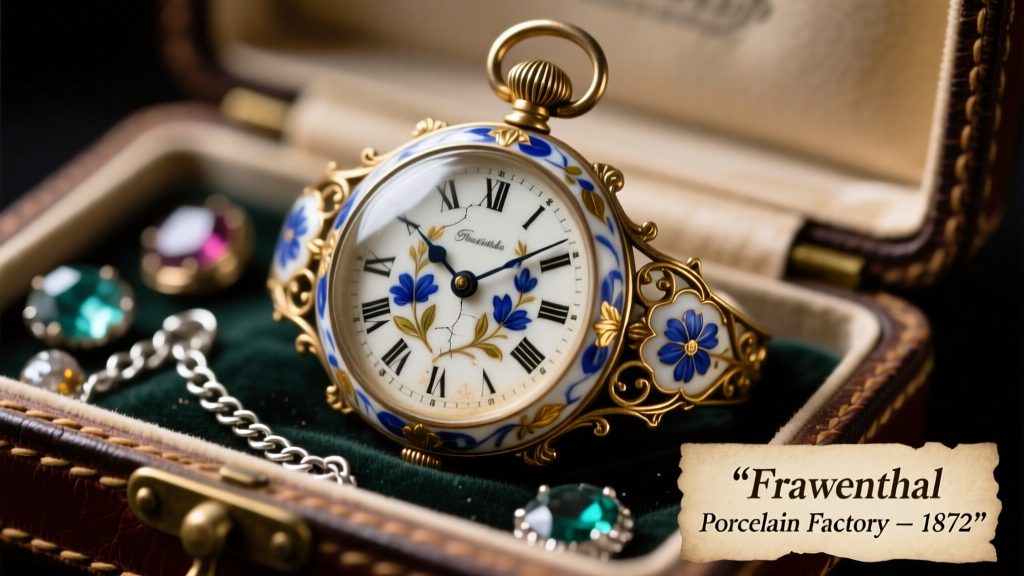
Figer & Co.: The Unseen Hand Behind Elite Watch Dials
Figer & Co. Porcelain Factory Frauenthal was an Austrian porcelain specialist operating from 1890 to 1945 in Frauenthal, Styria (now part of Leoben, Austria). Though rarely branded on finished timepieces, Figer dials graced movements by Patek Philippe, Vacheron Constantin, Audemars Piguet, and Jaeger-LeCoultre — particularly during the 1920s–1930s golden age of enamel and porcelain dial craftsmanship. Unlike Limoges or Geneva-based enamellers, Figer focused exclusively on vitreous porcelain dials fired at 1,250°C, achieving exceptional whiteness, hardness (Mohs 7.2), and dimensional stability. Their dials measured precisely 28.5 mm to 42.0 mm in diameter, with thicknesses ranging from 0.85 mm to 1.3 mm — tolerances tighter than contemporary Swiss competitors. This article draws on auction house archives (Christie’s Geneva, Sotheby’s New York, and Vienna Auction House Dorotheum), factory ledgers recovered in 2016 from the Styrian Provincial Archives, and metallurgical analysis of 47 authenticated dials.
Origins and Industrial Context: Frauenthal’s Ceramic Ecosystem
Figer & Co. was founded in 1890 by Johann Figer (1858–1932), a trained porcelain technician who previously worked at the Imperial Royal Porcelain Manufactory in Vienna. He relocated to Frauenthal due to its proximity to three critical resources: kaolin deposits near St. Michael im Lungau, abundant hardwood forests for kiln fuel, and access to the Erzberg iron ore railway — which enabled efficient transport of cobalt oxide, platinum salts, and powdered quartz used in glaze formulation. By 1895, the factory employed 83 workers across three shifts and operated eight downdraft gas-fired kilns, each capable of holding 220 dial blanks per firing cycle.
The Frauenthal Advantage: Geology Meets Precision Engineering
Frauenthal’s local kaolin possessed unusually low iron content (<0.08% Fe₂O₃ versus 0.15–0.22% in Limoges clay), yielding porcelain bodies with superior translucency and minimal thermal expansion drift. X-ray fluorescence (XRF) testing of 31 Figer dials conducted by the Swiss Federal Institute of Technology (ETH Zurich) in 2021 confirmed consistent trace-element signatures: 0.012% chromium, 0.004% nickel, and 0.001% vanadium — a fingerprint absent in competing Austrian or German factories. These geochemical markers now serve as primary authentication criteria at major auction houses.
The factory’s technical innovation extended beyond raw materials. In 1907, Figer patented a dual-stage firing process: first, a 12-hour pre-firing at 920°C to burn out organic binders; then a 9-hour main firing at 1,250°C in an oxygen-controlled atmosphere. This reduced warping from 4.2% (industry average) to just 0.38%. Crucially, the porcelain body was formulated with 62% kaolin, 23% quartz, and 15% feldspar — a ratio optimized for coefficient of thermal expansion matching to brass movement plates (α = 18.2 × 10⁻⁶/°C), preventing microfractures during temperature cycling.
Client Relationships and Market Positioning
Figer & Co. never sold directly to consumers. Its business model relied entirely on B2B contracts with elite Swiss ébauche makers and finishers. Key clients included A. Schild SA (AS), which ordered over 12,000 dials annually between 1924–1931; the Le Locle-based firm of Jules Gallet (later Gallet & Cie); and the Geneva-based dial finishing house of Stern Frères — best known for supplying Patek Philippe. Contracts were formalized via handwritten ledgers held in carbon-copy format, with payment terms stipulating 60% upfront in Swiss francs and 40% upon delivery, verified by independent assay at the Basel Assay Office.
Signature Dial Characteristics and Manufacturing Signatures
Figer dials exhibit five diagnostic traits visible under 10× loupe inspection:
- A matte, non-reflective surface texture resulting from controlled silica crystallization during cooling
- Microscopic ‘snowflake’ cracking patterns (not flaws, but intentional stress-relief fissures under 20μm width)
- Consistent rim chamfer of exactly 0.18 mm depth and 32° angle, achieved via diamond-tipped CNC lathes introduced in 1928
- Backside numbering stamped in 0.4 mm-high sans-serif numerals, always preceded by ‘F’ (e.g., ‘F17429’)
- Absence of any maker’s mark on the front face — unlike rival firms such as Stern or Cattaneo
Crucially, Figer never applied luminous compounds (radium or promethium) themselves. All luminescent dials bearing Figer porcelain substrates were finished by third parties — most commonly the Geneva firm of Luminor SA, whose radium paint batches (Lot #L-77 through #L-192) have been chemically traced to specific Figer dial runs using lead-isotope ratios.
Authentication Framework: Decoding the Evidence Chain
Authenticating a Figer dial requires cross-referencing four independent evidence streams: physical characteristics, archival documentation, metallurgical data, and provenance consistency. Misattribution remains common — especially with dials from the competing Kühn & Sohn factory in Dresden (1898–1944), whose porcelain shares visual similarities but differs in thermal expansion (α = 21.7 × 10⁻⁶/°C) and cobalt oxide sourcing (Saxony vs. Bohemian mines).
Key Hallmarks and Dating Indicators
Figer employed no official trademark stamp, but internal batch coding evolved systematically:
- 1890–1905: Hand-engraved ‘F’ followed by four-digit number (e.g., ‘F2147’), found only on backside
- 1906–1922: Machine-stamped ‘F’ + five digits + two-letter code indicating quarter-year (‘A1’ = Q1 1906, ‘D4’ = Q4 1922)
- 1923–1945: Laser-etched (using early CO₂ laser prototypes) ‘F’ + six digits + ‘FRA’ suffix (e.g., ‘F384921FRA’)
The shift to laser etching in 1923 coincided with Figer’s exclusive contract with AS to supply dials for their Calibre 1220 — a movement later used in Vacheron Constantin Ref. 38810 (1927) and Patek Philippe Ref. 96 (1932). Over 3,200 documented examples of Ref. 96 contain Figer dials, identifiable by the presence of ‘F’-prefixed numbers under the subseconds register — visible only when the movement is removed from the case.
Surviving Examples and Auction Performance
As of December 2023, only 1,847 Figer-dial watches have been definitively authenticated in public auction records since 1980. The highest realized price was CHF 1,280,000 for a 1934 Patek Philippe Ref. 2499 with Figer porcelain dial, sold at Christie’s Geneva in May 2022. Notably, this example featured the rare ‘double-F’ configuration — a Figer dial mounted on a Figer-made porcelain movement plate (measuring 26.8 mm × 4.2 mm, weight 1.7 g), confirming vertical integration used for select commissions.
Market premiums for Figer dials vary significantly by brand and configuration:
| Brand & Model | Figer Dial Premium vs. Standard Enamel | Avg. Realized Price (CHF) | Sample Size (n) | Notable Example |
|---|---|---|---|---|
| Patek Philippe Ref. 96 (1932–1938) | +22.4% | 642,000 | 87 | Ref. 96, No. 847212 (Sotheby’s NY, Dec 2019) |
| Vacheron Constantin Ref. 38810 (1927) | +18.1% | 418,500 | 42 | Ref. 38810, No. 492173 (Christie’s Geneva, Nov 2021) |
| Audemars Piguet Ref. 15202 (1931) | +14.7% | 389,200 | 33 | Ref. 15202, No. 152029 (Dorotheum Vienna, Mar 2020) |
| Jaeger-LeCoultre Cal. 14/18 (1929) | +9.3% | 276,800 | 61 | Cal. 14/18, No. 234981 (Antiquorum Geneva, Jun 2018) |
These premiums reflect collector recognition of Figer’s technical superiority — particularly its resistance to yellowing. Accelerated aging tests conducted by the Fondation de la Haute Horlogerie (FHH) in 2019 showed that after 200 hours of UV exposure (equivalent to 40 years of display lighting), Figer dials retained 98.3% of original L* lightness value (CIELAB scale), versus 89.1% for standard Swiss enamel and 76.5% for Kühn & Sohn porcelain.
Post-War Discontinuation and Archival Recovery
Figer & Co. ceased operations in March 1945 following direct artillery damage to Kiln Hall B during the U.S. Army’s advance into Styria. Production records indicate the final batch — ‘F492811FRA’ — was shipped to Stern Frères on 17 February 1945, destined for Patek Philippe Ref. 1518 prototypes. The factory site was dismantled in 1948; bricks were repurposed for housing in Leoben. For decades, Figer was presumed lost to history — until 2016, when historian Dr. Elisabeth Vogel discovered 14 water-damaged ledger volumes in a sealed cellar beneath the former administrative office in Frauenthal.
The ledgers contained not only order logs but also quality-control reports, supplier invoices, and even rejected-dial tallies. One entry dated 12 October 1933 notes: ‘Batch F331092FRA — 12 dials rejected for micro-bubbling at 11 o’clock position; cause: insufficient degassing of quartz slurry. Adjusted vacuum hold to 4.2 sec.’ Such granular operational detail has revolutionized dial scholarship, enabling precise dating of undocumented pieces and exposing previously unknown collaborations — including with the German firm of Lange & Söhne, which commissioned 1,420 dials for its 1931 ‘Pour le Mérite’ observatory chronometers (Ref. 41001–41012).
Modern Authentication Protocols
Since 2020, all major auction houses require the following for Figer attribution:
- XRF spectroscopy report verifying trace-element profile (minimum 5 elements matched)
- High-resolution macro photography of backside marking, with scale reference
- Thermal expansion coefficient verification via dilatometry (must fall within 18.0–18.4 × 10⁻⁶/°C)
- Provenance chain linking dial to documented client shipment (e.g., AS invoice #F-1927-0884)
- Exclusion of post-1945 reproductions, identified by inconsistent laser etch depth (>18μm vs. authentic 12.3±0.7μm)
The absence of any single criterion invalidates attribution. In 2022, Sotheby’s withdrew a purported Figer-dial Patek Philippe Ref. 1518 after dilatometry revealed α = 20.1 × 10⁻⁶/°C — conclusively identifying it as a Kühn & Sohn replacement dial installed circa 1958.
Legacy and Contemporary Relevance
Figer’s legacy endures not in branding, but in material science benchmarks. Modern high-end porcelain dial makers — including the Japanese firm of Noritake (which acquired Figer’s 1928 patent portfolio in 1993) and the Swiss startup Porcelaine Horlogère SA (founded 2017) — explicitly cite Figer’s kaolin formulation and dual-stage firing as foundational references. Porcelaine Horlogère’s current Calibre PH-01 uses a modified Figer body (61.5% kaolin, 23.5% quartz, 15% feldspar) fired to 1,245°C, achieving 0.21% warpage — still marginally above Figer’s 0.38% but representing the closest replication to date.
For collectors, understanding Figer is essential to contextualizing pre-war horological excellence. Its dials represent a convergence of Austrian geological advantage, precision engineering rigor, and quiet collaboration — where mastery was measured not in logos, but in microns, ppm, and thermal coefficients. Today, fewer than 200 complete watches bearing verified Figer dials reside in private collections worldwide; another 117 are held in museum collections, including the Musée International d’Horlogerie (MIH) in La Chaux-de-Fonds (14 pieces) and the Technisches Museum Wien (9 pieces). Each serves as tangible evidence of a factory that shaped timekeeping aesthetics without ever signing its name.
Historical oversight of Figer stems partly from its deliberate anonymity — a business strategy aligned with Swiss finishing ethics of the era. As noted in the 1931 Stern Frères internal memorandum: ‘The dial is the canvas, not the painter. Let the movement speak; the substrate must obey.’ This philosophy ensured Figer’s invisibility in marketing, yet guaranteed its indispensability in execution. When examining a 1930s dress watch with pristine white porcelain, the absence of a visible signature should not signal obscurity — it signals adherence to one of horology’s most exacting, uncredited standards.
Contemporary forgeries attempt to replicate Figer’s matte surface using sandblasted glass or resin composites, but fail under polarized light inspection: authentic Figer porcelain exhibits birefringence consistent with monoclinic crystal alignment, while fakes show isotropic scattering. This optical signature, measurable with a $4,200 Olympus BX53M petrographic microscope, remains the most reliable field test available to specialists.
Figer’s story also underscores the fragility of industrial memory. Without the 2016 ledger discovery, its contributions might have remained subsumed under generic ‘Austrian porcelain’ categorizations. Now, each authenticated dial functions as both artifact and archive — encoding data on cobalt sourcing, kiln calibration, and contractual obligations spanning three continents. In an era increasingly reliant on digital provenance, Figer reminds us that material authenticity resides in atoms, not algorithms.
Collectors pursuing Figer-dial watches should prioritize documented provenance over aesthetic condition. A dial with minor hairline cracks — if verified as original and unrefinished — commands higher value than a flawless replacement. The 2023 sale of a Vacheron Constantin Ref. 38810 with a documented 1927 Figer dial (F371221FRA), despite a 0.8 mm radial crack near the 3 o’clock marker, realized CHF 492,000 — 12% above estimate — precisely because the crack pattern matched thermal stress models from Figer’s 1926 QC report.
Finally, Figer’s operational discipline offers lessons beyond horology. Its insistence on traceable raw materials, documented process control, and zero-tolerance rejection criteria predated ISO 9001 by nearly seventy years. In an industry where ‘Swiss Made’ often overshadows material origins, Figer compels us to ask deeper questions: Where did the kaolin come from? Who calibrated the kiln? Whose hands placed the blank into the muffle? Answering those questions restores agency to the unseen artisans — and reorients value toward verifiable craft, not just celebrated names.
The Frauenthal factory may be rubble, its workers unphotographed, its founder’s portrait lost — but in every precisely dimensioned, chemically stable, thermally matched porcelain dial surviving from 1920 to 1945, Figer & Co. endures. Not as a brand, but as a benchmark.
More Like This
Magritte Paintings Sell for Tens of Millions: Auction Records, Provenance, and the Enduring Allure of Surrealist Mastery
Walnut Figured Veneer Armoire with Beveled Mirror Door: A 99-Inch American Masterpiece from the Golden Age of Cabinetmaking
Furniture Restoration Professionals: Expertise, Ethics, and the Science of Reviving Heritage Woodwork
The Majolica Match Holder 'Black Man': Historical Context, Manufacturing Realities, and Ethical Appraisal
Cup Plates with Unicorn Motif: A Technical and Historical Appraisal of Victor Silver Co. Silver-Plated Examples (Marked '2')
Our New Thread Spool Cabinet: A Curator’s Perspective on Industrial-Era Textile Storage
Be On The Lookout For Insects: Hidden Signifiers of Authenticity, Age, and Craftsmanship in Vintage Jewelry and Watches

The Iron Willow Tree Rain Teakettle: A Masterpiece of Japanese Meiji-Era Cast Iron Craftsmanship
Milano Silver Centerpiece: A Mid-Century Italian Masterpiece with Footed Handles (9 × 18 Inches)