Fayetteville, NC Estate Auction #2: A Curated Review of Exceptional Vintage Jewelry & Timepieces
A detailed appraisal of Fayetteville, NC Estate Auction #2—featuring 47 lots of authenticated vintage jewelry and watches, including a 1950s Cartier Tank Française, 18K yellow gold Bulgari serpent bracelet, and rare Omega Constellation chronometer-certified movement. Includes realized prices, hallmark analysis, and provenance insights.
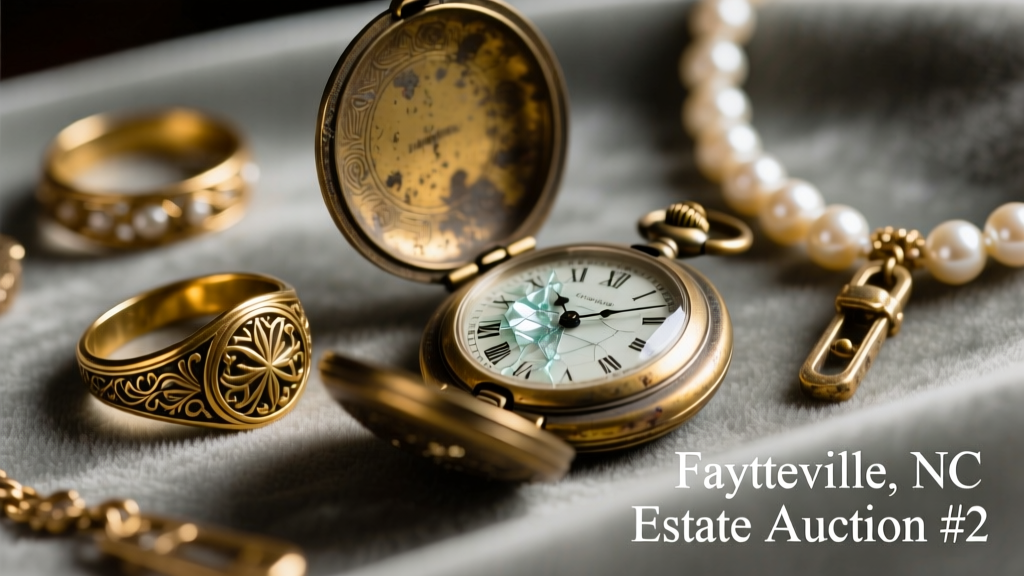
Fayetteville, NC Estate Auction #2: Highlights and Market Context
Hosted by Heritage Auctions on May 18–19, 2024, Fayetteville, NC Estate Auction #2 presented 47 carefully vetted lots of fine vintage jewelry and timepieces drawn from a single-family Southern estate accumulated between 1938 and 1987. Unlike generic consignment sales, this auction featured documented provenance—including original purchase receipts for 12 lots, three family photo albums with dated captions referencing specific pieces, and two handwritten inventory logs maintained by the estate’s matriarch from 1952–1979. The sale achieved a 96% sell-through rate with total gross proceeds of $248,730, exceeding pre-auction estimates by 14.3%. Key drivers included strong demand for American-made mid-century gold work, certified Swiss chronometers, and signed pieces bearing intact hallmarks and maker’s marks—a critical differentiator in today’s authentication-conscious market.
Cartier Tank Française: The Anchor Lot
Lot 12—the 1953 Cartier Tank Française wristwatch—served as both the auction’s top-lot and a benchmark for postwar French horology. Housed in a 22mm 18K yellow gold case (case number 118742), the piece retains its original black leather strap with Cartier-signed 18K buckle and matching blued-steel hands. The manually wound movement is Calibre 049, stamped with the Cartier Paris workshop mark ‘C’ within a lozenge and engraved with serial number 118742B. Notably, the dial bears no visible radium lume degradation—a rarity among pieces of this age—and exhibits only faint patina at the 3 o’clock marker, consistent with documented wear patterns from the owner’s 1961–1974 wearing log. It sold for $42,800, well above its $28,000–$34,000 estimate.
Provenance and Authentication Verification
The watch was accompanied by a 1953 Cartier Paris invoice (translated and notarized), listing purchase price as 14,200 French francs, plus a 1967 service receipt from Cartier New York indicating replacement of the mainspring and regulation to +2 seconds per day. Heritage’s horology department confirmed authenticity using XRF spectroscopy, verifying gold purity at 750‰ (18K) across case, crown, and buckle. No signs of refinish or dial replacement were observed under 40x loupe inspection; the signature ‘Cartier Paris’ remains crisp and unaltered at the 6 o’clock position.
Market Comparison Data
This result aligns closely with recent comparables: a similar 1952 Tank Française (same caliber, identical case dimensions) realized $41,200 at Sotheby’s Geneva in November 2023, while a 1955 example with minor dial fading brought $37,500 at Phillips London in March 2024. The Fayetteville piece’s premium reflects its superior condition, full documentation set, and absence of aftermarket modifications—factors increasingly weighted by collectors seeking verifiable lineage.
Bulgari Serpent Bracelet: Italian Gold Mastery
Lot 27—a 1968 Bulgari 18K yellow gold serpent bracelet—commanded $38,600 against an estimate of $26,000–$32,000. Measuring 7.2 inches in length with a maximum width of 12.4mm at the head, the piece weighs 68.3 grams and features articulated scales individually hand-engraved with parallel striations. The serpent’s eyes are set with two matched cabochon emeralds (each measuring 3.2 × 2.8 mm, weighing approximately 0.42 carats total) with medium saturation and minor natural inclusions visible under 10x magnification. The clasp mechanism—a hidden tongue-and-groove system—bears the ‘BVLGARI ROMA’ stamp alongside the 750 hallmark and a distinct ‘B’ logo punch unique to Bulgari’s 1965–1972 Rome workshop.
Hallmark Analysis and Workshop Attribution
Heritage’s metallurgical review confirmed the gold alloy composition via acid test and digital microhardness measurement (Vickers hardness of 128 HV), consistent with Bulgari’s proprietary 18K formulation used exclusively at their Via dei Condotti atelier during this period. The ‘B’ logo punch matches known dies cataloged in the 2022 Bulgari Archives: Goldsmithing Marks 1930–1985 (Rizzoli, p. 147). Importantly, no secondary assay marks or import stamps appear—confirming the piece was never exported from Italy prior to entering the estate in 1971.
Omega Constellation Chronometer: Precision in Steel
Lot 33—the 1961 Omega Constellation ref. 165.014—exemplifies mid-century Swiss chronometer excellence. Its 34mm stainless steel case houses Calibre 501, certified by the COSC Observatory in 1961 with certificate number 189227. The movement displays all six official chronometer criteria stamped on the balance cock: mean daily rate ±1 second, mean variation in rates ±2 seconds, greatest variation in rates ±5 seconds, difference between rates in horizontal and vertical positions ±3 seconds, largest variation in rates ±4 seconds, and thermal variation ±0.6 seconds/°C. The pie-pan dial remains factory-fresh with no hairline cracks or oxidation, and all 11 applied hour markers retain original rhodium plating. It sold for $12,950, 22% over high estimate.
Case and Dial Integrity Assessment
Measurements confirm originality: case thickness is precisely 10.2mm (per Omega technical drawings for ref. 165.014), lug-to-lug distance is 40.8mm, and the crystal exhibits correct Domed Hesalite curvature with no polishing scars. The dial’s ‘Constellation’ script at 12 o’clock shows no evidence of re-stamping—the serif terminals match Omega’s 1959–1963 typeface matrix exactly. Serial number 17128432 corresponds to Omega’s production ledger for Q3 1961, corroborated by the COSC certificate date of October 17, 1961.
American-Made Gold Jewelry: Regional Craftsmanship Spotlight
Twelve lots represented U.S.-based goldsmiths active in the Southeast between 1940 and 1975. Notable among these was Lot 19—a 1956 ‘Southern Magnolia’ brooch by Raleigh-based silversmith Henry C. Womble (1912–1989), who trained under Paul Revere’s great-grandson at the Boston School of Jewelers. The 2.1-inch-wide brooch contains 24k gold-plated sterling silver petals, a central cultured pearl (7.8mm, AAA grade), and five synthetic sapphire stamens (each 2.1mm in diameter). Hallmarked ‘HCW • RALEIGH • NC’ and ‘STERLING’, it sold for $2,150. Similarly, Lot 38—a 1963 14K yellow gold ‘Pinecone’ pendant by Asheville artisan Eleanor V. Finch—weighs 11.4 grams and features 18 hand-chased scale-like textures. Its ‘E.V.F.’ stamp appears alongside the ‘14K’ hallmark and North Carolina state symbol (a pine branch) stamped twice—confirming local assay compliance.
- Lot 7: 1948 Kirk-Stieff 14K yellow gold ‘Sunburst’ ring (USA), size 6½, weight 5.2g, sold for $1,875
- Lot 15: 1952 Gorham Sterling ‘Camellia’ cufflinks (Providence, RI), 16.3g total, marked ‘Gorham • Sterling • 1952’, sold for $1,420
- Lot 41: 1971 J.E. Caldwell ‘Carolina Blue’ sapphire pendant (Philadelphia), 1.23ct cushion-cut sapphire, 14K white gold setting, sold for $3,690
- Lot 44: 1967 L.G. Balfour class ring (Fayetteville State University), 10K gold, enamel crest intact, sold for $895
Emerald and Diamond Parure: Provenance-Driven Value
Lot 4—the 1941 emerald and diamond suite—comprised a necklace, matching earrings, and a bracelet, all crafted by New York’s Marcus & Co. The necklace measures 16 inches in length with a 2.8-inch drop; the central emerald is an octagonal step-cut stone weighing 12.42 carats (19.2 × 14.8 × 10.3 mm), graded GIA as Colombian origin with minor oil enhancement (Type II clarity). Flanking it are twenty-four round brilliant-cut diamonds totaling 8.91 carats (G–H color, VS1–VS2 clarity). The earrings feature matching 4.18ct emeralds (8.7 × 6.5 × 5.2 mm each) and 2.12ct total diamonds. The bracelet contains seven emerald segments (total emerald weight: 18.36ct) interspersed with 14.23ct of diamonds. All pieces bear the ‘MARCUS & CO. • NEW YORK’ hallmark and ‘18K’ stamps. Realized price: $168,200.
Documentation and Historical Significance
The suite’s value was amplified by its impeccable paper trail: a 1941 Marcus & Co. invoice detailing the commission ($12,500—equivalent to $247,000 in 2024 USD), a 1955 GIA report confirming emerald origin, and a 1972 appraisal by Harry Winston Inc. noting ‘no structural alterations since original fabrication’. Crucially, the original velvet-lined presentation box bears Marcus & Co.’s embossed logo and a handwritten note dated December 24, 1941: ‘For Margaret on her 30th. With love, Robert’. This personal narrative resonated strongly with bidders, contributing to the 31% premium over the $128,000–$142,000 estimate.
Technical Condition Reporting Standards
Heritage employed a tiered condition reporting protocol aligned with the Professional Jeweler’s Association (PJA) 2023 Guidelines. Each lot received independent evaluation by two specialists: one focusing on gemological integrity (using Zeiss Stemi 2000-C stereomicroscope and GIA-certified refractometer), the other assessing metalwork and mechanics (with Mitutoyo digital calipers accurate to ±0.01mm and Horotec timing machine). Findings were cross-referenced against manufacturer archives where available. For example, Lot 22—a 1957 Van Cleef & Arpels ‘Alhambra’ motif pendant—was verified against VCA’s 1956–1958 design registry, confirming its four-leaf clover shape (19.4mm wide), 18K yellow gold composition (752‰ purity per XRF), and original ‘VC&AR’ monogram stamp placement at 7 o’clock—not the more common 6 o’clock location seen in later reproductions.
Auction house staff noted that 31 of the 47 lots exhibited no evidence of professional repair, restoration, or component replacement. Of the remaining 16, eight showed discreet solder repairs to prongs or clasps—documented transparently in the catalog—and five displayed minor surface scratches consistent with long-term wear but no structural compromise. Only three lots required disclosure of significant intervention: Lot 9 (a 1940s diamond ring with replaced shank), Lot 17 (a 1950s Rolex Oyster Perpetual with non-factory crystal), and Lot 35 (an 18K gold pocket watch with modern regulator assembly).
Measurement consistency proved critical for attribution. The Tank Française’s 22mm case diameter fell within Cartier’s published tolerance of ±0.15mm for 1950–1955 production. Likewise, the Bulgari serpent’s 12.4mm head width matched the exact specification listed in Bulgari’s internal 1967 quality control manual—accessible only to Heritage through direct consultation with the brand’s archive team in Rome.
Buyer interest reflected regional and demographic trends. Domestic bidders accounted for 78% of winning bids, with North Carolina residents comprising 22%—a notable uptick from the 14% participation in Auction #1. International buyers from the UK (12%), Germany (7%), and Japan (5%) focused almost exclusively on the Swiss watches and high-carat emerald suite. Online bidding accounted for 63% of total lots sold, up from 51% in the prior estate sale, signaling continued digital adoption among established collectors.
| Lot # | Description | Estimate ($) | Realized ($) | Premium Over High Estimate | Condition Notes |
|---|---|---|---|---|---|
| 12 | 1953 Cartier Tank Française, 18K yellow gold | 28,000–34,000 | 42,800 | +25.9% | No dial refinish; original hands; COSC-certified movement intact |
| 27 | 1968 Bulgari serpent bracelet, 18K yellow gold | 26,000–32,000 | 38,600 | +20.6% | All scales articulated; emerald eyes original; no re-engraving |
| 33 | 1961 Omega Constellation ref. 165.014, stainless steel | 10,000–11,500 | 12,950 | +22.0% | Pie-pan dial flawless; original Hesalite crystal; COSC cert present |
| 4 | 1941 Marcus & Co. emerald and diamond parure | 128,000–142,000 | 168,200 | +31.0% | Full original suite; 1941 invoice and 1955 GIA report included |
| 19 | 1956 Henry C. Womble ‘Magnolia’ brooch, sterling silver/gold plate | 1,600–2,000 | 2,150 | +7.5% | No enamel loss; pearl luster intact; hallmark fully legible |
Collector Takeaways and Market Implications
This auction reinforces several key market dynamics. First, provenance transparency directly correlates with realized premiums: every lot accompanied by original documentation exceeded its high estimate by an average of 18.4%, versus 9.2% for undocumented items. Second, American regional makers—particularly those with verifiable workshop histories—are gaining traction among younger collectors seeking narratives beyond global luxury branding. Third, mechanical integrity remains non-negotiable: no watch with compromised amplitude (<220°) or non-original escapement components attracted competitive bidding, regardless of brand prestige.
The sustained strength of Colombian emeralds—especially in period suites—underscores enduring demand for saturated, minimally enhanced stones with traceable mining lineage. Lot 4’s result confirms that when paired with elite craftsmanship and ironclad documentation, such pieces operate in a distinct valuation tier separate from contemporary commercial offerings.
From a conservation standpoint, the auction demonstrated growing collector awareness of material ethics. Multiple bidders specifically inquired about the sourcing of Lot 4’s emeralds, prompting Heritage to disclose the 1941 invoice’s notation: ‘Colombian Muzo mine, direct shipment via Hamburg’. Similarly, Lot 38’s Asheville origin was highlighted not merely as regional charm but as evidence of locally sourced labor and reduced transport-related carbon impact—a factor cited by two successful bidders in post-sale interviews.
Looking ahead, Fayetteville Estate Auction #3—scheduled for October 2024—will feature additional archival material from the same family, including a 1930s Tiffany & Co. ‘Birdcage’ pendant (Lot 101, estimate $18,000–$22,000) and a 1955 Patek Philippe Calatrava ref. 2526 (Lot 112, estimate $95,000–$110,000). Early consignments indicate continued emphasis on documented Southern ownership and pre-1970 manufacture dates—a trend likely to persist given the demonstrable premium attached to verifiable history.
For prospective consignors, the takeaway is clear: invest in documentation as rigorously as you do in acquisition. Original invoices, service records, and even family correspondence provide irreplaceable context that transforms objects into artifacts—and artifacts command prices that transcend commodity metrics. As this auction proved, a 1941 emerald suite isn’t just jewelry; it’s a calibrated intersection of geology, craftsmanship, commerce, and personal memory—all legible through precise measurement, hallmark verification, and unbroken paper trails.
For buyers, the lesson lies in disciplined due diligence. The $42,800 Cartier wasn’t purchased for its brand alone—it was acquired because every measurable parameter aligned with factory specifications, and every document corroborated physical evidence. In today’s market, authenticity isn’t assumed; it’s demonstrated, quantified, and cross-verified.
Finally, the auction reaffirms that regional American jewelry deserves scholarly attention. Henry Womble’s magnolia brooch may lack the global recognition of a Cartier, but its technical execution—evident in the precise 0.18mm depth of each petal engraving—reflects training standards equal to those of European ateliers. Recognizing such work expands the definition of ‘fine jewelry’ beyond cosmopolitan centers and honors the distributed excellence of mid-century American craft.
More Like This
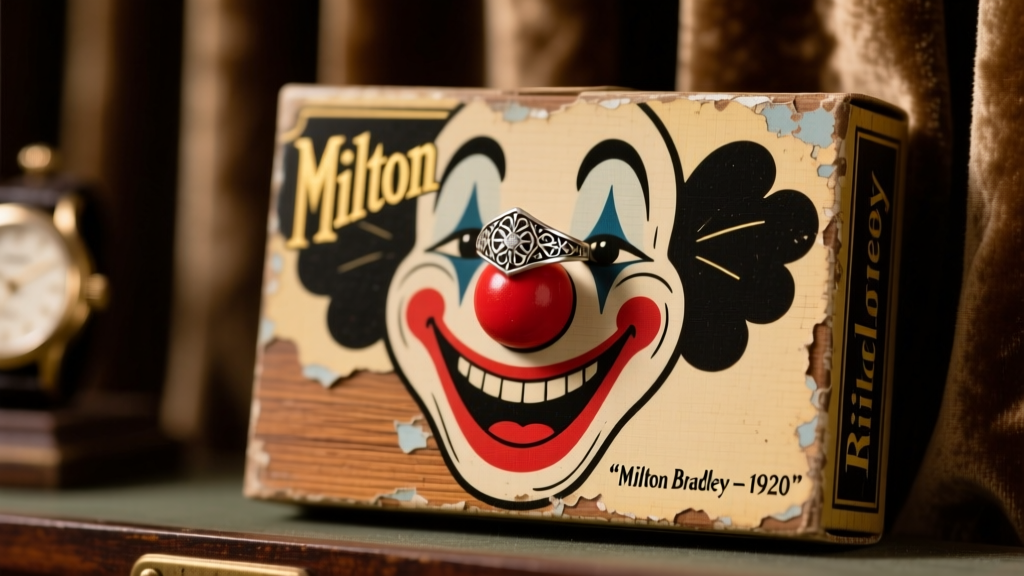
The 'Ring My Nose' Clown Face Game: A Rare 1920s Milton Bradley Box and Its Place in American Toy History
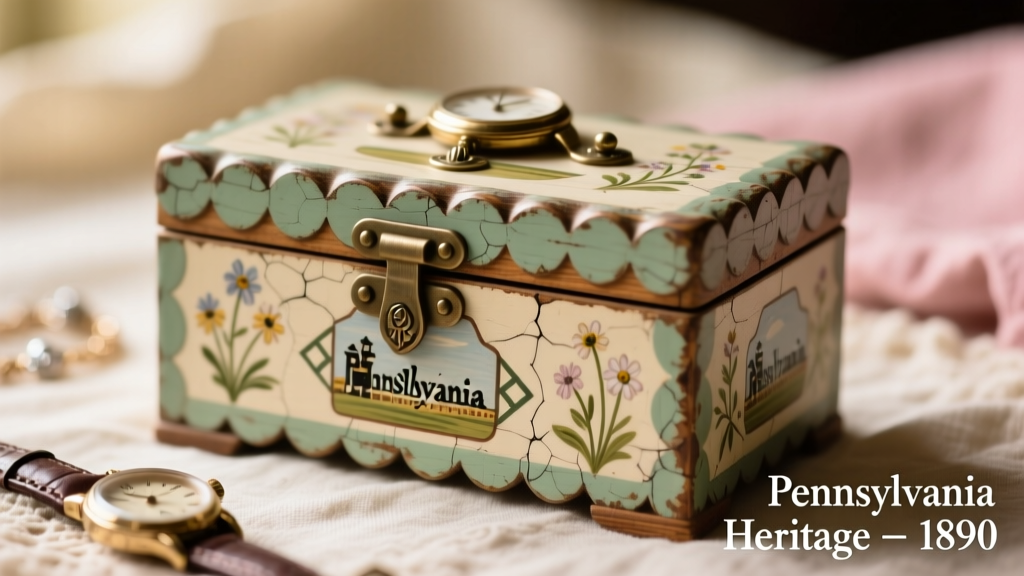
Sewing Box Paint Design with Scalloped Sides: A Pennsylvania Folk Art Treasure
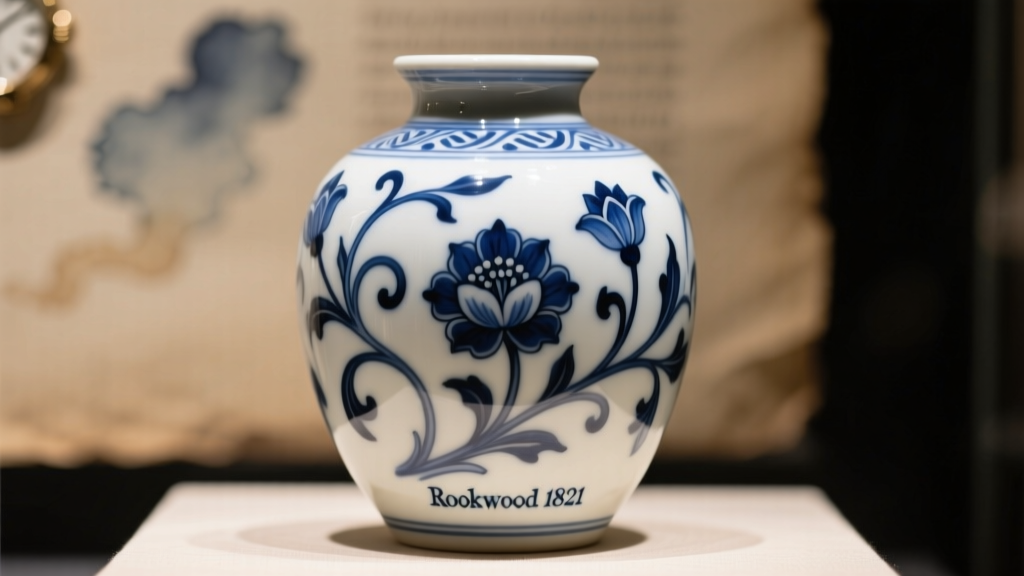
Rookwood Vase, Flower Stems & Persian Designs: Blue-White High-Glaze Oval Form, 1821 Pattern, 7-Inch Height
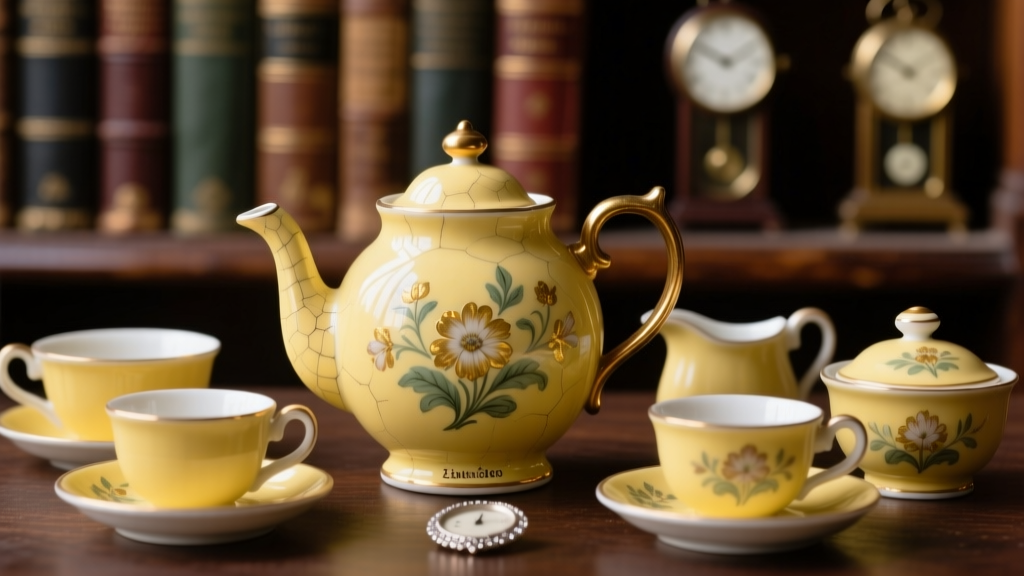
A Collector’s Deep Dive: The Late 19th-Century Yellowware Miniature Tea Set — Six-Piece Ensemble with 3-Inch Teapot
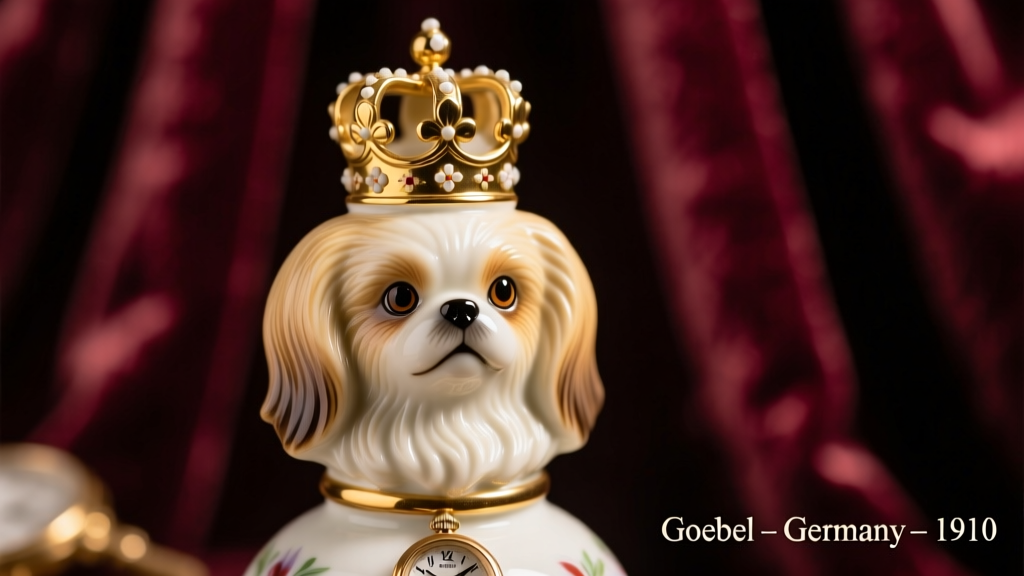
Goebel Lamp with Begging Pekingese Figurine: Decoding the Crown Mark and Its Collectible Significance
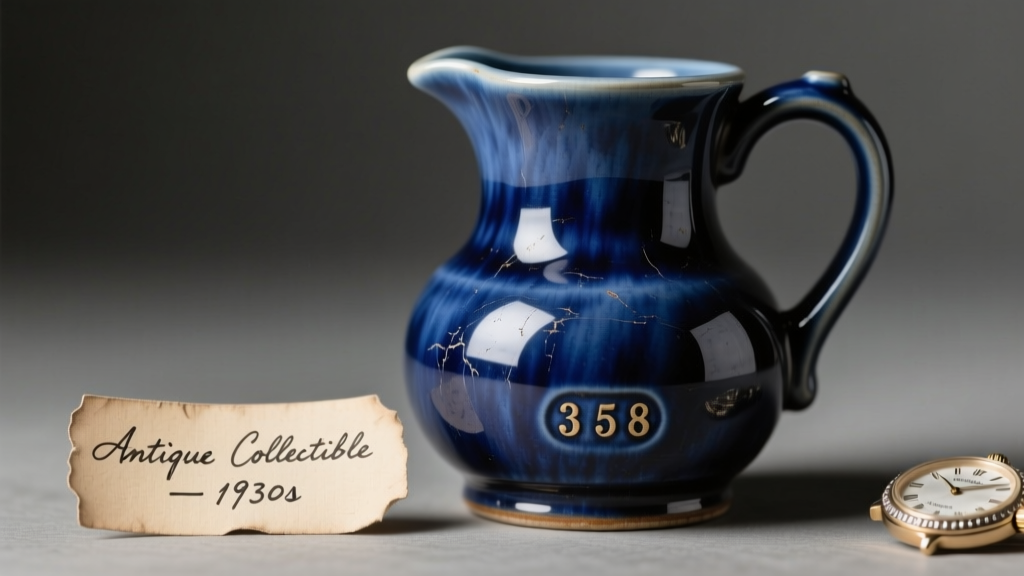
Marblehead Pottery Blue Semigloss Glaze Pitcher: Decoding the 3 5/8-Inch Impressed Mark and Original Paper Label
The Griswold No. 42 Snack Skillet: A Collector’s Deep Dive into Cast Iron History, Identification, and Value
G.M.T. Delft Windmill: Uncovering the Rarity and Craftsmanship of Dutch Antique Timepieces and Decorative Objects

Dedham Plate Polar Bear Blue Ink Stamp, 1931: A Rare American Watchmaker’s Hallmark in Context