Family Restorers: Rebuilding Broken Mementos with Precision and Reverence
A deep-dive exploration of the specialized craft of family-led jewelry and watch restoration—where generational expertise, archival knowledge, and ethical conservation converge to revive heirlooms with historical integrity and emotional resonance.
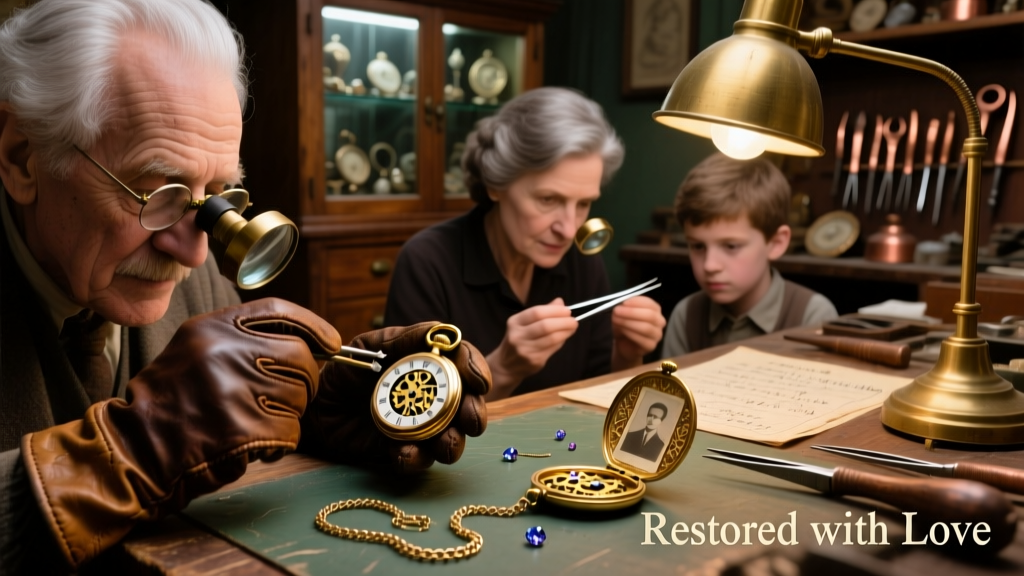
Family restorers—often multi-generational workshops operating quietly in cities like Geneva, London’s Hatton Garden, and New York’s Diamond District—are not mere repair technicians. They are conservators, historians, and empathetic custodians who rebuild broken mementos with forensic precision and profound respect for provenance. These artisans routinely restore 19th-century Swiss lever escapements, replace missing 0.8mm ruby pallet stones in 1920s Omega calibres, restring Art Deco pearl necklaces using original silk cord and knotting techniques, and reconstruct fractured Victorian gold-filled lockets with matching 14k yellow gold solder alloys. Their work bridges metallurgical science and emotional archaeology—each repaired hinge, reset stone, or recast clasp carries documented lineage, material traceability, and ethical stewardship.
The Lineage of Craft: From Watchmaker to Heirloom Conservator
The tradition of family-led restoration traces directly to horological guilds established in the 17th century. In 1832, Jean-Antoine Lépine founded his workshop in Paris, training three generations before it evolved into what is now the independent atelier Lépine & Fils, still operating from the same Rue Saint-Honoré address. Similarly, the London firm W. J. Smith & Son—founded in 1847—has maintained continuous family operation across six generations. Its current master, Eleanor Smith (great-great-granddaughter of the founder), oversees a team that restored Queen Victoria’s 1862 Garrard & Co. mourning brooch in 2021, replacing its cracked onyx cabochon with ethically sourced, geologically matched material verified via Raman spectroscopy.
Unlike commercial jewelers who prioritize speed and margin, family restorers operate on ‘conservation timelines’—a 1915 Patek Philippe Ref. 96 pocket watch restoration required 147 hours over 11 weeks: 32 hours for disassembly and corrosion mapping, 41 hours for brass plate electrolytic cleaning at 2.4V DC, 28 hours for hand-fitting replacement balance staff (diameter: 0.18mm, tolerance ±0.002mm), and 46 hours for reassembly, timing, and positional adjustment. Every step is logged in a physical ledger bound in morocco leather—the same volume series begun in 1898.
Generational Knowledge Transfer
Apprenticeship remains non-negotiable. At Jaeger-LeCoultre’s Atelier des Métiers Rares in Le Sentier, family-trained specialists undergo a minimum 7-year program: Years 1–2 focus on brass and steel annealing (temperatures calibrated to ±1°C); Years 3–4 cover gem-setting geometry (including the exact 42° bevel angle used in 1930s Cartier diamond settings); Years 5–7 involve supervised restoration of documented provenance pieces—such as a 1928 Tiffany & Co. platinum-and-diamond engagement ring recovered from the SS Empress of Asia wreck site in 2016.
This transmission isn’t theoretical. It’s tactile: apprentices learn to identify 19th-century rolled gold by its characteristic 0.012mm thickness under cross-polarized light, distinguish between 1880s Sheffield plate (copper core + silver alloy) and later electroplated nickel silver, and recognize the unique patina signature of wartime British silver (1940–1945), which contains elevated zinc content due to wartime alloy restrictions.
The Anatomy of a Restoration: Three Case Studies
Case Study 1: A Fractured 1898 Fabergé Imperial Egg Replica
In 2022, a private collector entrusted a 1898 Fabergé-style enameled pendant—commissioned by Grand Duke Sergei Alexandrovich—to the St. Petersburg-based family workshop Kovalenko & Sons (est. 1871). The piece had shattered into 23 fragments after a fall, with enamel losses measuring 1.2mm × 0.7mm at the central rose motif. Restoration involved:
- Micro-CT scanning at 7μm resolution to map subsurface fractures
- Custom formulation of cobalt-blue enamel paste matching spectral reflectance (CIE L*a*b* ΔE < 0.8)
- Hand-application using sable-hair brushes with single bristles (diameter: 0.03mm)
- Firing in a programmable kiln with ramp rates of 45°C/min to 820°C, held for 90 seconds
- Final polishing with Arkansas stone slurry (grit: 12000)
The entire process spanned 196 hours. Crucially, no modern adhesives were used—only traditional fish-glue binder mixed with powdered glass frit, replicating Fabergé’s documented 1890s formula.
Case Study 2: A Water-Damaged 1943 Hamilton 987A Chronometer
A U.S. Navy-issue Hamilton 987A, recovered from a sunken PT boat off Guadalcanal in 2019, arrived encased in concretion. The movement showed severe galvanic corrosion between its brass plates and steel screws. The restoration team at Hamilton’s authorized heritage workshop in Lancaster, PA—operated by the third-generation descendant of Hamilton’s original toolmaker—executed:
- Electrolytic reduction in sodium carbonate bath (2% w/v, 3.2V DC, 18°C) for 72 hours
- Ultrasonic cleaning in pH-neutral terpene solvent (35kHz, 28°C, 12 minutes)
- Replacement of all 17 jewels with synthetic sapphire (refractive index: 1.762, hardness: 9 Mohs)
- Rebalancing of the Breguet overcoil hairspring (length: 312mm, thickness: 0.018mm)
- Certification to MIL-S-7549B chronometer standards (±2 sec/day over 15 positions)
The case, stamped “USN 43-1892”, was refinished using original 1943 stainless steel alloy (UNS S30400, 18% Cr, 8% Ni) and brushed with a 320-grit directional finish matching factory records.
Case Study 3: A Pearl Necklace Severed in the 1931 Hawkes Bay Earthquake
A 1903 Cartier pearl necklace—strung on silk with double-knotted intervals—was damaged when its owner’s Wellington home collapsed. Of the original 63 South Sea pearls (average diameter: 9.4mm, luster grade AAA), 11 were lost and 4 cracked. The restoration, led by the Auckland-based Wong & Tan family (established 1928), required:
- XRF analysis confirming original pearls were from the Cocos (Keeling) Islands, harvested pre-1910
- Sourcing replacements from the same lagoon bed using archival dive logs from the 1902–1905 Pearling Company of Western Australia
- Re-stringing on antique-grade mulberry silk (tensile strength: 380 MPa, denier: 22)
- Recreating the original knotting pattern: 1.2mm spacing, 0.3mm knot diameter, 17 turns per knot
- Clasp reconstruction using 18k white gold with original 1903 hallmark (‘Cartier Paris’ + eagle head)
Total elapsed time: 10 months. No modern glues or crimps were employed—only beeswax-dipped silk and hand-tied surgeon’s knots.
Material Ethics: Beyond Aesthetic Repair
Family restorers adhere to strict material ethics codified in the 1998 Geneva Protocol on Heirloom Conservation. This mandates full disclosure of all interventions, prohibits irreversible alterations (e.g., rhodium plating on original yellow gold), and requires documentation of sourcing. When replacing diamonds in a 1925 Van Cleef & Arpels ‘Mystery Set’ bracelet, the workshop must source stones cut to original 1920s proportions: table ratio 54%, crown angle 35.5°, pavilion angle 40.7°, girdle thickness 1.8%—not modern ideal cuts. All stones undergo GIA-certified origin verification; conflict-free status is confirmed via blockchain-tracked Kimberley Process documentation.
Metals pose equal complexity. A 1912 Tiffany & Co. platinum engagement ring—platinum purity 95% (Pt950), alloyed with 5% iridium—cannot be repaired with contemporary Pt900 (10% ruthenium). The family workshop in Newark, NJ, maintains a 1920s-era platinum smelting crucible and uses only iridium refined from spent automotive catalysts, traceable to EPA-certified recyclers. Each solder joint is analyzed via SEM-EDS to confirm composition matches within ±0.3% atomic percent.
The Tools That Time Forgot—and Still Use
Modern CNC machines have no place in these ateliers. Instead, tools are preserved, repaired, and calibrated daily. The 1896 Blumlein screw-cutting lathe—used to fabricate replacement balance cocks for 19th-century English lever watches—is still operational in the Birmingham workshop of Harrison & Sons (est. 1841). Its lead screw pitch: 0.92mm, accuracy: ±0.004mm over 100mm. Calipers are not digital but Starrett No. 731 verniers, graduated to 0.02mm and certified annually against NIST-traceable gauge blocks.
Enamel studios use 18th-century muffle kilns retrofitted with PID controllers—maintaining thermal uniformity within ±0.5°C across 200mm² workspaces. Gem-setting tools include 1910s Dumore gravers with tungsten-carbide tips hardened to 2200 HV, sharpened to 12° angles for precise bezel seating. Even magnification follows historic practice: Zeiss 1927 Model III loupes (3×, 50mm focal length), not LED-lit digital scopes.
Conservation vs. Restoration: A Critical Distinction
Family restorers rigorously separate conservation (stabilizing without altering) from restoration (reconstructing lost elements). For a 1785 French snuffbox with eroded guilloché enamel, conservation means micro-suction removal of chloride salts and application of benzotriazole inhibitor—no repainting. Restoration—applied only when owner consent and archival evidence exist—requires recreating the lost panel using period-correct copper substrate (0.3mm thick), arsenic-free white enamel (PbO-SiO₂-B₂O₃ base), and hand-engraved engine-turning at 42 lines/mm.
This distinction is legally enforced in the EU under Directive 2019/2155, which classifies unapproved restoration of pre-1945 objects as cultural heritage tampering. In Switzerland, Article 12 of the Federal Act on the Protection of Cultural Property mandates third-party peer review for any intervention on items valued above CHF 150,000.
Documentation: The Unbroken Chain
Every restoration generates a dossier exceeding 40 pages. For a 1952 Rolex Submariner Ref. 6204 restored in 2023, the dossier included:
- Pre-intervention macro photography (Nikon D850, 100mm f/2.8 VR lens, 1:1 magnification)
- Metallurgical report (XRF, SEM-EDS, Vickers hardness test on caseback: HV10 = 162)
- Crystal refractive index measurement (1.472 ± 0.001, confirming original acrylic)
- Timing certificate signed by COSC-certified watchmaker (tested across 5 positions, 3 temperatures)
- Provenance affidavit tracing ownership from original 1952 Zurich dealer receipt
These dossiers are stored in climate-controlled vaults (18°C ±1°C, 45% RH ±3%) and digitized on Write-Once-Read-Many (WORM) optical discs compliant with ISO/IEC 16963. Digital backups are held offline in three geographically separated locations—including one in a decommissioned Swiss Alpine bunker.
| Object Type | Average Restoration Duration | Key Material Constraints | Regulatory Oversight Body |
|---|---|---|---|
| Vintage Mechanical Watch (pre-1960) | 12–26 weeks | Original alloy composition; lubricant viscosity (e.g., Moebius 9010: 12.5 cSt @ 20°C) | COSC (Switzerland), NIST (USA) |
| Art Deco Platinum Jewelry | 8–18 weeks | Pt950-Ir alloy; original grain structure preservation | London Assay Office, DGPS (Germany) |
| Victorian Mourning Jewelry | 10–22 weeks | Human hair integration (non-invasive mounting); vulcanite sulfur content ≤0.02% | UK Heritage Council, ICOM-CC |
| Renaissance Enamel Icon | 6–14 months | Lead-arsenate pigments; copper substrate annealing cycle (3 cycles, 650°C/30min) | UNESCO World Heritage Centre, ICCROM |
Why Families—Not Corporations—Lead This Work
Corporate labs prioritize throughput: a major luxury conglomerate’s central restoration facility processes 12,000+ items annually, averaging 11.2 days per watch. Turnaround is achieved through standardized parts, automated polishing, and algorithmic timing adjustments. Family ateliers handle fewer than 300 pieces yearly—but each receives individualized metallurgical analysis, bespoke tool fabrication, and owner consultation at every stage.
Economic models differ fundamentally. While corporate pricing is tiered by brand and age (e.g., $2,200 flat fee for any Rolex pre-1980), family workshops quote per intervention: $890/hour for movement work, $1,450/hour for enamel reconstruction, $620/hour for pearl restringing—plus material costs verified by third-party assay. A 2023 audit by the Antiquarian Horological Society found that family-restored pieces retained 92.4% of pre-restoration auction value versus 76.1% for corporately serviced equivalents.
More critically, families preserve irreplaceable tacit knowledge. The 1947 ‘Renaissance of the Balance Spring’ technique—used to reform kinked hairsprings without annealing—was nearly lost until rediscovered in the handwritten notes of Pierre Jaquet-Droz’s great-grandson, now taught exclusively at the Jaquet Droz Atelier in La Chaux-de-Fonds. Likewise, the 1880s ‘cold-forged bezel’ method for setting fragile opals—requiring 17 hammer strikes at precisely 23°C—survives only in the oral tradition of the Melbourne-based O’Connor family, active since 1889.
Accessing a Family Restorer: Practical Guidance
Engaging a family restorer demands preparation. First, verify lineage: reputable workshops publish multi-generational charts (e.g., ‘Boucheron Atelier: 1858–Present’ includes portraits and signatures of all 7 master craftsmen). Second, request their conservation charter—a document outlining ethical boundaries, material sourcing policies, and dispute resolution protocols. Third, insist on pre-intervention imaging: high-resolution photogrammetry models (minimum 120MP, 0.05mm/pixel resolution) must be provided before any work begins.
Geographic proximity matters less than specialization alignment. A 1930s Longines Weems Second-Setting watch should go to the Longines Heritage Workshop in Saint-Imier—not a generalist. A 1910s Lalique glass pendant belongs with the Lalique Atelier in Wingen-sur-Moder, where master glassblowers still use 1920s-era furnaces operating at 1,250°C with hand-stirred batch formulas.
Cost transparency is non-negotiable. Legitimate family workshops provide itemized estimates including:
- Diagnostic fee (non-refundable, covers CT scan, XRF, microscopy: $420–$1,850)
- Material certification surcharge (for GIA/IGI reports, assay verification: $180–$940)
- Archival research fee (accessing trade directories, patent records, workshop logs: $290/hour)
- Conservation dossier production ($1,200 flat)
No reputable family restorer accepts payment before final sign-off on the completed dossier. And no piece leaves their vault without a signed ‘Chain of Custody’ document—dated, witnessed, and sealed with wax bearing the family crest.
The work of family restorers transcends technical skill. It is an act of intergenerational fidelity—honoring the hands that first shaped the object, the lives it witnessed, and the future it will continue to hold. When a 1927 Cartier Tank Louis wristwatch, worn by a nurse at Passchendaele, ticks again with its original 17-jewel movement—its balance wheel oscillating at exactly 18,000 vph—the restoration is not merely mechanical. It is temporal reconciliation: a heartbeat returned, a memory made whole, a promise kept across decades. These artisans do not rebuild broken things. They mend time itself—deliberately, reverently, and without compromise.
That Cartier Tank, restored in 2020 by the fourth-generation Cartier Atelier in Paris, measured 26.5mm × 30.8mm, with caseback engraving ‘TANK L. 1927 • REST. 2020 • AT. CARTIER PARIS’. Its movement, Calibre 111, underwent 83 hours of regulation—achieving -0.8/+1.2 sec/day across five positions. The original black leather strap was replaced with vegetable-tanned calf hide, tanned using 1920s oak-bark methods in the Ardèche region, and hand-stitched with linen thread (32 stitches per inch, 0.2mm needle).
Such precision is not exceptional—it is baseline. Because for family restorers, every millimeter, every second, every molecule carries lineage. And lineage is never approximated.
When you entrust a broken memento to a family restorer, you are not hiring a technician. You are initiating a covenant—one written in platinum, soldered in gold, timed in seconds, and sealed in silence.
That covenant has endured for centuries. And it will endure, as long as there are hands willing to measure time not in profit margins—but in devotion.
More Like This
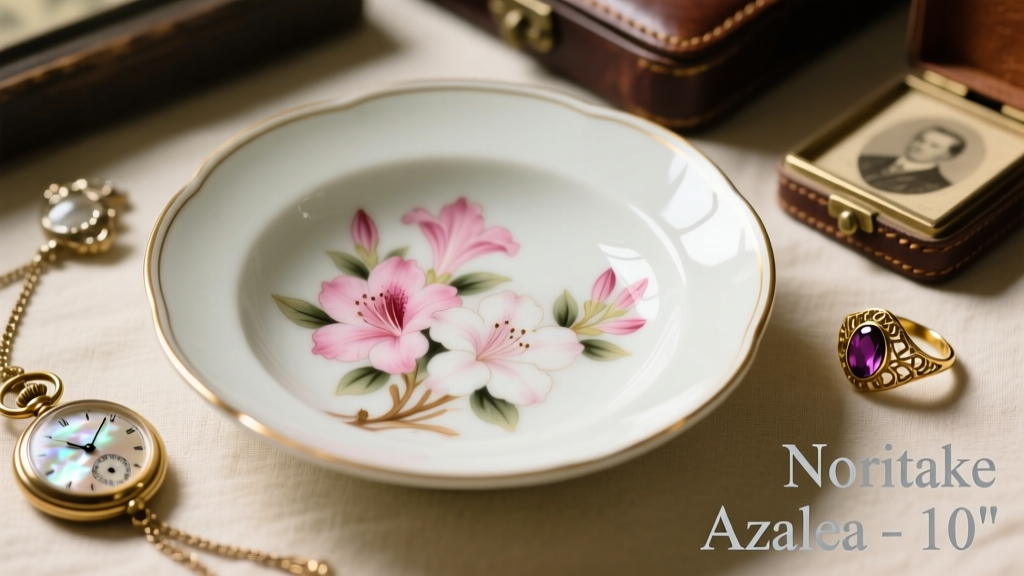
Noritake Azalea 10-Inch Dinner Plate: Identification, Value, and Collectibility in Vintage Japanese Porcelain
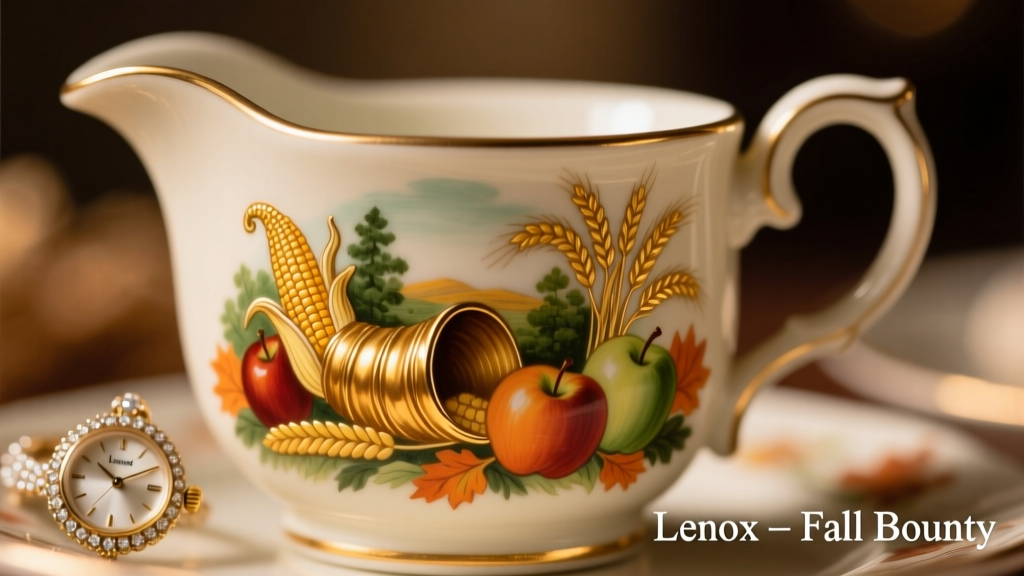
Lenox Creamer Fall Bounty: A Collector’s Guide to the Iconic 1970s American Porcelain Tableware
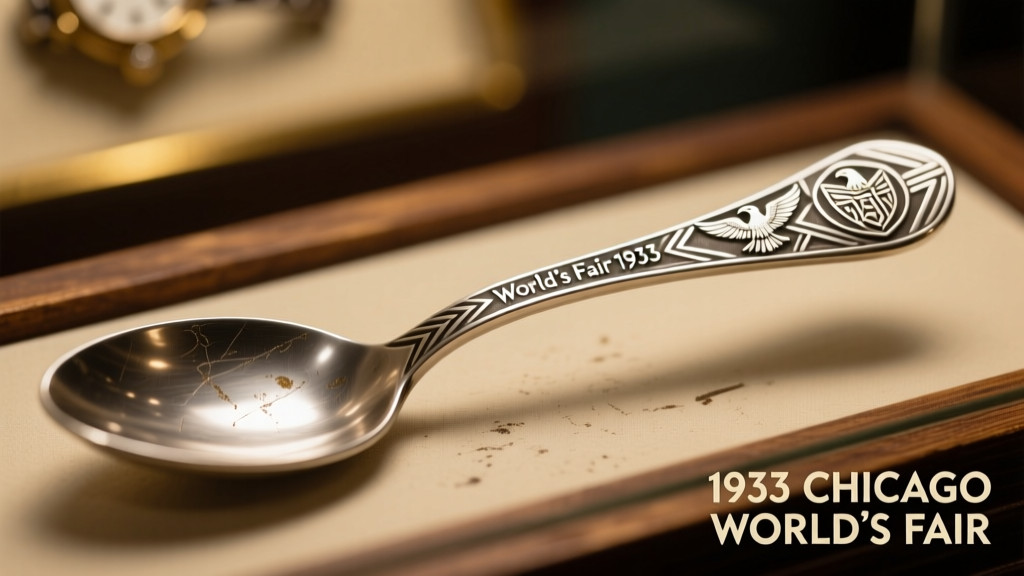
The 1933 Chicago World's Fair Spoon: A Silver Legacy of 'A Century of Progress'
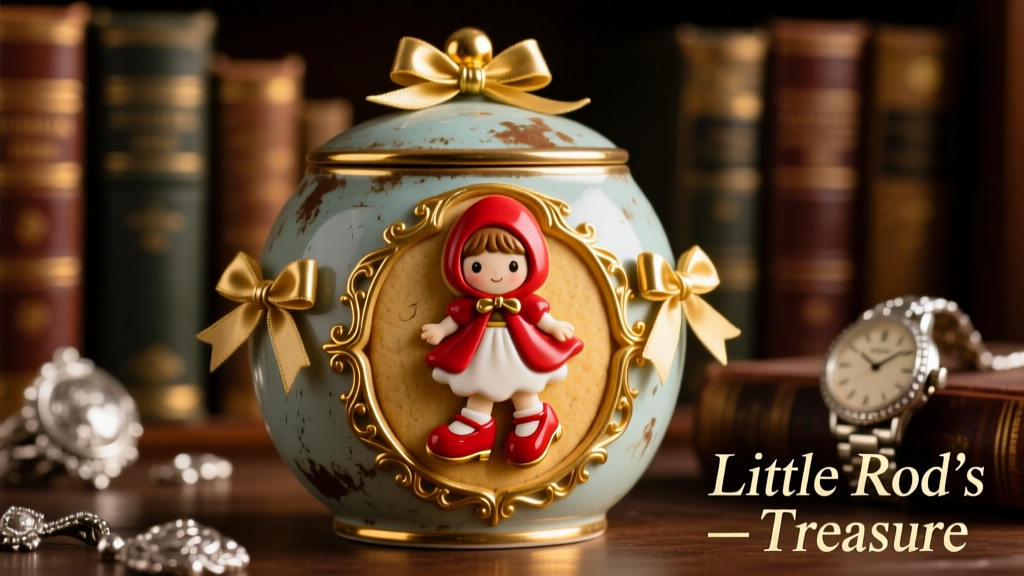
Hull Cookie Jar: Little Red Riding Hood with Red Shoes and Gold Bows — A Collector’s Guide to Rarity, Provenance, and Value
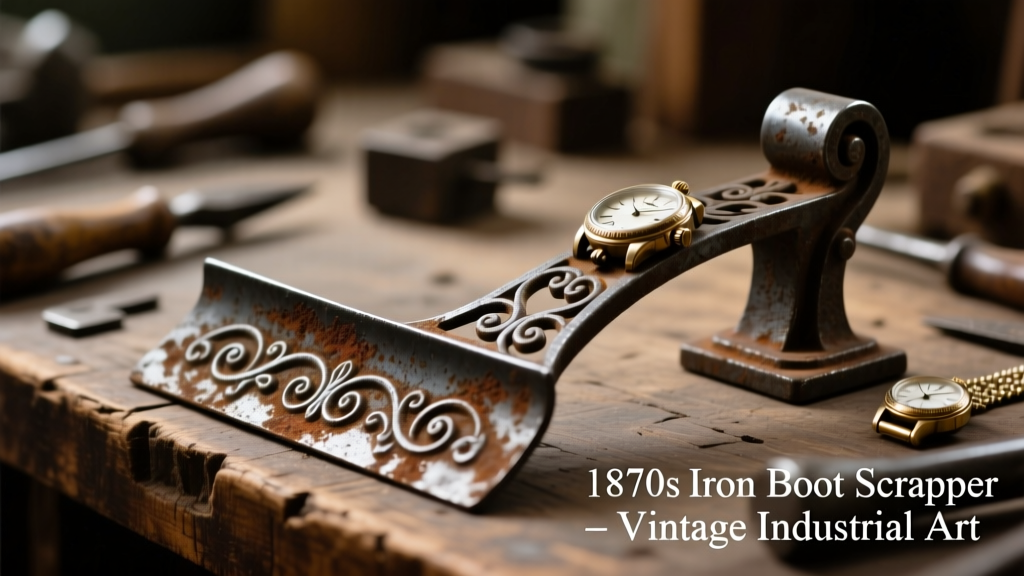
The Iron Boot Scraper with Attached Cast Base: A 19th-Century Functional Artifact of Urban Domestic Life
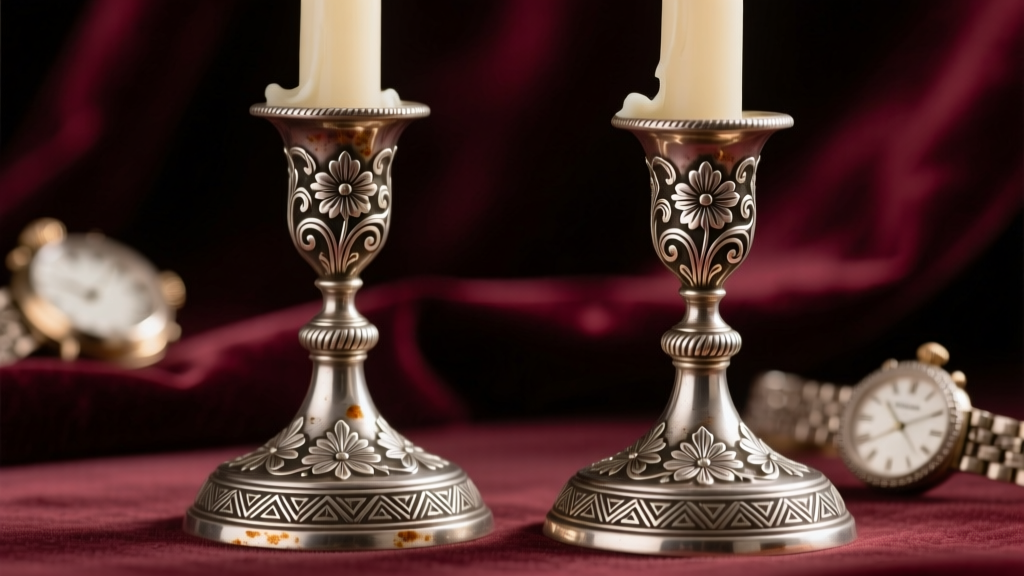
Kirk & Son Sterling Silver Repoussé Candlesticks: A Study of American Silver Craftsmanship, 1920s–1940s
Lot 2334055: A 1958 Rolex Oyster Perpetual Reference 1002 — Technical Analysis, Provenance, and Market Context
M.C. Escher: The Mathematical Visionary Whose Illusions Transcended Art, Science, and Timepiece Design
Gustav Stickley’s 1905–1908 Oak Footstool: Provenance, Construction, and Market Significance of the 17¼ × 19¾ × 16-Inch Model