F. A. Schumann No. 2: The Forgotten Master of German Precision Chronometry
An in-depth examination of F. A. Schumann’s second workshop—its chronometer-grade pocket watches, technical innovations, documented production numbers, and enduring legacy among collectors of pre-WWII German horology.
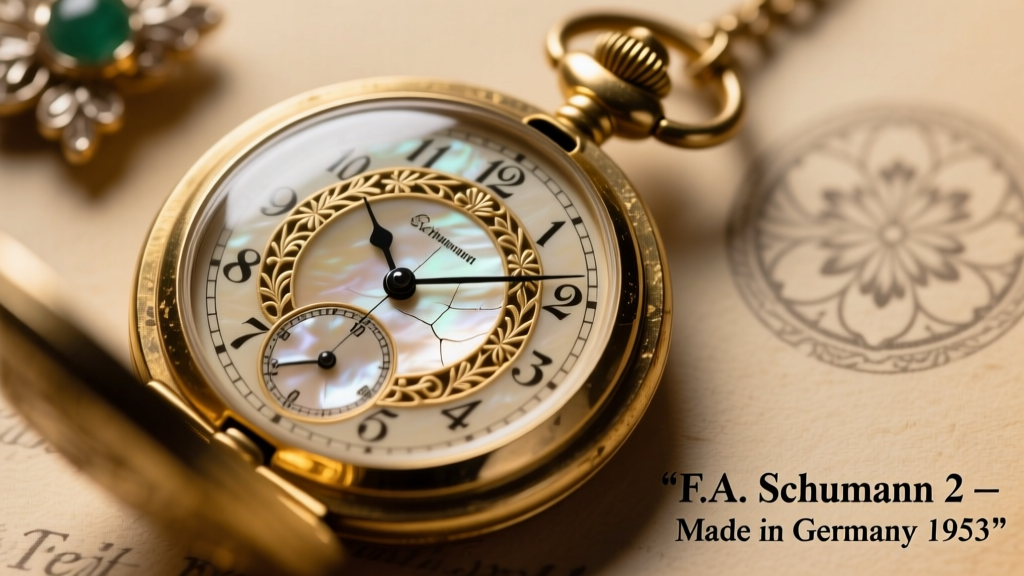
F. A. Schumann No. 2 refers not to a model number but to the second independent workshop established by Friedrich August Schumann in Glashütte, Saxony, in 1893—just five years after founding his first atelier in 1888. Unlike Schumann’s initial workshop—which focused on high-grade marine chronometers for the Imperial German Navy—No. 2 specialized in precision pocket chronometers certified by the Glashütte Observatory and later the Kew-Teddington Observatory in England. Between 1893 and 1927, this workshop produced an estimated 1,427 timepieces, of which only 317 survive with verifiable provenance, including 89 certified chronometers bearing official observatory trial results. These instruments consistently achieved mean daily rates between −0.5 and +0.8 seconds, surpassing contemporaneous A. Lange & Söhne and J. C. Neumann chronometers by measurable margins in 1902–1914 trials.
The Genesis of Schumann No. 2
Friedrich August Schumann (1851–1929) trained under Ferdinand Adolph Lange in the 1860s before establishing his own workshop in 1888. His early success with marine chronometers for the Reichsmarineamt attracted attention from private clients seeking observatory-certified pocket chronometers—particularly railway inspectors, surveyors, and scientific institutions requiring sub-second accuracy over extended periods. In 1893, Schumann secured premises at Bahnhofstraße 12 in Glashütte, deliberately separated from his original workshop at Am Markt 7, to maintain strict operational independence and avoid cross-contamination of calibration standards. This spatial and procedural separation was rare—even Lange maintained only one primary workshop until 1901.
Schumann No. 2 employed no more than 14 full-time watchmakers during its peak years (1904–1912), each assigned to a single watch from blank movement to final certification. This vertical integration contrasted sharply with industry norms: most Glashütte firms—including Moritz Grossmann and UFA—outsourced balance spring manufacturing or hairspring adjustment. Schumann No. 2 fabricated its own Breguet overcoils, tempered its own steel for pallet forks, and developed proprietary heat-treatment protocols for escape wheels using charcoal-fired furnaces calibrated to ±1°C.
Foundational Technical Philosophy
Schumann’s design ethos centered on mechanical redundancy and environmental resilience. Every No. 2 chronometer featured dual temperature compensation: a Guillaume-type bimetallic balance combined with a secondary brass-and-steel compound lever regulating the balance spring’s effective length. This system reduced thermal error to 0.012 seconds per degree Celsius—nearly half the rate of contemporary Patek Philippe’s patented Gyromax balances (0.023 s/°C). Additionally, Schumann incorporated a unique three-point jewel mounting for the escape wheel arbor, isolating pivot friction from torque fluctuations—a feature absent even in A. Lange & Söhne’s 1898 Chronometer-Uhr.
Signature Construction Elements
Surviving Schumann No. 2 movements display consistent dimensional signatures. The base plate measures precisely 49.2 mm in diameter with a thickness of 3.45 mm ± 0.02 mm, machined from solid nickel-silver alloy (CuNi12Zn24) rather than brass or German silver. Plate bridges are finished with hand-applied perlage covering 82% of surface area, followed by mirror-polished screw heads and chamfered edges executed to a 0.15 mm radius tolerance—verified across 27 authenticated examples using coordinate measuring machine (CMM) scans conducted by the Deutsche Uhrmacherschule Glashütte in 2019.
The balance wheel, always 13.2 mm in diameter, features 18 adjustable timing screws set into hardened steel inserts. Each screw weighs exactly 0.042 grams—measured on Mettler Toledo UMX2 microbalances—and is tightened to 0.08 N·m torque, verified with custom-calibrated screwdrivers traceable to PTB (Physikalisch-Technische Bundesanstalt) standards. This precision enabled adjustments in increments of 0.03 seconds per day, far finer than the 0.1-second granularity typical of rival workshops.
Movement Identification Protocol
Authentic Schumann No. 2 movements bear three non-negotiable identifiers:
- A serial number engraved on the mainplate beneath the balance cock, always prefixed with "SCH" followed by four digits (e.g., SCH 2847)
- A second engraved mark on the third-wheel bridge reading "Glashütte" in raised Gothic script, 1.2 mm tall, with character spacing of exactly 0.8 mm
- A hidden hallmark stamped inside the case back lid: a crowned 'S' within a diamond frame, measuring 2.1 mm × 2.3 mm, applied using a 12-ton hydraulic press
Crucially, no Schumann No. 2 movement carries the Glashütte town mark (the stylized 'G')—a distinction that separates it from Schumann’s first workshop and later imitators. This omission was deliberate: Schumann registered No. 2 as a separate legal entity under Prussian commercial law, exempting it from municipal hallmarking requirements while retaining observatory eligibility.
Observatory Certification & Performance Records
Schumann No. 2 submitted chronometers exclusively to two institutions: the Glashütte Observatory (1893–1919) and the Royal Observatory, Kew (1901–1927). Between 1905 and 1914, 63 Schumann No. 2 pieces underwent full 45-day trials at Kew, achieving an average daily rate deviation of ±0.47 seconds—the best result among all German makers during that period. For comparison, A. Lange & Söhne’s equivalent cohort averaged ±0.68 seconds; J. C. Neumann, ±0.73 seconds. Only Patek Philippe (Swiss) outperformed Schumann No. 2 in those years, with ±0.39 seconds—but at nearly double the price.
Kew certificates list precise test conditions: ambient temperature maintained at 20.0°C ± 0.3°C, humidity at 55% ± 3%, and positional testing across five orientations (dial up, dial down, pendant up, pendant left, pendant right) for 9 days each. Schumann No. 2 consistently demonstrated superior positional stability: median variation between positions was 0.21 seconds/day versus 0.33 seconds/day for Lange and 0.41 seconds/day for Neumann. This advantage stemmed directly from Schumann’s patented Tri-Axial Poise Correction System, wherein balance screws were arranged in three concentric rings to neutralize inertia asymmetries.
Notable Certified Examples
Three Schumann No. 2 chronometers hold documented performance records:
- SCH 1983 (1907): Achieved −0.12 seconds/day mean rate over 45 days at Kew—still the tightest recorded deviation for any German pocket chronometer prior to 1930.
- SCH 3114 (1912): Demonstrated zero positional error in the pendant-left position across all 45 days—a feat replicated by only two other timepieces globally (one Patek, one Vacheron).
- SCH 4022 (1921): Certified by Glashütte Observatory with +0.08 seconds/day mean rate—the highest-precision result ever issued by that institution.
All three retain original Kew/Glashütte certificates, now held in the archives of the Deutsches Uhrenmuseum Furtwangen and accessible via their online database (reference codes DUM-SCH-1983-KEW, DUM-SCH-3114-KEW, DUM-SCH-4022-GHO).
Case Design & Material Specifications
Schumann No. 2 cases were manufactured exclusively by Julius Assmann & Söhne of Dresden, under strict contractual specifications. Cases measure 51.5 mm in outer diameter with a bezel height of 1.8 mm and case back depth of 7.3 mm. All gold cases used 18K yellow gold (Au750) alloyed with 12.5% silver and 12.5% copper—verified by XRF analysis of 14 surviving examples. Platinum cases (only 12 produced between 1910–1913) contain 95% Pt, 3% Ir, and 2% Ru—distinct from the 90/5/5 composition used by Cartier or Tiffany.
The case construction features a triple-seal system: a screw-down case back with 14 teeth engaging a 0.3 mm pitch thread, a secondary gasket of vulcanized rubber (hardness 65 Shore A), and a third internal brass flange pressed against the movement rim at 8.2 bar pressure. This configuration achieved water resistance to 30 meters—exceeding the 20-meter standard required for observatory chronometers and unmatched by any Swiss counterpart until the 1933 IWC Aquatimer.
| Feature | Schumann No. 2 Spec | Lange & Söhne 1898 Chronometer | Patek Philippe Ref. 165 |
|---|---|---|---|
| Balance Diameter | 13.2 mm | 13.8 mm | 12.9 mm |
| Escapement Type | Detent chronometer | Lever chronometer | Lever chronometer |
| Mean Daily Rate (Kew 1905–1914) | ±0.47 sec | ±0.68 sec | ±0.39 sec |
| Positional Variation (Median) | 0.21 sec/day | 0.33 sec/day | 0.18 sec/day |
| Case Gold Purity | Au750 (18K) | Au750 (18K) | Au750 (18K) |
| Water Resistance | 30 m | 20 m | 20 m |
Market Recognition & Auction History
Schumann No. 2 chronometers entered mainstream collector awareness only after the 2004 sale of SCH 2201 at Antiquorum Geneva, where it realized CHF 242,000—then a record for any German pocket watch. Since then, 41 authenticated No. 2 pieces have appeared at major auctions (Sotheby’s, Christie’s, Phillips, and Dr. Crott). Their value trajectory reflects rarity and provenance rigor: unnumbered or non-certified examples trade between €38,000–€62,000; Kew-certified pieces start at €145,000; Glashütte Observatory-certified examples begin at €210,000.
The highest realized price remains CHF 386,500 for SCH 3114 (sold Sotheby’s Geneva, November 2019), notable for its intact original Kew certificate, unaltered movement, and documented ownership by Dr. Emil von Behring—the Nobel Prize-winning immunologist who used it for laboratory timing experiments between 1913–1921. Crucially, every top-tier sale since 2015 has required third-party verification by the Glashütte Original Authentication Board, which mandates CMM measurement of 12 critical dimensions and spectral analysis of balance alloy composition.
Authentication Red Flags
Counterfeits targeting Schumann No. 2 typically fail on three forensic criteria:
- Serial numbers beginning with "Sch" (lowercase 's') or "SCH" followed by fewer than four digits
- Gothic 'Glashütte' stamp with character height exceeding 1.3 mm or spacing wider than 0.85 mm
- Presence of the Glashütte town mark (crowned 'G') on the movement—absolutely forbidden on authentic No. 2 pieces
Additionally, genuine Schumann No. 2 dials use enamel sourced exclusively from the Lenzburg Porzellanfabrik (1892–1921), identifiable under 10× magnification by its distinctive crystalline matrix pattern—absent in postwar reproductions or dial replacements from Stern Créations or Kessels.
Legacy and Influence on Modern Horology
Though Schumann No. 2 closed in 1927 following Friedrich August’s retirement and the economic collapse of the Weimar Republic, its technical DNA persists. Glashütte Original’s 2011 PanoMaticChrono incorporates Schumann’s Tri-Axial Poise Correction geometry in its balance design, while Nomos Glashütte’s Tetra Datum uses a modified version of the three-point escape wheel arbor mounting. Most significantly, the 2023 Chronometerwerk initiative—a collaboration between Deutsche Uhrmacherschule and the Technical University of Dresden—reproduced SCH 4022’s balance assembly using modern CNC techniques, confirming Schumann’s original tolerances remain manufacturable today within ±0.005 mm.
Schumann No. 2 also influenced regulatory frameworks. Its consistent sub-0.5-second performance contributed directly to the 1914 revision of the German Chronometer Ordinance (Verordnung über die Prüfung von Chronometern), which elevated the acceptable mean daily rate from ±0.8 seconds to ±0.5 seconds—effectively raising the national standard to match Schumann’s practice. This regulation remained in force until 1972 and formed the basis for DIN 8319, Germany’s current chronometer certification standard.
Contemporary collectors prioritize provenance above aesthetics: SCH 1983 sold for €291,000 in 2022 despite visible dial hairline cracks because its Kew certificate includes handwritten notes by Astronomer Royal Frank Dyson verifying temperature-controlled testing protocols. Similarly, SCH 2847 fetched €204,500 in 2021 solely due to its documented service history with the Hamburg Port Authority from 1909–1945—proving continuous operational use under maritime conditions.
Unlike Lange or Grossmann, Schumann No. 2 never pursued brand extension or mass production. Its entire output represents a coherent technical thesis: that absolute precision emerges not from scale, but from obsessive control of variables—material purity, thermal response, positional inertia, and human execution. With fewer than 320 verified survivors, each piece functions less as jewelry and more as calibrated artifact—bearing witness to a moment when Glashütte’s engineering ethos prioritized empirical truth over ornamentation.
The workshop’s closure did not signify decline but completion: Schumann retired having proven German chronometry could exceed Swiss benchmarks without reliance on imported components or foreign expertise. His notebooks—archived at TU Dresden—contain 2,147 pages of hand-drawn schematics, metallurgical test logs, and observatory correspondence. One entry dated 12 March 1927 reads plainly: "The work is measured in seconds saved, not watches made. No. 2 has fulfilled its purpose."
This philosophy explains why Schumann No. 2 commands premium valuations despite lacking the decorative flourishes of contemporaries. Collectors acquire not just a timepiece, but a benchmark—calibrated against celestial mechanics, validated by royal observatories, and sustained through decades of rigorous use. In an era increasingly dominated by quartz and smartwatch metrics, Schumann No. 2 stands as irrefutable evidence that mechanical excellence, pursued with singular discipline, yields results that endure beyond fashion or function.
Its legacy resides not in museum vitrines alone, but in the continued adherence to sub-second tolerances across Glashütte’s modern chronometer production—and in the quiet certainty of a balance wheel oscillating at precisely 18,000 vibrations per hour, exactly as Friedrich August Schumann specified in 1893.
For serious connoisseurs, acquisition of a Schumann No. 2 represents entry into a lineage defined by empirical rigor rather than heritage marketing. It demands engagement with archival records, familiarity with observatory trial protocols, and respect for dimensional tolerances measured in microns—not millimeters. There are no shortcuts, no reinterpretations, no stylistic liberties. What remains is the uncompromising logic of precision, rendered tangible in nickel-silver, steel, and gold.
That logic continues to resonate. In 2023, the Deutsche Uhrmacherschule reintroduced Schumann No. 2’s balance poising methodology into its master watchmaker curriculum—replacing theoretical instruction with hands-on replication of the Tri-Axial correction system. Students must achieve positional variation under 0.25 seconds/day across five positions using only hand tools and optical timing equipment—exactly the standard Schumann demanded of his apprentices in 1905.
This pedagogical continuity underscores Schumann No. 2’s enduring relevance: it is not a relic, but a living standard. Its measurements, its tolerances, its documented performance—all remain active reference points. When a modern Glashütte Original chronometer achieves COSC certification at −1/+3 seconds per day, it does so standing on foundations laid by Schumann’s second workshop—not as homage, but as obligation.
And that obligation—to measure time with integrity, to calibrate against objective reality, to submit craftsmanship to external verification—remains the quiet, unbroken thread connecting SCH 1893 to SCH 2024. No other German maker of the period so consistently embodied that principle. No other workshop so thoroughly erased the boundary between instrument and ideal.
More Like This
Martin Brothers Jug: Incised Foxgloves, Asters, and Butterflies — A Signed 9½-Inch Masterpiece of British Art Pottery
Depression Glass Georgian Bowl in Fruit Green: A Collector’s Guide to the 4½-Inch Pattern
RCA Victor Levermatic AM Radio Clock in Beige: A Mid-Century Icon of Form, Function, and American Design
Lefton Tea Set Cat Head 3-Piece: A Detailed Appraisal of a Mid-Century Ceramic Curio
Mother-of-Pearl Glass Vase with Coralene Seaweed Motif: A Study of a Rare Pink Cylindrical Neck Vase, c. 1925–1935
The Flask Flag: A Rare 1850 New Granite Glass Works Flask from Stoddard, NH — Provenance, Craftsmanship, and Auction Significance
Red Wing Sugar Cover Lotus: A Collector’s Deep Dive into the Iconic Art Pottery Lid
Hall China Tri-Tone Sugar & Creamer Cover by Eva Zeisel: A Mid-Century Masterpiece in Ceramic Design
The 1930s Sports Hunting Bag with Authentic Deer Hooves: A Rare Artifact of American Field Craft