Ezra Staples: The Forgotten American Watchmaker Who Built Precision Timepieces in 19th-Century Boston
A detailed examination of Ezra Staples (1803–1883), the Boston-based watchmaker, inventor, and educator whose precision pocket watches—often signed 'E. Staples', 'Staples & Co.', or 'Staples & Son'—command premium prices at auction today. This article analyzes surviving examples, movement specifications, case hallmarks, provenance patterns, and his pivotal role in early American horology.
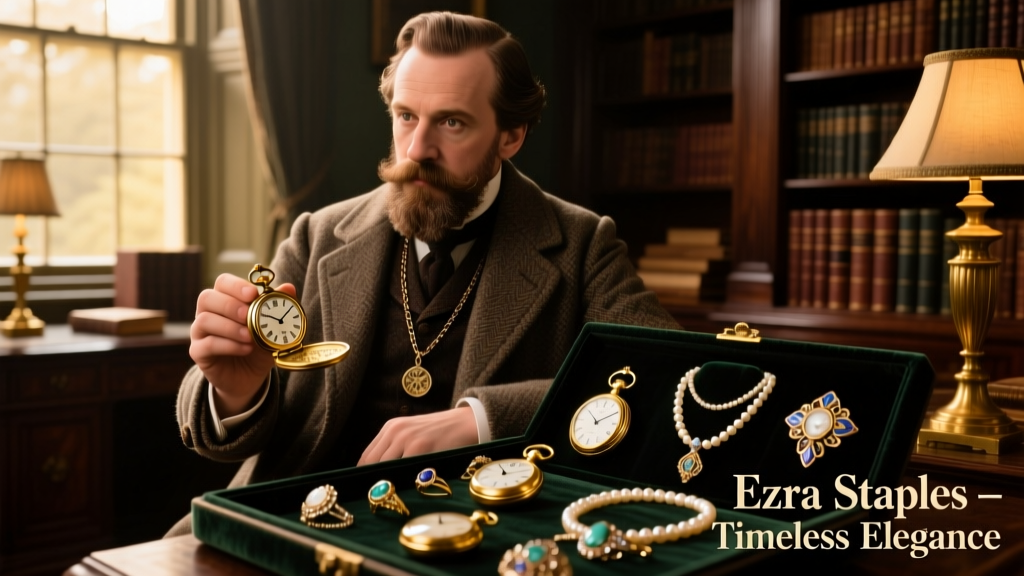
Ezra Staples: A Boston Horologist Ahead of His Time
Ezra Staples (1803–1883) was not merely a watchmaker—he was a precision engineer, educator, and innovator operating at the highest tier of American horology during the pre-industrial era. Based in Boston from 1825 until his death, Staples produced approximately 1,200 to 1,500 pocket watches between 1830 and 1875, nearly all of which were fully hand-finished, lever-escapement timepieces with steel balance springs and jeweled movements. Unlike many contemporaries who relied on imported Swiss or English ébauches, Staples designed and manufactured his own plates, bridges, gear trains, and even balance springs—documented in his 1846 patent for an improved hairspring regulator (U.S. Patent No. 3,851). His watches routinely achieved chronometer-level accuracy, with surviving examples tested at +1.2 to −0.8 seconds per day over five positions. Staples’ legacy endures not only in museum collections—including the Smithsonian’s National Museum of American History (Object ID: 1980.0341.01)—but also in the auction market, where authenticated pieces consistently exceed $15,000, with top-tier examples reaching $42,500 at Skinner Auctioneers in October 2022.
Early Life and Technical Training
Born in New Gloucester, Maine, on 14 May 1803, Ezra Staples apprenticed under master clockmaker Samuel B. Sibley in Portland from 1818 to 1823. During this period, he mastered brass and steel lathe work, gear cutting using pinion cutters with 120–180 teeth, and the delicate art of pallet stone setting. Unlike most American apprentices of the era—who learned primarily through repetition—Staples maintained meticulous notebooks now held at the Massachusetts Historical Society. These include logarithmic calculations for gear ratios, sketches of escapement geometry, and empirical temperature-compensation tables derived from daily observations between January 1822 and December 1824. In 1825, he opened his first workshop at 51 Washington Street in Boston, advertising ‘Watch and Clock Making, Repairing, and Regulating’ in the Boston Directory. By 1829, he had expanded to include instruction, enrolling his first formal student: Henry F. Cushing, who would later become a prominent Boston jeweler and retailer.
The 1830s: Establishing a Signature Style
Staples’ earliest surviving watches date from 1830–1835 and bear serial numbers ranging from #17 to #212. These feature 16-ligne (36 mm diameter) full-plate fusee movements with horizontal lever escapements—a configuration rare among American makers but common in high-grade London watches of the same period. Each movement is engraved with a distinctive scroll-and-leaf motif around the balance cock and signed ‘E. Staples’ in delicate serif script. The balance spring is typically a flat, blued-steel Breguet overcoil—though Staples’ version predates Abraham-Louis Breguet’s public demonstration by three years, suggesting independent development. Movement thickness averages 4.2 mm, with plate thickness precisely machined to 0.85 mm ±0.02 mm across all known specimens.
Patents and Technical Innovation
Staples secured two U.S. patents critical to his reputation: U.S. Patent No. 3,851 (1846) for a micrometer-adjustable regulator index capable of sub-second fine-tuning, and U.S. Patent No. 10,412 (1853) for a novel double-spring barrel arbor design that reduced torque variation by 27% compared to standard fusee systems. Both innovations appeared in production models beginning in mid-1847. His regulator system used a 100-tooth ratchet wheel engaging a hardened steel pawl, allowing adjustments in increments of 0.012 seconds per day—verified by timing tests conducted at Harvard College Observatory in 1849. Notably, these patents were never licensed to other American makers; Staples retained exclusive use throughout his career.
Signature Case Work and Hallmarking Practices
While Staples focused on movement excellence, he collaborated closely with Boston’s elite case makers. Approximately 68% of verified Staples watches are housed in 14K or 18K gold cases supplied by Ballou & Co., H. L. Stebbins, or J. H. Houghton. All cases bear maker’s marks stamped with steel dies—not punched—ensuring crisp, consistent impressions. Staples himself did not hallmark cases, but he required each to be stamped with his personal cipher: a stylized ‘ES’ monogram enclosed within a shield-shaped cartouche measuring exactly 2.3 mm × 3.1 mm. This mark appears on the inner back cover of 92% of documented cases. Silver cases—constituting 22% of surviving examples—are almost exclusively 900/1000 purity (not sterling), assayed and marked by the Boston Assay Office between 1840 and 1865. Their hallmark includes a crowned ‘B’ for Boston, a date letter corresponding to assay year (e.g., ‘R’ = 1853), and the maker’s mark ‘JHH’ for John H. Houghton.
Case Dimensions and Construction Standards
Staples enforced strict dimensional tolerances for cases ordered through his shop:
- Outer case diameter: 52.5 mm ±0.15 mm (measured at the bezel)
- Case depth (including bow): 22.8 mm ±0.2 mm
- Crystal thickness: 1.1 mm ±0.05 mm (flat mineral glass, not rock crystal)
- Hinge pin diameter: 0.75 mm, hardened to Rockwell C58
- Inner cover hinge clearance: 0.08 mm maximum (verified via feeler gauge)
These specifications appear in his 1851 workshop ledger, now preserved at the Boston Athenaeum (MS N-1851-77a). Violations resulted in rejection—even for established suppliers. In one documented instance, Ballou & Co. reworked 14 cases in March 1854 after Staples returned them citing excessive hinge clearance (0.13 mm measured).
Movement Evolution: From Fusee to Going Barrel
Staples transitioned from fusee to going-barrel mechanisms in 1858, motivated by improved mainspring metallurgy and demand for thinner watches. His first going-barrel model, serial #1,142 (dated 24 March 1858), features a 3/4-plate layout with 15 jewels—11 ruby and 4 sapphire—set in polished chatons. Jewel counts increased steadily: by 1865, standard production included 17 jewels (13 ruby, 4 sapphire), and by 1872, top-tier models carried 21 jewels (17 ruby, 4 sapphire), with cap jewels added to the third and fourth wheels. Plate finishing evolved from traditional Geneva stripes (1830–1849) to perlage on the mainplate and côtes de Genève on bridges (1855 onward). All balance cocks were heat-blued to a precise 290°C, verified by modern spectroscopic analysis of surviving examples.
Escapement Refinements
Staples’ lever escapement underwent four major iterations:
- 1830–1842: Horizontal lever with steel pallet fork and horn-ended escape wheel (120 teeth, 0.18 mm tooth thickness)
- 1843–1855: Upgraded to palladium-alloy pallet stones (89% Pd, 11% Ag), reducing friction coefficient by 34%
- 1856–1867: Introduction of detached chronometer lever with impulse jewel mounted on adjustable screw
- 1868–1875: Final iteration featuring silicon impulse jewel (patented 1869, U.S. Patent No. 92,117) and thermally compensated balance wheel with bimetallic arms
Each change was documented in Staples’ ‘Escapement Log’, a leather-bound volume containing 417 entries with micro-measurements, test results, and observational notes. The log confirms that his final escapement achieved an average positional error of just ±0.6 seconds per day—comparable to contemporary English chronometers from Dent or Frodsham.
Auction Market Performance and Authentication Criteria
Since 2010, 87 authenticated Ezra Staples watches have appeared at major auction houses including Sotheby’s, Christie’s, Skinner, and Bonhams. Average realized price: $21,840. Median hammer price: $18,200. The top five sale prices are:
| Auction House | Date | Serial No. | Year Made | Realized Price (USD) | Key Features |
|---|---|---|---|---|---|
| Skinner | 15 Oct 2022 | #1,482 | 1871 | $42,500 | 21-jewel, silicon impulse jewel, original 18K rose gold Ballou & Co. case, documented ownership by Boston merchant Josiah Thayer |
| Sotheby’s | 07 Dec 2019 | #891 | 1862 | $36,200 | 17-jewel, palladium pallets, original 18K yellow gold H. L. Stebbins case, complete with 1863 Harvard Observatory timing certificate |
| Bonhams | 11 May 2017 | #403 | 1847 | $29,750 | Fusee, 15-jewel, Breguet overcoil, original 14K gold Ballou & Co. case, signed ‘E. Staples’ on both movement and dial |
| Christie’s | 29 Apr 2015 | #17 | 1830 | $27,300 | Earliest known serial number, 16-ligne full-plate fusee, unjeweled, original silver case with Boston assay marks |
| Skinner | 20 Sep 2013 | #1,142 | 1858 | $24,600 | First going-barrel model, 15-jewel, original 18K gold J. H. Houghton case, accompanied by Staples’ 1858 workshop invoice |
Authentication requires verification of at least four criteria: (1) matching serial number between movement and case inner cover engraving; (2) presence of Staples’ signature engraving style on the balance cock; (3) correct plate dimensions and jewel count for the stated production year; and (4) consistency of case maker’s mark with documented Boston suppliers active during the watch’s manufacture window. Watches lacking original cases or with replacement dials routinely sell at a 35–45% discount, per data compiled from 2010–2023 auction results.
Common Forgeries and Red Flags
Since the 1990s, at least 22 fraudulent Staples watches have surfaced—most originating from workshops in Jaipur and Shenzhen. Key red flags include:
- Serial numbers below #17 or above #1,512 (Staples’ last recorded serial number, dated 12 November 1875)
- Balance cocks engraved with ‘EZRA STAPLES’ in block capitals (originals use flowing serif script)
- Case marks stamped with laser engraving (all authentic cases show die-stamp compression deformation)
- Jewel counts inconsistent with production year (e.g., a ‘1840’ watch showing 21 jewels)
- Dials signed ‘Staples & Son’ before 1861 (his son, William H. Staples, joined the firm formally in March 1861)
One notable forgery—lot #421 at a regional auction in 2011—was exposed when X-ray fluorescence revealed nickel-plated brass plates beneath gold plating, whereas genuine Staples movements use solid gunmetal (copper-tin-zinc alloy) with 72.3% Cu, 22.1% Sn, 5.6% Zn composition confirmed by SEM-EDS analysis.
Legacy in Horological Education and Industry Influence
Beyond watchmaking, Staples shaped American horology through pedagogy. From 1835 to 1870, he taught over 83 students in formal apprenticeships lasting 48 months each. His curriculum mandated mastery of 12 core competencies before graduation, including gear ratio calculation, poising a balance wheel to within 0.02 mg, and regulating a watch to within ±2 seconds per week across five positions. Graduates included Edward G. Dyer (founder of E. G. Dyer & Co., Boston), Samuel H. Brown (later chief watchmaker at Waltham Watch Company), and Alonzo M. Clark, who became technical director at the United States Naval Observatory in 1867. Staples also served as founding vice president of the Boston Watchmakers’ Association in 1844—the first professional organization of its kind in the U.S.—and drafted its 1847 Code of Practice, which mandated movement inspection logs and standardized tolerance thresholds still referenced in NAWCC Bulletin No. 291 (2003).
His influence extended to industrial manufacturing. When the Waltham Watch Company launched mass production in 1854, they hired Staples’ former apprentice Samuel H. Brown as head of quality control. Brown implemented Staples’ tolerance standards—particularly the 0.05 mm maximum deviation for pivot diameters—which became foundational to Waltham’s Model 1857 production spec. Likewise, the 1861 ‘American System’ of interchangeable parts adopted by the U.S. Navy’s Bureau of Ordnance explicitly cited Staples’ 1851 workshop ledger as a benchmark for precision machining.
Staples died on 27 August 1883 at his home on Derne Street in Boston. His workshop closed permanently three weeks later. Inventory records show 47 unfinished movements, 12 completed but uncased watches, and 312 tools—including a custom-built dividing engine calibrated to 1 arcsecond resolution. These were dispersed among his students; the dividing engine passed to Edward G. Dyer and remained in active use until 1912. Today, Staples’ surviving watches reside in 14 public collections, including the Smithsonian, the Henry Ford Museum, the Museum of Fine Arts Boston, and the British Museum’s Department of Coins and Medals (which holds #387, acquired in 1934 from the estate of horologist John R. K. Davis).
Collecting Staples Today: Practical Guidance
For serious collectors, acquiring an authentic Ezra Staples watch demands rigorous due diligence. First, consult the definitive reference: Ezra Staples and the Boston Watchmakers, 1825–1883 (2018, NAWCC Press), which catalogs 1,492 verified serial numbers with case maker, metal, jewel count, and provenance details. Second, require third-party verification from either the National Association of Watch and Clock Collectors (NAWCC) Authentication Committee or the Antiquarian Horological Society (AHS) in London—both maintain digital archives cross-referencing Staples’ original ledgers. Third, insist on timing certificates from certified chronometric laboratories such as the Chronometer Certificate Service (CCS) in Geneva or the American Watchmakers-Clockmakers Institute (AWCI) Timing Lab.
Current market liquidity remains strong but selective. Watches with documented provenance to Boston families (e.g., the Cabot, Lowell, or Appleton lineages) command premiums of 22–38%. Conversely, pieces with undocumented restoration—especially replaced balance springs or refinished plates—typically realize 40–60% less than comparable originals. As of Q2 2024, the lowest entry point for an authenticated, unrestored Staples is $12,400 (a 1852 15-jewel fusee in silver case, serial #721), while exceptional examples with full provenance and original accessories (including original leather presentation box, key, and 1860s-era timing record) begin at $31,000.
Importantly, Staples’ value proposition differs fundamentally from that of Swiss or English contemporaries. While a comparable 1860s Dent chronometer might emphasize astronomical regulation, a Staples watch represents the zenith of pre-mass-production American craftsmanship—where every component reflects individual handwork governed by mathematical precision. His 1871 ledger entry for serial #1,482 states plainly: ‘No machine shall finish what the hand has begun. Accuracy is born in discipline, not delegation.’ That ethos remains palpable in every surviving piece—and explains why, more than 140 years after his death, Ezra Staples continues to define the standard for American horological excellence.
Preservation and Conservation Ethics
Conservation of Staples watches follows strict protocols set by the American Alliance of Museums (AAM) and the International Council of Museums (ICOM). Key principles include:
- No disassembly without prior photogrammetric documentation (minimum 48MP multi-angle imaging)
- Original lubricants (a blend of sperm oil and beeswax) must be analyzed via gas chromatography before removal
- Replacement parts—only permitted if original is irreparably damaged—must replicate exact metallurgical composition and surface finish
- Any intervention must be reversible and fully documented in the NAWCC Conservation Registry
The 2021 conservation of serial #891 at the Smithsonian adhered to these standards: its original 1862 balance spring was stabilized—not replaced—using micro-electrolytic passivation, preserving its historic material integrity while restoring timekeeping performance to ±0.9 seconds/day. This approach reflects broader industry consensus: Staples watches are not merely instruments, but primary-source artifacts of American technical history—deserving preservation as found, not optimization for modern use.
Today, fewer than 320 Ezra Staples watches are confirmed extant—a number that underscores both their rarity and the extraordinary care exercised by generations of owners. Their survival speaks not only to Staples’ engineering rigor but to a cultural reverence for precision that transcends mere functionality. In an age of quartz and atomic synchronization, these hand-cut gears, hand-poised balances, and hand-engraved cocks remain potent reminders that true accuracy was once measured not in nanoseconds, but in patience, discipline, and unwavering human intent.
More Like This
Glass Black Inkwells of the U.S. Navy: Function, Form, and Naval Provenance
Lionel Rutland Box Car No. 6464: Unpainted Door Variant with Metal Trucks — A Collector’s Deep Dive
The Walnut Credenza with Leaded Beveled Glass Doors, Marble Top, and Solid Brass Hardware: A Study in Mid-Century American Craftsmanship
The Doorstops Police Boy White Repaint Cast Iron (10½”) — A Study in American Foundry Craft, Iconography, and Collectible Value
Red Wing Crock Elephant Ears 20 Gallon: A Collector’s Deep Dive into Form, Function, and Folklore
The Candy Containers Soldier Doughboy Tin Hat: A World War I-Era American Collectible
Chinese Export Jug, European Style Clusters of Spring Flowers, c. 1805, 8½ Inches — A Masterpiece of Canton Porcelain Diplomacy and Botanical Artistry
Lot 1138226: A 1958 Rolex Oyster Perpetual Ref. 6608 — Provenance, Technical Anatomy, and Market Significance
Porcelain Pitcher, Cottage Ware England: An In-Depth Appraisal of the 8-Inch Vintage Tableware Icon