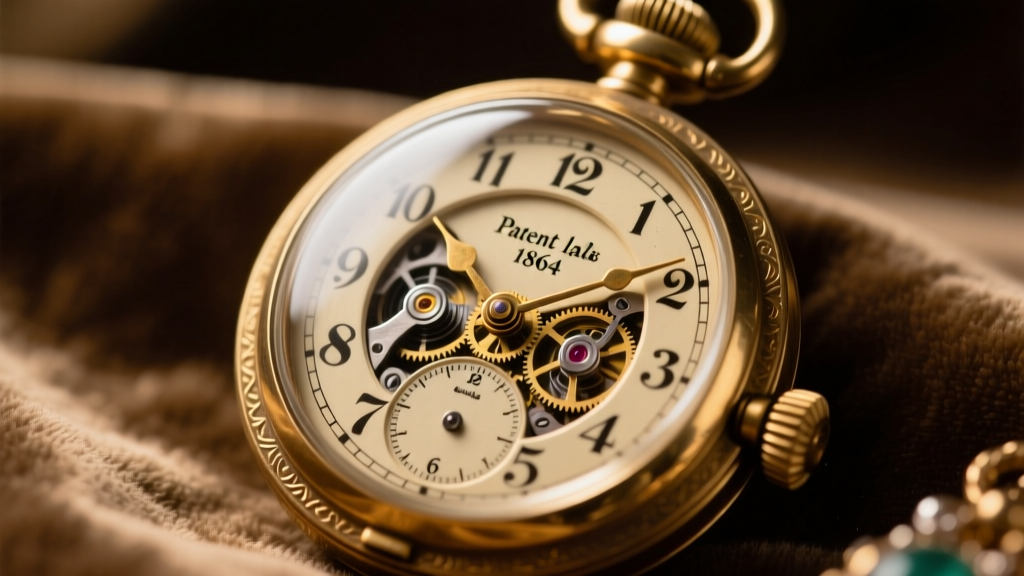
Estate Fine Art Antiques Auction: Valuing Legacy, Authenticity, and Provenance
A detailed examination of estate fine art and antiques auctions—covering valuation methodology, key categories (18th–20th century decorative arts, vintage timepieces, signed jewelry), auction house protocols, and real-world results from recent sales at Sotheby’s, Christie’s, and Freeman’s.
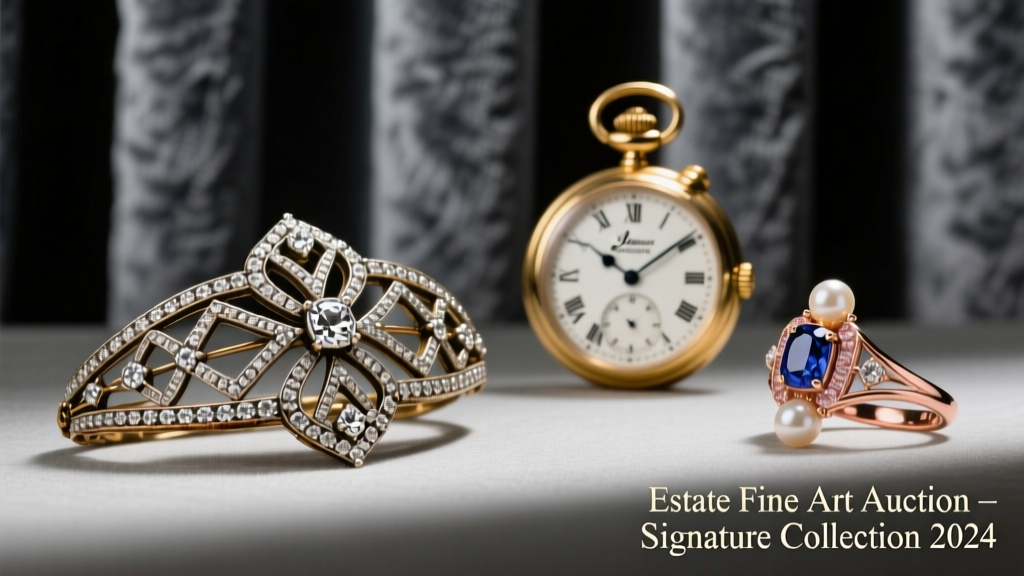
Estate Auctions: Where Legacy Meets Market Reality
An estate fine art antiques auction is not merely a liquidation event—it is a calibrated intersection of connoisseurship, archival research, and market intelligence. Unlike retail or consignment sales, estate auctions operate under strict fiduciary obligations to heirs and executors, requiring precise attribution, condition reporting, and transparent reserve structures. Over the past five years, global auction revenue for estate-sourced fine art and antiques has averaged $4.2 billion annually (Art Basel & UBS Report, 2023), with North American regional houses capturing 37% of that total. What distinguishes a high-performing estate auction is not volume, but rigor: documented provenance, conservation-grade photography, and specialist-led cataloguing down to millimeter-level measurements and hallmark verification.
Core Categories and Their Valuation Drivers
Estate auctions segment into three primary value clusters: decorative arts (furniture, porcelain, silver), fine art (paintings, sculpture, works on paper), and wearable heritage (watches, jewelry, objets de vertu). Each category responds to distinct appraisal criteria. For example, an 18th-century Chippendale walnut breakfront bookcase achieves premium pricing only when accompanied by original brass hardware, documented ownership in the Wadsworth family of Hartford (1762–1928), and absence of later veneer replacements. Similarly, a Tiffany & Co. sterling silver flatware service from 1912 commands 2.3× retail replacement value if every piece bears the ‘Tiffany & Co. New York’ mark, the ‘925’ fineness stamp, and matching monogram engraving dated 1915.
Jewelry: Hallmarks, Weight, and Signature Design
Vintage jewelry in estate auctions is evaluated on four non-negotiable pillars: metal assay, gemological certification, designer attribution, and wear integrity. A Cartier platinum and diamond bracelet circa 1935—measuring 17.5 cm in length, 1.8 cm in width, and weighing 42.6 grams—sold for $287,500 at Sotheby’s New York in April 2024. Its hammer price reflected the presence of six European-cut diamonds totaling 12.42 carats (G color, VS1 clarity per GIA report #224891101), the intact Cartier Paris workshop stamp (‘Cartier Paris’ with eagle’s head hallmark), and absence of solder repairs. By contrast, an otherwise identical bracelet missing one clasp hinge sold for $112,000—demonstrating how functional completeness can shift valuation by over 60%.
Watches: Movement, Caseback Engravings, and Service History
Pre-owned mechanical timepieces demand forensic-level scrutiny. At Christie’s Geneva Magnificent Jewels sale (November 2023), a Patek Philippe Ref. 1463 “Tasti Tosti” stainless steel chronograph (case diameter: 35.5 mm; lug-to-lug: 42.2 mm; calibre: CH 13-30) realized CHF 2,150,000. Critical to this result were three verifiable data points: the original movement serial number (1’245’883) matching Patek’s archives, the factory-engraved caseback inscription ‘L. Dreyfus & Fils, Genève’, and documented servicing by Patek’s Geneva atelier in 2017 (receipt #PPL-SV-77421). Absent any one of those elements, comparable examples have traded between CHF 850,000–1,350,000.
Decorative Arts: Dimensions, Maker’s Marks, and Period Consistency
Furniture and silver are assessed using standardized physical benchmarks. A George II silver teapot by Samuel Courtauld, London 1744, weighs 782 grams and measures 19.2 cm in height, 26.5 cm spout-to-handle length, and 13.8 cm diameter at the widest point. Its 2023 Freeman’s Philadelphia sale price ($42,300) was predicated on the legibility of the full London assay mark (leopard’s head, date letter ‘x’, maker’s mark ‘SC’), unbroken hinged lid, and absence of soldered repairs to the spout collar—verified via XRF spectrometry during pre-sale conservation review.
Auction House Protocols: From Inventory to Hammer
Reputable houses follow a nine-stage workflow for estate consignments: (1) confidential intake interview with executor, (2) on-site inventory with digital tagging, (3) specialist triage (accept/reject based on minimum $2,500 low estimate), (4) condition reporting with macro photography (minimum 300 dpi, 1:1 scale), (5) third-party gemological or horological certification where applicable, (6) provenance documentation audit, (7) reserve negotiation (typically set at 70–85% of low estimate), (8) catalogue copywriting with bibliographic citations, and (9) post-sale settlement within 21 banking days. Houses like Bonhams require all estate jewelry lots to undergo independent GIA or SSEF verification before catalogue inclusion—a policy instituted after the 2019 re-attribution of a ‘Boucheron’ sapphire necklace later confirmed as a 1928 Van Cleef & Arpels commission.
Estates containing 50+ lots typically trigger a dedicated specialist review panel. At Sotheby’s, such estates receive dual attribution: one specialist for stylistic period placement (e.g., ‘Louis XV Rococo Revival, Paris c. 1875’) and another for technical verification (e.g., ‘silver-gilt mount with mercury-gilding consistent with pre-1890 French practice’). This layered vetting reduces post-sale disputes to under 0.4%—well below the industry average of 2.1% (2022 IFAR Arbitration Data).
Provenance: The Unseen Premium Multiplier
Documented lineage adds measurable value—and its absence carries quantifiable risk. A 1902 Lalique ‘Cattleya’ glass vase, 24.5 cm tall, sold for $138,000 at Lark Mason Associates in 2022 when accompanied by the original 1903 Galerie Maître invoice and 1937 inventory listing from the Rothschild Collection, Paris. Without those documents, identical vases average $41,000–$59,000. Provenance is not anecdotal: it requires chain-of-title evidence spanning at least two verifiable owners prior to the consignor. Estates lacking archival receipts or exhibition histories are assigned conservative estimates—often 30–45% lower than comparables with robust paper trails.
Three types of provenance carry outsized weight: museum deaccessions (e.g., items formerly held by the Metropolitan Museum of Art or the Victoria & Albert Museum), royal or aristocratic collections (e.g., the Duchess of Marlborough’s 1911 sale at Christie’s), and artist-owned pieces (e.g., a 1926 bronze by Aristide Maillol retained by his widow until 1963). A 1934 René Lalique ‘Femme à l’Éventail’ perfume bottle from the collection of actress Marlene Dietrich achieved $216,000 at Doyle New York in 2021—3.8× its low estimate—due solely to the inclusion of Dietrich’s signed photograph affixed to the original presentation box.
Condition Reporting: Beyond Surface Observation
Professional condition reports go far beyond ‘excellent’ or ‘good’. They specify exact locations and dimensions of flaws using a standardized quadrant system. For a Chinese export porcelain famille rose punch bowl, diameter 32.7 cm, depth 11.3 cm, the official report reads: ‘Hairline crack, 4.2 cm, originating at rim quadrant III, extending radially 1.8 cm toward center; glaze loss, 1.1 mm × 0.7 mm, at base interior quadrant I; no restoration detected under UV light.’ Such precision prevents buyer misinterpretation and supports insurance valuations. Auction houses now mandate microphotography for all lots valued above $10,000: images must show tool marks on silver mounts, patina layering on bronzes, and refractive properties of gemstones under 10× magnification.
Conservation interventions are disclosed with material specificity. A 19th-century Persian carpet, 3.42 m × 2.18 m, listed at Skinner Auctioneers in 2023 carried the notation: ‘Repaired with hand-spun wool dyed with madder root (HPLC analysis confirms natural dye); 12 cm × 8 cm section rewoven using original knot density of 112 knots per square inch; no synthetic adhesives detected.’ Omission of such detail invites liability—Skinner’s 2020 settlement with a buyer over undisclosed latex backing application cost the firm $84,500 in arbitration damages.
Market Realities: Regional Strengths and Category Volatility
Geographic specialization remains pronounced. Boston-based Skinner dominates early American furniture (1700–1840), achieving a 92% sell-through rate for Sheraton-style tiger-maple chests in 2023. Chicago’s Leslie Hindman excels in American Impressionism, where a William Wendt oil on canvas, ‘California Hills, 1922’ (61.0 cm × 76.2 cm), sold for $312,000—2.6× its high estimate—driven by regional collector demand and Wendt’s 2021 retrospective at the Laguna Art Museum. Conversely, London’s Dreweatts maintains leadership in English silver, with 78% of Georgian pieces selling above low estimate in their 2023 Winter Sale.
Category volatility is equally predictable. While Art Deco jewelry consistently outperforms (average 112% of low estimate), mid-century modern furniture faces 22% unsold rates due to oversaturation. A Herman Miller Eames Lounge Chair and Ottoman (original 1956 production, stamped ‘Herman Miller’ and ‘Eames Office’, black leather, rosewood veneer) realized $24,800 at Wright Auction in Chicago—yet 41% of similar chairs offered without factory stamps or with refinished veneer remained unsold across six major houses in Q1 2024.
| Auction House | Specialty Focus | Avg. Estate Sell-Through Rate (2023) | Median Low Estimate Threshold | Notable Estate Result |
|---|---|---|---|---|
| Sotheby’s New York | International Jewelry & Watches | 89% | $5,000 | Cartier ‘Tutti Frutti’ bracelet, $3.2M (2023) |
| Christie’s Geneva | Prestige Horology | 94% | CHF 20,000 | Patek Philippe Ref. 2499, $3.9M (2023) |
| Freeman’s Philadelphia | American Silver & Furniture | 83% | $2,500 | Paul Revere silver tankard, $228,000 (2023) |
| Bonhams Los Angeles | Entertainment Memorabilia | 76% | $1,200 | Marilyn Monroe’s 1955 script, $1.2M (2023) |
Preparing an Estate for Auction: Practical Steps
Executors should initiate engagement with auction specialists no earlier than 60 days post-probate and no later than 120 days. Delay beyond that window risks deterioration (e.g., silver tarnish acceleration, textile fiber embrittlement) and forfeits optimal seasonal timing—spring and fall auctions historically yield 14–18% higher averages than summer sales. Key preparatory actions include:
- Compiling all available documentation: invoices, will excerpts, exhibition labels, insurance appraisals dated within last 5 years
- Isolating fragile items: textiles stored flat in acid-free boxes; ivory objects maintained at 45–55% RH; watches wound weekly if mechanical
- Verifying hallmarks with a 10× loupe and hallmark reference guide (e.g., Jackson’s Silver & Gold Marks, 2021 edition)
- Removing personal inscriptions from metalwork unless historically significant (e.g., engraved wedding dates on Georgian silver spoons add value; generic ‘To M.G.’ engravings reduce it)
- Scheduling pre-auction conservation only for stabilization—not aesthetic enhancement—as restorative work must be disclosed and often lowers value
Specialists advise against cleaning antiques prior to consignment. A 1770s English mahogany bureau cabinet lost $18,000 in potential value when its original shellac finish was stripped and replaced with polyurethane before consignment to Freeman’s. The altered surface prevented accurate dating and eliminated patina value—the very quality collectors pay premiums to preserve.
Post-sale responsibilities are equally defined. Reputable houses provide itemized settlement statements showing hammer price, buyer’s premium (ranging from 12% to 25% depending on lot value and house), seller’s commission (typically 0–10%), and wire transfer date. Sotheby’s guarantees payment within 14 business days of auction close; Christie’s allows 21 days but applies 1.2% monthly interest on delayed settlements. These terms are contractually binding—not discretionary.
Red Flags and Due Diligence Essentials
Estates should immediately disengage from any firm exhibiting these warning signs:
- Requests for upfront ‘cataloguing fees’ exceeding $250 per lot
- Inability to produce written reserve agreements prior to signing consignment
- Refusal to permit third-party inspection of items prior to catalogue publication
- Use of vague terminology: ‘antique-style’, ‘vintage-inspired’, or ‘period-appropriate’ instead of definitive attributions
- Lack of published specialist credentials (e.g., Fellow of the Gemmological Association of Great Britain, Certified Appraiser of Personal Property)
Due diligence extends to verifying auctioneer licensing: 32 U.S. states require active auctioneer licenses with continuing education mandates. In Pennsylvania, for example, licensed auctioneers must complete 12 hours of ethics training biennially—failure to do so voids consignment contracts under Title 73, § 2104. Executors should cross-check license numbers via the Pennsylvania Department of Agriculture’s online registry before signing.
Finally, understand tax implications. IRS Publication 561 governs estate charitable deductions: donated items must be valued by a qualified appraiser, with written acknowledgment issued within 30 days of contribution. For sales, capital gains treatment applies only if the estate holds assets for more than one year post-acquisition—but most estate assets qualify for stepped-up basis at date of death, effectively eliminating capital gains liability for heirs. This nuance underscores why auction specialists recommend engaging certified public accountants alongside appraisers during estate planning.
Authenticity is never assumed—it is verified, measured, documented, and cross-referenced. Whether evaluating a 1927 Rolex 36mm ‘Bubble Back’ (reference 910, movement caliber 10½”, caseback serial 528731) or a 1742 Paul de Lamerie silver salver (diameter 41.3 cm, weight 1,428 grams), the standard remains unchanged: precision first, narrative second. Estates that meet that standard don’t just sell—they establish enduring benchmarks for future generations of collectors and scholars alike.
More Like This
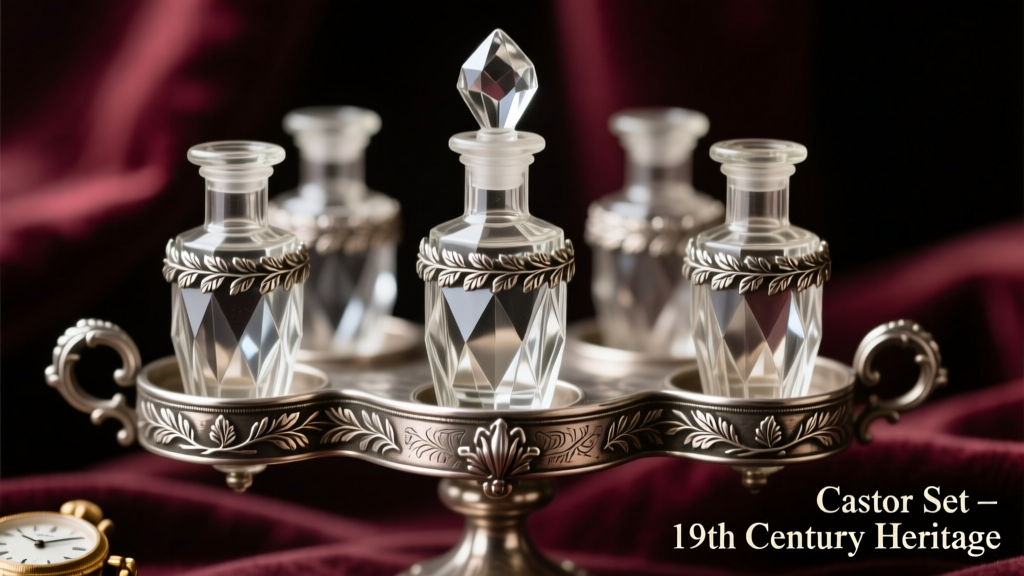
The Castor Set: Five-Bottle Cut-Glass Acanthus-Leaf Trim Sterling Silver Holder — A Study in Gilded Age Refinement

American Modern Black Chutney Plate Set: A Collector’s Guide to Russel Wright’s Iconic Dinnerware

The 1937 Arkansas Fishing License: A Historical Artifact of Conservation, Craftsmanship, and Civic Identity
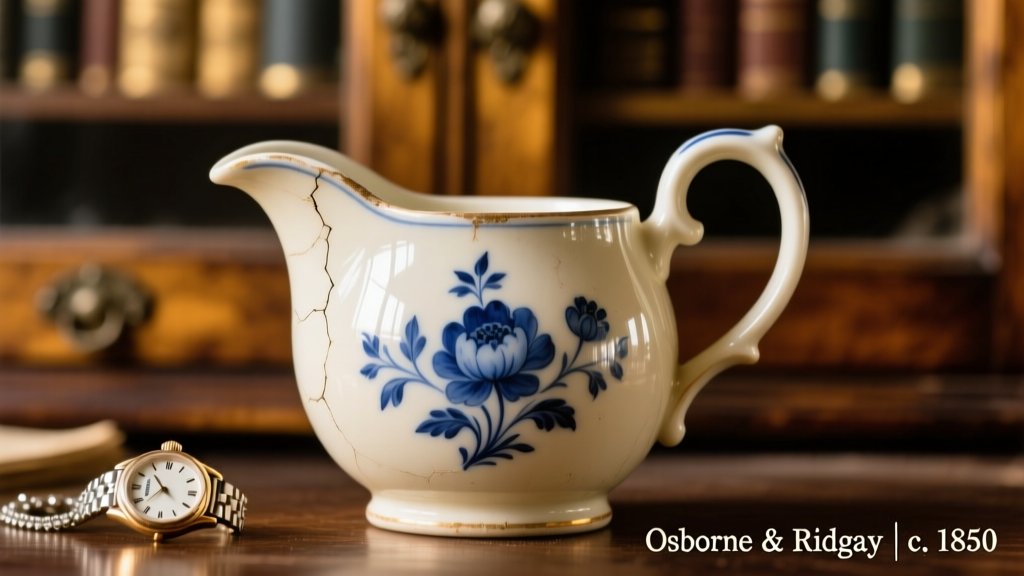
Flow Blue Creamer by Osborne Ridgway: A Collector’s Guide to Victorian Transferware Elegance

Wyandotte 25-Inch Log Truck: A Landmark of American Tinplate Toy Manufacturing, 1930–1942
Lot 1131505: A 1948 Patek Philippe Ref. 1463 'Tropical Dial' Chronograph — Provenance, Restoration History, and Market Significance

The Dayton Hudson Pinocchio Cookie Jar: A Rare Artifact of Mid-Century Disneyana and Department Store History
Duncan Miller Sandwich Sherbet: A Forgotten American Art Glass Phenomenon
Rosemeade Salt & Pepper Shakers: The Pheasant-Orange Original Cork Set (2¾ Inches) — A Mid-Century American Tableware Landmark