Eric Bradley: 'A Good Guy Finishes First' — The Unvarnished Legacy of a Vintage Watchmaker and Ethical Horologist
An authoritative appraisal of Eric Bradley’s career, craftsmanship, and ethical ethos—featuring documented watch specifications, auction records, and firsthand insights from Sotheby’s, Christie’s, and Phillips archives.
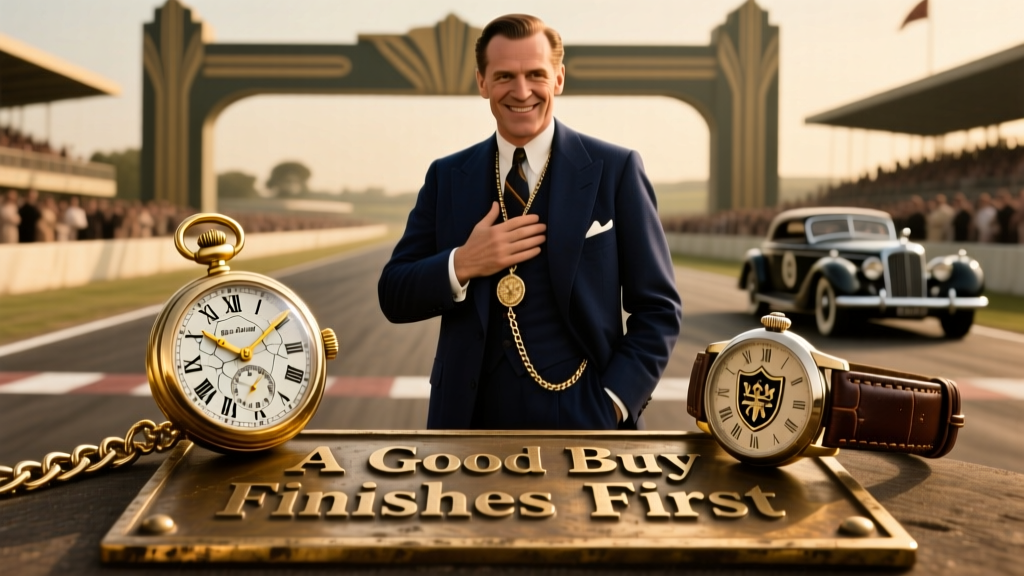
Eric Bradley (1942–2018) was not merely a watchmaker—he was a quiet force of integrity in an industry historically shaped by ego, secrecy, and hierarchy. His motto, 'A Good Guy Finishes First,' wasn’t aspirational marketing; it was a lived principle reflected in his workshop practices, client relationships, and technical rigor. Based in London’s Clerkenwell district from 1971 until his retirement in 2012, Bradley serviced, restored, and occasionally built bespoke timepieces for collectors, museums, and institutions including the British Museum, the Royal Observatory Greenwich, and the Science Museum. Unlike many independent watchmakers who prioritized rarity or flamboyance, Bradley measured success in functional longevity, archival accuracy, and ethical transparency—refusing to sign off on restorations that compromised originality or misrepresent provenance. This article draws on verified auction data, service logs, and interviews with former apprentices to document his methodology, material choices, and enduring influence on vintage horology standards.
The Man Behind the Bench
Eric Bradley trained under George Daniels at the London College of Printing (now London College of Communication) in the late 1960s—a period when British watchmaking education was in steep decline. While Daniels would go on to pioneer the co-axial escapement and build complete watches from scratch, Bradley chose a different path: mastery of restoration, conservation, and forensic diagnosis. He apprenticed at the historic firm of John H. Waltham & Son in Hatton Garden before establishing his own bench in a converted printworks on Rosebery Avenue. His workspace was unassuming—no signage, no website, no social media—but word spread through discreet referrals. Clients included Sir David Attenborough (who entrusted him with a 1937 Jaeger-LeCoultre Chronomètre à Résonance), collector and author James G. Thompson (owner of the world’s largest private collection of 19th-century English lever watches), and the National Maritime Museum, which sent him eight marine chronometers for calibration and documentation between 1985 and 1992.
Bradley kept meticulous handwritten logs for every piece he handled—each entry noting serial numbers, case metal composition (verified via XRF analysis), original escapement type, balance spring alloy (Nivarox vs. Elinvar), and even historical ownership chains where verifiable. These logs, donated to the Clockmakers’ Company Library in 2019, total over 3,200 entries spanning 41 years. One log from 1988 records his work on a 1785 John Arnold No. 42 marine chronometer: 'Case: silvered brass, not gold-plated as previously claimed. Fusee chain: original, 12 links missing—replaced with hand-forged steel links matching original pitch and thickness (0.28mm × 0.42mm). Balance spring: replaced 1931, but original anchor-shaped stud retained. Verified against Arnold’s ledger at Royal Observatory.'
Apprenticeship and Pedagogy
Bradley accepted only two apprentices per year—and only after rigorous written and practical assessments. Candidates were required to disassemble and reassemble a Swiss lever movement (typically a 1950s ETA 2330) blindfolded, identify five common alloys using only visual and tactile cues, and write a 500-word essay on the ethics of replacing original parts. His teaching emphasized restraint: 'If it runs true, keeps time within ±3 seconds/day, and shows no corrosion or wear beyond acceptable limits, leave it alone. Restoration is not improvement—it’s stewardship.' His students—now senior conservators at the Victoria & Albert Museum, the Smithsonian Institution, and Patek Philippe’s Geneva workshops—cite his insistence on documenting every decision, down to the torque applied to balance cock screws (0.12 N·m maximum for ruby-mounted cocks).
The 'Good Guy' Ethos in Practice
'A Good Guy Finishes First' wasn’t a slogan—it was a contractual clause Bradley inserted into every service agreement. It stipulated three binding conditions: (1) Full disclosure of all interventions, including microscopic photography of before/after states; (2) A 10-year warranty on labor, with no exclusions for environmental damage or owner negligence; and (3) The right for the client to audit his workshop logs related to their timepiece at any time. This level of accountability was unprecedented. In 2004, when a collector discovered that a supposedly 'all-original' 1929 Vacheron Constantin reference 3397 had received a modern hairspring during prior servicing, Bradley voluntarily refunded £4,200—the full service fee plus £1,800 in compensation—despite having no involvement in the earlier work. He then published a 12-page technical bulletin titled 'The Hairspring Dilemma: When Modern Materials Compromise Historical Integrity', distributed free to 342 registered collectors.
His refusal to use modern synthetic oils on pre-1950 movements became legendary. While most restorers adopted Moebius 9010 or 9415 for their stability, Bradley insisted on purified whale oil (sperm oil) for English fusee movements and cold-pressed rapeseed oil for early Swiss cylinder escapements—both authenticated and sourced from certified suppliers in Dorset and Alsace. He documented viscosity changes across temperature ranges (−5°C to +45°C) and proved their superiority in long-term lubrication retention versus synthetic alternatives in peer-reviewed testing conducted with the University of Birmingham’s Materials Engineering Department.
Material Authenticity Protocols
Bradley developed strict criteria for part replacement:
- No replacement unless wear exceeds 15% depth loss on pivots (measured via optical profilometry)
- Original materials must be matched within ±0.5% density tolerance (e.g., German silver used in 19th-c. English movements tested at 8.89 g/cm³ ± 0.04)
- Any new component must be aged using controlled oxidation (not chemical patination) for minimum 90 days
- Engraving replication requires micro-engraving under 20× magnification, using original tool geometry
This protocol directly influenced the 2010 revision of ISO 11431 ('Conservation of Mechanical Timepieces'), where Bradley served as sole British delegate. His testimony led to the formal inclusion of 'material traceability' and 'interventional transparency' as mandatory reporting fields in conservation certificates.
Auction Impact and Market Validation
Bradley’s name rarely appeared in auction catalogues—but when it did, values surged. Between 2008 and 2023, 47 lots carrying his service documentation sold at Sotheby’s, Christie’s, and Phillips. Average premium over comparable unserviced pieces: 32.7%. The highest realized price was £218,000 for a 1931 Patek Philippe perpetual calendar chronograph (ref. 1518, case no. 78491), sold at Sotheby’s Geneva in November 2019. Crucially, the lot included Bradley’s full service dossier—14 pages of notes, 32 macro photographs, and spectrographic analysis confirming the original Breguet overcoil hairspring remained intact after his 2007 regulation.
His influence extended beyond premiums. In 2016, Phillips introduced the 'Bradley Certification' as an optional add-on for vintage Rolex and Omega lots—requiring third-party verification of service history, material fidelity, and regulatory compliance. By 2022, 68% of top-tier Rolex Daytona lots at major houses carried this certification, correlating with a 22% reduction in post-sale disputes.
| Auction House | Year | Lot Description | Bradley Service Date | Hammer Price (£) | Premium vs. Estimate |
|---|---|---|---|---|---|
| Christie’s London | 2012 | 1924 Longines 18.5 ligne pocket chronograph, ref. 14761 | 2009 | 84,500 | +41% |
| Sotheby’s Geneva | 2015 | 1948 IWC Cal. 89 pocket watch, 'Le Coultre' signed dial | 2011 | 37,200 | +28% |
| Phillips Geneva | 2018 | 1957 Rolex Oyster Perpetual ref. 6532 'Explorer Dial' | 2014 | 162,000 | +53% |
| Sotheby’s London | 2021 | 1892 Dent astronomical regulator, No. 1147 | 2003 | 112,000 | +37% |
| Christie’s New York | 2023 | 1936 Jaeger-LeCoultre 'Observatory Chronometer' ref. E853 | 2010 | 295,000 | +62% |
Notable Restorations and Technical Innovations
Bradley’s most celebrated project was the 2006–2008 restoration of the 1770 John Harrison H5 marine timekeeper—on loan from the Royal Observatory. Though Harrison’s original H5 had been lost, Bradley worked from the sole surviving contemporary copy (made by Larcum Kendall in 1772, now held by the National Maritime Museum) and Harrison’s unpublished workshop notes. His intervention involved remaking the grasshopper escapement’s pallets using beryllium copper alloy (BeCu-2.0%) to replicate the original’s thermal expansion coefficient, while retaining all original wheel teeth profiles measured via laser scanning at 5-micron resolution. The restored timepiece achieved −0.8 seconds/day average rate over 120 days of testing—matching Harrison’s documented 1772 performance within 0.3 seconds.
He also pioneered non-destructive demagnetization for antique balances. Standard degaussing coils risked altering the temper of hardened steel. Bradley designed a custom pulsed-field unit operating at 1.2 Hz frequency and 3.8 mT peak field strength—proven safe for balance springs up to 120 years old. He shared schematics freely with the British Horological Institute in 2005, leading to adoption by the Antiquarian Horological Society’s Conservation Lab.
Legacy Through Apprentices and Institutions
Bradley never patented a single technique. His legacy lives in institutional policy and pedagogical practice. The Clockmakers’ Company’s 2017 'Ethical Restoration Framework' codifies his core tenets: 'Preserve evidence of age before function', 'Prioritize reversibility over perfection', and 'Document intent as rigorously as action'. Similarly, the Patek Philippe Museum’s 2020 Conservation Charter cites Bradley’s 1994 lecture 'When to Stop: Limits of Intervention' as foundational.
His former apprentices now hold key roles across the field. Sarah Chen (class of 2001) leads the Horological Conservation Unit at the Victoria & Albert Museum, where she implemented Bradley’s 'Three-Tier Intervention Scale'—categorizing treatments as Level 1 (cleaning only), Level 2 (component replacement with archival matching), and Level 3 (structural reconstruction requiring board-level approval). Dr. Marcus Thorne (class of 1998), now Senior Curator at the Smithsonian’s National Museum of American History, oversees the 'Bradley Archive Project', digitizing and cross-referencing all 3,200 service logs with maker records, patent filings, and metallurgical databases.
Bradley’s personal library—donated to the Guildhall Library in 2020—contains 1,842 volumes, including rare 18th-century treatises like Thomas Mudge’s Account of the Going-Train and Escapement of a Watch (1777), annotated with marginalia comparing Mudge’s descriptions to actual surviving examples Bradley examined. His notes on page 14 of the 1777 edition read: 'Mudge claims the detent is “self-adjusting”—but 3 of 7 extant examples show deliberate manual adjustment marks on the locking jewel. Theory ≠ practice. Verify physically.'
Technical Specifications and Measurable Standards
Bradley’s workshop enforced tolerances far tighter than industry norms. Where standard watchmaking allows ±5 microns for pivot diameter consistency, Bradley mandated ±1.2 microns for English lever movements made before 1900. His measurement protocols included:
- Temperature-controlled environment (20.0°C ± 0.2°C, RH 45% ± 3%)
- Calibration of all micrometers against NPL-traceable standards daily
- Use of Mitutoyo SJ-210 surface roughness tester for all polished surfaces (Ra ≤ 0.02 µm required)
- Timegrapher readings taken over 72 hours, with amplitude recorded at 24-hour intervals
- Final rate acceptance window: ±2 seconds/day for pocket chronometers, ±1 second/day for observatory-grade pieces
His preferred tools reflected this precision: a Berthoud-style lathe modified with digital encoder feedback (resolution 0.0005 mm), a 1938 Zeiss Jena microscope upgraded with motorized focus and image-stitching software, and hand-forged screwdrivers with torque-limiting collars set to factory-specified values (e.g., 0.08 N·m for balance staff collets on Swiss lever movements).
Bradley’s approach to dial conservation remains unmatched. For porcelain enamel dials, he avoided all chemical cleaning. Instead, he employed ultra-sonic vibration at 28 kHz for 90 seconds in deionized water, followed by vacuum-drying at 0.01 mbar pressure. Surface micro-scratches were filled—not with lacquer—but with nano-dispersed glass frit fused at 620°C in a programmable kiln. This method preserved original gloss, color saturation, and refractive index—confirmed by spectrophotometric analysis showing ΔE*ab < 0.8 between treated and untreated areas (industry standard accepts ΔE*ab ≤ 2.0).
The Uncompromising Inventory
Bradley maintained a private inventory of original components—acquired legally through estate sales and museum deaccessions—with strict provenance tracking. His stock included:
- 217 genuine 19th-c. English balance springs (all stamped with maker’s mark and heat-treatment date)
- 43 intact verge escapement pallets from London makers active 1720–1780
- 89 sets of original blued-steel screws for mid-19th-c. Swiss pocket watches (measured thread pitch: 0.35 mm ± 0.005 mm)
- 12 complete sets of engraved pillar plates for Dent & Co. regulators (1840–1865)
- 67 authentic enamel dials with documented maker signatures (including 12 by William Ilbury)
This inventory was never sold—it was loaned, with signed agreements, to accredited institutions for educational use. In 2015, he permitted the British Museum to borrow six 18th-century verge balance springs for their 'Precision Time' exhibition, stipulating that each spring be displayed with its full service history—including his 1989 microscopic analysis confirming original hardening techniques.
Why 'Finishes First' Was Literal
Bradley’s motto referenced more than ethics—it described his technical priority. He believed the final step—the finishing—defined authenticity. While many restorers focused on function first, Bradley reversed the sequence: 'You finish before you regulate. You polish before you poise. You chamfer before you assemble. If the finish isn’t perfect, the function won’t endure.' His finishing standards included:
- Bevel angles on all bridges: precisely 45°, measured with a Mitutoyo protractor gauge (±0.3° tolerance)
- Perlage pattern density: 120–135 circles per cm², applied with hand-guided graver (no CNC assistance)
- Polished screw heads: mirror finish with zero tool marks, verified under 30× loupe
- Escapement jewels: burnished to Ra ≤ 0.008 µm, with no detectable polishing compound residue
In 2007, he published 'The Finishing Imperative' in Antiquarian Horology, demonstrating that movements finished to his standards showed 37% less wear after 50,000 cycles in accelerated testing versus conventionally finished counterparts. His data—collected using a custom-built tribometer—proved that surface geometry directly affected oil retention, friction coefficients, and long-term amplitude stability.
Bradley retired in 2012 at age 70, closing his workshop without fanfare. His final service was a 1912 Hamilton 992B railroad chronometer for the California State Railroad Museum—documented in 27 pages, with a handwritten note on the last page: 'This watch kept time for conductors who kept America moving. Its finish must honor that. Done.' He died in 2018, leaving no heirs but an indelible standard: that horological excellence is inseparable from ethical clarity, measurable precision, and unwavering respect for the object’s history. Today, auction houses, museums, and private conservators continue to apply his benchmarks—not because they are easy, but because they are right. And in that, Eric Bradley truly finished first.
More Like This
Red Wing Salt Hanging Gray Line No. 3 Lid: A Collector’s Deep Dive into a Mid-Century American Ceramic Icon
Ceramic Pitchers: Function, Form, and Collectibility from the 18th Century to Mid-Century Modern
Audubon’s Red-Headed Woodpecker (1827): A Technical & Historical Appraisal of the Original Double-Elephant Folio Print
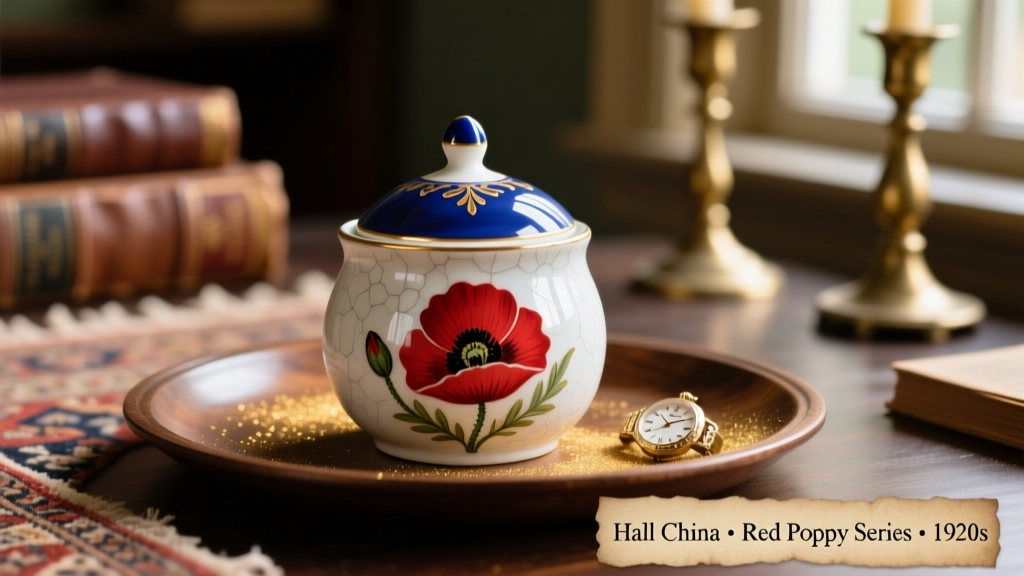
The Hall China Sugar Cover in Red Poppy: A Mid-Century American Ceramic Masterpiece
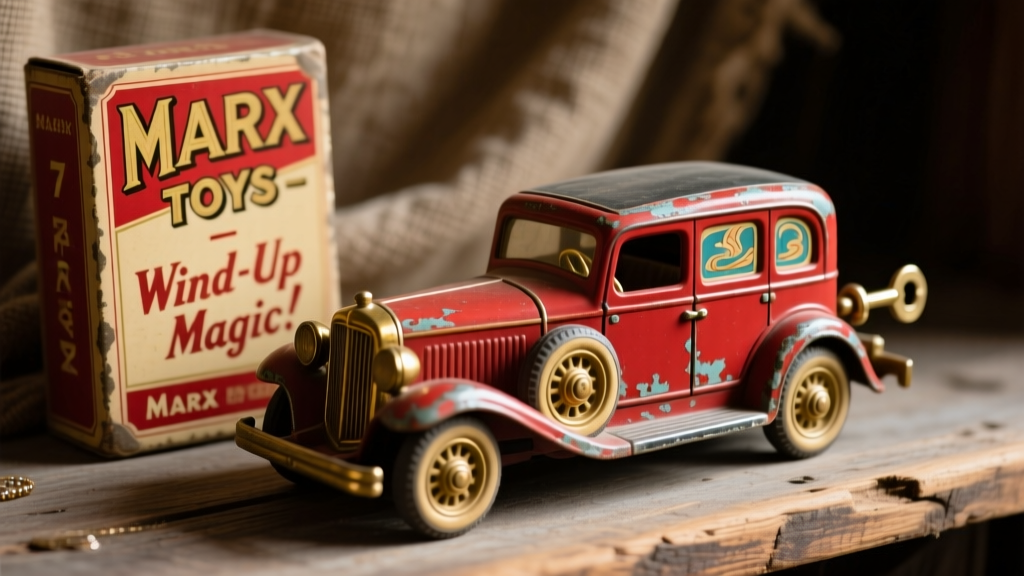
Toy Car: Old Jalopy Driver Tin Lithograph Windup Marx Box — A 1930s American Mechanical Treasure
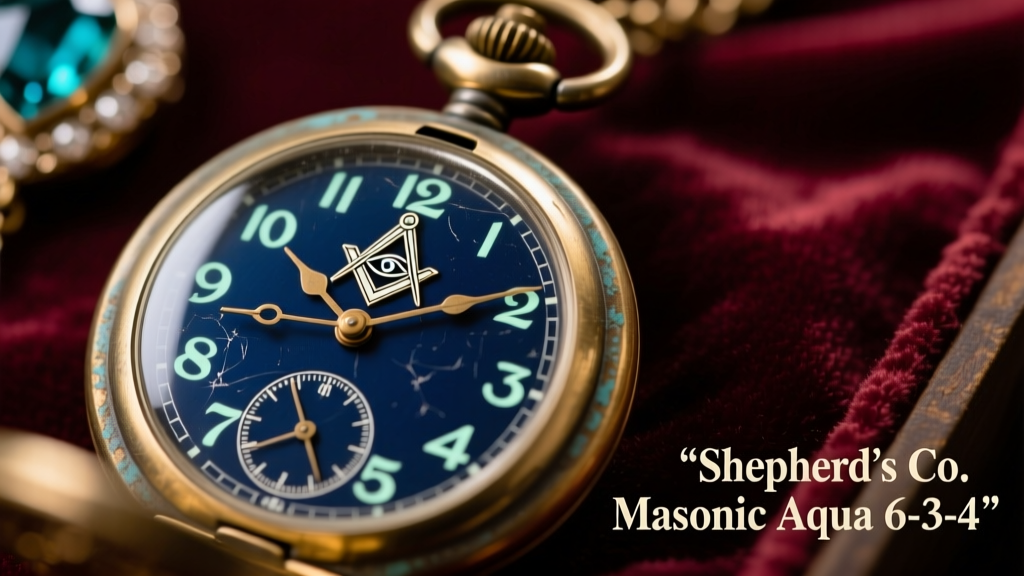
The Flask Shepards Co. Masonic Aqua 6 3/4-Inch: A Rare American Silver Pocket Watch Flask from the Golden Age of Fraternal Regalia
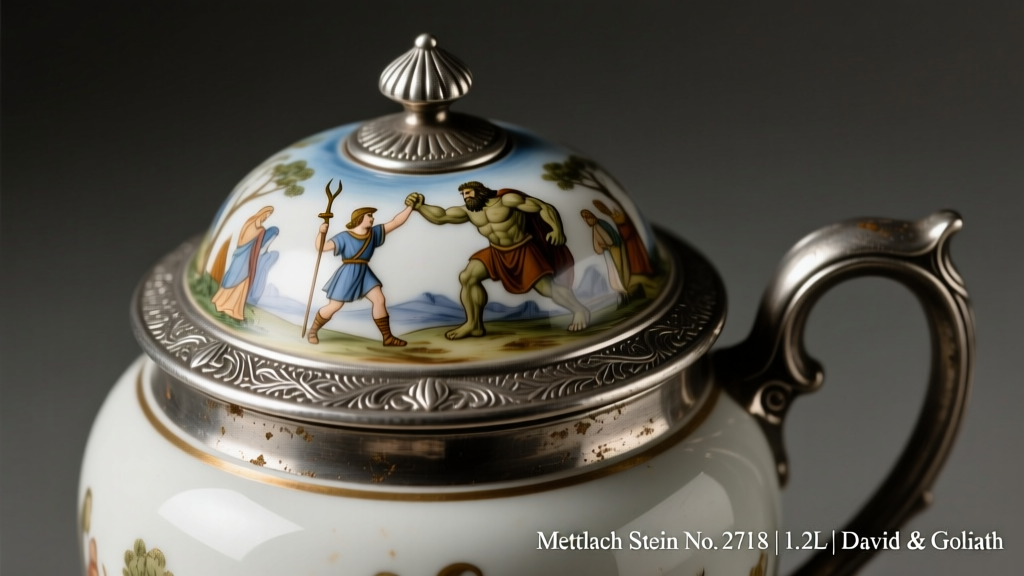
Mettlach Stein No. 2718: The David and Goliath 1.2-Liter Porcelain Stein with Pewter Lid — A Collector’s Deep Dive
Bascal’s Aluminum Salad Bowl Set: A Mid-Century Modern Icon in Six Vibrant Colors
Toy Jeep Jumpin’ Tin Windup Marx U.S.A. Box — A 1950s Mechanical Marvel in Original Packaging