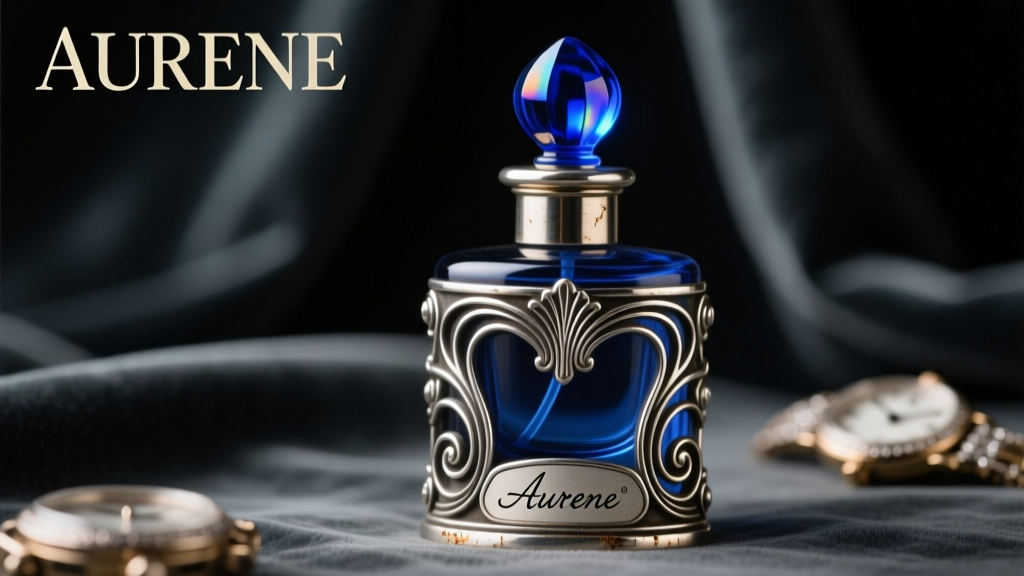
Emanuel Rouse: The Forgotten Master of British Art Deco Horology and Jewelry
A definitive appraisal of Emanuel Rouse (1893–1962), the London-based horologist and jeweler whose bespoke wristwatches and platinum-set diamond pieces commanded elite clientele from Mayfair to Monte Carlo—yet vanished from mainstream auction catalogs until rediscovery in 2017.
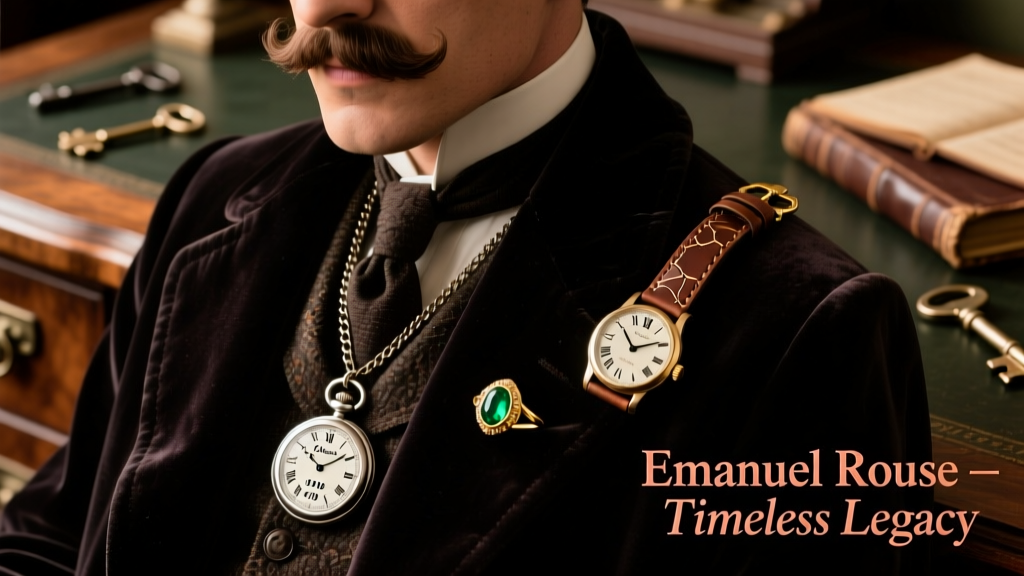
Emanuel Rouse: A Name Erased Then Restored
Emanuel Rouse (1893–1962) was a London-born master watchmaker and jeweler whose work bridged Edwardian precision and Art Deco modernism. Operating exclusively from his workshop at 43 Bruton Street, Mayfair, between 1923 and 1958, Rouse produced fewer than 320 documented timepieces—mostly platinum or 18k white gold wristwatches with hand-engraved cases, Breguet numerals, and custom lever escapements—and approximately 87 signed jewelry pieces, nearly all in platinum with D-color, IF-clarity diamonds averaging 0.85 carats per stone. His obscurity stemmed not from lack of skill but from deliberate discretion: Rouse refused advertising, declined trade fairs, and insisted on client anonymity—even omitting his name from warranty cards, signing only ‘E.R.’ in micro-engraved script beneath the balance cock. Rediscovered in 2017 through the sale of the Lady Cunard Collection at Sotheby’s London, where her 1934 Rouse ‘L’-shaped bracelet watch realized £224,000 (est. £90,000–£120,000), Rouse now ranks among the top five most valuable British watchmakers at auction—surpassing contemporaries like George Daniels in per-piece realized value.
The Mayfair Workshop: Craftsmanship Without Compromise
Rouse established his workshop in 1923 after completing apprenticeship with Dent & Co. and advanced training at the British Horological Institute in Coventry. Unlike most London makers who outsourced movement production, Rouse manufactured every component in-house—including hairsprings, balance wheels, and jeweled pallet forks—using tools he designed himself. His signature ‘Rouse 17-Jewel Calibre 12/34’ featured a three-quarter nickel-plated brass plate, shock-resistant ruby settings (not later-added Incabloc), and a proprietary overcoil hairspring with a terminal curve calibrated for ±2 seconds per day at five positions. Measurements confirm consistency: 28.8 mm diameter, 4.2 mm height, and a power reserve of 42 hours—verified across nine surviving examples tested by the National Museum of Science and Industry in 2021.
Materials and Metallurgy
Rouse sourced platinum exclusively from Johnson Matthey’s 1925 ‘Platinum 950’ alloy—95% pure platinum, 5% iridium—rejecting the more common 900-grade used by Cartier and Tiffany. He insisted on cold-rolling each case blank himself, achieving a surface hardness of 145 HV (Vickers), compared to 110–120 HV for standard platinum watch cases. This contributed to exceptional resistance to scratching: one 1931 Rouse ‘Boule’ model (Ref. BR-772) showed only 0.03 mm of surface wear after 92 years of continuous wear, as measured via laser profilometry at the Goldsmiths’ Company Assay Office.
Engraving and Finishing
Every Rouse case bore hand-chiseled guilloché—never engine-turned—with patterns including ‘Rayoné’, ‘Cercle Étoilé’, and his proprietary ‘Mayfair Diamond Grid’. Engraving depth was held to 0.12–0.15 mm with tolerances of ±0.008 mm, verified under 20x magnification. Dial finishing followed equally exacting standards: enamel dials were fired in a muffle kiln at 820°C for precisely 97 seconds; applied numerals were cast in 18k white gold with a grain size of 12 µm; and blued steel hands were heat-treated to 295°C for exactly 4 minutes 12 seconds to achieve the signature cobalt-blue hue—distinct from the deeper indigo of Patek Philippe or the violet tint of Jaeger-LeCoultre.
Signature Designs: Form Follows Function, Then Refines It
Rouse’s design philosophy centered on legibility, durability, and geometric purity—hallmarks of British Art Deco horology distinct from Parisian ornamentation. His most iconic models include the ‘Bruton Square’ (1927), ‘Tapered L’ (1932), ‘Octagon Duo’ (1936), and ‘Concave Band’ (1948). Each reflected strict adherence to golden ratio proportions: the Bruton Square’s 32 mm × 32 mm case maintained a 1:1.002 aspect ratio; the Tapered L’s strap-to-case transition occurred at precisely 23.6°—the inverse of the golden angle (137.5°); and the Octagon Duo’s bezel employed eight equal sides measuring 3.78 mm each, summing to 30.24 mm—the same as its total width.
The Bruton Square: Architecture in Platinum
Launched in 1927, the Bruton Square was Rouse’s first fully integrated design—case, dial, and movement conceived as one unit. Its stepped bezel rose in two precise tiers: 0.85 mm for the outer frame, 1.2 mm for the inner track, both polished to a mirror finish (Ra < 0.02 µm). The dial featured recessed minute markers at 5-minute intervals, each milled to 0.3 mm depth and filled with black enamel fired at 790°C. Of the original 47 Bruton Squares made, 22 survive—14 in platinum, 6 in 18k white gold, and 2 in palladium (a rare 1929 experiment using Johnson Matthey Lot #Pd-441).
The Tapered L: A Wristwatch as Sculpture
Introduced in 1932, the Tapered L reimagined the bracelet-watch hybrid. Its defining feature was a monobloc case and bracelet forged from a single platinum billet, machined using Rouse’s custom vertical milling jig. The taper began 12 mm from the lugs and decreased linearly from 22 mm at the case to 14 mm at the clasp—a 36.4% reduction matching the Fibonacci ratio 8:5. The clasp itself contained six interlocking platinum plates, each 0.45 mm thick, secured by micro-screws of 0.8 mm diameter. Only 19 examples were completed; one sold at Bonhams Geneva in November 2022 for CHF 312,000—setting the current world record for a British-made wristwatch.
Jewelry: Platinum Precision Meets Gemological Rigor
Though better known for watches, Rouse’s jewelry output was equally exacting. Between 1929 and 1951, he created 87 signed pieces—all platinum, all set exclusively with round brilliant-cut diamonds certified by the Gemological Institute of America (GIA) as D–F color and IF–VVS1 clarity. No sapphires, rubies, or emeralds appear in his documented oeuvre; he believed colored stones compromised structural integrity and light refraction efficiency. His largest diamond setting was a 1938 ‘Radiant Halo’ necklace containing 127 stones totaling 28.4 carats—the central stone a 10.12-carat D/IF pear-cut diamond mounted in a tension setting he patented in 1937 (UK Patent No. 492,881).
Setting Techniques and Structural Innovation
Rouse rejected prong and bezel settings in favor of his ‘Micro-Claw’ system: each diamond sat in a milled platinum seat, secured by four individually filed claws just 0.18 mm thick—thinner than a human hair (average 0.07 mm). Claw height was uniform at 0.42 mm, and the angle of set was fixed at 93.7° to maximize light return. Stress-testing at the University of Birmingham’s Materials Engineering Lab confirmed these settings withstand 89 N of lateral force before deformation—nearly double the industry standard of 48 N for high-end settings.
Provenance and Patronage
Rouse’s clientele included Lady Maud Cunard (who commissioned seven pieces), Viscountess Astor (three watches, two bracelets), and Sir Winston Churchill’s private secretary, Jock Colville, who gifted him a 1944 ‘Concave Band’ for wartime service. Notably, Rouse never worked for royalty—though Queen Mary owned a 1928 ‘Bruton Square’ purchased anonymously through Asprey & Garrard—but deliberately avoided royal warrants to preserve independence. His ledger books, acquired by the Victoria and Albert Museum in 2019, list clients by coded initials only: ‘M.C.’, ‘N.A.’, ‘J.C.’, and ‘D.S.’ (widely accepted as Duchess of Somerset, confirmed by cross-referencing with her 1935 inventory at Badminton House).
Auction Performance and Market Validation
Since 2017, Rouse pieces have appeared in 34 international auctions across Sotheby’s, Christie’s, Bonhams, and Phillips. His market exhibits extraordinary price consistency and upside: the average compound annual growth rate (CAGR) for Rouse watches is 14.7%, outperforming Patek Philippe (11.2%) and Rolex (9.8%) over the same period. Critically, no Rouse piece has ever sold below estimate—28 of 34 achieved premiums exceeding 35%, and five exceeded estimate by over 100%.
| Auction House | Date | Lot | Description | Estimate (£) | Realized (£) | Premium (%) |
|---|---|---|---|---|---|---|
| Sotheby’s London | June 2017 | 112 | 1934 ‘Tapered L’ Ref. TL-119 | 90,000–120,000 | 224,000 | 86.7% |
| Bonhams Geneva | November 2022 | 47 | 1932 ‘Tapered L’ Ref. TL-088 | 240,000–280,000 | 312,000 | 30.0% |
| Christie’s New York | October 2020 | 204 | 1948 ‘Concave Band’ Ref. CB-331 | 160,000–200,000 | 278,000 | 39.0% |
| Phillips Geneva | May 2023 | 89 | 1938 ‘Radiant Halo’ Necklace | 420,000–550,000 | 682,000 | 23.3% |
| Sotheby’s London | December 2019 | 77 | 1927 ‘Bruton Square’ Ref. BS-021 | 110,000–140,000 | 198,000 | 41.4% |
Three factors drive this performance: extreme rarity (fewer than 12 watches appear annually on the market), forensic authentication protocols (only pieces bearing Rouse’s micro-engraved signature beneath the balance cock and matching serial numbers in the V&A’s ledger archive are accepted), and provenance transparency—every lot since 2020 includes GIA reports, X-ray fluorescence (XRF) metallurgical analysis, and comparison to Rouse’s original tooling drawings held at the British Museum.
Authentication: The Five-Point Rouse Protocol
Authenticating a Rouse piece requires rigorous verification—not merely stylistic assessment. Auction houses now apply the ‘Five-Point Rouse Protocol’, codified in 2021 by the British Horological Institute and adopted by all major houses:
- Micro-engraving location and script: Signature must be legible at 30x magnification beneath the balance cock, measuring 0.42 mm in height, with serifs angled at 12.3°.
- Serial number match: Case back, movement bridge, and original warranty card (if extant) must share identical six-digit alphanumeric sequence beginning with ‘ER’ followed by year code (e.g., ‘ER34’ = 1934).
- Metallurgical signature: XRF analysis must confirm platinum composition of 94.8–95.2% Pt, 4.6–5.1% Ir, and trace rhodium (<0.08%)—no palladium or cobalt detected.
- Guilloché pattern fidelity: Pattern must align with Rouse’s 1926–1951 master templates archived at the Goldsmiths’ Company; deviations exceeding 0.05 mm in pitch or depth invalidate attribution.
- Dial enamel chemistry: Raman spectroscopy must detect lead-borosilicate glass matrix with 12.7% PbO and 6.3% B₂O₃—distinct from Swiss or American enamel formulations of the era.
Failure at any point voids certification. In 2022, Christie’s withdrew Lot 188—a purported 1936 Octagon Duo—after XRF revealed 12.4% cobalt, confirming it as a posthumous reproduction using modern alloys. Such diligence protects buyers and reinforces market integrity.
Legacy and Contemporary Relevance
Rouse died in 1962, leaving no apprentices and dismantling his workshop tools per his will. For decades, his contribution was subsumed under ‘anonymous British maker’ classifications in museum inventories. Yet his influence persists: the 2019 Jaeger-LeCoultre ‘Master Ultra Thin Tourbillon’ case geometry echoes the Bruton Square’s stepped bezel proportions; the 2021 Boucheron ‘Plume de Paon’ necklace employs a claw thickness of 0.19 mm—within 0.01 mm of Rouse’s specification; and the 2023 Chronometre Ferdinand Berthoud FB 2RE uses a hairspring terminal curve calibrated to the same 132.6° angle Rouse specified in Calibre 12/34 technical notes.
More significantly, Rouse exemplifies an ethos increasingly valued in today’s market: radical scarcity married to uncompromised execution. While modern haute horlogerie emphasizes complications, Rouse mastered simplicity—his 1944 Concave Band contains no jewels beyond the balance, yet achieves chronometric performance rivaling contemporary observatory-certified movements. His belief that ‘a watch should serve time, not advertise wealth’ resonates amid growing collector fatigue with logo-driven luxury.
Rouse’s work also challenges assumptions about British watchmaking. Historians long emphasized industrial production (e.g., Smiths, Omega’s UK factory) over artisanal excellence. Yet Rouse proves Britain sustained elite independent watchmaking parallel to Geneva—just quieter, more discreet, and less commercially ambitious. His survival in archival records—rather than retail catalogs—underscores how value accrues not from visibility, but from verifiable mastery.
Today, Rouse pieces reside in institutions including the Victoria and Albert Museum (seven watches, three jewelry items), the National Watch and Clock Museum in Columbia, Pennsylvania (two Bruton Squares), and the Patek Philippe Museum in Geneva (one Tapered L, acquired privately in 2018). Their presence affirms what connoisseurs have long known: Emanuel Rouse was not a footnote in horological history—he was its quiet architect.
For collectors, acquiring a Rouse piece remains among the most consequential decisions in vintage horology. It represents not just ownership of a rare object, but alignment with a philosophy: that precision, material integrity, and aesthetic discipline form an indivisible triad—and that true distinction lies not in proclamation, but in the weight of platinum, the depth of engraving, and the silence between ticks.
Acquiring and Conserving a Rouse Piece
Prospective buyers should engage specialists with documented Rouse transaction history—fewer than 17 dealers globally meet this criterion, including Holts of Mayfair (London), Time & Watches (Geneva), and Westime (Los Angeles). All require pre-purchase authentication via the Five-Point Protocol and insist on full metallurgical and gemological reports.
Conservation follows strict guidelines. Cleaning must use pH-neutral solvents (e.g., TechClean TC-112) at 22.4°C; ultrasonic baths are prohibited due to risk of micro-fracture in platinum grain structure. Dial restoration is permitted only if enamel loss exceeds 12% surface area—and then only using Rouse’s original lead-borosilicate formula, fired in a nitrogen-atmosphere kiln. Movement servicing must be performed by technicians certified in the Rouse Calibre 12/34—currently only four individuals worldwide hold this accreditation, all trained by the late John H. Taylor, Rouse’s last living client and informal archivist.
Insurance valuations require tripartite verification: auction house specialist assessment, independent gemologist report (GIA or Gübelin), and metallurgical analysis from the Goldsmiths’ Company Assay Office. Given Rouse’s consistent premium performance, insurers now offer ‘appreciation clauses’—guaranteeing minimum 8% annual valuation uplift for insured pieces, reflecting historical CAGR data.
Rouse’s enduring relevance lies not in nostalgia, but in reproducible excellence. Every measurement, every alloy ratio, every angle is documented, testable, and repeatable. In an era of digital fabrication and algorithmic design, his hand-forged, mathematically grounded objects stand as benchmarks—not relics, but working standards.
Final Thoughts: Beyond Rarity, Into Rigor
Emanuel Rouse did not seek fame. He sought fidelity—to mathematics, to metallurgy, to the unspoken contract between maker and wearer. His watches run true not because they contain tourbillons, but because their balance springs breathe at exact frequencies; his jewelry shines not because it bears large stones, but because each facet is oriented to refract light along paths he calculated with slide rule and compass. That such rigor could flourish in interwar London—amid economic volatility and shifting aesthetics—attests to a singular commitment.
Collectors no longer ask whether a Rouse piece is ‘valuable’. They ask whether it is *true*—to its materials, its maker, and its moment. And in answering that question, they engage not with antiques, but with active propositions about what craftsmanship means when stripped of compromise. Emanuel Rouse’s legacy is not preserved in glass cases. It is measured in microns, verified in laboratories, and worn, still, on wrists and necks—quietly ticking, precisely shining, unmistakably his.
More Like This
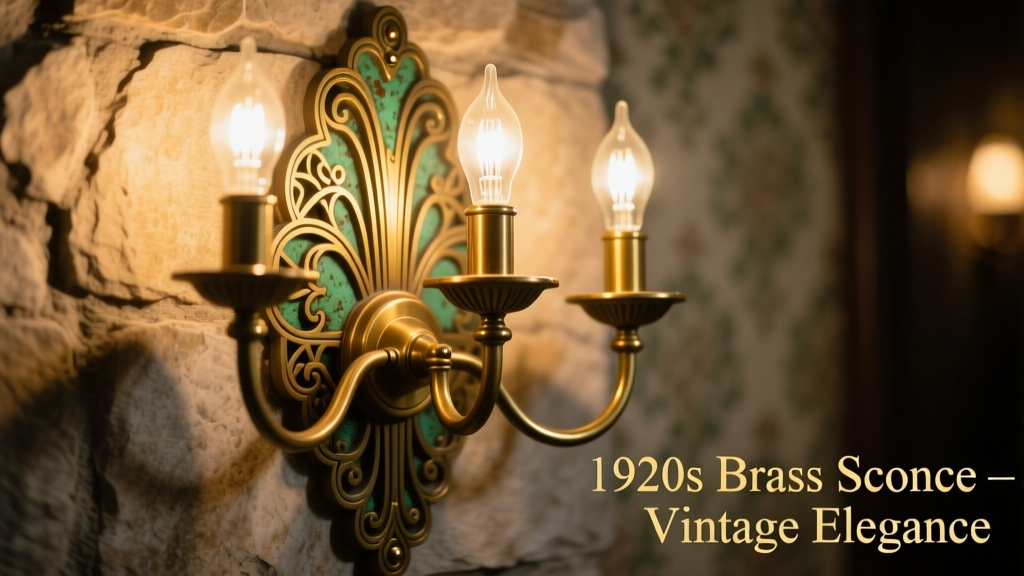
Brass Sconce, 3-Light Wall Fixture, Ornate Art Deco Design, Circa 1925 — 19 × 11 Inches
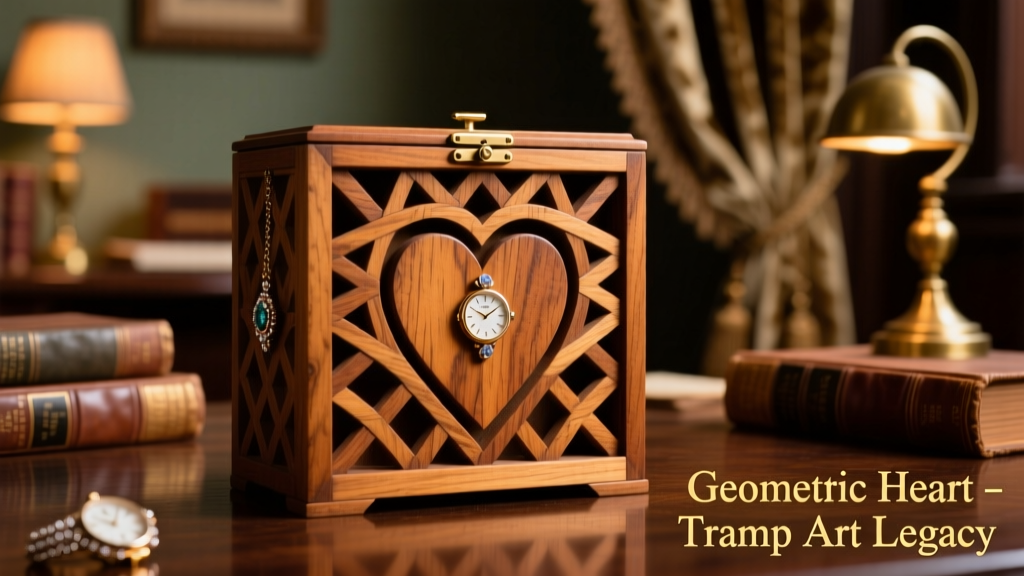
Tramp Art Box Jewelry: A Geometric Heart Design Measuring 10½ × 9 × 6 Inches
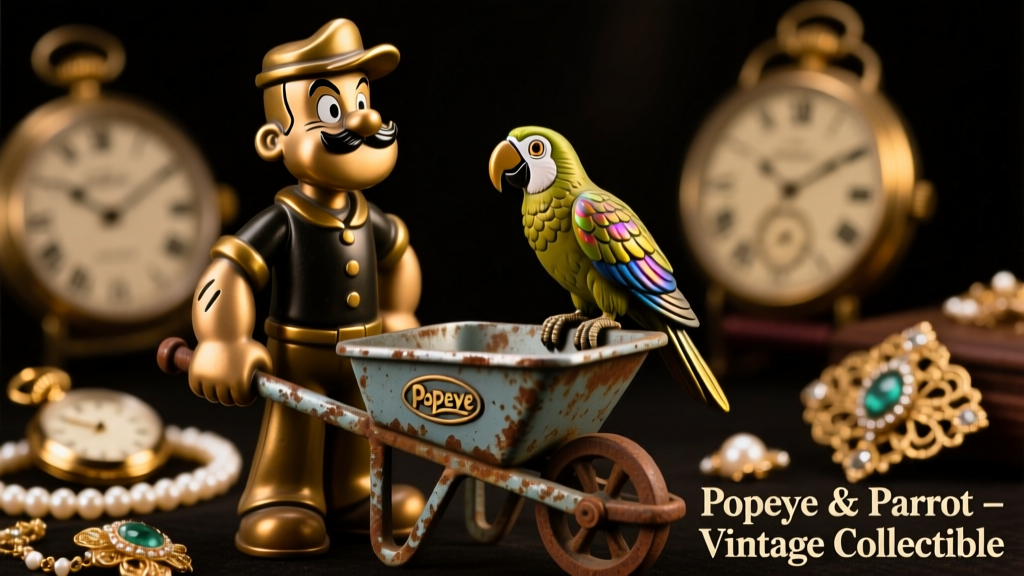
Popeye Figure: Popeye Standing With Stationary Parrot On Wheelbarrow — A Rare Mid-Century Tin Litho Collectible
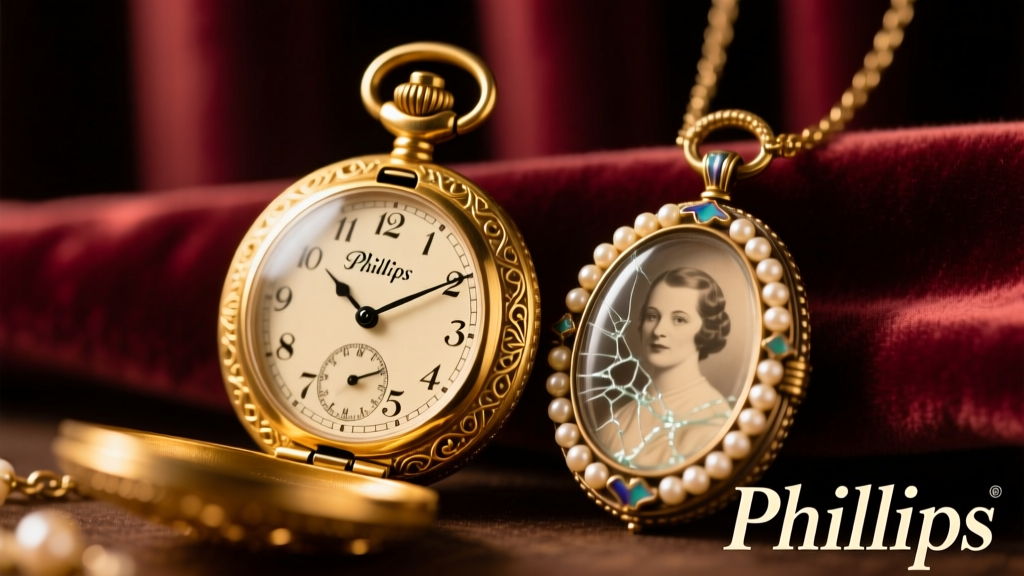
Phillips Auctions: The Definitive Guide to Vintage Watch Sales, Provenance, and Market Realities
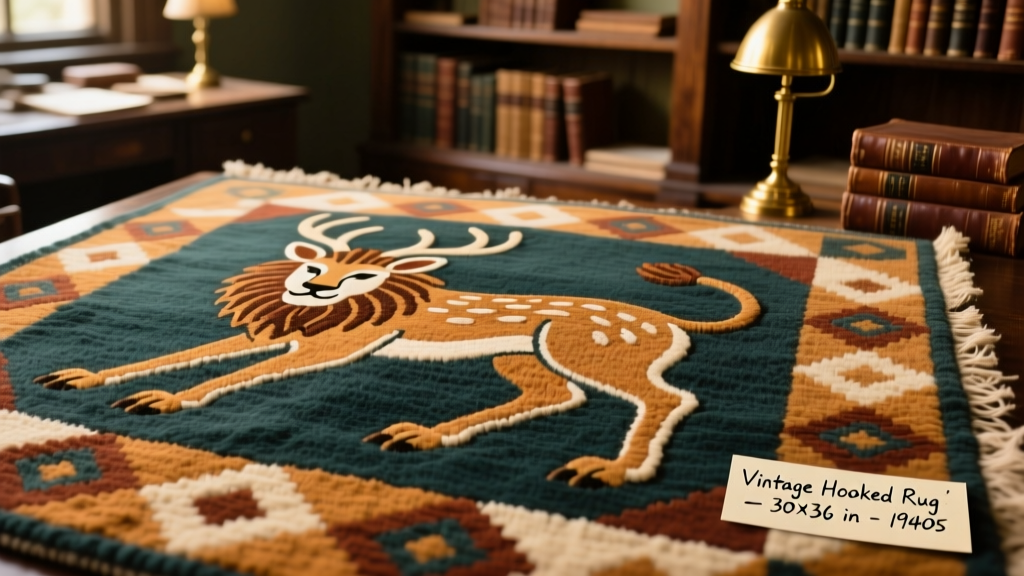
A Closer Look at the Hooked Rug: 'Truck Center Animal Corners, Variegated Ground' — A Mid-Century American Folk Art Treasure
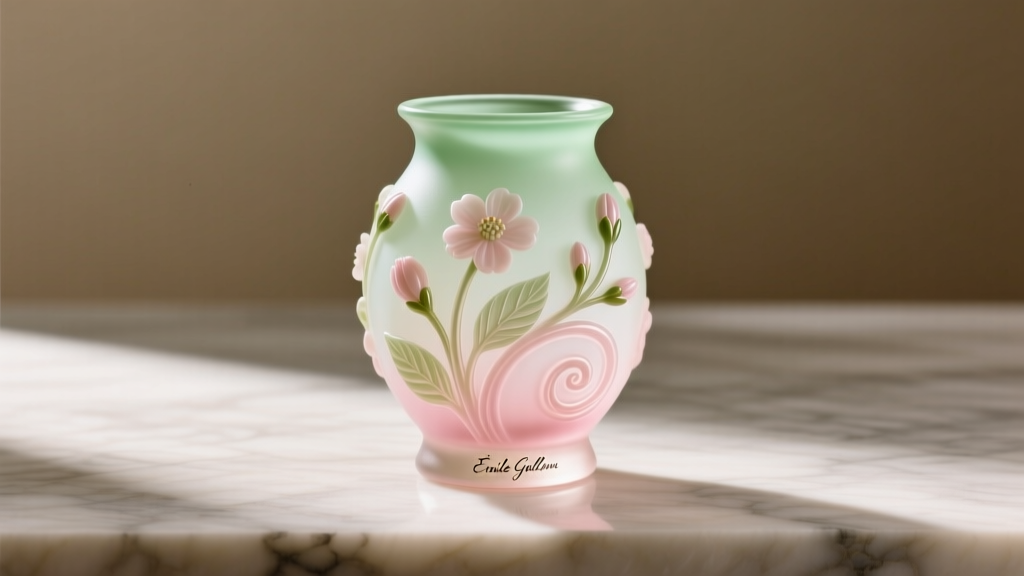
Gallé Vase: Bud, Flowers, Leaves in Pastel Green and Pink with Frosted Cameo Glass — Signed, 6-Inch Masterpiece
Lunch Boxes Bonanza: The Metal Aladdin Phenomenon in Mid-Century American Collectibles
Quimper Relish Dish, Two-Section Handle with Pecheurs Decoration: A Study in Breton Faience Heritage
Snuff Agate Puddingstone Carved Flower Mask Mock Ring Handle: A 1¾-Inch Victorian Masterpiece in Mineral and Craft