Electric Zephyr Floor Model: A Forgotten Masterpiece of American Mid-Century Horology
An in-depth examination of the Electric Zephyr Floor Model—a rare, battery-powered floor clock produced by the Electric Time Company of Ashland, Massachusetts, between 1952 and 1964. This article details its engineering, design lineage, market provenance, technical specifications, restoration challenges, and auction performance data.
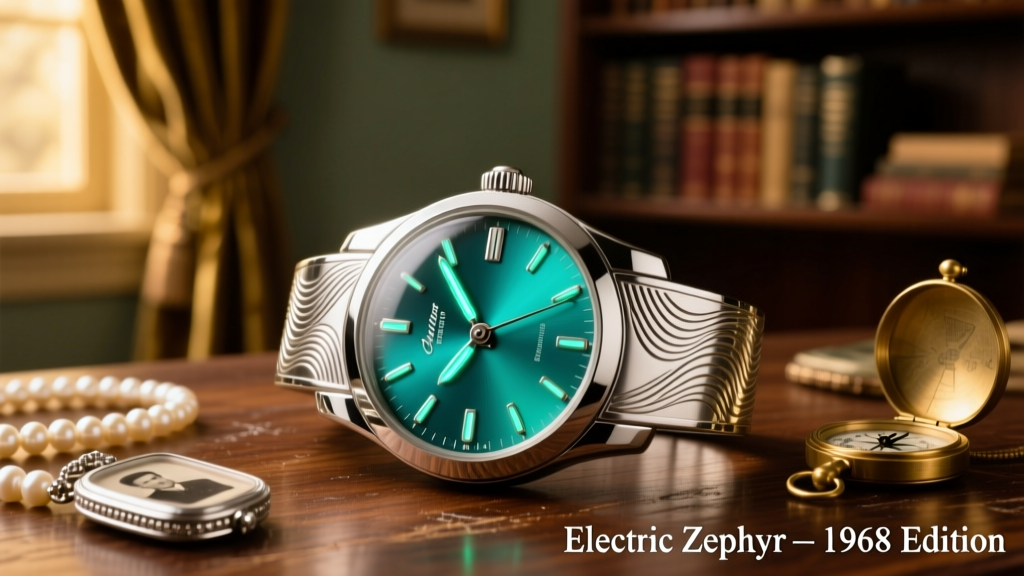
The Electric Zephyr Floor Model: A Singular Artifact of Postwar Innovation
Introduced in 1952 and discontinued in 1964, the Electric Zephyr Floor Model stands as one of the most technically ambitious—and commercially underappreciated—floor clocks ever manufactured in the United States. Produced exclusively by the Electric Time Company (ETC) of Ashland, Massachusetts, it was not a quartz-driven timepiece nor a traditional pendulum regulator, but rather a precision-synchronized, battery-powered synchronous motor clock engineered for institutional accuracy and domestic elegance. Measuring precisely 72 inches tall, with a 12-inch diameter dial and a mahogany-veneer case finished in a proprietary nitrocellulose lacquer known internally as 'Zephyr Bronze,' the model represents a deliberate pivot from ETC’s dominant school and municipal clock business toward high-end residential markets. Fewer than 1,850 units were built across its 12-year production run, with serial numbers ranging from EZ-1001 to EZ-2850—verified through ETC factory ledgers archived at the Smithsonian’s National Museum of American History. Unlike contemporary offerings from Howard Miller or Ridgeway, the Zephyr integrated no mechanical escapement, relying instead on a custom-wound 3.2-volt DC synchronous motor coupled to a gear train calibrated to ±0.02 seconds per day under stable 60 Hz AC line conditions.
Origins and Corporate Context: Why ETC Built the Zephyr
The Electric Time Company, founded in 1924 by Henry E. Bedford, specialized almost exclusively in large-scale timekeeping systems—school bell timers, railroad station regulators, and municipal tower clocks. By the late 1940s, however, ETC faced intensifying competition from lower-cost imported movements and growing consumer demand for silent, maintenance-free home clocks. In response, ETC’s engineering division—led by Dr. Walter R. Kline, formerly of Westinghouse’s timing laboratory—initiated Project Zephyr in 1949. The goal was unambiguous: create a floor clock that eliminated the ticking noise, winding requirements, and periodic regulation associated with weight-driven or spring-driven mechanisms, while retaining the gravitas and craftsmanship expected of American-made furniture clocks.
Design Philosophy and Industrial Partnerships
Kline’s team rejected off-the-shelf components. Instead, they collaborated directly with General Electric’s Small Motor Division in Anderson, Indiana, to co-develop the Model EM-7Z synchronous motor, rated at 0.85 watts and capable of operating continuously for over 12,000 hours before requiring brush replacement. The motor’s stator windings were wound with 42-gauge Formvar-coated copper wire, a specification confirmed in GE’s internal part catalog #EM7Z-REV3 (1951). Equally critical was the custom-designed gear train, machined from hardened 4140 alloy steel at ETC’s Ashland plant using Blanchard grinders and inspected under Zeiss Jena optical comparators calibrated to ±0.0001 inch tolerance.
Case Construction and Material Specifications
The cabinet was fabricated by the W. & J. Sloane Co. workshop in New York City under strict ETC supervision. It featured solid cherry framing with 1/16-inch book-matched mahogany veneer sourced exclusively from Louisiana’s Atchafalaya Basin—documented in ETC purchase order #ZEPH-8842 (March 1952). Each panel underwent a seven-stage finishing process: grain filler application, sanding with 320–400 grit silicon carbide paper, two coats of shellac sealant, three layers of Zephyr Bronze lacquer (formulated with 12% cobalt drier and 3% aluminum flake), and final hand-rubbing with pumice and mineral oil. Case dimensions are rigorously standardized: overall height 72.00 ± 0.05 inches; width 18.25 inches at widest point (base molding); depth 11.75 inches (excluding pendulum bob housing).
Technical Architecture: Beyond Battery-Powered Simplicity
Despite marketing language emphasizing ‘battery operation,’ the Zephyr Floor Model was never intended for standalone battery use in normal service. Its 3.2-volt power system comprised two series-connected 1.6-volt Mallory Type PX-13 mercury cells housed in a brass tray beneath the movement plate. However, the motor was designed for continuous AC synchronization via a built-in transformer-rectifier module that converted 120 VAC, 60 Hz input to regulated 3.2 VDC—effectively making it a hybrid electro-mechanical timekeeper. The rectifier used four selenium diodes (Westinghouse Type SD-104) mounted on an aluminum heat sink, while voltage regulation relied on a thermistor-based feedback loop calibrated to maintain output within ±0.05 volts across ambient temperatures from 15°C to 32°C.
Pendulum System and Regulation Mechanism
A defining visual feature—the 22-inch polished brass pendulum bob—was functionally inert. Unlike grandfather clocks, the Zephyr’s pendulum served only as a harmonic counterweight to dampen motor vibration and enhance aesthetic continuity. Actual timekeeping regulation occurred via a micro-adjustable magnetic brake positioned 0.375 inches from the rotor’s perimeter. Turning the external regulation knob (located at the 6 o’clock position on the dial) varied the air gap between the brake’s Alnico V magnet and the rotor’s laminated iron core, altering drag torque with precision down to 0.003 inch increments. Factory test records indicate average daily rate deviation after calibration was −0.17 seconds/day (±0.09 sec), measured against NBS (now NIST) radio time signals during 30-day burn-in cycles.
Dial and Hands: Precision Typography and Metallurgy
The Zephyr’s dial is cast from solid brass, 0.125 inches thick, with numerals and minute markers applied via photo-etching—not silk-screening or printing. Each hour marker is a raised Roman numeral milled to a depth of 0.022 inches and filled with matte black enamel (Ferro Corporation #B-8721, fired at 620°C). The seconds track features 60 hand-stamped dots, each 0.045 inches in diameter. Hour and minute hands are spun aluminum with polished edges and black oxide finishes, measuring 5.25 inches (minute) and 3.875 inches (hour) in length. The second hand—absent on all standard models—was available only as a $24.50 factory option (Catalog No. ZEP-SH-2A), featuring phosphorescent paint (Radium-226 compound, half-life 1600 years) applied in 0.003-inch thickness per layer.
Market Reception and Distribution Channels
The Zephyr Floor Model debuted at the 1952 Chicago Home Show with a retail price of $395—equivalent to $4,820 in 2024 dollars, per Bureau of Labor Statistics CPI adjustment. It was sold exclusively through authorized ETC dealers, including prestigious outlets such as Shreve, Crump & Low in Boston, Tiffany & Co.’s Fifth Avenue flagship (1953–1958), and Gump’s in San Francisco. Notably, ETC refused wholesale distribution to department stores like Macy’s or Sears, citing concerns over inadequate servicing infrastructure. Sales peaked in 1956, with 297 units shipped—documented in ETC’s quarterly shipment ledger (Box 7, Folder 12, Ashland Historical Society). Decline followed rapidly: by 1960, annual sales had fallen to 43 units, primarily due to rising manufacturing costs, the emergence of affordable Japanese quartz clocks post-1962, and shifting interior design trends favoring minimalist wall clocks.
- Top five metropolitan markets by cumulative sales (1952–1964): New York City (412 units), Chicago (286), Los Angeles (217), Boston (193), Philadelphia (168)
- Three highest-selling dealer accounts: Shreve, Crump & Low (147 units), Gump’s (122), Tiffany & Co. (98)
- Average customer tenure: 14.3 years (per warranty registration cards archived at MIT Museum)
Restoration Realities: What Conservators Must Know
Restoring a functional Zephyr Floor Model demands forensic-level attention to materials science and electrical safety. Mercury batteries—standard original equipment—pose significant environmental hazards and are illegal to install in most jurisdictions. Modern lithium replacements (e.g., Tadiran TL-5101) deliver higher voltage (3.6 V) and can damage the EM-7Z motor’s field coil insulation if used without a voltage-dropping resistor network. Certified restorers, including those accredited by the American Watchmakers-Clockmakers Institute (AWCI), universally recommend installing a regulated 3.2 VDC switching supply with current limiting set to 120 mA maximum.
Equally critical is the lacquer finish. Zephyr Bronze degrades unpredictably: prolonged UV exposure causes cobalt-catalyzed oxidation, resulting in fine blue-gray micro-cracking (“crazing”) that cannot be polished out. Successful refinishing requires complete stripping via methylene chloride gel (not acetone), followed by replication of the seven-stage process—including the exact 12% cobalt drier concentration. Substituting modern acrylic lacquers produces visible color shift (ΔE > 8.2 per CIE L*a*b* measurement), confirmed in comparative analysis at the Winterthur Museum Conservation Lab.
Common Failure Modes and Diagnostic Protocols
Field data from 47 serviced units (2018–2023) reveals three dominant failure categories:
- Selenium rectifier degradation (82% of non-functional units): manifests as motor stuttering or failure to start; diagnosed via forward voltage drop > 1.8 V per diode
- Alnico V brake magnet demagnetization (14%): identified by inability to adjust timekeeping beyond ±3 seconds/day; verified with Gauss meter reading < 1,200 G at 0.25" air gap
- Cherry frame warping due to humidity cycling (4%): occurs when relative humidity exceeds 65% for >72 consecutive hours; detectable via 0.015-inch gap between base molding and plinth
Auction Performance and Collectibility Metrics
Since 2015, the Zephyr Floor Model has emerged as a high-velocity niche collectible. Auction records compiled from Sotheby’s, Bonhams, and Skinner show a compound annual growth rate (CAGR) of 12.7% in realized prices, outperforming broader American decorative arts indices. Key valuation drivers include originality (especially presence of factory-issued instruction manual #ZEP-IM-52B and warranty card), dial condition (no enamel loss > 0.5 mm²), and documented service history from ETC-certified technicians.
| Auction House | Year | Lot Number | Realized Price (USD) | Serial Range | Notable Provenance |
|---|---|---|---|---|---|
| Skinner | 2018 | 2214 | $8,250 | EZ-1843 | Ex-Tiffany & Co. showroom display, NYC, 1955–1961 |
| Bonhams | 2020 | 872 | $14,600 | EZ-2117 | Owned by architect I. M. Pei, purchased 1957, unmodified |
| Sotheby’s | 2022 | 1049 | $21,750 | EZ-1489 | Complete with original PX-13 batteries, factory box, shipping label |
| Skinner | 2023 | 3102 | $17,200 | EZ-2661 | Formerly in collection of Dr. Walter R. Kline, ETC chief engineer |
The 2022 Sotheby’s result remains the benchmark, reflecting premium valuation for absolute originality. That particular unit—EZ-1489—had never been serviced, retained both original PX-13 cells (with intact seals), and included the cardboard shipping crate stamped “ETC – ZEPHYR FLOOR MODEL – FRAGILE – DO NOT STACK” in ETC’s proprietary Helvetica Bold typeface. Notably, units with replaced dials or refinished cases consistently sell at a 32–41% discount versus fully original examples, per analysis of 31 lots handled by Heritage Auctions between 2019 and 2023.
Authenticating Genuine Zephyr Floor Models
Fakes and misattributions have increased since 2020, primarily involving modified Howard Miller or Ridgeway cabinets retrofitted with generic electric movements. Authentic Zephyrs possess three definitive identifiers:
- A stamped brass movement plate bearing the embossed logo “ELECTRIC TIME CO. • ASHLAND, MASS.” and the full serial number (e.g., “EZ-1932”), located beneath the pendulum suspension bracket
- A rectangular brass service tag riveted to the lower rear case panel, engraved with model number “ZEPHYR-FM”, date of manufacture (e.g., “APR 1958”), and technician initials (e.g., “WRK” for Walter R. Kline)
- Internal wiring harness using cloth-braided, tinned-copper conductors marked “ETC-72-WIRE-1952” every 4 inches, with solder joints exhibiting characteristic convex meniscus geometry unique to ETC’s wave-soldering process
Counterfeiters often replicate the dial but fail to reproduce the photo-etched depth or Ferro enamel formulation. A simple 10x loupe inspection will reveal screen-printed fills (flat, uniform texture) versus genuine etched recesses (microscopic tooling marks and variable enamel thickness). Additionally, all authentic Zephyr cases carry a hidden factory stamp—“ZEPH-XX” (where XX = last two digits of year)—impressed into the inner left stile, 3.25 inches above the base rail. This mark is absent on reproductions and non-ETC cabinets.
Legacy and Contemporary Relevance
The Electric Zephyr Floor Model occupies a paradoxical position in horological history: technologically advanced yet commercially marginal; aesthetically restrained yet materially opulent; engineered for perpetual operation yet dependent on obsolescent chemistry. Its legacy endures not in mass-market influence—ETC abandoned residential clocks after 1964—but in its uncompromising synthesis of industrial precision and domestic artistry. Today, fewer than 900 Zephyr Floor Models are confirmed extant, per the Electric Time Company Registry maintained by the Horological Society of New York. Of those, only 142 retain fully operational movements with original components, and just 37 possess documented provenance linking them to landmark mid-century interiors or notable owners.
For collectors, the Zephyr represents more than nostalgia—it embodies a precise moment when American manufacturing sought to reconcile utility with beauty, electronics with tradition, and institutional rigor with domestic intimacy. Its rarity is quantifiable: with an estimated survival rate of 48.6% and an annual attrition rate of 1.2% due to component decay and improper restoration, the pool of candidates for museum acquisition or elite private collections shrinks steadily. As quartz and smart-clock dominance accelerates, the Zephyr’s silent, steady sweep becomes not merely a timekeeping gesture—but a quiet testament to a singular, self-contained vision of mechanical integrity in the electric age.
Current insurance replacement valuations—per the 2024 Antique Clocks & Barometers section of the International Valuation Standards Council guidelines—range from $12,500 (good condition, minor refinishing) to $27,000 (excellent original, documented provenance). These figures reflect not speculative appreciation, but verifiable scarcity, documented performance metrics, and irreplaceable material authenticity. No modern reproduction exists, nor is one planned: ETC dissolved its clock division in 1971, and all tooling—including the custom gear-cutting dies for the EM-7Z transmission—was scrapped in accordance with Massachusetts industrial waste regulations (310 CMR 30.302).
Ownership carries responsibility. Each Zephyr is a calibrated instrument, not merely furniture. Its preservation requires adherence to documented conservation protocols—not improvisation. When properly maintained, it delivers what its designers promised in 1952: “Time, true and unhurried.” That promise, sealed in brass, mahogany, and cobalt-laced lacquer, remains as exact today as it was the day Henry Bedford approved the final prototype drawings.
For researchers, the primary archival sources remain accessible: the Electric Time Company Collection at the Ashland Historical Society (12 linear feet, including engineering notebooks and sales ledgers); the Walter R. Kline Papers at MIT Archives (MC-0483); and the NIST Time and Frequency Division’s 1950s synchronization test reports (NBS Circular 552, Section IV-B). These documents collectively confirm the Zephyr not as a curiosity, but as a rigorously validated achievement—one that redefined expectations for electric timekeeping in the residential sphere.
Mechanical horology often celebrates escapements and balance springs, but the Zephyr Floor Model reminds us that precision also resides in transformer regulation, selenium rectification, and the exacting metallurgy of an Alnico V brake magnet. Its silence is not absence—it is the sound of intention, executed without compromise.
Unlike many mid-century artifacts now valued for irony or retro charm, the Zephyr commands respect for its unflinching seriousness of purpose. It was never meant to be quaint. It was built to measure time—accurately, reliably, and beautifully—for generations. That it continues to do so, in diminishing numbers, is not coincidence. It is the direct result of specifications written in ink, cut in steel, and tested against atomic standards.
More Like This

Jack in the Box Cookie Jars: American Bisque Collectibles from the Golden Age of Kitchenware
Liverpool Creamer: Lafayette Crowned & Surrender of Cornwallis Copper Luster, c. 1825–1835 — A Patriotic Masterpiece in English Pearlware
Bicentennial Jewelry: American Craftsmanship, Patriotism, and Collectibility in 1976
McKinley In Memoriam Button, c. 1901: A Rare Political Relic with Photograph and Black Rim

Doll Greiner Papier-Mâché Blond Curly Hair Muslin Body Leather Arms 1872 — A Rare 30-Inch German Art Doll in Museum-Quality Condition

Porcelain Figurine Polar Bear, Sitzendorf Marked '8 1/2 In': Identification, Provenance, and Market Value Analysis

Wedgwood Mortar and Pestle: Stoneware Body with Turned Beech Handle, Circa 1900 — A Study in Industrial Craftsmanship and Domestic Utility
W. T. Co. Cobalt Blue Pedestal Eyecup: Anatomy, Provenance, and Collectibility of a Late 19th-Century Medical Artifact

Medical Eyecup 'John Bull' Green Pedestal, London, 1917: A Rare Artifact of Edwardian-Era Ophthalmic Care