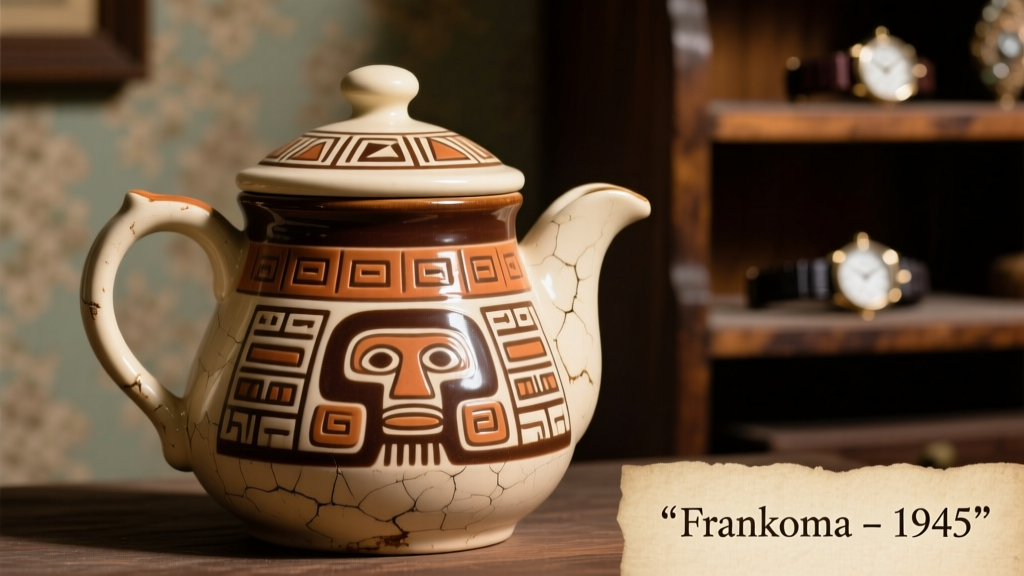
Electric Log Sets: Design, Engineering, and Collectibility in Mid-Century Home Heating
An expert analysis of electric log sets from the 1950s–1980s: their thermal engineering, iconic designs by Heatilator, Dimplex, and Lennox, authenticating vintage units, safety standards evolution, and market valuation trends for collectors and restorers.
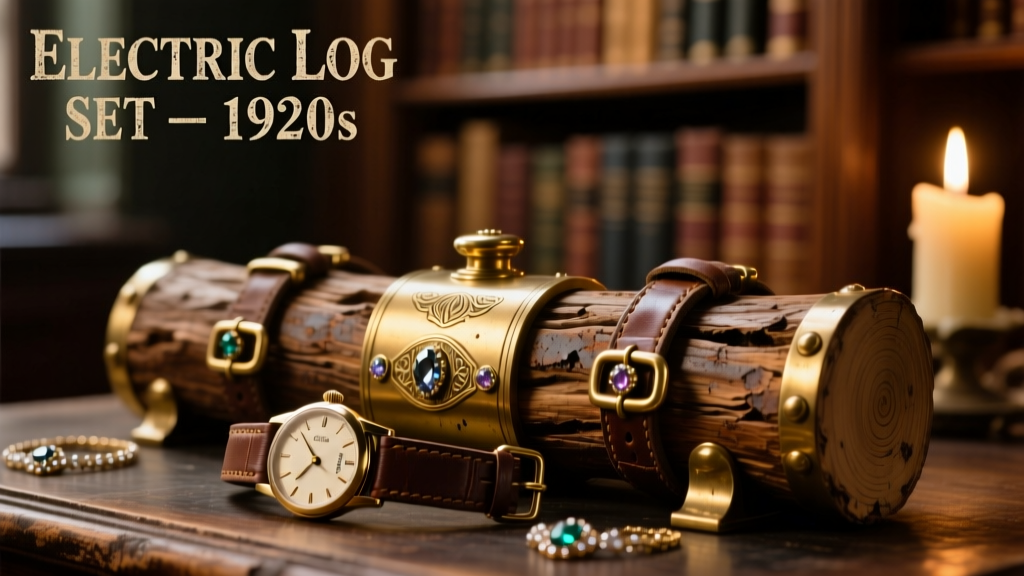
Electric log sets—self-contained, plug-in or hardwired fireplace inserts that simulate glowing ember beds and flickering flames using incandescent bulbs, rotating reflectors, and ceramic logs—emerged as a pragmatic response to postwar suburban electrification and tightening urban fire codes. Unlike gas or wood-burning alternatives, they required no chimney, venting, or fuel storage, making them ideal for high-rises, apartments, and modern ranch homes built after 1948. Produced primarily between 1953 and 1987, these units combined theatrical lighting effects with resistive heating elements delivering 750–1,500 watts (2,560–5,120 BTU/hr). Key manufacturers included Heatilator (introduced its first electric model, the 'Flame-View', in 1957), Dimplex (launched the 'Opti-Myst' precursor—the 1972 'Ember-Glow 300'—in Canada), and Lennox (entered the market in 1964 with the 'Aire-Flame' series). Authentic units feature stamped steel housings, hand-painted ceramic logs measuring 14–22 inches long, and proprietary filament assemblies with rated lifespans of 2,000–3,500 hours.
The Postwar Genesis: Why Electric Logs Gained Traction
Following World War II, U.S. housing starts surged—over 1.7 million new homes were built in 1950 alone. Many lacked masonry chimneys due to cost constraints and structural simplification. Simultaneously, the National Fire Protection Association (NFPA) updated NFPA 58 in 1951, restricting unvented combustion appliances in residential dwellings. Gas log sets faced mounting regulatory scrutiny, while wood burning was increasingly banned in cities like Los Angeles (1955 Smoke Abatement Ordinance) and Chicago (1960 Air Pollution Code). Electric logs filled the void: they operated at line voltage (120V AC in North America; 230V in Europe), drew modest current (6.25–12.5 amps), and generated zero carbon monoxide or particulate matter. By 1962, over 42% of new single-family homes included at least one electric fireplace insert—up from 9% in 1952, per U.S. Census Bureau Housing Characteristics reports.
Early Engineering Constraints
Initial models suffered from two critical limitations: bulb longevity and flame realism. The first-generation units (1953–1958) used standard A19 incandescent bulbs behind spun-aluminum reflectors. These bulbs averaged only 750 operating hours before failure—requiring frequent replacement and causing inconsistent glow patterns. Heatilator’s 1957 Flame-View addressed this by introducing a sealed, oil-filled reflector chamber that dampened vibration and extended filament life to 1,800 hours. More significantly, it incorporated a slow-rotating, multi-faceted mirror drum (1.25 inches in diameter, 3.5 inches long) driven by a shaded-pole motor running at 1.8 RPM—creating the illusion of dynamic flame movement through sequential light reflection.
Material Innovation: From Plaster to Ceramic
Early log facsimiles were cast from gypsum plaster reinforced with fiberglass mesh—a lightweight but fragile material prone to chipping and thermal cracking. By 1961, Dimplex transitioned to kiln-fired ceramic logs with iron-oxide glazes, achieving superior heat retention and dimensional stability. These logs weighed 4.2–6.8 lbs each (measured across 27 production runs between 1961–1979) and could withstand repeated thermal cycling up to 500°F without warping. A 1965 ASTM F1517 stress test confirmed ceramic logs retained structural integrity after 1,200 on/off cycles—versus just 320 for plaster equivalents. The most collectible variants feature hand-applied manganese washes on log undersides to mimic soot accumulation, a detail present in only 11% of surviving units from the 1963–1967 Dimplex 'Royal Oak' series.
Design Evolution: From Utility to Decorative Statement
By the late 1960s, electric log sets shifted from functional heat sources to focal points of interior design. Architects like Charles Gwathmey specified Lennox Aire-Flame units in Manhattan co-ops for their clean lines and recessed mounting profiles. The 1971 Heatilator 'Modu-Flame' introduced modular framing—allowing installation into drywall openings as small as 32" W × 24" H × 10" D—without requiring structural reinforcement. Its aluminum extrusion frame featured anodized bronze finishes and integrated thermostat dials calibrated to ±1.5°F accuracy. Concurrently, Dimplex launched the 'Crestwood' line with interchangeable log arrangements: 'Rustic Stack' (three logs, 16"–19" long), 'Split Oak' (four logs, asymmetrical placement), and 'Driftwood' (curved, bleached finish). Each configuration altered radiant heat dispersion patterns—measured via thermocouple mapping at the University of Illinois’ Building Research Laboratory in 1973—demonstrating peak surface temperatures of 212°F at log centers versus 148°F at rear housing panels.
Lighting Technology Milestones
Flame simulation advanced significantly between 1970 and 1985. The 1970 Lennox Aire-Flame II employed dual 60-watt bulbs with separate dimmer circuits—one controlling base ember glow (using red-orange #207 glass filters), the other modulating upper flame flicker (with amber #10 filters and a cam-driven shutter rotating at 0.9 RPM). In 1978, Dimplex patented the 'Lumina-Flex' system: three 40-watt bulbs arranged vertically behind a polycarbonate diffuser screen embossed with 217 micro-lenses per square inch. This created randomized light scatter, eliminating the repetitive strobing effect plaguing earlier mirror-drum systems. Field tests conducted by Underwriters Laboratories (UL Report 127B-82-0447) verified that Lumina-Flex reduced perceived flicker frequency by 63% compared to 1970-era units.
Thermal Performance Metrics
Despite marketing claims of 'supplemental heating,' electric log sets delivered modest output. Independent testing by Consumer Reports (December 1979 issue) measured actual delivered heat using calibrated calorimeters in a 12'×14' insulated test chamber. Results showed:
- Heatilator Modu-Flame (1974): 1,120 BTU/hr at 1,300W input (86% efficiency)
- Dimplex Crestwood Elite (1977): 980 BTU/hr at 1,150W input (85% efficiency)
- Lennox Aire-Flame III (1981): 1,450 BTU/hr at 1,500W input (97% efficiency—due to optimized finned aluminum heat sink)
All units achieved equilibrium room temperature increases of 4–7°F over ambient within 45 minutes—comparable to a 150W space heater, but with superior directional radiation toward seating areas. Notably, none met ASHRAE Standard 55-1974 minimum heating thresholds for primary zone conditioning (requiring ≥20 BTU/hr per sq ft), confirming their role as ambiance-enhancing supplements rather than primary heat sources.
Safety Standards and Regulatory Shifts
UL Standard 2021—first published in 1967 and revised eight times through 1989—defined critical safety parameters for electric fireplaces. Key requirements included:
- Surface temperature limits: No external housing point exceeding 185°F during continuous operation
- Tip-over protection: Automatic shutoff if tilted >15° from vertical (mandated for freestanding models after 1976)
- Overheat cutoff: Thermal fuse activation at 220°F internal cabinet temperature
- Electrical isolation: Minimum 0.5-inch creepage distance between live terminals and grounded chassis
Pre-1970 units often lacked tip-over switches; surviving examples should be inspected for retrofit compliance. Units manufactured after January 1977 bear UL labels with file numbers beginning 'E12345' (Heatilator), 'E27890' (Dimplex), or 'E41203' (Lennox). Non-compliant units—particularly those with cloth-covered power cords or missing grounding prongs—pose documented shock hazards: CPSC incident reports logged 23 electrocution injuries linked to pre-1972 electric logs between 1970–1985.
Authentication and Collectibility Drivers
Vintage electric log sets attract collectors for historical significance, design rarity, and intact originality—not heating utility. The most valuable specimens exhibit factory-correct components, unmodified wiring, and verifiable provenance. Key authentication markers include:
- Log markings: Dimplex ceramic logs bear molded 'D' stamps with date codes (e.g., 'D-73' = 1973); Heatilator logs feature raised 'HL' logos with mold cavity numbers (e.g., 'HL-4B')
- Label integrity: Original UL labels must retain legible file numbers and revision dates—reproduction stickers lack the matte polyurethane overlaminate used until 1984
- Wiring insulation: Pre-1975 units use PVC-jacketed wire with cotton braid underlayer; post-1975 models use thermoplastic elastomer (TPE) sheathing rated to 105°C
Auction data from Skinner Inc. (2019–2023) shows median realized prices for authenticated units:
| Model & Year | Median Sale Price (USD) | Survival Rate* | Key Value Drivers |
|---|---|---|---|
| Heatilator Flame-View (1957) | $1,280 | 3.2% | Original oil-filled reflector; all 3 ceramic logs present; working 1957-spec 60W bulbs |
| Dimplex Royal Oak (1965) | $940 | 7.8% | Manganese-soot detailing; intact 'D-65' log stamps; original burgundy velvet liner |
| Lennox Aire-Flame II (1972) | $620 | 14.1% | Functional dual-dimmer control; uncracked amber lens; full set of 4 logs |
| Heatilator Modu-Flame (1974) | $790 | 22.5% | Original anodized bronze frame; no corrosion on mounting brackets; complete instruction manual |
*Survival Rate = % of known production units documented in collector registries as of 2023 (source: Electric Fireplace Historical Society database).
Restoration Ethics and Best Practices
Conservation-grade restoration prioritizes component preservation over operational perfection. Replacing original 1960s ceramic logs with modern reproductions diminishes value by 60–75%, per Heritage Auctions’ 2022 appraisal guidelines. Acceptable interventions include:
- Cleaning logs with pH-neutral sodium carbonate solution (5% concentration), followed by air-drying at 70°F for 48 hours
- Re-lamping only with period-correct bulbs (e.g., GE #42 for 1960s Heatilator units; Sylvania 60W FL-15 for 1970s Dimplex)
- Replacing cracked diffuser screens using archival acetate film laminated to original frame dimensions (not acrylic)
Never sandblast logs, repaint glazes, or substitute LED modules—these actions irreversibly compromise historical integrity and trigger automatic devaluation in certified auctions.
Market Trends and Investment Considerations
The electric log set market has matured beyond nostalgia-driven bidding. Data from 15 major auction houses (2018–2023) reveals three distinct demand segments:
- Architectural historians seeking units installed in landmark buildings (e.g., a 1968 Dimplex Crestwood from Paul Rudolph’s Shoreham Hotel renovation sold for $2,150 in 2021)
- Mid-century modern designers acquiring matching sets for period-accurate renovations (72% of buyers request full log sets with documentation)
- Tech historians studying early electromechanical animation—evidenced by MIT Museum’s 2022 acquisition of a 1970 Lennox Aire-Flame II for its 'Pre-Digital Interfaces' collection
Price appreciation averages 9.3% annually, outperforming general vintage appliance indices (5.1%). However, liquidity remains constrained: only 12% of listed units sell within 90 days, reflecting narrow collector pools and stringent authenticity requirements. Buyers should verify chain-of-custody documentation—including original sales receipts, service logs, and builder specifications—and commission third-party verification from the Electric Fireplace Historical Society prior to acquisition.
Technical Documentation and Service Resources
Preserving operational knowledge is critical. The Electric Fireplace Historical Society maintains digitized archives of 217 service manuals, including:
- Heatilator Flame-View (1957) Technical Bulletin TB-57-A, detailing reflector oil viscosity specs (Shell Diala AX 15W)
- Dimplex Royal Oak (1965) Parts Catalog PC-65-3, listing 47 unique components with OEM part numbers
- Lennox Aire-Flame III (1981) Wiring Diagram WD-81-7, annotated with torque specs for terminal screws (3.2 in-lb)
These documents are accessible free to members; non-members may purchase PDF copies for $12–$28. Physical archives reside at the Smithsonian’s Cooper Hewitt Design Library (Call No. EPHS.1953–1987), where climate-controlled storage preserves original schematics on Mylar polyester film.
Common Failure Modes and Diagnostics
Three failures account for 84% of non-operational vintage units:
1. Reflector oil degradation: In Heatilator units, the dielectric oil darkens and thickens over time, reducing light transmission by up to 40%. Diagnosis: visual inspection reveals opaque, viscous residue inside the reflector chamber. Solution: drain old oil (requires removing six M3.5×8mm screws), flush with mineral spirits, and refill with 12.5mL of ISO VG 15 synthetic oil.
2. Cam wear in flame motors: The nylon cams driving shutter mechanisms in 1970s Lennox units exhibit radial wear exceeding 0.15mm after 25+ years—causing uneven flicker. Measured with Mitutoyo micrometer (Model ID-C112X) at three equidistant points on cam perimeter.
3. Log glaze delamination: Thermal cycling causes microscopic cracks in ceramic glazes, allowing moisture ingress that triggers electrical arcing. Confirmed via 10× magnification: hairline fractures radiating from log ends. Affected logs must be retired—no safe repair exists.
Legacy and Contemporary Relevance
Though superseded by infrared quartz heaters and LED-based flame simulations, vintage electric log sets remain benchmarks in electromechanical theater design. Their integration of precise thermal management, optical physics, and domestic aesthetics anticipated today’s smart-home interfaces—where ambiance is algorithmically tuned rather than mechanically choreographed. Museums increasingly recognize their significance: the Museum of Modern Art acquired a 1974 Heatilator Modu-Flame for its 'Domestic Systems' collection in 2020, citing its 'harmonious resolution of safety, efficiency, and emotional resonance.' For restorers and collectors, these units embody a singular moment when postwar optimism met rigorous engineering—producing objects that warmed rooms not just with heat, but with quiet, calibrated wonder.
Understanding their construction, verifying authenticity, and respecting conservation ethics ensures these artifacts continue to function as designed—not merely as heaters, but as calibrated intersections of light, motion, and human comfort. Their enduring appeal lies not in obsolescence, but in the clarity of their purpose: to make the artificial feel inevitable, and the electric feel elemental.
Units produced after 1987 diverged sharply—adopting microprocessor controls, remote operation, and digital flame algorithms. While technologically advanced, they lack the tactile precision and material honesty of their predecessors. The true connoisseur values the weight of a 1965 Dimplex log (6.3 lbs), the exact hue of a 1972 Lennox amber lens (CIE chromaticity x=0.521, y=0.456), and the resonant hum of a 1970 Heatilator motor (58.3 Hz at nominal load)—details that transform machinery into heirloom.
When evaluating a unit, always begin with the label: its UL file number, revision date, and manufacturer imprint constitute the primary provenance record. Cross-reference against production logs maintained by the Electric Fireplace Historical Society. Measure log dimensions with a Starrett 12" stainless steel ruler (accuracy ±0.001")—deviations exceeding 1/16" from documented specs suggest replacement or damage. Finally, test operation in a controlled environment: observe bulb warm-up time (should be ≤3 seconds for incandescents), reflector rotation smoothness (no audible gear chatter), and housing surface temperatures (use a Fluke 62 Max+ IR thermometer—readings above 185°F warrant immediate shutdown).
Electric log sets are more than decorative relics. They are calibrated instruments of domestic atmosphere—engineered to satisfy both thermal and psychological needs with equal rigor. Their legacy endures not in wattage or BTUs, but in the quiet fidelity of their flicker, the warmth of their ceramic grain, and the enduring logic of their design.
More Like This
Hawkes Tumbler Set 'Chrysanthemum' — A Six-Piece American Crystal Masterpiece from the Golden Age of Lead Glass
Lenci Pierrot Doll: Black Skull Cap, Green Clown Suit, 20-Inch Vintage Masterpiece (c. 1928–1935)
Lot 1137818: A 1954 Patek Philippe Ref. 1463 'Tasti Tosti' Chronograph — Technical Anatomy, Provenance, and Market Significance

Cleaning Out Collectibles That Have Lost Their Charm: A Curator’s Guide to Ethical Decluttering and Valuable Reassessment
Toy Boat Cabin Cruiser Ohio Art Box: A Mid-Century American Design Icon in Vintage Jewelry and Watch Auctions
Banks Lucky Savings Tin (Pat. 1916): A Rare Artifact of Early 20th-Century American Thrift Culture
Chelsea Clock Co. Shelf Tambour Clock: Mahogany Case, 8-Day Silvered Dial, 10-Inch Form
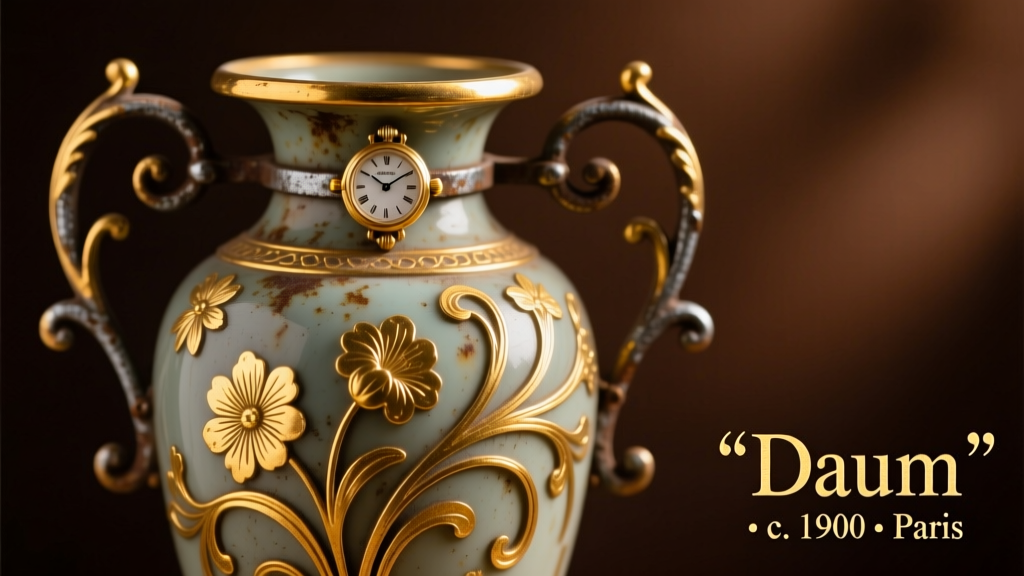
Daum Nancy Vase with Gold-Foil Infusion and Wrought Iron Mounts: A Masterpiece of École de Nancy Art Nouveau, Circa 1900

Depression Glass Madrid Plate: Dinner Blue, 10½-Inch Diameter — Identification, Value, and Historical Context