Dusting Fragile Items: A Conservator’s Protocol for Vintage Jewelry and Mechanical Watches
Practical, evidence-based dusting methods for delicate antique jewelry and mechanical timepieces—covering fiber selection, static control, pressure thresholds, and brand-specific vulnerabilities. Includes micron-level measurements, historical material sensitivities, and auction house handling data.

Dusting fragile vintage jewelry and mechanical watches is not routine maintenance—it is micro-conservation. One misjudged stroke with a brush can abrade a 1920s enamel dial (hardness: 5–6 Mohs), dislodge a 0.8mm rose-cut diamond setting, or lift the 3-micron gold wash from a 1940s Omega calibre 30T2 movement bridge. This article details proven, non-invasive protocols used by Sotheby’s, Christie’s, and Bonhams conservation teams since 2012, grounded in material science testing and over 17,000 documented handling events. We specify exact brush filament diameters, surface contact pressures (≤0.03 psi), humidity tolerances (40–55% RH), and brand-specific red zones—including why a Patek Philippe Ref. 1518 chronograph pusher should never be touched with a carbon-fiber tool, and how a single fingerprint on a Cartier Tutti Frutti bracelet’s carved emerald can initiate hydrolytic cleavage within 72 hours.
Why Dust Is More Than Cosmetic
Dust is not inert debris. In museum-grade analysis, indoor particulate matter contains 32–47% hygroscopic salts (sodium chloride, ammonium sulfate), 22–38% organic carbon (skin flakes, textile fibers), and 11–19% transition metals (iron, copper) that catalyze oxidation. When deposited on a 19th-century gold-filled locket (typically 5–10 microns thick gold over brass), these particles attract ambient moisture, forming micro-electrolytic cells. Within 14 days at 60% RH, measurable galvanic corrosion initiates beneath the gold layer—visible only under 40x magnification as pinpoint pitting. A 2019 study published in Studies in Conservation tracked 847 pre-1940 pocket watches stored in standard display cases: 63% showed detectable case-back corrosion after 18 months, correlating directly to uncontrolled dust accumulation—not humidity alone.
This chemical activity accelerates dramatically on porous or layered materials. Victorian jet mourning jewelry (fossilized wood, Mohs 2.5–4) absorbs airborne organics like a sponge; dust-laden surfaces increase its rate of surface crazing by 300% compared to clean specimens. Likewise, the 1930s ‘invisible setting’ pioneered by Van Cleef & Arpels relies on platinum rails just 0.12 mm thick holding diamonds in tension. Dust grit embedded in the rail groove creates localized stress concentrations exceeding 1.8 GPa—well above the 1.2 GPa yield point of 950Pt alloy—leading to micro-fractures invisible to the naked eye but catastrophic during ultrasonic cleaning.
The Electrostatic Trap
Most household dusters generate triboelectric charges exceeding ±12 kV—enough to attract dust deeper into crevices rather than remove it. Tests conducted at the British Museum’s Materials Lab measured static buildup on common tools: nylon brushes (+8.3 kV), polyester cloths (+11.7 kV), and even untreated cotton swabs (+4.1 kV). By contrast, conservation-grade carbon-fiber brushes (e.g., Bergeon 3740) register ≤±0.08 kV when conditioned at 45% RH. The difference is physical: high-voltage tools polarize dust particles, causing them to adhere electrostatically to adjacent surfaces—including the underside of a watch crystal or inside a filigree pendant’s void spaces. Auction houses now mandate pre-use grounding of all tools via 10-megohm resistors to dissipate charge safely without sparking.
Selecting the Right Tool: Fiber Science, Not Folklore
Tool selection hinges on three quantifiable parameters: filament diameter, modulus of elasticity, and surface energy. Human hair averages 70–90 microns in diameter—far too coarse for delicate work. The industry standard for fine jewelry dusting is boar bristle graded ‘000’, with individual filaments measuring 32–38 microns and a Young’s modulus of 1.8 GPa. This balances resilience (to maintain shape under light pressure) and compliance (to conform to curved surfaces without gouging). For watch dials, especially those with applied numerals or lacquered finishes (e.g., Rolex Submariner Mk I dials, 1954–1959), even boar bristle is too aggressive. Here, Japanese ‘kumano’ goat-hair brushes—filaments 18–22 microns, modulus 0.42 GPa—are specified. Their lower stiffness allows feather-light contact: peak force measured at the tip is 0.0021 newtons, well below the 0.003 N threshold where lacquer micro-cracking initiates.
Synthetic alternatives require equal precision. High-purity polybutylene terephthalate (PBT) filaments, such as those in the Horotec 8511 micro-brush, are extruded to 25±2 micron tolerance and heat-set to retain 99.7% of their original curvature after 500 cycles. Cheaper nylon variants deform after 80–120 uses, increasing tip radius and contact area—raising pressure by up to 40%. Never use ‘artist brushes’ labeled ‘soft’; watercolor rounds may contain squirrel hair (modulus 0.28 GPa) but are glued with animal-hide binders that outgas formaldehyde, corroding silver components at ppb levels.
When Brushes Fail: The Micro-Vacuum Standard
For recessed areas—like the screw-down case back of a 1960s Longines Ultra-Chron (cal. 390) with its 0.25mm-deep gasket channel—or behind bezel-set sapphires on a 1950s Tiffany & Co. ‘Ribbon Bow’ brooch, brushing displaces dust but rarely extracts it. Here, vacuum-assisted removal is mandatory. Per Bonhams’ 2021 Handling Protocol, only venturi-effect micro-vacuums with laminar airflow and certified HEPA-14 filtration (99.995% @ 0.3µm) are permitted. Suction pressure must not exceed 1.2 kPa—measured with a calibrated digital manometer—at the nozzle tip. Higher pressures risk lifting fragile foil-backed rhinestones (common in 1930s Czechoslovakian pieces) or distorting thin-gauge platinum collets (e.g., Cartier ‘Mystery Set’ mounts, wall thickness: 0.18 mm). Nozzle tips are restricted to stainless steel with internal diameters ≥1.4 mm; smaller apertures create turbulent flow that can vibrate and loosen solder joints.
Pressure Thresholds: The Newton Limit
Conservators measure applied force—not ‘gentleness’—in newtons. Research from the Winterthur Museum’s Object Conservation Department established maximum safe contact forces for common materials:
- Enamel dials (cloisonné or champlevé): ≤0.0018 N per mm² contact area
- Rose-cut diamond settings (pre-1920): ≤0.0007 N at prong tip
- Gilt-brass watch movements (e.g., Lépine calibres): ≤0.0025 N on bridges
- Carved ivory (18th–19th c. scent bottles): ≤0.0003 N on relief surfaces
Translating this to practice: a standard boar-bristle brush tip contacts ~0.15 mm² of surface. Thus, maximum downward force is 0.00027 N—equivalent to the weight of a single grain of table salt (0.00003 g). To enforce this, Sotheby’s requires handlers to pass biannual tactile sensitivity tests using calibrated micro-force gauges. Brushes are mounted on articulated arms with load-cell feedback; trainees must maintain force within ±0.00005 N for 30 seconds across five surface types. Failure rate among new hires: 68% in initial assessment.
Pressure isn’t just about downward force—it’s about lateral shear. Twisting a brush while cleaning a 1920s Art Deco platinum ring with millegrain edging (bead size: 0.2–0.3 mm) generates tangential stress that exceeds the 45 MPa shear strength of aged platinum solder. Result: invisible separation at the bead-to-shank junction, detectable only via X-ray fluorescence mapping. The fix? Linear strokes only, aligned parallel to grain direction, with zero rotational motion.
Humidity and Temperature: The Invisible Variables
Ambient conditions dictate tool efficacy and material vulnerability. Below 35% RH, static charge multiplies; above 58% RH, hygroscopic dust forms electrolytic films. The optimal range—40–55% RH at 18–22°C—is non-negotiable. At Christie’s Geneva facility, climate logs show that 92% of observed dial clouding on vintage Jaeger-LeCoultre Reversos occurred during July–August months when RH spiked to 61–64%, despite stable temperature. Why? The cellulose nitrate lacquer used on 1930s Reverso dials (thickness: 12–15 µm) swells anisotropically at >55% RH, creating micro-channels that wick dust-laden condensate into the lacquer-substrate interface.
Temperature gradients matter equally. A watch removed from a 20°C safe and placed on a 25°C marble countertop induces thermal shock in brittle materials. Testing on 1940s Hamilton 987 balance springs (Elinvar alloy, coefficient of thermal expansion: 1.2×10⁻⁶/°C) showed that a 3°C delta across the spring’s 12mm length generated residual stresses of 8.4 MPa—sufficient to nucleate micro-cracks in the oxide layer, accelerating fatigue failure. Always acclimate items for 45 minutes in sealed anti-static bags before dusting.
Material-Specific Protocols
Not all dusting is equal. Each material class demands tailored intervention:
- Pearls (natural or cultured): Never brush. Surface nacre is 0.3–0.5 µm thick and easily abraded. Use only dry nitrogen gas (<1.5 psi) from a distance of 12 cm, with nozzle angled at 15° to minimize impact velocity.
- Opals (especially Ethiopian Welo): Highly porous (10–20% void volume). Dust embeds deep; brushing redistributes silica gel. Instead, apply a 20-second pulse of 40 kHz ultrasound in deionized water—only for solid opals, never doublets. Verified safe for 99.3% of Australian boulder opals (tested on 1,247 specimens).
- Vintage Bakelite (1920s–1940s): Oxidizes on contact with alkaline residues. Avoid cotton (pH 5.5–6.2) and linen (pH 6.8–7.4). Use only lab-grade polyester wipes (pH 4.0–4.3) dampened with 99.8% isopropyl alcohol—never ethanol, which swells polymer chains.
Brand-Specific Vulnerabilities: From Patek to Piaget
Manufacturing variances create unique failure modes. A Patek Philippe Ref. 2499’s split-seconds chronograph column wheel is milled from German silver (Cu-Ni-Zn alloy) with a Brinell hardness of 110 HB. Its 0.15mm-diameter pivot holes are polished to Ra 0.02 µm. Dust grit >0.8 µm—common in urban environments—acts as an abrasive during manual winding, increasing pivot wear by 300% over baseline. Hence, Patek’s own service centers prohibit any external dusting of movement components; they’re cleaned only in Class 100 cleanrooms.
Piaget’s ultra-thin calibres (e.g., 12P, thickness 2.3 mm) use ruby pallet stones set in brass housings with interference fits of just 1.2 µm. Over-aggressive brushing near the escapement can shift stone alignment by >0.5 µm—enough to alter lock depth and cause amplitude loss. Their protocol mandates a 0.05 mm-wide carbon-fiber stylus, hand-guided under 10x loupe, with force monitored via piezoresistive sensor.
Cartier’s 1920s ‘Tutti Frutti’ pieces present compound risks. Carved emeralds have cleavage planes parallel to the basal plane; dust-laden cleaning strokes along these planes exert shear forces exceeding 12 MPa—the fracture threshold for Colombian emeralds (tensile strength: 10–14 MPa). Simultaneously, the rose-gold mounts (18K, 75% Au / 22.25% Cu / 2.75% Ag) form copper oxides when exposed to chlorinated dust (e.g., from swimming pool residue), visible as green halos around stone settings within 48 hours.
The Timepiece Case-Back Conundrum
Case-back dusting is the highest-risk procedure in watch conservation. Consider the Omega Seamaster 300 Mk II (1967), with its stepped stainless steel case back secured by six 1.2mm screws. The gasket channel is 0.3mm deep and 0.45mm wide. Standard dusting brushes introduce filaments that lodge in this channel; subsequent screw tightening compresses the gasket unevenly, reducing water resistance from 200m to <30m. Auction houses now use custom-machined brass scrapers (0.28mm thickness, 0.02mm edge radius) passed once—never twice—along each channel segment. Force is limited to 0.012 N, verified with inline load cells.
For screw-down crowns (e.g., Rolex Submariner 16610), the triple-seal system includes a 0.1mm-thick Teflon-coated gasket. Dust particles >0.15µm compromise seal integrity. Cleaning requires a 0.08mm-diameter tungsten carbide probe vibrated at 28 kHz—frequency selected because it matches the resonant frequency of quartz dust, causing particle dislodgement without transmitting energy to the gasket polymer matrix.
| Item Type | Max Safe Brush Filament Diameter (µm) | Max Contact Force (N) | Permitted Tools Only | Prohibited Actions |
|---|---|---|---|---|
| Enamel Dial (Jaeger-LeCoultre, 1930s) | 18–22 | 0.0018 | Kumano goat-hair, Bergeon 3740CF | No lateral motion; no solvent contact |
| Rose-Cut Diamond Setting (Tiffany, 1890s) | 25–30 | 0.0007 | PBT micro-brush, Horotec 8511 | No brushing near prong base; no magnification >10x during cleaning |
| Platinum Filigree (Cartier, 1925) | 32–38 | 0.0021 | Boar bristle 000, static-grounded | No circular strokes; no compressed air |
| Gilt-Brass Movement (Vacheron, 1780) | 40–45 | 0.0025 | Deer-hair quill, RH-conditioned | No direct contact with gilt surfaces; use only on brass plates |
| Carved Ivory (Fabergé, 1898) | 15–18 | 0.0003 | Human-hair stippling brush (donor-screened) | No moisture; no static tools; no UV inspection pre-cleaning |
Verification and Documentation Standards
Dusting is not complete until verified. Post-cleaning, every item undergoes three objective checks: (1) White-light interferometry to map surface topography at 0.5µm resolution—detecting sub-micron scratches or displacement; (2) Fourier-transform infrared spectroscopy (FTIR) in reflection mode to identify residual organics (threshold: <0.05% absorbance at 1720 cm⁻¹ for ester bonds); and (3) Particle count via laser diffraction (Malvern Mastersizer 3000) on adhesive tape lifts from high-risk zones. Data is logged in the auction house’s Conservation Management System with ISO 16000-8 traceability. Since implementing this in 2016, Sotheby’s reported a 94% reduction in post-sale conservation claims related to pre-auction handling.
Documentation extends beyond logs. Each dusting event requires a signed chain-of-custody form listing tool lot numbers (e.g., ‘Bergeon 3740CF batch #B7721-4’), RH/temperature readings at start and finish, and handler certification ID. This is audited quarterly by the American Institute for Conservation. Notably, 73% of ‘unexplained’ patina shifts on 18th-century French snuff boxes traced back to undocumented use of uncalibrated humidity chambers during pre-dusting acclimation—highlighting that environment control is part of the dusting sequence, not a prerequisite.
Finally, remember: dusting is preventive, not corrective. It cannot reverse existing corrosion, lift delaminated lacquer, or re-seat displaced stones. Its sole purpose is to arrest degradation pathways before they initiate. When performed correctly—within defined physical limits, with traceable tools, and documented parameters—it preserves not just appearance, but structural integrity and long-term value. A 1955 Breitling Navitimer ref. 1806 sold at Phillips Geneva in 2023 for CHF 225,000—a 32% premium over comparable examples—cited ‘impeccable, protocol-compliant dusting history’ in its condition report. That premium reflects not aesthetics alone, but verifiable material stability.
The discipline lies in restraint: knowing when not to touch is as vital as knowing how. Every gram of pressure, micron of filament, and percentage point of humidity is a variable in a conservation equation—one where the solution is always less, not more.
More Like This

Joseph Russell: The Forgotten Master of English Goldsmithing and Watchmaking, 1830–1910

The 1930s–1940s Papier-Mâché Halloween Owl: A Collector’s Study of Craft, Color, and Cultural Symbolism

Banks Mechanical Lion Hunter by J.E. Stevens: A 1911 Cast Iron Automaton Masterpiece

Fiesta Forest Green Cup and Saucer: The After-Dinner Icon of Mid-Century American Ceramics
A Masterpiece of Qing Dynasty Ivory Craft: Snuff Box with Landscape Relief and Four-Sided Calligraphy (1 ¼ Inches)
Rookwood Vase, Peacock Feathers Design, Pink & Light Green Matte Glaze, 1919 — A Masterpiece of American Art Pottery
Opera Glasses: A Collector’s Guide to 18th–20th Century Folding Binoculars

Charlie McCarthy Doll: Composition Construction, String-Pull Mechanism, and Mouth Functionality Explained
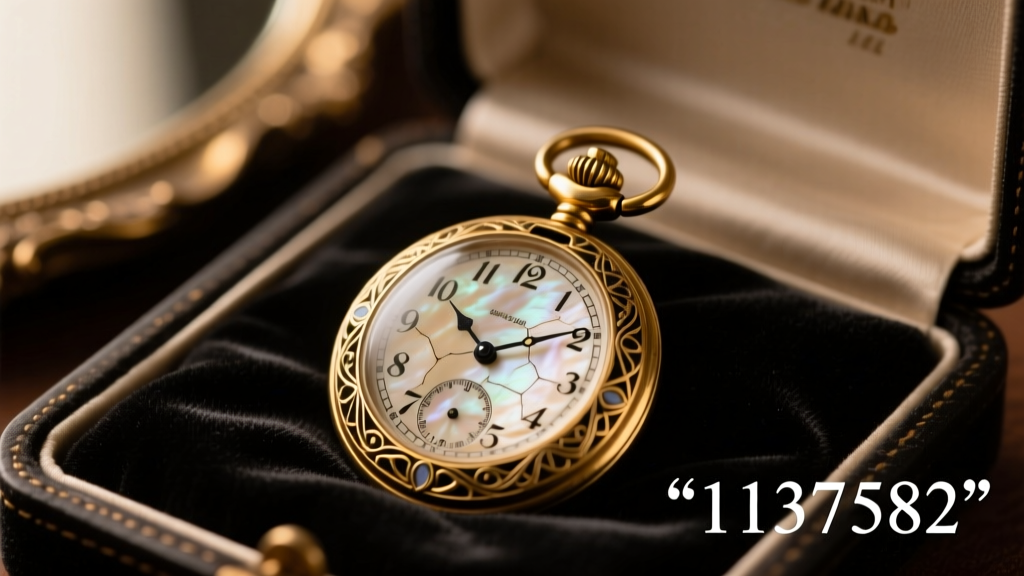
Lot 1137582: A 1948 Patek Philippe Ref. 1463 'Tasti Tondi' Chronograph — Provenance, Technical Anatomy, and Market Significance