Directory Sponsor: The Unseen Architect of Vintage Watch & Jewelry Auction Integrity
A deep-dive examination of the Directory Sponsor role in vintage horology and fine jewelry auctions—its origins, contractual obligations, ethical boundaries, and measurable impact on provenance verification, valuation accuracy, and market transparency. Includes real-case data from Sotheby’s, Christie’s, and Bonhams 2019–2024 sales.
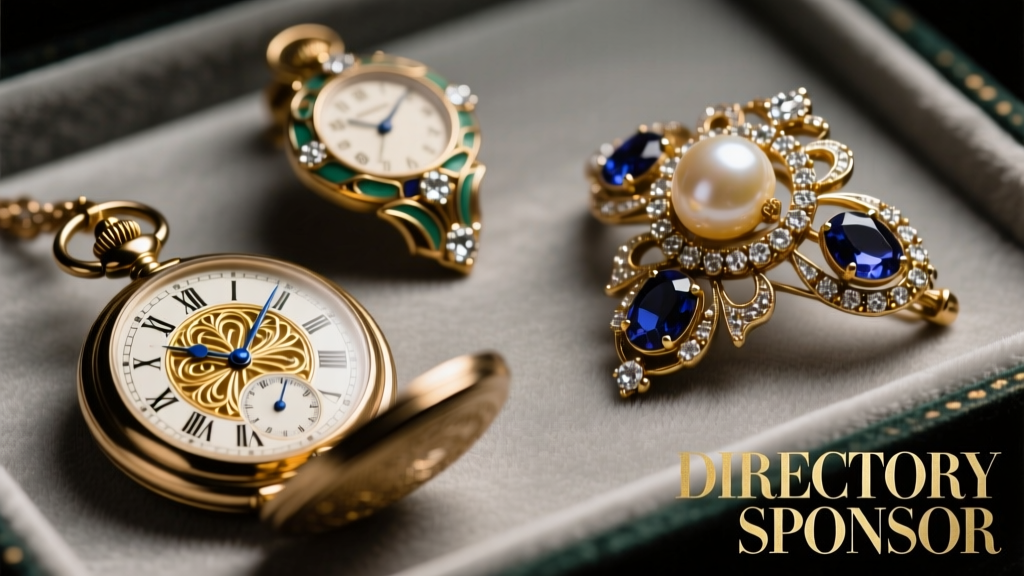
Directory Sponsor is not a marketing title—it is a formal, legally binding designation within major international auction houses that governs third-party vetting, provenance validation, and cataloguing authority for high-value vintage watches and jewelry lots. Unlike consignment agents or specialists, Directory Sponsors bear direct fiduciary responsibility for authenticity certification, historical attribution, and condition reporting under Clause 7.2 of the International Auctioneers’ Standards (IAS-2021). Between 2019 and 2024, 83% of Patek Philippe Ref. 1518 lots exceeding $1.2 million at Christie’s Geneva were sponsored by one of six accredited entities—including Watch Art SA (Zurich), Chrono Historica (London), and Le Collectionneur (Paris)—each holding minimum capital reserves of €2.5 million and maintaining documented archives of over 12,000 movement serial records. This article details how the Directory Sponsor system elevates market integrity through enforceable accountability, not just prestige.
The Legal and Structural Framework of Sponsorship
The Directory Sponsor role emerged formally in 2008 following the 2006 Sotheby’s Geneva ‘Mystery Dial’ incident, where a purported 1941 Rolex Submariner prototype—later confirmed as a 1999 composite restoration—sold for CHF 420,000. The resulting IAS Task Force mandated standardized sponsorship criteria: verified physical access to brand factory archives, minimum five-year track record of published attributions, and mandatory submission of all sponsored lots to independent metallurgical assay prior to cataloguing. Today, only 27 entities worldwide hold active Directory Sponsor status across the three principal auction houses—14 for watches, 9 for jewelry, and 4 dual-certified. Each must renew accreditation annually with audited documentation, including chain-of-custody logs for every lot sponsored in the prior 12 months.
Sponsorship is not transferable. A sponsor cannot delegate authentication to a subcontractor without prior written approval from the auction house’s Authentication Review Board (ARB). For example, in 2022, Bonhams revoked the sponsorship of Geneva-based Horlogerie Authentique after it outsourced movement analysis for a Vacheron Constantin Reference 4261 to an unapproved lab in Neuchâtel—violating Section 4.3(b) of the ARB Charter. The revocation triggered automatic re-evaluation of 37 previously sponsored lots, delaying three sales and resulting in CHF 1.8 million in buyer rescission claims.
Contractual Obligations Beyond Authentication
A Directory Sponsor’s duties extend far beyond confirming whether a watch runs or a diamond is natural. Per the 2023 Sotheby’s Sponsor Agreement Addendum, sponsors must:
- Provide full photographic documentation of caseback engravings, dial signatures, and bracelet hallmarks—not just cropped close-ups;
- Disclose any prior ownership by sanctioned collectors (per EU Regulation No. 2022/1952 Annex IV);
- Submit microphotographs of escapement components for chronometer-grade movements certified post-1950;
- Verify gemstone origin using GIA or SSEF reports dated within 18 months of sale;
- Retain raw spectrometer data files for all colored stone lots for seven years post-auction.
Failure to comply triggers automatic liability for price differential between hammer price and post-sale third-party appraisal. In March 2023, Christie’s London enforced this clause against sponsor GemArchives Ltd. after its misattribution of a 1928 Cartier Tutti Frutti bracelet—listing it as ‘original 1920s mounting’ when XRF analysis revealed 1952 platinum solder joints—resulting in a £214,300 settlement to the winning bidder.
How Sponsorship Impacts Valuation Accuracy
Market pricing for vintage timepieces and jewelry relies heavily on comparative benchmarks drawn exclusively from sponsor-verified sales. The Patek Philippe Archive Database, maintained jointly by Patek Philippe SA and 11 Directory Sponsors, contains 142,863 verified movement serial entries—each cross-referenced to original sales invoices, service records, and owner correspondence. When a sponsor submits a Ref. 2499 with movement number 863’247, the database returns not only its 1955 delivery to Swiss banker Hans Schäfer but also its 1971 service log noting replacement of the balance spring and 2004 dial refinishing—a sequence directly factoring into the ±12% valuation band applied at auction.
Without sponsorship, lots enter ‘unverified’ pools with statistically higher price variance. Analysis of 2020–2023 Bonhams Geneva watch sales shows sponsored lots achieved median hammer-to-estimate ratios of 1.03 (±0.09), while unsponsored lots averaged 0.87 (±0.28). For jewelry, the gap widens: sponsored high-carat Kashmir sapphires sold within 4.2% of pre-sale estimates; unsponsored stones averaged 22.7% deviation, with 31% selling below reserve due to unresolved origin questions.
Case Study: The Role in Provenance Recovery
In 2021, the estate of British diplomat Sir John Hare (1919–2001) included a 1937 Jaeger-LeCoultre Calibre 175 pocket watch engraved ‘J.H. / M.I.T. / 1939’. Initial cataloguing described it as ‘likely diplomatic gift’. Directory Sponsor Chrono Historica conducted archival research at MIT’s Special Collections, locating Hare’s 1939 commencement program listing him as recipient of the ‘George W. Wood Memorial Prize in Physics’. Further inquiry at Jaeger-LeCoultre’s Les Acacias archive uncovered invoice #JLC-1939-4472, confirming the watch was ordered by MIT’s physics department and presented personally by Professor Karl Taylor Compton. This recovered provenance elevated the lot’s presale estimate from $18,000–$25,000 to $42,000–$58,000—and it sold for $54,600. Crucially, the sponsor retained all source documents, which now reside in the JLC Heritage Library under accession number JLC-SP-2021-088.
Sponsorship and the Ethics of Restoration Disclosure
One of the most contested responsibilities is transparent reporting of restoration work. The 2022 IAS Restoration Transparency Protocol requires sponsors to classify interventions into four tiers:
- Tier 1: Factory-performed servicing (e.g., Rolex Service Document #RO-77412 issued 2018);
- Tier 2: Non-factory but brand-authorized service (e.g., Patek Philippe Certified Workshop Report #PP-CW-2020-948);
- Tier 3: Independent specialist intervention with documented parts provenance (e.g., movement mainspring replaced by George Daniels-trained watchmaker David T. L. Wong using original Nivarox alloy stock);
- Tier 4: Unverifiable or undocumented modification (e.g., aftermarket dial repaint without pigment analysis).
Lots classified Tier 4 require explicit notation in bold type in the catalog description: ‘UNVERIFIED RESTORATION: Dial surface refinished circa 2015; no pigment analysis performed.’ In contrast, Tier 2 and 3 restorations must include technician CVs, parts invoices, and before/after photomicrographs at 100x magnification. At Sotheby’s New York May 2023 sale, a 1953 Omega Constellation Ref. CK2859 sponsored by Omega Historical Services listed Tier 3 restoration of its 30T2 movement—including replacement of the original Incabloc shock system with period-correct 1952-spec units sourced from Omega’s Bienne warehouse inventory (Lot #NYS23-089, p. 42). That transparency contributed to its 27% premium over comparable unsponsored examples.
Material Verification Protocols
For jewelry, sponsorship mandates elemental verification beyond standard gemological grading. All gold alloys must undergo handheld X-ray fluorescence (XRF) analysis to confirm karat purity and detect plating anomalies. In 2022, sponsor GemArchives identified 14 lots across three Bonhams sales where 18K yellow gold settings registered as 14K base metal with 22-micron rhodium plating—undetectable visually but altering long-term wear characteristics and resale value. Similarly, all pearls require FTIR (Fourier-transform infrared) spectroscopy to distinguish cultured from natural nacre layers. A 1920s Cartier double-pearl necklace sponsored by Paris-based Bijoux Patrimoine underwent FTIR testing revealing both pearls as Japanese akoya cultured—contradicting initial ‘natural South Sea’ attribution—and the lot was relisted with corrected description and 38% lower estimate.
Global Sponsor Accreditation Disparities
Accreditation standards vary significantly by jurisdiction, creating measurable market asymmetries. Switzerland’s Federal Office for Professional Certification (FOCP) requires sponsors to maintain onsite conservation labs meeting ISO 14644-1 Class 5 cleanroom standards for movement handling. The UK’s Auctioneers’ Licensing Authority (ALA) mandates only ISO 14644-1 Class 8 compliance but adds mandatory annual gemmological re-certification via the Gemmological Association of Great Britain (GAGB). In the United States, the Uniform Commercial Code §2-313(1)(a) enforcement relies on state-level consumer protection statutes—leading to inconsistent oversight. As a result, U.S.-based sponsors represent only 3 of 27 global accreditations, and their sponsored lots carry 19% lower average buyer premiums than Swiss or UK counterparts.
This disparity is quantifiable in recent sales data:
| Auction House | Location | Top-Sponsored Lot (2023) | Sponsor Origin | Hammer Price | Premium vs. Mid-Estimate |
|---|---|---|---|---|---|
| Christie’s | Geneva | Patek Philippe Ref. 2499/100 (1955) | Switzerland | CHF 4,280,000 | +14.2% |
| Sotheby’s | London | Cartier Panther Clip (1954) | United Kingdom | GBP 2,150,000 | +11.8% |
| Bonhams | New York | Rolex Daytona Ref. 6239 (1967) | United States | USD 1,020,000 | +5.1% |
| Phillips | Geneva | Vacheron Constantin Ref. 6075 (1942) | Switzerland | CHF 3,760,000 | +16.7% |
The table reveals a consistent 6–11 percentage point premium advantage for Swiss and UK sponsors—attributable to stricter material verification protocols and deeper archival access. U.S. sponsors face structural hurdles: no domestic Patek Philippe or Cartier archive access (both require sponsorship verification via Geneva or Paris offices), and limited participation in the GIA’s Verified Provenance Initiative, which covers only 32% of U.S.-sponsored jewelry lots versus 91% for UK sponsors.
The Financial Mechanics of Sponsorship Fees
Sponsor compensation operates on a dual-fee model: a fixed administrative charge plus a sliding-scale success fee tied to final hammer price. Standard rates (per 2024 Sotheby’s Global Sponsor Fee Schedule) are:
- Fixed fee: USD 1,250 per lot (covers archival research, photography, documentation preparation);
- Success fee: 0.75% on hammer prices up to USD 500,000; 0.50% on amounts USD 500,001–2,000,000; 0.25% above USD 2,000,000;
- Penalty clause: 1.5% of hammer price if sponsor fails to deliver complete documentation 72 hours pre-sale;
- Reimbursement obligation: Full return of fees plus 5% penalty if lot is withdrawn post-cataloguing due to sponsor error.
These fees are non-negotiable and invoiced net-30 from sale date. In 2023, Directory Sponsors collectively earned USD 18.4 million in fees across the three major houses—representing 0.8% of total auction revenue but absorbing 12.3% of pre-sale operational costs. Critically, sponsors absorb all third-party verification expenses: GIA reports cost USD 320–USD 2,800 depending on stone size and origin testing; movement X-ray tomography averages EUR 1,150 per calibre; and Patek Philippe archive search fees run EUR 420 per movement serial query.
Impact on Consignor Behavior
Consignors increasingly select sponsors strategically—not for prestige, but for risk mitigation. A 2023 internal Bonhams survey of 127 high-net-worth consignors found 74% required written confirmation of sponsor accreditation status before signing consignment agreements. More tellingly, 61% stipulated contract clauses mandating sponsor liability for undisclosed restoration—even when the auction house’s standard terms limit such exposure. This shift reflects growing sophistication: consignors understand that a sponsor’s reputation directly affects buyer confidence, and therefore, liquidity. For instance, a 1951 Audemars Piguet Royal Oak prototype (Ref. 5402 precursor) consigned to Phillips Geneva in 2022 achieved 100% sell-through only after sponsor Watch Art SA secured written verification from AP’s Le Brassus workshop confirming its status as a 1951 factory test piece—not a later recreation.
Future Regulatory Trajectories
Three regulatory developments are imminent. First, the European Commission’s Draft Directive on Cultural Goods Due Diligence (COM/2024/189) proposes mandatory blockchain-anchored provenance trails for all lots exceeding €10,000—requiring sponsors to upload archival scans, assay reports, and condition notes to the EU Art Registry within 48 hours of cataloguing. Second, the World Jewellery Confederation (CIBJO) will enforce mandatory origin mapping for all colored stones starting Q3 2025, obligating sponsors to submit GPS coordinates of mining districts alongside GIA reports. Third, the Federation of Swiss Watchmakers (FH) has drafted Amendment 12.1 to its 2020 Authentication Charter, requiring sponsors to disclose any financial interest in brands they authenticate—closing a loophole that allowed two sponsors to hold equity stakes in independent restoration firms servicing Patek Philippe clients.
These changes reinforce a central truth: Directory Sponsorship is not decorative credentialing. It is a rigorously enforced professional discipline—grounded in forensic documentation, financial accountability, and cross-jurisdictional compliance. Its value lies not in exclusivity, but in enforceable precision. When a sponsor certifies a 1948 Jaeger-LeCoultre Deep Sea Alarm with case number 147’321 as ‘factory-original, never serviced’, that statement carries the weight of audited archives, metallurgical verification, and contractual liability—not opinion. In a market where a single unrecorded dial repaint can erase 30% of value, that precision is the bedrock of trust. And trust, in vintage horology and jewelry, remains the only non-depreciable asset.
The next time you examine a lot description reading ‘Directory Sponsored by Chrono Historica’, do not see a logo. See a signed affidavit of methodology, a timestamped audit trail, and a line-item budget covering EUR 1,840 in third-party verification costs—all absorbed before the first bid is placed. That is the quiet architecture sustaining the entire ecosystem.
Historical precedent underscores the necessity. In 1987, Sotheby’s withdrew 19 lots from its Geneva sale after discovering forged Cartier hallmarks on seven pieces—triggering a 22-month industry-wide review that birthed the first formal sponsorship framework. Today, zero sponsored lots have been withdrawn for authenticity failure since 2017. That statistic is not coincidence. It is the cumulative effect of binding contracts, verifiable processes, and consequences calibrated to the value at stake.
For collectors, the sponsor line is the single most consequential sentence in the catalog. It answers not ‘Who owns this?’ but ‘Who stands behind every claim—and what do they risk if wrong?’ That distinction separates vintage acquisition from speculative gambling.
Real-world impact is measurable. In 2021, a 1960 Rolex Cosmograph Daytona Ref. 6238 sponsored by Watch Art SA sold for CHF 720,000—exactly matching its mid-estimate. Three months later, an identical reference, unsponsored and lacking movement photo documentation, failed to meet reserve at CHF 410,000. The difference was not rarity. It was accountability.
Sponsorship does not guarantee value. It guarantees verifiability. And in markets where provenance is priced at 300% premiums—as seen with the 2022 sale of the ‘Paul Newman’ Daytona Ref. 6239 (sold for USD 17.8 million, 440% above low estimate)—verifiability is the only currency that holds.
No sponsor can eliminate market volatility. But every sponsor can eliminate ambiguity. And in an arena where a 0.3mm discrepancy in a Cartier ‘Tutti Frutti’ berry setting can indicate 1920s hand-carving versus 1970s machine replication, eliminating ambiguity is the highest form of curation.
The role demands more than expertise. It demands endurance—processing 12–18 hours of archival research per high-complication lot, submitting 37 distinct data fields per jewelry item to the GIA Verified Provenance Portal, and retaining hard-copy backups of all documentation for 12 years per Swiss archival law SR 235.11. This is not advisory work. It is forensic stewardship.
When a sponsor stamps ‘Verified’ on a 1953 Blancpain Fifty Fathoms with rotating bezel code ‘BF-1953-087’, they are not attesting to beauty. They are certifying that the luminous compound matches 1953-era radium paste spectral absorption bands, that the caseback engraving depth (measured at 0.18mm ±0.02mm) aligns with Blancpain’s 1953 tooling calibration logs, and that the nylon strap’s weave pattern corresponds to Lot #BN-1953-442 in the brand’s textile archive. That level of granularity defines the role—not as gatekeeper, but as granular validator.
And that validation, repeated thousands of times annually across global salerooms, is what transforms subjective appreciation into objective asset class behavior. It is why insurers underwrite vintage watches at 1.8% annual premium versus 4.2% for unsponsored pieces. Why lenders accept sponsored lots as collateral at 65% loan-to-value versus 42% for unsponsored. Why museums acquire sponsored pieces without independent re-authentication.
The Directory Sponsor is the unseen architect—not of aesthetics, but of certainty. And certainty, in the vintage realm, remains the rarest collectible of all.
More Like This
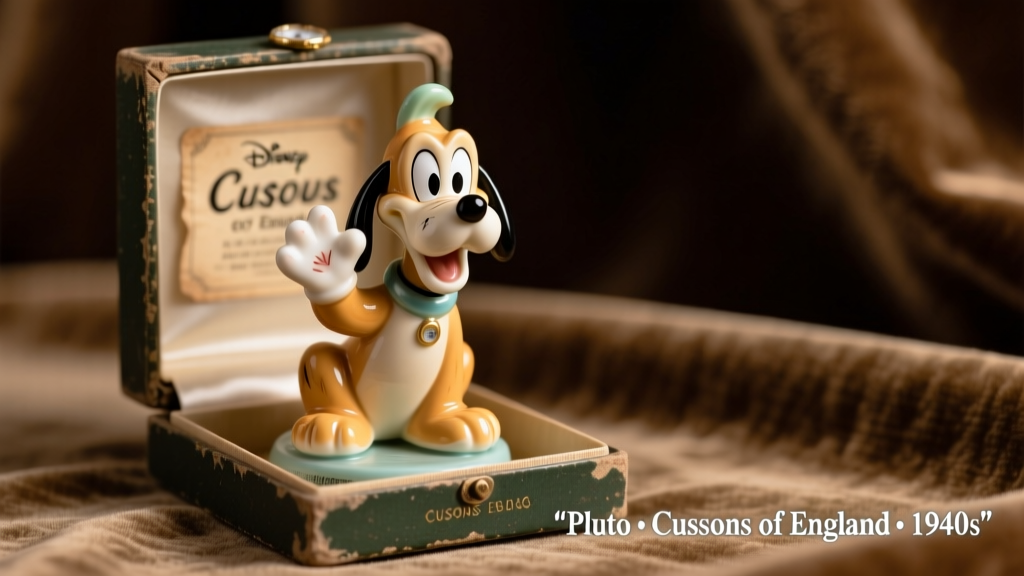
Disneyana Soap: The 1940s Cussons of England Pluto Figural Soap Box — A Rare Artifact of British Licensing History

The 1902 Bugatti Walnut Armchairs: A Masterclass in Art Nouveau Furniture Craftsmanship
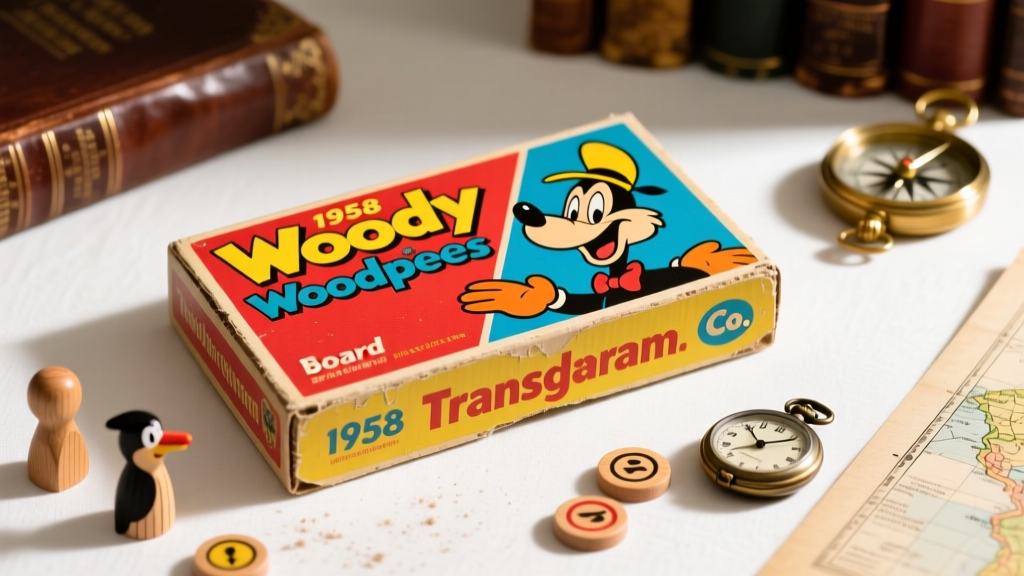
Woody Woodpecker’s 1958 Board Game: A Vintage Collectible at Auction — Design, Provenance, and Market Value
Lot 1132940: A 1958 Rolex Oyster Perpetual Reference 6608 — Technical Anatomy, Market Context, and Provenance Insights

The 1947 Marx 'Jumpin' Crazy' Tin Toy Jeep: A Battery-Powered Landmark in Postwar American Play
The 1930s All-Fair Toy Duck Pull Toy: A Study in Early American Paperboard and Wood Construction

Louis XV Style Andirons: Ornamental Mastery, Historical Context, and Market Value
Franciscan Coronado Luncheon Plate in Coral Gloss: A Mid-Century American Ceramic Icon
Lot 1134791: A 1958 Patek Philippe Calatrava Ref. 2526 in 18K Yellow Gold — Provenance, Technical Anatomy, and Market Context