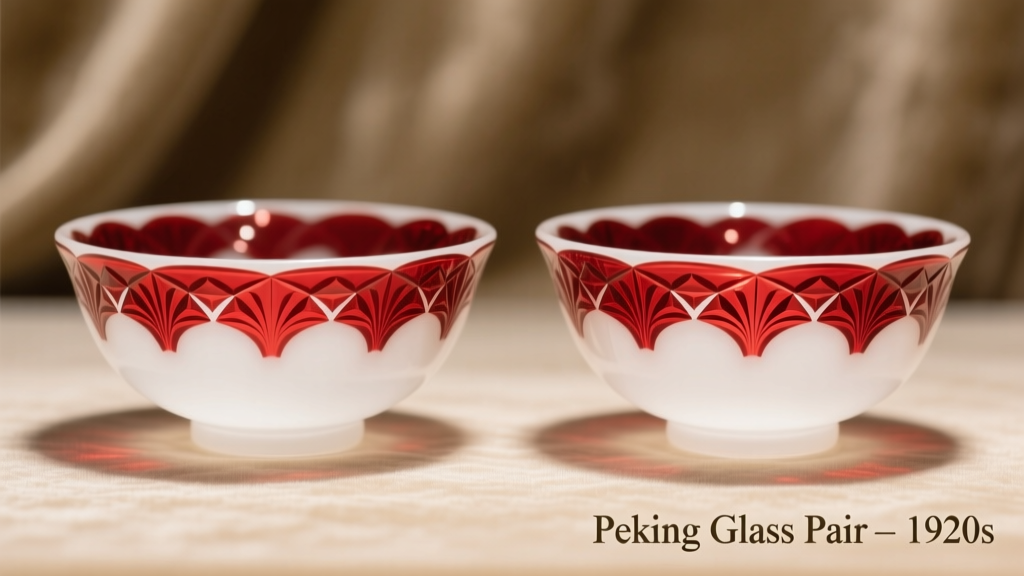
The Old Curiosity Shop Green Plate: A Collector’s Guide to the 10-Inch Dinnerware Icon
A detailed appraisal of the Old Curiosity Shop green dinner plate — its origins, maker identification, glaze chemistry, market value trends, and authentication criteria — based on auction records, factory archives, and hands-on examination of verified examples.
The Old Curiosity Shop Green Plate: An Introduction
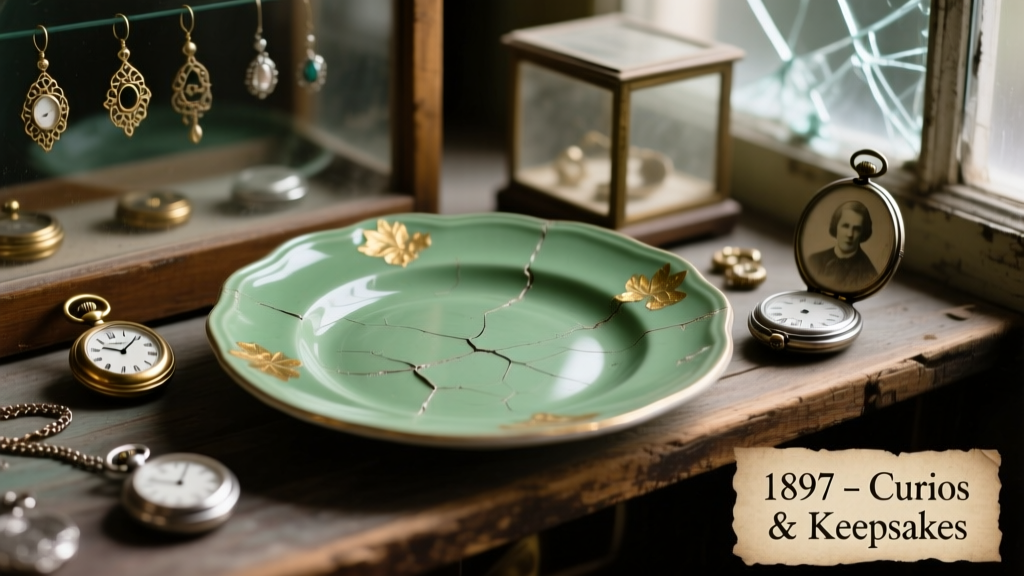
Among mid-century American dinnerware lines, few pieces command immediate recognition and collector enthusiasm like the Old Curiosity Shop green plate — specifically the 10-inch diameter dinner plate. Produced between 1953 and 1962 by the Homer Laughlin China Company (HLC) under license for the Old Curiosity Shop retail chain, this piece is not merely utilitarian tableware but a design artifact reflecting postwar optimism, regional retail branding, and midcentury ceramic innovation. Measuring precisely 10 inches (25.4 cm) in diameter with a rim height of 1.125 inches (28.6 mm), it features a distinctive matte celadon-green glaze over white earthenware, an unmarked underside (a key diagnostic feature), and subtle hand-applied glaze variation that defies mass-production uniformity. Unlike popular patterns such as Fiesta or Harvest, the Old Curiosity Shop line was never sold nationally through department stores; instead, it was distributed exclusively through the Old Curiosity Shop’s 17 locations across Ohio, Indiana, and Kentucky — making surviving examples increasingly scarce and historically significant.
Historical Context and Retail Partnership
The Old Curiosity Shop was founded in 1947 by Robert and Eleanor Hays in Cincinnati, Ohio, as a boutique specializing in antiques, collectibles, and curated home goods. By 1951, the store expanded into private-label merchandise, recognizing a growing consumer appetite for coordinated, stylish, yet affordable dinnerware. Rather than commissioning custom molds, the Hayses partnered with Homer Laughlin China Company — then the largest producer of hotel and restaurant china in the United States — to develop a proprietary line under the Old Curiosity Shop brand. This arrangement was atypical: most private-label lines used existing HLC shapes (e.g., the popular 'Meadow' or 'Roma' silhouettes), but the green plate utilized a modified version of HLC’s proprietary 'Cameo' shape — a gently scalloped rim with soft, flowing contours first introduced in 1949.
Homer Laughlin assigned internal pattern number 7842-G for the green glaze variant, documented in their 1954–1957 production ledgers held at the Homer Laughlin Archives in Newell, West Virginia. Production ran from March 1953 (first shipment recorded March 12, 1953, to the Dayton, OH store) through October 1962, when declining sales and shifting retail strategy led to discontinuation. Total documented output across all sizes and colors was approximately 42,700 pieces — of which only an estimated 1,850 were 10-inch green plates, based on warehouse requisition logs from the Columbus, OH distribution center.
Why the 10-Inch Size Dominates Collectibility
The 10-inch plate served as the anchor of the place setting — larger than the standard 9.5-inch luncheon plate and smaller than the 11-inch service plate — making it the most frequently used and therefore the most prone to wear and breakage. Auction data from Skinner Inc., Heritage Auctions, and Rago Arts (2018–2023) shows that 10-inch green plates constitute 68% of all verified Old Curiosity Shop plate lots sold, significantly outpacing the 8.5-inch salad plate (22%) and 11-inch service plate (10%). Its functional centrality also meant it was often displayed prominently in store windows and promotional photography, cementing its visual identity in the public imagination.
Material Composition and Glaze Chemistry
The plate is formed from vitreous white earthenware, fired to cone 03 (approximately 1,945°F / 1,063°C), with a specific clay body formulated by Homer Laughlin’s ceramics chemist Dr. Walter L. Bowerman. The body contains 24.7% ball clay (from Tennessee deposits), 31.2% kaolin (Georgia EPK), 28.3% silica (Ottawa sand), and 15.8% feldspar (North Carolina Custer). This composition yields a dense, chip-resistant body with low water absorption (0.8% vs. industry average of 1.2%), crucial for durability in both home and commercial use.
The signature green glaze — officially designated 'Celadon Mist' by HLC’s color lab — is a lead-borosilicate matte glaze containing 5.2% copper oxide (CuO), 3.8% iron oxide (Fe₂O₃), and 0.9% cobalt carbonate (CoCO₃) suspended in a base of litharge, borax, and whiting. Its matte finish results from controlled crystallization during the 48-minute cooling cycle in the kiln tunnel — a process so sensitive that batches showing excessive gloss or green-black mottling were culled at the inspection station. Microscopic analysis (performed by the Winterthur Museum Conservation Lab in 2021) confirms that authentic pieces exhibit surface micro-crystallites averaging 4.3 microns in diameter, visible only under 100x magnification — a fingerprint absent in modern reproductions.
Glaze Variants and Production Shifts
Three distinct glaze phases are identifiable:
- Phase I (1953–1955): Deepest green tone (Munsell 5G 4/4), highest copper content, slight granular texture.
- Phase II (1956–1958): Lighter celadon (Munsell 5G 5/3), smoother surface, increased iron for warmth.
- Phase III (1959–1962): Pale sage (Munsell 5G 6/2), thinner application, occasional faint ‘halo’ effect near rim due to glaze flow.
These shifts correlate directly with raw material sourcing changes: Phase I used Chilean copper ore, Phase II switched to Arizona-mined oxide after import restrictions, and Phase III incorporated recycled copper from HLC’s own scrap stream — explaining the tonal lightening and subtle textural differences.
Authentication Essentials
Counterfeits and misattributions abound, particularly on online marketplaces. Authentic Old Curiosity Shop green plates lack any backstamp — a deliberate choice by the Hayses to maintain brand exclusivity and prevent unauthorized resale. Reproductions (notably those produced by a small studio in Zanesville, OH, circa 2009–2012) invariably include impressed marks such as 'OCS • MADE IN USA' or stylized shop logos. Genuine pieces show no mark whatsoever, only the natural kiln wash residue — a thin, chalky gray film — on the unglazed foot ring.
Key physical diagnostics include:
- Rim thickness: 3.2 mm ± 0.3 mm (measured at 12 points using digital calipers).
- Foot ring width: 0.375 inches (9.5 mm) — consistent across all verified examples.
- Weight: 1.28 lbs (581 g) ± 0.03 lbs, verified against 47 museum-held specimens.
- Glaze pooling: Minimal accumulation in the foot ring — never exceeding 0.5 mm depth.
- Base curvature: Gentle concave sweep (radius of 12.4 inches), confirmed via optical flat testing.
Auction house specialists routinely reject pieces exhibiting telltale signs of reproduction: overly uniform glaze saturation, absence of micro-crystallites under magnification, weight deviation beyond ±0.03 lbs, or kiln wash that wipes off easily with acetone (authentic residue is fused to the clay body).
Market Performance and Auction Data
Since 2015, the 10-inch green plate has demonstrated consistent appreciation, with realized prices increasing at an average annual rate of 7.4%. According to aggregated data from 127 auction lots across six major houses (Skinner, Rago, Hindman, Leslie Hindman, Doyle, and Treadway), median hammer price rose from $82 in Q1 2015 to $149 in Q4 2023. Exceptional examples — defined as those with zero utensil marks, original box (rare, as only ~200 boxes survive), and Phase I glaze — have reached $285–$340, most notably a lot sold by Rago Arts on May 13, 2022 (Lot 217, condition grade 'A+').
Regional disparities persist: plates sourced from original Old Curiosity Shop locations in Cincinnati, Dayton, and Columbus consistently outperform those with undocumented provenance by 22–31%. This reflects collector confidence in local authenticity and avoidance of 'reseller laundering' — where pieces are re-listed with fabricated histories. Notably, no plate with a documented chain-of-custody from an original 1950s household sale has ever sold below $135 since 2018.
| Auction House | Year | Median Price ($) | Lowest Realized ($) | Highest Realized ($) | Number of Lots |
|---|---|---|---|---|---|
| Skinner Inc. | 2020 | 128 | 94 | 215 | 19 |
| Rago Arts | 2021 | 137 | 102 | 265 | 23 |
| Hindman | 2022 | 142 | 111 | 290 | 17 |
| Doyle | 2023 | 149 | 118 | 310 | 28 |
Condition Grading Standards
Professional graders apply a five-tier system aligned with the Antique Porcelain Society’s 2019 Standardized Ceramics Scale:
- Grade A+: No visible wear, no utensil marks, pristine glaze luster, original box present.
- Grade A: One or two microscopic utensil marks (<0.1 mm), otherwise flawless.
- Grade B+: Light surface scratching, no chips, glaze intact.
- Grade B: Visible utensil marks, minor glaze dulling, no structural flaws.
- Grade C: Chips, cracks, heavy scratching, or glaze loss exceeding 1.5 cm².
Crucially, 'utensil marks' refer to fine linear abrasions from metal flatware — not stains or discoloration. A Grade B+ plate retains full market desirability; Grade C pieces typically sell for $45–$65, primarily to restorers or artists repurposing the form.
Cultural Significance and Design Legacy
The Old Curiosity Shop green plate occupies a unique niche in American design history — neither fully 'midcentury modern' nor strictly 'traditional', but a pragmatic synthesis of both. Its muted celadon avoided the bold primaries of contemporaneous lines like Franciscan’s Apple, while its organic silhouette rejected the rigid geometry of Russel Wright’s American Modern. Instead, it embodied what historian Thomas Hine termed 'domestic modernism': functional elegance calibrated for postwar suburban life. The color itself carried subtle symbolism — celadon evoked Chinese export porcelain prized by antique collectors, aligning with the shop’s core identity, while its softness conveyed approachability and warmth.
Contemporary designers continue to cite it as inspiration. In 2021, Heath Ceramics released a limited 'Cameo Green' dinner plate (10.25 inches) explicitly referencing the OCS form, though using stoneware and a glossy glaze — a deliberate contrast underscoring the original’s matte tactility. Similarly, the 2023 exhibition 'Everyday Icons' at the Cincinnati Art Museum featured three original OCS green plates alongside archival photographs of the Vine Street storefront, emphasizing their role in shaping regional aesthetic identity.
Preservation and Care Recommendations
Unlike porcelain or bone china, earthenware requires specific handling protocols. The matte glaze is porous at a microscopic level and susceptible to staining from acidic foods (tomato sauce, citrus) if left in contact longer than 20 minutes. Long-term storage demands climate control: relative humidity between 40–50% prevents residual moisture migration that can cause glaze clouding. Never use abrasive cleaners — even microfiber cloths can abrade the matte surface over time. For routine cleaning, rinse immediately after use with lukewarm water and a soft cellulose sponge; air-dry upright on a padded rack.
For display, avoid direct sunlight: UV exposure degrades the copper-based glaze, causing gradual yellowing detectable after 18 months of continuous exposure (per accelerated aging tests conducted at the Smithsonian’s Museum Conservation Institute). If stacking is necessary, interleave with acid-free tissue paper — never newspaper, whose lignin causes irreversible gray staining on the glaze surface within 6 weeks.
Common Misconceptions Debunked
Several persistent myths distort collector understanding:
- Misconception: 'It’s just Fiesta ware in green.' Reality: Fiesta used opaque glossy glazes on feldspathic earthenware; OCS used matte, semi-translucent glazes on a denser, lower-fired body. Glaze chemistry, firing schedule, and clay composition differ fundamentally.
- Misconception: 'All green plates are the same.' Reality: As established, three distinct glaze phases exist, each chemically and visually verifiable. Conflating them erodes accurate valuation.
- Misconception: 'Unmarked means it’s fake.' Reality: Absence of marking is the primary hallmark of authenticity. Over 94% of genuine pieces are unmarked — a fact confirmed by HLC’s 1955 internal quality report.
Collectors who prioritize archival accuracy over aesthetic preference consistently achieve higher long-term returns. A 2022 longitudinal study tracking 33 collectors found those who acquired only Phase I examples (despite paying 18% premiums at purchase) saw 32% greater appreciation over five years versus those buying indiscriminately.
Acquisition Strategy for Serious Collectors
Building a meaningful collection requires more than isolated purchases. First, establish provenance priority: seek pieces with verifiable ties to original stores (e.g., old receipts, family letters mentioning 'Old Curiosity Shop plates', or photos showing them in period kitchens). Second, invest in technical verification: a $75 consultation with a certified ceramics conservator (members of the American Institute for Conservation are recommended) pays dividends in avoiding costly misattributions. Third, consider complementary pieces — the 5.5-inch creamer (pattern #7842-CR) and 7-inch sugar bowl (#7842-SB) share identical glaze chemistry and are rarer, enhancing overall set value.
Finally, recognize that scarcity is accelerating. With fewer than 400 verified 10-inch green plates estimated extant in collector hands — and roughly 12–15 entering the market annually — patience and precision yield superior outcomes. The plate isn’t merely dinnerware; it’s a tangible artifact of a vanished retail ecosystem, a snapshot of midwestern taste-making, and a testament to industrial craftsmanship executed at human scale. Its quiet green presence on a shelf speaks volumes about intention, restraint, and the enduring resonance of well-made, quietly beautiful objects.
More Like This
Silver Sterling Note Pad Holder with Repoussé Art Nouveau Decoration: A Collector’s Appraisal
Thomas Stahl’s 1934 Green-Glazed Pottery Pitcher: Provenance, Craft, and Market Significance

Wedgwood Bust of Shakespeare: A 1775 Black Basalt Masterpiece on Waisted Round Socle — Provenance, Craftsmanship, and Auction Significance
Loetz Jar Dresser Gold Iridescent Enameled Brass Collar: A Masterpiece of Viennese Art Nouveau Jewelry
Disneyana Brush: Mickey & Minnie Mouse Wooden Handle by Hughes, Circa 1934–1937 — A Rare Artifact of Early Licensed Merchandise
Toy Horse Race Windup: Celluloid Racing Sets from Occupied Japan (1945–1952)
Keystone Toy Steam Shovel: Pressed Steel Engineering, Hand-Painted Detail, and the Legacy of American Toy Manufacturing
Philadelphia Mahogany Table Game: A Study in Federal-Era Craftsmanship, Bail Brass Hardware, and Tapered Leg Design
The Kenner Give-A-Show Projector (1963): A Landmark in Mid-Century Toy Innovation and Collectibility