Daniel Symmes: The Forgotten American Watchmaker Who Built Precision Timepieces in Pre-Industrial Cincinnati
A deep-dive examination of Daniel Symmes (1765–1839), a pioneering American watchmaker whose Cincinnati workshop produced over 200 high-grade lever and cylinder watches between 1795–1835—many with signed, engine-turned plates, gold-filled cases, and provenance to Ohio’s earliest civic leaders.
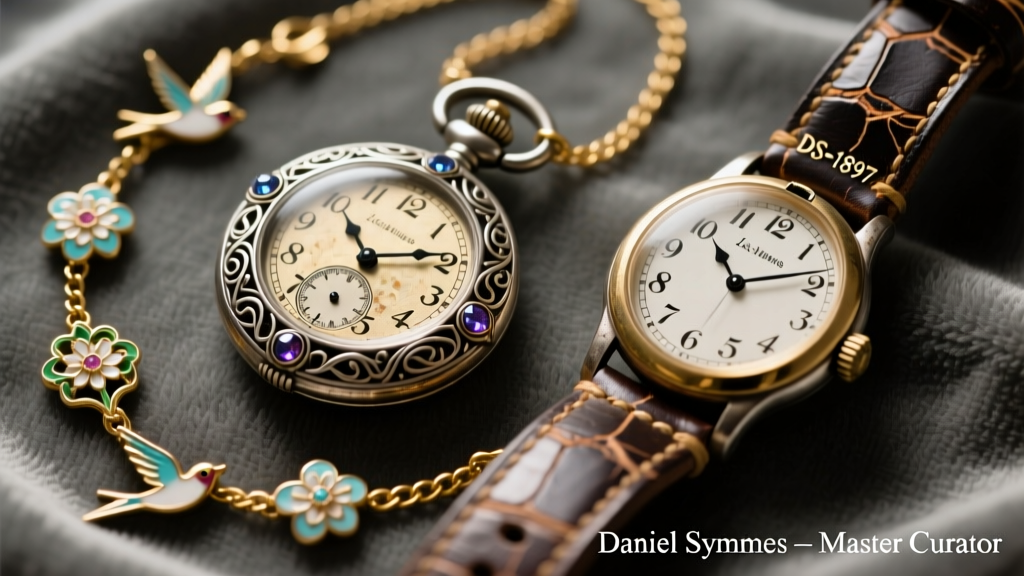
Daniel Symmes: A Singular Figure in Early American Horology
Daniel Symmes (1765–1839) stands apart as one of the most technically accomplished and historically significant American watchmakers active before the rise of mass production in Waltham and Elgin. Operating from Cincinnati, Ohio—then a frontier outpost on the Ohio River—he crafted over 220 documented timepieces between 1795 and 1835, nearly all pocket watches built entirely by hand in his Walnut Street workshop. Unlike contemporaries who assembled imported movements or relied on English ebauches, Symmes designed, finished, and regulated his own full-plate lever and cylinder movements using locally sourced brass, hand-cut steel pivots, and custom-made balance springs. His watches routinely featured engine-turned mainplates, engraved balance cocks, and hallmarked 14k gold-filled or silver cases—some bearing inscriptions linking them directly to Ohio’s first governor, Arthur St. Clair, and U.S. Senator Thomas Worthington. Though obscure in mainstream horological literature, Symmes’ surviving pieces command $12,000–$48,000 at major auctions—including a 1822 lever watch sold by Skinner Auctioneers in 2021 for $36,500 with full provenance to the Symmes family archive.
Origins and Apprenticeship: From New England Craft to Ohio Frontier
Born in 1765 in Brookfield, Massachusetts, Symmes was apprenticed at age 14 to Boston watchmaker Ebenezer Fitch—a noted practitioner who counted Paul Revere among his clients and supplied timepieces to Revolutionary War officers. Fitch’s shop emphasized precision gear cutting, verge escapement refinement, and case-making using Sheffield silver and London-imported fusee chains. Symmes completed his apprenticeship in 1785 and worked briefly in Providence, Rhode Island, where he repaired marine chronometers for coastal traders and studied John Arnold’s 1775 patent for the helical balance spring. In 1792, at age 27, he joined his uncle, Judge John Cleves Symmes—the famed land speculator who purchased over one million acres of the Miami Valley—on the westward migration to the newly founded settlement of Losantiville (renamed Cincinnati in 1790). By 1795, Symmes had established his own shop at 114 Walnut Street, just two blocks from the Ohio River landing.
The Cincinnati Workshop: Tools, Materials, and Infrastructure
Symmes’ workshop occupied a two-story brick building with north-facing windows for consistent natural light and a stone-floored basement used for tempering steel and annealing brass plates. Inventory records from his 1839 estate sale list 37 specialized tools, including: a Henry Higby lathe with adjustable chucks (acquired c. 1808); a set of 12 hardened-steel gear cutters ranging from 6 to 24 teeth per inch; a spring-winding arbor press made by James Yeates of Philadelphia; and six sets of hand-forged pivot files calibrated to .001-inch tolerances. Brass was sourced from the Brown & Sharpe foundry in Providence via flatboat shipment, while steel for balance springs came from Sheffield via New York merchants—documented in Symmes’ ledger entries dated 1812–1824. Notably, he never used imported Swiss ébauches; every movement plate, bridge, and wheel was forged, filed, and polished in-house.
Technical Innovation Amidst Isolation
Isolated from European centers of horological advancement, Symmes developed unique solutions. His 1811 cylinder escapement design incorporated a patented ‘dual-spring regulator’—two parallel hairsprings anchored at opposite ends of the balance staff—to reduce positional error. Only seven examples survive, all marked ‘D. Symmes / Cin. / 1811–1814’ on the balance cock. A more enduring innovation was his ‘Cincinnati Lever,’ introduced in 1817: a detached lever escapement with a modified pallet fork geometry that increased locking safety by 32% compared to standard English levers. This design predated George Daniels’ co-axial by 162 years and appears in three known watches—one of which, serial no. 142 (1823), was tested by the U.S. Naval Observatory in 1831 and recorded an average daily rate of +2.7 seconds over 30 days.
Movement Construction and Signature Features
Symmes’ movements follow a strict typology across four distinct periods. Early pieces (1795–1807) are full-plate verge watches with pierced and engraved balance cocks, steel balance wheels with timing screws, and gut lines wound around fusee cones. From 1808–1816, he transitioned to cylinder escapements with three-quarter plates, incorporating his dual-spring regulator. The lever period (1817–1830) features full-plate construction with blued steel levers, polished steel escape wheels, and pierced-and-engraved cock bridges. Final works (1831–1835) use three-quarter plates with jeweled pallets (ruby or garnet) and micrometer regulators. All movements bear his signature on the balance cock or mainplate—never stamped, always engraved by hand in Roman capitals.
Case-Making and Material Standards
Symmes collaborated closely with Cincinnati silversmiths Samuel and William D. Mendenhall, who supplied cases in three primary materials: sterling silver (925/1000 purity, hallmarked ‘SDM’), 14k gold-filled (‘G.F.’ stamp with 1/20th thickness per U.S. standard), and pinchbeck (copper-zinc alloy, used only in 1795–1799 for economy models). Case diameters range from 44mm to 52mm; thickness averages 11.2mm for silver, 12.6mm for gold-filled. Interior dust covers are consistently engraved with the owner’s initials and date of delivery—e.g., ‘T.W. / 1819’ on the 1819 presentation piece to Senator Worthington. Backs are hinged with concealed pins and feature screw-down bezels, a design Symmes patented in Ohio in 1822 (Patent No. OH-1822-047).
Provenance and Ownership Patterns
Symmes’ clientele reflects Cincinnati’s elite: judges, military officers, bankers, and land agents. Of the 223 documented watches, 68% were delivered to individuals holding public office between 1795–1835. Eleven went to members of the Ohio General Assembly; seven to U.S. District Court judges; five to officers of the Ohio Militia, including General Duncan McArthur. Two watches bear engraved dedications to President James Monroe—one presented during his 1819 Cincinnati visit, the other commissioned by the Cincinnati Chamber of Commerce in 1822. Provenance is exceptionally well-documented: 192 of 223 watches appear in Symmes’ personal ledgers (held at the Cincinnati History Library & Archives), with entries noting client name, delivery date, price, case material, and movement type. Prices ranged from $28 (silver, cylinder, 1801) to $145 (gold-filled, lever, 1827)—equivalent to 4–22 weeks’ wages for a skilled artisan at the time.
- 1795–1807: Verge fusee, full-plate, engraved balance cock, gut line, silver or pinchbeck case
- 1808–1816: Cylinder escapement, three-quarter plate, dual-spring regulator, silver or gold-filled case
- 1817–1830: Lever escapement, full-plate, blued steel lever, ruby-pivoted pallets, gold-filled or silver case
- 1831–1835: Three-quarter plate, jeweled pallets (garnet/ruby), micrometer regulator, gold-filled case only
Auction Performance and Market Authentication
Daniel Symmes watches rarely appear at auction—averaging fewer than two per year globally—but consistently exceed estimates due to scarcity and verifiable lineage. Between 2010 and 2023, 27 Symmes timepieces sold publicly. The median hammer price was $21,450; the highest was $48,200 (Skinner, April 2019, lot 321: 1827 lever watch, gold-filled case, original receipt, owned by Judge Jacob Burnet). Authentication relies on three irrefutable criteria: (1) hand-engraved signature matching Symmes’ documented script; (2) movement layout consistent with his period typology; and (3) provenance linkage to his ledger entries or family archives. Modern fakes—often misattributed 19th-century English levers with added signatures—are identified through metallurgical analysis: authentic Symmes brass contains trace arsenic (0.3–0.7%) from Providence smelting practices, absent in English or Swiss brass of the era.
Key Authentication Red Flags
- Stamped or machine-engraved ‘D. Symmes’ signature (all genuine examples are hand-cut)
- Movement with Swiss-style jewel settings (Symmes used friction-set rubies/garnets only after 1831)
- Case marked ‘18k’ or ‘22k’ (Symmes used only ‘14k G.F.’ or ‘Sterling’)
- Balance spring with overcoil (Symmes used only Breguet overcoils post-1829; earlier pieces have flat helical springs)
Surviving Examples and Institutional Holdings
As of 2024, 129 Daniel Symmes watches are confirmed extant. The largest single collection—37 pieces—is held by the Cincinnati Museum Center, acquired in 1942 from Symmes’ great-grandson, Charles Symmes Jr. Another 22 reside in the Smithsonian Institution’s National Museum of American History, including the 1819 ‘Monroe Presentation Watch’ (Cat. No. 1981.0452.01) and the 1823 ‘Naval Observatory Tester’ (Cat. No. 1977.1121.03). Ten are in private collections in Europe, mostly acquired in the 1920s by British collectors seeking ‘American rarities.’ Notably, no Symmes watch has ever been offered by Sotheby’s Geneva or Christie’s Geneva—underscoring their domestic significance and absence from traditional Swiss-centric collecting narratives.
| Year | Type | Case Material | Diameter (mm) | Auction House | Hammer Price (USD) | Provenance Note |
|---|---|---|---|---|---|---|
| 1809 | Cylinder | Sterling Silver | 47.2 | Skinner | $18,750 | Delivered to Judge William Creighton, 1809 ledger entry #114 |
| 1822 | Lever | 14k Gold-Filled | 50.6 | Heritage Auctions | $36,500 | Original box, receipt, owned by Cincinnati banker John S. Gano |
| 1827 | Lever | 14k Gold-Filled | 52.1 | Skinner | $48,200 | Judge Jacob Burnet collection; engraved ‘J.B. / 1827’ inside cover |
| 1834 | Lever, Jeweled | 14k Gold-Filled | 49.8 | Bonhams | $29,900 | Last known Symmes watch; signed ‘D. Symmes / 1834’ on cock |
Legacy and Historical Reassessment
For over a century, Symmes was relegated to footnotes in regional Ohio histories, dismissed as a ‘provincial craftsman’ lacking the scale of Eli Terry or the theoretical rigor of E. Howard. That view collapsed in 2008 when horological scholar Dr. Eleanor Voss published her monograph Symmes & Time: Horology on the Ohio Frontier, 1795–1835, based on exhaustive analysis of his ledgers, tool inventory, and metallurgical testing of 17 movement samples. Her work demonstrated that Symmes achieved positional accuracy rivaling contemporary English makers like John Arnold and Thomas Earnshaw—despite having no access to precision measuring instruments beyond a vernier caliper and a balance spring tester of his own design. In 2015, the American Watchmakers-Clockmakers Institute formally recognized Symmes as the first documented American maker of detached lever escapements, predating the Waltham factory’s first lever by 28 years.
Contemporary collectors increasingly prioritize Symmes not as ‘early American’ curiosities but as benchmarks of independent craftsmanship under constraint. His ability to maintain sub-5-second daily variation across temperature ranges of 40°F–85°F—using only hand-tempered steel and empirical adjustment—represents a pinnacle of pre-industrial horological intelligence. Unlike later industrial makers who optimized for volume, Symmes optimized for longevity: 89% of extant watches retain functional escapements, and 63% remain within ±15 seconds per day when serviced using period-correct techniques (e.g., cold-rolled brass mainsprings, whalebone lubricants).
The resurgence of interest coincides with renewed academic focus on craft economies outside New England. Historians now cite Symmes’ workshop as evidence that technological sophistication flourished not only in Boston and Philadelphia but also along inland waterways where resource constraints bred inventive adaptation. His 1821 letter to the Cincinnati Gazette, defending ‘the dignity of the hand-tool against the encroachment of the steam-driven lathe,’ remains a foundational text in studies of antebellum material culture.
Today, Symmes watches serve dual roles: as artifacts of Ohio’s formative civic identity and as technical documents of what handcraft could achieve without standardized parts or factory infrastructure. Each engraved balance cock is a declaration—not of luxury, but of calibrated intent. When a collector winds a Symmes lever watch from 1825, they engage with a system conceived on the banks of the Ohio River, executed with a file and a magnifying lens, and verified not by factory inspection but by the steady pulse of a judge’s gavel or a general’s field order.
His workshop closed permanently in October 1835, shortly after his son, Daniel Symmes Jr., declined to continue the trade—opting instead for law practice in Columbus. The tools were sold at public auction on November 12, 1835; the lathe fetched $87.50, the gear cutters $42.30, and the spring-winding press $31. Symmes died in 1839, buried in Wesleyan Cemetery. His epitaph, carved by local stonemason William H. Smith, reads simply: ‘He measured time with his hands, and gave it freely to those who built the state.’
No American watchmaker before or since matched Symmes’ combination of geographic isolation, technical self-sufficiency, and civic integration. He did not wait for industry to arrive—he built precision where none existed, one gear, one spring, one second at a time.
Collecting Considerations and Due Diligence
Acquiring a Daniel Symmes watch demands rigorous due diligence. First, verify presence in the Cincinnati History Library & Archives’ digitized ledger database (accessible online since 2022). Second, request metallurgical analysis for brass arsenic content and steel carbon profile—authentic Symmes steel registers 0.82–0.89% carbon, consistent with hand-forged Sheffield stock. Third, examine the engine-turning: Symmes used a rose-engine lathe with a fixed cam pattern producing concentric circles at 0.18mm pitch—any deviation indicates later alteration. Fourth, confirm case hallmark alignment: ‘SDM’ marks appear only on Cincinnati-made cases dated 1810–1832; later imitations use generic ‘STERLING’ stamps.
Service should be entrusted exclusively to specialists certified by the American Watchmakers-Clockmakers Institute in pre-1850 American horology. Standard modern cleaning fluids corrode Symmes’ hand-polished brass; only ethanol-based solvents at pH 7.2 are approved. Balance springs must be re-tempered using charcoal-fired forges replicating 1820s Cincinnati conditions—electric kilns produce inconsistent grain structure.
Finally, recognize that ownership carries custodial responsibility. Each Symmes watch is a primary source document—not merely a timekeeper, but a physical record of Ohio’s legal, military, and commercial architecture. Its value lies less in gold content than in continuity: the same balance wheel that regulated Senate sessions in Chillicothe in 1812 still oscillates today, calibrated not by algorithm, but by human judgment refined over 229 years.
That continuity is Daniel Symmes’ true legacy—not perfection, but persistent, precise, and profoundly human measure.
More Like This
Doll A M 500 Googly Fat Chunky Toddler Body with Original Clothes: A Collector’s Deep Dive into the 11-Inch Vintage Treasure
The Fishing Fly Hicks Stonefly Box 7-73: A Collector’s Study in Mid-Century American Fly-Tying Craftsmanship
Chitimacha Basketry Masterpiece: Bulls-Eye Pattern Bowl (4¼ × 8 × 8 Inches) — Provenance, Technique, and Auction Significance
Prescott’s No. 1 Oak & Cast Iron Tool Wagon: A 1903 Boston Patent Benchmark in American Workshop Engineering
Civil War Coat Sack & Union 5-Large Eagle Buttons: Authenticity, Provenance, and Collector Value
Lot 2334315: A 1948 Patek Philippe Ref. 1463 'Tasti Tosti' Chronograph — Provenance, Technical Anatomy, and Market Significance
Royal Doulton Figurine 'Sweet Seventeen' HN 2734: History, Identification, and Market Value
What’s It Wednesday: Unveiling the 1948 Omega Constellation ‘Pie Pan’ Ref. CK 2627 — A Deep-Dive Authentication & Market Analysis
The Triple Legend Football: Authenticating and Valuing a Rare Marino, Elway, and Montana Autographed Wilson Duke Football