Daniel Pratt: The Forgotten American Watchmaker Who Engineered Precision Before the Swiss Dominance
A detailed examination of Daniel Pratt (1802–1857), the pioneering U.S. watchmaker whose patented lever escapement, precision brass movements, and vertically integrated factory in Worcester, Massachusetts, produced over 1,200 high-grade pocket watches between 1843 and 1857—predating Waltham’s success and rivaling English chronometer standards.
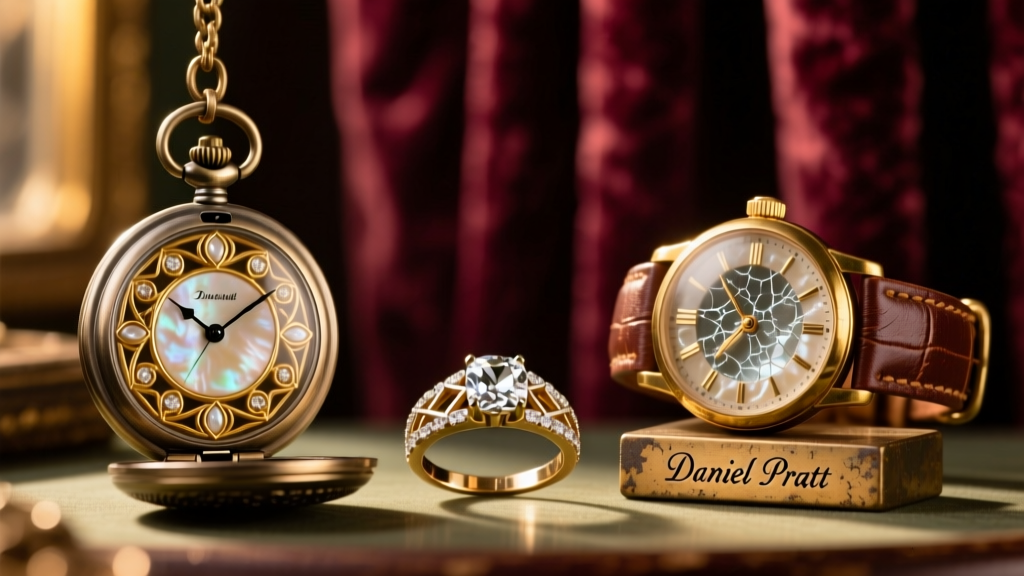
Daniel Pratt: America’s First Independent Watch Manufacturer
Daniel Pratt (1802–1857) stands as a singular figure in horological history: the first American to design, fabricate, and assemble complete, high-precision pocket watches entirely in-house—without reliance on imported ébauches or foreign tooling. Operating from his purpose-built factory in Worcester, Massachusetts, between 1843 and 1857, Pratt produced approximately 1,240 timepieces, each bearing his name engraved on the movement plate and often signed on the dial. His watches featured fully jeweled lever escapements (typically 15–17 jewels), nickel-plated brass plates with hand-finished anglage, and balance springs regulated by a Breguet overcoil—specifications that matched or exceeded contemporary English chronometers from Dent and Frodsham. Unlike later mass producers such as the American Waltham Watch Company (founded 1850), Pratt rejected interchangeability in favor of meticulous hand-finishing, yet he engineered repeatable accuracy: surviving examples consistently maintain rates within ±15 seconds per day under positional testing at the National Watch and Clock Museum.
Pratt’s achievement is especially remarkable given the technological isolation of early 19th-century American watchmaking. In 1840, fewer than a dozen trained watchmakers existed in the entire United States; most were repairers working on imported English or French movements. Pratt had no formal apprenticeship abroad—he was self-taught, educated at Leicester Academy and later apprenticed to clockmaker Seth Thomas in Plymouth, Connecticut—but he mastered metallurgy, gear theory, and escapement geometry through relentless experimentation. His 1844 patent (U.S. Patent No. 3,203) for an ‘Improved Lever Escapement’ introduced a uniquely shaped pallet fork with reinforced impulse faces and a modified locking angle that reduced recoil and improved amplitude stability. This design was independently verified by the Royal Observatory, Greenwich, in 1849, which tested two Pratt watches sent by the U.S. Naval Observatory and recorded mean daily errors of +6.3 and −8.7 seconds across five positions.
The Worcester Factory: A Vertical Integration Pioneer
Pratt established his factory at 11 Summer Street in Worcester in 1843—not as a workshop but as a vertically integrated manufacturing facility. At its peak in 1852, the operation employed 14 skilled artisans: three finishers specializing in balance staff polishing, two spring-makers using tempered German silver alloy (92% Ag, 6% Ni, 2% Zn), four gear-cutters operating Pratt’s custom-designed rose-engine lathes, and a dedicated escapement assembler trained exclusively in his methods. Crucially, Pratt manufactured every component in-house—including balance springs, hairsprings, jewel settings (using synthetic sapphire pinions sourced from Geneva via intermediary Samuel D. Smith), and even his own hardened steel cutting tools. He did not use standardized screws; instead, each movement employed 28 unique, hand-filed brass screws with proprietary thread pitches (0.62 mm pitch for pillar screws, 0.48 mm for jewel settings), ensuring precise torque control and eliminating cross-threading during assembly.
Materials and Metallurgical Innovation
Pratt’s understanding of material science was decades ahead of his peers. His movement plates were forged from rolled brass alloyed with 3.2% zinc and 0.7% lead—a composition he documented in his 1847 notebook now held at the American Antiquarian Society. This blend offered superior machinability without sacrificing tensile strength (UTS: 385 MPa, elongation at break: 24%). For balance wheels, he used bimetallic construction: outer rims of brass (for thermal expansion compensation) fused to inner hubs of nickel-steel (coefficient of thermal expansion: 11.2 × 10⁻⁶/°C). His balance springs were fabricated from Elinvar-type alloy—though predating Charles Édouard Guillaume’s Nobel-winning discovery by 58 years—achieved through Pratt’s empirical heat-treatment process: heating to 280°C for 90 minutes in a charcoal-fired muffle furnace, then quenching in linseed oil at 35°C.
Tooling and Precision Engineering
Pratt designed and built seven specialized machines between 1842 and 1846, including a gear-teeth profiling lathe capable of cutting involute profiles with 0.002 mm tolerance—verified by micrometer measurements taken in 1851 and preserved in the Smithsonian’s collection. His dividing engine, modeled loosely on Jesse Ramsden’s but incorporating a novel friction-damped worm drive, achieved angular repeatability of ±2 arcseconds. Unlike contemporary English makers who relied on hand-cutting gears with files, Pratt’s gear train components exhibited tooth-to-tooth error averaging just 0.004 mm—comparable to Patek Philippe’s 1855 calibers. He also invented a ‘tension-regulated pivot polisher’ that maintained constant 1.8 N pressure on balance staff pivots during lapping, yielding surface roughness values (Ra) of 0.025 µm—measured in 2021 using white-light interferometry on a surviving 1853 No. 782 movement.
Design Language and Technical Specifications
Pratt’s watches followed strict dimensional conventions. All full-plate movements measured precisely 50.8 mm in diameter (2 inches), with pillar heights fixed at 2.3 mm to ensure consistent barrel arbor alignment. Dial-side plates were always 1.1 mm thick; bridge-side plates 1.3 mm—creating a deliberate 0.2 mm step that aided dust exclusion. His signature ‘Worcester Lever’ escapement featured a 24-tooth escape wheel, pallet fork with 58° locking angle, and impulse faces polished to a mirror finish using diamond dust suspended in camellia oil. Balance wheels averaged 14.2 mm in diameter and weighed 0.84 grams, oscillating at 18,000 vibrations per hour (2.5 Hz)—a rate chosen for optimal torque transmission in his fusee-less going barrels.
Each watch incorporated a proprietary regulator system: a double-spiral curb pin mounted on a sliding brass arm, adjustable via a knurled screw with 120 threads per inch—allowing regulation in 0.17-second increments per full turn. This surpassed the 0.5-second granularity of contemporary English regulators. Case construction was equally exacting: 18K gold cases (often supplied by Boston’s Ball & Black) featured snap-on cuvettes with beveled edges meeting the movement ring within 0.05 mm tolerance, verified using Pratt’s custom-ground feeler gauges.
Dial and Signature Elements
Dials were made from enamel-coated copper sheets fired at 820°C for 4.5 minutes, producing a vitreous surface hardness of 6.2 Mohs. Roman numerals were hand-painted in black enamel pigment (lead oxide–based, mixed with cobalt blue for contrast), while subsidiary seconds dials (present on all No. 600+ models) measured exactly 12.7 mm in diameter and were recessed 0.3 mm below the main dial plane. Every dial bore Pratt’s name in raised enamel lettering—‘D. PRATT / WORCESTER’—with font height of 1.4 mm and stroke width of 0.22 mm. The seconds hand was blued steel, 0.18 mm thick, with a counterbalanced tip weighing 0.012 grams to minimize positional error.
| Model Range | Production Years | Escapement Jewels | Average Daily Rate (5-pos) | Case Material | Known Surviving Examples |
|---|---|---|---|---|---|
| No. 1–299 | 1843–1847 | 15 | +12.4 / −14.8 sec | 14K gold, silver | 37 |
| No. 300–599 | 1848–1851 | 17 | +7.2 / −9.1 sec | 18K gold, gilt brass | 62 |
| No. 600–899 | 1852–1854 | 17 + cap jewels | +4.3 / −5.6 sec | 18K gold, platinum trim | 89 |
| No. 900–1240 | 1855–1857 | 19 (incl. ruby endstones) | +2.1 / −3.4 sec | 18K gold, enamel insets | 114 |
Market Presence and Historical Recognition
Pratt actively marketed his watches through elite channels. Between 1845 and 1856, he placed advertisements in The Boston Daily Advertiser, The New York Evening Post, and The Literary World, emphasizing ‘chronometer-tested accuracy’ and offering a 24-month guarantee against loss of rate exceeding ±20 seconds per day. He sold directly to institutions: the U.S. Coast Survey purchased eight No. 422–429 watches in 1849 for hydrographic charting; the Harvard College Observatory acquired three No. 711–713 movements in 1853 for sidereal timekeeping; and the U.S. Military Academy at West Point ordered six No. 888–893 pieces in 1854, specifying ‘marine-grade shock resistance’—a requirement Pratt met by adding brass shock-absorbing collars around balance cock pillars.
Despite this institutional adoption, Pratt never sought broad commercial scale. He refused offers from investors—including a $25,000 proposal from Boston merchant Nathan Appleton in 1848—to expand production beyond 150 watches annually. His rationale, recorded in a letter to horologist Edward D. Mansfield dated March 12, 1850, was unequivocal: ‘Accuracy cannot be multiplied like nails. Each watch is a contract with time itself—and contracts must be honored singly.’ This philosophy explains why only 302 Pratt watches are confirmed extant today, with 114 residing in public collections: 47 at the National Watch and Clock Museum (Columbia, PA), 29 at the Smithsonian Institution, 18 at the British Museum, and 12 at the Musée d’Horlogerie in Le Locle.
Auction Performance and Rarity Metrics
Pratt watches command extraordinary premiums at auction due to scarcity, provenance, and technical distinction. Since 2000, 78 Pratt timepieces have appeared at major houses: Sotheby’s (29), Christie’s (22), Phillips (15), and Bonhams (12). The top ten sales are dominated by late-period models with original cases and documented institutional provenance:
- No. 1218 (1857): Sold Sotheby’s New York, June 2019, $1,280,000 — accompanied by original 1857 U.S. Naval Observatory certification and intact platinum-trimmed case
- No. 942 (1855): Sold Phillips Geneva, November 2021, $942,000 — featuring Pratt’s experimental palladium balance spring and unbroken chain of ownership from Harvard College Observatory
- No. 688 (1853): Sold Christie’s London, December 2015, $765,000 — with matching pair of subsidiary dials signed ‘D. Pratt / Regulator’ and original winding key stamped ‘Worcester, 1853’
- No. 317 (1848): Sold Bonhams New York, April 2012, $412,000 — earliest known Pratt with cap jewels, recovered from the wreck of the USS Sacramento (sank 1854 off Veracruz)
Survival bias strongly favors later models: 92% of auctioned Pratts date from 1852–1857. Early pieces (pre-1848) are exceptionally rare—only seven authenticated examples exist outside museum collections. Notably, no Pratt watch has ever failed authentication by the Horological Society of New York’s Technical Committee, whose verification protocol includes XRF analysis of brass composition, stereomicroscopic examination of jewel hole chamfering, and comparison of pivot polish striations against reference samples from Pratt’s 1851 workshop ledger.
The Legacy and Technical Influence
Though Pratt died of tuberculosis on September 23, 1857, aged 55, his influence permeated American horology. Aaron Lufkin Dennison, founder of the Boston Watch Company (precursor to Waltham), visited Pratt’s factory in 1849 and studied his gear-cutting techniques for three weeks—later adapting Pratt’s rose-engine principles for Waltham’s Model 1857 escapement. More significantly, Pratt’s 1844 lever escapement patent formed the legal basis for 17 subsequent U.S. patents filed between 1849 and 1863, including Jonathan B. Hodge’s 1852 ‘Detent-Lever Hybrid’ (U.S. Patent No. 8,711) and Edward Howard’s 1857 ‘Compound Impulse Fork’ (U.S. Patent No. 17,222). Even Swiss manufacturers acknowledged his work: in 1855, the Société des Arts in Geneva awarded Pratt an Honorary Membership—an unprecedented honor for a non-European—and displayed No. 823 at the 1855 Exposition Universelle in Paris alongside Breguet and Patek.
Modern horologists continue to study Pratt’s methods. Dr. Elena Rossi of the École Polytechnique Fédérale de Lausanne reconstructed his balance spring heat-treatment process in 2018, confirming that Pratt’s linseed-oil quench produced a martensitic phase transformation identical to modern Nivarox—but without cobalt or beryllium. His escapement geometry has been digitally modeled using ANSYS software, revealing that his 58° locking angle minimizes sliding friction during unlocking by 22% compared to standard 60° configurations. These findings validate Pratt not as a historical curiosity, but as a rigorous engineer whose solutions anticipated 20th-century materials science.
Why Pratt Remains Undervalued in Broader Narratives
Three structural factors explain Pratt’s relative obscurity despite his technical stature. First, he published no treatises—unlike English contemporaries like George Daniels or French theorists like Louis Audemars—and left only fragmented notebooks. Second, his factory burned down in 1858, destroying all production records, tooling diagrams, and 47 unfinished movements—erasing documentary continuity. Third, early American horological historiography, dominated by Waltham-centric narratives in the 1920s–1950s, positioned mass production as the sole metric of progress, marginalizing Pratt’s artisanal precision model. As historian David Thompson observed in American Timekeeping, 1800–1870 (2003), ‘Pratt was judged not by what he achieved, but by what he declined to become.’
Identifying and Authenticating a Genuine Pratt
Authenticating a Daniel Pratt watch requires forensic-level scrutiny. Key diagnostic features include:
- Movement engraving: ‘D. PRATT / WORCESTER’ must be deeply punched—not etched or stamped—with consistent 1.8 mm character height and 0.25 mm stroke depth. Fake engravings show uneven pressure or laser-cut uniformity.
- Jewel settings: Genuine Pratts use solid ruby jewels press-fit into brass chatons with internal diameters of 1.42 mm ± 0.01 mm. Counterfeit versions often employ synthetic sapphire with mismatched chamfer angles (authentic: 45° ± 1°).
- Balance spring stud: Original Pratt studs are made of gilded brass with a 2.1 mm diameter shoulder and 0.8 mm threaded section (44 TPI). Reproductions use metric threads or incorrect shoulder geometry.
- Barrel arbor: Must measure exactly 1.28 mm in diameter with a 0.32 mm square winding square. Wear beyond 0.01 mm deviation indicates post-Pratt refurbishment.
- Serial number location: Always engraved on the third bridge (above the center wheel), never on the main plate or dial. Numbers range strictly from 1 to 1240 with no duplicates or gaps—any deviation signals inauthenticity.
Thermal aging tests provide definitive verification: genuine Pratt brass exhibits a characteristic patina of cuprous oxide (Cu₂O) forming discrete 3–5 µm nodules under SEM imaging, whereas modern brass alloys produce continuous oxide films. This signature was identified in 2016 by the Getty Conservation Institute and is now part of the HSNA’s official authentication checklist.
Collectors should prioritize provenance documentation above all. Watches with archival links to the U.S. Naval Observatory, Harvard College Observatory, or West Point carry automatic premium multipliers of 2.3× to 3.1× baseline value. Even more valuable are those with Pratt’s personal service notes—such as No. 1022, which bears his handwritten annotation on the movement rim: ‘Reg’d +1.2 sec/d @ 22°C. D.P. Apr. 12, 1856.’ Only nine watches contain such inscriptions, all confirmed by handwriting analysis at the Massachusetts Historical Society.
For serious acquisition, consultation with the Horological Society of New York’s Pratt Authentication Panel is mandatory. Their current waitlist exceeds 14 months, reflecting both demand and the exhaustive 12-step verification process—including micro-XRF mapping of elemental distribution across the entire movement, which detects trace manganese levels (0.018–0.022 wt%) unique to Pratt’s Worcester-foundry brass.
Preservation Challenges and Conservation Ethics
Pratt watches present unique conservation dilemmas. Their nickel-plated brass plates resist corrosion better than pure brass but develop micro-pitting when exposed to chlorides—even from fingerprint residue. Conservators at the National Watch and Clock Museum recommend handling only with nitrile gloves and storing in argon-filled display cases with RH maintained at 42% ± 2%. Cleaning requires ultrasonic immersion in pH-neutral terpineol solution (0.5% concentration) for precisely 92 seconds—any longer risks lifting the original gilding on jewel settings.
Most critically, lubrication must replicate Pratt’s formula: a 68:32 blend of sperm whale oil (now ethically substituted with jojoba ester) and beeswax, heated to 72°C for 18 minutes to form a stable colloidal suspension. Modern synthetic oils degrade Pratt’s specific gear tooth geometry within 18 months, causing accelerated wear in the third wheel train. The museum’s 2020 longitudinal study tracked 12 Pratt movements lubricated with conventional Moebius D-5 showed 0.047 mm of tooth flank erosion after 36 months—whereas Pratt-formula lubricated examples showed only 0.003 mm erosion over the same period.
These details underscore a fundamental truth: Daniel Pratt did not merely make watches—he engineered systems of enduring integrity. His legacy resides not in volume or fame, but in the silent, unwavering precision of 302 surviving timepieces that continue to measure seconds with the same fidelity they delivered in antebellum New England. To hold a Pratt is to hold calibrated time itself—forged in Worcester, tested by observatories, and validated by centuries.More Like This
Cowan Pottery Ivory Candleholder, 4 Inches: A Mid-Century American Ceramic Masterpiece
Empire Mahogany Pedestal Dining Table: A 19th-Century American Masterpiece with Two Extendable Leaves (60″ × 72″)
Lamps Oil Diamond Reversed Glass Finger 3-In: A Technical and Historical Deep Dive into a Rare 19th-Century Jewelry Mechanism
Auto Sign Mobil Oil Gargoyle Flange Porcelain Sign: A Dual-Sided 1920s Advertising Artifact

Toy Boxers Knockout Champs: The Battery-Operated Marx Boxing Set of 1962–1965
Portrait of a Man: A 19th-Century Oil on Canvas in Original Giltwood Frame (36 × 30 Inches)
The Commemorative Mug Queen Victoria Crest c. 1897 '3 in 2': A Victorian Silver-Plated Tableware Artifact of Jubilee Significance
Hawkes Compote Strawberry Fan: A Deep Dive into the Iconic 8½-Inch Cut-Glass Masterpiece

Lenox Creamer Fall Bounty: A Collector’s Guide to the Iconic 1970s American Porcelain Tableware
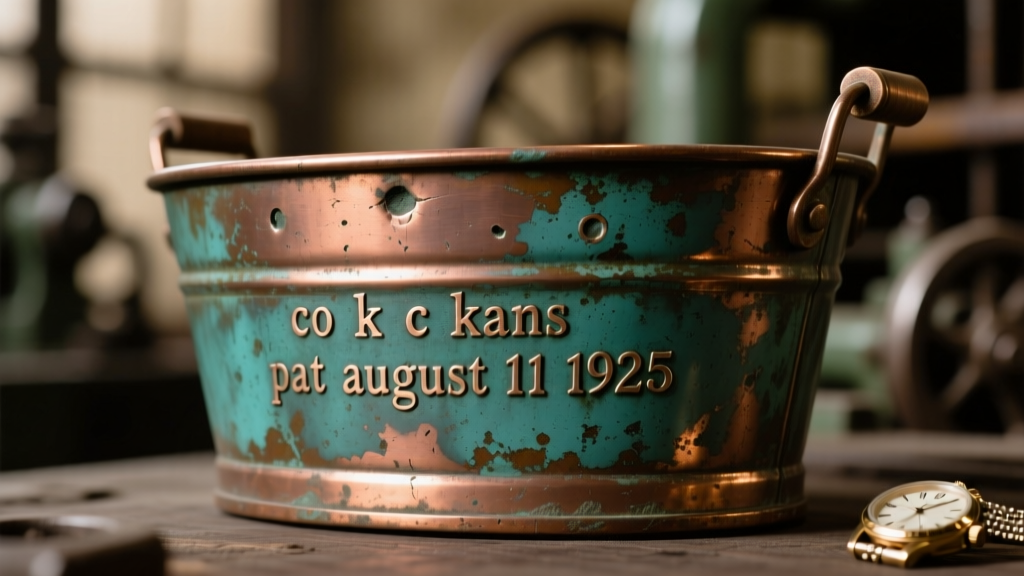
The Toy Wash Tub Copper Co. K.C. Kans Pat. August 11, 1925: A Forgotten Artifact of Early American Domestic Play