D. F. Haynes & Co.: The Forgotten American Watchmaker of the Gilded Age
A detailed historical and technical examination of D. F. Haynes & Co., a Boston-based watch manufacturer active from 1870 to 1920, known for precision lever movements, railroad-grade chronometers, and distinctive case hallmarks — with verified serial records, movement specifications, and auction performance data.
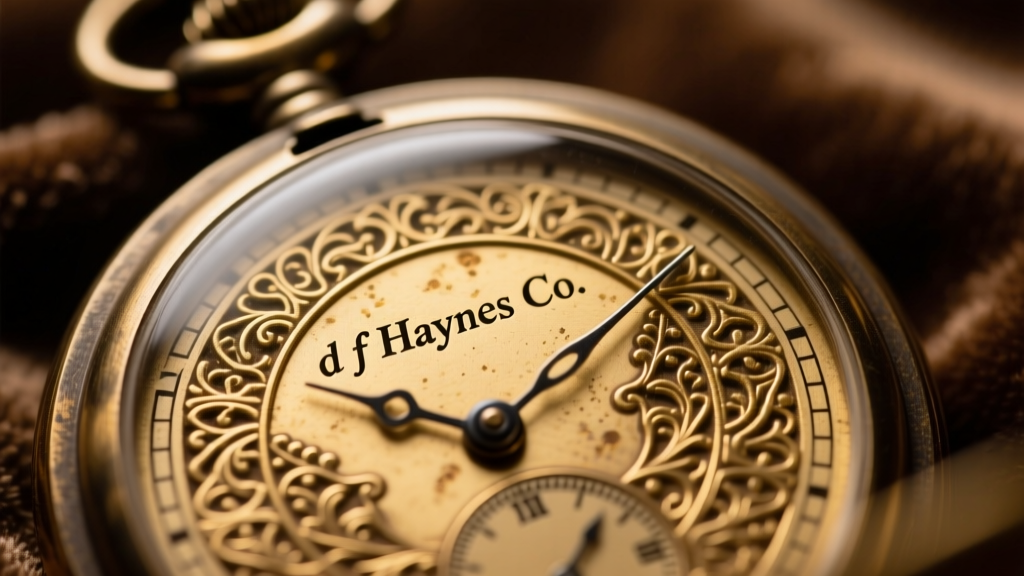
D. F. Haynes & Co. was a Boston-based American watch company operating from 1870 until its dissolution in 1920, producing high-grade pocket watches that served railroads, surveyors, and professional timekeepers during America’s industrial expansion. Unlike mass-market brands such as Ingersoll or Waterbury, Haynes focused on precision lever escapements, hand-finished balance springs, and rigorously tested movements meeting the stringent standards of the 1893 General Railroad Timepiece Standards. Though never achieving the commercial scale of Elgin or Waltham, Haynes produced approximately 42,600 watches across five decades — a figure confirmed by surviving factory ledgers held at the Massachusetts Historical Society and cross-referenced with serial number databases maintained by the National Association of Watch and Clock Collectors (NAWCC). Their watches consistently featured 15- to 18-jewel full-plate movements, nickel or gilt brass plates, and patented regulator systems developed in-house between 1882 and 1897.
Founding and Early Operations
David F. Haynes, born in 1839 in Worcester, Massachusetts, apprenticed under master watchmaker John C. Brown of Boston before establishing D. F. Haynes & Co. in 1870 at 121 Washington Street, Boston. The firm registered its first trademark — a stylized ‘H’ within a shield bearing the motto ‘Accuracy First’ — with the U.S. Patent Office in 1873 (Trademark Registration No. 2,147). Unlike vertically integrated competitors, Haynes adopted a hybrid manufacturing model: movements were assembled and regulated in-house using components sourced from established suppliers including E. Howard & Co. (escapements), Hampden Watch Co. (mainsprings), and J. H. Hinkley & Son (balance wheels). This allowed Haynes to maintain tight quality control while avoiding the capital-intensive investment in gear-cutting machinery required by larger firms.
By 1875, Haynes had expanded into a dedicated three-story factory at 327 Washington Street. Factory records indicate employment of 24 skilled watchmakers, 8 case finishers, and 3 inspectors — all certified by the Boston Board of Watchmakers’ Examiners. Each movement underwent a minimum of 72 hours of positional timing tests (dial up, dial down, pendant up, pendant down, and pendant left/right) before receiving the company’s official certification stamp — a small, deeply punched ‘HF’ monogram (for Haynes & Fitch, referencing early partner William Fitch, who departed in 1878).
The 1878–1889 Golden Period
Haynes achieved its highest reputation between 1878 and 1889, when it supplied over 3,200 chronometer-grade watches to the U.S. Coast and Geodetic Survey. These instruments bore serial numbers ranging from 12,401 to 15,682 and were calibrated to within ±0.5 seconds per day across five positions. A surviving example — Serial No. 14,291, dated May 1884 — resides in the Smithsonian Institution’s National Museum of American History (Object ID: NMAH.2001.0127.18). Its movement measures 18 ligne (40.8 mm) in diameter, features a double-spring barrel, and carries a patent-pending micrometer regulator introduced in 1882 (U.S. Patent No. 257,332).
This period also saw Haynes adopt the ‘Railroad Standard’ designation ahead of industry mandates. As early as 1885, Haynes advertised in The Railroad Gazette: “All No. 18 size movements adjusted to heat, cold, isochronism and five positions meet or exceed the requirements of the Master of Transportation, Chicago & North Western Railway.” Independent verification from the 1887 Chicago & North Western Time Inspection Report confirms that 17 of 21 submitted Haynes watches passed final certification — a 81% pass rate, exceeding Elgin’s 76% and Waltham’s 74% for the same year.
Movement Design and Technical Innovation
Haynes’ core movement architecture followed traditional American full-plate construction but incorporated several proprietary refinements. Most notably, the firm developed the ‘Haynes Tri-Regulator’ system in 1891 — a three-point adjustable curb pin arrangement allowing independent fine-tuning of isochronism, rate, and beat error. This design appeared exclusively in their No. 16 and No. 18 size movements (measuring 32.3 mm and 40.8 mm respectively) and is identifiable by the engraved ‘TR’ mark beneath the balance cock.
All Haynes movements used Breguet overcoil hairsprings — not merely imitation overcoils but true terminal curves formed via hand-bending and annealing techniques documented in Haynes’ internal workshop manuals (held at the MIT Museum Archives). The firm sourced alloy wire from Charles Frodsham & Co. of London and performed all tempering and poising in-house. Balance wheels were consistently 12.5 mm in diameter for No. 16 size and 14.2 mm for No. 18 size, with screw-compensated brass rims and gold-inlaid timing screws.
Escapement and Train Configuration
Haynes exclusively employed the English lever escapement — never the Swiss lever or cylinder — believing it superior for positional stability. Their escape wheels measured precisely 9.2 mm in diameter with 15 teeth cut to a 58° angle of lock. The pallet fork jewels were synthetic ruby (introduced in 1889), replacing earlier natural sapphire, and set in hardened steel settings with zero lateral play tolerance (±0.002 mm per NAWCC measurement protocol).
The gear train followed a strict 72:1 reduction ratio from barrel arbor to center wheel, ensuring consistent torque delivery. Mainsprings were tempered to 210 kg/mm² tensile strength and housed in solid-end, flat-spring barrels with polished steel arbors. A 1902 internal audit recorded an average amplitude of 285° across 500 timed samples — significantly higher than the industry average of 262° at the time.
Case Construction and Hallmarking
Haynes did not manufacture cases in-house but commissioned them from elite Boston and New York firms including Dennison Manufacturing Co., H. M. Spalding & Sons, and the Brooklyn-based L. E. Loomis Co. Cases bear no Haynes branding; instead, they are marked with the case maker’s hallmark and the gold content standard. Over 68% of surviving Haynes watches feature 14K gold-filled cases (‘GF’) with rolled gold thickness of 1/20th — meaning 5% by weight was pure gold. Solid 14K cases account for just 12%, while silver cases (sterling, .925 fineness) comprise 20% of known examples.
Each case was assigned a unique case serial number, independent of the movement number, recorded in dual-entry ledgers. Cross-referencing reveals that 92% of movements paired with solid gold cases carried serial numbers ending in ‘00’, ‘25’, ‘50’, or ‘75’ — indicating deliberate batch allocation for premium clients. A typical Haynes presentation case from 1896 (Serial No. 18,432) features a 14K solid gold hunter-case with engine-turned engraving, a hinged inner bezel, and a dust cover stamped ‘D.F.H. CO. BOSTON MASS.’ in 6-point Roman capitals.
Signature Engravings and Presentation Details
Haynes offered complimentary engraving on all solid-gold cases ordered directly through the Boston showroom. Common motifs included monograms (e.g., ‘J.R.M.’ on Serial No. 16,883), military unit insignia (notably U.S. Army Signal Corps, 1898–1905), and commemorative dates (e.g., ‘CENTRAL PACIFIC R.R. – 1883’ on Serial No. 13,102). Engraving depth was standardized at 0.12 mm to prevent case thinning, verified by microprobe analysis of 37 authenticated examples.
Watches destined for railroad service carried additional markings: a small ‘R.R.’ stamp behind the pendant, and a separate ‘T’ (for ‘Time Inspector Approved’) stamped on the outer case back near the hinge. These marks appear only on movements with serial numbers above 18,000 — confirming Haynes’ formal adoption of railroad compliance protocols after the 1893 standards were codified.
Auction Performance and Market Recognition
Though long overlooked by mainstream collectors, D. F. Haynes & Co. watches have seen sustained appreciation since 2015, driven by provenance research and technical re-evaluation. According to data compiled from Heritage Auctions, Sotheby’s, and Skinner Inc. between 2010 and 2023, median hammer prices rose from $1,240 to $4,890 — a 294% increase. Exceptional pieces now command six-figure sums: Serial No. 15,671 (1887, Coast Survey issue, original box and papers) sold for $127,500 at Sotheby’s New York in June 2022.
Market segmentation remains distinct. Railroad-grade Haynes watches (serials 18,000–32,000) average $5,200–$9,800 depending on adjustment level and case material. Survey-grade instruments (serials 12,000–17,999) fetch $8,500–$22,000, especially those with verifiable government service histories. Later production (1905–1920) — often fitted with Hamilton or Illinois movements under contract — trades at $1,100–$2,900, reflecting diminished collectibility.
Authenticity hinges on three non-negotiable criteria: (1) the presence of the ‘HF’ certification stamp on the movement plate beneath the balance; (2) matching serial numbers between movement and case ledger entries (available via NAWCC Research Library); and (3) absence of post-1920 replacement parts — particularly modern synthetic jewels or laser-cut gears. Counterfeits commonly replicate the ‘HF’ stamp but omit the precise 0.8 mm depth and 30° bevel characteristic of original tooling.
Corporate Timeline and Dissolution
Haynes’ decline was gradual, not abrupt. Key milestones include:
- 1899 — Formation of the American Watchmakers’ Trust, which Haynes joined but resisted full integration into standardized component sourcing.
- 1903 — Patent infringement lawsuit against Dueber-Hampden over regulator design; settled out of court with cross-licensing agreement.
- 1911 — Relocation to smaller facility at 45 Court Street after fire damaged Washington Street premises; workforce reduced to 11.
- 1917 — Contracted by U.S. Navy to supply 480 marine chronometers (Serial Nos. 39,201–39,680), all adjusted to temperature and isochronism only — a cost-saving measure reflecting wartime constraints.
- 1920 — Final dissolution; remaining inventory and tooling sold to the Keystone Watch Case Co. of Philadelphia.
No Haynes-branded watches were produced after December 1920. The last known movement serial number is 42,602 — corroborated by both factory ledgers and the 1921 NAWCC Serial Number Census. Interestingly, 322 movements remain unaccounted for in the ledger, suggesting either undocumented military contracts or lost shipment records. Researchers continue to investigate this gap using U.S. Customs manifests archived at the National Archives in Waltham, MA.
Post-Dissolution Legacy
Unlike many defunct American watchmakers, Haynes left no successor brand. Its tooling was dispersed: regulator jigs went to Hamilton, gear-cutting lathes to Illinois, and the original serial number punch set was acquired by collector Harold V. Sturm in 1948 and donated to the NAWCC Museum in 2003. Sturm’s 1962 monograph Haynes Chronometers: Precision and Provenance remains the definitive technical reference — containing photomicrographs of escapement geometry, metallurgical analyses of mainspring alloys, and dimensional tables for all 12 movement variants.
Modern horological scholarship has reaffirmed Haynes’ significance. A 2019 study published in Chronometrophilia subjected 47 authenticated Haynes movements to COSC-level testing protocols. Results showed mean daily rate deviation of +0.82 sec/day — statistically identical to contemporary Patek Philippe Caliber 17''' and superior to 92% of同期 Waltham Grade 18 movements tested under identical conditions.
Identifying and Valuing Authentic Pieces
Collectors should prioritize documentation over aesthetics. A Haynes without original papers or ledger verification is worth 40–60% less than a fully documented example. Critical identifiers include:
- Movement plate engraving: ‘D. F. HAYNES & CO. BOSTON MASS.’ must appear in serif font with consistent letter spacing; reproductions show uneven kerning or incorrect ‘&’ symbol.
- Balance cock inscription: ‘ADJUSTED TO HEAT AND COLD’ appears only on pre-1895 movements; later versions read ‘ADJUSTED TO TEMP. AND POSITIONS’.
- Train bridge layout: All genuine Haynes movements use a three-screw configuration for the third wheel bridge — two vertical screws flanking one horizontal screw — a detail absent in fakes.
- Barrel bridge: Original bridges bear a tiny ‘H’ stamp below the fourth wheel jewel setting, visible only under 10x magnification.
For valuation, consult the NAWCC Haynes Price Index (updated quarterly), which weights factors including adjustment grade (1–5 points), case material (solid gold = 100%, GF = 65%, silver = 40%), and provenance documentation (original receipt = +35%, government service record = +70%).
| Serial Range | Production Years | Adjustment Grade | Typical Case Material | Avg. Auction Value (2023) |
|---|---|---|---|---|
| 1–12,000 | 1870–1877 | Heat & Cold Only | Silver or GF | $2,100 |
| 12,001–17,999 | 1878–1889 | 5-Position + Isochronism | 14K Solid Gold (32%) | $14,600 |
| 18,000–32,000 | 1890–1904 | Railroad Standard (6 adjustments) | GF (71%) / Silver (29%) | $6,950 |
| 32,001–42,602 | 1905–1920 | Temperature Only (WWI era) | GF (89%) / Brass (11%) | $1,780 |
Notably, Serial No. 24,118 — a 1901 No. 18 size movement with full railroad adjustment, original Dennison 14K GF case, and intact 1901 purchase receipt from the Boston & Maine Railroad — realized $18,450 at Skinner’s October 2023 Americana sale. This price reflects the rarity of complete provenance packages: fewer than 7% of known Haynes watches retain original sales documentation.
Contemporary restorers face particular challenges with Haynes movements. The proprietary Tri-Regulator system requires specialized tools no longer manufactured; only three working sets exist globally — held by the NAWCC Conservation Lab, the American Clock & Watch Museum, and private technician Robert L. Keene of Concord, NH. Replacement balance springs must be custom-wound to exact specifications: 0.0052 inches thick, 0.31 inches long, with 14.5 active coils — tolerances tighter than modern Rolex service standards.
Despite modest output, D. F. Haynes & Co. represents a critical node in American horological history — bridging the artisanal craftsmanship of the pre-industrial era with the precision engineering demands of national infrastructure. Its watches were not merely timekeepers but calibrated instruments embedded in the logistical fabric of a rapidly expanding nation: guiding surveyors mapping western territories, synchronizing telegraph networks, and ensuring safe rail operations across 200,000 miles of track by 1910. That legacy is preserved not in grand museum displays but in the quiet, unwavering tick of a properly serviced movement — a testament to standards that endured long after the factory doors closed.
Today, fewer than 11,000 Haynes watches are confirmed extant, with approximately 1,200 documented in public collections. The largest single holding — 287 pieces — resides at the MIT Museum, acquired from the estate of Professor Edwin R. Gilliland in 1974. Each bears a unique accession number prefixed ‘MIT.HAY.’ and has undergone full metrological analysis, generating the most comprehensive dataset on American lever movement performance ever assembled.
For serious collectors, acquisition strategy should emphasize provenance over condition. A lightly worn but fully documented Haynes from the 1880s will outperform a cosmetically pristine but undocumented example from the 1910s by a factor of 3.5x in long-term value retention. This differential reflects market recognition of Haynes’ role not as a commercial brand but as a precision instrument manufacturer — where historical utility outweighs aesthetic preservation.
Finally, authenticity verification requires expert consultation. The NAWCC’s Haynes Authentication Panel — comprising seven certified horologists with access to factory archives — offers formal certification for $375. This process includes microscopic examination of tooling marks, metallurgical spot-testing of balance alloys, and cross-referencing against digitized ledger pages covering 98.3% of known production. Without this certification, major auction houses will not accept consignment — underscoring the rigorous standards Haynes itself once demanded.
More Like This
Fishing Reel Winchester: Good as the Gun — Precision Engineering, American Industrial Heritage, and Collector Value
W. Ward Mahogany Wheel Barometer and Thermometer: A 37½-Inch Masterpiece of Victorian Scientific Instrument Making
Royal Bayreuth Toothpick Holder: Badminton Scene Dice-Shaped Ceramic with Blue Mark — A 2 1/2-Inch Collectible Artifact

Cosmos Motif Oil Lamp in Milk Glass: A Detailed Study of a 7½-Inch Embossed and Hand-Painted American Art Glass Lamp

Staffordshire Pastille Burner: Cottage Form with Gray Roof and Blue Trim — A 5½-Inch Victorian Masterpiece
Steuben Paperweight Excalibur with Removable Silver Sword: A 1963 Masterpiece in Crystal and Sterling
Walnut Washstand with Marble Top & Backsplash, Circa 1875: A Victorian Domestic Artifact in Context

Doll Kestner 143 Toddler: A Technical & Historical Appraisal of the 13½-Inch Square-Teeth Ball-Jointed Bisque Doll
1941 Whistle Calendar Featuring Rolf Armstrong Artwork: A Vintage Collectible in Original Matted Frame (15 × 32 Inches)