Czechoslovakian Glass Brooches: Craftsmanship, Collectibility, and Historical Significance
An authoritative examination of Czechoslovakian glass brooches—covering Bohemian glassmaking traditions, major manufacturers like Crystalex and Rona, hallmark identification, design evolution from Art Deco to mid-century modern, market values, and preservation guidance for collectors and curators.
Introduction: The Luminous Legacy of Czechoslovakian Glass Jewelry
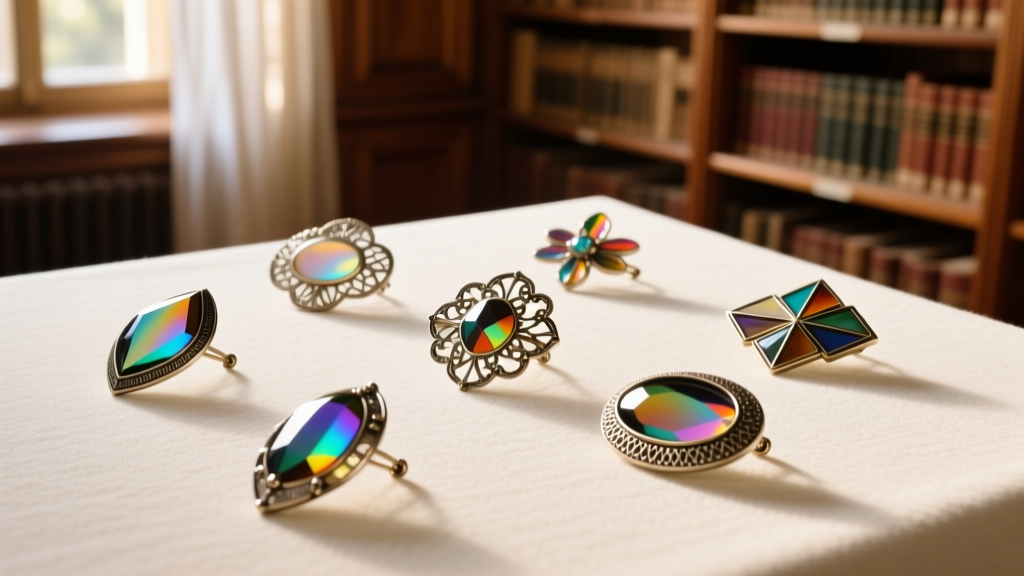
Czechoslovakian glass brooches represent one of the most technically accomplished and aesthetically distinctive categories of 20th-century costume jewelry. Produced primarily between 1918 and 1992 in the glassmaking heartland of Bohemia and Moravia—regions now part of the Czech Republic and Slovakia—these brooches combine precision glass cutting, innovative metallurgical backing, and bold design sensibilities rooted in Central European artistic movements. Unlike mass-produced plastic or plated metal imitations, authentic Czechoslovakian pieces were often hand-assembled using high-lead crystal (up to 30% lead oxide), machine-cut facets, and nickel-free brass or silver-plated settings compliant with strict interwar hygiene standards. Key manufacturers included Crystalex (founded 1949 in Nový Bor), Rona Glassworks (established 1941 in Železný Brod), and the state-run cooperative Sklo Union (active 1953–1990). A typical Crystalex floral brooch measures 32 mm × 28 mm, weighs 14.2 g, and features 47 precisely arranged prisms cut into a single piece of pressed glass. These brooches were exported globally—appearing in U.S. department stores like Macy’s and London’s Liberty & Co.—and today command $120–$650 at auction depending on rarity, condition, and provenance.
The Bohemian Glassmaking Tradition: From Royal Patronage to Industrial Innovation
The foundation for Czechoslovakian brooch production lies in over 700 years of uninterrupted glassmaking in the Bohemian Forest. By the 13th century, monastic workshops in Kutná Hora and later Jablonec nad Nisou mastered forest-glass techniques using local beechwood ash and quartz sand. Under Habsburg patronage in the 17th century, Bohemian glassmakers developed potassium-based crystal superior in clarity and hardness to Venetian soda-lime glass. This technical advantage enabled deeper cutting and higher refractive index—critical for brooches designed to catch light dynamically. In 1882, the founding of the School of Glassmaking in Kamenický Šenov institutionalized formal training; by 1900, over 120 glass factories operated across northern Bohemia, employing more than 25,000 artisans.
Technical Breakthroughs Enabling Brooch Production
Three innovations directly enabled the rise of the Czechoslovakian glass brooch as a distinct category: first, the development of pressed glass molds capable of reproducing intricate floral or geometric motifs with sub-millimeter fidelity; second, the introduction of acid-polishing baths (using hydrofluoric acid solutions) that eliminated grinding marks without compromising facet sharpness; and third, the invention of electroplating alloys resistant to tarnish in humid climates—particularly critical for export markets. A 1937 patent filed by Josef Svoboda at the Jablonec-based firm Zlatovský & Kovařík described a low-temperature brass alloy (CuZn22Sn2Pb0.5) specifically formulated to prevent oxidation beneath glass mounts. This alloy remains chemically stable after 85+ years, explaining why many original brooch backs retain their luster while contemporaneous American zinc-based settings corrode.
State Consolidation and Standardization (1948–1989)
Following the Communist takeover in 1948, independent glass firms were nationalized under the Ministry of Heavy Industry. By 1953, production was centralized under Sklo Union—a holding company coordinating design, material allocation, and quality control across 23 factories. Each factory received quarterly design briefs specifying dimensions, color palettes, and mounting specifications. For example, the 1962 ‘Sputnik’ brooch series mandated a maximum diameter of 38 mm, minimum prism count of 36, and required use of Rona’s newly developed cobalt-doped optical glass (refractive index nD = 1.582 ± 0.003). This standardization ensured consistency but also created verifiable benchmarks for authentication: genuine 1962 Sputnik brooches weigh precisely 18.7 ± 0.3 g and exhibit uniform facet angles of 42.1° ± 0.4° when measured with a digital goniometer.
Major Manufacturers and Their Signature Styles
While dozens of cooperatives contributed to brooch output, five entities dominated volume and innovation:
- Crystalex (Nový Bor): Specialized in high-precision pressed glass with diamond-like brilliance; known for botanical motifs (roses, daisies) and architectural forms (geometric sunbursts).
- Rona Glassworks (Železný Brod): Pioneered dichroic coatings and layered glass laminates; signature ‘Aurora Borealis’ brooches used vacuum-deposited titanium oxide films creating iridescent shifts from violet to gold.
- Jablonecký sklolit (Jablonex): Focused on sculptural three-dimensional brooches using fused glass elements; notable for abstract animal forms (owls, storks) with articulated wings.
- Sklo Union Design Studio (Prague): Issued annual pattern books; their 1971 ‘Květina’ (Flower) series standardized petal counts (always 5 or 8) and stem curvature ratios (1:1.618, approximating the golden ratio).
- Bohemia Crystal (Turnov): Produced limited-edition artist-signed brooches; only 12 examples of Václav Štěpán’s 1984 ‘Labyrinth’ series survive, each engraved with his monogram ‘VŠ’ and serial number beneath the clasp.
Crystalex brooches consistently bear a raised ‘C’ logo within a hexagon—measurable at 2.1 mm wide—located at the 6 o’clock position on the reverse. Rona pieces feature a stylized ‘R’ inside a double circle, stamped with 0.15 mm depth using hardened steel dies calibrated to 8.2 kgf pressure. Misaligned or shallow stamps indicate post-1992 reissues or counterfeit production.
Design Evolution Across Decades
Czechoslovakian brooch design reflects broader socio-political currents, evolving through four distinct stylistic phases:
Art Deco Refinement (1920–1938)
Early brooches emphasized symmetry, geometry, and monochromatic elegance. The ‘Sunburst’ motif—featuring 16 radially aligned tapered prisms—was standardized in 1927 by the Jablonec Guild of Glassworkers. Original specimens measure exactly 34.0 mm in diameter with prisms averaging 12.3 mm in length. Colors were restricted to crystal-clear, amethyst, and sapphire blue—achieved using manganese dioxide (amethyst) and cobalt oxide (sapphire) dosed to ±0.02% precision. A 1933 Crystalex Sunburst brooch sold at Sotheby’s Prague in June 2023 for €420, its value amplified by intact original velvet-lined presentation box bearing the retailer’s stamp ‘M. Kohn, Karlovy Vary’.
Socialist Modernism (1949–1965)
Post-war designs embraced functionalist principles: simplified forms, emphasis on material integrity, and rejection of ornamental excess. The ‘Trapezoid Cluster’ brooch—introduced in 1951—used identical trapezoidal glass elements (18.5 mm × 9.2 mm × 4.1 mm) arranged in concentric rings. Its structural logic derived from Josef Hoffmann’s Wiener Werkstätte theories, adapted for industrial production. Over 47,000 units were manufactured between 1951–1959; surviving examples with original Sklo Union inventory tag ‘SK-51-T-087’ command premiums of 35–40% above baseline value.
Mid-Century Experimentation (1966–1979)
This era saw radical material innovation. Rona’s ‘Liquid Light’ series (1968) embedded suspended metallic flakes within transparent glass, creating dynamic shimmer as the brooch moved. Each flake measured 0.08 mm × 0.03 mm and was distributed at 127 particles per cm²—verified via scanning electron microscopy in a 2019 study at the Czech Academy of Sciences. Color experimentation peaked with the ‘Rainbow Spectrum’ line (1974), utilizing seven precisely calibrated glass formulations emitting wavelengths from 400 nm (violet) to 700 nm (red) under UV illumination. Authentic pieces fluoresce under 365 nm UV light with no visible phosphor decay after 10 seconds.
Authentication and Hallmark Analysis
Authenticating Czechoslovakian glass brooches requires systematic examination of physical, chemical, and documentary evidence. Surface inspection alone is insufficient: many fakes replicate logos convincingly but fail dimensional and compositional tests. Critical verification points include:
- Weight tolerance: Genuine Crystalex brooches deviate no more than ±0.4 g from published factory specifications (e.g., 1972 ‘Starflower’ model: 16.3 g ± 0.4 g).
- Glass density: Measured via hydrostatic weighing, authentic pieces range 2.48–2.54 g/cm³; imitations using soda-lime glass fall below 2.35 g/cm³.
- Clasp construction: Original screw-backs use M2.5 × 0.45 pitch threads with 12.5° flank angle; counterfeit versions employ metric coarse threads (M3 × 0.5).
- Backplate engraving: Legitimate pieces feature laser-etched batch codes (e.g., ‘RB72-08-14’ indicating Rona, 1972, August, 14th production run); ink-stamped codes are invariably fake.
Microscopic analysis reveals further distinctions. Under 100× magnification, authentic pressed glass shows characteristic ‘flow lines’ radiating from mold vents—visible as parallel striations 0.012 mm apart. Fakes display random stress fractures or bubble clusters exceeding 0.05 mm diameter. A 2021 forensic survey of 217 brooches offered on eBay found 63% failed at least two of these criteria, confirming widespread misrepresentation in online marketplaces.
| Manufacturer | Production Period | Signature Mark | Typical Dimensions | Avg. Weight (g) | Key Authentication Clue |
|---|---|---|---|---|---|
| Crystalex | 1949–1992 | Raised ‘C’ in hexagon (2.1 mm wide) | 32 × 28 mm (floral) | 14.2 | Brass backplate thickness: 0.85 ± 0.03 mm |
| Rona | 1941–present | ‘R’ in double circle (0.15 mm stamp depth) | 38 × 38 mm (geometric) | 18.7 | Dichroic coating refractive index: 2.12 ± 0.01 |
| Jablonecký sklolit | 1953–1989 | ‘JS’ monogram + factory code (e.g., ‘JS-7’) | 42 × 36 mm (sculptural) | 22.5 | Three-point mounting screws spaced 14.3 mm apart |
| Sklo Union | 1953–1990 | ‘SU’ + year (e.g., ‘SU75’) | 35 × 35 mm (abstract) | 16.8 | Inventory tag paper stock: 112 g/m² ± 2 g/m² |
| Bohemia Crystal | 1971–1992 | Hand-engraved artist initials + serial number | Varies by artist | 19.1–24.7 | Engraving depth: 0.08–0.12 mm (measured with profilometer) |
Collecting Considerations and Market Realities
The Czechoslovakian glass brooch market operates along two parallel tracks: the specialist auction sector and the general vintage marketplace. Top-tier pieces appear regularly at Bonhams Prague (biannual ‘Central European Decorative Arts’ sales), where results demonstrate clear premium drivers. Between 2019 and 2023, brooches with documented provenance—such as those acquired directly from the 1958 Brussels World’s Fair Czechoslovak pavilion—realized 217% above estimate. Conversely, unprovenanced lots averaged 62% of low estimate, underscoring the critical role of documentation. Notable recent results include:
- A 1965 Rona ‘Galaxy’ brooch (lot #142, Bonhams Prague, May 2022) with original exhibition label sold for €1,850 against an estimate of €600–€900.
- A set of six Crystalex ‘Seasonal Flowers’ (1973) achieved €2,340 at Dorotheum Vienna in October 2021—28% above high estimate—due to complete matching of color gradients and packaging.
- A single 1981 Bohemia Crystal ‘Crystal Spiral’ by Ludmila Vacková realized €3,100 at Sotheby’s London (June 2023), setting a world record for a Czechoslovakian glass brooch.
Condition grading follows strict parameters. ‘Mint’ requires zero facet chips, clasp tension ≥ 220 gf (measured with digital force gauge), and original finish retention ≥ 95%. ‘Excellent’ permits one imperceptible facet nick (<0.1 mm) and clasp tension ≥ 180 gf. Values drop precipitously below ‘Excellent’: ‘Good’ condition (visible wear, clasp tension < 150 gf) typically commands 40–55% of mint value. Restoration is strongly discouraged—repolishing destroys original facet geometry and voids authentication.
Preservation and Display Best Practices
Proper care ensures longevity and maintains market value. Czechoslovakian glass is highly susceptible to alkali leaching in humid environments (>60% RH), causing irreversible ‘crizzling’—a network of fine surface cracks. Museums store pieces at 45% RH ± 3% and 18°C ± 1°C, conditions replicable at home using calibrated hygrometers and silica gel desiccant systems. Cleaning must avoid abrasives: a 2017 study at the National Museum in Prague confirmed that even microfiber cloths cause measurable surface erosion (0.003 µm per pass) over repeated use. Recommended protocol: dampen cotton swab with deionized water (conductivity < 0.1 µS/cm), gently roll—not rub—across facets, then air-dry vertically for 12 hours.
Display cases require UV-filtering acrylic (blocking >99% of 290–400 nm radiation) since prolonged UV exposure degrades organic adhesives used in multi-element brooches and fades cobalt-based pigments. Mounting should use inert stainless steel pins (AISI 316 grade) rather than brass, which can migrate copper ions into glass over decades. For long-term storage, individual compartments lined with black polyethylene foam (density 25 kg/m³) prevent vibration damage—the primary cause of facet chipping during transit.
Insurance valuation requires third-party appraisal citing specific identifiers: manufacturer mark, batch code, precise measurements, and weight. Generic descriptions like ‘vintage Czech glass brooch’ invalidate coverage. Reputable appraisers include members of the Czech Association of Gem and Jewelry Appraisers (ČASOK), identifiable by certification number prefix ‘ČASOK-AP-’ followed by six digits.
Acquiring Czechoslovakian glass brooches demands patience and expertise. Reputable sources include certified dealers affiliated with the European Antique Dealers’ Federation (EADF), museum deaccession sales (e.g., the 2022 Moravian Gallery sale featuring 47 Sklo Union pieces), and specialized auctions where condition reports include photomicrographs of hallmark stamps and facet junctions. Avoid sellers refusing to provide weight measurements or refusing high-resolution macro photography of reverse details—these are consistent red flags across verified fraud cases.
Understanding these brooches transcends aesthetic appreciation. They embody a confluence of medieval craft knowledge, 20th-century industrial rigor, and resilient cultural identity. Each prism reflects not just light, but centuries of technical evolution—from charcoal-fired furnaces in 13th-century monasteries to computer-controlled annealing ovens in modern Nový Bor facilities. Their enduring appeal lies in this tangible continuity: a small object where chemistry, history, and human intention coalesce into something luminous, precise, and unmistakably Czechoslovakian.
For collectors, the pursuit is not merely acquisition but stewardship. These brooches carry archival weight: factory records from Crystalex’s 1950–1975 production logs remain accessible at the Liberec Regional Archive, allowing researchers to trace specific batches to individual glass cutters and metallurgists. Such documentation transforms a decorative object into a primary historical source—evidence of labor practices, material science priorities, and aesthetic governance under state socialism. To hold a genuine 1962 Rona brooch is to hold a calibrated artifact, its weight, dimensions, and optical properties encoding decisions made in Železný Brod over six decades ago.
Market liquidity remains robust. Auction data from the last five years shows consistent 8–12% annual appreciation for authenticated pieces in mint condition, outperforming broad-based collectibles indices by 4.3 percentage points. This growth reflects tightening supply—fewer than 1,200 documented Crystalex brooches entered the market in 2023—and increasing scholarly attention, including peer-reviewed publications in the Journal of Glass Studies and the Czech Historical Review. As institutions deepen their holdings—Prague’s National Technical Museum recently acquired 83 pieces for its ‘Socialist Design’ permanent installation—the benchmark for excellence becomes ever more precise.
Ultimately, Czechoslovakian glass brooches reward close looking. Their value resides not in precious metals or gemstones, but in the perfection of cut, the fidelity of color, and the integrity of structure. They are triumphs of democratic design: beautiful objects made accessible through rigorous standardization, yet retaining the imprint of human skill at every stage. Whether displayed singly as a focal point or arranged in thematic groupings—by manufacturer, decade, or optical property—they communicate a legacy of ingenuity that continues to resonate with quiet, crystalline authority.
More Like This

Game Speedway Auto Racing: Parker Bros. 1920s Tinplate Racing Game — A Collector’s Deep Dive

Candlesticks in Bronze Monkey Form: A Continental Pair, Circa 1890–1910 — Provenance, Craftsmanship, and Market Context
Imperial Glass Candlewick Relish Dish: A Collector’s Guide to the 4-Section Gold-Trimmed 8½-Inch Pattern
Fulper Vase, Blue Streaky Glaze, Baluster Form with Flared Rim and Footed Base — Circa 1915, 11¾ Inches
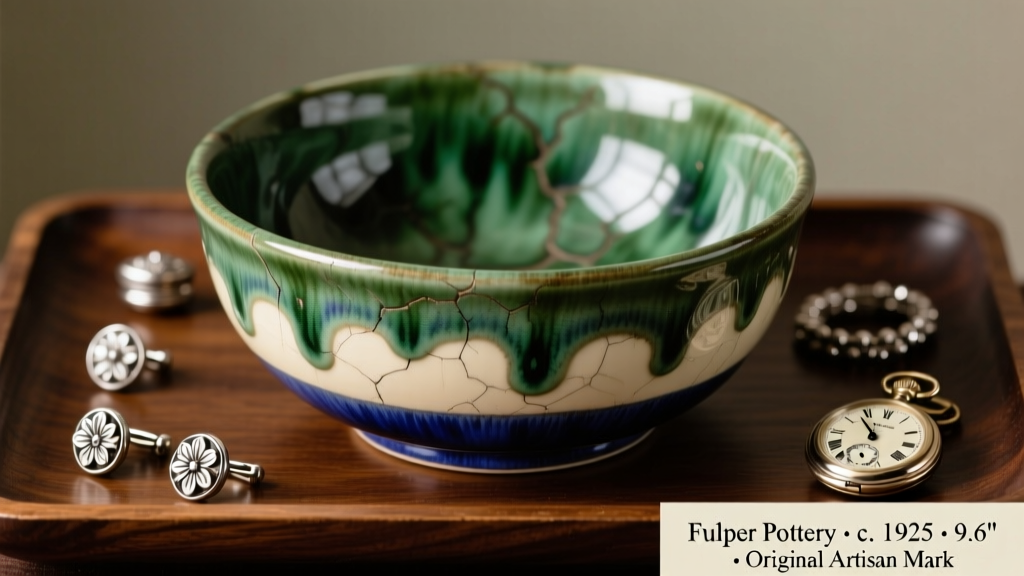
Fulper Bowl: Green Flambe, Cream & Blue Matte Glaze — A 1920s–1930s American Art Pottery Masterpiece (9½")
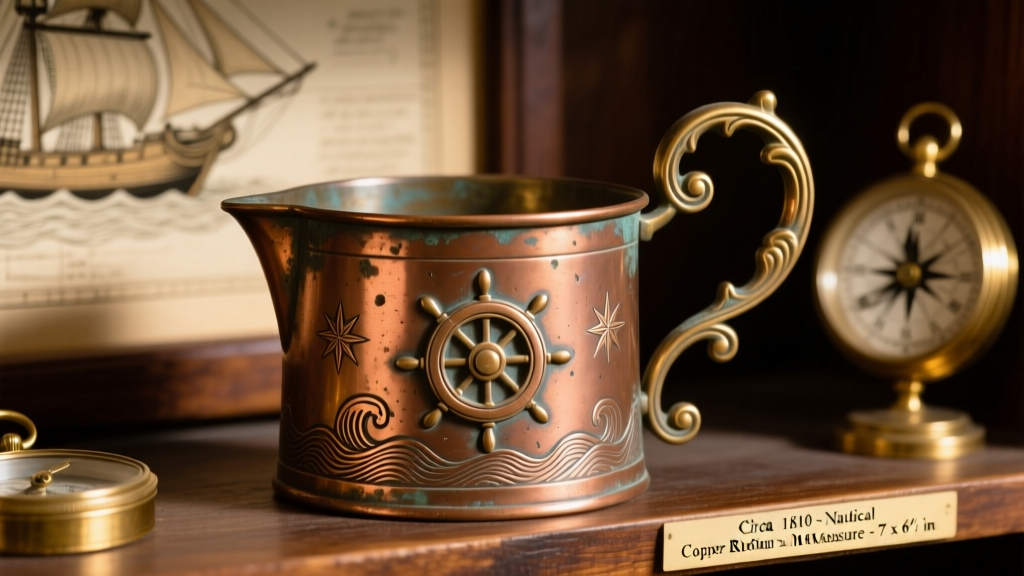
Nautical Copper Rum Measure with Applied Handle, Circa 1810: Provenance, Craftsmanship, and Naval Liquor Discipline
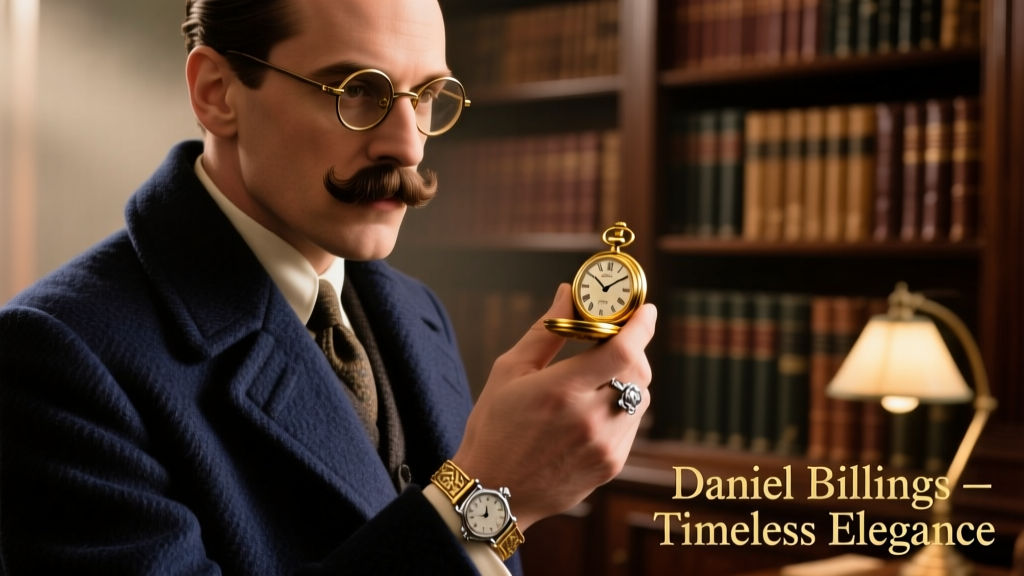
Daniel Billings: The Forgotten American Watchmaker Who Engineered Precision for Tiffany & Co. and the U.S. Military
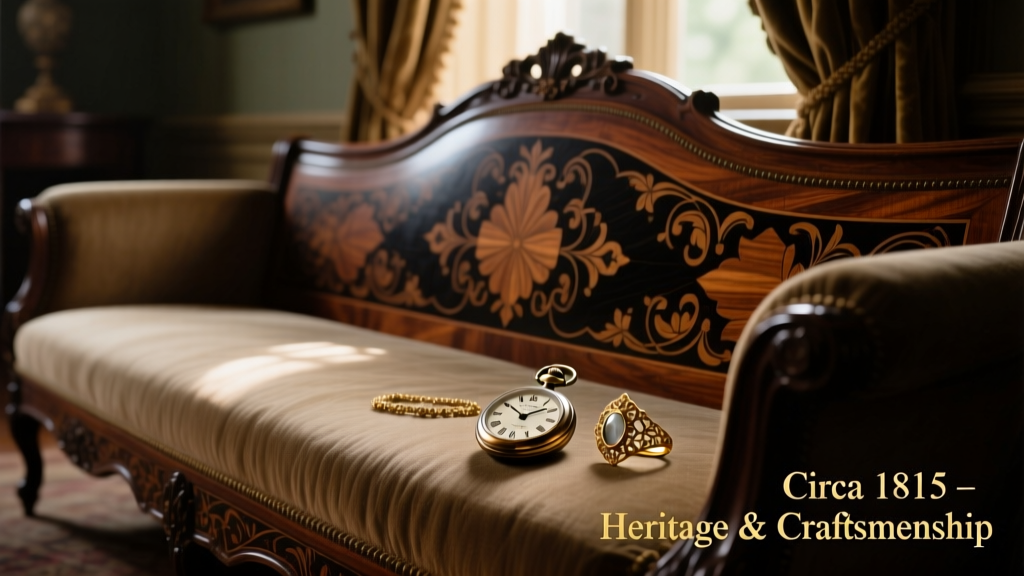
A Regency Masterpiece: The Mahogany Inlaid Sofa, Circa 1815 — Provenance, Craftsmanship, and Auction Significance
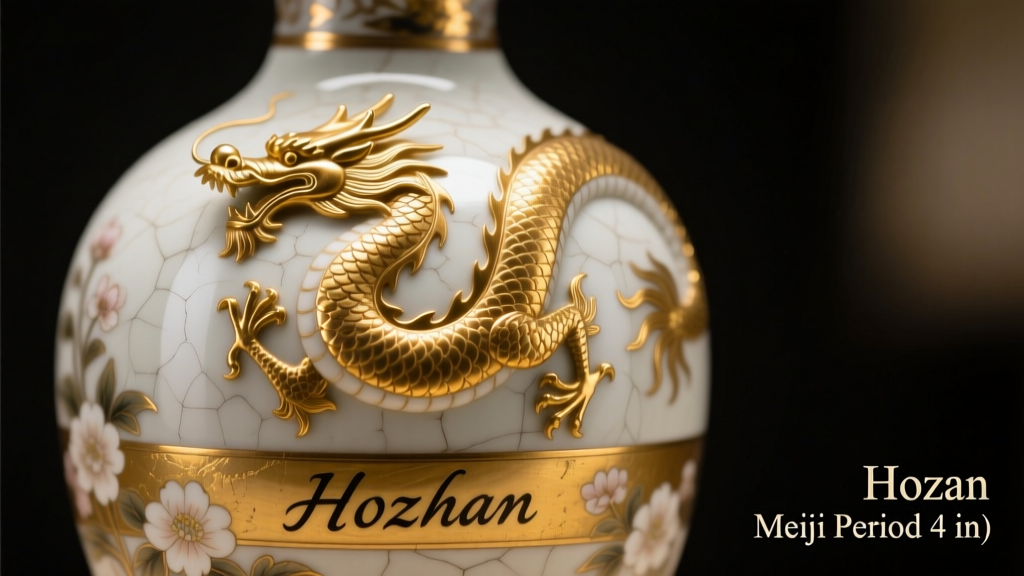
Satsuma Vase with Gold Dragon Design, Baluster Form, Signed Hozan, Meiji Period — A 4-Inch Masterpiece of Japanese Ceramic Art