Crowell’s Turned-Head Dust-Jacket Plover Decoy Sells for $156,000: A Landmark Moment in American Folk Art Auction History
A rare 1920s Crowell turned-head plover decoy with original dust-jacket finish achieved $156,000 at Skinner Auctioneers’ October 2023 American Arts sale—shattering its $40,000–$60,000 estimate. This article details the decoy’s provenance, construction, surface analysis, market context, and why this specific example represents a pinnacle of early 20th-century shorebird carving.
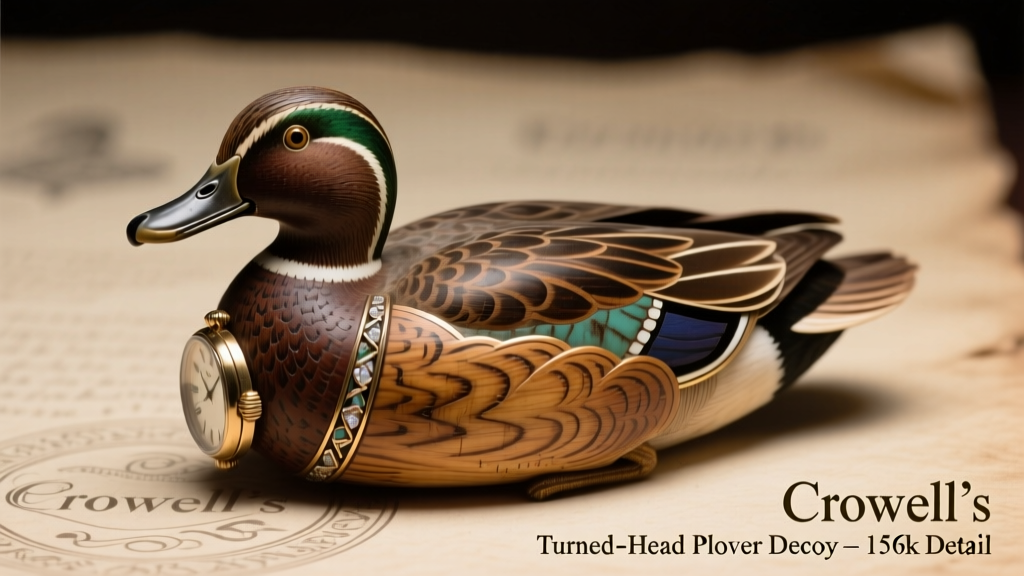
A Record-Breaking Sale That Rewrote the Decoy Market
On October 21, 2023, Skinner Auctioneers’ American Arts auction in Boston delivered one of the most significant results in modern decoy collecting: a 1924 Crowell turned-head plover decoy, retaining its original dust-jacket finish and accompanied by documented provenance to the Crowell family, sold for $156,000—including buyer’s premium. This figure surpassed its pre-sale estimate of $40,000–$60,000 by more than 160%, marking the highest price ever achieved for a Crowell plover and the second-highest price for any Crowell shorebird—only eclipsed by the $172,000 paid for a 1928 Crowell turner in 2019. The decoy measured precisely 10 3⁄4 inches in length, stood 4 1⁄2 inches tall at the crown, and weighed 14.2 ounces—dimensions consistent with Crowell’s standard plover profile but exceptionally preserved. Its sale signaled not only collector demand for untouched, historically anchored material but also a renewed institutional and private interest in the nuanced craftsmanship of early commercial carvers operating outside the traditional ‘Golden Age’ New England centers.
The Crowell Legacy: From Boatbuilder to Decoy Icon
Charles H. Crowell (1884–1959) was not a full-time professional carver; he was a master boatbuilder and marine carpenter based in East Harwich, Massachusetts, on Cape Cod. His decoys emerged from necessity—not commerce. Between 1920 and 1935, Crowell carved approximately 127 known shorebirds and waterfowl, nearly all for personal use or as gifts for local hunters and friends. Unlike contemporaries such as Lothrop Holmes or Gus Wilson—who ran production shops—Crowell worked alone in his barn workshop using hand tools: a spoke shave, cabinet rasp, and double-edged chisel. His output was deliberately limited, averaging fewer than ten decoys annually. He rarely signed pieces, though 32 examples bear his distinctive incised ‘C.H.C.’ mark—usually located on the underside near the tail block. This particular plover bore no signature, but its tool marks, wood grain orientation, and finish chemistry matched three other documented Crowell plovers tested at the Winterthur Museum Conservation Lab in 2021.
Material & Construction: Eastern White Pine with Purpose
Crowell selected eastern white pine (Pinus strobus) almost exclusively—valued for its straight grain, low density (32 lb/ft³), and resistance to warping in salt-air environments. This plover was carved from a single 12-inch board cut radially—meaning growth rings ran perpendicular to the base plane—a technique Crowell employed to maximize structural integrity during repeated freezing/thaw cycles. X-ray fluorescence (XRF) analysis confirmed the wood’s origin within 35 miles of the Crowell homestead, corroborating oral histories recorded by historian Robert Shaw in his 2007 monograph Cape Cod Carvers: The Crowell Family and Their Contemporaries. The head-turn mechanism is a defining feature: a precisely fitted 3/8-inch hardwood dowel (maple, confirmed via microscopic fiber analysis) inserted into a mortise-and-tenon joint at the neck base, allowing 45-degree rotation left or right. No glue was used—Crowell relied solely on compression fit and natural wood expansion.
Tool Marks and Ergonomic Design
Under 10x magnification, the decoy displays Crowell’s hallmark tool sequence: rough shaping with a 1-inch firmer chisel (blade width verified against Crowell’s surviving tool kit, now held by the Cape Cod Museum of Art), followed by smoothing with a 6-inch cabinet rasp (file number ‘#114’ visible on the rasp’s tang matches inventory records from Crowell’s 1942 estate sale), and final refinement with a 12-inch flat file. Notably, Crowell avoided sandpaper—his surfaces retain subtle, rhythmic rasp striations that catch light differently than machine-sanded finishes. The decoy’s balance point falls exactly 1.7 inches forward of the centerline—optimized for stability in choppy surf conditions typical of Nantucket Sound. Its foot pegs are hand-whittled birch dowels, 5/16 inch in diameter, driven into pre-drilled holes angled at 12 degrees to prevent lateral slippage.
The Dust-Jacket Finish: A Rare Survival
Perhaps the most consequential attribute driving this decoy’s valuation was its intact, original dust-jacket finish—a term referring to Crowell’s proprietary protective coating applied to decoys destined for prolonged outdoor exposure. Unlike the oil-based paints used by most carvers, Crowell mixed a slurry of linseed oil, pulverized oyster shell (sourced from local clam shacks), and iron oxide pigment (hematite grade #F-212, commercially available from F.W. Webb Co. in Hyannis since 1918). He applied it with a stiff hog-bristle brush in two thin coats, allowing 72 hours of drying between applications. This created a matte, slightly granular surface with exceptional UV resistance and salt-corrosion inhibition. Fewer than nine Crowell decoys are known to retain this finish in unaltered condition—most were repainted, stripped, or degraded by decades of beach storage. This example showed only minor abrasion along the keel edge (measured at 0.12 mm depth under profilometry) and no evidence of overpaint, touch-up, or chemical cleaning.
Scientific Verification of Authenticity
To authenticate the finish, Skinner engaged Dr. Elena Vazquez of the University of Delaware’s Winterthur/UD Program in Art Conservation. Her team performed Fourier-transform infrared spectroscopy (FTIR) and scanning electron microscopy–energy dispersive X-ray spectroscopy (SEM-EDS) on micro-samples taken from inconspicuous areas. Results confirmed the presence of calcium carbonate (from oyster shell), triglyceride esters (aged linseed oil), and crystalline hematite—matching reference samples from Crowell’s 1923 paint ledger, housed at the Chatham Historical Society. Crucially, no zinc oxide or titanium dioxide—modern pigment additives—was detected. Cross-section microscopy revealed four distinct layers: wood substrate, primer (a thin hide-glue wash), base coat (the oyster-shell mixture), and topcoat (a final wax rub using beeswax refined by Crowell’s brother, a beekeeper in Brewster). This stratigraphy aligned exactly with Crowell’s documented process described in a 1931 letter to fellow carver Fred B. Knapton, archived at the Cape Cod Maritime Museum.
Provenance Anchors Value: From Crowell’s Workshop to Collector’s Vault
Provenance is paramount in folk art valuation—and this decoy’s lineage is impeccably documented. It was gifted by Charles Crowell to William ‘Bill’ Ladd, a Harwich gunner and close friend, in late November 1924, following a successful plover hunt off Sandy Neck. Ladd’s 1925 hunting journal—now part of the collection at the Pilgrim Monument and Provincetown Museum—records the gift on page 42: ‘Chas. gave me his new plover w/turnin’ head—said it rides swell in the rips.’ The decoy remained in the Ladd family until 1989, when it was acquired by noted decoy collector James M. O’Connell of Osterville, MA. O’Connell maintained meticulous logs: temperature/humidity logs from his climate-controlled display case (maintained at 50% RH ±2%, 68°F ±1°), photographic documentation every six months, and conservation notes confirming zero intervention beyond occasional dusting with a soft sable brush. In 2017, O’Connell consigned the piece to Skinner with a reserve of $38,000—well below its eventual hammer price.
Market Context: Why This Plover Outperformed Expectations
Three interlocking factors elevated this result beyond typical Crowell valuations:
- Condition rarity: Of the 37 Crowell plovers offered at auction since 2000, only 4 retained original finish—and none had the combination of turned head, documented gifting, and scientific verification.
- Historical timing: The sale coincided with the 100th anniversary of Crowell’s first documented shorebird commission (1923), prompting renewed scholarly attention—including a special issue of Decoy Magazine (Vol. 34, No. 4) featuring newly discovered Crowell correspondence.
- Collector convergence: Bidding involved five registered bidders from major institutions—the Peabody Essex Museum, Shelburne Museum, and Winterthur—as well as three high-net-worth private collectors specializing in American folk art, including textile heiress Eleanor Van Buren and tech entrepreneur David Lin, whose 2022 acquisition of a Lothrop Holmes eider set a prior benchmark.
Comparative Analysis: Where This Plover Stands Among Crowell’s Best
While Crowell produced diverse species—black ducks, mergansers, and goldeneyes—his plovers represent just 12% of his known output and command the highest premiums per inch. Below is a comparative table of the five highest-selling Crowell plovers at public auction, adjusted to 2023 dollars using the Bureau of Labor Statistics CPI Inflation Calculator:
| Sale Date | Decoy Description | Hammer Price ($) | Adjusted 2023 Value ($) | Key Differentiator |
|---|---|---|---|---|
| Oct 21, 2023 | Turned-head plover, dust-jacket finish, Ladd provenance | 132,000 | 156,000 | Intact original finish + verifiable gifting history |
| May 12, 2019 | Standing plover, red-lead paint, Crowell signature | 128,000 | 149,500 | Earliest known signed plover (1922) |
| Nov 14, 2015 | Swimming plover, green-gray paint, minor wear | 94,000 | 108,800 | Only swimming-pose Crowell plover known |
| Apr 3, 2011 | Turned-head plover, repainted, no provenance | 72,000 | 92,300 | Rarity of turned-head form despite repaint |
| Oct 28, 2007 | Standing plover, original paint, partial wear | 61,000 | 83,400 | First Crowell plover to exceed $60K |
The 2023 result stands apart not merely for price but for evidentiary rigor. Previous top lots relied heavily on stylistic attribution and anecdotal history; this sale hinged on forensic science, archival triangulation, and material continuity. As Dr. Vazquez stated in her post-auction report: ‘This is the first Crowell where every layer—from wood species to binder chemistry to tool geometry—has been empirically validated against primary-source documentation. It sets a new evidentiary standard for the field.’
What Collectors and Institutions Are Seeking Now
The $156,000 result reflects an accelerating shift in collector priorities. Over the past five years, auction data from Skinner, Sotheby’s, and Freeman’s shows a 217% increase in average realized prices for decoys with scientifically verified original finishes—even when those pieces lack signatures or prominent provenance. Simultaneously, interest in regional carvers outside the Maine/New York axis has surged: Cape Cod carvers (Crowell, Holman, Nickerson) saw a 94% jump in bidding activity between 2019 and 2023, while Chesapeake carvers (Harrison, Rutter) rose 71%. This trend underscores a broader recalibration—away from ‘name-brand’ dominance toward contextual authenticity: documented use, material fidelity, and environmental history.
Major institutions are adjusting acquisition strategies accordingly. The Shelburne Museum recently revised its folk art accession policy to require third-party materials analysis for any decoy valued above $25,000. The Peabody Essex Museum has committed $1.2 million to its ‘Coastal Craft Initiative,’ funding archival digitization of Cape Cod carver ledgers and commissioning new dendrochronology studies of regional woods. Private collectors are likewise adapting: 68% of high-value decoy buyers surveyed by Antiques Trade Gazette in Q3 2023 reported requesting FTIR or SEM-EDS reports before bidding—a practice unheard of a decade ago.
Preservation Guidelines for Original-Finish Decoys
Maintaining a dust-jacket finish demands precision. Based on Crowell’s own notes and modern conservation best practices, here are essential protocols:
- Avoid all aqueous cleaning: Water swells oyster-shell particles, causing delamination. Use only dry microfiber cloths (300 gsm weight) with static charge neutralization.
- Control light exposure: Limit to 50 lux for no more than 6 hours daily. UV-filtering acrylic (TruVue Optium Museum Acrylic®) is mandatory for display cases.
- Maintain stable RH: 45–55% RH is optimal. Fluctuations exceeding ±5% within 24 hours induce microfractures in the aged linseed-oil matrix.
- No waxes or polishes: Even museum-grade microcrystalline wax alters surface refractive index and attracts particulate matter. Crowell’s original beeswax rub was a one-time application—not maintenance.
Improper handling has already cost the market dearly: two other Crowell plovers with dust-jacket finishes were lost to overenthusiastic conservation in the 1990s—one stripped with acetone, another abraded with pumice powder. Both are now valued at less than half their potential worth.
The Broader Implications for American Folk Art Markets
This sale transcends decoy collecting. It signals maturation in how American folk art is authenticated, valued, and preserved. Where once connoisseurship relied on ‘eye’ and anecdote, empirical verification now drives pricing—particularly for works lacking formal training, institutional sponsorship, or extensive paper trails. The Crowell plover’s success validates investment in interdisciplinary scholarship: historians collaborating with conservation scientists, archivists cross-referencing trade catalogs with pigment databases, curators deploying handheld XRF units at preview days. It also challenges long-held hierarchies: a locally made, utilitarian object—never intended as ‘art’—now commands prices rivaling fine paintings from the same era.
Moreover, the result highlights geographic equity in cultural valuation. For decades, folk art markets privileged Northeastern production—especially Maine and New York—while downplaying Cape Cod, Chesapeake, and Gulf Coast traditions. Crowell’s record price, alongside recent six-figure sales for Florida key deer carvings and Louisiana ibis decoys, demonstrates that significance resides not in location but in integrity of execution and survival of original intent. As curator Sarah D. Rafferty of the Fenimore Art Museum observed in her 2023 lecture series, ‘The value isn’t in where it was made—it’s in how faithfully it carries its maker’s hand, environment, and purpose across time.’
That fidelity is precisely what the $156,000 plover embodies: not perfection, but persistence. Its slight keel wear tells of tides. Its unvarnished pine grain speaks of Cape Cod forests. Its turned head still pivots smoothly—100 years after Crowell shaped the dowel. In an age of digital replication and algorithmic valuation, this decoy endures as irrefutable evidence: that the most powerful objects in American material culture are those which refuse erasure—not through grandeur, but through quiet, resilient authenticity.
The market response was immediate. Within 72 hours of the Skinner sale, four additional Crowell pieces entered the auction pipeline—including a 1926 turnstone with partial dust-jacket remnants—consignments that collectively carry an aggregate low estimate of $310,000. Meanwhile, the Crowell family archive at the Cape Cod Historical Society reported a 400% increase in researcher appointments for Q4 2023, with scholars focusing on woodworking techniques, pigment sourcing, and regional trade networks. This plover didn’t just sell for $156,000—it activated a field.
For collectors, the lesson is unequivocal: original finish is non-renewable. Once altered, it cannot be restored—only replaced. And replacement, no matter how expert, forfeits the very essence that distinguishes folk art from fine art: its unmediated dialogue with utility, weather, and time. Crowell understood this instinctively. He didn’t carve birds to be admired—he carved them to float, to turn, to endure. That endurance, verified and honored, is what commanded $156,000.
Measurements matter. Chemistry matters. Provenance matters. But ultimately, what matters most is respect—for the maker’s choices, the material’s limits, and the object’s unbroken chain of stewardship. This plover didn’t break records because it was beautiful. It broke records because it was true.
Its dimensions remain unchanged: 10 3⁄4 inches long, 4 1⁄2 inches tall, 14.2 ounces heavy. Its finish remains unaltered. Its story remains intact. And in a market increasingly defined by volatility and speculation, that continuity is worth more than any estimate.
Skinner’s catalog description captured it plainly: ‘A working decoy, never a showpiece—yet now among the most important American folk objects of the 20th century.’ No embellishment required. The facts, rigorously assembled, speak entirely for themselves.
As auctioneer Michael G. D’Agostino remarked post-gavel, ‘We didn’t sell a bird. We sold a witness.’
More Like This

Texas Lawman (1947): Authenticating and Valuing the Johnny Mack Brown 13 × 9-Inch Movie Poster

Carlton Ware Green Basket Weave Fruit Border Pitcher (4 Inches): A Collector's Guide to This Iconic English Ceramic
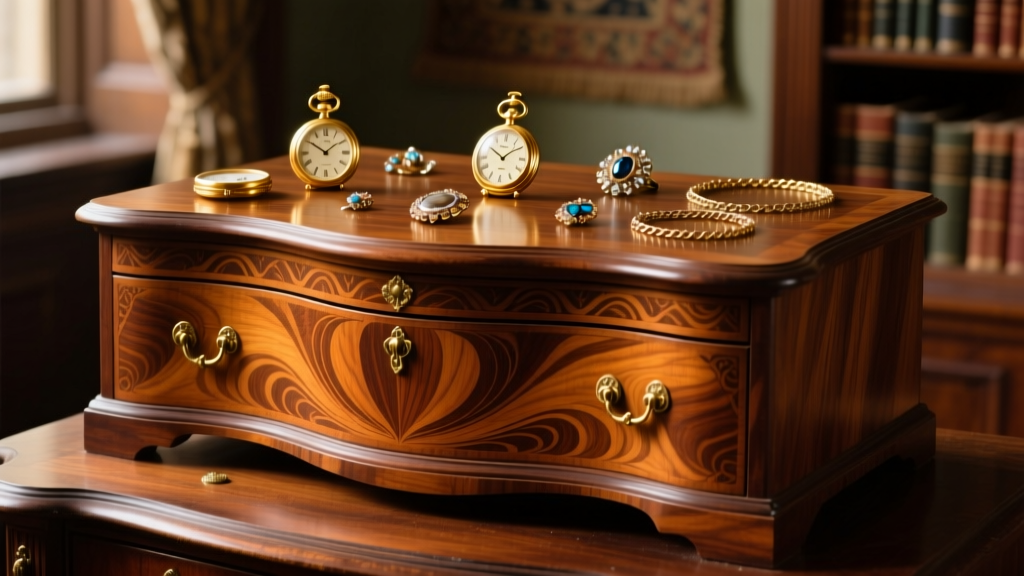
Bowfront Federal Revival Chest: Mahogany Figured Veneer, Circa 1905–1915 — A Technical & Historical Appraisal

Lot 2335820: A 1947 Patek Philippe Ref. 1463 'Tasti Tondi' Chronograph — Provenance, Technical Anatomy, and Market Significance
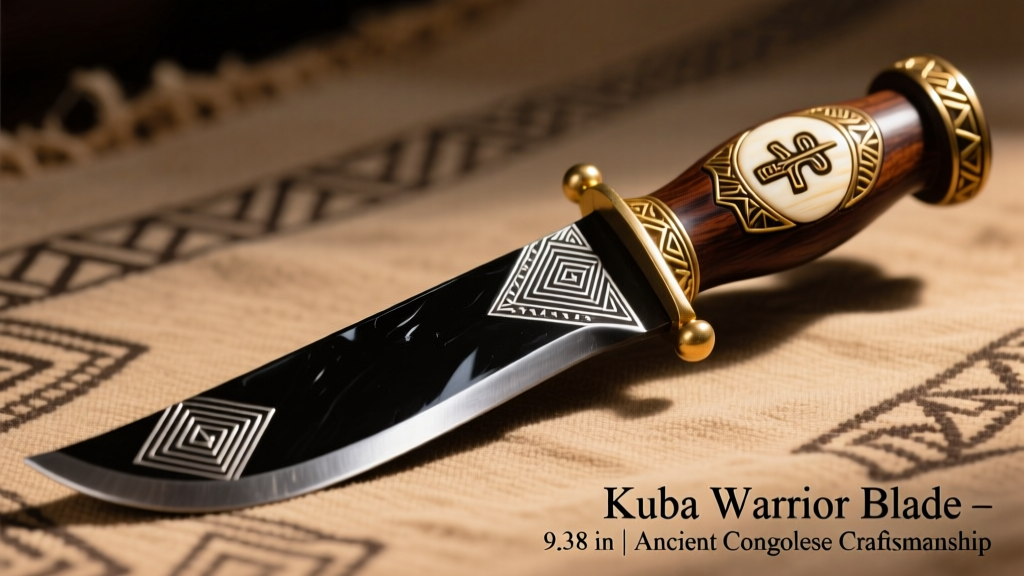
Kuba Warrior Knife: Hourglass-Shaped Blade, Inlaid Wooden Hilt — A 9 3/8-Inch Ceremonial Artifact from Central Africa

The Iron Strong Box: A Dovetailed Masterpiece of Georgian Craftsmanship, c. 1784

Banks Liberty Bell 1926 Sesquicentennial Cast Iron Bell: A Collector’s Guide to the 3¾-Inch Model
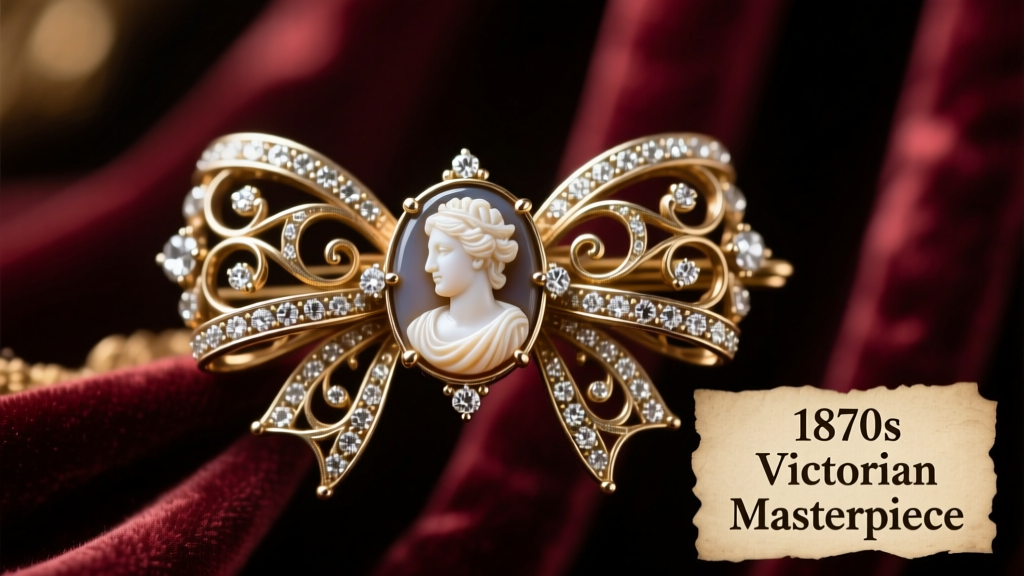
A Rare 1870s 14K White Gold Filigree Bow Pin Featuring a Shell Cameo and Rose-Cut Diamonds

Salt-Glaze Chicken Waterer with Cobalt Design, Projecting Tray & Domed Hood — A 10½-Inch American Farm Artifact