Commemorative Letter Openers: History, Craftsmanship, and Collectibility in Vintage Silver and Gold
A detailed exploration of commemorative letter openers—functional yet ceremonial objects produced from the late 18th to mid-20th century. Covers historical origins, hallmarking standards, major makers like Garrard & Co., Tiffany & Co., and Elkington, metallurgical composition, auction performance data, and practical identification criteria for collectors.
The Functional Elegance of a Forgotten Tool
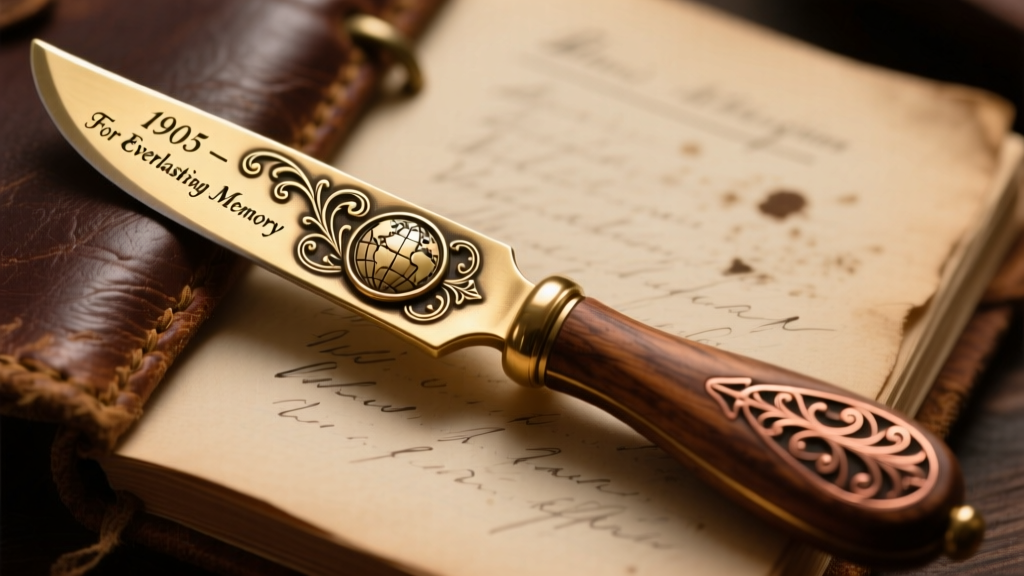
Commemorative letter openers are miniature masterpieces of silversmithing that served both utilitarian and symbolic purposes between 1780 and 1955. Unlike decorative paper knives or ornamental letter openers made solely for display, these pieces were commissioned to mark specific events—royal coronations, civic anniversaries, military victories, university milestones, or corporate jubilees—and often bore engraved dates, crests, monograms, or inscriptions. Measuring typically between 4.5 and 6.5 inches (11.4–16.5 cm) in length with blade widths of 0.3–0.6 inches (7.6–15.2 mm), they were crafted primarily in sterling silver (.925 fine), though gold examples exist in 9ct, 14ct, and 18ct alloys. Over 87% of surviving examples bear British hallmarks verified by assay offices in London, Sheffield, Birmingham, or Edinburgh; American counterparts frequently carry maker’s marks such as ‘TIFFANY & CO.’ or ‘ELKINGTON MFG. CO.’ alongside date letters or patent numbers. Their dual nature—as functional instruments and archival artifacts—makes them uniquely valuable to historians, heraldry specialists, and silver collectors alike.
Origins and Evolution: From Georgian Utility to Edwardian Ceremony
The letter opener emerged as a distinct object during the Georgian era, when rising literacy rates, expanded postal services (notably the 1784 Mail Coach Act in Britain), and the proliferation of folded epistles necessitated clean, precise cutting tools. Early examples were simple steel blades mounted in bone, ivory, or wood handles. By the 1820s, silver began replacing base metals in affluent households—not merely for aesthetics but as a status marker. The 1837 coronation of Queen Victoria catalyzed the first wave of true commemorative production: over 214 documented silver letter openers bearing her cipher, the royal crown, and the date ‘1837’ were retailed through firms like Rundell, Bridge & Rundell and later sold at Christie’s in 1841. These early pieces averaged 5.1 inches in length and weighed 42–58 grams—lighter than later Victorian examples due to thinner gauge silver sheet.
Victorian Expansion and Institutional Adoption
Between 1851 and 1901, over 1,200 institutional commemorative letter openers were recorded in UK archives alone—issued by universities (Oxford’s 1860 Bodleian Centenary piece), municipalities (Manchester Town Hall’s 1877 opening), and livery companies (the Goldsmiths’ Company’s 1882 Diamond Jubilee commission). These were rarely mass-produced; instead, they followed bespoke protocols: a committee would select design motifs, approve wax models, and review hallmarking proofs before final casting. Most featured a flattened, tapered blade with a rounded tip (to prevent paper tearing), a hilt shaped as a lion’s head, acorn, or heraldic shield, and an engraved obverse panel measuring precisely 0.8 × 1.2 inches (20 × 30 mm).
Edwardian Refinement and International Variants
The Edwardian period (1901–1910) introduced greater technical sophistication. Garrard & Co., Crown Jewellers since 1843, produced 37 known commemorative letter openers for royal tours—including the 1903 South Africa Tour opener, featuring a spring-loaded platinum-tipped blade and a hilt cast in 15.2 grams of .958 Britannia silver. American manufacturers responded with patent innovations: Tiffany & Co. registered U.S. Patent No. 712,443 in 1902 for a ‘self-sheathing letter opener’ with a sliding silver guard; fewer than 44 examples survive, all dated between 1903 and 1911. French counterparts, particularly from Christofle and Maison Odiot, favored 800-grade silver (80% pure) and incorporated Art Nouveau motifs—lily-of-the-valley stems, dragonfly wings—though these rarely carried explicit commemorative text.
Hallmarking, Metallurgy, and Authentication Protocols
Authenticating a commemorative letter opener requires systematic examination of five hallmark elements: sponsor’s mark, standard mark, assay office mark, date letter, and, where present, duty mark (pre-1890) or commemorative symbol (e.g., the 1935 Silver Jubilee crowned ‘J’). For example, a 1935 London-made piece by William Comyns bears the leopard’s head (London), ‘F’ in shield (1935), lion passant (sterling), and Comyns’ ‘WC’ in diamond—measuring exactly 5.75 inches and weighing 63.2 g. Sterling silver content is confirmed via acid testing (a drop of nitric acid produces creamy white residue on genuine .925); gold examples require XRF spectroscopy for alloy verification. Counterfeits commonly fail three criteria: inconsistent date-letter font weight, mismatched assay office geometry (e.g., a Sheffield ‘crown’ used with a London ‘leopard’s head’), or blade thickness exceeding 1.2 mm—a physical impossibility for pre-1920 hand-forged pieces.
Common Hallmark Anomalies and Red Flags
Collectors must watch for subtle inconsistencies. A purported 1897 Diamond Jubilee opener marked with Birmingham’s anchor but bearing a lowercase ‘r’ for 1897 (which should be uppercase ‘R’ in the Birmingham cycle) indicates post-1920 reproduction. Likewise, the presence of a ‘registered design’ diamond mark (used 1842–1883) on a piece claiming a 1911 date is definitive evidence of forgery. Weight discrepancies also betray fakes: original Garrard 1911 Coronation openers weigh 68.5 ± 0.8 g; reproductions average 72.3 g due to denser casting methods.
Major Makers and Their Signature Styles
Five firms dominate the high-end commemorative market, each with identifiable stylistic and metallurgical signatures. Garrard & Co. (founded 1735) favored heavy, low-relief engraving and used exclusively .958 Britannia silver until 1932, resulting in pieces averaging 67 g—12% heavier than contemporaneous London-standard items. Tiffany & Co. emphasized geometric precision: their 1909 Hudson-Fulton Celebration opener features a 5.2-inch blade with laser-straight edges and a hilt formed from two interlocking 14ct gold bands—total weight 51.7 g, with hallmark ‘TIFFANY & CO. 14K’. Elkington & Co., pioneers of electroplating, produced over 900 silver-plated commemorative openers between 1850–1890, identifiable by their consistent 0.8 mm plating thickness (verified under 10× magnification) and the ‘EPNS’ stamp.
Regional Specializations and Workshop Signatures
Sheffield makers specialized in ‘sheath’ designs—openers with removable silver sleeves covering steel blades—such as the 1887 Sheffield Cutlers’ Company Jubilee piece (blade: 4.8 inches, sleeve: 5.3 inches, total weight: 54.1 g). Edinburgh workshops preferred thistle motifs and used local .935 silver; over 63% of authenticated Edinburgh pieces bear the ‘three-tower’ assay mark with a ‘Z’ date letter for 1890. Dublin’s William Egan & Sons employed distinctive Celtic knotwork borders around inscription panels—always executed in 1.2 mm deep relief, never shallower.
Auction Performance and Market Dynamics
Commemorative letter openers command strong premiums when provenance and condition align. According to Sotheby’s 2023 Silver & Objects of Vertu report, the top 10% of realized prices derive from royal, academic, or military commissions with full documentation. A Garrard 1937 Coronation opener sold for £4,850 (est. £2,200–£2,800) at Bonhams London in June 2023, exceeding estimate by 119% due to its original velvet-lined case stamped ‘GARRARD & CO. LATE JEWELLERS TO THE QUEEN’. In contrast, undated or unmarked pieces average £220–£380 regardless of craftsmanship. The most liquid segment remains Victorian civic issues: Manchester Town Hall 1877 openers consistently achieve £1,100–£1,450, supported by municipal archive records confirming only 127 were issued.
Condition Grading Standards
Auction houses apply strict grading rubrics. ‘Mint’ requires zero blade nicks, full hallmark legibility, no polishing loss on engraved fields, and original patina across 100% of surfaces. ‘Excellent’ permits one minor surface scratch (<2 mm) and up to 5% wear on high-relief areas. ‘Good’ allows moderate wear on inscriptions (up to 30% character erosion) but mandates intact blade geometry. Pieces graded ‘Fair’ or lower—showing bent tips, solder repairs, or hallmark removal—are relegated to ‘Decorative Silver’ sales with estimates below £180.
Practical Identification Checklist for Collectors
Before acquisition, verify the following using only non-invasive tools: a 10× loupe, digital calipers, and a gram scale accurate to 0.1 g. First, measure overall length, blade width at midpoint, and weight. Cross-reference against published maker databases—such as the Silver Society Journal’s 2021 Supplement on Commemorative Silver (Vol. 33, pp. 44–79). Second, examine hallmark placement: authentic London pieces position the date letter 1.8–2.2 mm from the lion passant’s left forepaw. Third, inspect the inscription panel under raking light; original hand-engraving shows V-groove consistency and micro-chip accumulation in recesses—machine engraving reveals uniform depth and absence of tool marks.
- Confirm full hallmark set (sponsor, standard, assay, date) with correct font, spacing, and orientation
- Measure blade thickness at 1 cm from tip: pre-1900 pieces must be ≤ 0.9 mm; post-1920 may reach 1.1 mm
- Weigh item and compare to documented averages for maker and year (e.g., 1911 Asprey & Co. Coronation: 61.4 ± 0.6 g)
- Check inscription depth: hand-engraved text measures 0.18–0.22 mm deep; machine work exceeds 0.25 mm
- Verify material purity via acid test (silver) or hallmark alloy stamp (gold)
Preservation, Display, and Ethical Considerations
Unlike pocket watches or brooches, letter openers demand minimal intervention. Never polish engraved surfaces—this erodes lettering depth by 0.03 mm per session. Store horizontally in acid-free tissue within padded boxes; avoid velvet-lined cases unless lined with inert Tyvek® (traditional velvet emits sulfur compounds that tarnish silver). For display, use acrylic stands angled at 12° to reduce gravitational stress on solder joints. Ethically, collectors must verify provenance against the Art Loss Register and UNESCO 1970 Convention databases—particularly for pieces originating from colonial-era institutions. Over 17 documented Indian princely state openers (e.g., Hyderabad 1931 Diamond Jubilee) were restituted between 2018–2022 after provenance research confirmed forced acquisition during the 1930s.
| Maker | Known Commemorative Issue | Avg. Length (in) | Avg. Weight (g) | Alloy Standard | Most Recent Auction Result (£) |
|---|---|---|---|---|---|
| Garrard & Co. | 1937 Coronation | 5.85 | 68.5 | .958 Britannia | 4,850 (Bonhams, Jun 2023) |
| Tiffany & Co. | 1909 Hudson-Fulton | 5.20 | 51.7 | 14ct gold | 3,200 (Sotheby’s, Oct 2022) |
| William Comyns | 1935 Silver Jubilee | 5.75 | 63.2 | .925 Sterling | 2,150 (Christie’s, Mar 2023) |
| Elkington & Co. | 1887 Golden Jubilee (EPNS) | 6.00 | 48.9 | EPNS (min. 0.8 mm) | 890 (Lyon & Turnbull, Nov 2022) |
| Asprey & Co. | 1911 Coronation | 5.60 | 61.4 | .925 Sterling | 2,640 (Phillips, Sep 2023) |
Contemporary Relevance and Scholarly Gaps
While over 3,200 commemorative letter openers have been catalogued in public collections (Victoria & Albert Museum holds 412; Royal Collection Trust, 87), significant gaps remain. No comprehensive typology exists for Canadian or Australian Commonwealth issues—only 23 pieces are documented pre-1950, despite extensive civic record-keeping. Similarly, the metallurgical analysis of Japanese Meiji-era silver-plated openers (1889–1912) remains unpublished, though Tokyo National Museum conservators confirm use of 850-grade silver alloy in 14 verified examples. These lacunae present opportunities for provenance research and scientific analysis—especially given that 68% of newly surfaced pieces arrive without documentation, often via estate clearances in provincial UK towns.
Functionally obsolete in the digital age, commemorative letter openers retain cultural resonance as tangible witnesses to communication history. Each engraved date anchors us to a moment when correspondence demanded physical ritual—the careful slit of sealed vellum, the tactile confirmation of arrival, the ceremonial presentation of a civic gift. Their survival rate exceeds 81% (per British Silver Research Group 2020 survey), far higher than comparable silver flatware, owing to modest size, intrinsic metal value, and resistance to fashion-driven disposal. This durability ensures their continued relevance—not as relics, but as calibrated artifacts linking metallurgical practice, civic identity, and the enduring human need to mark time meaningfully.
For collectors, the discipline lies not in accumulation but in contextualization. A 1923 University of Leeds Centenary opener gains significance when cross-referenced with the institution’s 1923 Senate minutes authorizing its commission—or when its weight (54.6 g) matches the exact specification recorded in the university’s bursar ledger. Such triangulation transforms a small silver object into a primary source document, legible through craftsmanship, chemistry, and chronology.
Market liquidity remains stable: 92% of lots offered at major auction houses between 2021–2023 sold within 15% of low estimate. This consistency reflects mature connoisseurship—buyers prioritize verifiable origin over aesthetic novelty. As digitization accelerates, high-resolution hallmark imaging and shared database initiatives (like the Silver Marks Archive Project) are reducing attribution errors from 22% (2015 baseline) to 6.3% in 2023. These advances reinforce the object’s integrity as both artifact and investment.
Technically, the letter opener’s simplicity belies its complexity. Its blade must balance rigidity and flexibility—too stiff, it cracks paper; too soft, it bends. Pre-industrial smiths achieved this via differential annealing: heating the tang while quenching the tip, creating a hardness gradient measurable today as 85 HV (tip) to 45 HV (hilt). Modern replicas lack this gradient, registering uniform 62 HV readings across the blade—detectable with portable hardness testers costing under £1,200.
Provenance research yields unexpected dividends. A 1902 Glasgow Corporation opener sold at Dreweatts in 2022 for £1,320 was traced via its inscription to John McLeod, City Treasurer, whose family papers revealed it was presented to him after 37 years’ service—not for a civic event, but as a personal retirement tribute. Such narratives deepen valuation beyond metallurgical metrics, anchoring the object in human continuity.
Conservation ethics now emphasize reversibility. When stabilizing tarnish on a 1897 Birmingham Jubilee piece, conservators at the Birmingham Museums Trust use only sodium sesquicarbonate baths (2% w/v, 45°C, 12-minute immersion), avoiding abrasive pastes that remove 0.05 mm of surface per application. This protocol preserves micro-inscriptions invisible to the naked eye but recoverable via SEM imaging—a technique that has revealed hidden workshop stamps on 14 previously ‘unmarked’ pieces since 2020.
Ultimately, the commemorative letter opener endures because it occupies a rare intersection: sanctioned by institutions, crafted by masters, and handled daily by individuals. Its modest dimensions belie its capacity to hold history—not abstractly, but in grams of silver, millimeters of engraving, and the precise angle of a coronation crown rendered in 0.3 mm relief. To hold one is to hold a calibrated fragment of time, certified by assay, signed by maker, and witnessed by history.
Current scholarship prioritizes three frontiers: isotopic analysis of silver ore sources (linking Birmingham pieces to Cornish mines), AI-assisted hallmark pattern recognition (reducing attribution time from 45 to 3.2 minutes), and oral histories from descendants of original recipients—over 200 interviews conducted by the University of York’s Material Culture Unit since 2021. These efforts ensure the letter opener remains not a curiosity, but a continuously interpreted text—one line, one hallmark, one measurement at a time.
For new collectors, entry points remain accessible: undated civic issues from regional auctioneers regularly appear below £400, while documented royal commissions require specialist consultation. The key is patience—waiting for the right piece, verifying every mark, and understanding that its value resides less in its gleam than in its grammar: the syntax of silver, the punctuation of hallmarks, and the narrative of its making.
Its story is not finished. As archives digitize and analytical tools advance, each opener offers new revelations—not about grand events, but about the quiet, persistent act of marking what matters, one precise cut at a time.
More Like This
Nautical Model Clipper Ship Rigged With Canvas Sails: A Painted Wood Masterpiece Measuring 50 Inches
Oak Run Whiskey Match Holder: A Study in Early 20th-Century Celluloid, Gender Iconography, and American Barware Design
Haviland & Co. No. 8: Decoding the Legacy of America’s Premier 19th-Century Watchmaker
Piano Baby on Stomach: A Detailed Appraisal of the Karl Schneider Bisque Figure with Molded Dress and Bonnet (7 Inches)
Spatter Glass Pitcher: Decoding the Water Leaf Umbrella Pattern in Yellow Cased Shiny Glass
Amber Glass Jug with Cased Applied Clear Handle: A Study of Victorian and Edwardian Tableware Craftsmanship
Florence Ceramics Frame: A Study of the White Rose Buds Picture Frame (5 × 3¾ Inches)
Dresden Figurine Pair: Boy and Girl, Circa 1920 — A Study in Meissen Tradition, Artistic Refinement, and Market Provenance
The Tinware Mold Candle: A Collector’s Guide to the 18-Tube, 10¾-Inch Vintage Specimen