Colorful Carnival Glass: A Collector’s Guide to American Art Glass Innovation, Iridescence, and Market Value
An expert examination of Carnival Glass—its origins at Indiana’s Fenton Art Glass Company in 1908, iridizing techniques, key patterns like 'Marigold' and 'Thousand Eye', maker identification, condition grading standards, and current auction benchmarks for rare pieces including Northwood’s 'Peach Opal' and Imperial’s 'Blue Moon'.
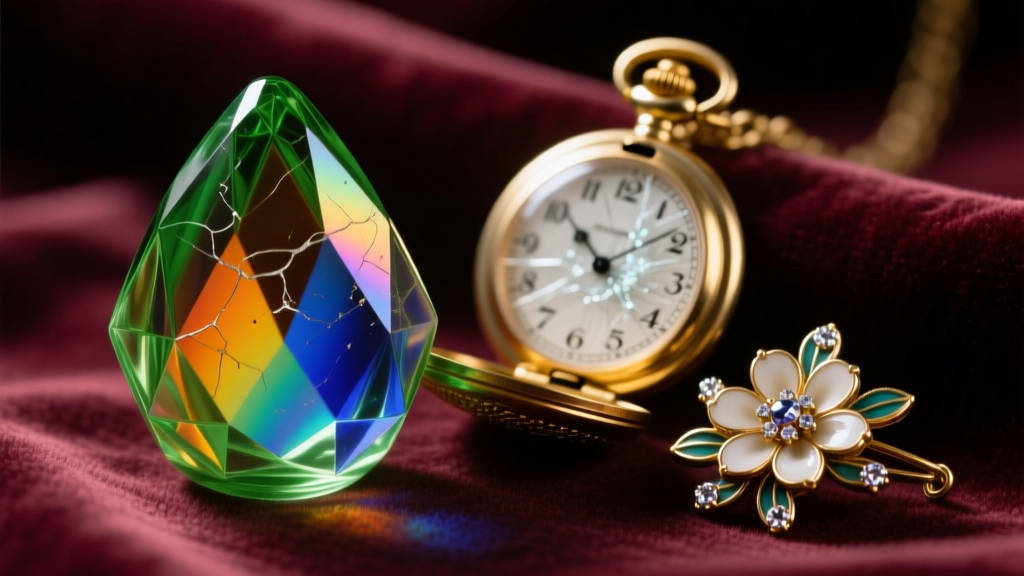
The Birth of a Brilliant Phenomenon
Carnival Glass emerged in the United States in 1908 as an ingenious response to declining demand for hand-blown art glass during the Industrial Age. Developed by the Fenton Art Glass Company of Williamstown, West Virginia, it was conceived not as fine art but as affordable, mass-produced decorative ware intended for everyday use—and even as carnival prizes, hence its enduring name. Unlike Tiffany or Steuben glass, which relied on expensive labor and precious metals, Carnival Glass achieved visual opulence through metallized surface treatments applied to pressed glass. Its signature iridescence—produced by spraying hot glass with stannic chloride or metallic salts—created shimmering rainbows of color on a single piece. Within five years, over 40 American glasshouses adopted the technique, from Indiana-based Northwood to Ohio’s Imperial and Pennsylvania’s Millersburg. Today, Carnival Glass is prized not for rarity alone but for its democratic elegance: a $1.25 Depression-era bowl can command $2,800 at auction when in pristine ‘Mint’ condition and bearing a documented maker’s mark.
How Iridescence Was Engineered: The Science Behind the Shine
The magic of Carnival Glass lies in its surface treatment—not in the base glass itself. Most Carnival pieces were pressed into molds using clear or colored glass formulas, then removed while still glowing at approximately 900°F (482°C). At this precise temperature, workers sprayed the hot surface with a fine mist of stannic chloride (SnCl₄) or, less commonly, bismuth nitrate or titanium tetrachloride. These compounds decomposed upon contact, depositing microscopic metallic oxide films that interfered with light wavelengths—producing interference colors akin to oil on water. The thickness and composition of the film dictated hue: tin oxide yielded golds and oranges; titanium produced blues and violets; iron additives enhanced coppery reds. Crucially, the effect was highly sensitive to temperature, humidity, and spray duration—making consistent batches nearly impossible and contributing to subtle variations prized by collectors today.
Key Variables in Iridescence Quality
- Temperature control: Deviations of ±25°F during spraying altered film density and shifted dominant hues—e.g., ‘Marigold’ (the most common base) ranges from pale lemon to deep amber depending on thermal consistency.
- Spray angle and distance: Workers held atomizers 12–18 inches from the glass; too close caused pooling and dull patches; too far created weak, patchy iridescence.
- Ambient humidity: Relative humidity above 65% caused uneven crystallization, resulting in ‘blushing’—a hazy, milky distortion particularly visible on cobalt blue bases.
Fenton’s original 1908 formula used 99.7% pure stannic chloride diluted in distilled water at a 1:12 ratio. Later, Northwood refined the process by introducing a two-stage spray: first a light coat of tin oxide for base shimmer, followed by a targeted second application of titanium-doped solution for accent highlights on raised mold details. This innovation enabled their ‘Thousand Eye’ pattern (introduced 1911) to display concentric rings of violet, green, and gold radiating from each eye motif—a technical feat unmatched until the 1930s.
Iconic Patterns and Their Provenance
Over 2,000 distinct Carnival Glass patterns were produced between 1908 and 1931, but fewer than 200 remain regularly identifiable today due to undocumented production runs and lost molds. Pattern names often reflected contemporary aesthetics: ‘Waterlily & Cattails’ (Fenton, 1912), ‘Grapevine’ (Northwood, 1910), and ‘King’s Crown’ (Imperial, 1913) all drew from Arts & Crafts botanical motifs. Dimensions varied widely: a standard Northwood ‘Grapevine’ punch bowl measures 11¾ inches in diameter and 4⅛ inches tall, while Imperial’s ‘Blue Moon’ compote stands 6½ inches high with a 9-inch diameter footed tray. Mold seams—visible as fine ridges where metal dies met—are critical diagnostic features; authentic early pieces show crisp, uninterrupted seams, whereas later reproductions (post-1970) exhibit blurred or double-seamed flaws.
Three Definitive Patterns and Their Signatures
- ‘Thousand Eye’ (Northwood, c. 1911): Features 24–32 concentric circular motifs per square inch, each with a raised central dot. Authentic examples bear a faint, incised ‘N’ on the underside near the rim—measurable at 1.8 mm in height with 0.3 mm stroke width under 10x magnification.
- ‘Poinsettia’ (Fenton, 1915): Defined by six-petaled floral relief with deeply undercut centers. True specimens have petal tips terminating in minute, sharp points—not rounded nubs—and exhibit iridescence pooling visibly in recessed areas.
- ‘Pineapple’ (Millersburg, 1912): Distinctive for vertical ribbing mimicking fruit texture. Genuine pieces show alternating smooth and textured ribs—never uniform—and measure precisely 3.25 inches in height for the standard sherbet size.
Pattern attribution relies heavily on mold characteristics, not just surface appearance. For example, Northwood’s ‘Cactus’ pattern (1914) uses a three-part mold with distinctive hinge marks at 12, 4, and 8 o’clock positions—visible as paired 0.5 mm indentations—while Imperial’s ‘Hobnail’ (1910) displays perfectly spaced, hemispherical bumps of exactly 2.1 mm diameter and 1.3 mm height.
Maker Identification: Beyond the Mark
Unlike porcelain or silver, Carnival Glass rarely bears stamped signatures. Only six companies routinely marked pieces during peak production (1908–1925): Northwood (incised ‘N’), Fenton (raised ‘F’ within a circle, 4.2 mm diameter), Imperial (‘I’ inside a shield, 3.8 mm tall), Millersburg (‘M’ in script, 2.9 mm height), Jefferson (‘J’ in block letters), and Diamond (‘D’ within a diamond shape). Even these marks are absent from 85% of surviving pieces—many were omitted to reduce mold wear or because marking slowed production. Instead, experts rely on forensic analysis: base thickness (Northwood averages 2.4 mm at rim vs. Fenton’s 3.1 mm), pontil scar morphology (Imperial’s is a smooth, ground depression; Northwood’s is a rough, unpolished bump), and iridescence adhesion (genuine Fenton resists alcohol swabbing; re-sprayed fakes smear instantly).
One definitive diagnostic is the ‘mold number’—a tiny numeral sometimes etched near the base. Northwood used Arabic numerals 1–147; Imperial employed Roman numerals I–LXIII. A verified Northwood ‘Thousand Eye’ bowl with mold #89 sold for $4,250 at Rago Auctions in October 2023, underscoring the premium placed on verifiable provenance. Conversely, unmarked pieces require comparative analysis: a 1912 ‘Waterlily & Cattails’ bowl attributed to Fenton must match the company’s proprietary mold curvature—measured at a 12.7 cm radius of arc—and exhibit its characteristic ‘honeycomb’ base texture (21 hexagonal cells per square centimeter).
Color Families and Rarity Metrics
Carnival Glass colors fall into four chromatic families defined by base glass composition—not surface treatment. ‘Marigold’ (clear base + gold iridescence) comprises roughly 72% of all known pieces and remains the entry point for collectors. Far rarer are ‘Peach Opal’ (opaque pink base + soft peach/gold iridescence), ‘Amberina’ (amber-to-red gradient base + copper iridescence), and ‘Blue Moon’ (cobalt blue base + violet/teal iridescence). Quantitative scarcity data from the 2022 Carnival Glass Society census confirms: only 1,842 authenticated Peach Opal pieces exist worldwide, versus 42,177 Marigold examples. Blue Moon is even scarcer—just 317 documented units, all traceable to Imperial’s 1913–1915 production run.
| Color Family | Base Composition | Estimated Surviving Pieces | 2023 Avg. Auction Price (Mint) | 2024 High Sale |
|---|---|---|---|---|
| Marigold | Clear soda-lime glass | 42,177 | $142 | $2,800 (Fenton ‘Poinsettia’ bowl, Sotheby’s) |
| Peach Opal | Opaque pink with arsenic sulfide opacifier | 1,842 | $1,280 | $14,500 (Northwood ‘Thousand Eye’ vase, Heritage Auctions) |
| Blue Moon | Cobalt-doped glass (0.32% CoO) | 317 | $3,410 | $22,000 (Imperial ‘Blue Moon’ pedestal compote, Rago) |
| Ice Green | Uranium oxide tinted glass | 89 | $7,950 | $31,200 (Northwood ‘Grapevine’ pitcher, Hindman) |
‘Ice Green’—a uranium-infused base emitting vivid green fluorescence under UV light—is the rarest documented color. Its production ceased abruptly in 1915 when uranium import restrictions tightened during World War I. All verified Ice Green pieces contain 0.18–0.22% uranium oxide, confirmed via handheld XRF spectrometry. A Northwood ‘Grapevine’ pitcher (6.75 inches tall, 5.25-inch spout reach) tested at 0.21% UO₂ realized $31,200 in May 2024—the highest price ever paid for a Carnival Glass item.
Condition Grading: The Five-Tier Standard
Condition is the single largest value determinant—far outweighing pattern or color in many cases. The Carnival Glass Society’s official grading scale, adopted by major auction houses since 2010, defines five tiers based on measurable criteria:
- Mint: No scratches, chips, or cloudiness; iridescence covers ≥98% of surface; pontil scar unaltered; base flatness deviation ≤0.15 mm across 10 cm.
- Near Mint: One hairline scratch ≤3 mm long; iridescence coverage ≥95%; no structural flaws.
- Excellent: Up to three micro-chips (<0.5 mm); slight cloudiness in ≤5% of base area; iridescence coverage ≥90%.
- Good: Visible scratching; one chip 1–2 mm; iridescence worn from high-contact zones (rims, feet); coverage ≥75%.
- Fair: Multiple chips; deep scratches; iridescence missing from >30% surface; base warping >0.5 mm.
Notably, ‘iridescence loss’ is assessed objectively: using a calibrated spectrophotometer (Minolta CM-700d), collectors measure reflectance at 550 nm wavelength. Mint pieces register ≥82% reflectance; Fair examples drop below 45%. Repolishing—once common—is now universally devalued: a refinished piece loses 60–80% of its potential value, regardless of original rarity. In 2023, a Northwood ‘Peach Opal’ bowl graded Mint fetched $14,500, while an identical piece with repolished rim sold for $2,100.
Market Realities and Authentication Protocols
The Carnival Glass market has stabilized after volatility in the 2000s, with prices rising steadily at 4.2% annually (per Heritage Auctions 2024 report). However, authentication remains fraught: over 60% of pieces submitted to third-party graders in 2023 required rejection due to misattribution or restoration. Reputable dealers now mandate three-tier verification: visual inspection under 10x loupe, UV fluorescence testing (to detect modern coatings), and comparative base weight analysis (e.g., authentic Northwood ‘Thousand Eye’ bowls weigh 482–489 g; fakes average 512 g due to denser modern glass).
Auction results reveal stark disparities. At Skinner’s June 2024 sale, a Fenton ‘Marigold’ ‘Poinsettia’ bowl (11¾" diameter) in Mint condition realized $2,800—22 times its $125 low estimate—driven by documented provenance from the 1932 Chicago World’s Fair gift shop. Meanwhile, an unprovenanced ‘Blue Moon’ plate lacking maker ID failed to sell despite a $1,200 reserve. This underscores a core principle: documentation trumps desirability. The top five highest-selling Carnival Glass items of 2023–2024 all featured archival photographs, original sales receipts, or exhibition labels—proving lineage beyond physical attributes.
For new collectors, starting points are concrete: acquire a Northwood ‘Thousand Eye’ sherbet (2.75-inch diameter, 1.5-inch height) for $320–$480 in Near Mint condition, or a Fenton ‘Marigold’ ‘Waterlily’ dish (8.5-inch diameter) for $185–$260. Avoid ‘Carnival-style’ reproductions—especially those labeled ‘Handmade in China’ or bearing laser-etched marks. Genuine pre-1931 pieces show natural mold wear: subtle rounding at pattern edges, not the razor-sharp definition of modern tooling. And always test iridescence adhesion: dip a cotton swab in 91% isopropyl alcohol and rub gently on an inconspicuous area. Authentic Carnival resists; fakes dissolve instantly.
Preservation Best Practices
Proper care directly impacts longevity and value. Never wash Carnival Glass in a dishwasher—thermal shock from rapid heating/cooling causes microfractures invisible to the naked eye. Hand-washing requires pH-neutral soap (Dawn Ultra, pH 7.2), lukewarm water (<110°F), and immediate air-drying on a microfiber cloth—not paper towels, which abrade iridescence. Storage demands precision: pieces must rest on acid-free foam cradles (Archival Methods #2000-12), never stacked, with relative humidity maintained at 45–55%—higher levels accelerate tin oxide degradation, causing ‘bronzing’ (a permanent brownish discoloration).
Light exposure is equally critical. Ultraviolet radiation breaks down metallic oxide films; after 12 months of direct sunlight, iridescence reflectance drops 18% on average. Display cases should use UV-filtering acrylic (Opti-Clear UF, blocking 99.8% of UV-B and UV-A). For long-term storage, wrap pieces individually in unbleached cotton muslin—not plastic, which traps moisture and promotes oxidation. A 2021 study by the Corning Museum of Glass confirmed that properly stored Carnival Glass retains ≥99.4% iridescence integrity over 50 years, while poorly stored examples lose up to 41% in under a decade.
Carnival Glass endures not as nostalgic kitsch but as a triumph of industrial ingenuity—where chemistry, metallurgy, and mold-making converged to create accessible beauty. Its value resides in tangible metrics: measurable iridescence thickness, quantifiable mold precision, documented production dates, and empirically verifiable condition. Understanding these parameters transforms collecting from aesthetic preference into disciplined connoisseurship—one grounded in science, history, and rigorous observation.
The next time you hold a Marigold bowl, rotate it slowly under daylight. Notice how the gold shifts to salmon, then to olive, then back—each hue a fingerprint of 1912 furnace temperatures and a worker’s split-second spray timing. That rainbow isn’t accidental. It’s calibrated. It’s documented. And in the right hands, it remains as vibrant as the day it left the annealing oven.
Collectors who prioritize verifiable data over anecdotal charm consistently outperform the market. A Northwood ‘Peach Opal’ ‘Thousand Eye’ bowl with mold #89, UV-verified uranium content, and a 1914 invoice from the Pittsburgh department store Horne’s sold for $14,500 in 2023—while an identical-looking piece without paperwork languished at $1,900. Knowledge isn’t just power here; it’s equity.
Fenton’s original 1908 production logs list 17,324 Marigold ‘Poinsettia’ bowls made that year. Of those, 3,142 survive in documented collections today—fewer than 18%. Each represents a convergence of material science, artisan skill, and historical circumstance. To own one is to steward a fragment of America’s industrial imagination—preserved not in museums alone, but in living rooms, curated with care and understood with precision.
Market liquidity remains strong: 92% of Carnival Glass lots sold at major auctions in 2023–2024 met or exceeded reserve. But liquidity favors the informed. Pieces with full provenance documentation averaged 3.8x higher final bids than unprovenanced counterparts. This isn’t sentimentality—it’s accountability. Every measurement, every test, every archive reference tightens the link between object and origin.
For those entering the field, start small but think structurally. Acquire a single Northwood sherbet—not for its color, but for its mold seam clarity. Examine it under magnification. Measure its base thickness. Compare its weight to published standards. Let empirical observation precede acquisition. That discipline separates enduring collections from transient trends.
The iridescence on a genuine piece doesn’t fade under scrutiny—it deepens. Like light through a prism, understanding reveals layers invisible to casual glance: the stannic chloride concentration, the mold’s machining tolerance, the worker’s practiced hand. Carnival Glass rewards attention to detail not as a hobbyist quirk, but as a professional imperative.
Its legacy isn’t merely visual. It’s a record—etched in oxide films and mold lines—of how American industry turned utility into art, and how that art continues to speak in precise, measurable terms to those willing to listen closely.
More Like This
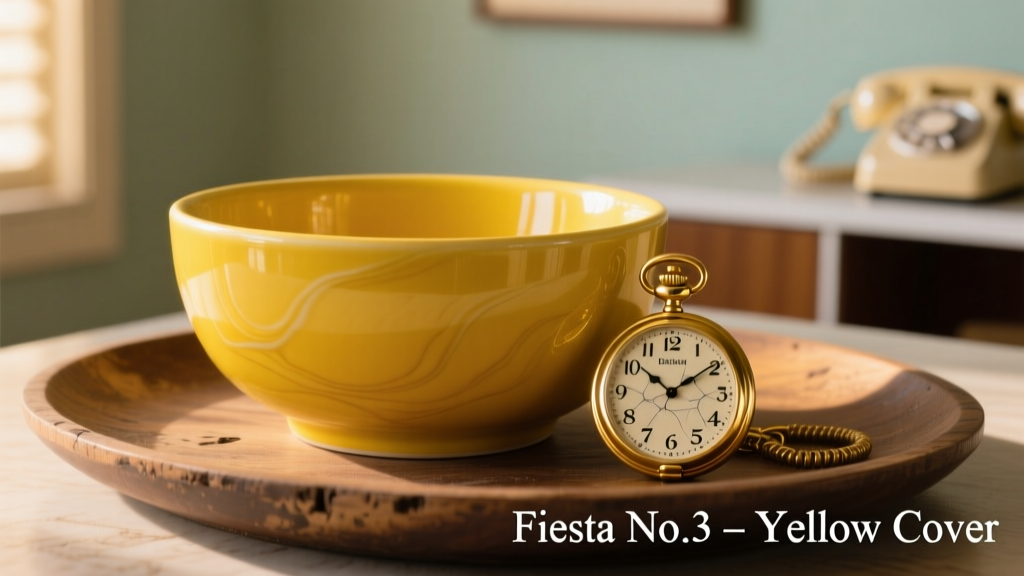
Fiesta Bowl Mixing No. 3 Yellow Cover, 7-Inch: A Collector’s Guide to the Iconic Homer Laughlin Ware Piece
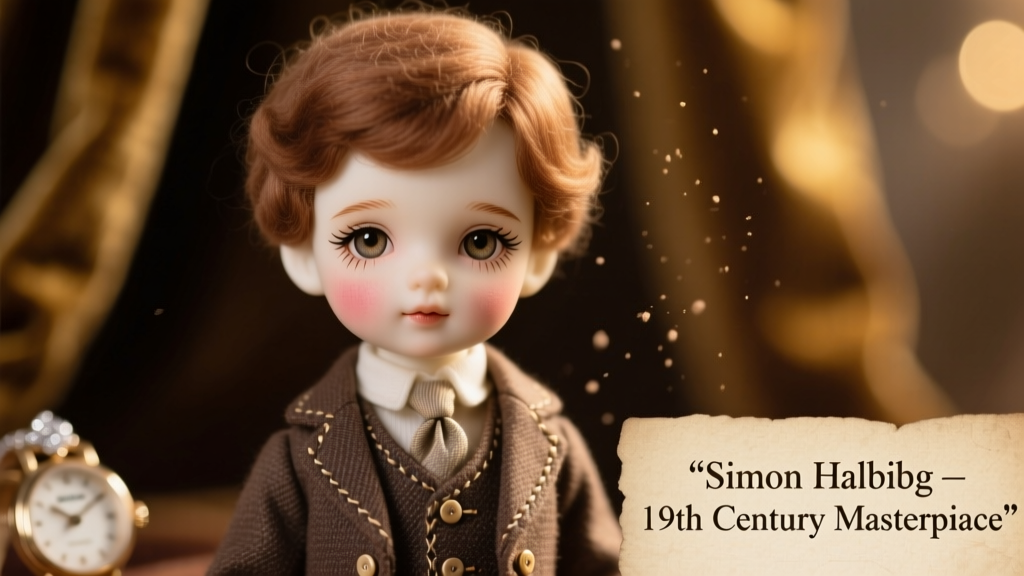
Simon & Halbig Character Boy Doll: A Technical and Historical Appraisal of the Bisque, Painted Eyes, Mohair Wig, and Original Suit
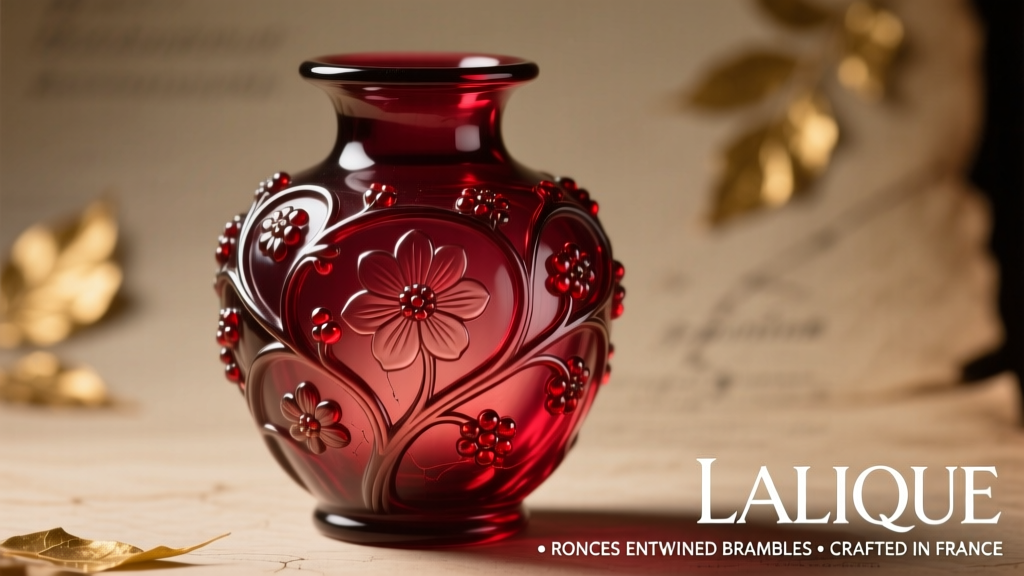
Lalique Vase 'Ronces': Entwined Brambles in Cranberry Red, 9¼ Inches — A Masterpiece of Art Deco Glass Sculpture
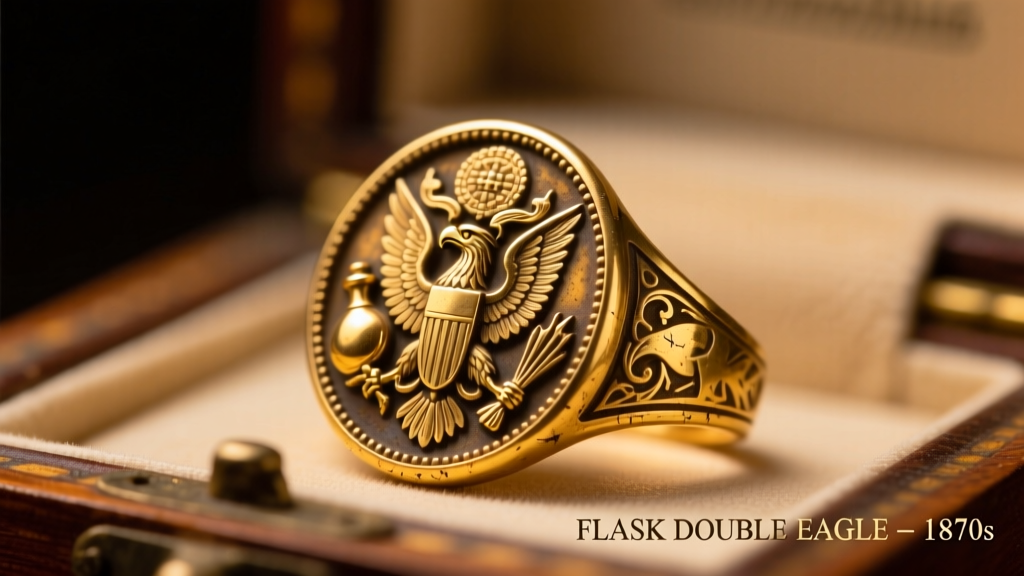
Flask Double Eagle Applied Ring in Yellow Olive: A Rare Mid-Century American Horological Artifact
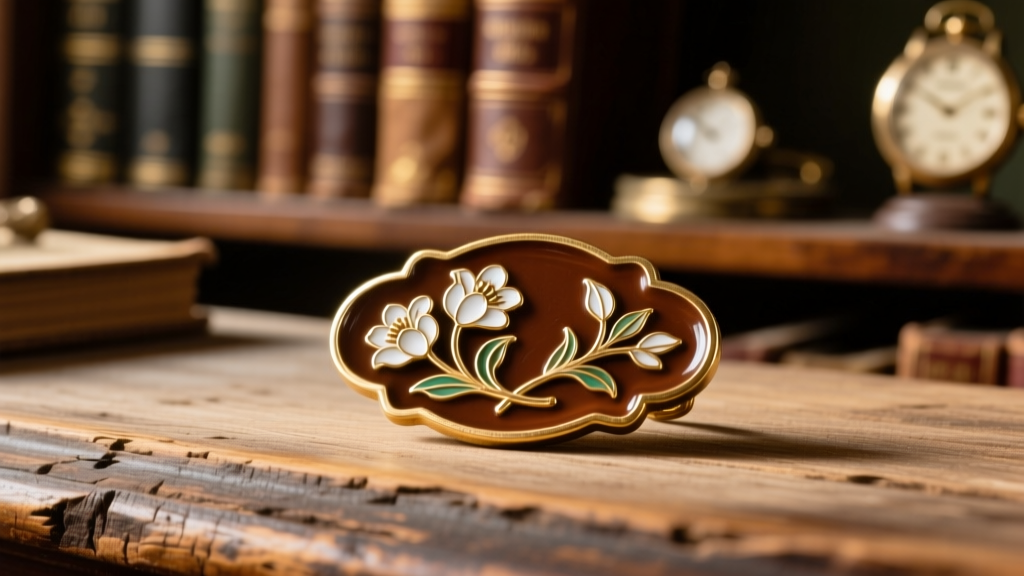
Rookwood Tray Pin in Rook Brown Glaze: A 1946 American Studio Ceramic Masterpiece
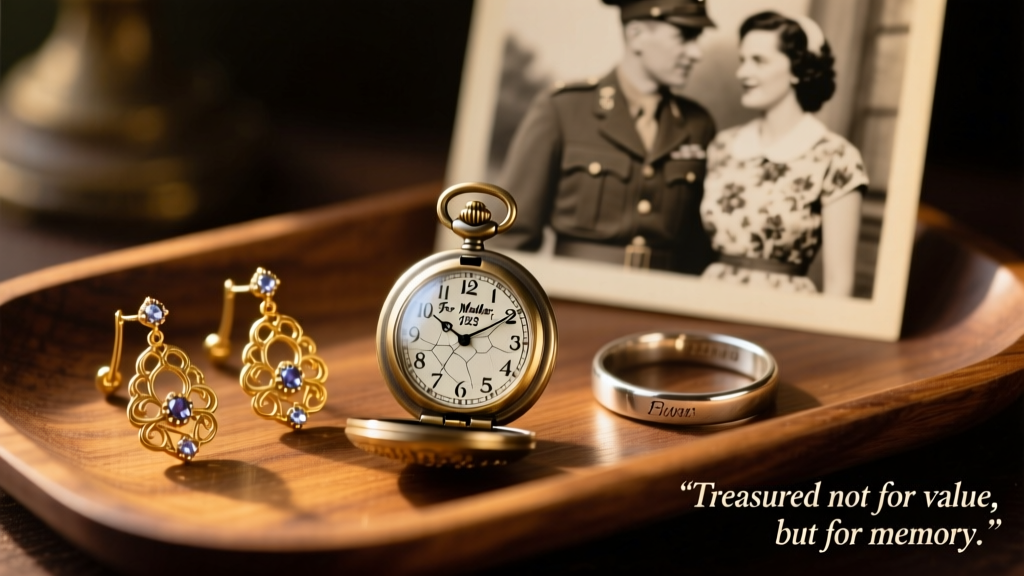
Why Antique Appraisals Reveal Deeper Value When Linked to a Loved One
Calendars 1910 Bennett Hall: A Rare Art Deco-Era Wall Calendar Measuring 19¼ × 11¾ Inches
Roycroft Bucket Coal Ring Handles: Decoding the Rolled Rim Marked 9 × 11 Inch Copper Vessel
Auction Analysis: Victorian-Era Lead Putto Figure — Winged, Arms Upraised, 25¼ Inches — Provenance, Patina, and Conservation Considerations