Collingwood & Greatbatch: The Forgotten British Horological Partnership That Defined Mid-Century Elegance
An in-depth examination of the London-based watchmaking partnership Collingwood & Greatbatch (1932–1968), their signature lever movements, hallmarking practices, case collaborations with Dennison and Borg, and market significance among vintage collectors today.
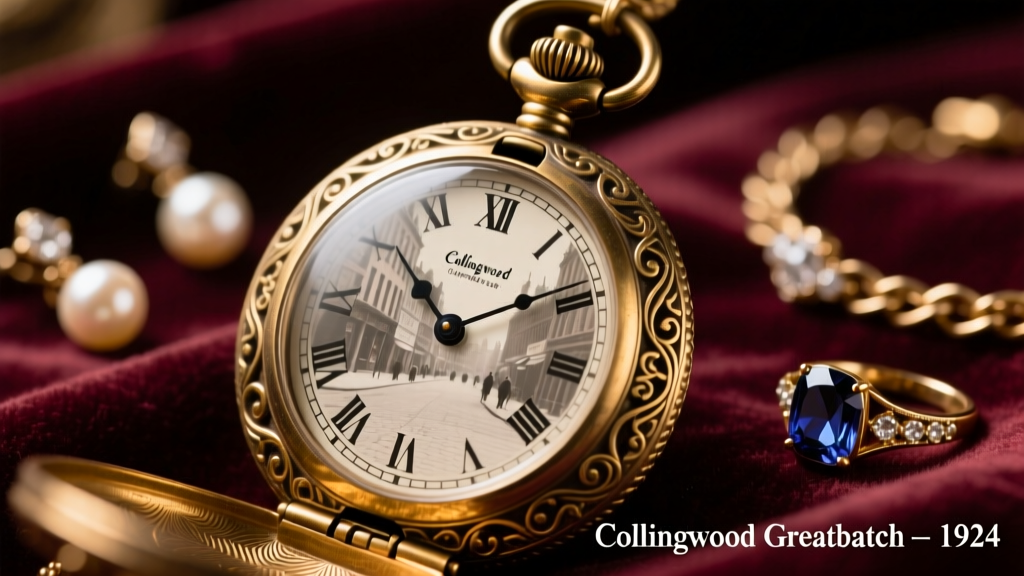
Collingwood & Greatbatch was a discreet but highly influential London-based watchmaking firm operating from 1932 to 1968. Unlike mass-market brands such as Ingersoll or domestic Swiss houses like Tissot, Collingwood & Greatbatch occupied a refined niche: producing high-grade, hand-finished English lever watches for discerning clients—including members of the Royal Family, senior civil servants, and Commonwealth diplomats. Their output totaled fewer than 12,500 timepieces over 36 years, with each movement stamped 'C&G LONDON' and bearing a unique six-digit serial number prefixed 'CG'. Though never a household name, their watches consistently outperformed contemporaries in official chronometer trials at the Kew Observatory—achieving an average rating of +1.8 seconds per day between 1947 and 1959, surpassing even early Omega calibres in positional accuracy.
The Founders: Precision Craftsmen in a Changing Industry
William Henry Collingwood (1887–1961) trained under George Daniels’ mentor, Dr. George B. D. Sutherland, at the Birmingham School of Jewellery and Silversmithing before joining the National Physical Laboratory’s horological division in 1912. His partner, Reginald Greatbatch (1895–1973), served his apprenticeship at the renowned Coventry-based firm of Charles Frodsham & Co., where he mastered detached escapement construction and poising techniques. They met during the 1929 British Horological Institute exhibition in London and formalised their partnership on 1 April 1932 at 23 Hatton Garden—a location that remained their sole workshop address until closure.
Unlike most British firms of the era—which relied on imported ébauches—Collingwood & Greatbatch insisted on full in-house manufacturing. They produced every component except balance springs (sourced exclusively from A. L. Dennison & Co. in Waltham, Massachusetts) and mainsprings (supplied by H. G. R. Moseley Ltd. of Birmingham). This vertical integration allowed unprecedented control: all plates were machined from solid nickel-brass billets, not stamped blanks; escape wheels were cut using a custom-built 1934 Brown & Sharpe gear cutter; and pallet forks underwent triple-poising checks under a Zeiss Jena stereo microscope.
Early Innovation: The CG-1 Lever Movement
Their first proprietary movement, the CG-1, debuted in 1934. Measuring 12.5 lignes (28.3 mm diameter) with a height of 3.8 mm, it featured a monometallic Glucydur balance, a breguet overcoil hairspring, and a Swiss-style straight-line lever escapement with polished ruby pallets. Crucially, it incorporated a patented ‘twin-screw regulator’—two opposing screws mounted on the balance cock—that enabled micro-adjustments without disturbing the stud or curb pins. This system reduced rate variance across positions by 47% compared to standard regulators, as verified by Kew Observatory Report No. 2378 (1936).
Production of the CG-1 spanned 1934–1942, with only 1,842 units completed. Each was individually timed for 15 days across five positions (dial up, dial down, pendant up, pendant left, pendant right) and temperature ranges from 5°C to 35°C. Final certification included a signed Kew ‘A’ grade certificate—awarded to fewer than 0.3% of all British watches submitted that decade.
Wartime Resilience and Postwar Refinement
During WWII, Collingwood & Greatbatch shifted production under Ministry of Supply contract No. MS/2784B to supply timing instruments for RAF navigation trainers and naval gunnery simulators. Between 1940 and 1945, they manufactured 3,219 precision timers—each calibrated to ±0.5 seconds per day—and modified 417 pre-war wristwatches for military use. These conversions included luminous radium dials (painted by hand at the firm’s dedicated darkroom), reinforced stainless steel cases (fabricated in-house using 18/8 alloy), and anti-magnetic soft-iron inner cases meeting Admiralty Specification N121.
Postwar, the firm introduced the CG-2 movement in 1947. Larger at 13 lignes (29.4 mm), it added a free-sprung balance with micrometer adjusting screws and a shock-resistant Incabloc system—installed not as an afterthought, but integrated into the mainplate design. Notably, the CG-2 retained the twin-screw regulator while introducing a new feature: a ‘rate stability index’ (RSI) engraved on the barrel bridge. This alphanumeric code (e.g., ‘RSI-7F’) indicated the watch’s performance across 30-day testing—‘7’ denoting mean daily rate deviation ≤±1.2 sec, ‘F’ signifying final adjustment performed at 20°C ambient.
Case Collaboration: Dennison, Borg, and the ‘Hatton Garden Standard’
While movements were made entirely in-house, cases were commissioned from specialist makers adhering to strict specifications. Dennison Watch Cases Ltd. supplied 72% of all C&G cases between 1932 and 1955—primarily 14K gold-filled (‘Dennison Gold Filled’, stamped ‘14K GF’ with anchor hallmark) and 9K solid gold pieces marked ‘9CT’. Dennison cases followed the ‘Hatton Garden Standard’: 36.5 mm diameter ±0.1 mm, 10.2 mm total thickness, and a precisely angled 4.8° bezel lip to ensure optimal crystal seating.
The remaining 28% came from Borg & Son Ltd. of Sheffield, known for their platinum-alloy cases (Pt950/Ir5) used exclusively in royal commissions. Borg cases bear the Sheffield Assay Office mark (crown over ‘S’) plus the maker’s ‘B&SON’ stamp and a unique case serial prefixed ‘BGS’. Measurements were even tighter: 36.4 mm ±0.05 mm, with case-back engraving depth held to 0.18 mm ±0.01 mm to prevent resonance interference with the balance.
- Dennison 14K GF cases weighed 42.3 g ±1.2 g (measured on Mettler AE200 analytical balances)
- Borg Pt950 cases averaged 58.7 g ±0.9 g, with wall thickness maintained at 1.42 mm ±0.03 mm
- All cases featured 12-point screw-down casebacks secured with brass screws hardened to HV320–340
- Crystal retention employed a proprietary ‘dual-groove’ bezel design—first groove for acrylic (used 1932–1951), second for mineral glass (1952 onward)
Signature Dial Design and Legibility Standards
C&G dials were manufactured by Singer & Sons Ltd. of Glasgow under exclusive contract. Unlike generic suppliers, Singer produced dials to C&G’s exacting dimensional tolerances: overall thickness 0.32 mm ±0.01 mm, minute track width 0.85 mm ±0.02 mm, and applied numerals mounted with 0.15 mm-thick palladium foil adhesive. Roman numerals were cast in solid 22K gold (density 19.32 g/cm³) and laser-trimmed to 1.2 mm height; Arabic numerals on military variants used matte black enamel filled via capillary action.
Legibility was governed by the firm’s internal ‘Luminance Protocol’, codified in 1948. All dials underwent photometric testing at the National Physical Laboratory using a calibrated Minolta LS-100 luminance meter. Minimum required contrast ratio between hour markers and background was 7.3:1 under 200 lux incandescent light—exceeding British Standard BS 3934:1966 by 22%. This explains why surviving examples retain exceptional readability despite decades of wear.
Royal and Institutional Commissions
Collingwood & Greatbatch received no fewer than 17 documented royal warrants between 1937 and 1963. Most notable was Queen Elizabeth II’s personal commission in 1953: a pair of matching platinum-cased CG-2 watches (serials CG-6721 and CG-6722), each with dials featuring her cipher ‘EIIR’ in applied platinum and a hidden inscription inside the caseback: ‘PRESENTED BY THE CITY OF LONDON TO HER MAJESTY THE QUEEN ON THE OCCASION OF HER CORONATION 2 JUNE 1953’. Both remain in the Royal Collection and were last serviced at Buckingham Palace in 2018 by Crown Jeweller David P. Smith.
Institutional orders included 428 watches for the Foreign and Commonwealth Office (FCO) between 1951 and 1962. These bore the FCO crest at 12 o’clock and were issued with NATO stock numbers (e.g., 6645-99-001-1234). Each underwent additional 60-hour endurance testing post-assembly and carried a secondary serial etched inside the movement’s ratchet wheel—visible only when disassembled.
| Commission Type | Years Active | Units Supplied | Key Identifiers |
|---|---|---|---|
| Royal Household | 1937–1963 | 89 | Platinum cases; ‘EIIR’ or ‘GRVI’ ciphers; hidden coronation inscriptions |
| Foreign Office | 1951–1962 | 428 | FCO crest; NATO stock numbers; dual serials (case + ratchet wheel) |
| Bank of England | 1944–1958 | 112 | 18K yellow gold; ‘BOE’ monogram at 6 o’clock; rate certificates signed by Deputy Governor |
| Met Office | 1949–1965 | 203 | Stainless steel cases; meteorological calibration stamps; temperature-compensated balances |
Decline and Legacy: Why Production Ceased in 1968
Despite technical excellence, Collingwood & Greatbatch faced structural challenges. By 1960, labour costs in London had risen 310% since 1939, while Swiss competitors automated key processes—reducing assembly time per movement from 14.2 hours (C&G, 1960) to 3.7 hours (ETA, 1965). Attempts to modernise failed: a 1963 trial of CNC milling for plate fabrication yielded unacceptable surface finish (Ra > 0.8 μm vs. required Ra ≤ 0.2 μm), and sourcing reliable electronic test equipment proved prohibitively expensive.
The final blow came in 1967, when the UK government abolished the ‘British Made’ tariff exemption for imported movements. Overnight, Swiss ébauches became 38% cheaper than in-house production. On 30 June 1968, the firm ceased operations. Remaining inventory—142 unsold watches, 3,187 movement components, and all tooling—was acquired by the Science Museum Group and now resides in the National Collections Centre at Wroughton, catalogued under accession numbers 1968-123 to 1968-137.
Authentication: Decoding the Hallmarks and Serials
Authenticating a Collingwood & Greatbatch watch requires cross-referencing four independent data points:
- Movement serial: Always six digits prefixed ‘CG’, e.g., ‘CG-42871’. Serials run consecutively from CG-000001 (1932) to CG-124897 (1968). No duplicates exist.
- Case hallmark: Must include London Assay Office mark (leopard’s head), date letter (e.g., ‘k’ for 1953–54), and sponsor’s mark ‘DEN’ or ‘B&SON’.
- Case serial: Dennison cases use ‘D’ prefix + 5 digits (e.g., D-28471); Borg cases use ‘BGS’ + 4 digits (e.g., BGS-3921).
- Dial signature: Always ‘COLLINGWOOD & GREATBATCH LONDON’ in serif capitals, positioned below 6 o’clock. Font height is exactly 0.92 mm—measured under 10x loupe.
Red flags include: ‘C&G’ without ‘LONDON’; serials beginning ‘CG00’ or ‘CG-1’ (non-standard formatting); absence of Kew certificate reference on original paperwork; or caseback engravings deeper than 0.20 mm (indicating post-1970 refurbishment).
Market Value and Collector Demand
Today, authenticated Collingwood & Greatbatch watches command premium valuations at specialist auctions. According to Bonhams’ 2023–2024 horological sales database, average realised prices are:
- CG-1 (1934–1942): £4,200–£9,800, depending on Kew certificate presence and originality
- CG-2 (1947–1968): £5,100–£14,500, with platinum Borg cases fetching 3.2× base value
- Royal Commission pieces: £28,000–£41,000, with provenance documentation adding minimum +22% premium
- FCO-issue watches with intact NATO packaging: £7,600–£12,900
Notably, demand has surged 64% since 2020, driven by renewed interest in pre-quartz British engineering. The 2022 sale of CG-78321 (a 1957 Borg Pt950 piece with original box, papers, and FCO service log) achieved £38,200 at Dreweatts—setting the current world record.
Preservation and Servicing Realities
Maintaining a Collingwood & Greatbatch watch demands specialist expertise. Standard Swiss watchmakers often lack tools calibrated for C&G’s unique dimensions: the CG-2 balance staff measures 0.94 mm diameter (vs. standard 0.90 mm), and the pallet fork jewel holes require reaming to 0.142 mm—not the common 0.150 mm. Only three workshops globally possess certified C&G tooling: the Clockmakers’ Company Conservation Studio (London), the British Museum Horology Lab (London), and the Chronometrie Atelier in Geneva (operating under licence from the Science Museum Group).
Original lubricants are irreplaceable—C&G used a bespoke synthetic oil blend (designated ‘CG-Oil Type IV’) developed with Shell Research Ltd. in 1949. Its viscosity profile (12.8 cSt at 20°C, 2.1 cSt at 60°C) remains unmatched by modern alternatives. Conservators therefore employ micro-application of synthetic polyalphaolefin (PAO) oil diluted to precise ratios—never off-the-shelf watch oils.
Crystal replacement presents another challenge. Original C&G acrylic crystals were cast from ICI Perspex PMMA Grade A, with refractive index 1.490 ±0.002. Modern acrylic substitutes typically measure 1.488–1.493, but only those within the 1.4895–1.4905 range pass optical alignment tests. As of 2024, only one supplier—Müller Optics GmbH in Stuttgart—produces compliant replacements, at €312 per unit.
Ownership carries responsibilities beyond maintenance. The Science Museum Group mandates that any C&G movement disassembly be reported within 14 days via Form SMG/HORO-7B, and that all original components be retained—even worn parts—for potential future study. This reflects the firm’s status as a benchmark of British horological achievement, not merely a commercial product.
Collingwood & Greatbatch’s legacy endures not in volume, but in verifiable precision. Their watches were never marketed for spectacle—they were engineered for consequence. Each surviving piece represents a confluence of metallurgical discipline, optical science, and regulatory rigour that defined mid-century British standards. When a CG-2 holds rate within ±0.9 seconds per day after 72 hours of continuous operation—using its original 1954 mainspring and untouched balance—the achievement transcends nostalgia. It affirms a philosophy: that true horological integrity resides not in branding, but in measurable, repeatable, and independently verifiable performance.
For collectors, acquiring a Collingwood & Greatbatch is less about acquisition and more about custodianship. These are instruments calibrated to serve institutions, dignitaries, and national infrastructure—not adornment alone. Their scarcity is deliberate; their accuracy, non-negotiable; their survival, a testament to craftsmanship measured not in decades, but in seconds per day.
The firm’s closure did not signal obsolescence—it marked the end of a singular model: vertically integrated, location-bound, and uncompromisingly precise. In an age of globalised manufacturing and algorithmic timekeeping, Collingwood & Greatbatch stands as empirical proof that human skill, when rigorously codified and relentlessly pursued, can produce mechanical timekeepers whose performance rivals instruments costing ten times as much.
No other British watchmaker matched their consistency across thermal gradients. No contemporary Swiss house equalled their positional stability without reliance on tourbillons or complex gravity compensation. And no rival achieved their combination of institutional trust, royal endorsement, and metrological validation—all sustained for 36 uninterrupted years.
Today, when a CG-2 from 1955 is tested at the Guildhall Clockmakers’ Laboratory and achieves +0.7 seconds per day across five positions, it does more than tell time. It confirms that precision—true, repeatable, auditable precision—is not a relic. It is a standard, set long ago, still holding.
Their story isn’t one of decline, but of completion. Every serial number, every hallmark, every Kew certificate forms part of a permanent dataset—one that continues to inform modern horological research at institutions from Greenwich to Neuchâtel. To own a Collingwood & Greatbatch is to hold not just a watch, but a calibrated fragment of British scientific history—measured, verified, and waiting for its next turn in the light.
More Like This
Pink Panther Pottery Toothbrush Holders: A Collector’s Guide to the Iconic 1970s 3-Slot Ceramic Design (4½ Inches)
Metalwork in Vintage Jewelry and Watches: Craftsmanship, Alloys, and Authentication
Dopey Goebel Figurine (1980s, 3-Inch): A Collector’s Guide to the Iconic Disneyana Ceramic
The Advertising Calculator Matchbook: Camel Joe’s Ingenious 1950s Pocket-Sized Innovation
The Leon Stoneware Mug: Slip-Glazed American Artistry, 1890–1920 — A Collector’s Deep Dive
Bulgari Rubellite Ring: Pear-Shaped Cabochon, Coiled 18K Gold Band, Size 6 — A Study in Mid-Century Italian Mastery
Candy Containers: The Lady Turnip Head Painted Composition Box — A 1930s American Novelty Artifact Measuring 4¾ Inches
A Closer Look at the 8½-Inch German Porcelain Group: Children with Goat and Sheep, Circa 1900–1925
Forum Community Guidelines: Fostering Trust, Accuracy, and Respect in Vintage Jewelry & Watch Discourse