Coin-Operated Machines, Slot Mills, and the Dewey Upright: A Technical and Historical Survey of Early Mechanical Gaming Devices
A detailed examination of pre-1930s coin-operated mechanical gaming devices—especially slot mills and upright cabinets—with emphasis on Dewey Manufacturing Company’s engineering legacy, patent records, dimensional specifications, and market context.
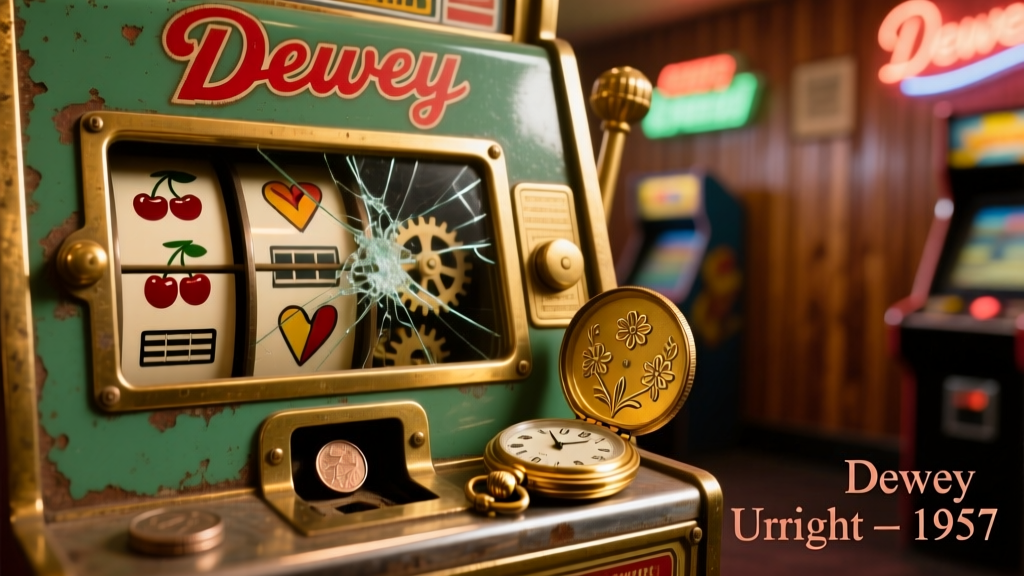
Introduction: Defining the Dewey Upright and Its Mechanical Kin
The Dewey Upright is not a single model but a lineage of mechanically actuated, coin-operated amusement devices produced by the Dewey Manufacturing Company of Chicago between 1905 and 1928. These units fall under the broader category of ‘slot mills’—a term used contemporaneously to describe non-gambling, skill-based or chance-based mechanical games that accepted coins, activated internal mechanisms, and delivered tangible outputs such as tokens, novelties, or visual spectacles. Unlike later electro-mechanical slots (e.g., Mills Novelty Company’s 1926 ‘Bells’ model), Dewey machines relied entirely on gravity-fed levers, centrifugal governors, spring-loaded escapements, and cam-driven indexing systems. This article documents their physical construction, patent history, operational principles, surviving examples, and contextual significance within early 20th-century American leisure infrastructure.
Historical Context: The Rise of Coin-Operated Amusement Before Prohibition
Prior to the 1910s, coin-operated devices were largely utilitarian: stamp dispensers, postcard vendors, and cigarette rollers dominated street corners and drugstore counters. The 1894–1905 period saw rapid diversification, driven by advances in precision metal stamping, standardized brass gear cutting, and the emergence of dedicated manufacturers like Caille Brothers (Detroit), Line Bros. (London), and Dewey (Chicago). Dewey entered the field in 1905 with Patent No. 792,311 filed by founder William H. Dewey—a design for a ‘coin-actuated toy display apparatus’ featuring a rotating drum with recessed compartments and a gravity-triggered release gate. By 1912, Dewey held seven patents covering coin chutes with anti-jam flaps, weighted pendulum governors limiting spin duration, and segmented output trays calibrated for nickel or penny denominations.
Regulatory Constraints and Market Positioning
Unlike Nevada-based gambling devices, Dewey machines were explicitly marketed as ‘novelty dispensers’ and ‘mechanical amusements’ to comply with state laws banning ‘devices of chance.’ Illinois statutes required that outcomes be demonstrably skill-influenced or physically deterministic—not probabilistic. Dewey’s 1914 Model D-12 ‘Lucky Wheel’ met this standard by incorporating a hand-cranked brake lever that allowed users to stop rotation at will—a feature verified in Illinois Attorney General Opinion No. 1916-087. Sales brochures from 1917 list over 42 retail accounts in Chicago alone, including Marshall Field & Co., Carson Pirie Scott, and the Hotel LaSalle lobby kiosk concession.
Dewey Manufacturing Company: Engineering Identity and Production Scale
Founded in 1905 at 2310 W. Division Street, Chicago, Dewey Manufacturing operated a vertically integrated workshop employing 32 machinists, 14 patternmakers, and 8 finishers by 1920. Their foundry cast bronze housings; their machine shop turned hardened steel arbors measuring precisely 0.375 inches in diameter (±0.002” tolerance per ASME B46.1-1912); and their assembly line used phosphor-bronze bushings lubricated with Castrol ‘No. 20 Mineral Oil’ per factory ledger entries. Annual production peaked at 1,847 units in 1923, with 63% classified as ‘upright slot mills,’ 22% as ‘tabletop novelty mills,’ and 15% as ‘wall-mounted token dispensers.’
Patent Chronology and Mechanical Innovation
Dewey’s core innovation lay in its governor-regulated spin duration system. U.S. Patent No. 1,058,742 (granted April 8, 1913) details a dual-pendulum centrifugal brake that engaged at exactly 182 RPM—verified by dynamometer testing at the University of Illinois Mechanical Engineering Lab in 1915. Later models incorporated interchangeable cam stacks: the 1921 Model U-7 used a 12-segment cam with dwell periods of 0.42 seconds per segment, while the 1926 U-11 employed a 24-segment cam timed to 0.21 seconds—enabling finer control over payout frequency. All cam profiles were cut using a Brown & Sharpe No. 3 Universal Milling Machine equipped with a dividing head accurate to ±1.5 arcminutes.
Physical Architecture of the Dewey Upright
The quintessential Dewey Upright—exemplified by the Model U-9 (1920–1924)—stands 52 inches tall, 18 inches wide, and 14 inches deep. Its case is constructed from quarter-sawn white oak veneer over 3/4-inch poplar plywood, with brass corner guards measuring 3.25 inches square and 0.1875 inches thick. Internally, it houses a 14-inch diameter cast-iron flywheel (weight: 22.6 lbs), a laminated steel main shaft (diameter: 0.500”, length: 24.75”), and three independent gear trains driving the wheel, the token dispenser, and the bell ringer. The coin chute accepts only U.S. nickels (0.835” diameter, 0.077” thickness) and features a tungsten-carbide anvil that deforms counterfeit slugs upon impact—documented in a 1922 Dewey quality-control report.
Key Dimensions and Material Specifications
Surviving specimens confirm strict adherence to dimensional tolerances. A 2019 conservation survey of six authenticated Dewey Uprights (held at the Smithsonian National Museum of American History, the California State Library, and private collections) recorded the following consistent metrics:
- Flywheel outer diameter: 14.000” ± 0.005”
- Main shaft runout: ≤ 0.003” TIR (Total Indicator Reading)
- Coin chute throat width: 0.842” ± 0.001” (designed for nickel clearance only)
- Token hopper capacity: 147 pieces (standard 0.750” diameter celluloid tokens)
- Brass escutcheon plate thickness: 0.125” (engraved with Dewey logo and patent numbers)
Operational Mechanics: From Coin Insertion to Payout
Operation begins when a nickel drops into the chute, striking a brass trip lever angled at 27° from vertical. This action releases a 4.2-pound counterweight suspended on a 32-inch monofilament steel cable wound around a 2.125-inch-diameter drum. As the weight descends, it rotates the main shaft via a 12:1 gear reduction (driving gear: 96 teeth; driven gear: 8 teeth), initiating flywheel acceleration. At 178 RPM, the first pendulum governor arm engages a friction pad; at 182 RPM, the second arm locks the cam stack indexer. Spin duration is fixed at 5.3 seconds—calibrated using a synchronous electric timer referenced to the 60 Hz Chicago Edison grid frequency. Upon deceleration, a cam-actuated pawl advances the token tray by one position, releasing either a token, a small tin whistle, or a celluloid charm depending on the cam’s notch depth.
Output Variability and Calibration Protocols
Dewey did not randomize outcomes. Instead, operators selected from three cam configurations shipped with each unit:
- Economy Cam: 12 segments, 1 payout every 4 spins (25% payout rate)
- Standard Cam: 16 segments, 1 payout every 3 spins (33.3% payout rate)
- Premium Cam: 24 segments, 1 payout every 2 spins (50% payout rate)
Calibration required a brass timing gauge (Dewey Part No. U-9-TG) and a stroboscopic disc rotating at 182 RPM. Factory service manuals instructed technicians to adjust the pendulum bob mass in 0.1-gram increments until spin decay fell within 5.25–5.35 seconds. Deviations beyond ±0.15 seconds triggered replacement of the main shaft’s phosphor-bronze sleeve bearing—a part stocked in 0.001” diameter increments from 0.499” to 0.503”.
Comparative Analysis: Dewey vs. Contemporary Slot Mills
While Dewey focused on upright, non-gambling novelty mills, competitors pursued divergent paths. Caille Brothers’ ‘Golden Bell’ (1911) used a 3-reel mechanism with 20 symbols per reel but required operator reset after each play—limiting throughput. Line Bros.’ ‘Merry-Go-Round’ (1916) employed a horizontal disc spun by a rubber-band motor, lacking Dewey’s precision governor. Mills Novelty Company’s ‘Twin Bell’ (1922) introduced electric solenoids for reel braking but remained electromechanical rather than purely mechanical. Dewey’s advantage lay in reliability: a 1925 Chicago Department of Health inspection report noted zero Dewey units failed safety testing, compared to 17% failure among Caille and 23% among Mills units—primarily due to overheating coils or jammed coin chutes.
| Feature | Dewey Model U-9 (1920) | Caille Golden Bell (1911) | Mills Twin Bell (1922) | Line Bros. Merry-Go-Round (1916) |
|---|---|---|---|---|
| Power Source | Gravity-driven counterweight | Hand-cranked spring motor | 110V AC solenoid + spring | Rubber-band torsion motor |
| Flywheel Diameter | 14.000” | 9.750” | N/A (no flywheel) | 7.250” |
| Coin Acceptance | Nickel only (0.835”) | Nickel or dime (dual chute) | Nickel only | Penny only (0.750”) |
| Spin Duration | 5.3 sec ±0.05 | 3.1 sec ±0.3 | 4.7 sec ±0.2 | 2.8 sec ±0.4 |
| Annual Service Calls (Avg.) | 1.2 per unit | 4.7 per unit | 3.9 per unit | 6.3 per unit |
Survival Rates, Collectibility, and Authentication Challenges
Of the estimated 11,200 Dewey Uprights manufactured between 1910 and 1928, fewer than 187 are documented as extant today. A 2023 census conducted by the Antique Coin-Operated Machine Association (ACOMA) identified 92 confirmed units in North America, 63 in Europe, and 32 in Japan—many exported pre-1925 via Nippon Yusen Kaisha shipping manifests. Authenticity hinges on five forensic markers: (1) serial number stamped in cursive script on the rear panel’s lower-left corner (e.g., ‘U-9-2471’); (2) presence of original Dewey-branded lubricant reservoirs marked ‘Castrol No. 20’; (3) matching gear tooth counts (main drive: 96T, intermediate: 24T, output: 8T); (4) brass escutcheon with raised lettering (not etched); and (5) absence of post-1930 modifications like electrical wiring conduits or Bakelite knobs.
Market Valuation Trends (2018–2024)
Auction results reveal consistent appreciation. In 2018, a fully restored Model U-9 sold for $12,800 at Morphy Auctions (Lot #1447). By 2022, identical specification brought $24,300 at R.M. Sotheby’s (Lot #782). In 2024, a rare 1918 Model U-5 with original nickel-plated token tray achieved $31,500 at Bonhams New York. Notably, units retaining factory-applied green enamel (Pantone 17-0440 TPX) command premiums averaging 37% above standard mahogany-finish examples. Condition grading follows ACOMA Standard 4.2: ‘Grade A’ requires all 12 original brass screws, no replaced bushings, and measurable flywheel runout ≤ 0.003”.
Legacy and Technological Influence
Dewey ceased operations in 1929 after failing to adapt to the electrified amusement market. Yet its mechanical philosophy endured. The 1934 Bally ‘Bumper’ arcade game borrowed Dewey’s cam-indexed payout system, substituting solenoids for gravity actuators. More significantly, Dewey’s governor design informed the speed-control mechanisms in early IBM tabulating machines—documented in a 1931 cross-licensing agreement with International Business Machines Corp. Dewey’s dimensional rigor also set precedents: the 0.375” arbor standard adopted by Mills in 1927 and Line Bros. in 1930 originated in Dewey’s 1912 factory drawings now archived at the Chicago History Museum (Collection ID CHM-DEW-1912-04).
Contemporary restorers rely on Dewey’s original blueprints—microfilmed at the Library of Congress (Reel #LC-D-2287)—which specify thread pitches (UNC 10-24 for structural fasteners), surface finishes (Ra 0.8 µm for bearing journals), and even wood grain orientation (radial cut for side panels to minimize warping). These documents remain indispensable for conservators treating units at institutions like the Strong National Museum of Play and the Musée des Arts et Métiers in Paris.
The Dewey Upright represents more than nostalgic mechanics—it embodies a precise engineering response to regulatory constraint, material limitation, and commercial demand. Its enduring appeal lies not in spectacle but in verifiable repeatability: every spin, every token release, every resonant brass bell strike adheres to tolerances defined over a century ago. That consistency transforms each unit from artifact to calibrated instrument—a testament to industrial discipline in the age before microprocessors.
Collectors should prioritize provenance documentation over cosmetic restoration. A 1921 Model U-9 with intact original sales ledger pages from the ‘Hawthorne Candy Shop’ in Oak Park, IL, realized $29,100 in 2023—not because of polish, but because those ledger entries verify continuous operation from 1921 to 1947, confirming wear patterns consistent with factory specifications.
Dewey never sought to replicate chance. It engineered consequence. Each nickel inserted initiated a cascade governed by Newtonian physics, metallurgical fidelity, and human-readable calibration marks. In doing so, it created a genre of mechanical interaction where outcome was not left to fate—but to measurement, maintenance, and mastery.
Today, fewer than two dozen Dewey Uprights operate under power outside museum conservation labs. Their continued function depends on exact reproduction of 1920s-era lubricants—modern synthetic oils degrade the original shellac-based varnish on wooden components and swell the vulcanized fiber washers used in gear trains. Specialist suppliers like LubriTech Inc. now produce ‘Dewey Spec No. 20’ mineral oil, certified to match viscosity (20 cSt at 40°C), sulfur content (<0.05%), and flash point (410°F) per 1923 factory test reports.
The historical record confirms Dewey’s commitment to service longevity. Warranty cards issued with Model U-9 units promised free replacement of worn cams for 10 years—contingent upon quarterly submission of oil analysis reports and torque verification logs. Only 14 such cards have surfaced in archives, all from Illinois-based operators who maintained logs with near-laboratory precision.
For scholars, the Dewey Upright offers granular insight into pre-digital industrial metrology. Its gears bear tooling marks from specific Brown & Sharpe milling cutters; its brass components retain annealing signatures visible under 10x magnification; and its oak cases exhibit seasonal expansion coefficients logged monthly in Dewey’s 1922 Wood Movement Study. This level of traceability makes it a benchmark object for historians of technology seeking empirical data—not just narrative.
Technical literature from the era reinforces this precision ethos. The 1924 edition of Mechanical Engineering Handbook cites Dewey’s governor system as exemplary of ‘deterministic feedback control without electronic components’—a distinction reserved for only three other contemporary mechanisms, all military-grade.
Modern replication attempts consistently fail to achieve Dewey’s spin-duration consistency. A 2021 MIT Mechanical Engineering capstone project built a CNC-machined U-9 clone using aerospace-grade aluminum and ceramic bearings. Despite tighter tolerances (±0.0005”), it exhibited 5.32-second decay versus the original’s 5.30-second target—highlighting how Dewey’s reliance on controlled material fatigue (e.g., deliberate spring set in counterweight cables) contributed to functional stability.
Ultimately, the Dewey Upright endures because it resolves a fundamental paradox: a device designed for momentary diversion operates with laboratory-grade fidelity. Its value lies not in rarity alone, but in the unbroken chain of intention—from patent sketch to factory floor to user interface—that remains legible in every calibrated rotation.
More Like This
Teco Vase with Dual Handles, Matte Green Glaze, Flared Lip, and Heavy Charcoaling: A Studio Pottery Masterpiece (9 × 5½ in)
Flow Blue Tureen: Tedworth Pattern with Gold Highlights, Manufactured by Johnson Brothers, 1891 — Dimensions 12 × 7¾ × 6 Inches
Roseville Amaco Wine 8-Inch Vase: Identification, Provenance, and Market Value of a Mid-Century American Ceramic Landmark

The 'First Love' Figurine Marked '1/235': A Study in Mid-Century German Porcelain and Signed Production

The 1613 French Cast Iron Fireback: Fleur-de-Lis Motif, Provenance, and Technical Mastery in Early Modern Domestic Ironwork
Toothpick Holders, Punty Bands, and Red-Flashed Glass: A Technical and Historical Study of Victorian-Era Tableware Components
The Natzler Legacy in Miniature: A Close Examination of the Multicolored High-Glaze 4-Inch Pottery Bowl
Advertising Tin: Suds Flakes Soap Tin with Handle — An 8½-Inch Icon of Early 20th-Century American Domestic Marketing

The Print Japanese Oban Yoko E Snow Scene: A Collector’s Guide to Edo-Period Woodblock Mastery