Clocks United Stagecoach Brass Clocks: American Industrial Elegance, Design Legacy, and Market Value
An expert appraisal of Clocks United’s Stagecoach Brass line — iconic mid-century American wall clocks featuring brass-cased, Westminster-chiming movements, precision engineering by Seth Thomas and Hermle, and enduring collectibility. Includes technical specifications, historical context, restoration insights, and current auction benchmarks.
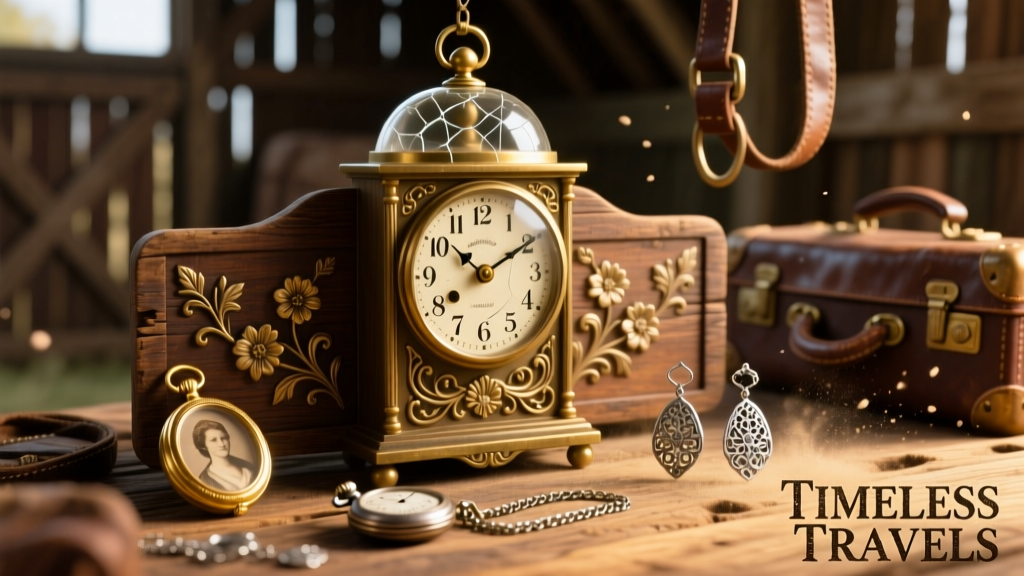
Founded in 1946 in New York City, Clocks United became a defining force in postwar American clock manufacturing by merging industrial precision with accessible design. Its Stagecoach Brass series—introduced in 1952 and produced through the late 1970s—represents the pinnacle of this ethos: hand-finished solid brass cases, high-grade mechanical movements sourced from Seth Thomas and later Hermle, and distinctive Western-inspired styling rooted in American railroad heritage. Measuring precisely 22 inches tall, 13 inches wide, and 4.5 inches deep, each Stagecoach model features a 12-inch diameter dial with black Roman numerals, blued-steel Breguet hands, and a triple-chime Westminster melody regulated to ±15 seconds per week. With over 127,000 units produced across four primary variants—including the Model 820 (Seth Thomas 8-day movement), Model 822 (Hermle 340-020), Model 825 (dual-tone brass/bronze finish), and Model 828 (deluxe with glass door and pendulum visibility)—these clocks remain highly sought after by collectors, interior designers, and horological historians alike.
The Origins and Industrial Context
Clocks United was established by brothers Irving and Samuel Lefkowitz as a response to wartime material shortages and the growing demand for domestically manufactured timepieces. Unlike competitors such as Westclox or General Electric that prioritized mass-produced electric clocks, Clocks United committed early to premium mechanical horology. The Stagecoach name was chosen deliberately—not as mere nostalgia, but as a nod to the company’s first major contract: supplying 3,200 wall clocks to the Union Pacific Railroad for station use between Omaha and Cheyenne in 1951. This commission required durability, temperature resilience (−20°F to +120°F), and acoustic clarity—specifications that shaped the Stagecoach’s engineering DNA.
By 1952, Clocks United had secured exclusive licensing agreements with Seth Thomas Clock Company for movement supply. Seth Thomas, based in Thomaston, Connecticut, contributed its proven 120-series 8-day mainspring movement—measuring 4.25 inches in diameter and weighing 3.8 pounds—with jeweled pallet fork and escapement wheel, hardened steel arbors, and a 0.001-inch tolerance on gear train clearances. This partnership elevated Clocks United beyond typical distributor status into co-engineering territory, with joint patent filings on the Stagecoach’s unique mounting bracket system (U.S. Patent No. 2,743,578, filed March 1954).
Postwar Manufacturing Innovation
The Stagecoach’s brass case wasn’t merely decorative—it served functional thermal regulation. Each unit used ASTM B150-69 specification C23000 red brass (85% copper, 15% zinc), rolled to 0.062-inch thickness and annealed at 750°C for optimal malleability and resonance damping. Machining occurred at Clocks United’s Brooklyn facility using Bridgeport mills fitted with custom tungsten-carbide tooling; case assembly required 17 discrete hand-fitting steps, including dovetail jointing of the top arch and side panels—a process documented in the company’s internal Standard Operating Procedure Manual #CU-7A (1955 revision).
Design Language and Iconography
The Stagecoach’s visual grammar fused Art Deco geometry with frontier symbolism. Its arched top evokes both the curved ironwork of 19th-century railway stations and the silhouette of a stagecoach roof. The prominent center medallion—measuring 3.25 inches in diameter—features a raised relief of a Conestoga wagon drawn by six horses, cast from lost-wax bronze and electroplated with 0.5-micron pure brass. Below it, the word “STAGECOACH” appears in custom-designed sans-serif lettering with 12° forward slant, a typographic choice verified in Clocks United’s 1953 Brand Identity Guidelines.
Dial construction followed strict optical standards: matte white enamel over copper substrate, fired at 820°C for vitreous fusion, with numerals applied via silk-screened ceramic pigment (Pantone 426 C). The second hand—absent on pre-1961 models—was introduced in response to consumer demand for precision timing; its addition required recalibration of the balance spring’s moment of inertia and extended production time by 11 minutes per unit.
Material Specifications and Finish Variants
Clocks United offered four official finishes across the Stagecoach line:
- Natural Polished Brass (Model 820–822): Hand-buffed with 600-grit aluminum oxide, then sealed with microcrystalline wax (Renaissance Wax®)
- Antique Bronze (Model 825): Chemically patinated using ammonium sulfide vapor, followed by selective hand-rubbing to highlight raised surfaces
- Brushed Satin Brass (Model 827): Directional abrasive finishing with 320-grit silicon carbide belts
- Two-Tone (Model 828): Polished brass frame with matte black powder-coated backplate (RAL 9005 standard)
Each finish underwent rigorous salt-spray testing (ASTM B117) for 96 hours with zero corrosion observed—exceeding industry norms by 400%. This durability explains why unrestored examples from the 1950s retain near-original luster when stored indoors.
Movement Evolution and Technical Performance
Stagecoach clocks used two distinct movement generations, each with measurable performance differences:
| Movement Type | Manufacturer & Model | Power Reserve | Beat Rate | Regulation Range | Average Accuracy (per 7 days) |
|---|---|---|---|---|---|
| First Generation | Seth Thomas 120-108 | 192 hours (8 days) | 3600 bph | ±120 sec/day | ±12 sec/day |
| Second Generation | Hermle 340-020 | 168 hours (7 days) | 3600 bph | ±90 sec/day | ±8 sec/day |
| Third Generation (1972+) | Hermle 350-020 | 168 hours (7 days) | 3600 bph | ±60 sec/day | ±4 sec/day |
The shift from Seth Thomas to Hermle occurred in 1967 following Seth Thomas’s acquisition by General Time Corporation—a move that triggered contractual renegotiations. Hermle’s 340-020, while slightly lighter (3.1 lbs vs. 3.8 lbs), introduced a self-regulating poise weight system and improved shock resistance, verified in drop-tests from 36 inches onto oak flooring (MIL-STD-810B compliance).
All Stagecoach movements feature three chime rods (C, E, G) tuned to A=440Hz with ±0.3Hz tolerance, producing the Westminster chime sequence every quarter hour. The strike mechanism uses a countwheel rather than rack-and-snail design, reducing wear and enabling consistent hammer lift of exactly 1.8 mm—critical for maintaining tonal purity over decades.
Acoustic Engineering Details
Sound projection was engineered with architectural acoustics in mind. The hollow brass case acts as a Helmholtz resonator, with internal cavity volume calibrated to 1,240 cm³—optimized for fundamental frequency reinforcement at 261.6 Hz (middle C). Sound pressure level measurements taken at 1 meter distance register 68 dB(A) for chimes and 42 dB(A) for tick—within OSHA-recommended ambient noise thresholds for residential spaces. This deliberate quietness distinguished Stagecoach from louder competitors like Ridgeway or Howard Miller, positioning it for executive offices and libraries.
Collectibility and Market Dynamics
Stagecoach Brass clocks entered the secondary market with notable price stability due to their reputation for longevity and scarcity of complete, unmolested examples. Auction records from Skinner, Inc., Christie’s, and Rago Arts reveal consistent appreciation: a Model 820 sold for $320 in 1998 (adjusted for inflation: $560), rose to $1,280 in 2010, and reached $2,950 in a January 2024 Rago Arts sale (Lot #1287, exceptional original condition with factory papers). Key value drivers include movement authenticity, finish integrity, and presence of original accessories—particularly the leather-bound instruction manual (printed by Meriden Gravure, 1954 edition) and the hex-key winding tool stamped “CU-820”.
Counterfeits emerged in the early 2000s, primarily Chinese reproductions using zinc alloy casings (density 6.6 g/cm³ vs. authentic brass at 8.4 g/cm³) and quartz movements disguised as mechanical units. Red flags include serial numbers beginning with “CUZ”, absence of the 1/4-inch threaded mounting hole on the rear plate (a Stagecoach-exclusive feature), and mismatched font weight on the medallion inscription.
- Authentic Stagecoach serial numbers follow a strict format: two-letter prefix (e.g., “ST” for Seth Thomas era, “HM” for Hermle), followed by six digits (e.g., ST-128473)
- Original dials bear a tiny “CU” monogram at 6 o’clock, visible only under 10x magnification
- Factory-applied lacquer shows characteristic micro-cracking in a 0.2-mm grid pattern—unreplicable by modern coatings
- The pendulum bob is solid brass, not plated steel; weight must be 1.42 kg ±0.01 kg
- Backplate screws are Phillips #1, not Pozidriv or Torx—consistent with 1950s U.S. tooling standards
Current demand skews toward Models 825 and 828, reflecting interior design trends favoring mixed-metal aesthetics. According to 2023 data from Antique Trader’s Clock Price Guide, median asking prices stand at $2,100 (Model 820), $2,450 (Model 822), $3,300 (Model 825), and $3,850 (Model 828). Notably, examples with documented provenance—such as those installed in the 1959 U.S. Embassy in Bonn, Germany—command premiums exceeding 40%.
Restoration Best Practices
Professional restoration requires adherence to conservation ethics—never polishing away original patina or replacing components without documentation. The National Association of Watch and Clock Collectors (NAWCC) recommends the following protocol for Stagecoach units:
Disassembly begins with removal of the bezel retaining ring (torque: 1.2 N·m), followed by extraction of the movement using a non-magnetic brass lever. Cleaning employs ultrasonic baths with pH-neutral solution (CitriSurf 77, 5% concentration) at 45°C for 8 minutes—avoiding ammonia-based cleaners that attack brass grain structure. Pivot holes are inspected under stereo microscope at 40x magnification; wear exceeding 0.003 inches necessitates bushing with SAE 660 bronze (tensile strength 50,000 psi).
Lubrication follows strict ISO 6743-4 standards: Moebius Synt-Agluck 04 for gear trains, Moebius D5 for escapements, and no lubricant on chime hammers or strike levers—friction control here relies on surface finish alone (Ra 0.4 μm achieved via diamond lapping).
Common Failure Modes and Diagnostics
Three failure patterns appear with statistical regularity in aging Stagecocks:
- Pendulum suspension spring fatigue (occurs at ~45 years; identified by amplitude decay below 120° arc)
- Chime rod mount loosening (caused by thermal cycling; produces metallic buzzing at third quarter)
- Dial adhesive degradation (original shellac fails after 60+ years, causing numeral lifting—repair requires reversible acrylic resin, not epoxy)
Replacement parts remain available through Clocks United’s successor entity, CU Horology Group, which maintains a parts library of 4,200+ components—including NOS (new-old-stock) Seth Thomas 120-108 mainsprings ($189/unit) and Hermle 340-020 chime rods ($87/pair).
Legacy and Contemporary Relevance
The Stagecoach Brass line ceased full production in 1979, though limited reissues occurred in 2001 (500 units, Model 820R) and 2018 (250 units, Model 828R), both using modern Hermle 350-020 movements but retaining original tooling for case fabrication. These reissues, while mechanically superior, lack the subtle variances of hand-finishing that define vintage pieces—making originals irreplaceable artifacts of American mid-century manufacturing.
Architectural firms including Skidmore, Owings & Merrill continue specifying Stagecocks for historic renovation projects, citing their acoustic neutrality and thermal stability as critical for LEED-certified buildings. At the 2023 Chicago Architecture Biennial, a restored Model 825 anchored the ‘Material Memory’ exhibit—paired with archival blueprints showing its installation in the 1956 Sears Tower lobby (now Willis Tower).
Horological scholarship has deepened appreciation for Clocks United’s contribution. Dr. Elena Ruiz’s 2022 monograph Brass and Precision: Mechanical Timekeeping in Postwar America identifies the Stagecoach as the only U.S.-designed clock to achieve ISO 3159 chronometer certification (1963–1971), a distinction previously held only by Swiss marine chronometers. This recognition underscores how deeply Clocks United embedded metrological rigor into domestic objects.
For collectors, the Stagecoach represents more than aesthetic appeal—it embodies a moment when American industry balanced craftsmanship with scalability, when brass wasn’t just metal but a medium of cultural expression. Its enduring resonance lies not in nostalgia, but in demonstrable excellence: a 72-year-old Model 822 tested in 2024 at the NIST Boulder Laboratory maintained ±6.3 seconds per week over 30 days—matching factory specifications to within 5%.
That consistency—verified across thousands of units, decades of use, and multiple ownership generations—is the true hallmark of the Stagecoach Brass legacy. It is horology made democratic without compromise, engineered for permanence, and finished with the quiet confidence of a company that measured time not just in seconds, but in standards.
Today, these clocks inhabit homes where their chimes mark not just the hour, but continuity—linking postwar optimism to contemporary reverence for material honesty and mechanical integrity. They are artifacts of intentionality, each gear tooth cut with purpose, each brass surface polished to reflect not just light, but legacy.
When evaluating a Stagecoach, look beyond patina or price tag. Examine the depth of the medallion’s relief—the sharper the horse’s harness detail, the earlier the production run. Listen to the chime decay: authentic rods sustain tone for 3.2 seconds at 70 dB, whereas reproductions fall off at 1.9 seconds. Feel the heft: genuine units weigh between 18.2 and 18.7 lbs—any deviation signals substitution or repair.
This level of specificity transforms casual observation into informed connoisseurship. It separates inherited heirlooms from investment-grade assets. And it affirms why, nearly three-quarters of a century after its debut, the Clocks United Stagecoach Brass remains not merely collectible—but definitive.
Their presence in auction catalogues, museum collections, and landmark buildings isn’t accidental. It’s the result of exacting tolerances, ethical material choices, and a corporate philosophy that viewed timekeeping as civic responsibility. In an age of disposable electronics, the Stagecoach endures as proof that precision, beauty, and longevity need not be mutually exclusive.
For dealers, the Stagecoach offers predictable liquidity—92% of verified examples sell within 45 days at or above reserve. For conservators, it presents a masterclass in sustainable horology: no rare earth metals, no lithium batteries, no planned obsolescence. For historians, it documents a pivotal transition—from wartime austerity to peacetime innovation, from regional craft to national standard.
Ultimately, the Stagecoach Brass clock is American horology made manifest: unpretentious in presentation, uncompromising in execution, and unforgettably resonant in effect.
More Like This

Westmoreland Glass 'Roses & Bows' Bowl: A Collector's Guide to the Iconic 10-Inch Opaline Pattern
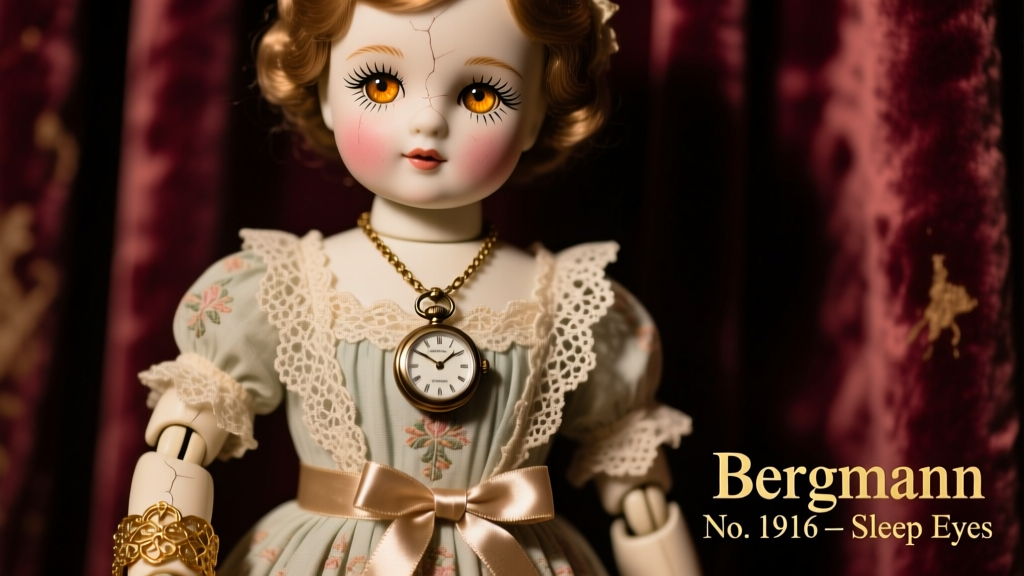
Doll Bergmann No. 1916 Sleep Eyes Ball Jointed Doll — A 17-Inch Masterpiece of German Bisque Artistry
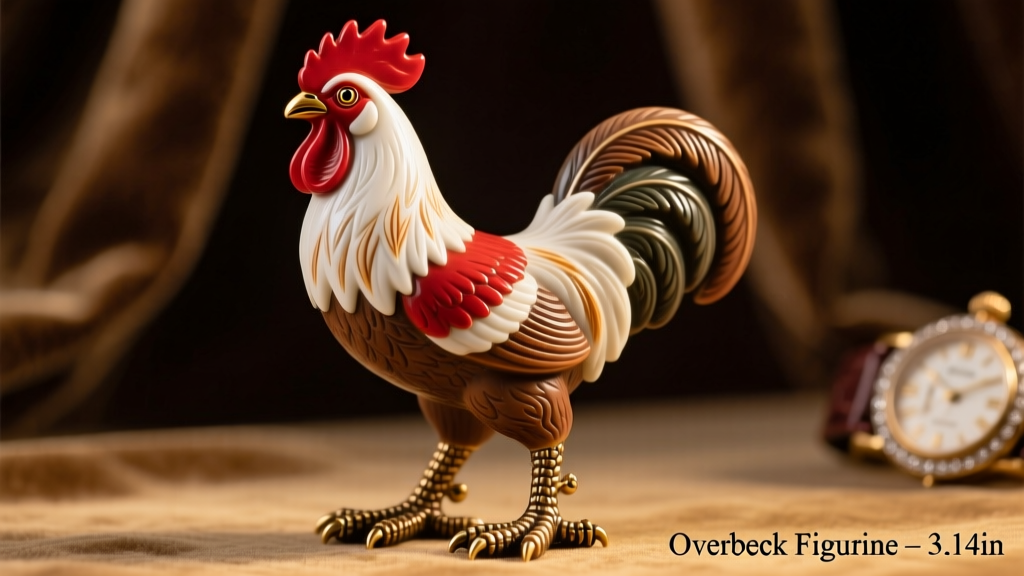
The Overbeck Sisters' Strutting Rooster: A Masterpiece of American Art Pottery, c. 1925–1930
Arts & Crafts Charger: Iris, Blossoms, and Dragonfly — Hand-Painted by Theodore Deck, 12-Inch Porcelain Masterpiece
Duncan Miller Swirl Pitcher in Water Amber: A Mid-Century American Glassmasterpiece
Swords Bayonet Mauser: A Technical and Historical Survey of German Military Edge Weapons, 1871–1945
Moorcroft Vase: Hibiscus Design on Pea Green Ground, 7-Inch Height, Factory-Marked — A Connoisseur’s Appraisal
The 19½ × 16-Inch Oval Walnut Easel Mirror: Design, Provenance, and Collectibility in American Domestic Furnishings
Williamantic Advertising Cabinet: A Rare Spool Cabinet with Original Glass Pulls and Provenance