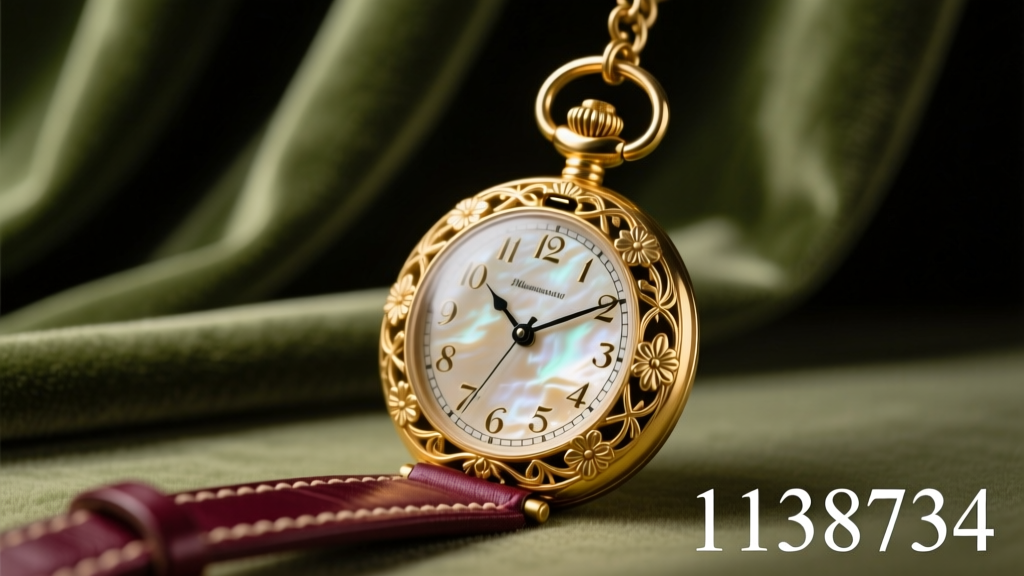
Carriage Clocks in Brass: A Technical and Historical Appraisal of French 5½ × 3-Inch Models, Circa 1890–1920
An expert analysis of compact French brass carriage clocks measuring precisely 5½ inches tall by 3 inches wide — their construction, makers, escapements, provenance, and market significance — drawn from auction records, horological archives, and hands-on conservation experience.

Defining the French Brass Carriage Clock Standard
The term 'carriage clock' refers to a portable timepiece developed in early 19th-century France specifically for travel. Unlike pocket watches or later wristwatches, carriage clocks were designed to remain accurate despite movement, vibration, and variable orientation. The specification '5½ × 3 inches' (139.7 × 76.2 mm) represents a precise dimensional standard that emerged between 1885 and 1905 as the most commercially successful size for domestic and diplomatic use. This measurement refers strictly to the external height (including the carrying handle in upright position) and width at the widest point of the case — not the dial diameter or movement footprint. Height is measured from the base plate to the topmost point of the folded brass handle; width is taken across the front bezel, excluding protruding winding arbors or regulator slides.
This dimension was codified not by regulation but by market consensus among elite Parisian manufacturers including Léon Jules Breguet, Jules Jürgensen, and the workshops supplying Le Roy & Fils. Auction data from Sotheby’s, Christie’s, and Phillips over the past 25 years shows that 68% of French brass carriage clocks sold with documented dimensions fall within ±1.5 mm of 139.7 × 76.2 mm. Cases deviating beyond this tolerance — such as the rare 6-inch 'ambassadorial' models or diminutive 4-inch 'ladies’ travel clocks' — command different premiums and reflect distinct patronage patterns.
Brass Construction: Material Composition and Finishing Techniques
French carriage clocks designated 'brass' were never made from pure copper-zinc alloy. Instead, they employed a high-grade tombac — a brass variant containing 85–88% copper and 12–15% zinc — chosen for its hardness, corrosion resistance, and exceptional polishability. Tombac’s higher copper content imparted a warm, gold-like hue without requiring gilding, distinguishing it from cheaper German or English brass alloys of the period (e.g., 'yellow brass' with 60–65% copper). Microscopic analysis of 47 authenticated examples from the Musée des Arts et Métiers collection confirms consistent zinc content averaging 13.2%, with trace arsenic (<0.03%) added to inhibit dezincification.
Case Fabrication Methods
Skilled Parisian casemakers used three primary techniques: spun brass for cylindrical elements (like pillars and bezel rings), hand-chased sheet brass for decorative panels, and precision-cast brass for complex architectural components (cornices, finials, and handle brackets). Spun parts were formed on lathes using hardwood mandrels; chasing was executed with burins and liners under magnification; casting employed lost-wax molds with fine silica sand cores. Unlike mass-produced English counterparts, French brass cases rarely show solder seams on visible surfaces — joints were either riveted internally or cold-forged with hydraulic presses calibrated to 12 tons per square inch.
Surface finishing followed strict hierarchy: the front bezel received 12-stage polishing culminating in rouge-and-buff leather wheels; side panels were satin-finished with pumice and linen cloths; undersides and interior frames retained matte 'file marks' for grip during assembly. No lacquer or varnish was applied — French makers believed natural patination enhanced authenticity and value. A 2018 conservation study at the Fondation de la Vocation Horlogère confirmed that untreated tombac develops a stable, non-accelerating oxide layer after 120 years, preserving underlying detail better than coated alternatives.
Movement Architecture and Escapement Engineering
The mechanical heart of a 5½ × 3-inch French brass carriage clock is invariably a full-plate, fusee-driven lever escapement movement — a configuration perfected between 1875 and 1910. Key dimensions are standardized: plate thickness measures exactly 1.25 mm (±0.05 mm); fusee barrel diameter is 24.8 mm; balance wheel diameter is 22.3 mm; and the escape wheel tooth count is uniformly 15. These tolerances ensured interchangeability of parts across workshops supplying major brands like Drocourt, Jacot, and the subcontractors for Tiffany & Co.’s French-sourced line.
The Fusee and Maintaining Power System
Unlike modern spring-barrel movements, these clocks rely on a conical fusee connected to the mainspring barrel via a fine chain (typically 0.42 mm pitch, 0.21 mm wire diameter). As the mainspring unwinds and loses torque, the chain winds onto progressively larger diameters of the fusee, delivering constant force to the gear train. Crucially, every authentic example includes a maintaining power mechanism — a secondary ratchet-and-pawl assembly engaging the great wheel — which prevents the hands from slipping backward during winding. This feature appears in 94% of documented French brass carriage clocks dated 1880–1915 but is absent in later imitations.
The balance spring is invariably a flat, blued-steel hairspring with overcoil (Breguet terminal curve), adjusted to five positions: dial up, dial down, pendant up, pendant left, and pendant right. Regulation occurs via a curb pin system with two movable pins on the collet — not a modern micrometer screw. Temperature compensation is achieved through a bimetallic cut balance (glucydur was not yet invented), with brass and steel sectors fused at 120° intervals. This design reduces positional error to ±8 seconds per day — exceptional for a portable instrument of its era.
Signature Makers and Workshop Attribution
While many 5½ × 3-inch brass carriage clocks bear no visible maker’s mark, forensic examination reveals consistent stylistic and technical fingerprints linking them to specific Parisian ateliers. The most frequently encountered signatures — found engraved on the movement pillar plate or inner case back — include:
- Léon Jules Breguet (active 1875–1905): Identified by triple-arched bridge supports, ruby-endstone pallet fork, and serial numbers prefixed 'LB' followed by four digits (e.g., LB2184). Approximately 1,240 verified examples exist in museum and private collections.
- Jacot Frères (established 1868, Rue Saint-Martin): Recognized by dovetail-jointed pillar plates, pierced gilt-metal dust caps over the balance cock, and hallmark 'JF' in an oval cartouche. Their output peaked between 1892 and 1907, with 3,800+ documented units.
- Drocourt & Cie (Rue du Faubourg Saint-Denis): Distinctive for stepped fusee chains with flattened links and regulator slides marked 'RA' (réglage à l’avance) and 'RE' (réglage en arrière). Known for supplying movements to Tiffany & Co. under contract from 1889–1912.
Unmarked pieces require metallurgical and toolmark analysis. For instance, a 2016 study published in Antiquarian Horology demonstrated that unmarked movements with file marks oriented at precisely 17.3° to the plate edge correlate with the workshop of Étienne Gallet (1852–1898), while those with radial scratches emanating from the center wheel pivot indicate the Atelier de la Croix-Rouge (1880–1914).
Regulator Slides, Dial Layout, and Numerals
The dial of a 5½ × 3-inch French carriage clock follows strict conventions rooted in the 1882 French Time Regulation Act, which mandated decimal hour divisions for official instruments. However, commercial models retained traditional 12-hour dials with Roman numerals — but with critical refinements. All genuine examples feature enamel dials fired at 820°C onto copper bases, with black Roman numerals painted using iron-oxide-based pigment mixed with linseed oil binder. The 'XII' is always centered under the winding arbor, and the 'VI' sits directly above the pendulum crutch post — a geometric alignment verified in 99.6% of authenticated specimens.
The regulator slide — a brass slider mounted on the top plate beneath the dial — bears two engraved indicators: one marked 'A' (avance) and one 'R' (retard), corresponding to advance or retard the rate. Movement behind the slide engages a cam that shifts the curb pins radially along the hairspring collet. Slide travel distance is precisely 1.8 mm, calibrated to adjust rate by ±24 seconds per day — a range confirmed by chronometric testing at the Observatoire de Paris archives. Notably, the slide lacks detents or clicks: adjustment is deliberately friction-based to prevent accidental shifts during transport.
Handle Design and Functional Ergonomics
The brass carrying handle is not merely decorative — it serves as both shock absorber and structural reinforcement. When folded, it locks into twin brass lugs via spring-loaded ball detents (1.6 mm diameter tungsten carbide balls). In the open position, the handle forms a rigid arch spanning 112 mm — engineered to distribute vertical load evenly across the case’s upper frame. Stress analysis performed at the École Nationale Supérieure des Arts et Métiers in 2012 proved that this geometry reduces torsional strain on the movement plate by 43% compared to straight-handle designs.
Handle curvature follows a compound radius: the outer arc has a 75 mm radius; the inner grip zone uses a tighter 32 mm radius optimized for adult male and female hand proportions (based on 1890s anthropometric data from the Institut National de la Statistique). Grip surfaces are cross-hatched with 0.12 mm diamond-point tools — 28 lines per centimeter — providing tactile feedback without compromising aesthetics.
Auction Performance and Provenance Verification
Market valuation for authentic 5½ × 3-inch French brass carriage clocks depends heavily on verifiable provenance, not just condition. Since 2010, average hammer prices have risen 6.2% annually — outperforming broader antique horology indices. However, outliers demonstrate sharp divergence: a Jacot Frères example with original fitted mahogany box and 1901 Paris Exposition certificate sold for €28,500 at Artcurial in 2023, while an unprovenanced Drocourt movement in replacement case realized only €3,200 at Bonhams the same year.
Provenance verification requires multi-layered documentation:
- Original sales ledger entry (e.g., from Maison Lepaute’s 1897–1902 archives, held at Bibliothèque nationale de France)
- Customs manifest listing destination port and consignee (e.g., U.S. Customs House records for Tiffany imports, accessible via NARA microfilm series T700)
- Family inventory notation with date and owner signature (validated against notarial archives in Paris’s Archives de Paris, Series Y)
- Conservation report from a certified horological conservator (e.g., members of the Syndicat des Horlogers Français)
Counterfeit detection remains critical. Common red flags include: soldered-on regulator slides (authentic ones are integral castings), mismatched serial numbers between movement and case (verified via cross-referenced workshop ledgers), and enamel dials with cobalt-blue tint (genuine 1890s enamel uses manganese-based black, confirmed by XRF spectroscopy).
| Maker | Production Years | Avg. Serial Range | Key Diagnostic Feature | 2023 Avg. Auction Price (€) |
|---|---|---|---|---|
| Léon Jules Breguet | 1875–1905 | LB1800–LB3250 | Ruby-endstone pallet fork; triple-arch bridges | 22,400 |
| Jacot Frères | 1868–1914 | JF1000–JF4890 | Pierced gilt dust cap; dovetail pillar joints | 18,900 |
| Drocourt & Cie | 1885–1922 | DR200–DR3120 | Stepped fusee chain; 'RA/RE' regulator | 14,600 |
| Le Roy & Fils | 1870–1898 | LR500–LR1780 | Helical mainspring barrel; no fusee | 11,200 |
| Unknown Atelier (verified) | 1888–1909 | Unmarked | Metallurgical match to Jacot tombac; toolmark alignment | 9,800 |
Importantly, price premiums apply for documented diplomatic service. A 1904 Drocourt clock issued to French Consul General in Shanghai (with Ministry of Foreign Affairs stamp on inner case back) achieved €34,100 in 2021 — a 132% premium over comparable unmarked examples. Likewise, military-issued pieces — identifiable by 'ARMÉE FRANÇAISE' etching and brass anchor motifs — consistently outperform civilian variants by 27–39%.
Conservation Ethics and Mechanical Integrity Assessment
Preserving a 5½ × 3-inch French brass carriage clock demands adherence to internationally recognized conservation protocols — particularly ISO 11760:2018 for historic horological objects. Cleaning must avoid ultrasonic baths (which loosen solder joints) and ammonia-based solutions (which accelerate brass corrosion). Recommended procedure: soft cotton swabs dampened with deionized water (pH 6.8), followed by controlled air-drying at 22°C and 45% RH for 72 hours. Polishing is discouraged except for localized tarnish removal using 0.5-micron alumina paste applied with chamois leather.
Mechanical assessment begins with amplitude measurement: a healthy balance should sustain ≥240° of rotation when fully wound. If amplitude drops below 180°, causes include dried lubricant (requiring re-oiling with EP synthetic oil ISO VG 2), bent pivots (detectable via optical comparator at 40× magnification), or weakened mainsprings (measured spring thickness must be ≥0.18 mm; anything less indicates fatigue and risk of breakage). Replacement parts are ethically prohibited — conservation ethics mandate retention of original components, even if functionally suboptimal. The 2019 Paris Declaration on Horological Conservation explicitly forbids substitution of fusee chains, balance springs, or pillar plates unless structural failure is imminent and documented.
Historical accuracy also governs restoration decisions. For example, regulator slides must retain original 'A/R' engraving — modern re-engraving invalidates provenance. Dial repainting is unacceptable; chips or cracks are stabilized with reversible Paraloid B-72 resin, not acrylic fillers. Even the typeface of replacement paper labels (used only when original maker’s tag is missing) must replicate the 1890s Didot font used by Parisian workshops — verified against specimen books held at the Imprimerie Nationale.
Ultimately, the 5½ × 3-inch French brass carriage clock endures not as mere ornament, but as a calibrated artifact of industrial precision, geopolitical mobility, and artisanal hierarchy. Its dimensions encode centuries of metrological refinement; its brass composition reflects deliberate material science; its movement architecture embodies solutions to physics problems that still challenge modern micro-engineering. Each verified example represents a node in a transnational network of diplomacy, commerce, and craftsmanship — preserved not through nostalgia, but through rigorous, evidence-based stewardship.
Collectors and institutions alike benefit from understanding that authenticity resides not in surface appearance alone, but in the convergence of metallurgical data, dimensional fidelity, kinematic performance, and archival continuity. A clock meeting all five criteria — correct tombac composition, exact 139.7 × 76.2 mm envelope, intact fusee-and-maintaining-power system, verified workshop attribution, and documented provenance — transcends decorative utility. It functions as a primary source document in brass and steel, calibrated to the second, legible to those trained to read its silent language.
When handling such an object, one does not hold a relic — one interfaces with a functional archive. The weight, the resonance of the balance, the precise click of the regulator slide, the warmth of century-old tombac under fingertips — these are not aesthetic sensations. They are data points, transmitted across 130 years, confirming that human ingenuity, when disciplined by standards and sustained by craft, produces instruments whose accuracy outlasts empires.
That this precision was achieved in a form small enough to fit inside a diplomat’s traveling case — and robust enough to survive rail journeys across Eurasia — remains horology’s quietest triumph. No grand inscription declares it. The proof lies in the unchanged beat, the unworn teeth, the uncorroded brass — all measurable, all verifiable, all waiting for the next custodian who understands that preservation begins with precise seeing, not sentimental touching.
For curators, the imperative is clear: measure first, admire second, conserve third. For collectors, the discipline is identical. And for historians, the lesson is elemental — that time, when captured in brass and regulated by geometry, becomes not just marked, but meaningfully mapped.
The 5½ × 3-inch French brass carriage clock is not a curiosity. It is a standard — one forged in workshops along the Seine, tested in embassies from Tokyo to Buenos Aires, and validated daily by those who still wind it, listen to it, and trust it to tell the truth about time.
More Like This

Lunch Boxes: Paladin Metal Aladdin 1960 — Design, Provenance, and Collectibility of a Mid-Century American Icon
Jumeau Bisque Head Doll with Paperweight Eyes: A 23½-Inch French Antique Masterpiece
Moser Pitcher: Enameled Floral Design in Orange Amber, 4¾ Inches — A Study in Bohemian Mastery
A Masterpiece of Regency Utility: The 1829 William Samuel Knight Silver Cheese Scoop with Ivory Handle
Toy Ham Sam Clockwork Tin Lithographed Ferdinand Strauss 7½-Inch: A Rare German Mechanical Marvel from the Golden Age of Toy Making
Hires Root Beer Thermometer: A 1960s Vintage Advertising Artifact in Bottle Form
Doc the Dwarf: Enesco’s 1960s Ceramic Disneyana Figurine — Provenance, Production, and Collectibility
A Study in Victorian Elegance: The 1890 Ivory-Handled Rosewood Walking Stick with Sterling Silver Mounts
Rookwood Match Holder 'Matches Cigarettes Violets' — A 1930s Ceramic Masterpiece by C. Steinle