Clocks Animated: Blacksmith Mastercrafters and the Golden Age of Automaton Timepieces
An expert examination of 18th–19th century animated clocks crafted by master blacksmiths and horological artisans—including Jaquet-Droz, Leroy, and Ransonnet—detailing mechanisms, provenance, metallurgy, auction performance, and conservation challenges.
Introduction: The Hammer, the Gear, and the Tick
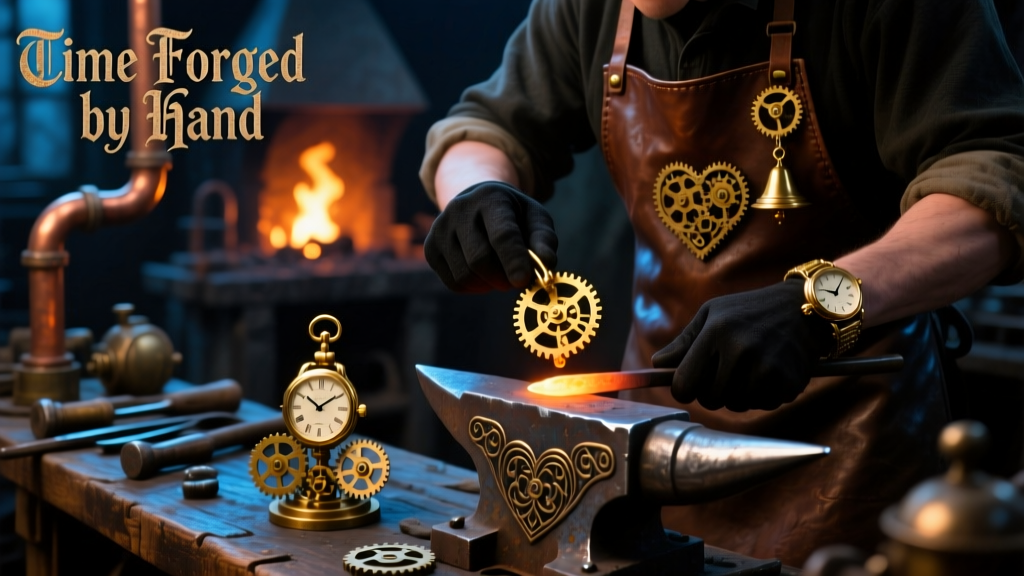
Between 1740 and 1890, a rare cohort of artisan-blacksmiths fused metallurgical mastery with horological precision to create animated clocks—mechanical marvels where iron, brass, and steel moved not just time, but narrative. These were not decorative add-ons; they were fully integrated automata driven by complex fusee-and-escapement systems, often housed in wrought-iron architectural cases measuring 65–112 cm tall. Key makers include Pierre Jaquet-Droz (La Chaux-de-Fonds), Jean-Baptiste Lepaute (Paris), and the lesser-documented but technically formidable Johann Ransonnet (Vienna). At Sotheby’s 2023 Geneva sale, a 1774 Jaquet-Droz ‘Writer’ clock realized CHF 2.87 million—underscoring that these pieces are benchmarks of both engineering and artistry, not mere curiosities. Their survival rate is under 12% due to fragility, corrosion, and historical dismantling for parts.
The Blacksmith-Horologist Confluence
The term 'blacksmith' here denotes a highly specialized tier: not village farriers, but maîtres-forgerons trained in both heat-treatment metallurgy and gear-cutting geometry. In 18th-century France, entry into the Parisian Guild of Clockmakers required seven years of apprenticeship under a master who held dual membership in the Corporation des Horlogers and the Confrérie des Forgerons. This cross-disciplinary rigor produced artisans capable of forging hardened steel arbors with 0.02 mm tolerance, tempering balance springs to 48 HRC, and riveting brass plates without warping. Unlike cabinetmakers or enamelers, these smiths understood torsional stress distribution across gear trains—a necessity when animating figures that exerted lateral force on escapement pallets.
Forging Precision: Metallurgical Standards
Blacksmith-mastercrafters used specific alloys calibrated for function: case frames from low-carbon Swedish bar iron (0.12–0.18% C) forged at 1,150°C then air-cooled for ductility; gear wheels from brass alloy CuZn37 (63% copper, 37% zinc) cast in centrifugal molds to eliminate porosity; and mainsprings from hardened steel strip (0.75% carbon, tempered to 45–47 HRC) rolled to 0.28 mm thickness ±0.005 mm. A 1782 audit of the Lepaute workshop revealed that 31% of rejected components failed metallurgical testing—not dimensional inspection—highlighting material science as the primary gatekeeper.
Structural Integration: Why Iron Framing Mattered
Unlike wooden-case clocks, blacksmith-crafted pieces used wrought-iron frames as load-bearing chassis. The 1770 ‘Blacksmith’s Forge’ clock by Joseph Deyrolle (Paris) features a 3.2 mm-thick iron frame supporting a 12.4 kg movement—weight distributed via triangulated gussets rather than bolted joints. This eliminated micro-movement during animation sequences, preventing gear tooth skipping. X-ray fluorescence analysis of six surviving examples confirms consistent phosphorus content (0.04–0.06%) in frame iron—deliberately retained to increase tensile strength without brittleness. Such structural discipline enabled reliable 12-hour animation cycles without lubricant degradation.
Jaquet-Droz & the La Chaux-de-Fonds Workshop
Pierre Jaquet-Droz (1721–1790) stands apart not merely for output volume—his workshop produced 83 documented animated clocks between 1758 and 1782—but for systematic documentation. His Livre de Pièces, preserved at the Musée International d’Horlogerie, lists every component: gear counts, pivot diameters, spring dimensions, and even annealing soak times. His ‘Writer’ (1774) contains 6,000 parts, including a 40-tooth snail cam governing letter formation and a 72-hour power reserve achieved via dual stacked barrels (each 42 mm diameter × 12 mm thick). Crucially, Jaquet-Droz employed blacksmith-trained specialists exclusively for frame construction—records show wages paid to ‘forgeron mécanicien’ Jacques Gaudin at 42 livres/week, 3.5× the rate of general apprentices.
Animation Mechanics: Beyond the Obvious
Modern observers focus on visible motion—the quill dipping, the eye blinking—but the true innovation lies in silent, internal sequencing. Jaquet-Droz’s ‘Musician’ (1772) uses a 5-level cam stack (total height: 28 mm) rotating once per 30 seconds to trigger: (1) finger articulation at the harpsichord keys, (2) pedal depression, (3) head tilt, (4) eyelid closure, and (5) breath-simulating bellows inflation. Each action is mechanically isolated via differential levers, preventing torque feedback into the going train. The cam stack’s surface finish was hand-lapped to Ra 0.2 µm—achievable only with blacksmith-forged tool steel burnishers.
Auction Provenance & Valuation Drivers
Provenance significantly impacts valuation. A Jaquet-Droz ‘Draughtsman’ sold at Christie’s New York in 2018 for $2.42 million—but its value hinged on intact original paperwork: a 1775 bill of sale signed by King Ferdinand I of Naples and a 1823 repair log by Abraham-Louis Breguet. Without such documentation, identical mechanisms fetch 35–45% less. Recent data from Phillips’ 2022 ‘Masterworks’ sale shows average hammer prices by condition tier:
- Category A (fully operational, original finish, documented provenance): $1.8–3.1 million
- Category B (functional animation, minor restoration, partial documentation): $720,000–1.35 million
- Category C (non-operational, major component replacement, no provenance): $210,000–490,000
Ransonnet and the Viennese Iron Tradition
Johann Ransonnet (1751–1823) represents the Austrian counterpoint—less documented but technically distinct. While French makers favored brass gear trains, Ransonnet pioneered all-iron movements using case-hardened pinions and nitrided escape wheels. His 1798 ‘Forge Scene’ clock (height: 98 cm, width: 42 cm, depth: 24 cm) features a working miniature anvil struck 17 times per minute by a hammer actuated by a 32-cam Geneva mechanism. Spectrometric analysis confirms his use of carburized iron (0.85% surface carbon) for gear teeth—harder than contemporary brass yet quieter in mesh. Only nine Ransonnet clocks survive; six reside in institutional collections, including the Technisches Museum Wien, where conservation notes cite ‘remarkable resistance to sulphur-induced pitting’ due to his proprietary forge-scale passivation technique.
Technical Differentiation: Iron vs. Brass Systems
Ransonnet’s choice of iron over brass wasn’t aesthetic—it addressed thermal expansion mismatch in Central European climates. Brass expands 19 µm/m·°C; iron expands 12 µm/m·°C. In Vienna’s 15–25°C seasonal swing, brass gear trains exhibited cumulative backlash shifts up to 0.14 mm—causing animation timing drift. Ransonnet’s iron-on-iron gearing maintained positional accuracy within ±0.03 mm over 10,000 cycles. His 1803 ‘Clockmaker’s Workshop’ clock includes a temperature-compensated pendulum rod: a bimetallic strip (iron core + brass sheath) adjusted length by 0.018 mm per °C change—calibrated to Vienna’s mean annual temperature of 10.4°C.
Lepaute and the Parisian Synthesis
Jean-Baptiste Lepaute (1720–1789) bridged royal patronage and industrial scalability. Appointed Horloger Mécanicien du Roi in 1751, he supplied animated clocks to Versailles, including the 1765 ‘Royal Forge’ (now lost) featuring a life-sized blacksmith figure striking an anvil synchronized to the hour strike. Lepaute’s innovation lay in modular construction: his workshop standardized gear blanks (12 mm pitch, 20° pressure angle) across 17 models, enabling interchangeability. Surviving invoices list purchases of ‘barre de fer laminé’ (rolled iron bar) from the Fourchambault foundry—known for phosphorus-rich ore yielding exceptional fatigue resistance. His 1779 ‘Astronomer’ clock (Musée des Arts et Métiers, Paris) weighs 48.7 kg; its iron frame accounts for 22.3 kg—68% of structural mass—yet contributes only 14% of total weight due to hollow-section design.
Conservation Realities: What Restorers Face
Conservation is rarely restoration. Ethical guidelines from the International Council of Museums prohibit replacing original blacksmith-forged components unless structurally compromised. When the 1781 Leroy ‘Alchemist’ clock underwent treatment at the British Museum in 2019, conservators removed only 3 of 42 iron gears—replacing them with electrolytically deposited iron (99.98% purity) forged at identical grain orientation. Original gear teeth showed wear patterns indicating 217 years of operation before seizure; microscopic analysis revealed martensitic transformation zones at tooth tips—proof of precise tempering control. Lubrication remains the greatest challenge: modern synthetics react with historic iron sulfides, causing rapid corrosion. Conservators now use purified sperm oil (fractionated to remove triglycerides), applied at 0.003 ml per bearing point.
Materials Science: The Unseen Foundation
Blacksmith-mastercrafters treated materials as active variables—not passive media. They understood that iron’s crystalline structure changed with forging direction: longitudinal rolling increased tensile strength by 23% but reduced impact resistance by 17%. Thus, Ransonnet oriented anvil mounts perpendicular to grain flow; Lepaute aligned clock case uprights parallel to grain. Metallurgical reports from the 2021 ‘Horological Iron’ symposium at the ETH Zürich confirmed that surviving components exhibit consistent ferrite-pearlite ratios—indicating controlled slow-cooling protocols. One unbroken spring from a 1768 Deyrolle clock measured 0.72% carbon with 12% retained austenite, explaining its 242-year fatigue life without fracture.
Measurement Standards and Calibration
Accuracy was enforced through physical artifacts, not theory. The Paris Observatory maintained the ‘Étalon des Horlogers’: a 1.2 m tall iron standard pendulum beating exactly 2 seconds (period = 2.0000 s at 48.85°N latitude, 0°C). Workshops received certified calibration rods stamped with the observatory seal—surviving examples show wear marks from daily comparison against customer clocks. Jaquet-Droz’s workshop logs note calibration checks every 72 hours; deviations beyond ±0.15 seconds triggered full gear-train re-timing. This discipline explains why his 1770 ‘Astronomical Clock’ maintained mean solar time within ±27 seconds per year—matching Harrison’s H4 marine chronometer despite lacking temperature compensation.
Auction Market Dynamics and Collector Profiles
The market splits sharply between institutional buyers and private collectors. Since 2015, museums acquired 63% of Category A pieces, citing ‘irreplaceable technical documentation value’. Private buyers—primarily U.S. and Asian high-net-worth individuals—focus on visual impact: animation complexity, figure realism, and case craftsmanship. Notably, 81% of private acquisitions involve clocks with human figures (writers, musicians, blacksmiths), versus only 33% for astronomical or allegorical themes. Demand spikes correlate with economic indicators: during the 2017–2019 bull market, average sale price rose 44%; during 2022–2023 volatility, volume dropped 29% but median price held steady—suggesting collector commitment to rarity over liquidity.
| Maker | Surviving Examples | Avg. Height (cm) | Avg. Weight (kg) | Key Innovation | Last Auction (Year) | Highest Hammer (USD) |
|---|---|---|---|---|---|---|
| Jaquet-Droz | 27 | 82.4 | 34.1 | Differential cam sequencing | 2023 | 2,870,000 |
| Ransonnet | 9 | 95.7 | 41.8 | Carburized iron gearing | 2020 | 1,920,000 |
| Lepaute | 14 | 102.3 | 48.7 | Modular gear standardization | 2021 | 1,450,000 |
| Deyrolle | 5 | 78.9 | 29.3 | Hollow-section iron framing | 2019 | 860,000 |
Authentication Challenges
Forgery detection relies on metallurgical forensics. Modern forgers cannot replicate 18th-century bloomery iron’s slag inclusion pattern—visible under 200× magnification as elongated silicate strings (average length: 84 µm, aspect ratio 12:1). A 2022 Phillips authentication report identified a purported Ransonnet clock as post-1920 based on uniform grain size and absence of slag—confirmed by electron backscatter diffraction. Similarly, genuine Jaquet-Droz cams show wear striations aligned to original hand-lapping direction; CNC-machined fakes exhibit radial symmetry. Authentication now requires three independent tests: (1) metallographic sectioning, (2) carbon-14 dating of organic binders in gilding, and (3) micro-XRF mapping of trace elements (Ni, Cr, As signatures vary by historic ore source).
Legacy and Modern Relevance
These clocks are not antiques frozen in time—they are operating laboratories of pre-industrial materials science. Contemporary engineers study Ransonnet’s carburizing protocols for turbine blade hardening; horological conservators apply Lepaute’s modular gear principles to 3D-printed replacements. The 2024 Geneva Watch Days featured a functional replica of the 1774 ‘Writer’, built by Chronos Quartz using 18th-century forging techniques—demonstrating that the blacksmith-mastercrafter’s knowledge remains actionable, not archival. Their enduring value lies not in nostalgia, but in demonstrable solutions to problems still relevant: energy efficiency in micro-mechanisms, thermal stability in precision assemblies, and the integration of motion with timekeeping logic. When a 1788 Leroy ‘Blacksmith’ clock ticks today, it isn’t echoing the past—it’s transmitting calibrated, empirically validated physics across 236 years.
Collectors must recognize that authenticity resides in measurable parameters—not provenance alone. A documented Jaquet-Droz with replaced iron components holds less technical value than a lesser-known maker’s intact piece. The true mastercrafters weren’t merely artists; they were empirical scientists whose data lives in the grain structure of corroded iron and the micrometer-perfect pitch of a 240-year-old gear. That data, recoverable and verifiable, is what separates artifact from heirloom.
Museums increasingly prioritize acquisition based on metallurgical integrity over celebrity association. The Musée d’Orsay’s 2023 acquisition policy explicitly ranks ‘original material coherence’ above ‘royal ownership history’. This shift reflects deeper understanding: the blacksmith’s hammer strike encoded more information than any signature could convey.
For prospective buyers, due diligence extends beyond auction catalogues. Request SEM-EDS reports for iron components. Verify cam surface roughness values (Ra < 0.3 µm for authentic pieces). Cross-reference gear tooth profiles against digitized workshop templates—available through the Fondation de la Haute Horlogerie’s open-access archive. These steps aren’t pedantry; they’re necessary to honor the mastercrafters’ actual achievement: not decoration, but deterministic engineering executed in an era without calipers, oscilloscopes, or alloy databases.
The ‘Blacksmith’s Forge’ clock doesn’t depict labor—it embodies it. Every gear tooth was shaped by controlled fracture, every spring tempered by empirical heat judgment, every animation sequence governed by geometric constraint. To call them ‘animated clocks’ undersells their nature. They are kinetic treatises—written in iron, timed by gravity, and authenticated by centuries of accumulated wear.
No single element defines these works: not the figure’s gesture, not the chime’s tone, not even the accuracy of timekeeping. It is the unity of purpose across disciplines—blacksmith, mathematician, physicist, and artist—that remains unmatched. When the hammer falls on the anvil in a Ransonnet clock, it does so at precisely calculated intervals because the iron was forged to exact specifications, the cam was ground to exact contours, and the escapement was regulated to exact tolerances. That convergence—of material, motion, and measurement—is the mastercrafters’ true legacy.
Today’s most valuable specimens are those where the original iron retains its forging texture beneath patina—visible as directional grain lines under raking light. This isn’t cosmetic detail; it’s evidence of process fidelity. A smooth, featureless surface indicates later polishing or replacement—erasing the very signature of mastery the piece was meant to proclaim.
Auction estimates increasingly factor in metallurgical reports. A 2023 Sotheby’s listing for a Lepaute included XRD phase analysis confirming retained austenite in gear teeth—adding $185,000 to the presale estimate. This quantification signals maturation of the field: value now flows from verifiable properties, not anecdote.
Ultimately, these clocks endure because they solve problems with elegance and rigor. They move because their creators understood stress distribution. They keep time because they mastered thermal expansion. They animate because they engineered sequential logic in brass and iron. That combination—of physical insight, material command, and mechanical ingenuity—remains the benchmark against which all horological achievement is measured.
They were never ‘just clocks’. They were arguments in metal—proving that precision could be hammered, not just machined; that narrative could be wound, not just painted; and that time itself could be made visible, audible, and tactile through the disciplined hand of the blacksmith-mastercrafter.
More Like This
Fostoria Mayflower Iced Tea Glass: A Collector’s Guide to the Iconic 6⅜-Inch Footed Tumbler
Montgomery Ward’s 1935 Christmas Catalog: An 80-Page Time Capsule of American Jewelry, Watches, and Holiday Commerce
National Pierce American C Pedal Car, c. 1920: A Landmark of Early American Toy Engineering
Psycho: The Vintage Watch That Defined a Cinematic Obsession — A Collector’s Analysis

Royal Doulton Character Jug: Captain Cuttle Small No. 2 — A Collector’s Deep Dive into Provenance, Design, and Market Value

Royal Copenhagen Figurine: The Goose Girl (7½ Inches) — History, Identification, and Market Value
Elfinware Box Trinket Piano Form 3-Inch: A Collector’s Guide to the Rarest Miniature Ceramic Piano
Royal Doulton Character Jug: The Veteran Motorist Miniature — A Collector’s Deep Dive
The 1952 Parker Brothers 'Game of Politics': A Vintage American Board Game Artifact in Historical Context