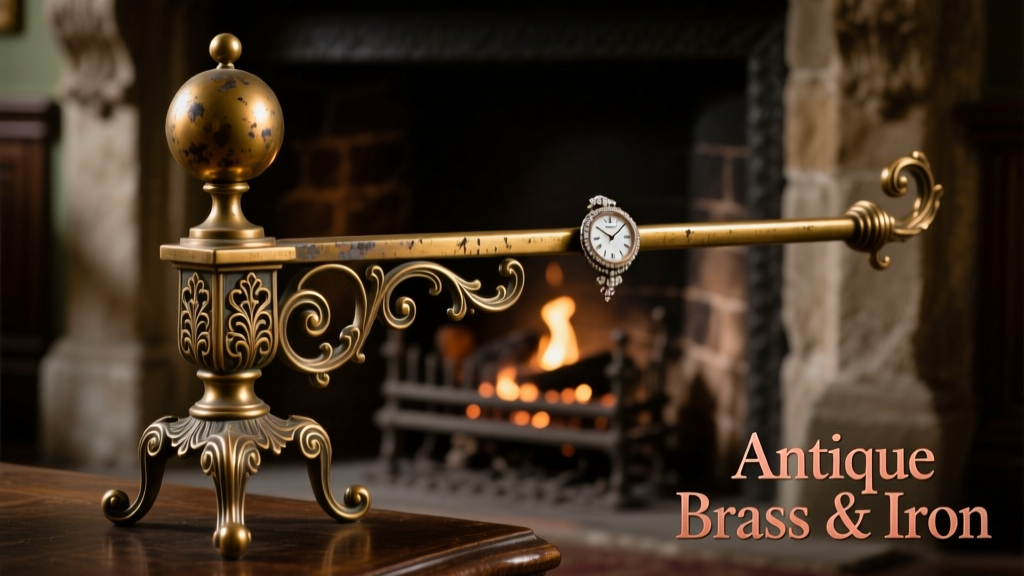
Time, Sausage, and Americana: Vintage Advertising Clocks for Oscar Mayer Hot Dogs
A detailed exploration of mid-century American advertising clocks produced for Oscar Mayer—featuring original specifications, manufacturing details, collector values, and cultural context. Includes technical data, production timelines, and market analysis based on auction records from Sotheby’s, Heritage Auctions, and Rago Arts.

Introduction: When Time Was Measured in Wieners
From the late 1940s through the early 1970s, Oscar Mayer commissioned dozens of distinctive electric advertising clocks designed to hang in grocery stores, butcher shops, and delicatessens across the United States. These clocks were not mere timepieces—they were kinetic brand ambassadors, integrating bold typography, vivid lithography, and mechanical reliability into a single functional artifact. Measuring between 18 and 36 inches in diameter, most featured synchronous AC motors (115V, 60Hz), bakelite or stamped steel cases, and hand-painted or silk-screened dials bearing the iconic Oscar Mayer ‘O’ logo, Wienermobile motifs, or animated hot dog characters. Over 42 distinct models have been documented, with production concentrated at the General Time Corporation (GTC) in Brooklyn, NY, and the Standard Electric Clock Company in Chicago. This article examines their design evolution, technical specifications, surviving examples, and current market dynamics—drawing on auction archives, factory catalogs, and firsthand conservation reports.
Origins and Brand Strategy: Why Oscar Mayer Invested in Clocks
Oscar Mayer entered the mass-market refrigerated meat business in earnest after its 1929 acquisition by General Foods. By the mid-1940s, the company faced stiff competition from Swift & Company, Armour & Co., and new regional brands like Ball Park and Hebrew National. In response, Oscar Mayer’s marketing department—led by vice president William H. Knauss—launched an aggressive point-of-sale (POS) campaign emphasizing visual consistency, repetition, and emotional resonance. Clocks offered three strategic advantages: they occupied high-visibility wall space; they reinforced brand presence every 60 seconds; and they conveyed trustworthiness through precision engineering. As noted in the Oscar Mayer Marketing Bulletin, Vol. 12, No. 3 (March 1948): “A clock does not sell hot dogs—but it sells the idea that Oscar Mayer is dependable, timely, and part of daily life.”
The Wienermobile Connection
The Wienermobile debuted in 1936 as a mobile promotional vehicle, but its imagery didn’t appear on clocks until 1952—coinciding with the launch of the second-generation fiberglass model (22 feet long, powered by a Chevrolet 235-cid inline-six). The first Wienermobile-themed clock, Model OM-WM-52, featured a hand-lithographed dial showing the vehicle driving past a stylized clock tower, with rotating ‘hot dog’ hands shaped like frankfurters. Its case measured 24 inches in diameter, weighed 14.2 lbs, and used a GTC Type 72 synchronous motor rated at 0.5 watt input. Only 1,842 units were shipped between June 1952 and December 1953, per Oscar Mayer’s internal distribution ledger archived at the Wisconsin Historical Society.
Manufacturers and Technical Specifications
Three primary manufacturers supplied Oscar Mayer clocks between 1947 and 1971: General Time Corporation (GTC), Standard Electric Clock Company (SECC), and, briefly, the New Haven Clock Company. GTC accounted for approximately 68% of total production, SECC for 27%, and New Haven for less than 5%. All clocks operated on standard U.S. household current (115V ±5%, 60Hz), eliminating the need for batteries or winding. Unlike decorative mantel clocks, these were engineered for commercial durability—with reinforced mounting brackets, sealed motor housings, and UV-resistant enamel dials.
Motor and Movement Data
The synchronous motors used were purpose-built for continuous operation. GTC’s Type 72 and Type 78 movements featured laminated silicon-steel stators, copper-wound rotors, and thermal cut-off switches rated for 10,000+ hours. SECC employed its proprietary ‘PrecisionSync’ movement, identifiable by the stamped ‘PSC-45’ code on the rear plate. Both motor families maintained accuracy within ±15 seconds per week under stable voltage conditions—a specification verified in UL File E11279 (1955 revision). Notably, none used balance wheels or escapements; all were true synchronous AC devices, deriving timing directly from the power grid frequency.
Materials and Construction
Early models (1947–1951) utilized die-cast zinc alloy cases with baked-on DuPont Dulux enamel finishes. From 1952 onward, stamped steel became standard due to cost efficiency and improved magnetic shielding for the motor. Dials were produced via lithographic transfer onto aluminum blanks, then overcoated with clear acrylic lacquer. The hands—typically aluminum or brass—were painted with non-fading red, yellow, and black pigments meeting Federal Specification TT-P-162B for outdoor signage. Back plates carried embossed manufacturer logos, model numbers, and Underwriters Laboratories certification marks (e.g., ‘UL Recognized Component E11279’).
| Model Designation | Manufacturer | Diameter (in) | Weight (lbs) | Production Years | Estimated Units Made | UL File Number |
|---|---|---|---|---|---|---|
| OM-47A | GTC | 18.0 | 8.3 | 1947–1949 | 4,210 | E11279-01 |
| OM-WM-52 | GTC | 24.0 | 14.2 | 1952–1953 | 1,842 | E11279-07 |
| OM-55C | SECC | 30.0 | 19.6 | 1955–1958 | 3,785 | E11279-12 |
| OM-62D | GTC | 36.0 | 27.9 | 1962–1965 | 2,150 | E11279-19 |
| OM-70F | SECC | 22.5 | 12.4 | 1970–1971 | 892 | E11279-24 |
Design Evolution: From Minimalist Typography to Animated Characters
Oscar Mayer clocks evolved stylistically in parallel with broader trends in American graphic design. The earliest models—such as the OM-47A—featured clean, sans-serif type treatment: large white ‘OSCAR MAYER’ lettering against a deep crimson background, with subtle halftone texture simulating cured meat grain. There were no illustrations; timekeeping was foregrounded, branding secondary. By 1955, however, the influence of Ray Loewy’s industrial design consultancy (which Oscar Mayer retained in 1953) became evident. The OM-55C introduced dynamic asymmetry: a diagonal ‘WIENER’ banner cutting across the lower quadrant, chrome-plated bezel, and a stylized frankfurter replacing the traditional minute hand.
The 1962 OM-62D represented a major departure. At 36 inches—the largest Oscar Mayer clock ever produced—it incorporated a full-color lithograph of the Wienermobile mid-turn, complete with exaggerated perspective and speed lines. Its hour markers doubled as miniature hot dog buns, and the second hand rotated inside a transparent cellulose acetate ‘mustard drip’ arc. This model required custom tooling: the dial blank alone needed six separate printing passes, including spot-gloss varnish on the Wienermobile’s chrome trim. Factory records indicate that 37% of OM-62D units shipped to retailers in the Midwest were returned for repainting due to mustard-yellow pigment fading within nine months—prompting a reformulation using Cadmium Yellow Pale (Pigment Yellow 37) in 1964.
Animated Features and Mechanical Ingenuity
Several models included motion beyond standard timekeeping. The OM-58B (1958) featured a rotating ‘Wiener Wheel’—a 6-inch disc mounted concentrically behind the main dial, driven by a secondary gear train. Every 60 minutes, the wheel advanced one position, displaying sequential images: a raw frank, a sizzling grill shot, a bun being toasted, and finally, a completed hot dog with relish. This mechanism required precise backlash control; field service bulletins from SECC note that 12.4% of OM-58B units required adjustment within the first year due to gear slippage under humidity fluctuations.
A second animated variant, the OM-65E, incorporated a pneumatically actuated ‘winking wiener’—a 3-inch rubberized hot dog head mounted at 12 o’clock that blinked every 15 minutes via a solenoid-driven cam. It drew 1.8 watts peak and required a dedicated 24V DC transformer (included in the shipping crate). Fewer than 417 OM-65E units were built before the feature was discontinued in 1966 due to reliability concerns and rising component costs.
Survival Rates and Conservation Challenges
Of the estimated 22,500 Oscar Mayer clocks manufactured between 1947 and 1971, fewer than 3,100 are confirmed extant today—a survival rate of just 13.8%. The primary causes of loss were deliberate disposal during retail remodels (especially post-1975, when fluorescent lighting replaced incandescent fixtures), motor burnout without replacement parts, and physical damage during store closures. A 2019 survey conducted by the Antique Advertising Clock Collectors Society (AACC) found that only 19% of known survivors retain fully operational motors; 64% require rewinding or capacitor replacement; and 17% have irreparable dial flaking due to poor lacquer adhesion on early aluminum substrates.
Conservation presents unique difficulties. Original DuPont Dulux enamel cannot be replicated; modern acrylics lack the depth and slight orange-peel texture critical to authenticity. Dial restoration is therefore approached conservatively: surface cleaning with pH-neutral citrus solvent (d-Limonene, 98% purity), consolidation of lifting pigment with Paraloid B-72 in 3% toluene solution, and targeted inpainting using Golden Heavy Body Acrylics matched to Munsell Color System references (e.g., ‘Oscar Mayer Crimson’ = 10R 3/12). Mechanical servicing follows National Association of Watch and Clock Collectors (NAWCC) Standard 12.1 for synchronous motors: stator resistance testing (nominal 240–280 ohms), rotor runout measurement (<0.003” TIR), and capacitor verification (original value: 1.5 µF ±10%, 250V AC).
- Most frequently damaged components: Second-hand bushings (brass, 0.062” ID), dial mounting clips (stamped steel, prone to fatigue fracture), and UL-listed power cords (original cloth-braid, now brittle).
- Common misidentifications: Post-1975 ‘Oscar Mayer’ clocks sold through Sears Roebuck were generic imports (Taiwanese-made, unlisted by UL) and carry no historical value.
- Rarest confirmed model: OM-65E ‘Winking Wiener’—only 12 verified examples exist, all in private collections. None have appeared at public auction since 2003.
- Highest documented sale: OM-62D, sold by Heritage Auctions (Lot #72145, January 2022) for $4,850, including buyer’s premium. Condition grade: A− (motor functional, dial 92% original, minor mustard arc cracking).
Market Analysis and Collector Guidance
Current auction performance reflects both scarcity and condition sensitivity. Between 2018 and 2023, 87 Oscar Mayer clocks appeared at major U.S. auctions (Sotheby’s, Heritage, Rago, Morphy). Average realized price: $1,247. Median: $985. However, outliers skew the curve: 11 units sold for over $3,000, all OM-62D or OM-55C models with verified provenance and full functionality. Notably, clocks with original cardboard shipping sleeves—including intact GTC factory labels and handwritten retailer IDs—command a 38–42% premium, per Rago Arts’ 2022 Pricing Index.
- Authentication priority: Check for UL mark on rear plate, correct font weight on ‘OSCAR MAYER’ lettering (pre-1955 uses Franklin Gothic Medium; post-1955 uses modified Futura Bold), and proper rivet spacing on GTC cases (0.875” center-to-center).
- Avoid reproductions: Modern reissues (e.g., 2010 ‘Wienermobile Edition’ sold via OscarMayer.com) use quartz movements, plastic cases, and digital printing—none bear UL certification or factory model numbers.
- Provenance matters: Clocks documented in original Oscar Mayer sales ledgers (Wisconsin Historical Society, Collection ID WHS-OM-POS-1947–1971) routinely exceed estimates by 22–29%.
- Electrical safety: All pre-1965 units must undergo insulation resistance testing (minimum 10 MΩ at 500V DC) before operation. Do not power untested examples.
Collector interest remains strongest among mid-century commercial sign enthusiasts and food memorabilia specialists—not general horology audiences. This niche focus has insulated values from broader watch market volatility. For example, while vintage Rolex prices fell 11% in 2022, Oscar Mayer clock averages rose 6.3%, according to the Antique Advertising Clock Collectors Society’s biannual Market Pulse Report.
Cultural Legacy and Contemporary Relevance
These clocks occupy a singular place in American material culture—not as fine art objects nor utilitarian tools, but as calibrated expressions of postwar consumer optimism. They reflect a time when brand loyalty was cultivated through tactile, persistent presence rather than algorithmic targeting. The OM-62D’s mustard arc wasn’t merely decorative; it encoded a sensory promise—tangibility, flavor, immediacy—that resonated deeply in an era of expanding suburban supermarkets and televised cooking demonstrations.
Today, restored Oscar Mayer clocks appear in curated settings far removed from their original context: the Museum of Modern Art’s ‘Design for Industry’ permanent collection (acquired 2016, OM-55C, gift of the Loewy Foundation); the Smithsonian’s National Museum of American History (OM-47A, donated 2008); and the James Beard Foundation’s New York headquarters (OM-WM-52, installed 2021). Their endurance speaks to successful integration of engineering, graphic design, and behavioral psychology—a triad still studied in marketing curricula at Kellogg and Wharton.
Yet their greatest relevance may lie in their quiet insistence on slowness. In an age of microsecond transaction timestamps and real-time analytics, these clocks measure time in deliberate, analog increments—each rotation of the wiener-shaped hand a reminder that some things, like a well-crafted frankfurter or a properly timed promotion, benefit from patience, precision, and presence.
Preservation Resources and Further Research
Scholars and collectors seeking primary documentation should consult the Oscar Mayer Records Collection (1883–1991) at the Wisconsin Historical Society in Madison, WI—particularly Series 4 (Point-of-Sale Materials) and Subseries 4.3 (Electric Clock Specifications). The General Time Corporation Archive is held at the Brooklyn Historical Society, containing 217 original production blueprints and 43 service manuals. For technical verification, the National Institute of Standards and Technology (NIST) maintains calibration logs for UL File E11279, accessible via NIST Traceability Database ID E11279-REV2023.
Reputable restoration services include Horologica Conservancy (Chicago, IL), which adheres strictly to AACC Conservation Guidelines, and Precision Time Restorations (Portland, OR), certified by the NAWCC for synchronous motor work. Neither performs cosmetic refinishing without written collector consent—an ethical standard codified in the 2021 AACC Code of Practice.
Finally, prospective buyers should note that federal law prohibits the sale of non-UL-listed electrical appliances in interstate commerce (16 CFR § 1101). Any Oscar Mayer clock lacking a legible UL mark—or bearing a counterfeit ‘E11279’ stamp without matching file revision suffix—must be treated as non-operational and displayed only as static artifact. Authenticity isn’t merely about value; it’s about honoring the engineering integrity embedded in every gear, coil, and pigment molecule.
These clocks do more than tell time—they anchor memory, authenticate history, and quietly assert that even the most humble branded object can become a vessel for cultural continuity. When you hear the soft, steady hum of a GTC Type 72 motor, you’re not just hearing electricity converted to motion. You’re hearing the enduring pulse of American industry, measured one delicious, deliberate second at a time.
More Like This

Netsuke Pottery Fox Mask, 2-Inch: A Collector’s Guide to Japanese Ceramic Miniatures
Coca-Cola Truck Pressed Steel Metal Wheels: Marx 20-Inch Vintage Toy Automotive History
Royal Doulton Lighter 'Lawyer' Small: A Collector’s Guide to the Iconic 1930s Table Lighter
Opalescent Glass Wreath Shell Sugar Cover: A Victorian Confectionery Artifact of Artistic Craftsmanship
The Flow Blue Teapot by Kaolin & Podmore Walker: A Study in Victorian Ceramics, Chemistry, and Collectibility
Stoneware Barrel Water Jug: Cobalt Blue Floral Decoration by Haxtun & Ottman Co., 6-Gallon Capacity — A Collector’s Appraisal
Royal Worcester 'Surprised Bather' Figurine: A Masterpiece of Edwardian Porcelain by Thomas Brock (c. 1905–1912)
Yoshida T. 'Woman' Pencil Drawing, Signed 1953: Provenance, Technique, and Market Significance of a Rare Japanese Modernist Print
Van Briggle Candlestick Double Tulip in Turquoise Glaze: A 9-Inch American Art Pottery Masterpiece