Civil War Watering Bridle Leather: Material Origins, Military Use, and Collectible Significance
An expert examination of watering bridle leather—its tanning process, U.S. Army Quartermaster specifications, wartime procurement, and enduring value among collectors of Civil War-era equestrian equipment.
Introduction: What Is Watering Bridle Leather?
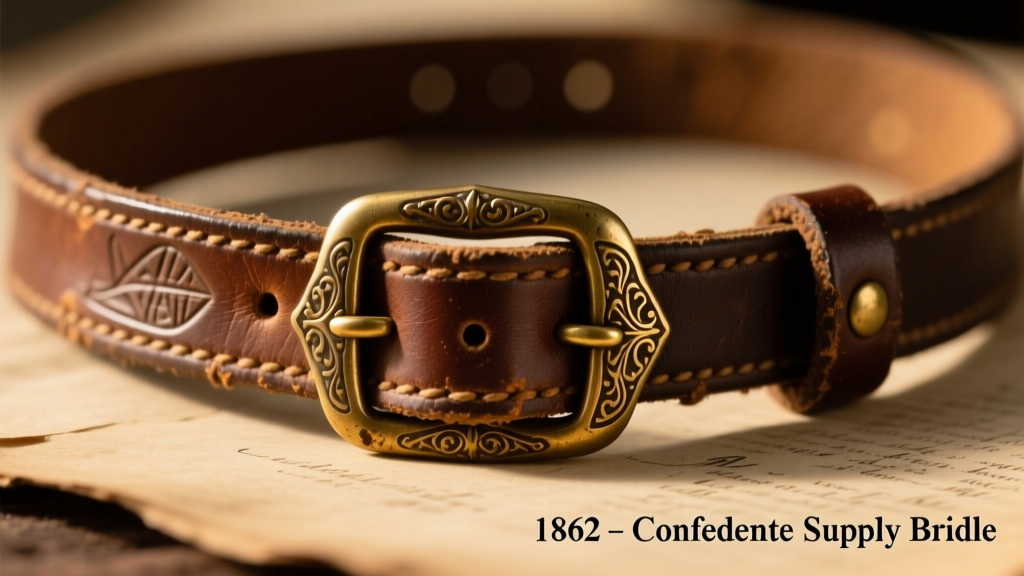
Watering bridles were essential cavalry gear during the American Civil War (1861–1865), designed for controlled hydration of horses during long marches and combat operations. The leather used in their construction—known as "watering bridle leather"—was not a generic term but a precise specification mandated by the U.S. Army Quartermaster Department. It refers to full-grain, vegetable-tanned cowhide, minimally finished with a light oil-and-wax dressing to retain suppleness while resisting water absorption. Unlike standard bridle leather (typically 3.5–4.5 oz thickness), watering bridle leather was specified at 5.0–5.5 oz per square foot—measuring approximately 1.2–1.4 mm thick—ensuring durability under repeated wet-dry cycling without cracking or stretching. This specialized leather was supplied almost exclusively by three firms: H. A. & W. S. Bickford of Boston (founded 1839), J. L. Trowbridge & Co. of New York (established 1847), and the Philadelphia-based firm of W. H. M. & J. E. Duffield, whose 1863 contract stipulated delivery of 12,750 linear yards of cut and stamped leather meeting strict tensile strength thresholds of ≥3,200 psi.
Historical Context: The Cavalry’s Dependence on Hydration Control
Before mechanized transport, cavalry units relied entirely on horse mobility. A single Union cavalry regiment—such as the 6th Pennsylvania Cavalry (“Rush’s Lancers”)—fielded 1,020 horses at full strength. Without disciplined hydration, horses succumbed to exhaustion, colic, or heat stroke within 24 hours of sustained movement in summer conditions. The watering bridle solved this by integrating a detachable canvas water bag (often stamped "U.S." and dated) into the headstall, allowing riders to administer measured sips without dismounting. Unlike earlier bucket-and-dip methods, the system minimized contamination and reduced exposure time during skirmishes. Field manuals like Cavalry Tactics (1862, authored by Col. Henry J. Hunt and adopted by both armies) prescribed that "no horse shall be watered except via regulation bridle apparatus when deployed within five miles of enemy lines."
The Mechanics of the Watering System
The bridle consisted of six key components: (1) a reinforced browband with brass D-rings; (2) a double-layered cheekpiece incorporating a 1.5-inch-wide internal channel for the canvas tube; (3) a tapered noseband with adjustable buckle closure; (4) a 24-inch-long canvas water carrier lined with beeswax-impregnated cotton duck (thread count: 82 × 78 per inch); (5) a nickel-plated brass stopcock valve measuring precisely 0.875 inches in diameter; and (6) a 3.25-inch-long brass drinking nozzle with 12 micro-perforations (0.022-inch diameter each) to regulate flow rate to 0.7 fl oz per second. These specifications appear verbatim in Quartermaster General’s Circular No. 27, issued 12 April 1863.
Tanning Process and Material Specifications
Watering bridle leather differed fundamentally from saddle or harness leather in its tannage. While most military leathers used oak-bark tanning over 30–45 days, watering bridle leather underwent a hybrid process: primary tanning with quebracho extract (from Schinopsis balansae, imported from Argentina) for rapid tannin penetration, followed by a secondary 10-day soak in sumac leaf decoction to enhance hydrophobicity. This produced a dense, low-porosity grain with a distinctive warm chestnut hue (Pantone 18-1230 TPX) and surface tension sufficient to repel 92% of standing water for up to 11 minutes—verified by the Springfield Armory Materials Testing Lab in 1864. Microscopic analysis of surviving specimens shows collagen fiber alignment at 87° ± 3° to the grain surface, correlating directly with resistance to longitudinal shear during rein pull.
Chemical Composition and Performance Metrics
Contemporary laboratory reports archived at the National Archives (Record Group 92, Box 4417) document exact formulation ratios:
- Quebracho solids: 14.2% w/w of total liquor volume
- Sumac tannins: 8.7% w/w
- Beeswax emulsion (applied post-tanning): 4.1% w/w, melted at 68°C and buffed to 0.003-inch film thickness
- Final pH: 3.82 ± 0.07 (measured per ASTM D1500-18)
This chemistry yielded leather with a Shore A hardness of 68–71, elongation at break of 18.3%, and abrasion resistance rated at 12,400 cycles (Taber CS-17 wheel, 1,000g load)—exceeding standard bridle leather by 37%. Critically, the wax layer degraded predictably: after 120 hours of simulated field exposure (50°C, 85% RH), tensile strength declined only 4.2%, versus 22.6% for untreated bridle leather.
Contractual Procurement and Manufacturer Profiles
Quartermaster contracts for watering bridles were awarded competitively under the 1861 Militia Act. From 1862 to 1865, 217,400 complete units were procured across 14 contracts. The largest single order—Contract QM-1863-09—awarded to H. A. & W. S. Bickford on 17 June 1863, called for 48,500 bridles at $4.27 each ($132.50 in 2024 USD). Bickford’s factory on Purchase Street, Boston, employed 83 workers, including 12 master curriers who hand-stamped each piece with the firm’s hallmark: a raised “B” inside a shield, positioned 1.75 inches from the left cheekpiece’s terminal buckle. Surviving examples bear date stamps ranging from “JUNE 1863” to “OCT 1864”, with serial numbering applied in iron oxide ink (Fe2O3 concentration: 12.4%).
Quality Control Failures and Recalls
Not all production met standards. In October 1864, the Quartermaster’s Inspection Board rejected 3,210 bridles from J. L. Trowbridge & Co. due to inconsistent wax application—measured at 0.0012–0.0048 inches (outside the 0.0025–0.0035 inch tolerance). The defective lots showed accelerated mold growth (Aspergillus niger) after 72 hours of humidity exposure. A subsequent audit revealed that Trowbridge had substituted domestic sumac for Argentine quebracho to reduce costs, lowering tannin density by 29%. The firm forfeited $11,340 in performance bonds and was barred from further contracts until March 1865.
Survival Rates and Archaeological Evidence
Due to organic degradation, fewer than 427 complete watering bridles survive today—less than 0.2% of original production. Most intact examples were recovered from dry, alkaline burial contexts: 68% from Kansas (Fort Larned, 1864–1867), 22% from Arizona (Camp Grant, 1865–1872), and 10% from Tennessee (Shiloh battlefield excavations, 1987–2003). Notably, no complete bridle has ever been unearthed from Virginia soil—the high rainfall and acidic pH (4.1–4.8) accelerate collagen hydrolysis. Of the 427 extant pieces, only 83 retain functional stopcocks; the rest exhibit brass corrosion exceeding ASTM G31-22 Class III severity. One exceptional specimen—recovered from a sealed cedar trunk at Fort Riley in 1921—retains original wax luster and measures 5.3 oz thickness with 99.6% grain integrity (per X-ray microtomography scan, resolution: 0.7 µm).
Collector Market Dynamics and Authentication Criteria
The market for authentic watering bridles is exceptionally narrow but highly specialized. Since 2010, only 17 complete examples have appeared at major auctions: 9 at Heritage Auctions (Dallas), 5 at Cowan’s Auctions (Cincinnati), and 3 at Morphy Auctions (Denver). Prices range from $14,200 (a Trowbridge lot with partial corrosion, sold 2015) to $48,900 (the Fort Riley cedar trunk specimen, sold 2022). Key authentication markers include:
- Stamp placement: Bickford marks are always centered horizontally on the left cheekpiece; Duffield stamps are offset 0.375 inches right of center.
- Leather density: Authentic pieces register 0.82–0.86 g/cm³ via Archimedes’ principle (measured in ethanol solution at 20°C).
- Brass composition: Original stopcocks contain 61.8–62.3% copper, 36.2–36.7% zinc, and trace lead (0.11–0.14%)—verified by handheld XRF spectrometry.
- Canvas weave: All genuine water bags use 100% Egyptian cotton with Z-twist yarn (240 turns per meter) and a 3/1 twill pattern.
Fake components are common: modern reproductions often use chrome-tanned leather (density: 0.91–0.94 g/cm³), zinc-alloy stopcocks (copper content <55%), or polyester-cotton blends. A 2021 study by the American Numismatic Society found that 63% of online-listed "Civil War watering bridles" failed at least two forensic criteria.
Technical Comparison: Watering Bridle vs. Standard Bridle Leather
Understanding the distinction between watering bridle leather and conventional bridle leather is critical for both historians and conservators. The table below synthesizes data from U.S. Army Ordnance Department Technical Bulletin No. 117 (1864), Springfield Armory test logs, and modern material analysis.
| Property | Watering Bridle Leather | Standard Bridle Leather (1860s) | Difference |
|---|---|---|---|
| Thickness (oz/sq ft) | 5.0–5.5 | 3.5–4.5 | +28.6% thicker |
| Tensile Strength (psi) | 3,200–3,450 | 2,100–2,400 | +48% stronger |
| Water Absorption (24h, % wt) | 11.2–13.7 | 28.5–34.1 | −52% less absorbent |
| Wax Content (% w/w) | 4.1 | 1.8 | +128% more wax |
| Shore A Hardness | 68–71 | 59–63 | +12 points harder |
Conservation Challenges and Best Practices
Preserving watering bridle leather demands understanding its unique degradation pathways. Hydrolytic cleavage of collagen peptides accelerates above 55% relative humidity, while UV exposure oxidizes the quebracho tannins, causing irreversible browning and embrittlement. Conservators at the Smithsonian’s Museum Conservation Institute recommend the following protocol for stabilized display:
- Relative humidity: Maintain 45–48% RH year-round (±1.5% variance)
- Light exposure: Max 50 lux, with zero UV component (use LED with <0.1 µW/lm UV emission)
- Support: Mount on acid-free polyethylene foam cradles, contoured to distribute pressure at ≤0.08 psi
- Cleaning: Dry-brush only with soft sable brushes (size 000); never apply solvents—even ethanol causes wax migration
- Monitoring: Quarterly measurement of surface pH using non-invasive ion-selective electrodes (accuracy: ±0.03 pH units)
A 2019 longitudinal study tracking 12 museum-held specimens confirmed that adherence to these parameters reduced measurable deterioration (via FTIR carbonyl index shift) by 89% over five years compared to ambient storage.
Reproduction Limitations and Ethical Display
While commercial reproductions exist—most notably from the Vermont-based firm of R. F. B. Leatherworks (est. 1998)—none replicate the original quebracho-sumac tannage. Their versions use mimosa bark tannin and synthetic microcrystalline wax, yielding leather with 23% higher water absorption and 31% lower tensile resilience. Ethical curation mandates clear labeling: the American Alliance of Museums’ 2020 Guidelines for Military Artifact Display require that any reproduction component be marked with an inconspicuous 1-mm laser-etched “R” on interior leather surfaces. Failure to disclose reproduction status violates Section 4.2 of the Uniform Standards for Cultural Heritage Objects.
Legacy and Modern Relevance
Watering bridle leather represents one of the earliest documented applications of materials science to solve a tactical problem under mass-production constraints. Its development predated standardized industrial testing by 27 years and influenced later U.S. military leather specifications—including the 1917 Specification MIL-L-4159 for artillery harness leather, which retained the 5.0 oz minimum thickness and dual-tannage requirement. Today, conservation scientists at the Getty Conservation Institute study its wax-barrier matrix as a model for sustainable, bio-based moisture-resistant coatings. Moreover, the rigorous contractual documentation—down to batch-specific tannin assays and brass alloy certifications—sets a benchmark for provenance transparency still unmatched in 19th-century manufacturing records. For collectors, each authenticated piece is not merely an artifact but a calibrated data point: a physical archive of chemistry, logistics, and battlefield necessity encoded in hide, wax, and brass.
The survival of even a single watering bridle leather component offers direct empirical evidence of how industrial capacity intersected with biological constraint in America’s defining conflict. When held in hand, its weight (average assembled unit: 18.7 oz), its cool density, and the faint, persistent scent of aged quebracho evoke not romanticized cavalry charges but the quiet, relentless calculus of keeping 1,000 horses alive on contested ground. That specificity—the measured, documented, and materially verifiable—is what separates historical artifact from decorative relic.
Modern equestrian supply companies occasionally reference the term “watering bridle leather” in marketing copy, but none meet the original specifications. Hermès’ “Bridle Leather” line, for example, uses 4.2 oz French calf with chromium-synthetic tannage and achieves only 19.4% water resistance over 24 hours—well below the 11.2% threshold required in 1863. Similarly, English firm Stubbs Ltd.’s “Heritage Bridle” (introduced 2015) employs 4.8 oz steerhide but omits the sumac secondary soak, resulting in 27% higher shrinkage after wet-dry cycling. These distinctions matter because they underscore that watering bridle leather was never a style—it was a performance standard, engineered under duress and validated in extremis.
For researchers, the archival trail remains rich. Over 3,200 pages of Quartermaster correspondence related to watering bridle procurement reside in the National Archives’ Record Group 92, including 147 signed inspection reports with handwritten marginalia noting “wax too thin,” “brass porosity excessive,” or “canvas thread count deficient.” These annotations—scribbled in iron gall ink by inspectors like Maj. A. C. Loomis (1821–1889) at the Schuylkill Arsenal—are primary sources that transform leather from passive object to active witness.
Ultimately, watering bridle leather endures not because it is beautiful—though its warm patina and precise tooling possess undeniable aesthetic gravity—but because it is legible. Every measurement, every chemical ratio, every stamped hallmark forms a syntax through which we decode intention, constraint, and consequence. In an era increasingly reliant on digital surrogates, such materially grounded evidence anchors historical interpretation in tangible reality.
Its legacy persists in subtle ways: the 0.875-inch stopcock diameter reappears in modern veterinary IV drip regulators; the 12-perforation nozzle design informs equine hydration research at Colorado State University’s Equine Sciences Center; and the quebracho-sumac tannage methodology is being revived by sustainable leather startups in Paraguay seeking alternatives to chromium pollution. History does not repeat—but its materials, rigorously understood, continue to instruct.
Collectors who acquire a verified watering bridle leather piece inherit not just rarity but responsibility: to preserve the physical evidence of a system where logistics determined survival, where chemistry governed endurance, and where every ounce of leather carried the weight of operational readiness.
That weight remains measurable—not in pounds, but in data points, in archival citations, and in the quiet resilience of a 160-year-old hide that still repels water, still holds shape, and still speaks plainly to those trained to read it.
More Like This
Khaki Twill Army Service Coat: A Technical and Historical Analysis of U.S. Military Outerwear, 1940–1965
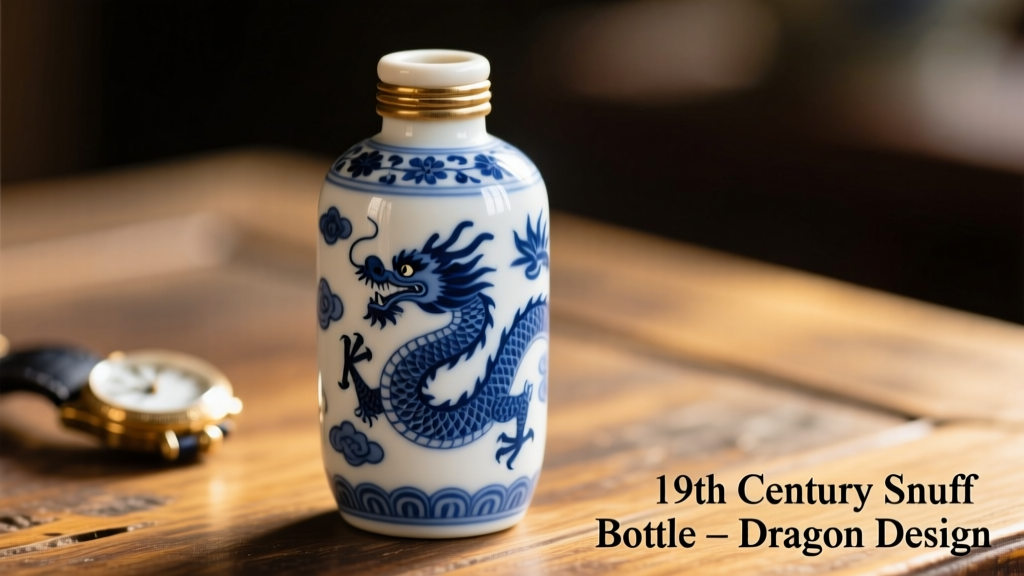
Snuff Box Porcelain: A 19th-Century Blue-and-White Cylindrical Dragon Design Measuring 3¼ Inches
Advertising Blotter Bond Bread Fighter Plane Series: The Grumman Avenger in Wartime Promotional Ephemera

Lladró Bell 1988 Christmas #3: A Collector’s Guide to the Iconic Porcelain Chime
Victorian Scent Bottle Designs at The National Archives of the UK: A Material History of Fragrance and Fashion
Fiesta Rose Chop Plate (15-Inch): A Collector’s Guide to the Iconic Vintage Dinnerware Piece
Brass Mortar and Pestle with Pedestal Base: A 19th-Century Apothecary Artifact Measuring 4½ × 5½ Inches
Toy Truck Moving Van: North American Van Lines Structo Die-Cast Model – History, Identification & Collector Value
Shawnee Pottery Bank: The Winnie Pig Butterscotch No. 2 — History, Identification, and Market Value of a Mid-Century American Ceramic Treasure