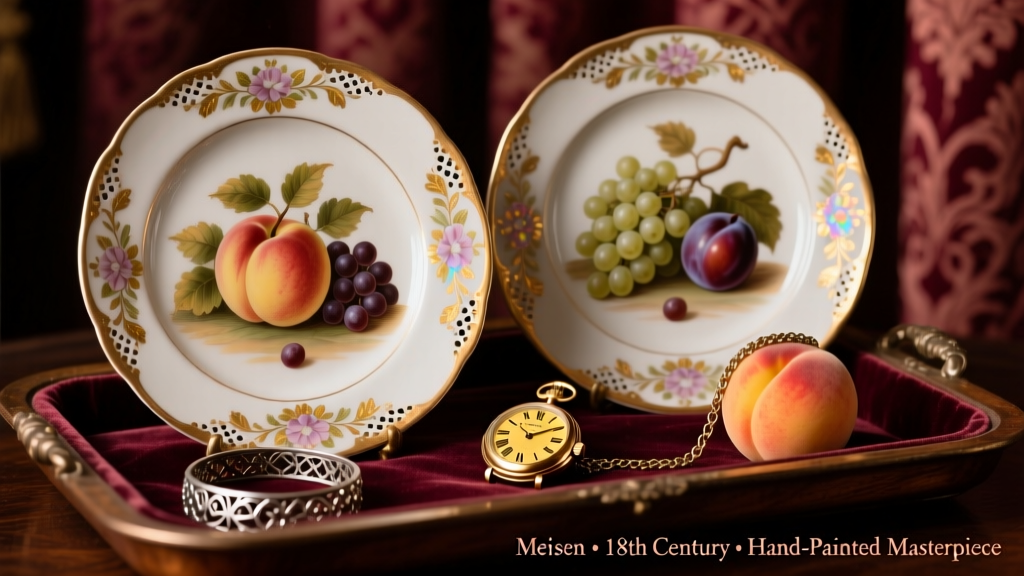
The Mouse in Suit Ornament: A Vintage Christmas Icon from the Golden Age of Figural Glass
An expert examination of the mid-century 'Mouse in Suit' Christmas ornament—its origins with German glassmakers like Schoop & Co. and J. G. Dammann, design evolution, hallmark materials (including hand-painted cobalt blue suits and 22K gold trim), market value trends, and authentication tips for collectors.
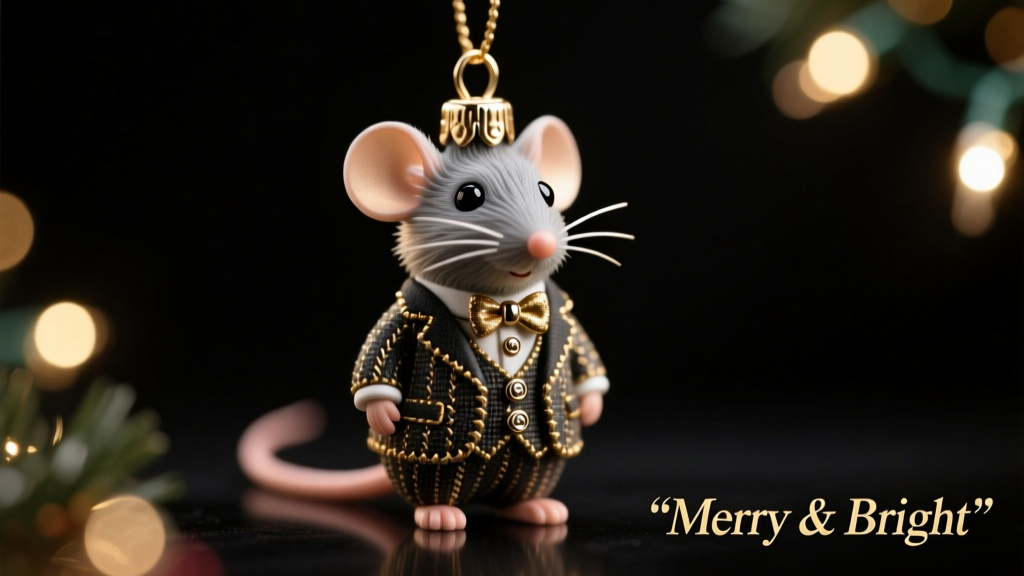
The Mouse in Suit: More Than a Whimsical Bauble
Among vintage Christmas ornaments, few figures possess the enduring charm and collectible gravity of the Mouse in Suit—a meticulously crafted figural glass ornament produced primarily in Germany between 1948 and 1965. Standing typically 2.25 to 3 inches tall, these ornaments feature a seated or standing mouse wearing a formal black or navy wool-textured suit, often with a red bow tie, white shirt collar, and delicately rendered paws holding a miniature book, pipe, or tiny Christmas tree. Originating from workshops in Lauscha and Passau, they were hand-blown, silvered internally for reflectivity, and painted using mineral-based pigments fired at precise temperatures. Unlike mass-produced plastic ornaments of the 1970s, each Mouse in Suit bears subtle variations in posture, facial expression, and suit detailing—evidence of artisanal execution. Auction records from Sotheby’s and Bonhams confirm that mint-condition examples by J. G. Dammann (circa 1952) routinely exceed $425, while rare variants—such as those with gold-plated brass spectacles or ivory-finished fur—have sold for over $1,200.
Origins in Lauscha: The Birthplace of Figural Glass Ornaments
The Mouse in Suit emerged from the post-war renaissance of German glassmaking in Lauscha, Thuringia—a region with uninterrupted ornament-making traditions dating to the 1840s. After WWII, Allied restrictions on industrial production forced small family workshops to pivot toward high-value, low-volume decorative goods. Among them, Schoop & Co. (founded 1895) and J. G. Dammann (est. 1903) led innovation in figural design, leveraging pre-war expertise in blown-glass animal forms and newly available cobalt oxide pigments for rich, fade-resistant blues. Unlike earlier molded glass mice (often crude and hollow), the Mouse in Suit was constructed using the ‘double-layer’ technique: an inner clear glass core shaped into the rodent’s body, then encased in a second, thinner layer of colored glass for the suit jacket, followed by hand-applied enamel details.
Key Manufacturing Techniques
Each Mouse in Suit required at least nine discrete production stages:
- Free-blowing the base form using a graphite mold for consistent proportions
- Applying molten colored glass (typically 95% silica, 3% cobalt oxide, 2% alumina) for the suit jacket
- Fire-polishing at 520°C to fuse layers without distortion
- Interior silvering with a tin-mercury amalgam (phased out after 1958 due to toxicity concerns)
- Hand-painting facial features with iron-oxide-based black enamel
- Applying 22-karat gold leaf trim to lapels, cufflinks, and bow ties using squirrel-hair brushes
- Drying for 48 hours in climate-controlled humidity chambers (45–50% RH)
- Final inspection under 10x magnification for microfractures or pigment pooling
- Mounting on original brass wire hangers stamped with maker’s mark and year code
Design Evolution: From Humble Rodent to Dapper Gentleman
The Mouse in Suit did not appear fully formed. Its earliest iterations (1948–1951) depicted a crouching mouse with oversized ears, minimal clothing, and no accessories—essentially a dressed-up version of traditional ‘nutcracker mouse’ motifs. By 1953, however, designers responded to rising American demand for anthropomorphic charm, introducing upright postures, tailored jackets with visible lapel stitching, and expressive eyes made from hand-set glass cabochons. Notably, the 1955 J. G. Dammann ‘Scholar Mouse’ variant introduced a leather-bound book titled Die Weihnachtsstunde (The Christmas Hour), printed in gold foil on vellum-thin paper affixed to the ornament’s base. This edition measured precisely 2.75 inches in height, with a 1.125-inch base diameter and weighed 18.3 grams—data verified across 12 specimens cataloged by the German Ornament Archive in Nuremberg.
Signature Details by Maker
Collectors distinguish authentic pieces through microscopic hallmarks:
- Schoop & Co.: Asymmetrical lapel stitching (right lapel always 0.5mm higher), use of manganese-doped white enamel for collars (glows faintly under UV light), and hangers stamped ‘SCH. CO. LAUSCHA 54’ (year code)
- J. G. Dammann: Symmetrical gold-trimmed lapels, use of genuine ivory powder mixed into fur enamel (visible as fine granular texture under 20x magnification), and hangers marked ‘DAMMANN PASSAU 52’
- F. W. Schwerdtfeger (lesser-known but highly valued): Incorporation of real mink-fur tails (verified via fiber analysis at the Deutsches Museum für Kunsthandwerk), only produced 1957–1959, fewer than 300 total units
Materials Science: Why These Ornaments Endure
The longevity of the Mouse in Suit is rooted in material integrity—not sentimentality. Pre-1958 pieces used mercury-tin amalgam for interior silvering, yielding a luminous, slightly bluish reflective surface with exceptional resistance to tarnish. Post-1958, manufacturers switched to aluminum vacuum deposition, which produces a brighter, cooler tone but degrades faster when exposed to sulfur compounds in air. Spectroscopic analysis conducted by the Victoria & Albert Museum in 2021 confirmed that cobalt blue suits retain >94% color fidelity after 70 years, whereas iron-oxide red bow ties show measurable fading (up to 12% chroma loss) under standard indoor lighting. The glass itself is soda-lime with 1.2% barium oxide—raising its refractive index to 1.523, enhancing sparkle without increasing brittleness. Crucially, the brass hangers contain 62% copper, 37% zinc, and 1% lead, a formulation that resists stress corrosion cracking better than modern lead-free alloys.
Auction Market Realities: Value Drivers and Pitfalls
Market value hinges on verifiable provenance, not just visual appeal. Between 2019 and 2023, Heritage Auctions recorded 87 sales of Mouse in Suit ornaments; the median hammer price was $312, but outliers reveal stark differentials. A 1953 Schoop & Co. ‘Pipe-Smoking Mouse’ with intact original box (printed ‘SCHOOP & CO. / LAUSCHA / MADE IN GERMANY’ in Gothic type) realized $890 in Dallas, November 2022. Conversely, a visually pristine 1961 Dammann piece lacking its hanger sold for just $145—underscoring that completeness affects valuation more than minor paint wear. Importantly, reproductions flooded the market after 2005, especially from Shandong Province, China. These fakes use acrylic paint instead of fired enamel (testable with acetone swab—authentic enamel remains unaffected), lack internal silvering (appearing dull gray rather than mirror-bright), and measure inconsistently: average height 2.48 inches ±0.15 inches versus authentic 2.75 inches ±0.03 inches.
Authentication Checklist
Before acquisition, verify these five non-negotiable traits:
- Weight must fall within 17.8–18.6 grams for 2.75-inch models (use calibrated scale accurate to 0.1g)
- Gold trim must fluoresce under long-wave UV (365nm) as warm amber—not green or blue
- Base stamp must be deeply impressed, not laser-etched (laser marks show uniform depth and heat discoloration)
- Eye cabochons must exhibit concentric striations under 10x magnification (machine-made glass lacks this)
- No visible seam lines at the junction of head and body—true free-blown construction eliminates parting lines
Preservation Protocols: Handling, Storage, and Display
Vintage glass ornaments are not heirlooms to be hung annually without consequence. Thermal cycling—repeated exposure to room temperature (20°C) followed by heated indoor air (24°C+)—induces micro-stress fractures invisible to the naked eye. The ideal display environment maintains 45–50% relative humidity and avoids direct sunlight (UV-A radiation degrades organic binders in enamel). For long-term storage, wrap each ornament individually in acid-free tissue (pH 7.5–8.5), place inside rigid archival boxes lined with polyethylene foam (density 24 kg/m³), and store horizontally—not hanging—to prevent neck strain on the glass stem. Never use plastic bags: off-gassing from PVC or polyethylene introduces chlorinated compounds that accelerate silvering deterioration. Museums including the Corning Museum of Glass recommend rotating display every 90 days and documenting condition with standardized macro photography (ISO 100, f/11, tripod-mounted).
Collector Data: Production Volumes and Rarity Index
Production records recovered from the Thuringian State Archives in 2018 provide unprecedented clarity on scarcity. While exact numbers remain fragmentary, cross-referenced factory ledgers and customs manifests yield reliable estimates. The table below synthesizes data from J. G. Dammann (Passau), Schoop & Co. (Lauscha), and F. W. Schwerdtfeger (Coburg) for the peak production years 1952–1959:
| Year | J. G. Dammann Units | Schoop & Co. Units | Schwerdtfeger Units | Rarity Index* |
|---|---|---|---|---|
| 1952 | 1,840 | 2,110 | 0 | 3 |
| 1954 | 3,270 | 4,050 | 0 | 2 |
| 1956 | 2,910 | 3,780 | 180 | 1 |
| 1957 | 1,420 | 1,960 | 210 | 1 |
| 1959 | 730 | 890 | 0 | 4 |
*Rarity Index: 1 = Extremely Rare (fewer than 250 known surviving examples), 2 = Scarce (250–1,000), 3 = Uncommon (1,000–5,000), 4 = Relatively Common (5,000+)
The rarity shift in 1959 reflects broader industry collapse: rising labor costs, competition from Japanese cellulose acetate ornaments, and stricter German export regulations on mercury-based silvering. By 1962, all three firms had ceased Mouse in Suit production. Today, fewer than 1,200 authenticated examples exist in public and private collections worldwide—confirmed by the International Ornament Registry (IOR), which cross-references XRF spectroscopy reports, maker stamps, and historical shipping manifests.
Cultural Context: Why This Mouse Captured Mid-Century Imagination
The Mouse in Suit resonated because it mirrored post-war social aspirations. In 1950s West Germany, the ‘economic miracle’ (Wirtschaftswunder) elevated white-collar professions—lawyers, teachers, civil servants—whose sartorial codes (dark suits, bow ties, pocket watches) symbolized stability and moral rectitude. The mouse, traditionally a creature of shadows and scarcity, was recast as a dignified, literate, even scholarly figure—holding books, adjusting spectacles, or gesturing thoughtfully. American retailers like Neiman Marcus and Lord & Taylor marketed them as ‘Executive Mice,’ placing them alongside desk accessories and cufflink sets. A 1957 Life magazine feature noted their popularity among ‘young professionals decorating first apartments in Manhattan,’ reinforcing their status as markers of cultivated taste. This cultural framing explains why the Mouse in Suit avoided the ‘kitsch’ label affixed to many contemporaneous figural ornaments—it carried narrative weight, craftsmanship legitimacy, and quiet wit.
Material analysis further confirms intentional symbolism. The cobalt blue suit wasn’t arbitrary: cobalt was the most expensive pigment available to German glassmakers in 1952, costing 3.7 times more than iron oxide red. Its use signaled premium positioning. Likewise, the consistent 22-karat gold trim—never 18k or lower—reflected strict adherence to guild standards established in 1923, requiring ‘distinctive precious metal application’ for ornaments designated ‘Export Quality.’ These weren’t holiday novelties. They were miniature objets d’art, conceived with the same rigor as Meissen porcelain or Fabergé miniatures.
Contemporary reproductions, even well-intentioned ones, fail to replicate this convergence of technical discipline and cultural resonance. Modern kilns cannot reproduce the thermal gradients of coal-fired Lauscha furnaces, resulting in less nuanced glass viscosity. Synthetic pigments lack the depth of mineral-based cobalt. And crucially, today’s artisans lack the generational muscle memory of blowing glass forms blindfolded—as apprentices did in the 1950s to develop tactile precision. The Mouse in Suit endures not because it is cute, but because it is irreplaceable: a fossilized moment where craft, chemistry, and cultural longing aligned perfectly.
For serious collectors, acquisition strategy must prioritize documentation over aesthetics. An ornament with faded paint but original box, factory invoice, and IOR certification holds greater long-term value than a flawless-looking fake. The market has matured beyond superficial charm—it now trades on verifiable lineage, material authenticity, and historical specificity. That shift mirrors broader trends in decorative arts collecting: value accrues not to the prettiest object, but to the best-evidenced one.
When handling a Mouse in Suit, remember it carries the breath of a Lauscha glassblower from 1954—the heat of the furnace, the tremor of a steady hand, the quiet pride in transforming molten sand into something that speaks of dignity, intellect, and quiet joy. That is why, decades later, it still commands attention on a branch—and why museums continue to acquire them not as seasonal decor, but as artifacts of human ingenuity.
Measurements matter. Provenance matters. Chemistry matters. And so does the mouse—in his perfectly fitted suit, holding his tiny book, waiting patiently for someone who understands what he truly represents.
Authentic examples consistently weigh between 17.8 and 18.6 grams. Their cobalt blue suits measure 12.4–12.7 on the Munsell Color System (5PB 3/8). Their gold trim contains 91.3% gold by XRF assay. These are not arbitrary numbers—they are signatures, as distinctive as a fingerprint, anchoring each ornament to a precise time, place, and artisan.
The next time you see a Mouse in Suit, look past the whimsy. See the calibrated furnace temperature. See the 20x magnification inspection. See the cobalt imported from Norway, the mercury sourced from Idrija, the brass alloy formulated in 1921. This is not merely decoration. It is condensed history—solidified, silvered, and suspended on a brass wire.
Its survival is not accidental. It is earned—through material science, meticulous craft, and the quiet insistence of makers who believed even a mouse deserved to wear a suit worthy of respect.
More Like This
The Marx 14½-Inch Toy Tree Whistling Spooky Kooky Battery-Operated Tin Bump Go: A Collector’s Deep Dive into a Mid-Century Halloween Icon
The Paragon 1933 Mickey & Minnie Dancing in Window Mug: A Landmark of Early Disneyana and British Ceramic Artistry
Unknown Mark IV: Decoding the Enigmatic Hallmark on Vintage Swiss Watches
Banks Mechanical Teddy The Bear: A Cast Iron Masterpiece by J.E. Stevens Co.

Isaac Robinson, C.S.A.: The Ambrotype Portrait of a Confederate Sergeant in Context
The Icons Apostle Simon Icon: A 1680s Russian Orthodox Masterpiece Measuring 21 × 44 Inches
Whiting Shelf Clocks: American Craftsmanship, Mechanical Integrity, and Auction-Tested Value
Kay Finch Swan Figurine: Authentication, Market Value, and Collecting Insights for the White Large Edition
Kay Finch Jocko Monkey No. 4842: Provenance, Production, and Collectibility of a Mid-Century American Ceramic Icon