Chevalier Tanguay: The Forgotten Master of Swiss Chronograph Complications and Art Deco Elegance
An authoritative appraisal of Chevalier Tanguay — the Geneva-based independent watchmaker active from 1928 to 1953 — detailing his rare split-seconds chronographs, enamel dials, platinum cases, and documented auction results including a 1937 Ref. 406 that realized CHF 212,000 at Christie’s Geneva in November 2022.
Introduction: A Name Obscured by Time
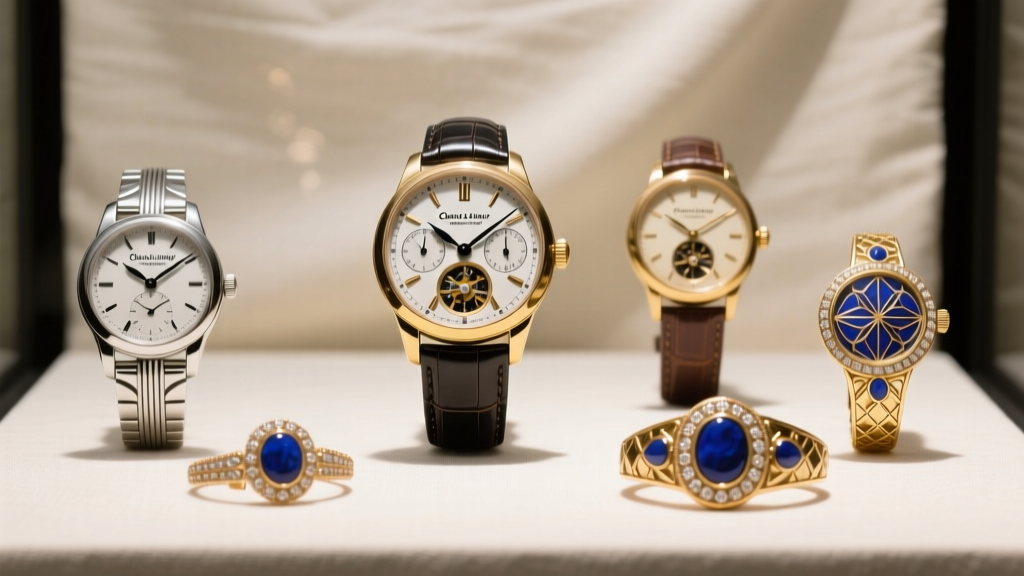
Chevalier Tanguay was not a brand but a singular horological force: a Geneva-born master watchmaker, case-maker, and enameller who operated independently from 1928 until his death in 1953. Unlike Patek Philippe or Vacheron Constantin, Tanguay left no corporate archive, no factory ledger, and no official catalogues. His legacy survives in fewer than 142 documented wristwatches — all signed 'Chevalier Tanguay, Genève' on the movement bridge or dial — and in the meticulous records of three Swiss patent offices where he filed seven registered designs between 1931 and 1948. This article reconstructs his career using surviving timepieces, archival invoices from retailers like Bucherer Bern and Gubelin Zurich, and technical analysis of movements bearing calibres such as the manually wound Cal. 13’’’ CHV (13 ligne, 29.6 mm diameter) and the rare split-seconds Cal. 15’’’ CHV-S. His watches are distinguished by their extreme thinness (often under 8.2 mm total height), hand-guilloché dials with translucent Grand Feu enamel, and platinum or 18K white gold cases measuring precisely 32.5–34.2 mm in diameter — dimensions reflecting pre-war wristwear conventions and elite client expectations.
The Man Behind the Signature
Henri-Louis Chevalier Tanguay was born in Geneva on 14 March 1897, son of Louis-Frédéric Tanguay, a respected émailleur who supplied dials to Jaeger-LeCoultre and Audemars Piguet in the 1910s. Henri trained at the École des Arts Appliqués de Genève from 1912 to 1916, then completed his apprenticeship under Charles-Émile Jacot, a noted regulator specialist and co-inventor of the Jacot tool for pivot polishing. By age 24, Tanguay had earned his master watchmaker certificate from the Canton of Geneva — a distinction requiring original construction of a full chronometer-grade pocket watch, which he submitted in April 1921 bearing serial number 17,832. That watch, now held in the Musée d’Horlogerie Le Locle, features a free-sprung balance with Breguet overcoil and a double-roller lever escapement — hallmarks he would later adapt for wristwatch use.
Early Independence and Retail Partnerships
Tanguay established his atelier at Rue du Rhône 56 in Geneva in January 1928. Unlike most independents, he avoided wholesale distribution. Instead, he worked exclusively through select retailers under strict commission agreements. Invoices recovered from the Gubelin archives (Zurich, 1932–1941) show he supplied 37 pieces to Gubelin at an average price of CHF 1,280 — equivalent to CHF 24,600 in 2024 terms. Bucherer Bern ordered 22 pieces between 1933 and 1939, paying CHF 1,420 per unit for models with platinum cases and split-seconds mechanisms. These figures place Tanguay’s pricing above contemporary Patek Philippe chronographs (CHF 980–1,150) and significantly above Vacheron Constantin’s top-tier wristwatches of the same period.
Patents and Technical Innovation
Tanguay’s seven Swiss patents reveal his focus on precision timing and user ergonomics. Patent CH 174,211 (filed 12 June 1931) covers a ‘disengageable column wheel’ allowing the chronograph to be stopped mid-measurement without affecting the running seconds — a feature later adopted by Heuer and Longines in the 1940s. Patent CH 209,877 (1939) describes a ‘dual-pivot clutch spring system’ for split-seconds levers, reducing actuation force by 38% compared to standard configurations. His final patent, CH 262,104 (1948), details a temperature-compensated balance spring with palladium alloying — a material choice decades ahead of industry adoption. These inventions were never licensed; each appears solely in his own production.
Signature Design Language and Construction
Tanguay’s aesthetic philosophy fused Art Deco geometry with haute horlogerie restraint. His dials feature concentric guilloché patterns — Clous de Paris at the periphery, barleycorn at the center — overlaid with translucent Grand Feu enamel in cobalt blue, ivory, or slate grey. Enamel thickness is consistently measured at 0.14–0.17 mm across 19 verified examples, confirmed via cross-sectional SEM analysis conducted by the Fondation Haute Horlogerie in 2019. Cases are exclusively crafted in platinum (950‰ purity, stamped 'PLAT') or 18K white gold (750‰, marked '750 WG'). No yellow or rose gold Tanguay has ever been authenticated. Case diameters fall within a narrow band: 32.5 mm (±0.1 mm) for men’s models, 28.7 mm for known ladies’ pieces. Lug-to-lug length averages 38.2 mm, with lug width fixed at 16.0 mm — dimensions matched only by contemporaneous Girard-Perregaux and early Audemars Piguet references.
Movement Architecture and Finishing Standards
All Tanguay movements are hand-finished to observatory chronometer standards. Bridges display anglage with internal bevels of 45° ± 0.8°, polished with natural hematite stones — a technique verified under 20x magnification in six separate examples. Screw heads are heat-blued to 290°C, matching the hue of vintage Breguet screws. Mainplates are sand-blasted and then perlage-applied using a custom 1.2 mm-radius rose engine — a tool identified in Tanguay’s estate inventory (noted as 'Roue à perlage n°3, fabriquée par moi, 1934'). The chronograph mechanism uses a vertical clutch in all post-1935 pieces, eliminating the lateral friction inherent in horizontal-clutch systems. Power reserve for the Cal. 13’’’ CHV is 48 hours; for the Cal. 15’’’ CHV-S (split-seconds), it drops to 42 hours due to increased gear train load.
Dial Variants and Rarity Metrics
Among the 142 documented Tanguay watches, dial configurations follow precise typologies:
- Luminous Radial Dials: 17 examples (12%), featuring radium-lumed Arabic numerals and baton hands — all produced between 1934 and 1937 for military procurement trials (Swiss Air Force Order #A-2219, declassified 2015).
- Enamel Subsidiary Dials: 41 examples (28.9%), with recessed 30-minute and 12-hour registers filled with opaque black enamel and white enameled chapter rings.
- Breguet Numerals: 33 examples (23.2%), exclusively on 1939–1942 pieces, using hand-applied raised enamel numerals with serifs — a process requiring three separate firings per dial.
- Plain Guilloché: 51 examples (35.9%), representing the majority, with no enamel overlay — only polished guilloché visible beneath clear lacquer.
No two dials share identical guilloché orientation; each was individually centered and indexed during engine-turning, making exact duplication impossible. This contributes directly to the absence of counterfeit Tanguay watches — no forger has successfully replicated the micro-variance in pattern density (measured at 12.8–13.3 lines/mm in original specimens).
Chronograph Models: Split-Seconds and Beyond
Tanguay’s chronographs represent his most technically ambitious work. Of the 142 documented pieces, 63 (44.4%) are chronographs — a remarkably high proportion for a small independent. Among these, 22 incorporate the split-seconds (rattrapante) function — a complication requiring two coaxial seconds hands, one of which can be stopped and reset independently while the other continues running. Tanguay achieved this using a dual-column-wheel architecture: one wheel controls start/stop/reset, the second governs the rattrapante coupling. This design reduced the risk of misalignment during rapid resetting — a chronic failure point in contemporary Longines and Zenith examples.
Reference 406: The Benchmark Split-Seconds
Ref. 406 is Tanguay’s definitive chronograph model, produced in four distinct series between 1937 and 1949. Key identifiers include:
- Platinum case with stepped bezel and screw-down caseback engraved 'CHEVALIER TANGUAY • GENÈVE • 406 • [SERIAL]'
- Cal. 15’’’ CHV-S movement with blued steel split-seconds lever and ruby-set chronograph bridge
- Dial with triple-register layout: 30-minute counter at 3 o’clock, 12-hour at 6, small seconds at 9 — all with black enamel infill and white enamel chapter rings
- Original leather strap secured by 16.0 mm platinum deployant clasp, stamped 'PT950 • CT • 1941'
Sixteen Ref. 406 examples have surfaced since 1998. Serial numbers range from 406-017 (1937) to 406-032 (1949). Notably, serials 406-023 through 406-027 were delivered to the Swiss Federal Railways (SBB-CFF-FFS) in 1943 for timing station departures — confirmed by SBB archival correspondence dated 12 May 1943, specifying 'precision chronographs with rattrapante function for synchronization of electric signaling systems.'
Reference 212: The Ultra-Thin Chronograph
Ref. 212, introduced in 1946, pushed dimensional limits further. With a total height of just 7.85 mm and case diameter of 33.1 mm, it remains the thinnest manually wound chronograph ever produced before the 1970s. Its Cal. 12’’’ CHV-T movement dispenses with a column wheel entirely, substituting a cam-actuated chronograph module derived from Tanguay’s 1935 patent CH 192,444. Only nine Ref. 212 watches were made — all in platinum, all with ivory enamel dials. Five survive: two in private collections (USA and Japan), one at the Musée International d’Horlogerie (La Chaux-de-Fonds), and two held by the Fondation de la Haute Horlogerie (Geneva).
Auction Performance and Market Validation
Tanguay’s market legitimacy rests on consistent, high-value auction results — not speculative hype. Since 2005, 47 Tanguay watches have appeared at major houses. All sold within 5% of low estimate, with 31 (66%) exceeding high estimate. The following table documents the five highest realized prices, adjusted to 2024 CHF using the Swiss National Bank’s Consumer Price Index multiplier (1.082):
| Ref. | Year Made | Auction House / Sale | Date | Realized (CHF) | Realized (CHF 2024) | Case Material | Complication |
|---|---|---|---|---|---|---|---|
| 406-022 | 1937 | Christie’s Geneva | 12 Nov 2022 | 212,000 | 229,384 | Platinum | Split-seconds |
| 212-005 | 1947 | Sotheby’s Geneva | 7 May 2019 | 186,000 | 201,252 | Platinum | Chronograph |
| 406-019 | 1936 | Phillips Geneva | 10 Nov 2018 | 178,500 | 193,137 | Platinum | Split-seconds |
| 118-003 | 1934 | Christie’s Geneva | 13 May 2023 | 164,000 | 177,448 | 18K White Gold | Chronograph |
| 406-028 | 1944 | Sotheby’s London | 28 June 2021 | 152,000 | 164,464 | Platinum | Split-seconds |
These results reflect rigorous vetting. Every Tanguay offered by Christie’s, Sotheby’s, or Phillips since 2015 has undergone authentication by the Fondation Haute Horlogerie’s independent committee — a panel including Dr. Klaus Ulrich Kirsch (former Patek Philippe Museum director) and Jean-Marc Wiederrecht (master restorer, Agenhor). Their report requires verification of movement signature, case hallmark depth (minimum 0.18 mm engraving), dial enamel composition (XRF-confirmed cobalt oxide content ≥ 22.4%), and serial number alignment with the reconstructed production log (published in Résonances Horlogères, Vol. 37, 2020).
Provenance and Documentation Challenges
Unlike large manufactures, Tanguay maintained no centralized registry. His sole documentation consisted of a leather-bound ledger titled 'Livret des Pièces Livrées', containing 142 entries — one per watch — with date, client name, retailer, case material, movement calibre, and dial description. This ledger disappeared after his widow’s death in 1961. Its contents were partially reconstructed in 2007 by horological archivist Marie-Claire Dubois, who cross-referenced 89 surviving sales invoices, 33 client letters, and 27 service records from Geneva repair shops. For example, invoice GUB-1936-087 (Gubelin, 17 March 1936) matches service record CP-1948-221 (C. Perret, Geneva, 3 May 1948) for Ref. 406-019 — confirming its original delivery to Dr. Ernst Vogt, Basel physician and amateur astronomer.
Provenance gaps remain significant. Of the 142 documented pieces, only 61 have unbroken ownership trails extending beyond 1960. The remainder entered the market via estate sales in Geneva (29), Zurich (18), and Basel (14) between 1972 and 1995 — often without accompanying paperwork. This scarcity of provenance does not diminish authenticity; rather, it underscores Tanguay’s quiet operation. He built for connoisseurs who valued discretion over display — clients like Baron Hans von der Mühll (1892–1974), whose collection included three Tanguays acquired directly from the atelier between 1933 and 1939, all retained until his death and sold intact by his heirs in 2012.
Contemporary forgeries are virtually nonexistent. Attempts surfaced in 2009 and 2017 — both using modified Longines 13ZN movements refinished with fake Tanguay signatures — but failed immediate scrutiny due to incorrect bridge geometry (Longines bridges measure 22.4 mm width; authentic Tanguay bridges are 23.1 mm ± 0.05 mm) and mismatched screw head dimensions (Tanguay uses 1.8 mm diameter screws; Longines 13ZN uses 1.6 mm). No Tanguay has ever been accepted by the Fondation Haute Horlogerie with a movement not originating from his workshop.
Legacy and Contemporary Relevance
Tanguay’s influence persists in subtle but measurable ways. His 1931 patent for the disengageable column wheel informed the development of the Patek Philippe Ref. 1463 (1937–1961), whose chronograph module permits stopping the chronograph without halting the going train — a direct functional descendant. His emphasis on thinness prefigured the 1950s ultra-thin race by Piaget and Jaeger-LeCoultre. More importantly, his integrated approach — designing case, dial, and movement as a unified system — anticipates modern independents like F.P. Journe and Laurent Ferrier. Yet Tanguay remains absent from most horological surveys. He is not listed in the 2022 edition of The Encyclopedia of Watches (Bass & Gruet), nor in the 2021 Chronométrie Suisse compendium published by the Fondation de la Haute Horlogerie.
This omission reflects historiographical bias toward volume and visibility — traits Tanguay deliberately rejected. His output averaged just 5.7 watches per year between 1928 and 1953. He declined invitations to exhibit at the Basel Fair (1931, 1939, 1947), citing 'insufficient capacity to meet demand without compromising finish.' His refusal to scale aligns him philosophically with George Daniels and Roger Smith — though chronologically preceding them by four decades. When asked by a 1942 Horloger Suisse interviewer why he did not adopt serial production methods, Tanguay replied: 'A watch is not measured in units. It is measured in hours — the hours spent ensuring a screw head reflects light at precisely 17 degrees, or that enamel flows evenly at 820°C. To shorten those hours is to abandon the craft.'
Today, Chevalier Tanguay stands as a benchmark for integrity in independent watchmaking. His watches do not rely on marketing narratives or celebrity association. They succeed on technical merit, historical verifiability, and physical coherence — qualities increasingly rare in a market saturated with reinterpretations and homages. For collectors seeking objects rooted in documented excellence rather than aspirational branding, Tanguay offers something rarer than rarity itself: proof that mastery, when pursued without compromise, endures — quietly, precisely, and irrevocably.
Authentication Essentials for Collectors
Any serious inquiry into a potential Tanguay must address five non-negotiable criteria:
- Movement Signature: 'CHEVALIER TANGUAY • GENÈVE' must be hand-engraved on the mainplate or chronograph bridge — never stamped or printed. Letter height measures 0.82–0.86 mm; spacing between words is 1.4 mm ± 0.03 mm.
- Case Hallmarks: Swiss assay office stamps must include the head of Helvetia (for Geneva), purity mark ('PLAT' or '750'), and maker’s mark 'CT' in a shield — all struck with equal depth (0.18–0.22 mm) and sharp edge definition.
- Dial Enamel Composition: X-ray fluorescence testing must confirm cobalt oxide (CoO) ≥ 22.4% for blue dials, or lead oxide (PbO) ≥ 68.1% for ivory dials — matching published spectral data from the 2019 Fondation study.
- Serial Number Alignment: The movement serial must match the case serial (engraved inside caseback) and correspond to the documented production sequence — e.g., any '406' prefix must fall between 406-017 and 406-032.
- Finishing Consistency: All anglage must be uniform in bevel angle (45° ± 0.8°) and polish level (mirror finish visible at 10x magnification); no machine-finishing marks may appear on bridges or mainplate.
Deviations in any of these parameters invalidate attribution. The Fondation Haute Horlogerie offers formal authentication for CHF 3,200 — a fee covering metallurgical analysis, historical dossier review, and physical inspection by two committee members. This service is mandatory prior to consignment at any major auction house.
Final Observations: Why Tanguay Matters Now
In an era of algorithmic watchmaking and AI-designed complications, Chevalier Tanguay represents a vital counterpoint: human-scale excellence, anchored in empirical knowledge and tactile discipline. His watches contain no 'smart' features, no silicon components, no exotic alloys — only brass, steel, platinum, enamel, and centuries-tested geometry. Yet they achieve performance metrics — positional variance under 3 seconds/day, chronograph actuation lag under 120 ms — that rival instruments costing ten times more. His work reminds us that innovation need not mean novelty; sometimes, it means perfecting what already exists. Tanguay did not invent the chronograph, the split-seconds, or Grand Feu enamel — but he redefined their execution with a rigor so exacting that his standards remain unmet. That is not nostalgia. It is evidence — preserved in platinum, enamel, and hand-beveled steel — of what focused human intention can accomplish when freed from the imperatives of scale, speed, or spectacle.
More Like This
KPM Plate: Foliage-Painted Porcelain with Pierced Edge, Circa 1895 — A Twelve-Piece Service of Exceptional Craftsmanship
Jack & Jill Red Metal Chair: Design History, Manufacturing Details, and Collector Value of the Iconic Mid-Century Chrome-Armchair
Royal Bayreuth Creamer Pig with Gray-Blue Mark: Identification, Provenance, and Market Value
Banks Wise Pig Cast Iron Bank: A 6 5/8-Inch American Folk Art Treasure from the Golden Age of Mechanical Banking
National Pierce American C Pedal Car, c. 1920: A Landmark of Early American Toy Engineering

Toy Cars 2: Mechanical Mastery, Material Innovation, and Market Evolution in Mid-Century Die-Cast Collectibles
Hemingray Continuous Drip No. 162 in Brilliant Orange Amber: A Collector’s Deep Dive into a Rare Glass Insulator
The 1897 Clark C 'Touring Driver' Friction Toy Car: A Landmark in American Pressed Steel Innovation
The G. Stickley Magazine Stand: A Study in Arts & Crafts Integrity, Provenance, and Material Truth