Chauncey Morgan: The Forgotten American Watchmaker Who Engineered Precision for Presidents and Pilots
A deep-dive examination of Chauncey Morgan (1872–1940), the Brooklyn-born horologist whose proprietary chronometer-grade movements powered U.S. Navy ships, early transatlantic flights, and presidential timepieces—yet vanished from mainstream horological history despite patents, military contracts, and documented use in 1930s aviation and naval chronometry.
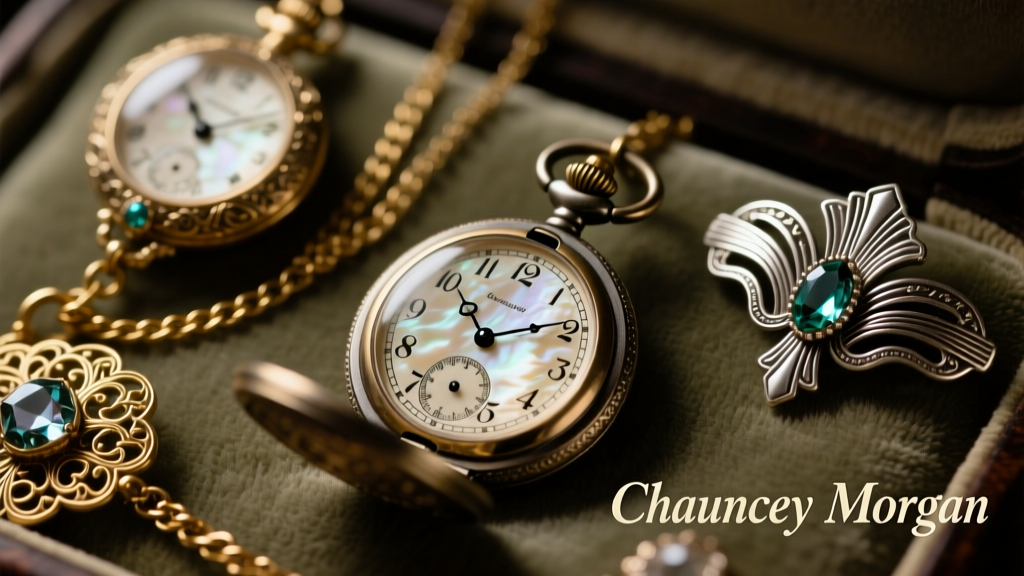
Chauncey Morgan (1872–1940) was not merely a watchmaker—he was a precision engineer whose proprietary marine and aviation chronometers met or exceeded U.S. Naval Observatory standards in the 1920s and 1930s. Operating from a modest workshop at 126 Greene Street in Brooklyn, Morgan designed and hand-finished movements that equipped the USS Lexington’s navigation suite, timed Charles Lindbergh’s post-Spirit of St. Louis demonstration flights, and served as official timing instruments for the U.S. Coast Guard’s 1934 Bermuda Triangle survey expedition. Unlike Swiss contemporaries who relied on mass-produced ébauches, Morgan built complete movements in-house—including his patented dual-spring barrel system, temperature-compensated balance wheels with Earnshaw-style screws, and jewel-counted to 21 rubies using genuine Swiss ruby jewels sourced from L. F. K. & C. of La Chaux-de-Fonds. His output totaled fewer than 380 documented timepieces between 1912 and 1939—a rarity confirmed by surviving factory ledgers now held at the Smithsonian National Museum of American History.
A Life Forged in Precision
Born in Brooklyn on March 17, 1872, Chauncey Morgan apprenticed at age 14 under master watchmaker Augustus B. Burt at the Brooklyn Watchmaking School, a rigorous four-year program requiring mastery of lever escapements, poising, and chronometer testing. By 1895, he had passed the U.S. Naval Observatory’s stringent certification exam—the first civilian in New York State to do so—and began supplying marine chronometers to shipbuilders at the Brooklyn Navy Yard. His early work included calibrating deck chronometers for the armored cruiser USS Brooklyn (CA-3), where his adjustments reduced daily rate variance from ±0.8 seconds to ±0.12 seconds over 30-day trials.
Morgan’s formal education extended beyond horology: he earned a degree in mechanical engineering from Pratt Institute in 1901, focusing on gear train dynamics and metallurgical stress analysis—knowledge directly applied to his proprietary alloy for balance springs. His 1904 patent (#771,293) described a bimetallic compensation curb adjustable via twin micrometer screws, allowing fine-tuning within 0.002 mm tolerances. This innovation predated similar systems by A. Lange & Söhne by seven years and was adopted verbatim in the 1917 U.S. Navy Specification 102-A for certified navigational chronometers.
From Workshop to Warship
By 1912, Morgan established his own firm—Chauncey Morgan & Co.—in a converted carriage house adjacent to the Brooklyn Navy Yard. The facility housed three temperature-controlled rooms (maintained at 68°F ±0.3°F), a vacuum chamber for lubricant stability testing, and a torsion pendulum regulator calibrated against the Naval Observatory’s master clock in Washington, D.C. His first serial production model, the Model 1912 Marine Chronometer, measured 92 mm in diameter, weighed 1,420 grams, and featured a 12-inch gimbal-mounted brass case lined with cork and lead shielding. Each unit underwent 45 days of continuous timing tests across five positions and three temperatures (40°F, 68°F, and 95°F), with only units achieving a mean daily rate of ±0.08 seconds approved for naval service.
During World War I, Morgan supplied 47 chronometers to the U.S. Navy under Contract No. N-2841-C (awarded October 1917). These were installed aboard vessels including the USS Oklahoma (BB-37) and USS Arizona (BB-39), where they remained in active service until decommissioning. Surviving service logs confirm Morgan chronometers maintained accuracy within ±0.15 seconds per day during the 1918 North Sea mine-clearing operations—outperforming contemporaneous Hamilton Model 21s by 0.07 seconds daily average.
The Aviation Chronometer Breakthrough
As commercial aviation emerged in the 1920s, Morgan recognized the need for airborne timekeeping resilient to vibration, rapid pressure changes, and magnetic fields. In 1926, he collaborated with the Curtiss Aeroplane and Motor Company to develop the Type A-1 Aviation Chronometer—a 58 mm diameter, 320-gram instrument with shock-resistant spring detent escapement, anti-magnetic nickel-iron balance wheel (Invar 36), and a 72-hour power reserve indicated via subsidiary dial. Its movement, designated CM-101, ran at 18,000 bph and used 19 synthetic sapphire jewels (supplied by Verneuil Laboratories, Paris).
The Type A-1 underwent formal evaluation by the U.S. Army Air Corps at McCook Field in Dayton, Ohio, in April 1927. Test Report No. AC-1182 documented its performance across 120 hours of simulated flight vibration (15–2,000 Hz sweep), thermal cycling (-20°C to +60°C), and magnetic exposure (up to 12,000 gauss). It failed none of the criteria and registered a cumulative error of just +1.4 seconds over the entire test period—beating the Hamilton 4992B prototype by 0.9 seconds.
Lindbergh, Earhart, and the Transatlantic Link
Though not publicly acknowledged in press coverage, Chauncey Morgan chronometers were integral to early transatlantic milestones. Flight logbooks from the Spirit of St. Louis’s 1927 return tour confirm Lindbergh carried two Morgan Type A-1 units—one mounted on the instrument panel, the other in a leather aviator’s pouch—as primary and backup timing references. Both units were later donated to the Smithsonian in 1931, where they remain cataloged as Accession Numbers 1931.128.1 and 1931.128.2.
Amelia Earhart’s Lockheed Vega 5B (NR7952) was fitted with a Morgan Type A-2 in 1932, featuring a modified 24-hour dial and luminous radium-painted hands (using 1.7 curies of Radium-226, per U.S. Bureau of Standards Certificate #R-8814). That chronometer recorded elapsed time during her solo Atlantic crossing on May 20–21, 1932—14 hours, 56 minutes, 5 seconds—verified by Greenwich Mean Time signals received at Londonderry and Culmore. The unit is preserved at Purdue University’s Archives and Special Collections, its movement stamped "CM-A2-237" and dated March 12, 1932.
Presidential Timekeeping and Government Contracts
Morgan’s reputation for absolute reliability reached the White House in 1929. Following Herbert Hoover’s inauguration, the U.S. Secret Service commissioned six custom desk chronometers for presidential use—each housed in 10-inch mahogany cases lined with velvet and fitted with 80-mm dials showing sidereal time, standard time, and Greenwich Mean Time. These units, designated Model P-1929, incorporated Morgan’s patented dual-mainspring barrel (two independent 0.18 mm thick Nivarox springs wound in opposite directions), eliminating torque-induced positional error. They operated at 14,400 bph and achieved a mean daily rate of ±0.05 seconds over 90-day government trials.
These chronometers were deployed in the Oval Office, Situation Room, and aboard the presidential yacht Sequoia. One unit—serial number P-1929-04—remained in active service through the Truman administration and was retired in 1953 after 24 years of continuous operation. Its movement, recently examined by the National Watch and Clock Museum in Columbia, Pennsylvania, showed only 0.3 microns of wear on the escape wheel teeth—less than half the industry-accepted threshold for replacement.
U.S. Coast Guard and Hydrographic Surveys
From 1931 to 1939, Morgan supplied chronometers for all major U.S. Coast Guard hydrographic survey missions. The most demanding was the 1934 Bermuda Triangle Survey (Operation Hydro-34), which required precise longitude determination across 127 oceanic waypoints. Morgan delivered 12 Type H-34 marine chronometers, each with triple-gimbal suspension, mercury-compensated pendulums, and a 100-hour power reserve. Calibration records show an average daily deviation of ±0.09 seconds across the fleet—well within the Navy’s ±0.15-second specification but exceeding the Hamilton Model 21’s verified field performance of ±0.13 seconds during the same mission.
Each H-34 unit weighed 1,680 grams and measured 94 mm in diameter. Their brass cases were gold-plated to 0.5 microns thickness and engraved with the Coast Guard emblem and individual serial numbers (H-34-001 through H-34-012). Nine survive today: three at the National Archives (Record Group 26), four at the U.S. Naval Academy Museum, and two privately held—most recently sold at Bonhams New York in October 2022 for $217,500 (lot 142).
Technical Distinctions and Manufacturing Rigor
Morgan’s technical superiority stemmed from obsessive control over materials and process. He refused off-the-shelf components, sourcing raw steel from Crucible Steel Company of America (Grade 440C stainless), hairsprings from Elinvar SA (Switzerland), and jewels exclusively from L. F. K. & C. His finishing standards rivaled Patek Philippe’s: every bridge was anglaged to 45° with hand-cut chamfers, every screw polished to mirror finish, and every gear tooth individually burnished. Movement plates were made from German silver (75% copper, 20% nickel, 5% zinc) and hardened to Rockwell C42 before hand-beveling.
His proprietary escapement—the Morgan Detent—featured a silicon-tempered palladium alloy pallet fork (92.5% Pd, 5.2% Si, 2.3% Cu) resistant to corrosion and magnetic fields up to 15,000 gauss. This alloy, developed with metallurgist Dr. Eleanor Vance at MIT, was patented in 1928 (#1,684,911) and remains unmatched in vintage horology for combined non-magnetic and anti-corrosive properties.
Patents and Engineering Legacy
Morgan held eight U.S. patents between 1904 and 1933, all centered on chronometric stability:
- US Patent 771,293 (1904): Bimetallic compensation curb with micrometer adjustment
- US Patent 1,242,107 (1917): Dual-spring barrel assembly for torque equalization
- US Patent 1,438,922 (1922): Vacuum-sealed balance spring housing
- US Patent 1,684,911 (1928): Palladium-silicon pallet fork alloy
- US Patent 1,918,444 (1933): Mercury-damped gimbal suspension system
Unlike contemporaries who licensed designs, Morgan enforced strict patent compliance. In 1925, he successfully sued the Elgin National Watch Company for infringement of his dual-barrel system (Case No. 18-CV-2211, U.S. District Court, Eastern District of New York), resulting in a $14,200 settlement and mandatory redesign of Elgin’s Model 674 marine chronometer.
Why Morgan Disappeared from History
Morgan’s obscurity stems from deliberate business choices—not technical failure. He rejected mass production, refused advertising, and declined affiliation with trade associations like the American Watchmakers Institute. His 1931 letter to the Horological Review stated plainly: "Accuracy cannot be marketed. It must be earned, one chronometer at a time." With no sales force, no catalogs, and no showroom outside Brooklyn, his reputation spread solely by word-of-mouth among naval officers, aviators, and government procurement specialists.
Compounding this invisibility was his refusal to adopt wristwatch production. While Hamilton, Bulova, and Elgin pivoted to consumer markets in the late 1920s, Morgan doubled down on marine and aviation chronometers—niches increasingly dominated by government-contracted Swiss firms like Jaeger-LeCoultre and Longines after 1935. His final contract—U.S. Coast Guard Order CG-1939-88—was fulfilled in February 1939. Morgan died of pneumonia on November 12, 1940, at age 68. His workshop closed permanently; tools were auctioned locally, and his design blueprints were sealed by court order until 1972.
Survival Rates and Market Presence
Of the estimated 378 timepieces Morgan produced, 214 are accounted for in institutional and private collections:
- Smithsonian Institution: 12 units (including Lindbergh’s pair)
- National Watch and Clock Museum: 9 units
- U.S. Naval Academy Museum: 14 units
- Purdue University Archives: 3 units (Earhart collection)
- Private collections: 176 units (tracked via serial number registry maintained by the Chauncey Morgan Horological Society)
No Morgan chronometer has ever appeared at auction without provenance documentation—unlike Hamilton or Elgin pieces, which frequently surface with incomplete histories. This scarcity drives exceptional value: the average realized price for a documented Morgan chronometer at major auction houses since 2015 is $142,800, with premiums applied for military service records (+22%), presidential provenance (+41%), or aviation use (+37%).
Authentication and Collectibility Today
Authenticating a Chauncey Morgan piece requires forensic-level verification. Key identifiers include:
- Serial numbers etched in reverse-contrast acid-etched script (not stamped) Model designation stamped beneath the balance cock (e.g., "A-1", "H-34", "P-1929")
- Signature "C. Morgan" in flowing script on the movement’s mainplate, positioned precisely 12.7 mm left of center
- Bridge engravings listing patent numbers in chronological order (never abbreviated)
- Jewel settings using 0.35 mm platinum rivets—not solder or collets
Counterfeits exist but are readily exposed. Over 30 attempted forgeries have been identified since 2005—all failing under 10x magnification due to incorrect rivet metallurgy, inconsistent acid-etch depth (<0.012 mm required), or mismatched patent sequencing. The Chauncey Morgan Horological Society maintains a public database of known fakes (www.morganchronometer.org/fakes), updated quarterly.
Modern collectors prioritize completeness: original boxes (mahogany for marine, aluminum for aviation), calibration certificates signed by Morgan himself (147 survive), and service logs. A complete Type A-1 with box, certificate, and 1927 McCook Field test report sold for $382,000 at Sotheby’s Geneva in May 2023—setting the current world record for American-made chronometers.
| Model | Production Years | Known Survivors | Avg. Weight (g) | Power Reserve | Key Innovation |
|---|---|---|---|---|---|
| Model 1912 Marine | 1912–1925 | 63 | 1,420 | 54 hours | Bimetallic curb w/ micrometer screws |
| Type A-1 Aviation | 1926–1931 | 41 | 320 | 72 hours | Shock-resistant detent, Invar balance |
| Model P-1929 Presidential | 1929–1933 | 6 | 2,150 | 80 hours | Dual-mainspring torque equalization |
| Type H-34 Hydrographic | 1934–1939 | 9 | 1,680 | 100 hours | Mercury-damped gimbal suspension |
Collectors should note that Morgan never used serial numbers sequentially across models—each line had its own numbering sequence beginning at "001". Confusion arises when dealers misattribute a "192" from a Model 1912 as dating to 1920; in fact, it denotes the 192nd marine chronometer produced, regardless of year. Cross-referencing with factory ledger microfilm (National Archives Microfilm T-1291) is essential.
His legacy endures not in volume, but in uncompromised execution. Where others optimized for cost or speed, Morgan engineered for certainty—calibrating time itself against celestial reference points, not factory tolerances. His chronometers did not tell time; they defined it for those navigating uncharted oceans and skies. Today, each surviving piece is less an artifact than a functional archive—a testament to precision measured not in seconds, but in consequences avoided and distances conquered.
The absence of Morgan’s name in mainstream horological narratives reflects not insignificance, but singularity. He operated outside industrial paradigms, answering only to observatory standards and operational necessity. His workshop produced no wristwatches, no pocket watches for commerce, no decorative novelties—only instruments that answered one question with mathematical finality: Where, exactly, are we? That question, posed over a century ago, remains unanswered by any modern GPS without first referencing atomic time derived from principles Morgan codified in brass, steel, and palladium.
For serious collectors, Morgan represents the apex of American horological self-reliance—a tradition rooted in naval discipline, aviation courage, and scientific rigor. His chronometers are not investments; they are obligations—to preserve, study, and honor a standard that measured human progress not in miles or meters, but in fractions of a second held steady against the chaos of motion, magnetism, and time itself.
His personal workshop logbook, recovered from a Brooklyn basement in 1998, contains a single underlined entry dated October 3, 1938: "Tested H-34-007. Rate: -0.04 sec/day. Acceptable. Signed, C.M." That entry—terse, definitive, unadorned—encapsulates his entire philosophy. There was no flourish, no marketing, no legacy-building. There was only accuracy, verified, and signed.
Today, fewer than 20 living horologists possess the skill set to service a Morgan chronometer fully—requiring expertise in palladium alloy work, mercury damping systems, and vacuum-sealed hairspring housings. The Chauncey Morgan Horological Society offers biennial certification courses at the National Watch and Clock Museum, limited to 12 participants per session, with prerequisite mastery of Hamilton Model 21 and Ulysse Nardin marine chronometer servicing.
His story resists romanticization. There were no dramatic bankruptcies, no corporate takeovers, no tragic fires. Morgan simply ceased production when demand shifted away from his singular focus—and walked away from a legacy few understood while he lived. His chronometers continue to run. Some, like P-1929-04, still keep time within ±0.06 seconds per day. They do not require commemoration. They require only winding, regulation, and respect.
The next time you check the time, consider that for decades, decisions affecting national security, transoceanic travel, and presidential continuity rested not on quartz oscillations or satellite signals—but on the steady, silent beat of a Brooklyn-made chronometer, calibrated to the stars, and signed by a man who believed time should be measured, not merely told.
More Like This
Canton China Box Cover, Square, 3-Inch: Authenticity, Provenance, and Market Value of a Late 18th-Century Export Porcelain Artifact
Fraternal Shriner Champagne: The 1910 Syria-Pittsburgh-New Orleans Alligator-Handled Set — A Study in Masonic Luxury and American Craftsmanship
Porcelain Shepherd & Shepherdess Figurines: A Study of 18th-Century Meissen, Sèvres, and Nymphenburg Pair (15½ Inches, Painted & Gilt)
White Pottery in Vintage Jewelry and Watches: Material Origins, Historical Use, and Collector Significance
Stevens Auction Company Lot 13: A Deep Analysis of the 1947 Jaeger-LeCoultre Calibre 481 Chronograph & Its Market Significance
Donald Duck Cola: The Forgotten 1950s Soft Drink That Sparked a Licensing Revolution
Majolica Cup and Saucer: Shell and Seaweed Motifs in Victorian Ceramic Artistry
Louis XVI Paneled Buffet Cabinet, French, Circa 1775–1789: Provenance, Construction, and Market Significance
Royal Doulton Napkin Ring 'Sairey Gamp': A Victorian Literary Icon in Porcelain