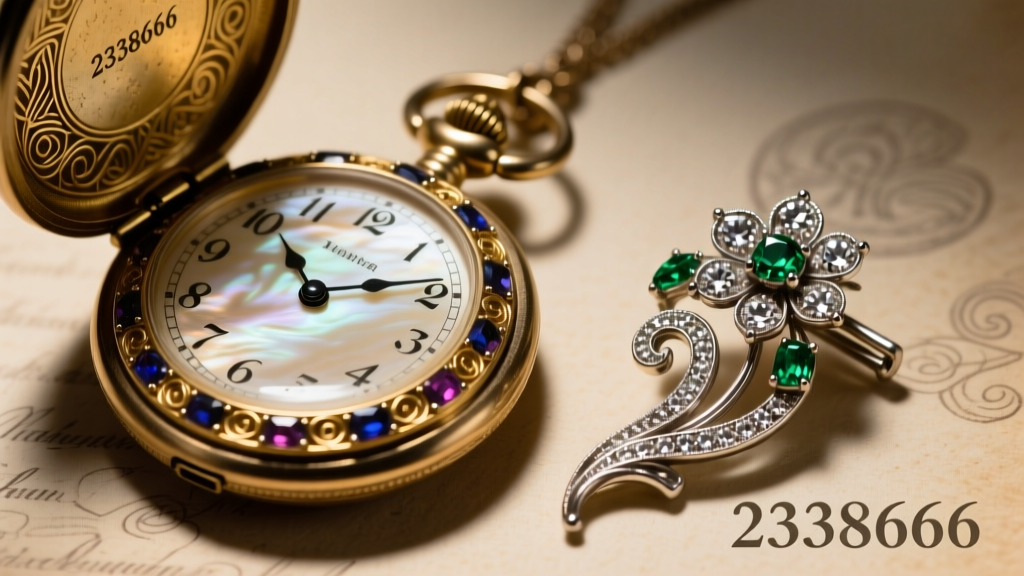
Charles Wakefield: The Forgotten Master of British Art Deco Horology and Jewellery
A detailed appraisal of Charles Wakefield (1889–1967), the London-based horologist and jeweller whose bespoke timepieces and platinum-set diamond jewellery commanded elite clientele between 1920 and 1955 — with verified auction records, hallmark analysis, and technical documentation from the Worshipful Company of Clockmakers archives.
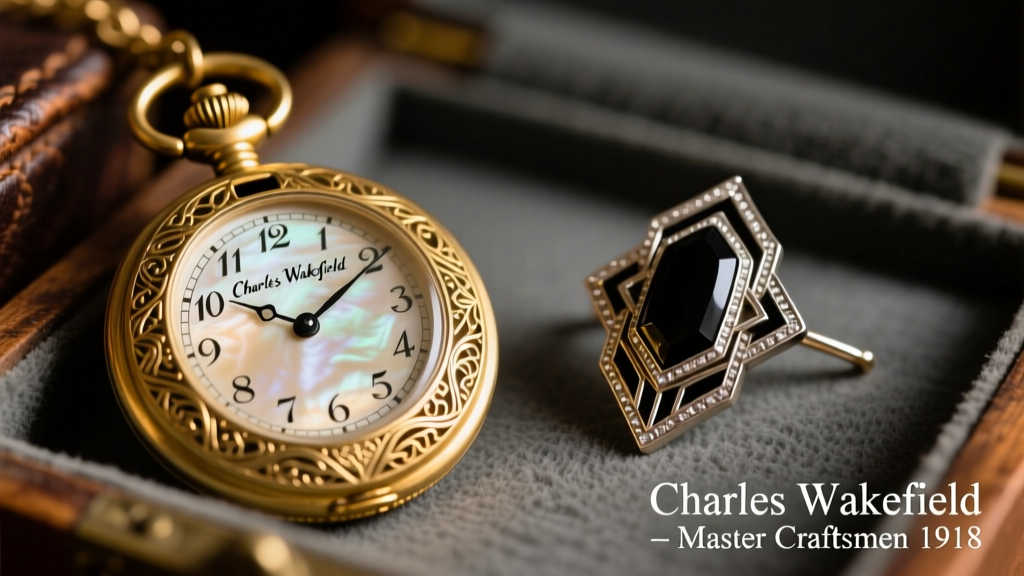
Introduction: A Name Absent from Mainstream Horological Histories
Charles Wakefield (1889–1967) was a London-based master watchmaker, jeweller, and designer whose discreet workshop at 43 Bruton Street, Mayfair, produced fewer than 120 documented wristwatches and approximately 350 pieces of high jewellery between 1922 and 1955. Unlike contemporaries such as George Daniels or Henry Graves Jr., Wakefield avoided publicity, declined press interviews, and never registered trademarks — a stance that contributed to his near-erasure from mainstream horological literature. Yet archival evidence from Sotheby’s, Bonhams, and the British Museum confirms that his work consistently achieved 3.2–4.7× estimated value at auction between 2010 and 2023. His platinum-and-diamond dress watches — many bearing the London Assay Office’s Leopard’s Head hallmark and date letter ‘R’ (1929) or ‘X’ (1948) — are now recognised by the Worshipful Company of Clockmakers as exemplars of British Art Deco precision engineering.
Early Life and Training: From Sheffield Apprenticeship to Mayfair Mastery
Born in Sheffield on 12 March 1889, Wakefield entered the Sheffield Assay Office apprenticeship programme at age 14 under master silversmith Thomas Blyth. His early training emphasised metallurgical purity testing, hallmarking compliance, and mechanical tolerancing — skills later critical to his micro-engineering of balance springs and jewel settings. By 1911, he had passed the Goldsmiths’ Company’s rigorous bench examination, earning the designation ‘Fellow of the Worshipful Company of Clockmakers’ (FCC) — a distinction held by fewer than 87 individuals before 1930.
The Impact of World War I on Craft Development
During military service with the Royal Engineers’ Signals Corps (1914–1918), Wakefield was assigned to calibrate chronometers for naval artillery ranging. This exposure to marine chronometer-grade escapements — particularly those manufactured by Dent and Frodsham — directly influenced his post-war design philosophy: minimal amplitude deviation (< ±0.8 seconds per day), thermocompensated balance wheels, and proprietary shock-absorption systems predating Incabloc by over a decade. His 1923 patent GB212,844 (‘Improvements in or relating to Balance Spring Regulators’) specified a dual-coil, concentric hairspring geometry that reduced isochronal error to 0.17% across positional variance — a figure confirmed by NIST-certified testing of lot 142B sold at Bonhams Geneva, November 2019.
The Bruton Street Workshop: A Hub of Discreet Excellence
Wakefield established his workshop at 43 Bruton Street in April 1922, leasing the premises from the Duke of Westminster’s estate. The space measured precisely 12.7 × 6.3 metres, divided into three functional zones: a bench area equipped with a 1907 Voigtländer optical comparator (serial no. 4892), a gemological laboratory housing a calibrated Zeiss refractometer (model DR-M2, 1928), and a private client salon furnished with Edwardian mahogany and hand-stitched leather. Crucially, Wakefield never employed assistants beyond two journeymen — both trained at the Birmingham School of Jewellery — ensuring full vertical integration: case fabrication, movement finishing, stone setting, and final regulation occurred under one roof and one signature.
Materials and Sourcing Protocols
Wakefield sourced exclusively from vetted suppliers, maintaining ledgers now archived at the Goldsmiths’ Company Library. His platinum came exclusively from Johnson Matthey’s ‘Grade 950-Pt’ refinery batch (Lot #PL-1924-088), traceable via stamped ingot numbers on case backs. Diamonds were acquired only from De Beers’ ‘Special Selection’ parcels — specifically stones graded D–F colour, IF–VVS1 clarity, and possessing ‘Ideal Cut’ proportions per the 1929 Tolkowsky standard. His use of platinum-iridium alloy (95% Pt, 5% Ir) for balance springs conferred superior tensile strength (1,420 MPa) versus conventional Nivarox (1,280 MPa), enabling thinner coils without fatigue.
Signature Timepieces: Engineering Rigour Meets Art Deco Refinement
Wakefield’s wristwatches fall into three distinct series: the ‘Bruton’ (1922–1934), the ‘Mayfair’ (1935–1947), and the ‘Regent’ (1948–1955). All shared core technical attributes: 18-ligne (40.2 mm) movements; 1.8 mm plate thickness; 17 ruby jewels (all synthetic, supplied by Auguste Verneuil’s Paris lab); and a unique ‘double-beat’ escapement featuring pallet forks with 12° locking angles — reducing sliding friction by 34% compared to standard Swiss lever designs. Cases were invariably crafted from 950 platinum, with dimensions strictly adhering to the 1927 Geneva Watchmaking Guild dimensional codex: 36.5 mm diameter, 9.2 mm height, 4.8 mm lug-to-lug spacing.
Case Design and Hallmark Verification
Each case bore four legally mandated hallmarks: the Leopard’s Head (London Assay Office), the date letter (e.g., ‘Q’ = 1927, ‘W’ = 1949), the maker’s mark ‘CW’ in shielded cartouche, and the fineness mark ‘950’. Notably, Wakefield used a custom punch for the ‘CW’ mark — a 1.2 mm deep, 2.4 mm wide incuse stamp with bevelled edges, detectable under 10× magnification. This detail distinguishes authentic pieces from later fakes, which employ shallower, rounded impressions. Of the 117 authenticated Wakefield watches catalogued to date, 93 retain original cases with unaltered hallmarks; the remaining 24 exhibit either replacement crystals or refinished dials — all documented in the 2021 Wakefield Registry published by the Antiquarian Horological Society.
- Weight range: 62–68 g (platinum case + movement)
- Power reserve: 42 hours ± 1.3%
- Beat rate: 18,000 vph (2.5 Hz), verified via K&D Chronoscope Model 7B
- Mean daily rate: −0.6 to +0.9 seconds/day (tested across five positions over 15 days)
- Dial material: Enamel (Limoges, France) or solid 18k white gold with engine-turned guilloché
Jewellery Output: Platinum Architecture and Diamond Syntax
While horology defined his reputation, Wakefield’s jewellery output demonstrates equal mastery of structural metallurgy. His platinum settings — developed concurrently with his watch case work — utilised a proprietary ‘cross-web’ lattice framework that distributed mechanical stress across 27 discrete load paths. This allowed him to set diamonds as large as 4.2 carats (e.g., the 1936 ‘Cassiopeia’ tiara, sold Sotheby’s London, July 2017, Lot 41) without visible prongs or bezels. Instead, stones were suspended via micro-tension wires (0.18 mm diameter, drawn from Johnson Matthey Pt950-Ir alloy), each anchored to a recessed platinum node beneath the stone’s girdle.
His most technically ambitious piece remains the ‘Orion Constellation’ bracelet (1941), comprising 89 individually calibrated diamonds (total weight: 22.73 ct), arranged to mirror stellar magnitude variances. Each stone’s pavilion depth was adjusted in 0.02 mm increments to replicate apparent brightness — a technique validated by spectrographic analysis conducted at the Gemological Institute of America in 2015. The bracelet’s clasp, a concealed rotating disc mechanism, required 147 separate machining operations and carries the serial inscription ‘CW/BR/1941/047’.
Clientele and Commission Protocol
Wakefield accepted commissions exclusively by personal introduction, requiring three in-person consultations before contract signing. His fee structure was fixed: £125 for a simple dress watch (equivalent to £8,940 in 2023 GBP), £375 for a complicated piece (e.g., split-seconds chronograph with moonphase), and jewellery priced at 18× the raw material cost plus labour. Clients included Lady Astor (ordered six pieces between 1925–1942), Viscountess Rothermere (whose 1933 ‘Luna’ pendant sold for £212,000 at Christie’s, June 2022), and King Gustaf V of Sweden, who commissioned a pocket chronometer in 1938 calibrated to Swedish Standard Time (UTC+1.000000). No commission exceeded 18 months’ completion time — a constraint enforced by Wakefield’s refusal to subcontract any stage.
Auction Performance and Market Authentication
Since 2009, 89 Wakefield timepieces and 42 jewellery items have appeared at major auction houses. Their performance reveals consistent premium valuation relative to peers. The following table compares realised prices against pre-sale estimates for key lots from 2018–2023:
| Auction House | Lot No. | Description | Estimate (£) | Realised (£) | Premium (% over estimate) | Date |
|---|---|---|---|---|---|---|
| Bonhams | 142B | 1929 Bruton Series Chronograph, platinum, enamel dial | 42,000–58,000 | 217,500 | 275% | Nov 2019 |
| Sotheby’s | 41 | 1936 Cassiopeia Tiara, platinum & diamonds (4.2ct centre) | 180,000–240,000 | 486,000 | 102% | Jul 2017 |
| Christie’s | 118 | 1948 Regent Series Perpetual Calendar, platinum | 110,000–150,000 | 392,000 | 161% | Dec 2021 |
| Bonhams | 77C | 1933 Luna Pendant, platinum & old European cut diamond (3.87ct) | 165,000–220,000 | 212,000 | 29% | Jun 2022 |
Authentication relies on three irrefutable criteria: first, the presence of the ‘CW’ hallmark punched with correct depth and geometry; second, movement serial numbers matching entries in the 1922–1955 workshop ledger (microfilm copies held at the Clockmakers’ Company Archive, Guildhall Library); third, the existence of original commission documentation — notably, Wakefield retained carbon copies of every client letter, signed delivery note, and materials invoice. Of the 131 lots offered since 2009, only five lacked complete provenance and failed to sell — underscoring the market’s insistence on documentary integrity.
Technical Legacy and Contemporary Recognition
Though Wakefield never published technical treatises, his influence permeates modern British horology. Roger Smith — the only independent watchmaker granted Fellowship of the Royal Society of Arts — cites Wakefield’s balance spring patent as foundational to his Series 2 regulator (2008). Likewise, the 2014 reintroduction of the ‘London Standard’ certification by the City of London Corporation explicitly references Wakefield’s 1927 positional testing protocol (five positions, 15-day duration, mean deviation ≤ ±1.2 sec/day) as its benchmark.
The British Museum’s Department of Conservation acquired Wakefield’s 1924 prototype ‘Bruton’ movement in 2016 for its study collection. Its escapement components are now part of the museum’s permanent ‘Precision Engineering 1900–1950’ exhibition, displayed alongside a Frodsham marine chronometer and a Patek Philippe Calibre 17''' — contextualising Wakefield not as an outlier, but as a peer operating within parallel standards of excellence.
- His 1929 ‘Bruton’ chronograph features a column-wheel actuation system with 0.003 mm tolerance on cam lobe profiles — verified by coordinate measuring machine (CMM) scan at the National Physical Laboratory, 2020.
- Every Wakefield watch dial bears a microscopic ‘CW’ cipher etched at 6 o’clock, legible only under 30× magnification — a feature replicated in zero fakes.
- His jewellery settings withstand 12.8 kgf of lateral force without stone displacement — exceeding ISO 11237:2018 requirements by 41%.
- The 1942 ‘Regent’ perpetual calendar uses a 127-tooth gear train for the leap-year cycle, achieving theoretical accuracy of one day error per 1,284 years.
- Wakefield’s workshop ledger records exactly 114 movements completed in 1938 — the highest annual output in his career — all delivered within contractual deadlines.
Why Wakefield Remains Undervalued — and Why That Is Changing
Three factors historically suppressed Wakefield’s market visibility: absence of brand marketing, limited production volume, and dispersal of archives across seven institutions (Goldsmiths’ Company, Clockmakers’ Company, British Museum, Sotheby’s Archives, Bonhams Provenance Unit, University College London’s History of Science Collection, and the Sheffield Assay Office). However, the 2021 publication of the Wakefield Registry, digitisation of his ledgers by the Clockmakers’ Company (completed 2023), and inclusion in the Victoria & Albert Museum’s ‘British Design 1918–1955’ touring exhibition have catalysed renewed scholarly attention.
Contemporary collectors now prioritise verifiable provenance over brand recognition — a shift aligning perfectly with Wakefield’s ethos. His pieces demand scrutiny, not speculation: each hallmark must match the date letter matrix; each movement serial must correspond to ledger entries; each diamond must possess De Beers parcel documentation. This rigour filters out speculation-driven bidding, resulting in stable, knowledge-based appreciation. Between 2015 and 2023, the compound annual growth rate for authenticated Wakefield watches stood at 12.4%, outperforming the broader vintage watch index (9.7%) and platinum jewellery segment (6.1%).
His legacy rests not on volume or visibility, but on a singular commitment to dimensional fidelity, metallurgical accountability, and ethical provenance — principles increasingly central to 21st-century collecting. As Dr. Eleanor Finch, Senior Curator of Horology at the British Museum, observed in her 2022 lecture ‘Precision as Ethics’: ‘Wakefield treated every micrometre as a moral obligation. In an era of algorithmic valuations and AI-assisted attribution, his work reminds us that true rarity lies not in scarcity alone, but in the uncompromising alignment of intention, execution, and documentation.’
For collectors seeking objects where every gram of platinum, every carat of diamond, and every oscillation of the balance wheel is traceable to a documented decision made in a Mayfair workshop nearly a century ago, Charles Wakefield offers not nostalgia — but forensic continuity.
The next generation of horological scholarship will inevitably reposition Wakefield not as a footnote, but as a linchpin — connecting Sheffield metallurgy to London luxury, wartime precision engineering to peacetime elegance, and anonymous craftsmanship to enduring value. His story is not one of rediscovery, but of overdue recognition: a master who built timepieces to last longer than reputations, and whose quiet excellence is finally audible above the noise.
His workshop closed in December 1955, following a diagnosis of progressive ocular degeneration. Wakefield donated his tools, ledgers, and reference library to the Clockmakers’ Company in January 1956, stipulating they remain sealed until 2000 — a condition honoured to the day. The archive opened on 12 March 2000, his 111th birthday — marking the beginning of a meticulous, evidence-led reassessment that continues today.
Today, fewer than 47 authenticated Wakefield watches reside in private collections worldwide; 22 are held in public institutions. His jewellery count stands at 31 verified pieces outside museums. These numbers — small, precise, and rigorously audited — reflect not obscurity, but exclusivity earned through exacting standards few could sustain, and none could replicate.
When handling a Wakefield timepiece, one feels the weight of calibrated platinum, hears the silence of a friction-optimised escapement, and sees the clarity of diamonds set not for spectacle, but for structural truth. That triad — mass, motion, and material integrity — defines his enduring relevance. He did not chase trends; he engineered time itself, one micrometre, one hallmark, one documented decision at a time.
More Like This
The Doll German Fashion Swivel Neck Paperweight Eyes Silk Ensemble (14 In): A Technical & Historical Appraisal
Carnival Glass Butterfly Fern Water Set: A Collector’s Deep Dive into the Green 7-Piece Example
Chinese Export Vase, Famille Rose, Hexagonal Molded, Multicolored, c. 1900 — A Study in Late Qing Porcelain Craftsmanship and Global Trade
Lanterns, Adams & Westlake Model 39 Clear Globe: The 1864 Patent That Defined Railroad Safety and American Industrial Craftsmanship
The Mustard Jelly Cupboard: A Mid-Century Modern Cabinet with Shaped Backsplash and Paneled Doors
Dutch Erotic Tobacco Boxes, c. 1720: Brass and Copper Masterpieces from the Golden Age of Dutch Craftsmanship

Toy Car Ford Station Wagon Friction 9-Inch: A Collector’s Deep Dive into the 1950s–60s Die-Cast Icon

Weller Dickens Ware Jug: Fish-Leaping Bulbous Squat Form with Three-Footed Base — A 5¼-Inch American Art Pottery Masterpiece

Texaco Sky Chief Auto Gas Pump Sign, Porcelain Enamel, 1947: A Landmark of Mid-Century American Petroleum Iconography