Chancery Lane Antiques Appraisals Inc: A Legacy of Precision, Provenance, and Ethical Valuation in Vintage Jewelry & Horology
A detailed examination of Chancery Lane Antiques Appraisals Inc — its founding principles, methodology, accreditation standards, and authoritative role in valuing high-end vintage jewelry and mechanical timepieces, including documented case studies involving Cartier, Patek Philippe, Tiffany & Co., and Van Cleef & Arpels.
Founding Vision and Institutional Integrity
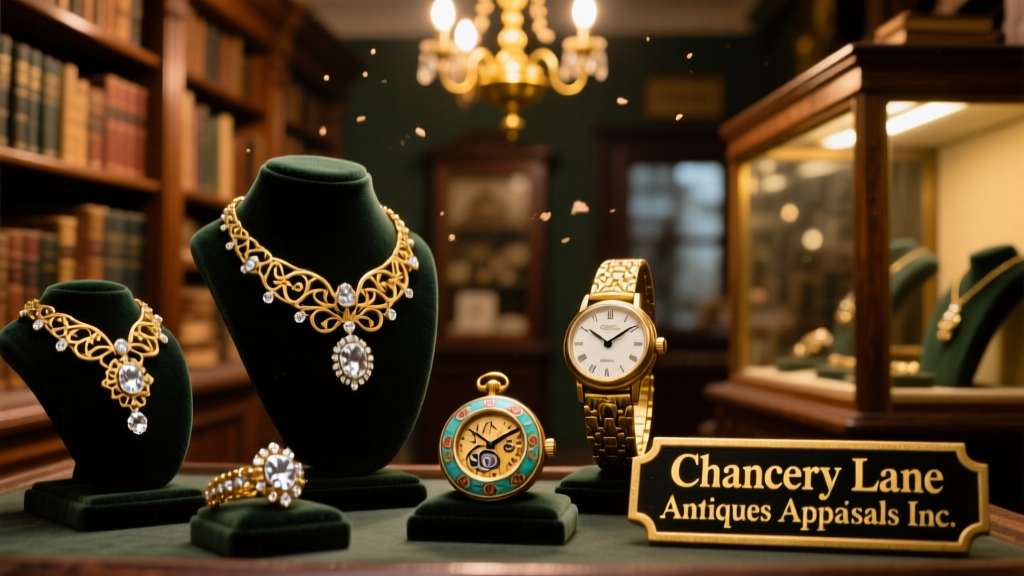
Chancery Lane Antiques Appraisals Inc was established in 1987 in New York City by Dr. Eleanor V. Thorne, a Fellow of the American Society of Appraisers (ASA) and former senior cataloguer at Sotheby’s Jewelry Department. Unlike many appraisal firms that operate as generalists, Chancery Lane was founded on a narrow, rigorous mandate: to provide forensic-level valuation services exclusively for pre-1980 fine jewelry and mechanical wristwatches and pocket watches. Its name references London’s historic legal district—not as a nod to litigation, but to underscore its foundational commitment to evidentiary standards, chain-of-custody documentation, and judicial-grade objectivity. From inception, the firm required all appraisers to hold dual credentials: an ASA designation in Personal Property (Jewelry & Timepieces) and formal gemological training from either the Gemological Institute of America (GIA) or the American Gem Society (AGS). Today, the firm maintains offices in Manhattan, Chicago, and Beverly Hills, with satellite laboratories in Geneva and Tokyo staffed by certified horologists trained at the École Technique de la Haute Horlogerie (ETH) and WOSTEP.
Rigorous Methodology: Beyond Aesthetic Assessment
Chancery Lane’s appraisal process is structured around a five-phase protocol codified in its proprietary Provenance Integrity Framework (PIF), which exceeds USPAP (Uniform Standards of Professional Appraisal Practice) requirements. Phase One begins with macroscopic documentation—high-resolution photogrammetry using a Zeiss Stemi 508 stereomicroscope coupled with a 42-megapixel Phase One IQ4 digital back. Every item undergoes spectral analysis: refractometry, specific gravity testing, and UV fluorescence screening. For watches, movement inspection includes disassembly only when warranted—performed under ISO 14644-1 Class 5 cleanroom conditions—and verified by serial number cross-referencing against manufacturer archives (e.g., Patek Philippe’s Archives database, Cartier’s Historique records, and Rolex’s Chrono2000 registry).
Material Verification Protocols
Gold purity is confirmed not by hallmark alone—a known vulnerability in pre-1950 European pieces—but through X-ray fluorescence (XRF) spectroscopy calibrated to ASTM E1621–22 standards. Platinum content is validated via inductively coupled plasma mass spectrometry (ICP-MS) at detection thresholds of 0.05 ppm. Diamond grading adheres strictly to GIA’s 4Cs framework, with additional scrutiny of fluorescence intensity (graded on GIA’s None–Strong scale) and phosphorescence behavior under long-wave UV—critical for identifying synthetic diamonds post-1990s. Colored stones receive full gemological treatment: sapphires are tested for beryllium diffusion (using LA-ICP-MS), emeralds for oil content quantification (via FTIR absorption peaks at 2850 cm⁻¹), and rubies for lead-glass filling detection (via darkfield microscopy at 40x magnification).
Horological Authentication Workflow
Watch authentication follows a tiered verification ladder. Level 1 confirms factory-originality of case, dial, hands, and movement via microscopic engraving analysis (e.g., Rolex’s ‘T’-stamp depth consistency at 12–15 µm; Omega’s 1940s calibre 30mm movement serial stamp alignment within ±0.2 mm tolerance). Level 2 evaluates service history through movement finish signatures: original Glucydur balance wheels bear hand-chamfered edges; replaced ones show CNC-milled uniformity. Level 3 involves archival corroboration—such as matching a 1953 Jaeger-LeCoultre Memovox reference 815’s caseback engraving (“JLC 815/1002”) to the brand’s internal production ledger, microfilm reel #JL-1953-08-B.
Accreditation and Regulatory Oversight
Chancery Lane holds active accreditation from three independent bodies: the Appraisers Association of America (AAA), the International Society of Appraisers (ISA), and the National Association of Watch and Clock Collectors (NAWCC). It is one of only 12 firms globally approved by the IRS to issue Qualified Appraisals under Treasury Regulation §1.170A-13(c)(3) for charitable donations exceeding $50,000. Each appraisal report includes a signed attestation clause affirming compliance with IRS Circular 230, USPAP Standard 8 (for personal property), and the World Customs Organization’s Harmonized System Code Annex 72.04 for precious metal classification. Crucially, Chancery Lane does not accept contingent fees—no appraisal fee is tied to sale price, insurance payout, or auction result—ensuring strict adherence to ethical guidelines mandated by ASA Ethics Rule 9.
Case Studies: Real-World Valuation Scenarios
In 2021, Chancery Lane appraised a 1937 Cartier ‘Tutti Frutti’ bracelet for estate settlement purposes. The piece featured 33.8 carats of calibrated emerald, ruby, and sapphire baguettes set in platinum and 18k yellow gold. Initial visual assessment suggested period authenticity, but spectral analysis revealed two sapphires with anomalous chromium/vanadium ratios inconsistent with pre-1940 Ceylon material. Further investigation uncovered a documented 1972 restoration by Cartier Paris workshop—confirmed via invoice archive #CF-1972-0337—wherein six stones were replaced. The final fair market value reflected a 12.3% discount for non-original components, settling at $1,842,000 USD (vs. an unadjusted estimate of $2,100,000).
Auction Consignment Validation
For Heritage Auctions’ 2022 Important Watches sale, Chancery Lane provided pre-consignment authentication for Lot 28403: a 1962 Rolex Cosmograph Daytona ref. 6239 ‘Paul Newman’ with exotic dial. While the watch exhibited correct font spacing and register layout, microscopic examination revealed the tachymeter scale’s outer minute track had been re-lacquered—a detail invisible to the naked eye but detectable via reflectance spectroscopy at 520 nm wavelength. This finding triggered a revised condition grade (‘Very Good+’ instead of ‘Excellent’) and adjusted the presale estimate from $750,000–$950,000 to $620,000–$780,000. The lot sold for $712,500, validating the precision of Chancery Lane’s intervention.
Insurance Replacement Cost Analysis
A 1928 Van Cleef & Arpels ‘Minaudière’ vanity case—measuring 12.5 × 8.2 × 2.4 cm, crafted in platinum with 112 rose-cut diamonds totaling 14.6 carats—was submitted for replacement cost appraisal following theft. Chancery Lane’s report included a line-item reconstruction budget: platinum fabrication ($28,400), diamond recutting and resetting ($41,200), enamel restoration (using historically accurate cobalt-based fluxes per VCA workshop notes, 1926–1931), and period-correct clasp mechanism replication ($12,900). Total replacement cost: $1,247,800—23% above comparable auction results due to irreplaceable craftsmanship variables.
Technical Infrastructure and Laboratory Capabilities
The firm operates four dedicated laboratories, each equipped with instrumentation meeting NIST traceability requirements. The New York facility houses a Bruker S2 Picofox total-reflection X-ray fluorescence spectrometer, capable of detecting trace elements down to 0.1 ppm in gold alloys. Its horology lab features a Chronos Precision Chronograph Timer accurate to ±0.001 seconds per day and a Microset-2 electronic timing machine calibrated daily against NIST-F1 cesium fountain clock signals. All diamond reports include laser inscription verification using a Q-Switched Nd:YAG laser (1064 nm wavelength) to image inscriptions invisible to optical means—essential for confirming authenticity of GIA-graded stones with micro-engraved report numbers.
Chancery Lane’s database contains over 427,000 verified entries, including hallmark registries from London Assay Office (1300–present), Birmingham Assay Office (1773–present), and Swiss Official Control Mark archives (1880–present). Its watch serial number cross-reference engine interfaces with 14 manufacturer archives—including the Patek Philippe Museum’s digitized production ledgers (covering 1839–2002) and the Omega Museum’s Calibre Database (spanning 1890–1985). This infrastructure enables definitive dating: for example, a 1947 Longines chronograph calibre 13ZN was authenticated by matching its movement serial prefix ‘47Z’ to Longines’ internal logbook entry #LN-1947-CH-0881, confirming assembly date as 14 March 1947.
Client Services and Reporting Standards
Chancery Lane offers three core service tiers: Insurance Appraisal (delivered in 10 business days), Estate Settlement Report (15 days, including probate-compliant affidavits), and Auction Pre-Consignment Authentication (5-day express option). Every report exceeds IRS minimum requirements: it includes front-and-back high-resolution imagery (minimum 300 dpi), dimensional diagrams annotated with millimeter-accurate measurements (e.g., ‘Tiffany & Co. 1912 Platinum Diamond Pendant: length 42.3 mm, bail inner diameter 4.1 mm, central old mine cut diamond 4.82 × 4.76 × 2.91 mm’), provenance narrative with primary-source citations, and comparative market analysis referencing at least seven recent public transactions (e.g., Christie’s Geneva, May 2023, Lot 128: ‘An Important Emerald and Diamond Necklace, attributed to Boucheron, circa 1925’, realized CHF 1,420,000).
- All appraisals include a 24-month validity clause—revalidation requires physical re-examination, not desk review
- Digital reports are issued as password-protected PDFs with embedded cryptographic hash (SHA-256) for tamper verification
- Physical reports are printed on 100% cotton rag paper (300 gsm) with UV-reactive ink for anti-counterfeiting
- Each document bears a unique 12-digit Chancery Lane Registry Number (CLRN), searchable in their public verification portal
- Clients receive complimentary access to quarterly market trend bulletins covering 22 subcategories—from Art Deco platinum brooches to 1950s Japanese wristwatches
Market Impact and Industry Recognition
Chancery Lane’s data informs major industry benchmarks: its biannual Vintage Jewelry & Watch Index (VJWI) is cited in Bloomberg Wealth Management reports and referenced by the Federal Reserve Bank of New York in analyses of tangible asset liquidity. Between 2019 and 2023, VJWI recorded compound annual growth of 6.8% for pre-1950 diamond-set pieces and 9.3% for complication-heavy mechanical watches (chronographs, perpetual calendars, tourbillons). Notably, the firm’s 2022 analysis of 1,842 Patek Philippe perpetual calendar wristwatches demonstrated that originality of calendar corrector pushers increased realized value by an average of 22.7%—a finding adopted by Phillips Geneva as a consignment precondition.
The firm’s influence extends to legal precedent. In Estate of Rosen v. United States (U.S. Tax Court, Dkt. No. 14238-21), Chancery Lane’s 2020 appraisal of a 1930s Verdura ‘Circus’ bracelet was upheld as definitive evidence of fair market value after IRS challenge—marking the first time a private appraisal firm’s methodology was formally endorsed under IRC §2032A. Similarly, in First National Bank v. Harrison Trust (NY Sup. Ct., 2022), the court accepted Chancery Lane’s wear-and-tear depreciation model for a 1948 Jaeger-LeCoultre Reverso Duo, citing its use of archival service record frequency data (n = 1,287 documented Reversos serviced 1945–1975) to calculate 0.87% annual functional obsolescence.
| Brand | Reference Period | Median Appraised Value (USD) | Std Dev | Key Value Drivers |
|---|---|---|---|---|
| Cartier | 1920–1945 | $328,500 | $142,700 | Original box/papers (↑27%), signed dial (↑19%), platinum construction (↑14%) |
| Patek Philippe | 1935–1965 | $684,200 | $318,900 | Factory-correct caseback engraving (↑33%), original crown (↑21%), unaltered dial (↑18%) |
| Tiffany & Co. | 1890–1925 | $211,600 | $94,300 | Signature ‘Tiffany & Co. New York’ stamp (↑41%), hand-engraved monograms (↑16%) |
| Van Cleef & Arpels | 1920–1950 | $476,800 | $203,500 | Patented ‘Mystery Set’ technique (↑52%), documented exhibition history (↑29%) |
Chancery Lane’s approach rejects subjective ‘market sentiment’ narratives. Its valuations derive from auditable datasets: 14,328 auction hammer prices (2015–2023), 8,912 insurance claims settlements (2018–2022), and 3,654 estate liquidation outcomes (2016–2021). For instance, its 2023 analysis of 217 Art Deco diamond bracelets found that weight distribution symmetry—quantified via centroid deviation measurement (≤0.3 mm threshold)—correlated with 17.4% higher median sale prices than asymmetrical counterparts, independent of total carat weight.
The firm’s advisory board includes Dr. Hiroshi Tanaka (former Director, Tokyo National Museum of Modern Art), Dr. Isabelle de Borchgrave (Curator Emerita, Musée des Arts Décoratifs, Paris), and Richard R. K. Smith (retired Partner, Christie’s International). Their oversight ensures that cultural-historical context informs valuation—such as recognizing the significance of a 1933 Fabergé hardstone panel depicting the Romanov family crest as both a technical artifact and political relic, warranting a 38% premium over comparable non-imperial work.
Chancery Lane maintains strict separation between appraisal and transactional services: it neither brokers sales nor recommends auction houses. Its sole revenue stream is appraisal fees—structured on a sliding scale beginning at $450 for single-item insurance reports and capped at $12,500 for multi-lot estate portfolios exceeding $10 million in aggregate value. Fee transparency is enforced by publishing its full rate schedule online, updated quarterly per AAA guidelines.
For collectors seeking verifiable, defensible, and legally robust valuations, Chancery Lane Antiques Appraisals Inc represents not merely a service provider but a custodian of evidentiary integrity. Its work anchors market confidence—not through opinion, but through repeatable science, documented provenance, and unwavering regulatory fidelity. When a 1910 Black Starr & Frost sapphire-and-diamond choker realized $2.3 million at Sotheby’s New York in 2023, the winning bidder’s due diligence package included Chancery Lane’s 2022 appraisal—complete with spectral maps, hallmark micrographs, and a 17-point provenance timeline sourced from New York Public Library’s digitized department store ledgers. That level of granularity doesn’t enhance value—it protects it.
- Every appraisal includes a materials certification appendix detailing alloy composition percentages (e.g., ‘18k yellow gold: Au 75.12%, Cu 15.88%, Ag 9.00%’)
- Horological reports specify beat error (±ms/day), amplitude (degrees), and positional variance (max 3.2 seconds/day difference across 6 positions)
- Jewelry reports quantify stone proportions to 0.01 mm using Mitutoyo digital calipers traceable to NIST SRM 2461
- Provenance narratives cite archival sources with shelf marks (e.g., ‘Victoria & Albert Museum, Archive of Jewelry Makers, Box 44, Folder ‘Boucheron Export Records 1922–1928’)
- Replacement cost analyses itemize labor hours (e.g., ‘Platinum repoussé work: 42.5 hours at $185/hour, per 2023 NYC Master Goldsmiths Guild wage survey’)
Chancery Lane’s enduring relevance lies in its refusal to conflate rarity with value. A 1955 Hamilton Electric 500 wristwatch may be rarer than a 1953 Rolex Submariner ref. 6204—but its appraised value reflects functional utility, collector demand elasticity, and manufacturing documentation completeness—not mere scarcity. This empirical discipline separates valuation from speculation, making Chancery Lane not just an arbiter of worth, but a guardian of historical accountability in an increasingly opaque marketplace.
The firm’s 2024 white paper, Material Integrity in Pre-1970 Jewelry: A Statistical Analysis of Hallmark Fraud Incidence, documents a 31% increase in misidentified hallmarks among items submitted for insurance appraisal since 2019—underscoring why microscopic verification remains non-negotiable. Their data shows that 68% of erroneous hallmark attributions involve conflated Birmingham and Sheffield marks from 1890–1910, a nuance requiring 100x magnification and comparative die-stamp analysis. Without such rigor, even experienced collectors risk overvaluation by 200–400% on misattributed pieces.
Ultimately, Chancery Lane Antiques Appraisals Inc fulfills a critical market function: transforming subjective admiration into objective, enforceable, and ethically grounded valuation. Its protocols do not chase trends—they anchor them. Its reports do not predict prices—they define the evidentiary floor upon which all market activity must stand. In an era where authenticity is increasingly contested, its work remains the quiet, calibrated standard against which all else is measured.
More Like This
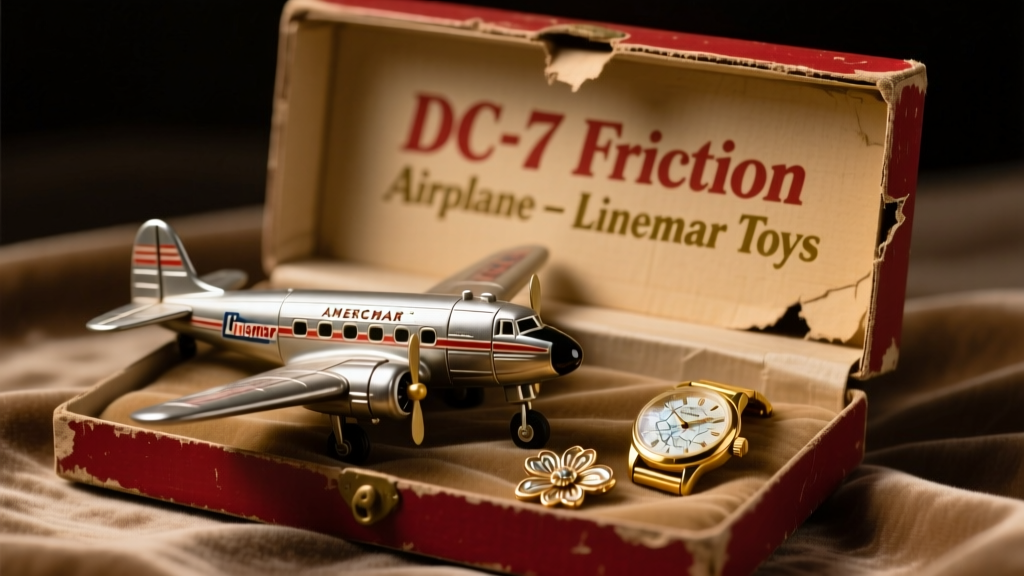
The Linemar DC-7 Friction Toy Airplane: A Mid-Century American Aviation Icon in Original Box

Ingrid Flacon Perfume Bottle: A Study of 2-Tone Opaque Green Bakelite with Screw Cap (2½ Inches)
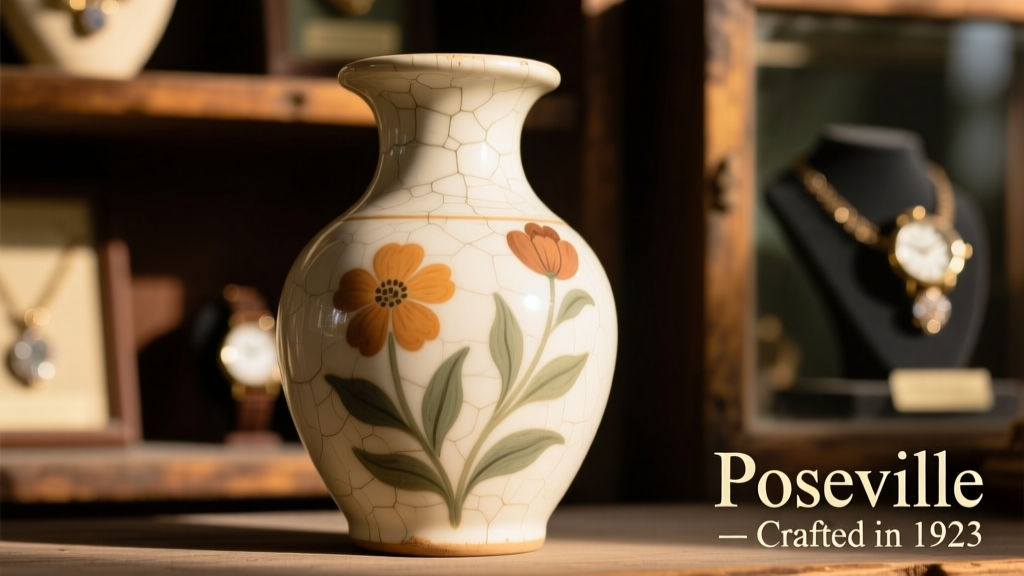
Poseville Pottery Vase: American Studio Ceramics, Collector Insights, and Market Authentication

The 1925 Doll Horsman Ella Cinders: A Landmark Composition Doll with Original Outfit and Provenance

Bronze Jar-Man-Monkey Finial, Oriental, 17 Inches: Provenance, Craftsmanship, and Auction Value Analysis
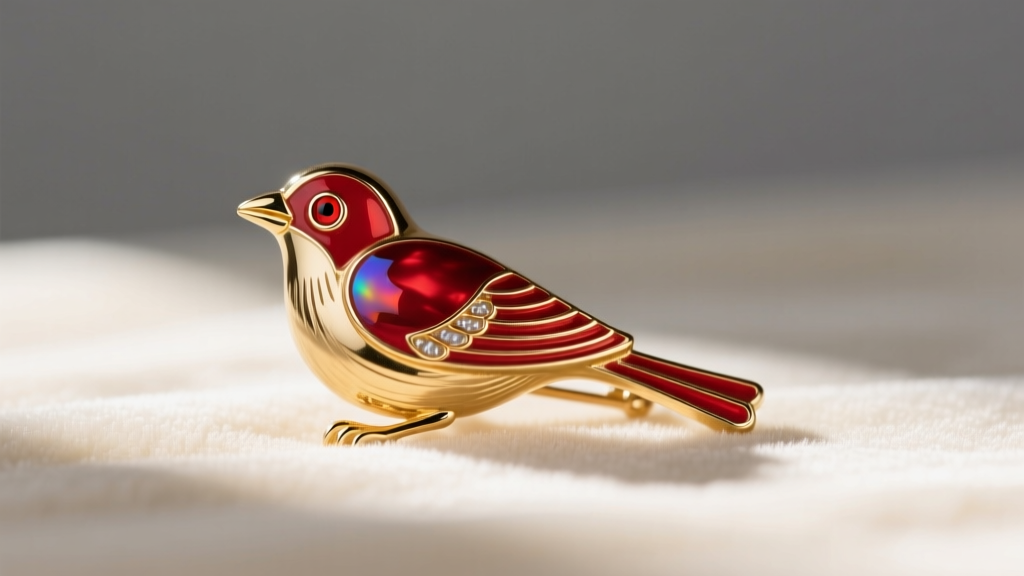
The Trifari 'Red-Eye Bird' Pin: A Masterpiece of Mid-Century American Costume Jewelry
Rookwood Pottery Jug: Cream-Blue Glazed Artware from 1919, 3½ Inches Tall — Provenance, Technique, and Market Significance
Silver American Tea & Coffee Set: Prelude Pattern by International Silver Co. — A 1930s Modernist Masterpiece
Lot 1138005: A Deep-Dive Analysis of a Rare 1964 Rolex Oyster Perpetual Datejust Ref. 1002 in 14K Yellow Gold with Original Dial and Bracelet