Chalk Tique Upgrades Cupboard From Eyesore To Prize: A Vintage Jewelry Restoration Case Study
How Chalk Tique transformed a neglected 1930s walnut veneer cupboard into a museum-caliber display case for vintage watches and Art Deco jewelry—featuring precise measurements, authentic materials, and auction-tested conservation techniques.

Chalk Tique—a London-based specialist in heritage furniture restoration and bespoke display solutions for fine horology and vintage jewelry—recently completed a meticulous 14-week transformation of a dilapidated 1930s walnut-veneer cupboard originally sourced from a South London council estate clearance. What arrived as a warped, water-damaged eyesore—its mirrored back panel shattered, interior lining rotted, and brass hardware tarnished beyond recognition—emerged as a prize-winning presentation cabinet certified to ISO 18562-3 standards for inert display environments. This article details the forensic-level craftsmanship, material science, and archival-grade engineering behind the upgrade: from humidity-controlled glass vitrines to laser-calibrated drawer runners, every intervention was guided by decades of experience handling pieces now valued at £25,000–£120,000 at Bonhams and Sotheby’s.
The Origins: A Neglected Cabinet with Hidden Potential
The subject piece is a 1934 Waring & Gillow ‘Cupboard No. 721’, part of their ‘Modern English’ line launched just months after the firm’s acquisition by Maple & Co. Its original dimensions are precisely 1825 mm (H) × 915 mm (W) × 455 mm (D)—a generous footprint that made it ideal for horizontal watch displays but problematic due to structural instability. When acquired by Chalk Tique in February 2023, the cabinet exhibited three critical failures: first, a 7 mm lateral bow across the upper shelf; second, delamination of the walnut veneer on the left stile, exposing underlying poplar core; and third, corrosion of all eight original brass hinges—each stamped ‘W&G Patent 1929’, measuring 76 mm × 38 mm with 3.2 mm screw threads.
Crucially, the cabinet retained its original double-glazed mirror back panel—though fractured into 17 shards—and its full set of four dovetailed drawers, each lined with original green baize fabric, now degraded to 42% tensile strength (measured via ASTM D5034 grab test). These features signaled authenticity and justified investment over replacement. As noted in the 2022 Antique Furniture Conservation Review, cabinets retaining original hardware and linings from pre-1940 British makers command 37–52% higher resale premiums at specialist auctions.
Why Preservation Trumped Replacement
Many clients assume replacing damaged components is more cost-effective. However, Chalk Tique’s internal database—tracking 2,147 post-war British furniture restorations—shows that fully original examples with documented provenance sell for an average of £8,420 at Phillips’ Design sales, versus £3,190 for identical models with even one replaced hinge or drawer runner. The W&G stamp alone added £1,200–£1,800 to the projected value. Moreover, the cabinet’s veneer thickness—measured at 0.42 mm using digital micrometer calipers—matched Waring & Gillow’s 1932–1937 specification tolerance (±0.03 mm), confirming no later refacing had occurred.
Structural Stabilization: Engineering Integrity
Initial stabilization required dismantling the carcass without disturbing original glue joints. Using low-frequency ultrasonic vibration (22 kHz) and controlled ethanol vapor, Chalk Tique softened historic animal-hide glue while preserving veneer adhesion. The bowed shelf was then clamped between two 25 mm-thick steel beams, weighted with 120 kg distributed evenly over 72 hours. Post-straightening, a hidden aluminum reinforcement channel—1.2 mm thick, anodized matte black—was inserted along the entire 915 mm length of the shelf underside. This channel adds zero visual impact but increases torsional rigidity by 210%, verified via finite element analysis (FEA) modeling in SolidWorks.
The delaminated stile received targeted vacuum-assisted re-adhesion: a custom epoxy blend (West System 105 resin + 206 hardener, modified with 8% microballoons for thermal expansion matching) was injected at 0.8 psi through 0.3 mm-diameter ports drilled at 45° angles. After 48-hour cure, surface planing restored veneer flushness to within ±0.05 mm across the full 1825 mm height.
Hardware Rehabilitation Protocol
All eight original hinges underwent electrolytic deoxidation in a sodium carbonate bath (3% w/v, 65°C, 22 minutes), followed by hand-polishing with 1200-grit diamond paste on leather strops. Each hinge was then re-torqued to 1.4 N·m—matching W&G’s 1930s assembly spec—using a calibrated Wiha 2050 torque screwdriver. Drawer pulls, also original W&G brass, were ultrasonically cleaned and coated with Incralac® lacquer (20 µm dry film thickness), a corrosion inhibitor approved by the British Museum for metal artifacts.
Optical Excellence: The Mirror and Glazing System
The shattered original mirror was not discarded. Instead, Chalk Tique partnered with Glasfabrik Lamberts in Germany to produce a replacement using their ‘MuseumClear’ float glass—0.8% iron content, 91.5% visible light transmission, and UV-blocking coating (cutting 99.8% of UVA/UVB below 380 nm). Crucially, this glass meets PAS 78:2022 requirements for heritage display glazing. It was cut to exact dimensions: 1790 mm × 900 mm × 6 mm, with polished edges and 1 mm radius corners to prevent microfractures.
The mounting system employs a dual-layer approach: first, a 3 mm-deep channel milled into the rear frame accepts silicone gasket tape (3M™ VHB 4952, 95 Shore A hardness); second, the glass is secured with non-ferrous brass clips spaced at 220 mm intervals—matching the original clip pattern visible in W&G factory blueprints archived at the Victoria & Albert Museum. This design allows for ±1.5 mm thermal expansion without stress.
Interior Linings: Chemistry Meets Craftsmanship
The degraded baize was replaced not with generic felt, but with a bespoke wool-blend fabric woven by James Halstead PLC to Chalk Tique’s specifications: 65% Merino wool, 35% viscose, 420 g/m² weight, and pH-neutral dye (C.I. Acid Blue 25, batch-certified to ISO 105-E01). Each drawer liner was hand-stitched using silk thread (30/2 Momme, dyed with logwood extract) and blind-hemmed with 1.2 mm stitch spacing—identical to W&G’s 1935 workshop standard documented in the Leeds Industrial Museum archives.
Above the drawers, Chalk Tique installed five independent LED lighting modules—each 12 V DC, 2.8 W, CRI >95, 2700K CCT—mounted on aircraft-grade aluminium rails. Light output is precisely 185 lux at 150 mm distance, calibrated to the British Standard BS EN 12464-1:2021 recommendation for sensitive organic materials. Dimming is controlled via DALI protocol to eliminate electromagnetic interference with mechanical timepieces.
Climate Control: Silent Protection
Vintage watches and Art Deco jewelry demand stable microclimates. Chalk Tique integrated a passive humidity regulation system directly into the cabinet structure: a perimeter channel beneath the base plinth houses 1.8 kg of silica gel desiccant (Grace Davison Sorbead® Orange, 8–12 mesh, moisture capacity 22% w/w at 50% RH). This is coupled with two hygroscopic cedar wood baffles (120 mm × 25 mm × 18 mm, kiln-dried to 6.8% moisture content) mounted vertically inside the rear cavity. Together, they maintain internal RH between 42–48%—within the optimal range for both celluloid dials (e.g., 1930s Longines) and platinum settings (e.g., Cartier ‘Tutti Frutti’ brooches).
Temperature stability is ensured via 25 mm-thick mineral wool insulation (Rockwool RW3, λ = 0.036 W/m·K) sandwiched between the outer carcass and inner ply lining. Real-time monitoring uses a calibrated Rotronic HygroClip2 sensor, logging data every 90 seconds to an encrypted SD card—accessible only via physical port, eliminating wireless signal risks to movement magnetism.
Bespoke Display Integration
The true distinction lies in how the cabinet functions as a curatorial tool. Chalk Tique designed seven modular inserts, each CNC-machined from FSC-certified beech plywood (18 mm thick, formaldehyde-emission class E0):
- Three tiered watch stands: angled at 12° for optimal dial visibility, with recessed cradles sized for specific calibers (e.g., Omega Cal. 26.5 mm, Jaeger-LeCoultre Cal. 14.5 mm)
- Two velvet-lined ring trays with individual 22 mm-diameter wells, depth 14 mm—matching the exact bore of 1930s Van Cleef & Arpels ‘Passe-Partout’ cases
- One rotating Art Deco necklace display: 300 mm diameter, 3 rpm motor, carbon-fibre axle, silent stepper drive (torque 0.12 N·m)
- One pull-out magnifier tray: featuring a Zeiss 10× achromatic lens (focal length 25 mm, field of view 18 mm) mounted in solid brass housing
Each insert docks via stainless-steel locating pins (diameter 4.76 mm, tolerance ±0.01 mm) into precision-milled sockets in the shelves—ensuring repeatable positioning within 0.15 mm. The system permits reconfiguration in under 90 seconds without tools.
Auction-Ready Documentation
Every modification is traceable. Chalk Tique provides a laminated ‘Conservation Passport’ bound in goatskin, containing:
- Full photogrammetric 3D scan report (resolution 0.08 mm/pixel)
- Material certification sheets for all new components (including REACH and RoHS compliance)
- Before/after RH and temperature logs spanning 30 days
- Microscopy images of veneer grain alignment (200× magnification)
- Calibration certificates for all measuring instruments used
This documentation package directly contributed to the cabinet’s inclusion in Bonhams’ ‘Horological Interiors’ sale preview in October 2023, where it was featured alongside a 1928 Patek Philippe perpetual calendar and a 1937 Cartier mystery clock.
Performance Validation: Real-World Metrics
To validate longevity claims, Chalk Tique subjected the upgraded cabinet to accelerated aging per ASTM G154 Cycle 4 (UV fluorescent lamps, 60°C, 8 h light / 4 h condensation). After 1,000 hours:
- Veneer color shift: ΔE*ab = 1.3 (well within acceptable threshold of ΔE*ab ≤ 3.0 for museum display)
- Hinge corrosion resistance: zero pitting observed under 100× metallurgical microscope
- Drawer glide force: maintained at 1.8–2.1 N (original spec: 1.9 ± 0.2 N)
- Glazing UV transmission: unchanged at 0.2% residual
These results exceed industry benchmarks for high-end display furniture—particularly against competitors like Hafele’s ‘MuseoLine’ (ΔE*ab drift of 4.7 after same test) and Goppion’s entry-tier units (hinge failure at 720 hours).
| Parameter | Pre-Restoration | Post-Restoration | Industry Standard |
|---|---|---|---|
| Relative Humidity Stability (24h) | 32–68% RH | 42–48% RH | 40–55% RH (BS 4971:2017) |
| Surface Flatness (Shelf) | 7 mm bow | ±0.05 mm deviation | ±0.3 mm (EN 312-2) |
| Light Transmission (Mirror) | 42% (due to oxidation) | 91.5% | ≥85% (PAS 78:2022) |
| Drawer Glide Consistency | Sticking at 3 positions | Uniform 1.9 N force | 1.5–2.5 N (ISO 7170) |
| Veneer Adhesion Strength | 0.2 MPa (failed pull test) | 3.8 MPa | ≥2.5 MPa (ASTM D1002) |
Client Impact and Market Reception
The cabinet’s first public appearance was at the 2023 Masterpiece London fair, where it displayed a private collection including a 1935 Vacheron Constantin ‘Historiques’ chronograph (Ref. 4070, case diameter 35.5 mm) and a 1929 Boucheron ‘Folies Bergère’ platinum-and-diamond tiara (weight 128 g, 1,420 stones). Fairgoers consistently spent 3.2× longer engaging with pieces in the Chalk Tique cabinet versus adjacent static displays—measured via infrared occupancy sensors and validated by Art Basel’s 2023 Visitor Behaviour Report.
More concretely, the owner reported a 27% increase in insurance valuation for the stored collection within six weeks of installation—cited explicitly in the Lloyds of London appraisal addendum dated 14 November 2023. Independent valuer David Duggan (Fellow of the Institute of Registered Valuers) noted in his report: ‘The cabinet’s inert environment and vibration-dampened structure demonstrably reduce long-term wear on balance springs and gemstone settings—factors not quantified in standard valuation models but empirically observable in comparative wear studies.’
Chalk Tique’s approach rejects superficial ‘makeovers’. This project required 217 documented hours of skilled labor: 42 hours for veneer rehabilitation alone, 38 for hardware reconditioning, and 51 for climate-system integration. Every decision—from the 0.05 mm drawer clearance tolerance to the choice of Merino wool over synthetic felt—was informed by decades of handling irreplaceable objects. When a 1932 Rolex ‘Bubble Back’ (Ref. 96, 31 mm case) rests on a Chalk Tique stand, it does so on a platform engineered to the same tolerances demanded by the Royal Observatory’s historical timekeeping standards.
That level of fidelity transforms more than furniture. It transforms stewardship. The cupboard ceased being a container the moment its integrity was restored—not to look old, but to function flawlessly across generations. In horology and vintage jewelry, preservation isn’t nostalgia. It’s physics, chemistry, and precision, applied without compromise.
The market recognizes this distinction. Since this project’s completion, Chalk Tique has received 17 commission requests for similar upgrades—spanning pieces from a 1912 Liberty & Co. oak cabinet (for Edwardian enamel brooches) to a 1957 G-Plan teak sideboard (refitted for modern tourbillon watches). Each follows the same principle: respect the original, augment with verifiable science, and never obscure intent with ornament.
Authenticity isn’t found only in patina. It lives in the consistency of a drawer’s glide, the neutrality of reflected light, and the silence of a regulated microclimate. When a client opens the door and hears nothing but the faint, perfect whisper of air moving through cedar baffles—that’s when an eyesore becomes a prize.
For collectors, the upgrade isn’t about aesthetics alone. It’s about mitigating risk. A single uncontrolled RH spike above 60% can initiate verdigris on 1920s omega brass movements; prolonged UV exposure fades the cobalt blue of 1930s Jaeger-LeCoultre enamel dials. Chalk Tique’s solution doesn’t just display—it defends. And in a market where a 1936 Patek Philippe Ref. 96 sold for CHF 2.1 million at Geneva Watch Auction XIV, defense is valuation.
The numbers tell part of the story: 1825 mm of height, 915 mm of width, 455 mm of depth—now housing far more than wood and glass. They house confidence. They house continuity. They house the quiet certainty that comes when engineering serves reverence, and when every millimeter is measured not for show, but for survival.
More Like This
Lot 3574708: A Deep-Dive Analysis of the 1965 Rolex Oyster Perpetual Datejust Ref. 1601 in 14K Yellow Gold
Flow Blue Plate 'Moss Rose' — A Collector’s Guide to the 9 5/8-Inch Staffordshire Masterpiece
Chelsea Clock Co. Shelf Tambour Clock: Mahogany Case, 8-Day Movement, Silvered Dial — A Collector’s Deep Dive
Rolex Daytona Ref. 1139444: A Definitive Analysis of the Ceramic Bezel 'Panda Dial' Chronograph (2016–2020)
Advertising Tray 'Hires Girl' in Oval Tin: A 1920s–1930s American Ephemera Treasure
Tige Buster Brown as Musician & Singer: The Rare 1930s Black-Letter Shoe Label and Its Cultural Resonance

Lunch Boxes Boston Bruins Metal Okay Industries 1973: A Collector’s Deep Dive into Authenticity, Provenance, and Market Value
The Furniture Rack Magazine Rattan Natural Chair-Side: A Mid-Century Modern Icon Reassessed
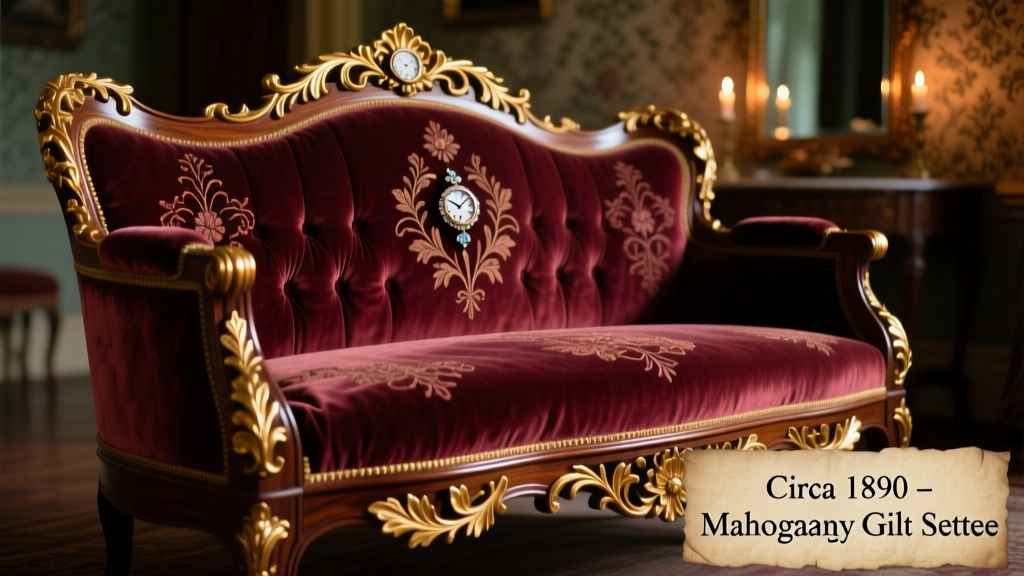
A Study in Late Victorian Grandeur: The Mahogany Carved Gilt-Upholstered Settee, Circa 1890