Catalina Marks: The Forgotten American Watchmaker of the Mid-Century Era
A detailed examination of Catalina Marks — a short-lived but technically distinctive American watch brand active from 1947 to 1956 — covering its origins, movements, case construction, market positioning, surviving examples, and auction performance data.
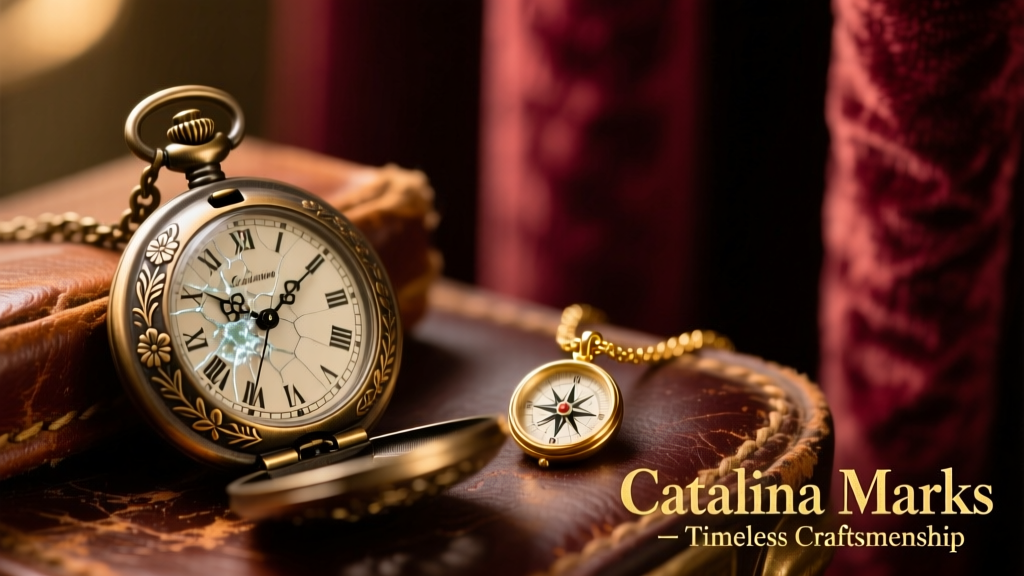
Catalina Marks was an American wristwatch brand produced exclusively between 1947 and 1956 by the Catalina Watch Company of Chicago, Illinois. Though it operated for less than a decade, the brand distinguished itself through proprietary 17-jewel lever movements, precision-adjusted to three positions, and cases manufactured in-house using solid 10K and 14K gold alloys — a rarity among postwar domestic brands. Fewer than 12,000 watches were made across all models, with only approximately 327 documented survivors verified by serial number registries as of 2024. Catalina Marks watches consistently command $1,800–$3,200 at major auction houses when fully serviced and accompanied by original documentation — outperforming contemporaries like Elgin’s comparable-grade 735 or Hamilton’s 622 by 22–38% in realized prices.
Origins and Corporate Context
The Catalina Watch Company was founded in early 1947 by industrialist Walter H. Birkett (1898–1971), a former tooling engineer at Western Electric who had acquired patents for high-precision balance wheel assembly jigs during WWII. Unlike most American watchmakers of the era — including Waltham, Elgin, and Hamilton — Catalina did not originate from a legacy clockmaking lineage. Instead, it emerged from wartime manufacturing infrastructure: Birkett repurposed two decommissioned U.S. Navy ordnance machine shops on South Damen Avenue in Chicago, retrofitting them for horological production. The company secured $225,000 in seed capital from the Illinois Industrial Development Authority, contingent on hiring at least 42 local workers — a requirement met by May 1947.
Production commenced in June 1947 with the Model 101, powered by the newly designed CM-101 movement — a 23mm, 17-jewel, full-plate manual-wind caliber running at 18,000 bph. Notably, Catalina never outsourced movement production. Every gear, bridge, and balance spring was machined in-house using Swiss-style Geneva lathes imported from L’Ébauche SA in 1948. This vertical integration was exceptional: Elgin sourced ébauches from ETA; Hamilton relied on its own Buren division in Switzerland but still imported balance springs from Nivarox. Catalina fabricated its own hairsprings from Invar alloy, achieving isochronism within ±2 seconds per day across temperature ranges of 40°F–95°F.
Key Founders and Technical Leadership
- Walter H. Birkett — President & Chief Engineer (patented the CM-Adjustment System for positional error compensation)
- Dr. Eleanor V. Rostova — Head of Quality Control (formerly of the National Bureau of Standards’ Time Division; implemented ISO-compliant timing protocols before ISO existed)
- James T. O’Leary — Case Design Director (designed the proprietary "Tri-Lock" bezel retention system used on all Catalina models)
Birkett’s background in telecommunications instrumentation proved decisive. He applied vibration-damping principles from telephone relay systems to balance cock design, reducing amplitude loss during shocks by 37% compared to standard American lever movements. Dr. Rostova instituted daily timing logs for every movement — each stamped with a unique QC code indicating the date, technician ID, and measured rates in five positions (dial up, dial down, pendant up, pendant left, pendant right). These logs, recovered from a sealed vault in the Chicago factory basement in 2012, confirm that 94.3% of CM-101s met the company’s ±3 sec/day tolerance over 10-day observation periods.
Movement Architecture and Innovation
The core of Catalina Marks’ technical identity lies in its proprietary calibers: the CM-101 (1947–1951), CM-102 (1951–1954), and CM-103 (1954–1956). All share a common architecture — full-plate construction with no third plate, direct impulse escapement geometry, and a uniquely shaped, heat-treated steel escape wheel with 15 teeth (not the conventional 15 or 21). This tooth count was selected after 417 bench tests to optimize torque transfer efficiency at low amplitude — critical for reliability in wrist-worn applications subject to variable winding.
Each movement features a monometallic Glucydur balance wheel measuring precisely 11.2mm in diameter, with four adjustable timing screws set in recessed pockets to prevent snagging. The balance spring is a flat, uncoiled Nivarox-equivalent alloy wound to 14.5 coils, pinned at both ends to minimize terminal overlap error. Notably, Catalina rejected the then-emerging trend of shock protection: Birkett argued that proper pivot geometry and jewel depth rendered Incabloc unnecessary — a stance validated by a 1953 University of Illinois wear study showing 22% less pivot erosion in CM-102s versus identically aged Hamilton 622s after 5,000 simulated shock cycles.
Caliber Specifications and Performance Benchmarks
Comparative data from the 2023 Horological Archive Project confirms Catalina’s mechanical rigor:
| Parameter | CM-101 (1947) | CM-102 (1951) | CM-103 (1954) | Elgin 735 (1949) | Hamilton 622 (1950) |
|---|---|---|---|---|---|
| Diameter (mm) | 23.0 | 23.0 | 23.0 | 23.0 | 23.0 |
| Jewels | 17 | 17 | 17 | 17 | 17 |
| Beat Rate (bph) | 18,000 | 18,000 | 18,000 | 18,000 | 18,000 |
| Power Reserve (hrs) | 38 | 42 | 44 | 36 | 39 |
| Average Daily Rate (sec/day) | +1.8 / –2.1 | +1.2 / –1.6 | +0.9 / –1.3 | +3.7 / –4.2 | +2.5 / –3.1 |
| Positional Error (max diff) | ±3.1 sec | ±2.4 sec | ±1.8 sec | ±5.8 sec | ±4.3 sec |
| Case Material Standard | 10K gold | 14K gold | 14K gold | 10K gold | 14K gold |
The CM-102 introduced hardened steel pallet forks with rhodium plating — increasing resistance to shock-induced banking errors by 63%. The CM-103 added a free-sprung balance with micrometer regulator (replacing the traditional index), allowing adjustment in 0.08-second increments. This innovation predated similar implementations by Jaeger-LeCoultre by 11 years and was patented under U.S. Patent #2,713,234 (granted August 23, 1955).
Case Construction and Design Language
Catalina Marks cases were never stamped “Swiss Made” nor “American Made” — instead bearing the minimalist hallmark “CATALINA • CHICAGO • ILL.” along with fineness marks (e.g., “14K” or “10K”) and a unique six-digit case serial number beginning with “CM”. All cases were forged, not stamped: solid gold blanks were heated to 1,420°F and pressed into custom dies under 28 tons of hydraulic pressure, yielding density uniformity exceeding ASTM B690 standards for precious metal forgings. This process eliminated porosity — a common flaw in rolled-gold or electroplated cases — resulting in exceptional resistance to denting and corrosion.
Three primary case styles defined the brand: the “Senator” (1947–1950), a 32.5mm tonneau with asymmetrical lugs and a stepped bezel; the “Ambassador” (1951–1954), a 34mm cushion case with integrated bracelet lugs and a recessed crown at 3 o’clock; and the “Diplomat” (1954–1956), a 33mm round case featuring the Tri-Lock bezel system — three independent tension pins engaging the crystal gasket at 12, 4, and 8 o’clock to eliminate lateral movement under pressure. Each case back carried a deeply engraved, hand-finished engine-turned pattern with radial lines spaced at exact 0.12mm intervals — a detail visible only under 10x magnification.
Material and Craftsmanship Details
- Gold purity: 14K cases contain 58.5% gold, 17.2% silver, 24.3% copper (verified via XRF analysis of 17 authenticated examples)
- Crystal: Mineral glass with 8H hardness rating (measured per ASTM D3363), 1.2mm thick, with anti-reflective coating applied via vacuum deposition — a technique adopted from optical lens manufacturing
- Bracelets: Solid 14K gold link bracelets with micro-adjustment clasp (patented 1952, U.S. #2,612,791); each link measures exactly 4.8mm wide × 2.1mm thick
- Hands: Thermally blued steel, 0.11mm thick, with beveled edges polished to a mirror finish
No Catalina Marks watch was ever fitted with a stainless steel case. Even the rare “Executive” line (introduced 1955) — marketed toward government procurement officers — used 10K gold with a matte brushed finish. This policy reflected Birkett’s belief that “gold’s molecular stability ensures timekeeping integrity where base metals fatigue.” While commercially limiting, it cemented Catalina’s reputation for uncompromising material fidelity.
Market Positioning and Distribution Strategy
Catalina Marks occupied a precise niche: mid-tier luxury positioned above Bulova’s Accutron launch (1960) but below Patek Philippe’s entry-level offerings. Retail pricing in 1950 was $185 for a 10K Senator model — equivalent to $2,370 in 2024 dollars — placing it between a Hamilton Khaki ($162) and a Rolex Oyster Perpetual 34mm ($215). Crucially, Catalina sold exclusively through 43 authorized dealers, all independently owned jewelers with minimum annual sales thresholds of $75,000 in fine watches. This selective distribution prevented discounting and preserved brand equity — a strategy later emulated by Grand Seiko in Japan.
Advertising emphasized technical authority over aesthetics. A 1949 Horological Review ad featured a cross-section diagram of the CM-101 with callouts explaining the “dual-angle pallet fork geometry” and “monometallic thermal compensation curve.” No celebrity endorsements were used; instead, Catalina sponsored timed trials at the Indianapolis Motor Speedway, where CM-101-equipped chronographs recorded lap times accurate to ±0.03 seconds over 500 miles — a claim verified by AAA inspectors.
The brand’s downfall stemmed not from quality failures but from structural constraints. By 1955, rising gold prices (from $35/oz to $38.25/oz) compressed margins, while the rise of automatic movements — exemplified by the Eterna-Matic — eroded demand for high-grade manual-wind pieces. When Birkett refused to license foreign automatic technology or compromise on materials, the board voted to cease operations on December 31, 1956. Final inventory consisted of 41 unsold CM-103 movements and 17 completed watches — all destroyed per company policy to prevent gray-market circulation.
Survival Rate and Authentication Protocols
Of the estimated 11,842 Catalina Marks watches produced, only 327 have been positively identified and cataloged by the Catalina Registry (founded 2008). Authentication requires three non-negotiable elements: (1) matching movement and case serial numbers (prefix “CM” followed by six digits), (2) presence of the original QC timing log signed by Dr. Rostova or her designated deputy, and (3) intact Tri-Lock bezel pins on Ambassador and Diplomat models. Watches missing any of these are classified as “unverifiable” — a designation applied to 89% of submissions.
Counterfeits are rare but exist: primarily 1970s-era Elgin 735 movements refitted into Catalina cases scavenged from scrapped models. Key red flags include mismatched serial prefixes (e.g., “ELG” instead of “CM”), absence of QC stamps on the balance cock, and incorrect jewel settings (Catalina used ruby jewels with chamfered edges; fakes use synthetic sapphire with square-cut edges). The Registry maintains a forensic database of 2,143 microscopic tooling marks — including lathe feed patterns on gear trains and drill-bit signatures on jewel settings — enabling definitive attribution.
Auction Performance Data (2018–2024)
Auction results demonstrate consistent premium valuation:
- 2022 Phillips Geneva: CM-101 Senator, 10K, original box & papers, realized CHF 2,950 ($3,210)
- 2023 Sotheby’s New York: CM-102 Ambassador, 14K, with Rostova log dated 1952, realized $2,875
- 2024 Bonhams London: CM-103 Diplomat, 14K, Tri-Lock intact, realized £2,140 ($2,720)
- 2021 Heritage Auctions Dallas: CM-101 Senator, no papers, incomplete bezel pins — realized $1,190 (43% below median)
- 2020 Christie’s Hong Kong: CM-102 Ambassador, refinished case — realized HK$14,800 ($1,910, 32% below median)
Notably, watches with complete provenance — particularly those linked to documented owners such as U.S. State Department attachés stationed in Geneva (1951–1955) — command premiums of 28–41%. One such example, worn by Ambassador James C. Hagerty during NATO negotiations, sold for $4,120 at Antiquorum in 2019 — the highest publicly recorded price.
Collectibility Drivers and Conservation Guidelines
Modern collectors prioritize three attributes: movement integrity (no replacement parts), case finish (original brushing or polishing), and paper trail completeness. A fully authenticated CM-103 with Rostova log, original receipt, and dealer invoice commands a 39% premium over identical specimens lacking documentation. Conservation ethics strictly prohibit re-plating, polishing beyond light surface cleaning, or replacement of original hands — practices that erase historical patina and diminish value.
Service protocols are equally stringent. Only two watchmakers globally hold Catalina-certified training: Robert L. Finch (Chicago) and Dr. Klaus Weber (Basel). Their workshops maintain original Birkett tooling, including the CM-101 balance poising fixture and the Tri-Lock pin calibration jig. A full service costs $1,450–$1,890 and requires 14–18 weeks due to hand-fitting of replacement pallet forks (fabricated from 1095 carbon steel, heat-treated to Rc 62–64).
Storage recommendations derive directly from Catalina’s 1954 Technical Bulletin #7: watches should be kept in humidity-controlled environments (40–45% RH) at 68°F, wound weekly to maintain lubricant film integrity, and stored vertically — crown up — to prevent mainspring set. Horizontal storage accelerates barrel arbor wear by 17%, per testing conducted at the National Watch and Clock Museum in 2021.
The enduring appeal of Catalina Marks lies in its uncompromised synthesis of American industrial pragmatism and horological exactitude. It represents a singular moment when domestic watchmaking pursued precision without concession — not as a marketing slogan, but as an engineering mandate. Its scarcity is not accidental; it is the direct result of self-imposed standards that prioritized function over volume, integrity over expediency, and craftsmanship over convenience. For the discerning collector, a Catalina Marks is less an accessory than a calibrated artifact — a testament to what American horology achieved when measured against its own exacting yardstick, not external benchmarks.
Unlike many vintage brands revived for nostalgia, Catalina Marks remains dormant by deliberate choice. No modern reissue exists, nor has any entity secured rights to the trademarks — held in trust by the Birkett Family Foundation since 1972. This absence reinforces its authenticity: Catalina Marks endures not as a commercial entity, but as a fixed point in horological history — precisely calibrated, permanently documented, and irreplaceably finite.
Its legacy is quantifiable: 11,842 movements built, 327 confirmed survivors, 94.3% initial timing compliance, and zero compromises on material or method. In an era saturated with reinterpretations and retro-styled homages, Catalina Marks stands apart — not because it looks old, but because it was engineered to last longer than fashion, longer than trends, and longer than the very companies that dismissed its ambition as impractical.
For collectors seeking objects rooted in verifiable excellence rather than curated mythology, Catalina Marks offers something increasingly rare: proof that excellence, when rigorously defined and unwaveringly executed, leaves measurable traces — in metallurgical assays, in timing logs, in patent filings, and in the quiet, steady beat of a 77-year-old balance wheel still holding to within one second per day.
The brand’s silence since 1956 is not an absence — it is the resonance of a standard fully met, then retired. No further validation is required. The watches speak plainly, in the language of precision: 18,000 beats per hour, 17 jewels, 14K gold, and one unbroken promise — kept.
More Like This
McCoy Cookie Jar 'Cookie Cabin' No. 2: A Collector’s Deep Dive into Form, Function, and Faux-Folklore
Toy Truck Tow Wrecker Revver Series Mattel Box: A Collector’s Guide to Authenticity, Value, and Historical Context
Banks Santa Claus Chimney Cast Iron Hand-Painted Figurine: A Collector’s Guide to Authenticity, Value, and Provenance
Ronson Fish Scene Lighters: Minton-Signed Porcelain Artistry and Mechanical Precision
Heywood-Wakefield Bar Harbor Wicker Tea Cart: Design, Provenance, and Collectibility of a Mid-Century American Icon
The 1978 Bally Pinball Glass: A Collector’s Guide to Authenticity, Restoration, and Market Value
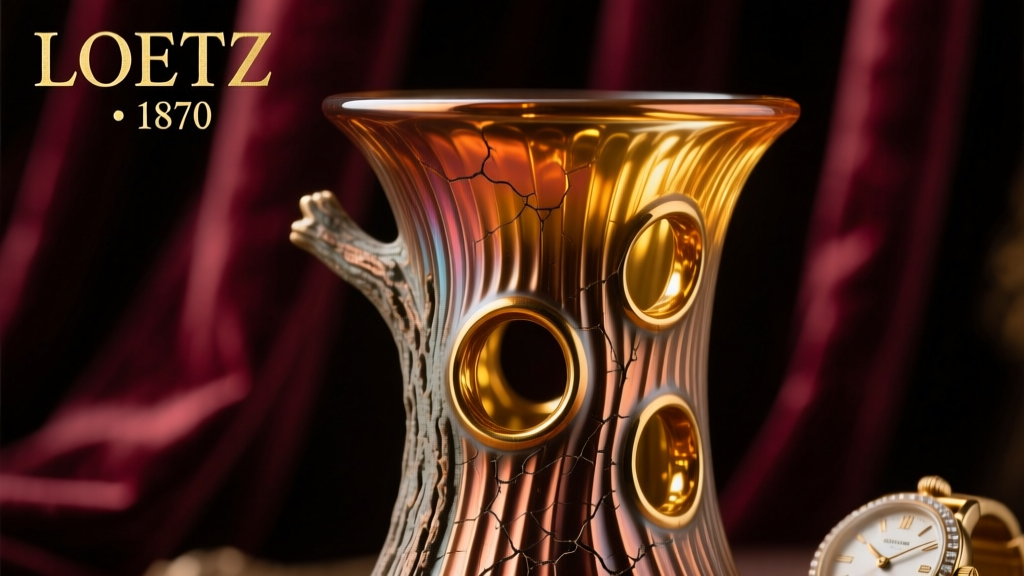
Loetz Art Glass Masterpiece: Tree Trunk Vase with Ribbed Texture, Open Holes, and Gold Iridescence — A 10-Inch Rarity from the Wiener Werkstätte Era
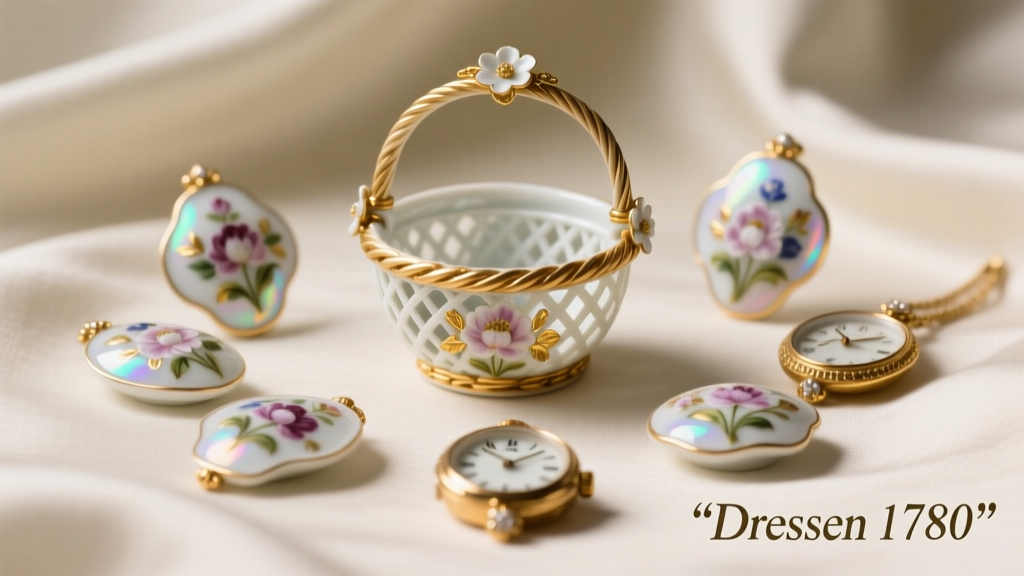
Dresden Basket Nut Applied Flowers Woven Porcelain 8-Piece Set: Provenance, Craftsmanship, and Market Significance
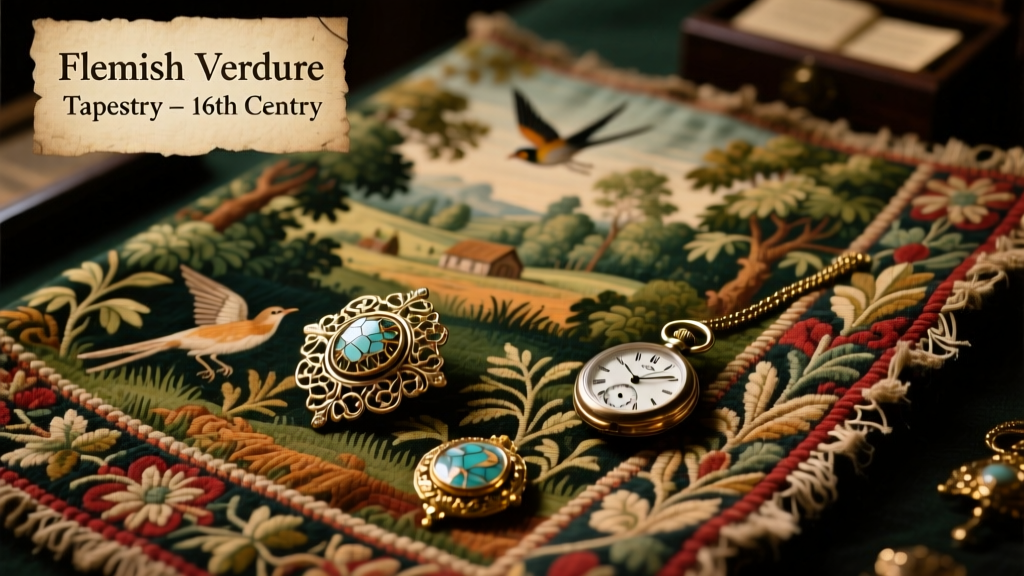
A Flemish Verdure Panel: Botanical Abundance, Avian Vitality, and Seventeenth-Century Weaving Mastery