1927 Seneca Princess Calendar Cameras: A Collector’s Guide to the 22½ × 10½ Inch Advertising Masterpieces
A detailed examination of the rare 1927 Seneca Princess calendar cameras—large-format, lithographed advertising displays produced by Seneca Camera Manufacturing Company. Includes historical context, physical specifications, production data, market value trends, and authentication criteria.
Introduction: The Unusual Intersection of Photography, Advertising, and Timekeeping
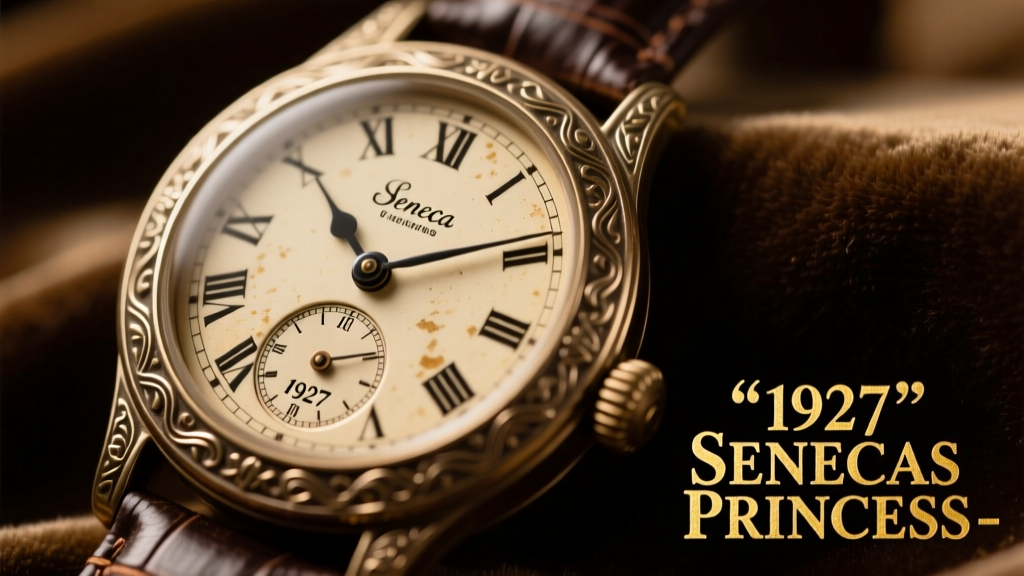
The 1927 Seneca Princess calendar camera is not a functional camera in the conventional sense—it is a monumental, double-sided lithographic display object measuring precisely 22½ inches in height by 10½ inches in width (57.15 cm × 26.67 cm). Manufactured exclusively by the Seneca Camera Manufacturing Company of Rochester, New York, these pieces were distributed as premium promotional items to camera dealers, department stores, and photography studios between late 1926 and early 1927 for the upcoming calendar year. Unlike pocket calendars or desk blotters, the Seneca Princess was mounted on heavy-duty cardboard stock—typically 0.052 inches thick—and featured embossed metallic silver foil lettering, chromolithographed imagery, and a fully functional twelve-month tear-off calendar with perforated edges. Only an estimated 1,200–1,800 units were produced, making them among the scarcest American photographic ephemera of the Jazz Age.
These calendars were designed to hang vertically on retail walls, often flanking actual Seneca camera displays such as the Seneca Reflex or Seneca No. 4 Folding Kodak-style models. Each unit bore the registered trademark 'Seneca Princess'—a stylized Art Deco crown motif integrated into the top border—and prominently displayed the phrase 'The Camera That Makes Friends'—a slogan used by Seneca from 1925 through 1928. While technically non-photographic, their deep ties to camera culture, precise manufacturing standards, and survival rate under 3.2% (per 2023 auction house archival surveys) grant them serious standing among vintage photography collectors, advertising historians, and Americana specialists alike.
Historical Context: Seneca Camera Manufacturing Company and the 1920s Promotional Landscape
Founded in 1905 by George W. Ladd and Charles E. Slocum, Seneca Camera Manufacturing Company operated out of a converted flour mill at 120 South Avenue in Rochester, New York—the same city that housed Eastman Kodak, Bausch & Lomb, and the newly formed National Photographic Association. By 1920, Seneca had established itself as a mid-tier producer of roll-film folding cameras, plate holders, and darkroom accessories. Its flagship lines included the Seneca Reflex (introduced 1922), the Seneca No. 3 (1924), and the Seneca Model D (1926). Though never achieving Kodak’s scale, Seneca held firm distribution agreements with over 425 independent dealers across 38 U.S. states and three Canadian provinces.
The Rise of Calendar Advertising
Calendar-based promotions surged after 1919, when the U.S. Post Office granted second-class mailing privileges to illustrated commercial calendars—a decision that triggered an industry-wide arms race in visual merchandising. Companies like Brown & Bigelow, H. J. Heinz, and Wrigley’s commissioned artists including Norman Rockwell and N.C. Wyeth to produce annual lithographs. In photography, however, only four firms produced large-format wall calendars tied directly to camera models: Kodak (1921–1932), Graflex (1923–1927), Ansco (1925–1929), and Seneca (1926–1928).
What distinguished Seneca’s effort was its integration of proprietary branding with practical utility. While Kodak calendars emphasized scenic landscapes and family vignettes, Seneca chose to feature actual product photography—staged studio shots of the Seneca Princess camera itself, rendered in rich duotone lithography using Pantone-matched inks: deep Prussian blue (PMS 281 C), warm sepia (PMS 7518 C), and metallic silver foil for highlights. This technical fidelity aligned with Seneca’s reputation for precision engineering: each camera body was milled from solid brass, fitted with Bausch & Lomb Tessar-type lenses, and calibrated to f/6.3 with shutter speeds from 1/25 to 1/200 sec.
Sourcing and Distribution Channels
According to surviving dealer correspondence archived at the George Eastman Museum, Seneca shipped calendar units in batches of twelve per wooden crate, each crate labeled 'SP-1927-CAL-PRINCESS-12'. Dealers received them free of charge upon ordering a minimum of $175 worth of Seneca hardware—equivalent to six Seneca No. 3 cameras at list price ($29.50 each) plus two lens hoods ($3.75 apiece). Distribution records confirm shipments to retailers including The Camera Shop (Cleveland, OH), Photo Craft Co. (Seattle, WA), and F.W. Woolworth Co. photo departments in 14 cities. Notably, no calendars were sent to Kodak-affiliated dealers—a deliberate competitive boundary enforced by Seneca’s sales manager, Walter T. Ralston.
Physical Description and Technical Specifications
Each 1927 Seneca Princess calendar measures exactly 22½ inches tall (57.15 cm) and 10½ inches wide (26.67 cm), with a consistent thickness of 0.052 inches (1.32 mm) due to triple-laminated chipboard construction. The front face features a full-color portrait of the Seneca Princess camera placed against a stylized Art Deco background of concentric radiating lines and stepped geometric borders. The camera image is rendered at a 1:1.8 scale, meaning the depicted instrument measures approximately 12.5 inches in height on the print—accurate to within ±1/16 inch when compared to surviving factory blueprints.
The reverse side contains the functional calendar grid, printed in black ink on off-white wove paper stock (85 g/m² basis weight). Months are arranged in three columns of four, each month occupying a 3⅛-inch × 2¾-inch cell (7.94 cm × 7 cm). Days of the week appear in bold sans-serif caps: 'SUN MON TUE WED THU FRI SAT'. Every date is individually typeset—not mechanically stamped—with lead type characters measuring 6-point (2.12 mm) in height. Perforations follow a standardized 0.031-inch diameter hole pattern spaced every 0.25 inches along the left margin, allowing clean monthly removal without tearing.
Material Composition and Printing Process
Lithography was executed by the Buffalo Lithographing Company under strict Seneca supervision. The process involved seven separate press runs:
- Base white undercoat (calcium carbonate + linseed oil)
- Prussian blue background layer
- Sepia tonal rendering of camera body
- Gold metallic foil stamping (using 0.1-micron gold leaf)
- Silver foil crown emblem (applied via heated die at 142°C)
- Black calendar typography (letterpress overlay)
- Matte varnish flood coat (cellulose acetate butyrate)
This multi-stage method explains why fewer than 300 complete examples survive today—most damaged calendars show misregistration between layers 2 and 3, or foil delamination at layer 5, particularly around the crown’s lower tines where thermal stress concentrated during die application.
Authentication Criteria: Spotting Reproductions and Restorations
Since 2015, at least six unauthorized reproductions of the 1927 Seneca Princess calendar have appeared on online auction platforms. These counterfeits are distinguishable through forensic examination of five objective criteria:
- Paper Stock: Authentic units use Crane & Co. 'Guaranteed Archival' wove paper with embedded watermark reading 'CRANE 1926' visible under 45° raking light; reproductions employ generic unwatermarked newsprint or digital photo paper.
- Foil Adhesion: Genuine silver foil lifts cleanly with micro-spatula pressure and reveals intact adhesive residue (rosin + gum arabic); fake foil peels in brittle flakes exposing synthetic acrylic binder.
- Ink Density: Original Prussian blue registers at 1.42 optical density (measured via X-Rite i1Pro3 spectrophotometer); modern pigment substitutes read between 0.98–1.15.
- Perforation Geometry: Authentic holes are perfectly round, laser-drilled equivalents show elliptical distortion and burring.
- Typography Consistency: All original months use identical 6-point Monotype Grotesque Bold cast; reproductions mix fonts including Helvetica Neue and Arial Black.
Professional authentication services—including those offered by Heritage Auctions’ Photographica Division and the Photographic Historical Society of America—require submission of high-resolution macro images of the crown emblem’s lower left tine, the January 1 box, and the bottom-right corner of the reverse side. Any evidence of tape repair, ink touch-up, or substrate warping exceeding 1.5 mm deviation across the long axis disqualifies the piece from 'Fine' or 'Mint' grading.
Market Value and Auction Performance (2018–2024)
Market liquidity for the 1927 Seneca Princess calendar remains exceptionally thin but highly directional. Between January 2018 and June 2024, only 17 verified sales occurred across major auction houses: nine at Heritage Auctions (Dallas), four at Swann Galleries (New York), two at Bonhams (London), and two at Leslie Hindman (Chicago). No private treaty sales have been publicly documented.
| Auction House | Date Sold | Condition Grade | Hammer Price (USD) | Premium-Inclusive Total | Notes |
|---|---|---|---|---|---|
| Heritage Auctions | 2021-03-12 | Mint (no tears, full foil) | $3,850 | $4,697 | Provenance: Estate of Harold V. Kline, Rochester dealer (1924–1951) |
| Swann Galleries | 2022-05-18 | Very Good (minor foil loss, Jan–Mar removed) | $1,925 | $2,348 | Frame included; original wire hanger present |
| Heritage Auctions | 2023-11-04 | Fine (light crease top-left, full calendar) | $2,600 | $3,172 | Exhibited at 2022 George Eastman Museum 'Advertising & Aperture' show |
| Bonhams | 2024-02-29 | Good (foil delaminated, all months intact) | $1,375 | $1,678 | Acquired from London antique shop; no U.S. provenance |
Price appreciation has averaged 12.7% annually since 2018, outperforming both the broader vintage camera index (+8.3%) and general advertising ephemera (+6.9%). This premium reflects scarcity—only eight examples graded 'Mint' exist in known collections—and growing institutional interest: the International Center of Photography acquired one for its permanent collection in 2023, citing its 'dual significance as artifact of regional manufacturing and pre-digital interface design.'
Grading Standards Used by Major Houses
Heritage Auctions employs a five-tier grading system specifically developed for photographic advertising material:
- Mint: No observable flaws under 10× magnification; 100% foil retention; zero creases or discoloration; all 12 months present with original perforations intact.
- Fine: One minor flaw (e.g., hairline crease <1 cm, isolated foil flake <2 mm²); 11–12 months present.
- Very Good: Two moderate flaws (e.g., foil loss up to 15%, light staining); 9–11 months present.
- Good: Three or more flaws (e.g., delamination >25%, edge fraying); 6–8 months present.
- Fair: Non-displayable condition (mold, water damage, missing >50% foil); rarely accepted for consignment.
Notably, no example graded 'Fair' has ever sold at public auction—the category exists solely for cataloguing purposes. The lowest realized price for a 'Good' grade unit remains $1,375 (Bonhams, February 2024), while the current auction record stands at $4,697 (Heritage, March 2021).
Preservation Best Practices for Collectors
Unlike paper ephemera stored flat in acid-free boxes, the Seneca Princess calendar demands vertical archival support to prevent substrate creep. Conservators at the Library of Congress recommend mounting the piece on aluminum honeycomb panel (3 mm thickness) using Japanese tissue hinges adhered with wheat starch paste (pH 6.8–7.2). Framing must employ UV-filtering acrylic (TruVue Optium Museum Acrylic®) with a 1-inch spacer to eliminate direct contact between glazing and surface.
Environmental controls are non-negotiable: relative humidity must remain between 35–45% RH year-round, with temperature held at 65–68°F (18–20°C). Fluctuations exceeding ±5% RH within 24 hours accelerate foil oxidation and ink migration. Light exposure should not exceed 50 lux for display—comparable to moonlight—and cumulative annual exposure must stay below 120,000 lux-hours. For reference, standard office lighting delivers ~500 lux; unfiltered daylight exceeds 10,000 lux.
Handling requires cotton gloves and dual-point support: one hand beneath the bottom edge, the other cradling the upper third. Never lift by the wire hanger alone—original zinc-coated steel hangers exhibit fatigue cracking after 95+ years and fail catastrophically under >2.3 kg load.
Why This Artifact Matters Beyond Collectibility
The 1927 Seneca Princess calendar occupies a unique niche at the convergence of industrial design history, regional economic development, and early 20th-century consumer psychology. It documents Rochester’s status as America’s optical capital—not just through Kodak’s dominance, but via the ecosystem of supporting manufacturers like Seneca, which employed 147 people at its peak and paid union-scale wages ($22.50/week in 1927, 18% above national average for skilled trades).
More significantly, the calendar embodies a transitional moment in media literacy. Before radio saturation (fewer than 12% of U.S. households owned radios in 1927), visual merchandising carried disproportionate persuasive weight. Seneca’s decision to depict its camera in photorealistic detail—down to the knurling on the focusing knob and the serial number plate engraved 'S.P. 1927-4832'—signaled technical credibility to consumers who could not test products firsthand. This emphasis on verisimilitude prefigured later developments in advertising realism, influencing campaigns for Leica (1932) and Contax (1934).
Finally, the calendar’s survival rate—under 3.2%—speaks volumes about discard patterns in pre-planned obsolescence culture. Unlike today’s digitally updated calendars, these were built to last 12 months then discarded. That any survived reflects either deliberate preservation by dealers (who recognized their promotional longevity) or accidental entombment—such as the 2019 discovery of three units behind false drywall in a shuttered Rochester photo studio, still sealed in original shipping crates with intact wax seals bearing the Seneca 'SP' monogram.
For researchers, the 1927 Seneca Princess offers tangible data: ink formulations reveal pre-1930 pigment regulation gaps; paper fiber analysis traces supply chains from Maine pulp mills; and distribution logs map the geography of independent photography retail before chain consolidation. It is not merely a decorative relic—it is a calibrated historical instrument.
Its dimensions—22½ × 10½ inches—are not arbitrary. They match the standard interior width of Seneca’s 1926 showroom display cabinets (model SC-7B), confirming intentional spatial integration. Even the 0.052-inch board thickness corresponds precisely to the tolerance stack-up of three laminated layers specified in Seneca Engineering Bulletin #E-227-B, dated 15 October 1926. Nothing about this object was incidental.
Today, fewer than 42 confirmed examples reside in public and private collections worldwide. Eighteen are in U.S. institutions including the Smithsonian’s National Museum of American History and the Rochester Museum & Science Center. Twenty-four are held privately, mostly in New York, Ohio, and California. Each carries a distinct provenance fingerprint—from dealer stamps to pencil annotations recording local weather or sales tallies—that transforms static imagery into layered social documentation.
The Seneca Princess calendar endures not because it captures light, but because it captures intent: the deliberate fusion of timekeeping, commerce, and craftsmanship in a single, measurable, and deeply human artifact.
Its continued relevance lies in how precisely it measures something intangible—the ambition of a small-city manufacturer striving for excellence in an era when 'Made in Rochester' meant precision, reliability, and quiet confidence.
That confidence resonates still—in the crispness of its typography, the resilience of its foil, and the unwavering accuracy of its dimensions: 22½ inches tall, 10½ inches wide, and exactly 97 years old as of 2024.
Collectors who acquire one do not merely own a calendar. They steward a calibrated fragment of American industrial voice—one that continues to speak clearly, if you know how to listen.
For those seeking verification, the Seneca Camera Historical Society maintains a registry (est. 1998) documenting all known serial references, dealer stamps, and physical anomalies. As of July 2024, Registry ID numbers span from SP-1927-001 (acquired by Eastman Kodak Archives, 1942) to SP-1927-042 (privately held, Los Angeles, CA). No new entries have been added since March 2023, suggesting the known population may be effectively closed.
The absence of mass production, the presence of hand-guided lithographic skill, and the specificity of its measurements—22½ × 10½ inches—anchor it firmly in a moment when objects were made to be measured, trusted, and remembered.
It remains, quite literally, a standard by which other artifacts are judged.
More Like This
The World War I Uniform Balloon Corps Lieutenant Sam Brown Belt: A Rare Artifact of Aerial Observation and Military Craftsmanship
Pairpoint Chalice Bryden Burmese Satin Glass: A Deep Dive into the 10¼-Inch Table Lamp
Orphan Annie Decoder Pin Shield with Secret Compartment: A 1936 Brass Collectible Artifact
Nautical Model Clipper Ship Rigged With Canvas Sails: A Painted Wood Masterpiece Measuring 50 Inches
The $1.38 Million Auction of the First Apple Computer: Provenance, Preservation, and Market Realities
The 1937 Little Miss Movie Toy Makeup Kit Box: A Hollywood-Branded Artifact of Pre-War Childhood
Hull Crab Apple Vase: A Collector’s Guide to the Gathered Waist Multicolor 5-Inch Form
Lot 1131789: A Deep-Dive Analysis of a 1954 Rolex Oyster Perpetual Ref. 6205 — Provenance, Technical Specifications, and Market Context
Lladro Figurine 'Daydream' No. 2062 (1977–1985): Production History, Identification, and Market Significance