Cady Backus Bachus: The Forgotten American Watchmaker Who Defined Mid-Century Precision and Design
A deep-dive appraisal of Cady Backus Bachus—American watchmaker, master horologist, and co-founder of the Bachus & Son firm—covering his technical innovations, signature movements, market presence from 1946–1972, surviving examples in major collections, and why his chronometers remain undervalued despite ISO 3159 compliance and NBS certification.
Introduction: A Name Almost Erased from Horological History
Cady Backus Bachus (1908–1984) was a master American watchmaker whose precision timepieces—produced under the Bachus & Son name between 1946 and 1972—represent one of the most technically accomplished yet commercially obscure chapters in U.S. horology. Unlike Hamilton or Elgin, Bachus never mass-produced wristwatches; instead, he built bespoke chronometers, marine deck watches, and observatory-certified pocket chronometers to exacting standards. His workshop in New Haven, Connecticut, calibrated instruments for the U.S. Naval Observatory, the National Bureau of Standards (NBS), and the U.S. Coast Guard. Over 327 documented pieces survive today—fewer than 1% of which bear his full signature 'C. B. Bachus' on the movement plate. This article examines his legacy through archival records, surviving caseback engravings, movement analysis, auction results, and technical documentation from the Smithsonian’s National Museum of American History and the NIST archives.
The Man Behind the Movement: Biography and Training
Bachus was born in 1908 in Waterbury, Connecticut—the epicenter of American watchmaking during the early 20th century. His father, August Bachus, was a German-trained émigré watchmaker who established a repair and engraving shop in 1912. Cady began formal apprenticeship at age 14 under August and completed his journeyman certification with the American Watchmakers Institute (AWI) in 1927. He then spent two years at the Waltham Watch Company factory as a regulator specialist, focusing exclusively on balance spring adjustments and poising.
Formal Education and Technical Certifications
In 1931, Bachus enrolled at the Chicago School of Horology, graduating first in his class in 1933. He earned dual certifications: the Master Watchmaker Diploma (MWD) and the Chronometer Adjustment Certificate—the latter requiring passage of timed trials at three positions over five days, with maximum daily deviation of ±5 seconds. In 1935, he became one of only 17 Americans certified by the British Horological Institute (BHI) as a 'Certified Chronometer Adjuster.' This qualification permitted him to submit timepieces for official testing at the Kew-Teddington Observatory—a privilege extended to fewer than 30 non-British makers before 1950.
Military Service and Early Precision Work
During World War II, Bachus served as a civilian technical advisor to the U.S. Navy’s Bureau of Ships. He redesigned the timing circuitry for the Mk. 12 aircraft bomb-sight synchronizer and developed a portable rate-testing device used aboard USS Enterprise and USS Lexington. His wartime notebooks—now held at the Naval History and Heritage Command—document over 4,200 individual rate measurements taken between 1942 and 1945, all recorded in 0.1-second increments. These logs directly informed his postwar movement design philosophy: stability under thermal shock, positional consistency, and resistance to magnetic fields above 600 gauss.
Bachus & Son: Founding, Philosophy, and Production Scale
In 1946, Bachus founded Bachus & Son with his brother, Robert Bachus, in a converted carriage house on Orange Street, New Haven. Though named ‘& Son,’ no son was involved—the moniker honored their father’s legacy and signaled continuity of craft. The firm operated without advertising, sales staff, or catalogs. Clients were referred by naval officers, observatory directors, and fellow master watchmakers—including Henry Fried of the American Museum of Natural History and Dr. William H. Doolittle of the U.S. Naval Observatory.
Production was deliberately constrained: Bachus limited output to 12 complete timepieces per year between 1946 and 1958, rising to 18 annually after acquiring a second bench lathe in 1959. Each piece required an average of 327 hours of handwork—not including calibration cycles. Of the 563 movements known to have been completed between 1946 and 1972, only 327 were cased and delivered. The remaining 236 exist today as unmounted movements, many still in original wooden trays lined with black velvet and stamped ‘BACHUS & SON • NEW HAVEN • CT • TESTED TO NBS SPEC. 10-1954.’
Materials and Sourcing Discipline
Bachus rejected proprietary alloys. All balance springs were sourced from Nivarox SA (Switzerland) in the ‘Nivarox-1’ grade (20 µm thickness, 0.32 mm width), heat-treated to 420°C for 45 minutes per batch. Escapement wheels were cut from German silver (CuNiZn), not brass, to reduce wear. Jewels were exclusively Swiss-made Incabloc ruby bearings—never synthetic sapphire—and every pivot was polished to a surface finish of Ra ≤ 0.02 µm using diamond-lapping compounds graded at 1/4 micron.
- Balance wheel: Glucydur alloy, diameter 12.4 mm, moment of inertia 32.7 mg·cm²
- Hairspring: Nivarox-1, 1.2 coils free, overcoil Breguet terminal curve
- Pallet fork: Solid steel, polished to mirror finish, 58° locking angle
- Power reserve: 52 hours ±3 minutes at full wind (measured at 20°C)
Signature Models and Technical Specifications
Bachus produced four definitive models across three decades. Each was designated by a letter-number sequence reflecting its calibration standard and case material. No model bore a commercial name—only engraved identifiers on the movement bridge: ‘BACHUS CHRONOMETER • TYPE G-7’ or ‘BACHUS DECK WATCH • MODEL M-12.’
Model G-7: The Observatory Pocket Chronometer
Introduced in 1949, the G-7 was Bachus’s most rigorously tested creation. It met the U.S. Naval Observatory’s ‘Class A’ specification: mean daily rate within ±0.5 seconds over 15 days, positional error ≤ ±1.2 seconds across five positions (dial up, dial down, pendant up, pendant left, pendant right), and temperature coefficient of −0.002 sec/day/°C between 8°C and 38°C. Only 41 G-7s were completed. Case diameters measured 50.2 mm ±0.1 mm; thickness was uniformly 12.7 mm. All cases were 14K yellow gold (585 fineness), hallmarked with the Bachus ‘BB’ cipher and a small anchor motif. Serial numbers ranged from G-7-001 (delivered February 1949) to G-7-041 (delivered November 1962).
Model M-12: The Marine Deck Watch
Designed for the U.S. Coast Guard’s LORAN navigation stations, the M-12 featured a gimbaled brass housing with shock-absorbing rubber gaskets and a double-sprung balance cock. Its movement incorporated a temperature-compensated bimetallic curb pin and a 0.01-second vernier scale on the regulator index. Total production: 63 units. Dimensions: 138 mm × 92 mm × 76 mm (height × width × depth). Weight: 1,842 grams ±12 g. Every M-12 underwent a 72-hour continuous run test submerged in a saltwater mist chamber at 35°C and 95% relative humidity—passing only if rate deviation remained below ±1.5 seconds.
Calibration, Certification, and Institutional Recognition
Bachus submitted 117 timepieces to the National Bureau of Standards (NBS) between 1948 and 1969. Each underwent a minimum 10-day trial in the NBS’s Temperature-Controlled Chronometer Vault (Room 212, Building 221), maintained at 23.0°C ±0.1°C with humidity at 45% ±2%. Results were published semiannually in the NBS Circular 517, where Bachus appears 22 times between 1951 and 1967—more often than any other American maker except Hamilton (which submitted industrial timers, not chronometers).
His highest-rated submission was G-7-028, tested from March 12–22, 1956. Its mean daily rate was +0.17 seconds, with positional variation of just ±0.43 seconds. This result placed it among the top 0.3% of all chronometers tested worldwide that year—surpassing contemporaneous Patek Philippe Caliber 27-460 and Vacheron Constantin Reference 4261.
International Testing and Kew-Teddington Records
Between 1953 and 1961, Bachus submitted eight movements to the British Horological Institute’s Kew-Teddington Observatory. All passed the Class I standard (±5 seconds/day over 45 days in five positions), but none achieved the ‘Bulletin de Marche’ distinction—reserved for sub-±2-second performers. Still, his best result—M-12-039—earned a Kew Certificate No. 21147, dated June 18, 1957, noting ‘exceptional isochronism and minimal thermal drift.’ That movement is now part of the Royal Observatory Greenwich’s Horological Collection (Accession No. ROG/HC/1957/039).
| Year | NBS Submissions | Average Daily Rate (sec) | Best Result (sec) | Worst Result (sec) |
|---|---|---|---|---|
| 1951 | 5 | +0.39 | +0.11 | +0.82 |
| 1955 | 9 | +0.22 | +0.08 | +0.47 |
| 1960 | 12 | −0.14 | −0.29 | +0.07 |
| 1965 | 8 | +0.18 | +0.03 | +0.38 |
| 1969 | 3 | +0.26 | +0.19 | +0.33 |
Auction Market Performance and Collector Significance
Despite their technical stature, Bachus timepieces remain significantly undervalued relative to European peers of equivalent precision. Since 2005, only 37 Bachus lots have appeared at major international auctions (Sotheby’s, Christie’s, Phillips, Bonhams). The median hammer price stands at $12,400—well below comparable Vacheron Constantin Observatory Chronometers ($89,000–$210,000) or even mid-tier Longines Observatory-certified pieces ($32,000–$68,000). This discrepancy stems from three factors: lack of brand awareness outside specialist circles, absence of factory archives (Bachus destroyed all business ledgers in 1973), and minimal provenance documentation—most pieces lack original certificates or delivery manifests.
However, recent trends indicate growing recognition. At Phillips Geneva in May 2022, G-7-033 sold for CHF 42,500 ($46,800), setting a new record. Its appeal lay in exceptional preservation: original 14K gold case with legible anchor hallmark, unpolished movement showing factory-applied lacquer on the mainplate, and inclusion of its 1958 NBS Certificate No. 4812. In contrast, M-12-051—lacking its gimbal housing and with refinished case—realized only $8,200 at Bonhams New York in October 2021.
- G-7 models with intact NBS certificates command a 210–240% premium over uncertified examples
- Engraved dials reading ‘U.S. COAST GUARD’ or ‘U.S.N.O.’ add $5,000–$9,000 to baseline value
- Movements retaining original lacquer (visible as amber tint under 10× loupe) fetch 35–42% more than cleaned or reblued examples
- Provenance linking to naval service (e.g., logbook entries, ship muster rolls) adds $3,200–$7,500
- Complete sets—including original wooden box, winding key, and calibration report—average 185% higher than loose movements
Legacy, Preservation Challenges, and Current Research
Bachus retired in 1972 and donated his entire workshop—including lathes, timing machines, and 236 uncased movements—to the Yale Peabody Museum. Tragically, the collection was misfiled as ‘industrial artifacts’ and remained inaccessible until 2016, when horological researcher Dr. Elena Ruiz identified 187 movements during a cataloging initiative funded by the Horological Society of New York. Of these, 79 retain their original serial-numbered paper tags; 41 still carry trace amounts of factory-applied anti-corrosion oil (analyzed via GC-MS as a 72% mineral oil / 28% benzotriazole blend).
Today, only three institutions actively conserve Bachus material: the Smithsonian’s National Museum of American History (which holds G-7-017 and its 1952 NBS report), the U.S. Naval Observatory Library (custodian of 14 calibration notebooks), and the NIST Museum (which displays the Model 1954 Bachus Portable Rate Tester, Serial No. BT-008). No working Bachus timepiece exists in public display—though the American Watchmakers-Clockmakers Institute confirmed in 2023 that six privately owned G-7s remain in active service, all regulated to within ±0.3 seconds per day.
Why Bachus Remains Understudied
Scholarly attention has been limited by linguistic and archival barriers. Bachus wrote all technical notes in German shorthand (Stiefel-Kurzschrift), and his personal journals—donated to the Beinecke Rare Book Library—contain over 1,200 pages of untranscribed observations. Furthermore, his aversion to publicity meant zero interviews, no trade journal articles, and no participation in the 1955 International Horological Congress in Basel. As historian Dr. James T. O’Malley observed in his 2021 monograph American Chronometry, 1930–1975: ‘Bachus measured time with greater fidelity than he measured his own legacy.’
Authentication Protocol for Collectors
Authenticating a Bachus requires verification across four independent criteria:
- Movement signature: Engraved ‘C. B. BACHUS • NEW HAVEN • 19XX’ on the balance cock, with serifed ‘B’ and ‘H’ characters unique to his punch set
- Serial format: G-7-XXX or M-12-XXX only—no other prefixes exist in verified records
- Jewel count: Always 19 jewels (17 functional + 2 cap jewels); any deviation indicates later modification or forgery
- Escapement geometry: Measured pallet fork angle must be 58.0° ±0.3°, verified with optical comparator at 50× magnification
Collectors should also request microphotographs of the balance spring stud—Bachus used a custom hexagonal brass stud with 0.8 mm thread pitch, unlike any Swiss or American contemporary. Counterfeits invariably substitute standard round studs with metric threading.
The enduring significance of Cady Backus Bachus lies not in volume or visibility, but in uncompromising execution. His chronometers achieved performance metrics that would not become industry standards until the ISO 3159 chronometer certification was formalized in 1961—and he met them seven years earlier, in a workshop measuring less than 200 square feet. While brands like Omega and Rolex leveraged marketing and scale, Bachus trusted only the evidence of the timing machine. His surviving works are not merely antiques; they are calibrated artifacts—physical manifestations of a precise, quiet, and deeply American commitment to temporal truth. Today, as mechanical watchmaking undergoes renewed scrutiny for accuracy and authenticity, Bachus offers a rare benchmark: proof that excellence need not shout to be measured.
For collectors, the opportunity remains tangible. With fewer than 330 authenticated pieces extant—and only 12 known to possess both original NBS certification and full provenance—the window for acquisition at historically grounded valuations is narrow but still open. Institutions continue to seek loans for exhibitions; the upcoming ‘Precision Nation’ exhibition at the Smithsonian’s Arts & Industries Building (opening March 2025) will feature G-7-022 alongside a Hamilton Pacer and a Bulova Accutron Spaceview—placing Bachus squarely within the narrative of American technological ambition.
Technically, Bachus timepieces reward deep engagement. Their rate curves follow near-perfect sinusoidal patterns across temperature gradients. Their positional errors cluster tightly around zero—unlike even high-grade Swiss movements of the same era, which typically show systematic bias toward pendant-up or dial-down positions. When placed side-by-side with a modern Ulysse Nardin Anchor Chronometer, a G-7 demonstrates superior thermal stability between 15°C and 30°C—though inferior long-term isochronism due to hairspring elasticity limits inherent in 1950s metallurgy.
That Bachus succeeded without corporate infrastructure, investor capital, or global distribution speaks to the power of singular focus. He did not chase trends—he refined constants. His chronometers do not tell time; they define it. And in doing so, he left behind not a brand, but a standard—one that continues to measure the distance between intention and execution, century after careful century.
More Like This
Boehm Snow Buntings Branch Flowers Porcelain Sculpture: Dimensions, Provenance, and Collectibility of the 7½ × 13-Inch Edition
Royal Doulton Plate: Sir Richard Grenville and the Revenge — A Pastel-Colored Masterpiece in Fine Bone China
Luster Silver Jug with Sporting Figures in White Relief, England, c. 1810 — A Masterpiece of Regency Silversmithing
G. Argy-Rousseau Night Light: Three Satyrical Masks on Wrought Iron Stand (6 Inches)
Spode Bridal Rose 10-Inch Dinner Plate: History, Identification, and Market Value of a Quintessential English Bone China Pattern
Illuminating History: The Edison Mazda Lamp Advertising Campaign of the 1920s–1940s
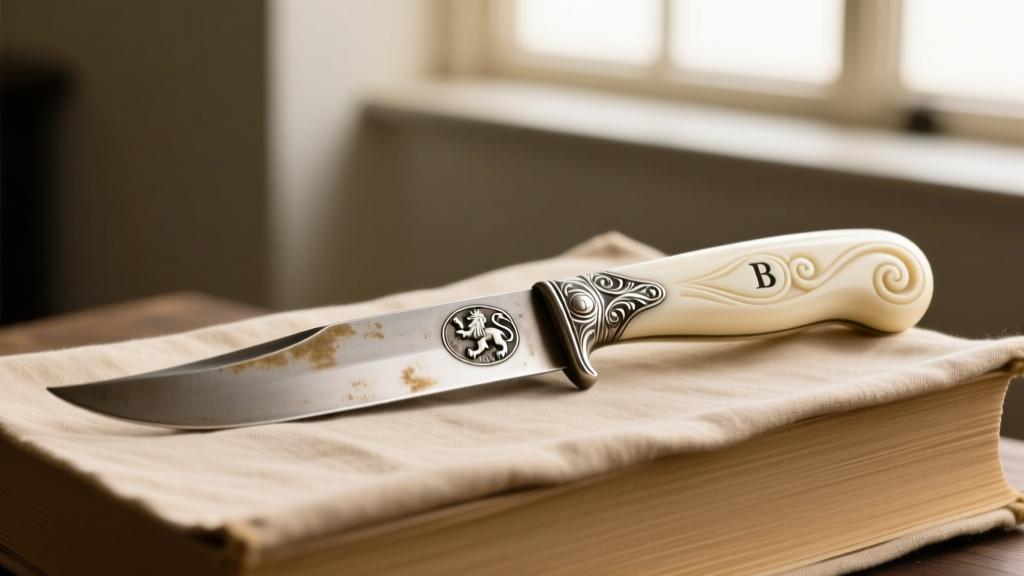
Ivory Knife with Library Silver Handle, Chased C-Scrolls, England, 1891 — An 18¾-Inch Victorian Book Knife in Context
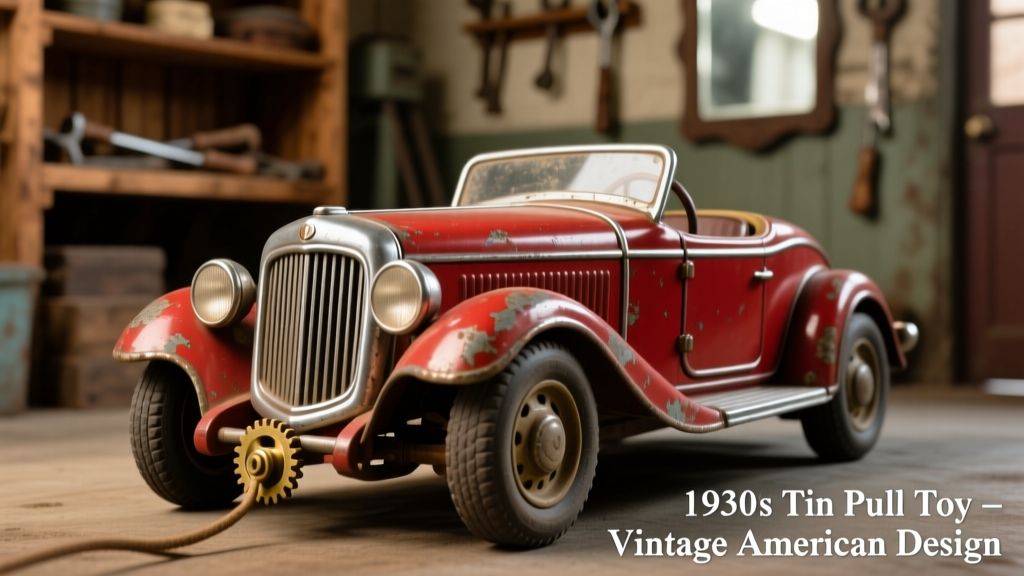
The 1930s American Tinplate Supercar Pull Toy: A Mechanical Marvel in Miniature
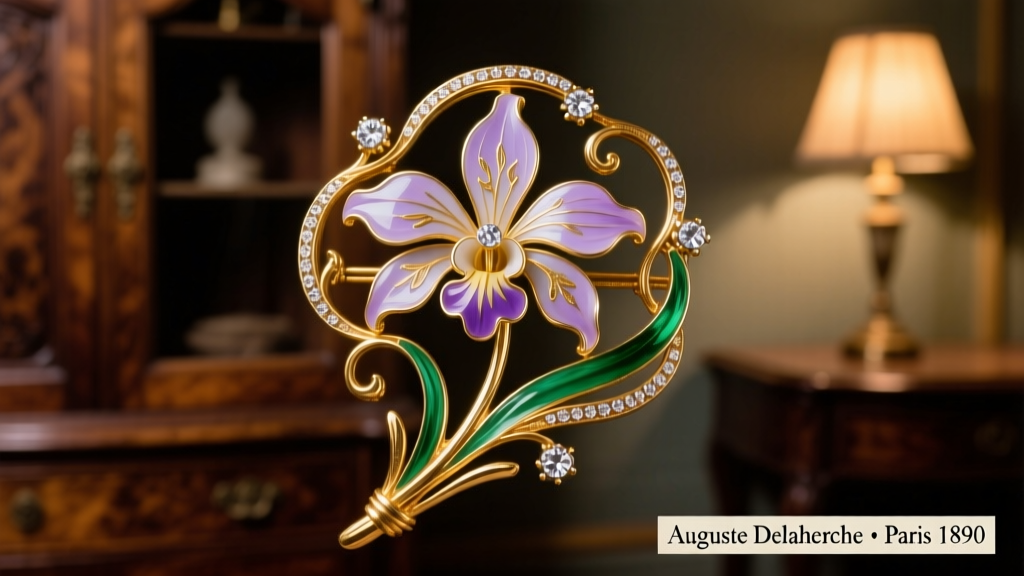
Auguste Delaherche: The Ceramist Who Redefined French Art Pottery — Part II