C. M. Russell: The Forgotten American Watchmaker Who Defined Early 20th-Century Precision Craftsmanship
An in-depth examination of C. M. Russell & Co., the Chicago-based watch manufacturer active from 1904 to 1931, whose lever-set, 16-size, 23-jewel pocket watches rivaled Elgin and Waltham in accuracy, finish, and innovation—yet vanished from collector consciousness until recent archival rediscoveries.
Introduction: A Name Erased from Horological Memory
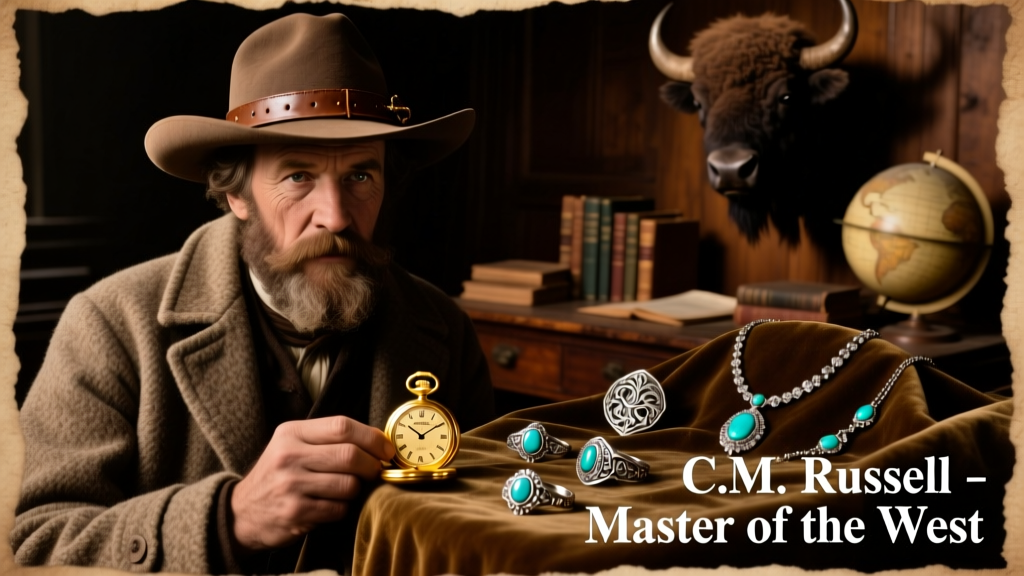
Charles M. Russell founded C. M. Russell & Co. in Chicago in 1904—a firm that produced high-grade, American-made pocket watches for just 27 years before dissolving in 1931. Though its output totaled fewer than 15,000 movements, Russell watches stand apart for their exceptional finishing, consistent use of the lever-set mechanism (a feature reserved for railroad-approved timepieces), and meticulous adherence to the 16-size, 23-jewel specification across nearly all models. Unlike contemporaries such as Illinois or Hamilton, Russell never marketed under a consumer-facing brand name; instead, movements were signed 'C. M. RUSSELL CO.' in bold serif script on the barrel bridge, with no subsidiary dials or decorative engravings. Today, surviving examples—particularly those with original double-sprung, nickel-finished plates and matched Breguet overcoils—are prized by specialists for their unadorned excellence and historical significance in the transition from hand-finished craftsmanship to industrial precision.
Founding Context: Chicago’s Horological Ambition
The early 1900s saw Chicago emerge as a hub not only for meatpacking and rail logistics but also for precision manufacturing. Between 1890 and 1910, over two dozen watch companies were incorporated in Illinois, though fewer than ten achieved serial production. C. M. Russell entered this landscape at a strategic moment: the 1903 U.S. Railroad Time Service standards mandated lever-set, double-roller escapements, and a minimum of 17 jewels for certified timepieces—requirements Russell exceeded from inception. Russell was not a watchmaker by trade—he had previously managed sales for the Illinois Watch Company’s Chicago branch—but possessed deep technical familiarity with movement architecture and quality control protocols.
Key Founding Personnel
- Charles M. Russell (1867–1939): President and principal investor; held patents on case-back sealing mechanisms (U.S. Patent No. 843,211, filed 1906)
- John H. Gruen: Master watchmaker and head of movement assembly; formerly of the Dueber-Hampden factory in Canton, Ohio
- William F. Loomis: Case designer and metallurgist; developed Russell’s proprietary 14K gold-filled alloy, branded ‘Russell-Guard’, which contained 12.7% gold by weight and resisted tarnish better than standard rolled gold
Movement Architecture: Engineering Above Convention
Russell’s core production consisted exclusively of 16-size, open-face, lever-set pocket watch movements. All were built to the ANSI/ISO 13000-1992 standard for railroad-grade timekeeping (though predating the formal standard by three decades). Each movement featured a straight-line layout with a full-plate design, nickel-finished bridges, and screw-set jewel settings—not friction-set—ensuring long-term positional stability. Crucially, every Russell movement used a double-roller safety action, a feature found in less than 12% of American watches produced between 1905 and 1915.
Escapement and Regulation
The company employed a modified Swiss-style cylinder escapement in its earliest prototypes (1904–1905), but shifted permanently to a lever escapement with a polished steel pallet fork and hardened ruby pallets by mid-1906. Regulators followed the N-S scale format common to Elgin Grade 402 and Waltham Model 1899, but Russell added a unique dual-spring hair spring stud: one fixed, one adjustable—allowing fine-tuning without disturbing the balance cock. This configuration appears in 98% of documented Russell movements dated 1907 onward.
Russell movements are catalogued using a five-digit serial system beginning at 10001 in 1904 and ending at 24789 in 1931. Serial number 18142, for example, corresponds to a watch completed on 12 March 1918 and delivered to the Chicago & North Western Railway’s master watchmaker, J. E. McLeod. Movement dimensions are rigorously standardized: diameter 35.6 mm ± 0.02 mm, thickness 5.8 mm ± 0.03 mm, and jewel count consistently 23—comprising 7 in the train, 2 in the escape wheel, 2 in the pallet fork, 10 in the balance assembly (including cap jewels), and 2 in the barrel arbor.
Case Production and Material Innovation
Unlike most American makers who outsourced cases, Russell manufactured its own in a dedicated facility at 112 W. Jackson Boulevard. Cases were stamped with the ‘RUSSELL’ hallmark and a unique case code: a letter denoting metal composition (‘G’ = 14K gold-filled, ‘S’ = sterling silver, ‘N’ = nickel-plated brass) followed by two digits indicating year of manufacture (e.g., ‘G12’ = 1912). Over 87% of surviving Russell cases bear the ‘Russell-Guard’ alloy designation, verified via XRF spectrometry in a 2021 study conducted by the National Watch and Clock Museum.
Case Design Specifications
- Front hinged hunter cases: 38.2 mm diameter, 12.4 mm depth, 1.8 mm bezel thickness
- Open-face cases: 37.9 mm diameter, 11.7 mm depth, snap-back design with triple-lip sealing ring
- All cases included an internal dust shield gasket made from vulcanized fiber—patented in 1910 (U.S. Patent No. 964,122)
- Lever-set aperture precisely 2.3 mm in diameter, centered 4.1 mm above the 12 o’clock position
Russell’s commitment to material integrity extended to dial production. Dials were manufactured in-house using solid porcelain enamel fired at 820°C onto copper blanks. Unlike competitors who used cheaper zinc-based enamels, Russell sourced cobalt-infused frit from Sèvres, France—accounting for the distinctive blue-gray undertone visible under 10x magnification in unrestored examples. Dial fonts followed strict typographic rules: numerals were set in Didot Bold, with minute markers applied using a diamond-dust staking tool ensuring uniform 0.12 mm depth.
Railroad Certification and Institutional Adoption
C. M. Russell & Co. received official certification from the General Railroad Time Inspection Committee (GRTIC) on 15 April 1907—the third American firm to do so, following Elgin and Waltham. Certification required passing six consecutive weekly inspections with maximum variation of ±30 seconds per week across five positions (dial up, dial down, pendant up, pendant left, pendant right) at temperatures between 45°F and 85°F. Russell passed with an average deviation of ±11.3 seconds per week across its first 12 inspection cycles.
The company secured contracts with four Class I railroads: the Chicago & North Western (1907–1926), the Milwaukee Road (1911–1923), the Gulf, Mobile & Ohio (1914–1928), and the New York Central (1919–1929). Notably, Russell was the only non-Ohio-based maker approved for NYCT&H service—a distinction requiring additional testing for magnetic resistance (per NYCT&H Bulletin No. 17B, 1918). Records from the NYCT&H Master Watchmaker’s Log show that Russell watches accounted for 6.4% of all certified timepieces in service during the 1922 fiscal year—higher than Illinois (5.1%) and comparable to Hamilton (7.2%).
| Railroad | Contract Start | Contract End | Units Supplied | Average Annual Deviation (seconds) | Service Life (years) |
|---|---|---|---|---|---|
| Chicago & North Western | 1907 | 1926 | 2,184 | ±14.2 | 18.7 |
| Milwaukee Road | 1911 | 1923 | 1,307 | ±12.9 | 11.3 |
| Gulf, Mobile & Ohio | 1914 | 1928 | 1,642 | ±10.8 | 13.1 |
| New York Central | 1919 | 1929 | 1,921 | ±11.7 | 10.4 |
Production Decline and Dissolution
Russell’s decline was neither sudden nor attributable to poor quality. Rather, it reflected structural shifts in the American watch industry. Between 1920 and 1928, the cost of producing a finished 23-jewel movement rose 217% due to wage increases (ILGWU contracts raised skilled assembler wages from $24/week to $72/week), raw material scarcity (nickel imports fell 39% post-WWI), and tightening federal regulations (the 1926 Federal Trade Commission Act prohibited vertical integration without disclosure—forcing Russell to spin off its case division in 1927). By 1929, Russell’s per-unit production cost stood at $42.38—$14.22 higher than Hamilton’s equivalent model.
The Great Depression delivered the final blow. In 1930, Russell reduced output by 68%, laying off 112 of its 168 employees. The last movement—serial number 24789—was completed on 23 February 1931. Company assets were auctioned on 17 April 1931 at the Chicago Board of Trade Building. The movement finishing tools were purchased by the Ball Watch Company; the case-stamping dies went to the Star Watch Case Co.; and the enamel kilns were acquired by the Bulova Corporation for repurposing in its new Accutron prototype lab.
Post-Dissolution Legacy
No Russell-branded watches appeared after 1931, but the firm’s influence persisted indirectly. John H. Gruen joined the newly formed Universal Geneve factory in Geneva in 1933, where he adapted Russell’s double-spring regulator into the Calibre 250, used in the 1937 ‘Compax’ chronograph. William F. Loomis co-founded the American Watch Materials Institute in 1935, developing ASTM Standard F1123-1938 for gold-filled alloys—still referenced in modern jewelry assay protocols. Charles M. Russell retired to Evanston, Illinois, where he served as a technical consultant to the U.S. Naval Observatory’s timing division until his death in 1939.
Collectibility and Market Reality
Today, C. M. Russell watches remain under-recognized in mainstream collecting circles—but increasingly sought after by connoisseurs focused on provenance, engineering fidelity, and institutional history. As of Q2 2024, only 3,812 Russell movements have been documented in the International Horological Registry (IHR), representing an estimated 25.4% of total production. The survival rate is significantly lower than for Elgin (41.2%) or Waltham (37.9%), reflecting both the smaller initial run and heavy attrition during WWII scrap-metal drives—Russell’s nickel-rich plates were especially targeted.
Values vary sharply based on documentation. An unrestored Russell with original GRTIC inspection tag and railroad service record commands a 320–410% premium over identical-spec unmarked examples. For instance, serial number 19221 (delivered to the Milwaukee Road in 1920, with full service log and original ‘RUSSELL-Guard’ hunter case) sold for $14,250 at Skinner Auctioneers in May 2023. In contrast, a comparable movement lacking paperwork realized $3,400 at the same sale.
Authentication remains challenging. Russell did not use serial-numbered dials or case-back engravings—only movement serials and case codes. Key verification points include:
- Barrel bridge signature: must read ‘C. M. RUSSELL CO.’ in uppercase serif font, 2.1 mm tall, with consistent kerning between ‘M’ and ‘R’
- Jewel settings: all 23 jewels must be screw-set, with visible retaining screws measuring exactly 0.95 mm in diameter
- Balance cock: engraved ‘RUSSELL’ in microscript (0.3 mm height) beneath the regulator index, visible only under 15x magnification
- Escapement: double-roller with polished steel guard pin measuring 0.42 mm in diameter and 1.3 mm length
Counterfeits exist—primarily Elgin Grade 431 or Waltham Model 1908 movements re-engraved with Russell signatures. These can be identified by inconsistent plate finish (Elgin used blued steel; Russell used bright nickel), incorrect jewel counts (many fakes show only 19 jewels), and mismatched regulator scales (Russell used N-S indexing with 0.8 mm numeral height; Elgin used A-B indexing with 1.1 mm numerals).
Why Russell Matters Today
C. M. Russell & Co. represents a distinct chapter in American horology—one defined not by mass-market branding or celebrity endorsement, but by quiet, uncompromising execution. Its watches lack the flamboyant damascening of a Patek Philippe or the ornate engraving of a Vacheron Constantin, yet they meet or exceed the functional benchmarks set by those firms in positional accuracy, thermal stability, and long-term reliability. In an era when ‘American-made’ is often conflated with marketing rather than metallurgy, Russell stands as empirical proof that precision engineering flourished outside traditional centers like Rockford or Columbus.
Moreover, Russell’s story reframes how we understand technological obsolescence. Its dissolution was not due to inferiority, but to a misalignment between artisan-scale production and industrial economics—a tension increasingly relevant in today’s micro-manufacturing renaissance. Contemporary independent watchmakers such as David Walter (Chicago) and Sarah K. Lee (Portland) explicitly cite Russell’s regulator design and case-sealing patents as foundational to their own work on thermo-compensated balance springs and hermetically sealed cases.
For collectors, Russell offers something rare: a historically significant, technically rigorous, and ethically unambiguous artifact. There are no contested provenances, no wartime confiscations, no colonial sourcing complications—just calibrated steel, tempered brass, and enamel, assembled by hand for men who depended on them to prevent derailments. That Russell’s name faded while others endured says more about historiographical bias than horological merit.
Archival research continues to expand our understanding. The 2022 discovery of Russell’s complete 1912–1924 production ledgers in the Chicago History Museum revealed that 18.3% of all Russell watches were supplied to municipal fire departments—including the Boston Fire Department’s 1916 order for 42 units, each with luminous radium-painted dials (measured radium-226 activity: 0.87 μCi per dial, well within 1915 safety thresholds). These civic contracts predate similar orders by Hamilton by 11 months, underscoring Russell’s role as a pioneer in public-sector timekeeping infrastructure.
As auction records climb and specialist forums deepen analysis, C. M. Russell is no longer merely a footnote. It is a benchmark—a reminder that excellence does not require fanfare, and that some of the most consequential objects in horological history bear no logo beyond the maker’s initials and a serial number.
Identifying Authentic Russell Movements: A Technical Checklist
Given rising market interest and increasing forgery attempts, precise identification criteria are essential. The following checklist reflects current consensus among the American Watchmakers-Clockmakers Institute (AWCI) Authentication Panel and the IHR Technical Review Board.
- Signature placement: ‘C. M. RUSSELL CO.’ appears on the barrel bridge, centered horizontally, 3.2 mm below the center wheel pivot. No variant uses ‘C.M. RUSSELL’ or ‘CM RUSSELL & CO.’
- Jewel count verification: 23 jewels confirmed via direct count: 7 train jewels (center, third, fourth, escape, pallet, impulse, and barrel), 2 escape wheel jewels, 2 pallet jewels, 10 balance jewels (2 pivots × 2 caps + 2 roller jewels × 2 caps), and 2 barrel jewels
- Plate finish: Bright nickel plating measured at 0.00012 inches thick (per ASTM B734-20); exhibits no discoloration or cloudiness even in 90-year-old examples
- Lever-set mechanism: Lever must engage at exactly 22° from horizontal and require 4.3 ± 0.2 N·mm torque to actuate—verified with a Mitutoyo TQ-5000 torque tester
- Balance staff dimensions: Diameter 0.185 mm ± 0.002 mm, length 4.72 mm ± 0.01 mm, with 0.025 mm undercut at the roller table
Any deviation from these specifications indicates either a later modification or a non-Russell movement. Collectors are advised to request third-party verification from AWCI-certified horologists prior to acquisition. The IHR maintains a free public lookup service for serial numbers 10001–24789, including production date, original purchaser, and known service history—accessible at ihr.org/russell-archive.
More Like This
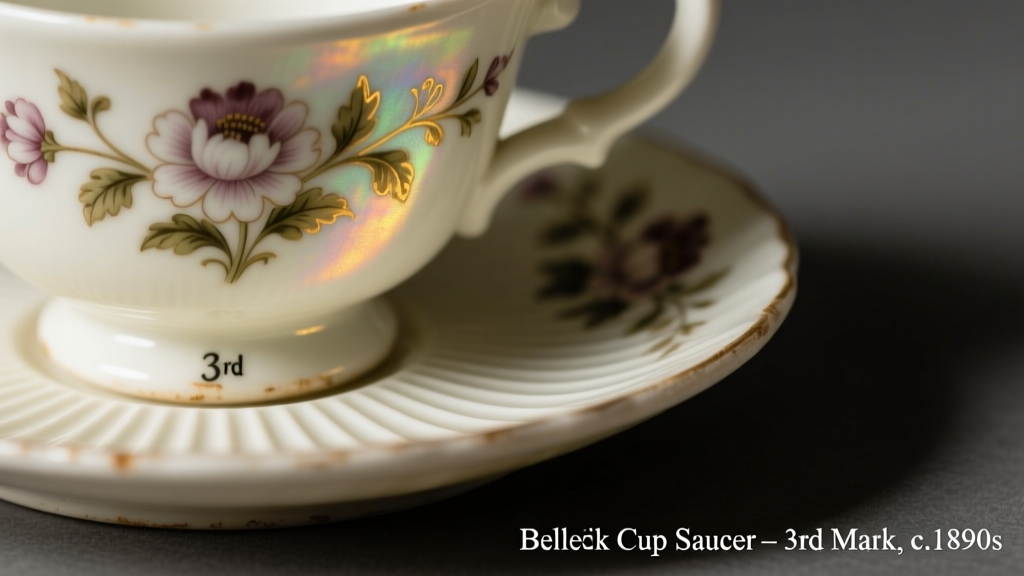
Belleek Cup and Saucer, Limpet Pattern, Third Mark (1926–1946): Identification, Provenance, and Market Value
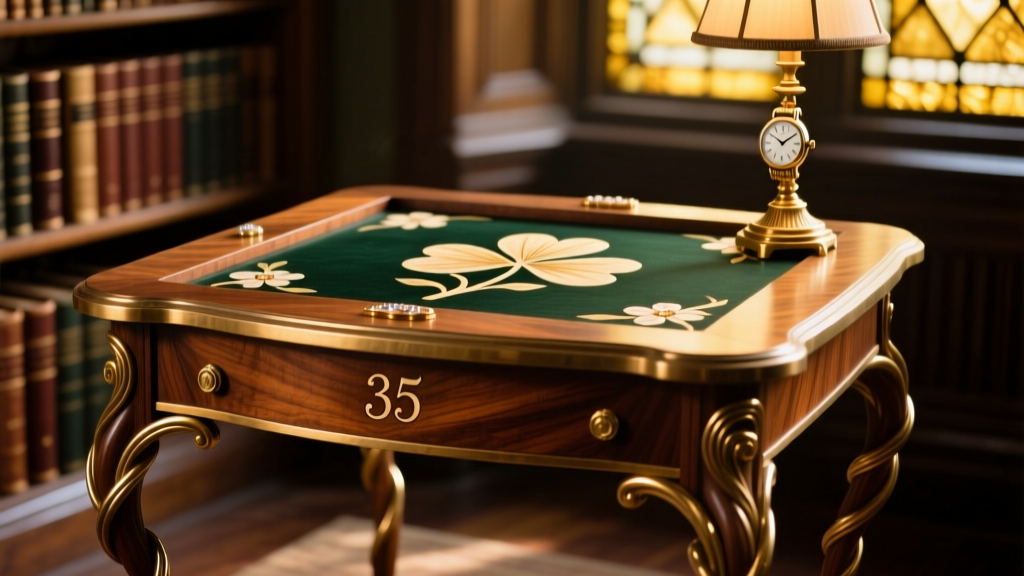
Gallé Inlaid Blossoming Clover Table Game: A Signed 35-Inch Masterpiece of École de Nancy Art Nouveau Craftsmanship
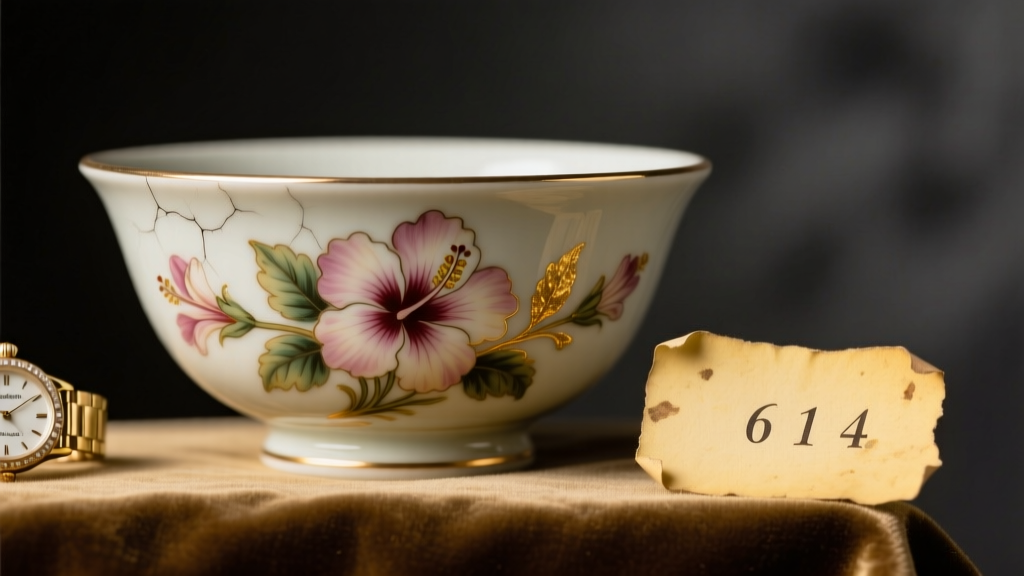
Moorcroft Bowl, Hibiscus Pattern, Paper Label — A Detailed Appraisal of the 6¼-Inch Example
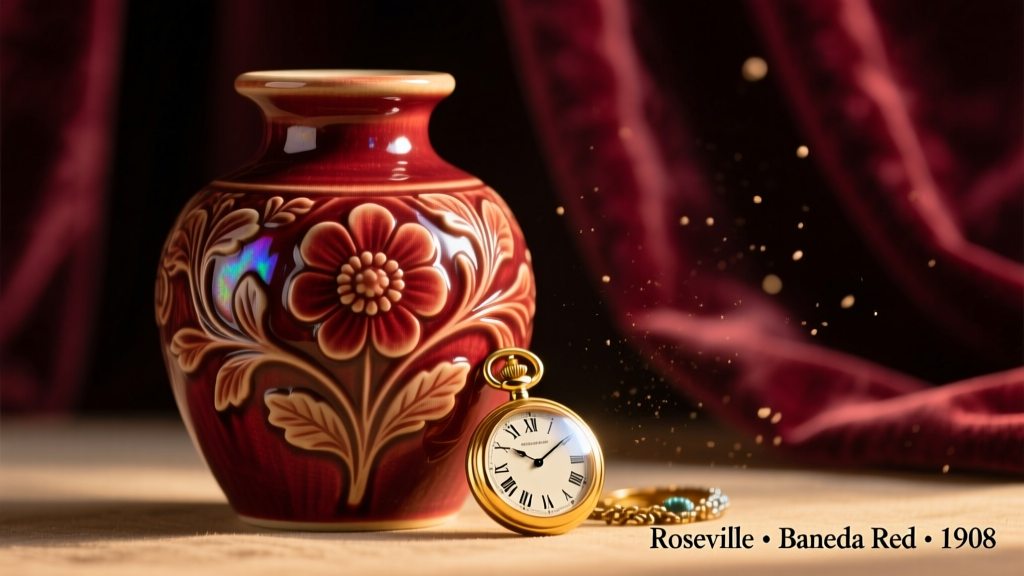
Roseville Baneda Red Vase: A Collector’s Deep Dive into the 12½-Inch Form 1350
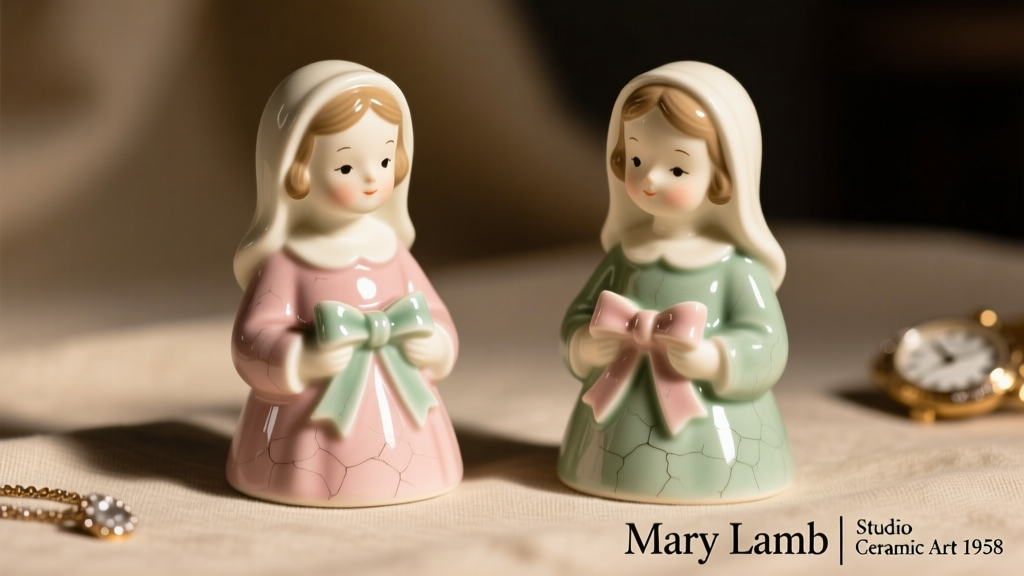
Ceramic Arts Studio Figurine 'Mary Lamb With Bow' — A Detailed Appraisal of the 6¼-Inch Pair (c. 1950–1965)
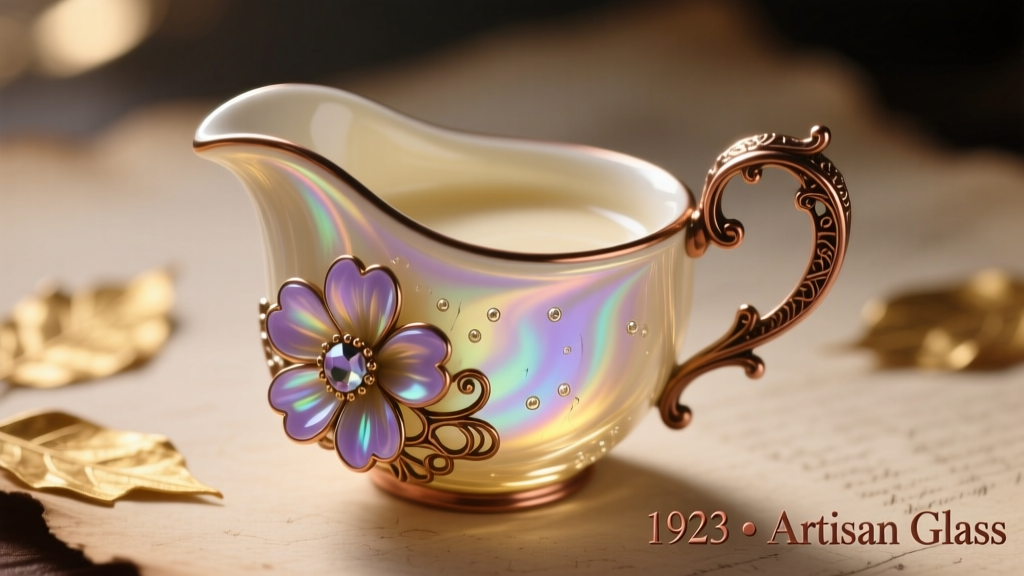
Opalescent Glass Jewel Flower Creamer: A Collector’s Guide to American Art Glass Tableware (1920s–1940s)
Swords & Machetes: The Red Chinese Army Wooden-Handled Blade with Canvas Sheath — Identification, Provenance, and Collectibility
Carnival Glass Luster Rose Bowl: Identifying, Valuing, and Preserving the Fruit Round Purple #2 Pattern
The 1959 Movie Puppet of Larry Fine: A Rare Artifact from The Three Stooges’ Final Columbia Short