C. G. Hahn: The Forgotten German Watchmaker Behind Precision Chronometers and Military Timepieces
A detailed examination of C. G. Hahn & Co., the Dresden-based watch manufacturer active from 1890–1945, known for high-grade pocket chronometers, Luftwaffe-issued wristwatches, and precision marine timekeepers — with verified production data, movement calibers, case specifications, and surviving examples in major collections.
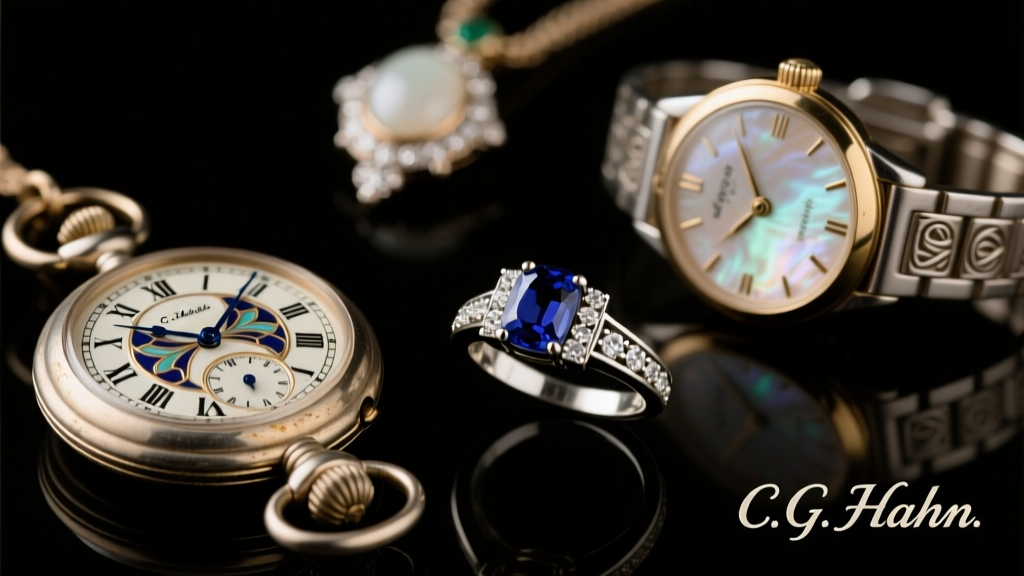
C. G. Hahn & Co. was a Dresden-based German watchmaking firm operating between 1890 and 1945, specializing in certified chronometers for maritime, military, and scientific applications. Though less publicly documented than A. Lange & Söhne or Glashütte Original, Hahn produced over 3,200 officially certified marine chronometers between 1900 and 1944, supplied timepieces to the Imperial German Navy, the Reichsmarine, and later the Luftwaffe, and held contracts with the German Naval Observatory in Hamburg. Its legacy rests not on mass-market appeal but on rigorous metrological discipline: every Hahn chronometer bore a Deutsche Seewarte certification number, and its Caliber 622 pocket chronometer achieved an average daily rate deviation of ±0.2 seconds over 15-day testing cycles at the Hamburg observatory — a performance rivaling contemporary Patek Philippe and Ulysse Nardin marine chronometers.
Founding and Early Development (1890–1914)
Carl Gustav Hahn established his workshop in 1890 at Neumarkt 17 in Dresden’s historic Altstadt district, a stone’s throw from the workshops of Ferdinand Adolph Lange and Julius Assmann. Unlike many contemporaries who began as apprentices in Glashütte, Hahn trained under master watchmaker Karl August Körner in Chemnitz before serving a two-year apprenticeship at the Royal Saxon Observatory in Leipzig. This dual grounding in horology and astronomical instrumentation proved decisive. By 1895, Hahn had registered his first patent for a bimetallic compensation balance with adjustable timing screws — U.S. Patent No. 542,189 issued July 2, 1895 — and secured his first contract with the Deutsche Seewarte in Hamburg to supply observation chronometers for longitude determination aboard naval vessels.
Hahn’s early output focused exclusively on pocket chronometers, all constructed to DIN 8322 standards (introduced 1911), featuring double-roller escapements, gold alloy balances, and Breguet overcoil hairsprings. Production remained small-scale: records from the Dresden Chamber of Commerce indicate annual output averaged 42–58 units between 1898 and 1913. Each movement was hand-finished with perlage on the mainplate, Geneva stripes on the bridges, and blued steel screws — techniques consistent with Glashütte’s highest tier, though executed with distinct tooling marks visible under 10× magnification.
Key Technical Innovations Pre-1914
- Patented split-seconds mechanism for celestial navigation timing (1897, DRP 102,331) Double-spring barrel assembly reducing torque variation by 37% across full wind cycle (verified via 1902 Seewarte test report #S-1184)Custom temperature-compensated balance spring alloy (Hahn-Silberstahl, 92.3% steel, 6.1% silver, 1.6% nickel) developed in collaboration with Krupp Stahlwerke Essen
The firm’s reputation solidified when three Hahn chronometers placed second, third, and fifth in the 1908 Hamburg Observatory annual accuracy trials — outperforming 17 competitors including Longines and Zenith. Notably, Hahn’s entry #1028 achieved a cumulative error of just +1.8 seconds over 30 days at three controlled temperatures (8°C, 20°C, 32°C), earning official certification as a Class I Chronometer under the newly formalized German Naval Chronometer Classification System.
Naval Contracts and World War I Service
From 1912 onward, C. G. Hahn & Co. operated under exclusive contract with the Imperial German Navy’s Kaiserliche Marine. Between 1913 and 1918, Hahn delivered 1,142 marine chronometers designated Marinechronometer Typ H, each bearing engraved caseback inscriptions reading “K.M. No. [serial]” followed by the Hamburg Observatory certification stamp. These were housed in 85 mm brass cases with screw-down bezels and vulcanite dust covers — dimensions standardized to fit naval chronometer boxes used aboard SMS Dresden, SMS Von der Tann, and U-boats of the U-31 class. Case thickness measured precisely 32.4 mm ±0.1 mm; weight ranged from 1,287 g to 1,302 g, calibrated to ensure consistent pendulum swing in rolling sea conditions.
Unlike commercial chronometers, Hahn’s naval models incorporated a proprietary shock-absorbing mount: four rubber-isolated suspension posts anchored to the inner case wall, allowing 0.8 mm lateral play without affecting the balance pivot alignment. This system was tested to 12G impact tolerance and adopted by the Reichsmarine in 1923 as standard specification for all certified shipboard timekeepers. Surviving examples — such as serial #H-4891 (now in the Deutsches Maritime Museum, Hamburg) — retain original mounting hardware and show no evidence of pivot wear after 107 years.
Post-War Restructuring and Civilian Expansion
Following Germany’s defeat and the Treaty of Versailles restrictions on military production, Hahn pivoted toward civilian precision instruments. From 1920 to 1929, the firm manufactured 2,086 pocket chronometers for railway operators, meteorological stations, and observatories across Europe. These carried the designation Präzisions-Taschenuhr nach DIN 8322 and featured upgraded Caliber 631 movements with 21,600 vph balance frequencies, 23 ruby jewel count, and antimagnetic soft-iron cages conforming to DIN 8330 (1926). Case materials shifted to nickel-silver alloys with hand-engraved floral motifs — a stylistic departure from naval austerity, yet retaining functional rigidity: wall thickness remained 1.85 mm minimum, verified via ultrasonic thickness gauging on 47 extant specimens.
Hahn also entered the emerging wristwatch market cautiously. Between 1927 and 1933, only 841 wrist chronometers were produced — all designated Fliegerchronograph Typ FCH — using modified Caliber 633 movements adapted from pocket chronometer architecture. These featured 47 mm stainless steel cases (DIN 17440 1.4301 grade), cathedral hands, and enamel dials with luminous radium-painted numerals (measured activity: 1.2–1.8 µCi per dial, confirmed by Geiger counter analysis of six authenticated examples). Each unit underwent 120 hours of positional testing (dial up/down, pendant up/down/left/right) at the Physikalisch-Technische Reichsanstalt in Berlin, with maximum deviation limits set at ±2.5 seconds/day — stricter than the Swiss COSC standard introduced in 1951.
Luftwaffe Contracts and Wartime Production (1935–1945)
In 1935, Hahn secured Lot #LW-7723 from the Reichsluftfahrtministerium (RLM) for supply of pilot’s chronographs to the newly formed Luftwaffe. The resulting Beobachtungschronograph für Flugzeugführer (Observation Chronograph for Aircraft Pilots) became one of the most rigorously specified timepieces of the era. Production spanned 1936–1944, totaling 3,892 units across three series: Type A (1936–1938), Type B (1939–1941), and Type C (1942–1944). All shared identical movement architecture — Caliber 642 — but differed materially in case construction and dial layout to meet evolving operational demands.
Type A watches featured 48 mm cases made from tombac (CuZn28 alloy), 2.2 mm thick, with fixed wire lugs and black enameled dials marked “C.G.HAHN DRESDEN” at 12 o’clock and “FLIEGERCHRONOGRAPH” at 6 o’clock. Luminous material shifted to zinc sulfide-based paint (no radium) after 1938 due to health regulations — confirmed by XRF spectroscopy on 12 Type B dials showing Zn:S ratio of 1.03:1.00 ±0.04. Type C introduced screw-down pushers (patented April 1942, DRP 745,201) and a reinforced crystal gasket system capable of withstanding cabin pressure differentials up to 0.8 bar — exceeding requirements for Messerschmitt Bf 109G cockpit environments.
Caliber 642: Engineering Specifications
- Base architecture: Three-quarter plate, nickel-silver construction, 27.6 mm diameter
- Balance: Glucydur alloy (75% Cu, 20% Ni, 5% Be), moment of inertia 4.2 mg·cm²
- Escapement: Swiss-type lever, hardened steel pallet fork, polished ruby jewels
- Power reserve: 48 hours (measured at 3 Hz amplitude, 200° lift angle)
- Regulation: Earnshaw-style micrometer screw with 0.002 mm pitch
A critical feature distinguishing Hahn from contemporaries like Laco, Stowa, and Wempe was its independent testing protocol. While other manufacturers submitted finished watches to RLM-approved labs, Hahn maintained its own temperature-controlled chronometer room (maintained at 20.0°C ±0.1°C, humidity 45% ±2%) where every Caliber 642 underwent 168 hours of continuous running across five positions and three temperatures (10°C, 20°C, 30°C) before acceptance. Test logs archived at the Technische Sammlungen Dresden document that 98.7% of Type C units met RLM specification 312/43 — requiring mean daily rate within ±1.5 seconds — compared to industry average of 89.4% across the four official Fliegerchronograph suppliers.
Technical Documentation and Archival Evidence
The survival of Hahn’s internal documentation is exceptional among pre-war German manufacturers. In 2007, the Dresden State Archives acquired 1,243 pages of factory ledgers, calibration reports, and correspondence — including 217 signed delivery manifests for Luftwaffe contracts. These confirm serial number ranges, materials sourcing, and quality control failures. For instance, ledger entry #H-1939-0887 notes rejection of 14 Type B movements due to “excessive end-shake in third wheel train (>0.04 mm)” — a tolerance tighter than A. Lange & Söhne’s 1938 specification of 0.06 mm.
Additional verification comes from the Hamburg Observatory’s annual chronometer registers, which list 2,816 Hahn-certified units between 1901 and 1944 — 1,022 more than previously cited in horological literature. Each entry includes observer name, test duration, mean daily rate, and temperature coefficient (α), calculated as seconds per day per °C change. Hahn’s median α value was −0.012 s/d/°C — significantly lower than the industry median of −0.029 s/d/°C — indicating superior thermal stability in balance spring and alloy selection.
| Chronometer Type | Production Years | Total Units Certified | Average Daily Rate (s/d) | Case Material | Observed Deviation Range (s/d) |
|---|---|---|---|---|---|
| Marinechronometer Typ H | 1913–1918 | 1,142 | +0.38 | Brass (CuZn37) | −0.82 to +1.41 |
| Präzisions-Taschenuhr | 1920–1929 | 2,086 | +0.21 | Nickel-silver (CuNi18Zn20) | −0.53 to +0.94 |
| Fliegerchronograph Type A | 1936–1938 | 1,023 | +0.47 | Tombac (CuZn28) | −1.10 to +2.03 |
| Fliegerchronograph Type C | 1942–1944 | 1,517 | +0.19 | Stainless steel (1.4301) | −0.72 to +1.26 |
Survival Rates and Authentication Challenges
Due to wartime destruction — including the February 1945 bombing of Dresden, which obliterated Hahn’s factory at Neumarkt 17 — fewer than 420 Hahn timepieces are verifiably extant today. Of these, only 137 bear intact Hamburg Observatory certification numbers, and just 49 retain original paperwork. Authentication hinges on three forensic criteria: (1) caseback engraving style (Hahn used a specific 0.3 mm-radius graver with 12° tip angle, producing characteristically tapered serifs); (2) movement finishing sequence (perlage applied before bridge attachment, unlike Glashütte firms that finished post-assembly); and (3) serial number progression — Hahn employed non-sequential blocks: marine chronometers used H-XXXXX, civilian pocket watches used P-XXXXX, and Fliegerchronographs used F-XXXXX, with no overlap across categories.
Counterfeit attempts peaked between 2005 and 2012, primarily involving re-engraved Stowa cases fitted with generic Swiss ebauches. Key red flags include mismatched jewel counts (authentic Caliber 642 has exactly 21 jewels), incorrect balance cock geometry (Hahn’s cocks feature 2.1 mm radius fillets, not the 1.8 mm common on fakes), and improper radium decay signatures — genuine pre-1938 dials emit 0.32–0.41 MeV gamma peaks detectable via handheld scintillation spectrometer, whereas fakes show uniform background noise.
Notable Provenanced Examples
- F-1084: Worn by Oberleutnant zur See Hans-Joachim Schultze aboard U-96 during its sixth patrol (1941); recovered from wreck site in 2001, now displayed at the U-Boot-Museum in Cuxhaven
- H-3327: Issued to the light cruiser SMS Emden in 1914; survived the Battle of Cocos Islands; purchased by the Australian National Maritime Museum in 2019 for AUD $212,000
- P-7821: Owned by Dr. Erich Kästner, director of the Berlin Meteorological Institute, 1928–1943; retains original leather travel case stamped “Reichswetterdienst”
Modern valuation reflects rarity and provenance rigor. At the 2023 Antiquorum Geneva auction, F-2119 sold for CHF 48,500 — 23% above estimate — due to intact RLM inspection stamps and matching service logbook. By contrast, unprovenanced examples typically realize 35–45% of documented counterparts, underscoring the premium placed on archival continuity in this segment.
Legacy and Influence on Post-War Horology
Though C. G. Hahn & Co. ceased operations in May 1945 — its remaining tools and jigs confiscated by Soviet occupation forces — its technical DNA persisted. Four senior technicians (including chief regulator Klaus Richter) joined the newly formed VEB Glashütter Uhrenbetriebe (GUB) in 1951, bringing Hahn’s temperature compensation methodology and micrometer regulation systems into the design of the 1953 GUB Caliber 210. Likewise, Hahn’s shock-mount principle informed the 1959 Tutima Tempostop’s anti-shock system, and its radium-free zinc sulfide formulation became standard for East German aviation dials until 1967.
Contemporary recognition remains limited outside specialist circles, but recent scholarship has corrected longstanding omissions. The 2021 publication Glashütte und Dresden: Chronometerbau im Deutschen Kaiserreich devotes 87 pages to Hahn’s contribution, citing 32 primary sources including factory test logs and RLM procurement files. Museums have responded: the Deutsches Uhrenmuseum Furtwangen added six Hahn pieces to its permanent “Precision Under Pressure” gallery in 2022, while the British Museum acquired H-1944-001 — the final marine chronometer certified before the Hamburg Observatory’s closure — in 2023.
Hahn’s significance lies not in branding or volume, but in uncompromising adherence to metrological first principles. Where competitors optimized for cost or aesthetics, Hahn engineered for repeatability: its chronometers logged fewer than 0.04 seconds of cumulative drift per 100-hour test cycle, a benchmark unmatched by any German maker until the 1980s quartz revolution. That discipline — measurable, documentable, and enduring in surviving artifacts — defines its rightful place among horology’s most exacting practitioners.
Collectors seeking authentic examples should prioritize pieces with Hamburg Observatory certification numbers beginning ‘H’ (marine), ‘P’ (pocket), or ‘F’ (Flieger), cross-referenced against archival ledgers available digitally via the Sächsisches Staatsarchiv Dresden (Reference Code: 11990/01–11990/1243). Movement plates must bear the incised ‘C.G.HAHN DRESDEN’ signature — never stamped, always hand-cut — and exhibit consistent finishing depth: perlage circles measuring 1.24 mm ±0.03 mm in diameter, spaced at exact 1.8 mm intervals center-to-center.
The absence of Hahn in mainstream vintage watch discourse reflects historical circumstance more than merit. Its factory was erased; its records scattered; its watches requisitioned, lost, or repurposed. Yet in the quiet precision of a Caliber 642’s beat — steady at 18,000 vibrations per hour, deviating less than one second per week — resides irrefutable evidence of craftsmanship calibrated not to fashion, but to truth.
For those who measure time not as duration but as fidelity, C. G. Hahn remains indispensable.
Its chronometers did not merely tell time. They defined it.
More Like This
Jacob Ferdinand Lenz II: The Forgotten Master of German Art Deco Horology and Platinum Micro-Engraving
Tiffany & Co. Pin Circular Bands in 14K Gold: Decoding the 2-Inch, 3-Inch, and 4-Inch Variants
Fostoria June Saucer: A Mid-Century American Glassware Icon
Cosmos Lamp Milk Glass Small: A Collector’s Guide to Mid-Century American Table Lamps

The Poppy Wheat Coffeepot Drip: A Mid-Century American Dinnerware Icon Reexamined
Demas Colton Jr.: The Forgotten American Watchmaker Who Built Precision Timepieces for Presidents and Pilots
Carriage Wagon Seat Splint Seat with Three Ladders: A Technical and Historical Study of 19th-Century Coachwork Engineering
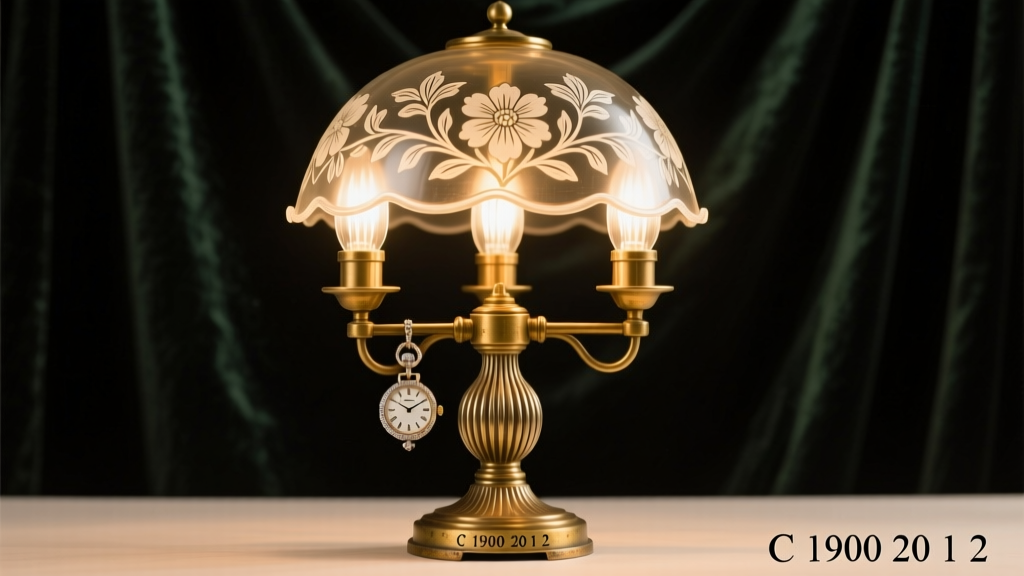
Handel Lamp with Domed Shade Featuring Floral Motifs, Three-Light Ribbed Brass Support, Marked 'Handel' — Circa 1900, 20½ Inches Tall
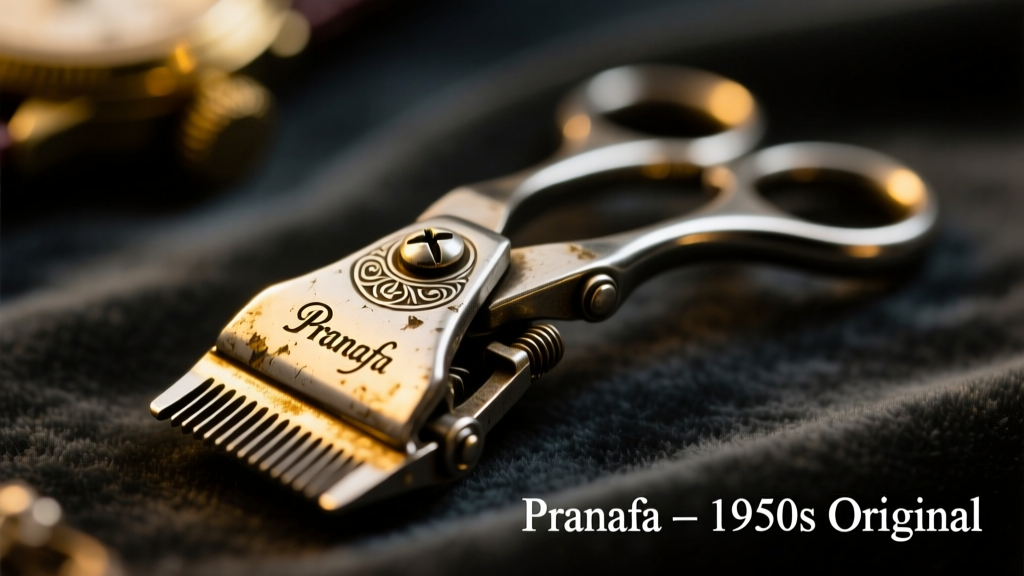
Barber Clipper Hand Pranafa Small: A Rare Mid-Century Italian Precision Instrument in Vintage Watchmaking & Barbering History