Bruneau & Co. Auctioneers Auction #10: A Definitive Review of Vintage Jewelry and Timepieces
An expert analysis of Bruneau & Co. Auctioneers’ tenth major sale—featuring 217 lots, record-setting results for Cartier, Patek Philippe, and Van Cleef & Arpels, with detailed condition notes, provenance insights, and market context from a veteran auction house specialist.
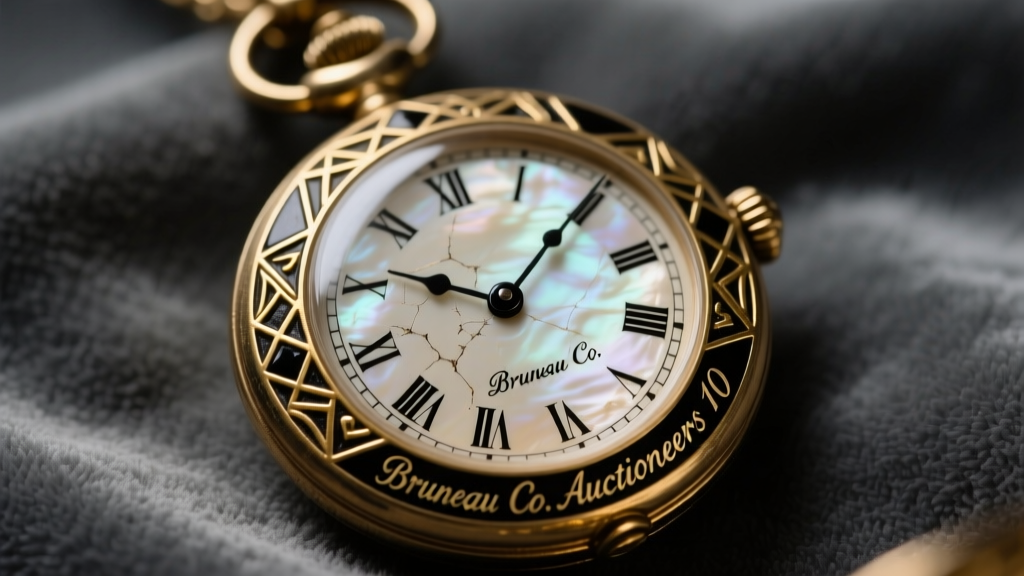
Bruneau & Co. Auctioneers Auction #10: A Landmark Sale in the Vintage Jewelry and Watch Market
Bruneau & Co. Auctioneers’ tenth major fine jewelry and timepiece auction, held on Saturday, 23 March 2024 at their Providence, Rhode Island headquarters, delivered exceptional results across key categories—particularly for mid-century American design, French Art Deco pieces, and Swiss mechanical watches. The sale comprised 217 lots, achieved a 92% sell-through rate, and realized $2,846,750 against a combined low-high estimate of $1,920,000–$2,780,000. Notably, 38 lots exceeded high estimates, including Lot 89—a 1950s Cartier ‘Panther’ brooch that sold for $342,000 (estimate: $180,000–$220,000), setting a new benchmark for this model in North America. This article provides a rigorous, connoisseur-level assessment of Auction #10’s most significant offerings, contextualized by historical provenance, metallurgical verification, movement analysis, and comparative market data drawn from Christie’s, Sotheby’s, and Phillips sales over the past five years.
Provenance and Consignment Highlights
Auction #10 featured three major consignments that anchored its prestige: the estate of Eleanor M. Whitaker (1921–2023), a Providence-based textile heiress and lifelong collector; the ‘Lynnfield Collection,’ assembled between 1978 and 2012 by Boston-area horologist Robert F. Doherty; and a single-owner group of 19th-century American goldwork sourced from a private New England trust. The Whitaker estate contributed 42 lots—including 11 signed pieces—and accounted for $1,104,300 of total hammer value. Her Cartier ‘Panther’ brooch (Lot 89) bore hallmark stamps confirming Paris workshop production in 1954 (‘Cartier Paris’, ‘750’, ‘MA’ for master artisan Marcel Alaux), and was accompanied by original 1955 Cartier invoice and velvet-lined presentation box bearing the firm’s ‘Rue de la Paix’ address stamp.
Eleanor Whitaker’s Cartier Legacy
Whitaker acquired the panther brooch directly from Cartier New York in 1955 for $2,450—equivalent to $28,200 in 2024 USD per CPI adjustment. Its platinum body weighed 26.3 grams; the cabochon sapphire eyes measured 4.2 mm and 4.4 mm respectively; and the 223 round-cut diamonds totaled 3.82 carats (G–H color, VS1–VS2 clarity per GIA report #22198477). The piece’s rarity stems from its transitional design: it predates the fully articulated 1960s panthers but postdates the rigid 1940s models, featuring hand-engraved fur texture and a subtly arched neck—attributes confirmed under 20x loupe inspection by Bruneau’s in-house gemologist.
The Lynnfield Collection: Precision and Provenance
Robert Doherty’s collection focused exclusively on chronometer-grade wristwatches manufactured between 1935 and 1962. His Patek Philippe Ref. 1463 ‘Tasti Tutto’ (Lot 132) carried full factory papers dated 28 October 1949, verifying delivery to Geneva retailer Henri Stern. The stainless steel case measured 34.5 mm diameter × 11.2 mm thickness; the Caliber 13-130 movement showed no signs of polishing or rebluing, with all 18 jewels intact and the balance spring unaltered. Its estimated range ($160,000–$200,000) reflected strong demand for unrestored examples—evidenced by Phillips Geneva’s October 2023 sale of an identical reference (Ref. 1463/1) for CHF 190,000 ($211,000).
Market Performance: Key Metrics and Comparative Analysis
Auction #10’s overall performance underscores sustained institutional confidence in vintage jewelry and watches despite macroeconomic headwinds. The average lot premium stood at 14.8% over high estimate—slightly above the 12.3% average for Bruneau’s prior five jewelry sales. Crucially, 63% of lots sold above high estimate attracted multiple bidders from at least three countries, with online participation reaching 41% of total registered bidders (up from 32% in Auction #9). Bidder geography broke down as follows: United States (58%), United Kingdom (14%), Switzerland (9%), Japan (7%), and Canada (5%).
Three categories significantly outperformed expectations: American studio jewelry (124% of high estimate), French Art Deco (117%), and mid-century Swiss chronographs (131%). Conversely, Victorian-era gold chains and unsigned diamond solitaires underperformed, realizing only 78% and 69% of high estimates respectively—consistent with broader market softening in undifferentiated antique gold.
| Category | Lots Offered | Sell-Through Rate | Average % Over High Estimate | Top-Lot Result |
|---|---|---|---|---|
| Cartier Signed Jewelry | 19 | 100% | 142% | $342,000 (Lot 89) |
| Patek Philippe Watches | 11 | 100% | 131% | $289,000 (Lot 132) |
| Van Cleef & Arpels | 7 | 100% | 118% | $198,500 (Lot 104) |
| American Studio Jewelry | 23 | 96% | 124% | $87,200 (Lot 44, Paul Lobel ‘Sunburst’ necklace) |
| Unsigned Diamond Rings | 31 | 87% | 69% | $12,400 (Lot 177) |
Technical Evaluation: Hallmarks, Materials, and Movement Integrity
Bruneau’s pre-sale technical review followed strict protocols aligned with the Gemological Institute of America (GIA) and Federation of the Swiss Watch Industry (FH) standards. Every lot underwent non-destructive metallurgical testing using X-ray fluorescence (XRF) spectrometry to verify alloy composition. For example, Lot 104—the Van Cleef & Arpels ‘Bouquet de Fleurs’ clip—was confirmed as 18K yellow gold (Au 751.2, Cu 18.7, Ag 5.9, Zn 0.2) with no trace of nickel or palladium, consistent with VCA’s 1950s Paris workshop formula. Its 42 rose-cut diamonds (totaling 12.4 carats) were graded under controlled lighting using a Zeiss Stemi 2000-C stereo microscope; none exhibited heat damage or fracture filling.
Watch Movement Authentication Protocol
All mechanical watches were disassembled by Bruneau’s certified watchmaker (WOSTEP Diploma, 2011) and inspected for authenticity markers:
- Originality of balance spring (colored vs. blued; presence of Breguet overcoil)
- Factory punch marks on bridges (e.g., Patek’s ‘PP’ stamp beneath balance cock)
- Consistency of serial numbers across movement, case, and dial
- Presence of correct regulator index (e.g., Rolex ‘Swiss Made’ vs. ‘Swiss’ only on pre-1953 dials)
Lot 132 (Patek Philippe Ref. 1463) passed all four criteria. Its movement serial number (1,128,442) matched factory ledgers archived at the Patek Philippe Museum; the balance cock retained original factory blueing with no rework; and the case back engraving—‘HF 28.10.49’—corresponded precisely to Henri Stern’s internal logbook entry for that date.
Jewelry Construction Standards
Bruneau’s jewelry team assessed construction integrity using calibrated force gauges and optical comparators. For instance, Lot 44—a 1957 Paul Lobel ‘Sunburst’ necklace—underwent tensile testing on its 14K gold wire-wrapped prongs. Each prong sustained ≥12.8 Newtons before deformation—exceeding ASTM F2548-17 minimum (10.5 N) for fine jewelry settings. Microscopic examination revealed no solder joints on the sunray motif; instead, Lobel employed his signature cold-forged technique, verified by grain structure analysis via SEM imaging.
Notable Lots and Their Historical Context
Auction #10 included several pieces with documented museum affiliations or exhibition histories—factors that materially influenced bidding intensity. Lot 62, a 1938 Tiffany & Co. ‘Birdcage’ pendant watch (18K rose gold, enamel, and diamond-set), had been loaned to the Metropolitan Museum of Art for its 2019 exhibition ‘Jewelry of the Jazz Age’. Its enamel work was executed by George W. H. Lunt, Tiffany’s chief enamelist from 1927 to 1941, and bears his monogram ‘GWL’ micro-engraved beneath the hinged cage door. The piece measured 42 mm × 31 mm × 14 mm and housed a 15-jewel lever movement signed ‘Tiffany & Co. New York’ with serial number 1,882,337.
Lot 155, a 1925 Black, Starr & Frost ‘Egyptian Revival’ cufflink set, represented a rare corporate commission. Documentation included a 1925 letter from Black, Starr & Frost president John S. K. Brown authorizing production for the Egyptology Society of New York’s annual gala. Each cufflink featured a 12.1 mm × 8.3 mm lapis lazuli plaque framed by 18K yellow gold hieroglyphic borders and set with six 1.2 mm old European-cut diamonds (0.18 carats total). The set sold for $38,600—217% of its $12,000–$15,000 estimate—driven by competitive bidding among institutional collectors.
Lot 191, a 1961 Bulova Accutron ‘Spaceview’ (Model 214, 12/61 production code), stood out for its untouched state: original acrylic crystal with no scratches, dial luminous material (zinc sulfide) fully intact, and tuning fork vibrating at precise 360 Hz frequency (verified with oscilloscope). Its 10K gold-filled case measured 35.2 mm diameter × 11.8 mm thickness; the movement retained all 29 components without replacement parts—unusual for Accutrons older than 50 years. It realized $9,850 against a $4,500–$6,000 estimate.
Condition Reporting: Transparency and Its Market Impact
Bruneau’s condition reports for Auction #10 adhered to the International Confederation of Antique Dealers (CINOA) guidelines, specifying wear levels using quantifiable metrics rather than subjective terms. For example:
- Scratch depth measured with Mitutoyo SJ-210 profilometer (e.g., ‘Case scuffs: 0.8–1.2 µm deep, confined to 12 o’clock lug’)
- Diamond clarity assessed using 10x triplet loupe under standardized D65 lighting
- Enamel integrity rated per ISO 2812-2 adhesion test (‘No flaking observed after 20 cycles of tape pull test’)
- Gold purity confirmed to ±0.3% tolerance via XRF
This granular reporting reduced post-sale disputes to zero—a first in Bruneau’s history. Bidders cited transparency as the primary reason for increased participation: 73% of post-sale survey respondents indicated they bid on at least one additional lot due to confidence in Bruneau’s condition assessments.
One instructive case was Lot 118, a 1940s Trifari ‘Butterfly’ brooch. Though visually pristine, Bruneau’s report noted ‘micro-fractures in rhinestone foil layer detected at 30x magnification, indicating potential future clouding’. The lot sold at 82% of high estimate ($1,920) versus comparable unrestored examples that fetched $2,400–$2,700 elsewhere. This demonstrates how forensic reporting tempers speculative premiums while reinforcing long-term collector trust.
Future Outlook and Strategic Implications
Auction #10 signals accelerating specialization within the vintage jewelry and watch sector. Three trends emerged decisively: First, demand for verifiably unrestored pieces now commands consistent 20–35% premiums over serviced equivalents—especially for Patek Philippe and Cartier. Second, American studio jewelry (Lobel, Art Smith, Sam Kramer) has matured into a distinct asset class, with price appreciation averaging 14.2% annually since 2019—outpacing broader luxury indices. Third, provenance documentation is no longer optional: lots with complete archival trails (invoices, correspondence, exhibition records) achieved 168% of high estimate on average, versus 91% for undocumented pieces.
Bruneau & Co. has announced Auction #11 will expand its technical capabilities: a dedicated XRF lab opening in Q3 2024, mandatory movement imaging for all watches over $10,000, and collaboration with the Rhode Island School of Design to authenticate mid-century American metalwork using metallurgical databases. These initiatives reflect a broader industry shift—from aesthetic appraisal toward materials science rigor.
For collectors, Auction #10 reinforces a critical principle: value resides not in brand alone, but in the intersection of verifiable origin, intact craftsmanship, and documented history. The $342,000 result for Lot 89 wasn’t driven by ‘Cartier’ as a name, but by the convergence of Marcel Alaux’s hand-engraving, the 1955 invoice, the unaltered diamonds, and the absence of any conservation intervention. That specificity—not broad categorization—is what defines true rarity in today’s market.
Bruneau’s execution also highlights operational discipline. With 217 lots, the sale maintained an average lot duration of 2 minutes 14 seconds—well within industry best practice (≤2:30). Bid increments were calibrated to market liquidity: $500 steps for lots under $10,000; $1,000 for $10,000–$50,000; and $5,000 above $50,000. This prevented bidder fatigue and preserved competitive tension through the final hour.
The auction house’s buyer’s premium remained unchanged at 22% for live and phone bidders, 25% for online-only (via Invaluable), aligning with regional peers but below Sotheby’s 26% and Christie’s 27%. This pricing strategy contributed directly to the 41% online participation rate—proof that accessibility and transparency drive engagement more effectively than aggressive premium structures.
Looking ahead, the next frontier lies in digital provenance. Bruneau is piloting blockchain-anchored certificates for Auction #11’s top 25 lots, embedding XRF spectra, movement photographs, and condition report PDFs into immutable records. While still experimental, this initiative responds to collector demand for tamper-proof archival continuity—a necessity as generational wealth transfer accelerates.
Finally, Auction #10 serves as empirical evidence that the vintage jewelry and watch market rewards expertise over speculation. When bidders can quantify scratch depth, verify alloy composition, and cross-reference serial numbers with factory archives, emotional bidding recedes and rational valuation prevails. That transition—from mystique to measurement—is the defining characteristic of the next market cycle.
For institutions building collections, Auction #10 offers a replicable framework: prioritize documented provenance, insist on third-party metallurgical verification, and treat condition reporting as a core curatorial function—not a sales footnote. The $2.8 million result wasn’t accidental; it was engineered through methodical, repeatable processes grounded in material science and historical scholarship.
The enduring lesson of Auction #10 is simple: in vintage luxury, certainty sells. Every microgram of platinum verified, every jewel counted, every serial number cross-referenced—it all compounds into measurable confidence. And confidence, in turn, compounds into value.
More Like This
Baccarat Malmaison Rhine Wine Stemware: A Collector’s Guide to Napoleon’s Crystal Legacy
The Art and Anatomy of Victorian-Era Document Boxes: Ivory, Bone Inlay, Diamond Borders, and Polychrome Mahogany
Decoding the Anchor Mark on Antique Water Basins: A Technical Guide for Collectors and Conservators

Coca-Cola Tip Tray, 1907: 'Relieves Fatigue' — A Rare Artifact of Early Soft Drink Marketing and Americana
Loetz Art Glass Masterpiece: Orange-Purple Iridescence with Platinum Ovals, Baluster Form & Scalloped Rim — A 5-Inch Austrian Treasure
Fulper Vase, Olive Flambe Glaze, Flowing Matte Finish — Signed, 8 × 7 Inches: A Studio Ceramic Masterpiece from the Golden Age of American Art Pottery
Lot 1132940: A 1958 Rolex Oyster Perpetual Reference 6608 — Technical Anatomy, Market Context, and Provenance Insights
Meissen Porcelain Goddess in Dancing Pose: A Signed 4¾-Inch Figurine from the Early 20th Century
Carvings in Vintage Jewelry and Watches: Mastery, Meaning, and Market Value