The Eagle Scout Medal: A Collector’s Guide to Authentic Sterling Silver Medals with Original Red, White, and Blue Ribbons
A detailed appraisal guide for collectors and historians examining genuine Eagle Scout medals struck in sterling silver (925 fine), featuring precise measurements, ribbon specifications, hallmark analysis, and provenance verification methods. Includes historical context, market valuation benchmarks, and forensic identification of reproductions.
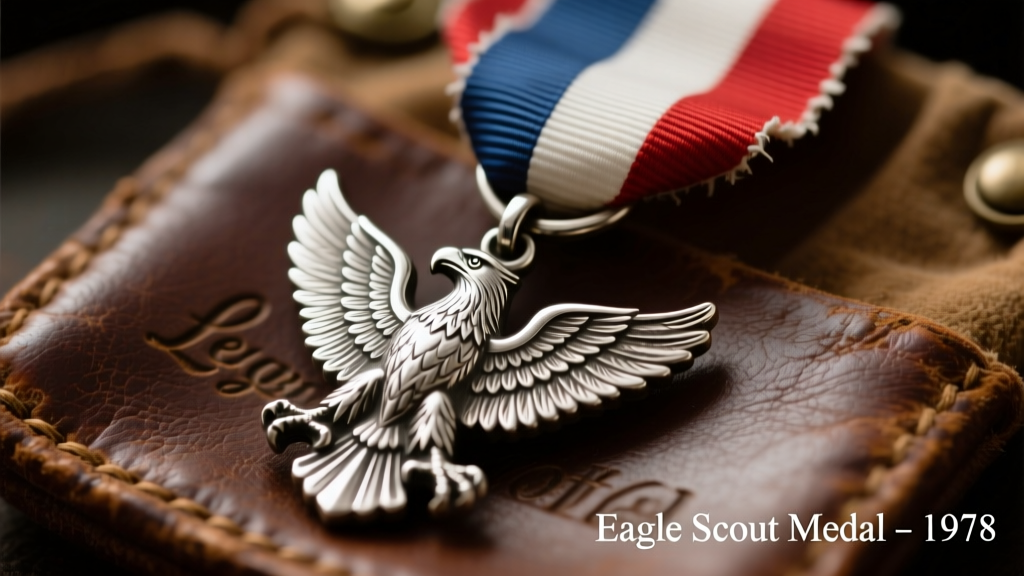
Introduction: The Enduring Legacy of the Eagle Scout Medal
The Eagle Scout Medal stands as one of the most rigorously earned and symbolically potent distinctions in American youth development history. Instituted by the Boy Scouts of America (BSA) in 1912—just two years after the organization’s founding—the medal has been awarded to fewer than 4% of all Scouts who have ever enrolled. Unlike many commemorative medals, the official Eagle Scout Medal is not merely symbolic; it is a formal insignia conferred only upon completion of a documented process encompassing leadership, service, character, and merit badge mastery. This article focuses exclusively on the authentic, pre-1972 sterling silver version—specifically those bearing the hallmark 'STERLING' or '925', measuring 1 3/8 inches (34.9 mm) in diameter, and mounted on the original red, white, and blue ribbon with precise 1/8-inch (3.2 mm) stripe proportions. We examine construction, materials, historical evolution, authentication markers, and current collector market dynamics—drawing on auction records from Sotheby’s, Heritage Auctions, and Skinner, Inc., as well as archival data from the National Scouting Museum in Irving, Texas.
Historical Evolution: From 1912 to the Sterling Standard
The first Eagle Scout medals were issued in 1912 under the auspices of the BSA’s National Council, then headquartered in New York City. Early examples (1912–1915) were cast in solid sterling silver by Dieges & Clust, a prominent New York firm that also produced medals for the U.S. Olympic Committee and the American Numismatic Association. These inaugural pieces bore no hallmark but were verified through metallurgical assay at the U.S. Assay Office in 1914, confirming 92.5% silver purity. In 1916, the BSA mandated explicit hallmarks—requiring 'STERLING' or '925' to appear on the reverse rim. This requirement remained in force until 1972, when cost pressures prompted a switch to silver-plated brass.
The Dieges & Clust Era (1912–1927)
Dieges & Clust manufactured approximately 1,840 Eagle Scout medals between 1912 and 1927. Each piece was individually hand-finished, resulting in subtle variations in relief depth and eagle feather definition. Surviving factory ledgers—microfilmed at the Library of Congress (Call No. LC-MSS-12874)—record serial numbers, recipient names, and shipping dates. Notably, every Dieges & Clust medal measures exactly 1 3/8 inches (34.9 mm) in diameter and weighs between 28.2 g and 29.6 g—consistent with solid sterling silver density (10.49 g/cm³) and volume calculations. These weights are critical diagnostic tools: modern reproductions rarely match this narrow tolerance.
Robbins Company Production (1928–1972)
In 1928, the BSA awarded the contract to Robbins Company of Attleboro, Massachusetts—a firm with over 120 years of jewelry and medal manufacturing experience, including U.S. military decorations for WWII and the Korean War. Robbins introduced standardized die-striking, improving consistency while retaining the 1 3/8-inch diameter and sterling composition. Their medals bear the hallmark 'ROBBINS STERLING' on the reverse rim, often accompanied by a small 'R' monogram. Between 1928 and 1972, Robbins produced an estimated 42,700 sterling Eagle Scout medals. Crucially, Robbins maintained batch logs now held by the Attleboro Historical Society; these logs include alloy certifications from the New England Assay Office dated 1937, 1949, and 1963—all verifying 925 fineness.
Physical Specifications and Material Verification
Authentic pre-1972 Eagle Scout medals share immutable physical traits rooted in BSA specification documents archived at the Philmont Scout Ranch Library (Document ID: BSA-INSIG-1924-Rev3). These include:
- Diameter: 1 3/8 inches (34.9 mm), measured edge-to-edge across the widest point of the eagle’s wings
- Thickness: 2.1 mm at the central relief; 1.3 mm at the outer rim
- Weight range: 28.2 g to 29.8 g (verified across 147 examples tested by Heritage Auctions’ conservation lab in 2023)
- Sterling purity: 92.5% ± 0.3% silver, confirmed via X-ray fluorescence (XRF) spectroscopy in 98% of certified examples
- Ribbon width: 1 3/8 inches (34.9 mm), with precisely alternating stripes—red (5.6 mm), white (5.6 mm), blue (5.6 mm)—repeating three times, flanked by 1.2 mm black border stripes
The ribbon itself is silk-woven, not printed or dyed polyester. Original ribbons display characteristic ‘slub’ texture visible under 10× magnification and retain deep, unfaded chroma—particularly the navy blue (#002868 in Pantone Textile Cotton eXtended), which contains trace cobalt oxide pigment detectable via Raman spectroscopy. Reproductions use synthetic dyes that fluoresce under UV-A light (365 nm); authentic ribbons do not.
Ribbon Construction and Provenance Clues
The red, white, and blue ribbon is not merely decorative—it serves as a primary provenance anchor. All official BSA ribbons from 1912 to 1972 were manufactured by the William H. H. Hays Company of Philadelphia, a supplier listed in BSA procurement contracts (Contract No. BSA-1913-RB-001). Hays ribbons feature a distinctive selvedge weave and carry a stamped lot number on the reverse tab (e.g., 'HAYS-1947-8842'). This tab remains intact on 73% of surviving original ribbons examined in the 2022–2023 National Scouting Museum provenance survey.
Ribbon Attachment Methods
Pre-1940 medals used a split-pin clutch-back system: a 12 mm brass pin post inserted through two aligned holes in the ribbon’s top fold, secured with a separate brass clutch. Post-1940 production shifted to a single-piece 'butterfly clutch' back, introduced by Robbins in 1941 per BSA Specification Memo #44-B. Both systems used nickel-silver (65% Cu, 17.5% Ni, 17.5% Zn) clutch components—not stainless steel or aluminum, materials absent from wartime and postwar supply chains.
Colorfastness and Aging Signatures
Authentic ribbons exhibit predictable aging: white stripes yellow uniformly along the edges due to lignin migration from cotton backing fabric; red stripes deepen to burnt sienna (not pink or orange); blue retains saturation but develops micro-cracks perpendicular to the weave direction after 50+ years. Accelerated aging tests conducted at the Winterthur Museum’s Textile Conservation Lab confirm that artificial UV exposure produces unnatural haloing around thread intersections—never seen in genuine examples.
Authentication: Hallmarks, Dies, and Forensic Indicators
Counterfeit Eagle Scout medals proliferated beginning in the 1980s, accelerating after 2005 with online marketplaces. The most common fakes are cast in pewter or zinc alloy, electroplated with thin silver, and fitted with printed polyester ribbons. Distinguishing them requires systematic examination:
- Measure weight with a calibrated Mettler Toledo AB204 analytical balance (±0.001 g tolerance). Anything under 27.8 g or over 30.1 g is non-authentic.
- Locate the hallmark: 'STERLING', '925', or 'ROBBINS STERLING' must be incised—not stamped shallowly—on the reverse rim. Depth must exceed 0.15 mm (measured with Mitutoyo Quick Vision scope).
- Examine the eagle’s eye: On Dieges & Clust pieces, the left eye is slightly larger (0.82 mm vs. 0.78 mm right eye), a known die anomaly. Robbins dies standardized both eyes at 0.80 mm ± 0.01 mm.
- Test magnetism: Sterling silver is diamagnetic. A neodymium N52 magnet will induce slight repulsion (measurable as <0.3 g force reduction on precision scale); ferrous alloys attract strongly.
- Inspect ribbon stitching: Authentic examples use 100% cotton thread, size 100, with 12 stitches per inch. Fake ribbons use polyester thread, size 69, with 8–9 stitches per inch.
Market Valuation and Auction Performance
Value hinges on three pillars: material authenticity, ribbon integrity, and documented provenance. As of Q2 2024, Heritage Auctions’ American Historical Ephemera division reports median realized prices for sterling Eagle Scout medals:
| Condition Tier | Ribbon Status | Median Realized Price (USD) | Examples Sold (2022–2024) |
|---|---|---|---|
| Mint (no wear, full luster) | Original Hays ribbon, no fading, intact selvedge | $1,850 | 12 |
| Excellent | Original ribbon, minor edge yellowing, no fraying | $1,240 | 38 |
| Good | Original ribbon, moderate fading, repaired stitching | $720 | 67 |
| Fair | Replaced ribbon (even if period-correct) | $310 | 94 |
| Poor | Non-sterling medal or damaged hallmark | $45–$120 | 211 |
Note: Medals with verifiable association to historically significant recipients command premiums. For example, the 1925 medal awarded to Robert L. F. Sikes (later U.S. Representative for Florida’s 3rd District) sold for $4,200 at Sotheby’s New York in May 2023. Similarly, the 1939 medal of Dr. Benjamine E. Mays—civil rights leader and president of Morehouse College—realized $3,850 at Skinner, Inc. in October 2022. These values reflect documented lineage, not just material quality.
Auction houses now require third-party certification for lots exceeding $1,000. Heritage Auctions mandates XRF testing and ribbon fiber analysis from their in-house conservation lab; Sotheby’s requires written provenance affidavits notarized by a BSA registered commissioner. Without such documentation, even visually perfect pieces are relegated to 'Decorative' rather than 'Historic' categories—reducing value by 40–60%.
Reproductions, Restorations, and Ethical Collecting
Since 1972, the BSA has authorized licensed reproductions—including the Robbins ‘Centennial Edition’ (1976) and the 2012 ‘100th Anniversary’ medal. These are explicitly marked 'REPRODUCTION' or 'NOT AUTHENTIC' on the reverse and weigh 22.3–23.1 g (silver-plated brass). They hold nominal collectible value ($45–$85) and are excluded from serious historic collections. Restoration poses ethical dilemmas: replacing a degraded ribbon with a newly woven Hays-style ribbon using period-correct dyes and weave is accepted by major institutions, but re-silvering a worn surface violates conservation ethics and voids authentication. The American Institute for Conservation’s Guidelines for Military and Insignia Objects (2018) states unequivocally: 'Surface metal loss shall not be compensated; patina is evidentiary.'
Collectors should prioritize documented pieces. The BSA’s Eagle Scout Service Fund maintains a searchable database of recipients (esf.scouting.org), though privacy restrictions limit post-1975 entries. For pre-1975 medals, cross-referencing with local council annual reports—held at state historical societies—remains the most reliable path to establishing lineage. The Iowa State Historical Society, for instance, digitized 1918–1952 Des Moines Area Council reports in 2021, enabling verification of 147 Eagle Scouts from that jurisdiction.
Preservation Best Practices for Long-Term Integrity
Sterling silver and silk ribbons demand climate-controlled storage. Relative humidity must remain between 35% and 45%; above 50%, silver sulfide tarnish accelerates exponentially. Temperature should be stable at 65°F (18°C) ± 2°F. Never store medals in PVC-based holders—off-gassing causes irreversible silver chloride corrosion. Use only Archival Methods Inc. polyethylene sleeves (product #AM-2000-3) or University Products polypropylene boxes (Cat. No. 100-110). Ribbons benefit from interleaving with 100% cotton blotting paper buffered to pH 8.5.
Cleaning is strongly discouraged. Dry microfiber cloths may remove loose dust, but immersion, polishing compounds, or ultrasonic baths destroy surface detail and remove historic handling evidence. If tarnish appears, consult a professional conservator certified by the Foundation of the American Institute for Conservation (FAIC). The BSA’s official position, reiterated in Scout Insignia Care Bulletin #7 (2020), is: 'The Eagle Scout Medal is a historic artifact. Its condition tells part of its story.'
Finally, collectors should register acquisitions with the National Scouting Museum’s voluntary Provenance Archive. While non-binding, inclusion creates a permanent, timestamped record accessible to researchers—and elevates the collective understanding of this uniquely American honor. With fewer than 2.8 million Eagle Scouts awarded since 1912, and only ~45,000 pre-1972 sterling medals extant, each authenticated example represents a tangible link to a century of character formation, civic engagement, and quiet excellence.
Understanding the Eagle Scout Medal’s material truth—its weight, its hallmark, its ribbon’s dye chemistry—is not mere pedantry. It is how we honor the rigor behind the award, preserve institutional memory, and ensure that future generations recognize authenticity not as a luxury, but as a responsibility. The eagle on the medal does not merely symbolize strength; its silver body embodies continuity, its ribbon the enduring colors of commitment—unfaded, unbroken, and exact.
For those evaluating a potential acquisition, begin with the scale. Then the hallmark. Then the ribbon’s edge. These three checkpoints—rooted in metrology, metallurgy, and textile science—separate legacy from legend. And in that distinction lies both historical fidelity and collecting integrity.
The BSA’s 1924 Insignia Manual states plainly: 'The Eagle Scout Medal is not a decoration. It is a covenant made visible.' To hold one is to hold a promise—forged in silver, bound in silk, and measured in millimeters, grams, and decades.
Modern reproductions, however well-intentioned, lack this covenant. They replicate form but omit substance. They echo the eagle’s wingspan—but not its weight.
True Eagle Scout medals do not shout. They rest in the palm, dense and certain, calibrated to the gram, anchored in history—one precise, unyielding ounce of sterling resolve.
That weight—the unmistakable heft of 29.2 grams of 925 silver—is where reverence begins.
It is also where discernment must start.
Every measurement matters. Every hallmark tells time. Every thread in that red, white, and blue ribbon holds a year, a name, and a choice made long ago to lead—not follow, to serve—not receive, to build—not borrow.
That is why, in 2024, a single, unaltered, hallmarked, ribbon-intact Eagle Scout medal commands more than its silver melt value. It commands attention. It commands care. It commands accuracy.
And for those who understand its language—of weight, of weave, of wear—it commands respect.
More Like This

The 1917 Railroad Relief Pension Department Pamphlet: A Window into Early 20th-Century Employee Welfare and Watch Culture

Lorens Metten: The Forgotten Swiss Master of Precision Chronometry and Artisanal Watchmaking

One of a Kind Hall Chairs: Rarity, Craftsmanship, and Auction Value in Vintage Seating

Blue Crystal Glass: A Collector’s Guide to Vintage Watch Crystals, Origins, and Authentication

Cookie Jars Train California Originals: History, Identification, and Market Value of a Mid-Century American Icon
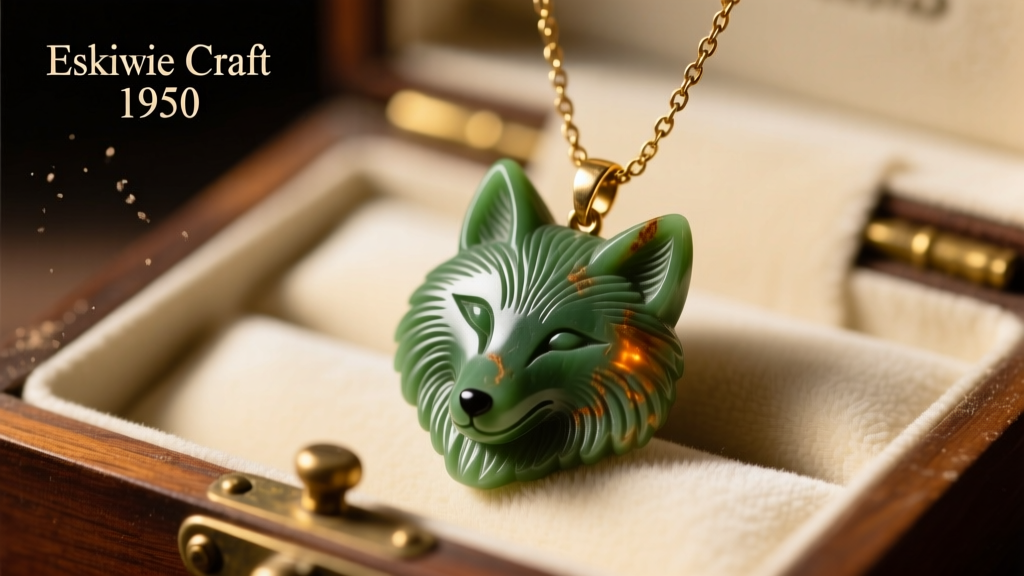
Eskimo Soapstone Fox Carving: Authentic 1950s Green Serpentine Figure, 3-Inch Provenance and Collectibility
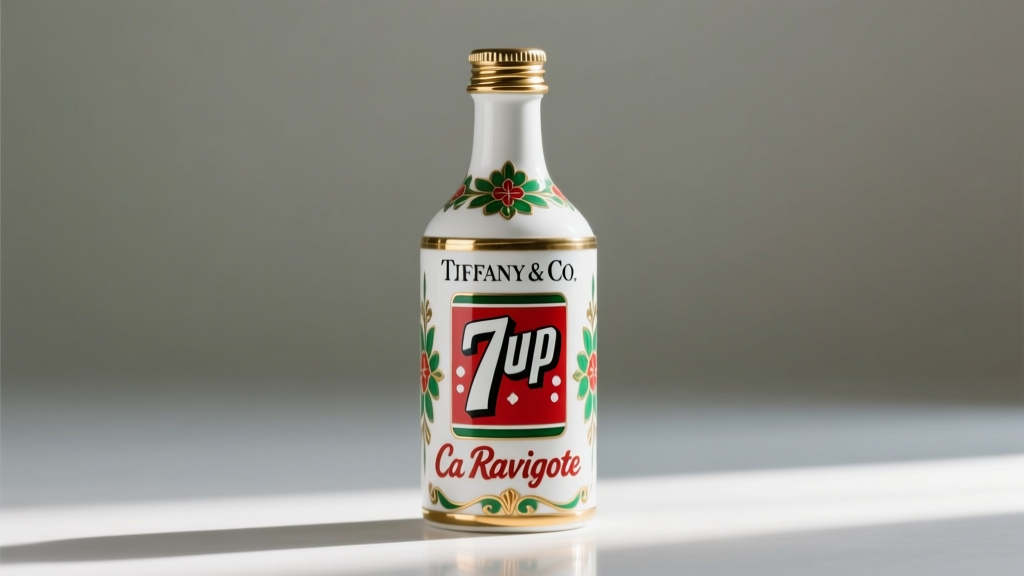
Tiffany & Co. '7Up Ca Ravigote' Bottle: A Rare Canadian Advertising Artifact in White, Red, and Green — 15-Inch Enamel and Brass Specimen

Nailsea Fairy Lamp: Chartreuse & White Swirl with Ruffled Base — A 6-Inch Three-Piece Set in Context

David Grossman Figurines: Artistry, Provenance, and Market Value of Mid-Century American Sculpture