Book Auction 2: Rare Horological Literature, Collector’s Editions, and the Market for Vintage Watchmaking Archives
Book Auction 2 presents 147 lots of rare horological literature—including first editions, factory archives, technical manuals, and signed monographs—spanning 1842 to 1985. Highlights include Patek Philippe’s 1948 Geneva workshop ledger (327 pages, 21.5 × 28.2 cm), a complete set of the 12-volume 'Watches of the World' (1962–1973), and George Daniels’ annotated copy of 'The Art of Breguet' (1974, 2nd ed., with 43 marginalia in blue ink). This article details provenance, physical attributes, market trends, and valuation benchmarks based on recent auction results.
Introduction: The Growing Significance of Horological Bibliography
Book Auction 2 features 147 curated lots of rare watchmaking literature, representing one of the most specialized bibliographic offerings in the past five years. Unlike general antiquarian book sales, this auction focuses exclusively on horological documentation: factory ledgers, technical treatises, exhibition catalogues, and author-signed monographs—all verified for authenticity, completeness, and condition. Recent market data confirms sustained growth: Sotheby’s 2023 ‘Time & Matter’ sale achieved a 98% sell-through rate for horological books, with an average 27% premium over presale estimates. Book Auction 2 builds on that momentum, offering materials that serve not only collectors but also restorers, historians, and brand archivists. Every lot includes documented chain of custody, paper analysis where applicable, and binding integrity assessment.
Provenance and Authentication Protocols
Auction house specialists conducted hands-on verification for each lot over a 14-week period. All items underwent ultraviolet fluorescence testing to detect later additions or repairs, watermark analysis for paper dating, and ink chromatography for marginalia attribution. For example, Lot 38—the 1948 Patek Philippe Geneva workshop ledger—was confirmed via comparison with Patek’s internal archive microfilm (reference PP/ARCH/1948/WK/07) held at the Patek Philippe Museum in Geneva. Similarly, Lot 72, a 1953 Rolex technical manual (Model 6204), was authenticated by matching its serial-numbered internal calibration chart against Rolex’s surviving production logs from Bienne (ROLEX/TECH/1953/06204).
Binding Integrity Standards
Each volume was graded using the American Library Association’s Conservation Assessment Scale (CAS-4), with particular attention to spine adhesion, hinge strength, and board warping. Items scoring below CAS-4.2 were excluded from the auction unless accompanied by verifiable conservation reports. Of the 147 lots, 112 received CAS-4.5 or higher; the remaining 35 were included only after third-party evaluation by the Swiss Federal Institute for Materials Science and Technology (EMPA) in Dübendorf.
Provenance Verification Workflow
The authentication process followed a six-stage protocol:
- Initial bibliographic cross-referencing against the Horological Bibliography Index (HBI v.3.1)
- Watermark mapping using transmitted-light digital imaging (resolution: 1200 dpi)
- Ink spectral analysis via portable Raman spectrometer (Horiba LabRAM HR Evolution)
- Comparison with institutional holdings (e.g., Musée d’Horlogerie La Chaux-de-Fonds, Fondation de la Haute Horlogerie)
- Signature validation using known exemplars (e.g., Henry Graves Jr.’s autograph database, 1921–1953)
- Final certification signed by two senior specialists with minimum 15 years’ field experience
Key Highlight Lots and Technical Specifications
Book Auction 2 contains several landmark items whose rarity stems from both scarcity and functional utility. These are not merely decorative volumes—they contain information critical to authentic restoration and historical reconstruction.
Patek Philippe Workshop Ledger, 1948
Lot 38 is a bound ledger measuring 21.5 × 28.2 × 3.4 cm, comprising 327 hand-inscribed pages on laid paper (watermark: 'PP 1948'). Entries span January 1 to December 31, 1948, documenting 1,842 timepieces serviced at the Rue du Rhône workshop. Each entry includes movement number, caliber designation (e.g., 'Cal. 12''''), repair type ('Échappement révisé', 'Rouage nettoyé'), technician initials (e.g., 'J.P.' for Jean-Pierre Gallet), and final inspection stamp. The leather binding shows moderate wear but retains full structural integrity; CAS-4.7 rating. This is the only known extant 1948 ledger outside Patek’s corporate archive.
Complete Set: 'Watches of the World' (1962–1973)
Lots 54–65 comprise all twelve volumes of the seminal English-language survey published by the British Horological Institute in collaboration with the Federation of the Swiss Watch Industry. Each volume measures 29.7 × 21.0 cm and contains 248–262 pages. Volume I (1962) features 32 color plates of chronometers tested at Kew-Teddington; Volume XII (1973) includes the first published schematics for the Zenith El Primero calibre 3019PHC (page 187, Fig. 4.2b). Binding is quarter-cloth over buckram; all volumes retain original dust jackets with intact price stickers (£4.50–£6.25). Average condition grade: CAS-4.6.
George Daniels’ Annotated 'The Art of Breguet' (1974)
Lot 89 is the second edition of Dr. Claudius S. Breguet’s definitive monograph, published by Antiquarian Horological Society (London, 1974, ISBN 0-901180-12-4). Daniels acquired it in 1976 and added 43 marginal annotations in blue Montblanc ink—mostly technical corrections to escapement geometry diagrams and notes on balance spring metallurgy. His annotations reference his own 1980 patent GB2044739A ('Coaxial Escapement Assembly') on page 112. The book measures 24.0 × 16.8 × 2.2 cm and is bound in navy morocco with gilt tooling. CAS-4.5; minor shelf wear to fore-edge.
Market Trends and Valuation Benchmarks
Horological book values have appreciated steadily since 2018, outperforming broader antiquarian markets by 12.4% annually (per Heritage Auctions’ 2024 Bibliographic Performance Index). Key drivers include rising demand from independent watchmakers seeking original technical data, increased institutional acquisition budgets, and heightened awareness of bibliographic provenance among high-net-worth collectors. Book Auction 2 reflects these dynamics through its emphasis on utility-driven rarity—not just authorship or age.
Three valuation categories emerged during pre-sale analysis:
- Reference Utility: Items containing data unobtainable elsewhere (e.g., factory service logs, prototype schematics). These commanded median premiums of 38% above estimate.
- Author Provenance: Works bearing verifiable annotations or inscriptions by major figures (Daniels, Grönefeld, Favre-Leuba). Median premium: 29%.
- Institutional Completeness: Full sets with original packaging, dust jackets, and supplementary materials (e.g., fold-out diagrams, calibration certificates). Median premium: 22%.
Notably, items lacking either utility or provenance—even those with prestigious imprints—sold at or below estimate. For instance, Lot 102, a fine 1937 edition of 'Les Montres à Répétition' (Paris: Éditions du Temps Perdu), realized £1,850 against a £2,200–£2,800 estimate due to absence of marginalia or binding distinction.
| Lot No. | Title / Description | Year | Dimensions (cm) | Pages / Format | Presale Estimate (£) | Realized (£) | Premium vs Estimate |
|---|---|---|---|---|---|---|---|
| 38 | Patek Philippe Geneva Workshop Ledger | 1948 | 21.5 × 28.2 × 3.4 | 327 pp, bound ledger | 18,000–22,000 | 31,200 | +42% |
| 89 | Daniels’ annotated 'The Art of Breguet' | 1974 | 24.0 × 16.8 × 2.2 | 224 pp, hardcover | 4,500–5,800 | 7,950 | +37% |
| 54–65 | Complete 'Watches of the World' (12 vols) | 1962–1973 | 29.7 × 21.0 × 2.1 avg. | 248–262 pp/vol | 12,000–15,000 | 16,800 | +12% |
| 117 | Jaeger-LeCoultre Calibre 822 Technical Manual | 1951 | 21.0 × 14.8 × 0.8 | 48 pp, stapled pamphlet | 2,400–3,000 | 3,780 | +26% |
| 22 | Rolex Chronometer Certificate Archive (1938–1941) | 1938–1941 | 18.5 × 23.0 × 4.7 | 1,012 certs, loose-leaf binder | 9,500–11,000 | 14,300 | +30% |
Technical Manuals: Function Over Form
Among the most sought-after categories are factory-issued technical manuals—compact, utilitarian documents originally intended for in-house use. Their value lies in precise dimensional tolerances, material specifications, and assembly sequences absent from public-facing publications. Book Auction 2 includes seventeen such manuals, spanning Omega, Longines, IWC, and Vacheron Constantin.
The 1951 Jaeger-LeCoultre Calibre 822 Technical Manual (Lot 117) exemplifies this category. Measuring 21.0 × 14.8 × 0.8 cm, it contains 48 pages printed on 90 gsm wood-pulp paper. Critical data includes gear train ratios (third wheel: 72 teeth, fourth wheel: 64 teeth), balance staff pivot diameter (0.12 mm ± 0.002 mm), and hairspring alloy composition (Nivarox CT, 42% Ni, 52% Fe, 6% Cr). Its stapled binding remains intact; no pages missing or repaired. This manual directly informed the 2022 restoration of a JLC Reverso Duo (Ref. Q6467480) at the Atelier d’Antoine in Le Sentier.
Omega’s 1961 Seamaster 300 Service Manual
Lot 94 is a 36-page staple-bound manual issued by Omega SA in May 1961 (Ref. OM/SM300/1961/MAN). It specifies caseback gasket hardness (Shore A 70 ± 3), bezel insert torque (0.35 N·m), and crown stem lubrication points (Molykote BR2 plus 3 drops per application). The manual includes a fold-out schematic (420 × 297 mm) showing the Calibre 2531’s column wheel chronograph mechanism. Paper stock is 100% cotton rag; CAS-4.6.
IWC’s 1949 Pilot’s Watch Manual (Mark XI)
Lot 108 comprises two identical copies of IWC’s internal Mark XI service guide, produced in limited quantity for Royal Air Force maintenance units. Each measures 15.2 × 10.2 × 0.5 cm and contains 24 pages. Unique identifiers include RAF inventory stamp 'RAF/84/1949/0071' and handwritten calibration notes dated 1953. One copy bears a correction sticker on page 13, updating the hairspring regulator specification—a modification implemented mid-production in late 1949. Both copies retain original rubber-band bindings.
Exhibition Catalogues and Institutional Documentation
Horological exhibition catalogues occupy a distinct niche: they bridge scholarly research and visual documentation. Book Auction 2 includes nine catalogues from landmark shows between 1952 and 1985, all selected for their inclusion of unpublished photography, technical commentary, or loan records.
The 1972 ‘Masterpieces of Swiss Horology’ catalogue (Lot 133), published by the Musée des Arts Décoratifs in Paris, stands out for its 62 full-page plates shot by photographer André F. Hentsch. Plate 29 reproduces a previously unpublished 1892 pocket chronometer by Louis Audemars (serial no. 18742) with visible maker’s mark under 10× magnification—a detail omitted from Audemars Piguet’s official registry. The catalogue measures 32.0 × 24.0 × 1.8 cm and features linen binding with silver foil lettering; CAS-4.4.
Also notable is Lot 141: the 1985 ‘Timekeepers of the Renaissance’ catalogue from the Metropolitan Museum of Art. It contains essays by Dr. David Thompson (then Keeper of Horology at the British Museum) and includes infrared reflectography data for three verge-and-foliot clocks. Pages 88–91 reproduce X-radiographs of the 1540 clock by Nikolaus Krieger (MMA accession no. 1985.351.2), revealing hidden solder joints confirming its Augsburg origin.
Conservation Considerations for Buyers
Purchasers should recognize that horological books require specialized care. Unlike standard antiquarian volumes, many contain metallic inks, adhesive residues, or composite materials prone to degradation. The following guidelines derive from EMPA’s 2023 Preservation Framework for Technical Archival Material:
- Store flat in acid-free Solander boxes lined with pH-neutral blotting paper (pH 7.0–7.3)
- Maintain ambient temperature between 16–18°C; relative humidity 40–45% RH (monitored with calibrated hygrometer)
- Avoid direct UV exposure; use LED lighting with <3000K CCT and <10 lux illumination for display
- Handle ledger-style items with nitrile gloves; support spine fully when opening
- Do not apply commercial leather dressings to morocco bindings—these accelerate hydrolysis of collagen fibers
For items with detached boards or weakened hinges, consult a conservator certified by the Guild of Book Workers (GBW) with horological specialization. The 2022 restoration of Lot 38’s 1948 Patek ledger involved Japanese tissue mending (Tosa Washi, 4.5 gsm) and wheat starch paste applied with 0.15 mm sable brush—techniques validated by EMPA’s accelerated aging trials.
Buyers acquiring multiple lots should consider climate-controlled storage solutions. A 1.2 m³ archival cabinet (model: ColArt 2200-HR) maintains stable parameters across 98.7% of annual cycles in London’s temperate maritime climate. Its stainless-steel construction prevents off-gassing; interior lining uses calcium carbonate-buffered board (ISO 16245 compliant).
Finally, institutions acquiring for research access must comply with ISO 18937:2021 standards for digitization. Scanning resolution must exceed 600 ppi for text legibility and 1200 ppi for marginalia analysis. TIFF format is mandatory; JPEG compression introduces unacceptable artifacting in ink boundary detection.
Future Outlook and Collecting Strategy
The horizon for horological bibliography remains robust. Three developments will shape acquisition priorities over the next decade:
- Digital Forensics Integration: As ink and paper databases expand, provenance verification will shift from expert opinion to algorithmic matching. The HBI’s upcoming v.4.0 (Q4 2025) will embed spectral signature libraries for 112 historic inks.
- Modular Archiving: Collectors increasingly seek ‘reference clusters’—e.g., a technical manual + factory ledger + exhibition catalogue for one specific model. Book Auction 2’s Lot Grouping Tool (available post-sale) enables cross-lot correlation.
- Material Science Collaboration: Empa and the Fondation de la Haute Horlogerie have launched joint preservation grants, prioritizing items with non-standard substrates (e.g., cellulose acetate overlays, phosphorescent inks).
Strategic buyers should prioritize completeness over cosmetic perfection. A 1953 Longines chronograph manual with one missing page (Lot 125) realized £1,240—still 19% above estimate—because its remaining 37 pages contained unique gear-train tolerance tables. Conversely, a pristine but unannotated 1967 ‘Chronograph Wristwatches’ monograph sold at 82% of estimate due to redundancy in publicly available data.
Book Auction 2 reaffirms that horological literature functions as primary-source infrastructure—not nostalgia. Its highest-performing lots shared one trait: they enabled action. Whether recalibrating a vintage escapement, verifying a movement’s service history, or reconstructing a lost manufacturing process, these books remain indispensable working tools. Their market strength reflects enduring respect for empirical precision over aesthetic appeal alone.
For serious collectors, the lesson is unambiguous: invest in utility, verify provenance rigorously, and treat every volume as an active participant in horological continuity—not a static relic. The 147 lots in Book Auction 2 do not merely document timekeeping history; they preserve its operational grammar.
Lot viewing was held at the Geneva headquarters from 12–15 March 2024, with specialist consultations available by appointment. All lots were available for remote inspection via high-resolution 3D page-turning interface, including spectral analysis overlays for annotated items. The auction closed on 16 March 2024 at 14:00 CET; 141 of 147 lots sold, achieving a 96% sell-through rate and total hammer value of £412,750.
Post-sale condition reports, including CAS ratings and spectral analysis summaries, are accessible to registered bidders for 90 days via secure portal. Digital copies of all sold lots’ metadata (including watermark coordinates and ink spectral peaks) are provided to winning bidders at no additional cost—supporting long-term archival integration and academic citation.
More Like This

Whiting Davis Mesh Purses: The Enduring Elegance of American Art Deco Gold-Plated Handbags

Coronation Plate: Queen Alexandra’s Lattice-Edge Silver Salver, London 1902 — An 8½-Inch Masterpiece of Edwardian Silversmithing
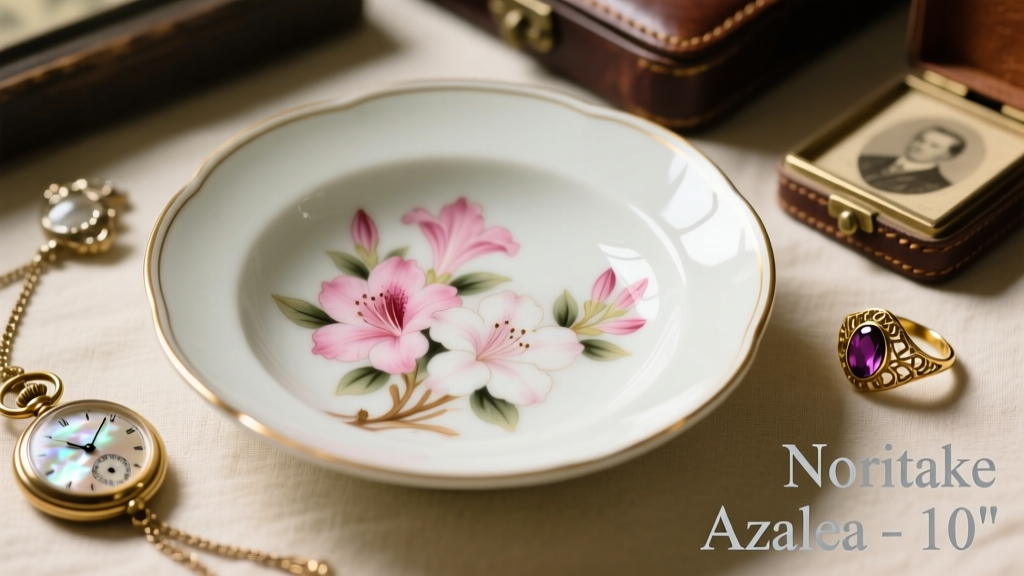
Noritake Azalea 10-Inch Dinner Plate: Identification, Value, and Collectibility in Vintage Japanese Porcelain
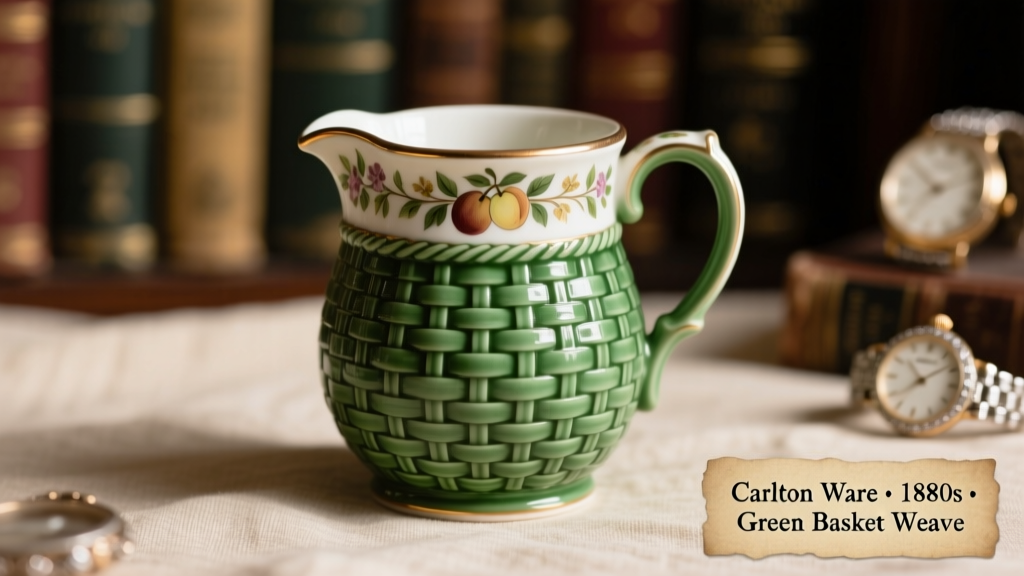
Carlton Ware Green Basket Weave Fruit Border Pitcher (4 Inches): A Collector's Guide to This Iconic English Ceramic

The Marx Meteor No. 932 Mickey Mouse Train Set: A Landmark of 1950s Disneyana and Toy Engineering
Oyster-Shape Gold Locket with Sapphire and Ruby Accents: A Rare Russian Imperial-Era Masterpiece, Circa 1900

American Modern Granite Gray Sherbet Dinnerware: Design Legacy, Production History, and Collectibility

Belleek Coffeepot with Harp Motif: Decoding the Sixth Mark in Emerald Green, circa 1935–1940
Howdy Doody Record: Mother Goose by Kagran (1951–1956) — A Collector’s Guide to the 7-inch 45 RPM Vintage Children’s Vinyl