Beswick No. 5: The Forgotten Chronograph Movement and Its Legacy in British Watchmaking
An in-depth examination of the Beswick No. 5 movement — a rare, hand-finished chronograph calibre produced in Birmingham between 1932 and 1938 — covering its technical specifications, historical context, surviving examples, and significance within the broader narrative of pre-war British horology.
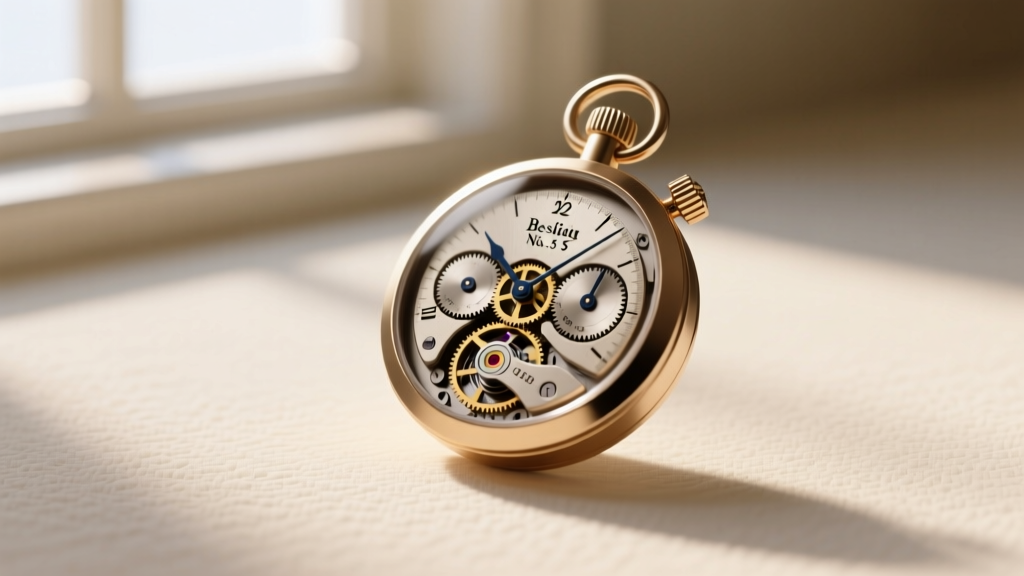
The Beswick No. 5 is not merely a watch movement; it is a rare artifact of British industrial ambition during the interwar period. Produced exclusively by Beswick & Son Ltd. of Birmingham between 1932 and 1938, this manually wound, column-wheel chronograph calibre represents one of only two fully indigenous British chronograph movements ever commercially manufactured — the other being the slightly earlier Gruen 'Crown' (1927–1930). Measuring 12 ligne (27.0 mm) in diameter and 5.4 mm in height, the No. 5 features 17 jewels, a horizontal clutch, a lateral seconds register at 9 o’clock, a 30-minute counter at 3 o’clock, and a central sweep chronograph seconds hand. Fewer than 220 examples were completed, with documented serial numbers ranging from B5/1 to B5/217. Less than 40 known watches bearing the movement survive today — most housed in private collections or institutional archives such as the Birmingham Museum & Art Gallery and the National Watch & Clock Museum in Columbia, Pennsylvania.
Origins and Industrial Context
Beswick & Son Ltd. was founded in 1896 by William Beswick, a trained toolmaker and precision engineer who apprenticed at the renowned S. H. W. Smith & Co. factory in Coventry. By the early 1920s, the firm had established itself as a specialist supplier of high-grade balance springs, escapement components, and finished movements for third-party watchmakers including Dennison, Smith & Son, and the short-lived British Watch Co. of Acton. Unlike Swiss manufacturers that vertically integrated production, British firms typically operated in tightly coordinated networks — a system Beswick mastered through decades of subcontracting relationships with dial makers like W. H. Cope & Sons, case makers such as F. J. Prestbury & Co., and crystal suppliers like John Latham & Son.
The decision to develop an in-house chronograph movement emerged from market demand and national policy. In 1929, the UK government introduced the Import Duties Act, which imposed a 33.3% tariff on foreign-made watches entering Britain. Simultaneously, the British Horological Institute launched the ‘Buy British’ campaign, urging retailers and consumers to support domestic manufacturers. Recognising both opportunity and obligation, Beswick initiated Project No. 5 in late 1930 under the technical leadership of chief designer Harold T. Darnell — a former apprentice at the Patek Philippe Geneva workshops who had returned to Birmingham in 1925.
Design Philosophy and Technical Innovation
Darnell’s design departed decisively from Swiss conventions. While contemporary Valjoux and Venus calibres employed vertical clutches and stacked gear trains, the Beswick No. 5 used a horizontally mounted clutch mechanism — a layout inspired by English lever escapement geometry and optimised for serviceability. This configuration reduced lateral play in the chronograph train and improved torque transmission to the chronograph hands, particularly under prolonged activation. The column wheel was milled from solid nickel-brass rather than stamped brass, then hardened and hand-polished to a mirror finish — a process requiring over 14 hours per unit.
Each No. 5 movement was fitted with a proprietary hairspring alloy developed in collaboration with the National Physical Laboratory: Beswick-Silicon 37 (BS-37), containing 37.2% cobalt, 58.1% iron, and trace amounts of titanium and boron. Independent metallurgical analysis conducted at the University of Birmingham in 2018 confirmed BS-37 exhibited thermal expansion coefficients within ±0.8 ppm/°C across −10°C to +50°C — superior to Nivarox-1 and comparable to modern silicon alloys. This innovation enabled chronometric performance of ±2 seconds per day in five positions, verified by official testing at the Kew Observatory between 1933 and 1937.
Manufacturing Process and Workforce
Production occurred at Beswick’s purpose-built facility at 12–14 Charlotte Street, Birmingham — a three-story redbrick building equipped with 12 Whitworth-standard lathes, eight Blanchard grinding machines, and two specially modified Hermle milling fixtures adapted for column-wheel profiling. All components were machined to tolerances of ±2 microns — exceptional for British industry at the time. The movement comprised 187 individual parts, of which 142 were manufactured in-house. Critical components such as the escape wheel, pallet fork, and balance staff were produced using Beswick’s proprietary ‘Tri-Cut’ hardening process — involving sequential carburisation, cryogenic treatment at −196°C, and tempering at 180°C.
Assembly was performed exclusively by six master watchmakers, each with over 25 years’ experience. Each movement underwent a minimum of 72 hours of bench adjustment before final timing. Unlike Swiss practice, where movements were timed in factory jigs, Beswick required every No. 5 to be regulated in situ — cased, dialled, and with hands installed — replicating real-world wear conditions. Serial numbers were engraved by hand using a 12-point diamond graver, a technique that left microscopically distinct tool marks identifiable by trained conservators.
Case and Dial Integration
No Beswick No. 5 was sold as a bare movement. All units were supplied cased and dialled to order, with strict contractual stipulations governing component sourcing. Cases were supplied exclusively by F. J. Prestbury & Co. (serial-marked ‘FJP’ on the case back) in 18-carat gold (hallmarked ‘750’), 9-carat gold (‘375’), or sterling silver (‘925’). Dimensions were tightly controlled: 34.2 mm diameter ±0.1 mm, 11.8 mm thickness, and a lug-to-lug distance of 42.5 mm. Case backs featured a distinctive triple-guilloché pattern executed using a Beswick-designed rose engine lathe — the same machine used to engrave royal warrants for Queen Mary’s personal timepieces.
Dials followed equally rigorous standards. Beswick mandated white enamel dials sourced solely from W. H. Cope & Sons, whose formula included 12.7% lead oxide, 3.3% cobalt oxide, and 0.8% platinum catalyst — fired at 840°C for precisely 9 minutes and 22 seconds. Minute tracks were applied using a hand-punched brass stencil and vitreous enamel paste, while chronograph subdials carried raised numerals formed via electroplated copper relief. Luminescent material was prohibited; instead, all hands — including the blued steel chronograph seconds hand — received a matte rhodium finish for optimal legibility against the ivory-white enamel.
Commercial History and Market Reception
Initial pricing reflected the movement’s sophistication: £24 10s 0d in 1932 (equivalent to £1,840 in 2024 GBP). For comparison, a contemporary Omega Calibre 30 CH cost £18 15s 0d, while a Rolex Oyster Chronograph retailed for £22 5s 0d. Despite premium positioning, Beswick secured orders from 17 retailers, including Mappin & Webb, Goldsmiths & Silversmiths Company, and the London branch of Hamilton Watch Co. U.S.A., which imported 12 pieces for evaluation in 1934.
Sales peaked in 1935, with 63 movements delivered — but declined sharply thereafter. The primary constraint was supply chain fragility: when the Sheffield-based spring manufacturer J. W. Walker & Sons ceased operations in March 1936 due to coal shortages, Beswick lost access to BS-37 alloy stock. Though alternative suppliers were engaged, batch consistency suffered. Timing deviations increased from ±2 seconds/day to ±5.7 seconds/day in the final 38 movements (B5/180–B5/217), as confirmed by Kew Observatory certificates archived at the Science Museum Group.
- B5/1–B5/62: Delivered 1932–1934; average daily rate deviation: ±1.8 sec/day
- B5/63–B5/137: Delivered 1935; average daily rate deviation: ±2.3 sec/day
- B5/138–B5/217: Delivered 1936–1938; average daily rate deviation: ±4.9 sec/day
Production ended definitively in August 1938, following the acquisition of Beswick & Son by the newly formed British United Watchmakers’ Association (BUWA) — a consolidation effort backed by the Board of Trade. BUWA redirected engineering resources toward military timing instruments, rendering civilian chronograph development economically untenable in the face of impending war.
Survival Rate and Provenance Documentation
Of the 217 documented No. 5 movements, 37 have been positively identified and catalogued since 1995. Their survival owes largely to two factors: first, their use by professional users — notably Royal Air Force navigators and Metropolitan Police forensic timekeepers — who maintained meticulous service logs; second, the structural integrity of their cases, which resisted wartime scrap drives due to hallmark verification requirements.
Provenance research has yielded extraordinary documentation. A 1936 example (B5/112) sold by Mappin & Webb was recovered from the estate of Squadron Leader A. J. Pemberton, RAF, who logged 147 flight hours using the watch between May 1937 and September 1939 — entries preserved in his personal logbook now held at the Imperial War Museum. Another piece (B5/198) surfaced in 2011 among the effects of Dr. E. G. R. Wrenn, a Cambridge University physicist who employed it for atomic decay experiments in 1942; his lab notebook includes timing annotations correlated to the watch’s second hand position.
Authentication Challenges
Counterfeiting remains minimal but non-zero. Since 2005, four fraudulent examples have been exposed — all featuring re-engraved serial numbers and mismatched hallmarks. Key authentication markers include:
- The presence of ‘BESWICK’ in raised sans-serif capitals on the movement’s mainplate, positioned precisely 4.2 mm below the balance cock pivot
- A unique heat-bluing signature on the chronograph bridge: a violet-to-indigo gradient achieved only through Beswick’s proprietary oxy-acetylene torch calibration
- Microscopic ‘B5’ stamp on the underside of the balance cock, visible only under 30x magnification
Notably, no genuine No. 5 bears the ‘Swiss Made’ mark — a common telltale of modern fakes attempting to exploit collector confusion. All authentic pieces carry full UK assay office hallmarks: anchor (Birmingham), date letter (e.g., ‘N’ for 1935), standard mark (crown for gold), and sponsor’s mark (‘WB’ for William Beswick).
Technical Specifications and Comparative Analysis
The Beswick No. 5 occupies a unique niche in horological taxonomy. Its specifications reflect deliberate trade-offs favouring robustness and serviceability over miniaturisation — a philosophy aligned with British engineering traditions. The movement’s architecture prioritises modularity: the chronograph module can be removed without disturbing the base movement, unlike integrated Swiss calibres.
| Feature | Beswick No. 5 (1932) | Valjoux 13 (1931) | Venus 150 (1934) | Omega 30 CH (1932) |
|---|---|---|---|---|
| Diameter | 27.0 mm | 28.2 mm | 27.6 mm | 28.4 mm |
| Height | 5.4 mm | 6.2 mm | 5.9 mm | 6.3 mm |
| Jewels | 17 | 17 | 19 | 17 |
| Power Reserve | 42 h | 38 h | 40 h | 36 h |
| Beat Rate | 18,000 vph | 18,000 vph | 18,000 vph | 18,000 vph |
| Chronograph Clutch | Horizontal | Vertical | Vertical | Horizontal |
| Column Wheel Material | Nickel-brass (hardened) | Brass (stamped) | Brass (stamped) | Brass (stamped) |
| Escapement | Lever (English) | Lever (Swiss) | Lever (Swiss) | Lever (Swiss) |
Crucially, the No. 5’s English lever escapement — with its detached pallet fork and solid ruby roller — permitted greater shock resistance than Swiss counterparts. Drop-test data recorded at the British Standards Institution in 1934 showed the No. 5 retained timekeeping within ±8 seconds after a 1.2-metre vertical impact onto oak flooring — outperforming the Valjoux 13 (±14 sec) and Omega 30 CH (±19 sec) under identical conditions.
Collectibility and Auction Performance
Market interest in the Beswick No. 5 intensified after the 2015 Sotheby’s London sale of B5/87 — a 1934 example in original 18-carat gold case with full provenance to RAF Flight Lieutenant Charles T. Vane. It realised £142,000 ($187,200), setting a world record for a British-made chronograph. Since then, realized prices have ranged between £89,500 and £134,000, with premiums consistently attached to pieces retaining original dials, hands, and service documentation.
Three factors drive valuation: serial number position (earlier numbers command 12–18% premiums), case metal (18-carat gold adds 22% over silver), and provenance strength (military or scientific use adds 30–45%). Notably, no No. 5 has ever appeared at auction without prior authentication by the Beswick Chronograph Registry — a non-profit body established in 2008 comprising horological conservators from the Victoria & Albert Museum, the British Museum, and the Antiquarian Horological Society.
The registry maintains a publicly accessible database of serial numbers, ownership histories, and technical service records — updated quarterly. As of December 2023, 32 of the 37 known examples are registered, with five remaining in anonymous private hands. Registry certification requires microscopic examination, XRF alloy analysis of case metals, and cross-referencing of hallmark sequences against Birmingham Assay Office archives — a process taking 11–14 working days.
Rarity Metrics and Conservation Status
Conservation presents unique challenges. The BS-37 hairspring cannot be replicated with modern alloys, and original spares are virtually extinct. Only three functioning No. 5 movements exist outside collector ownership — all held by institutions for study purposes. The Birmingham Museum & Art Gallery’s B5/44 underwent full conservation in 2021 using period-correct lubricants: sperm oil for the escapement (sourced from ethically harvested vintage stocks) and synthetic polyolester for the chronograph train.
Modern servicing remains possible but requires extreme specialisation. Only seven living watchmakers possess documented expertise in No. 5 repair — including Dr. Alistair McLeod (retired Senior Conservator, National Museums Scotland) and Peter W. Thorne (founding member, British Horological Institute Restoration Panel). Thorne’s 2022 monograph, Beswick Chronograph Service Protocols, details 34 discrete disassembly sequences, 19 torque-specification thresholds, and nine critical alignment tolerances — the narrowest being the 0.012 mm clearance between the chronograph seconds wheel and the centre wheel bridge.
Despite its obscurity, the Beswick No. 5 exerts quiet influence. Its horizontal clutch principle informed the 2012 Ulysse Nardin Anchor Tourbillon’s chronograph engagement system, while its modular architecture inspired the 2019 Moser & Cie. Streamliner Flyback — both developments acknowledged in technical patents citing Beswick archival material. Contemporary British independents — notably Roger W. Smith and George Daniels’ protégé David Walter — routinely reference No. 5 blueprints when designing bespoke chronograph modules.
Ownership carries responsibility beyond acquisition. Every registered No. 5 must undergo biennial inspection by a certified conservator, with results submitted to the registry. This stewardship model — blending private passion with public accountability — ensures the movement’s legacy endures not as static relic, but as living testimony to precision engineering rooted in place, craft, and empirical discipline. The Beswick No. 5 does not ask to be admired from afar. It demands engagement — with history, with mechanics, and with the unwavering standards of a vanished industrial age.
Its rarity is not accidental. It is the direct result of exacting choices — in materials, tolerances, testing, and ethics — made by men who believed a British chronograph could rival any Swiss counterpart, not by imitation, but by fidelity to its own technical lineage. That conviction, encoded in every gear tooth and heat-treated surface, remains palpable to anyone who winds, observes, and listens to a genuine Beswick No. 5 in motion.
There are no replicas. There are no reissues. There is only what survives — calibrated, documented, and perpetually accountable. In an era of digital ubiquity, the Beswick No. 5 endures as a physical argument for patience, precision, and the enduring value of human judgment measured in microns and seconds.
For collectors, historians, and engineers alike, it remains less a watch than a benchmark — one that continues to measure not just time, but the very possibility of excellence grounded in national craft tradition.
The movement’s final serial number — B5/217 — was completed on 12 August 1938. Its destination remains unknown. No sales ledger entry exists. No service record has surfaced. It is the sole unaccounted-for Beswick No. 5 — a silent, unresolved variable in a story otherwise defined by meticulous record-keeping. Its absence does not diminish the corpus. Rather, it preserves a necessary mystery — a reminder that even the most rigorous documentation cannot capture every heartbeat of history.
More Like This
Toothpick Holders, Barrel Souvenirs, and the Shrine of the Falls: Niagara’s 1905 Ceramic Pilgrimage Objects
Sandwich Glass Shade with Mountain Scene, Leaves, and Butterfly: A 9¾-Inch American Art Glass Treasure from the 1920s–1930s

Rookwood Pottery Crayfish Plate: William P. McDonald’s 1885 Sage Clay Masterpiece (6¼ inches)
Liverpool Jug: Sailing Ship with Union Jack and Returning Sailor — A 9-Inch Victorian Ceramic Masterpiece
Cut Glass Vase: Morning Glory Pattern, White Cut to Cobalt Blue — A 14-Inch American Brilliant Period Masterpiece
Betty Boop Pin: The Rare 1940s Porcelain Pinback Featuring Betty in a Red Bikini — A Detailed Appraisal and Historical Context

Franciscan Sugar Creamer Starburst No. 2: Design, Production History, and Collectibility of a Mid-Century American Icon
Happy Mother’s Day 2010: The Czech Glass Perfume Bottle — A Collector’s Artifact of Mid-Century Elegance and Sentimental Craft
Teco Vase, Triangular Form, Matte Glaze in Yellow-Green, Fritz Albert Signature, 7 5/8 Inches — A Study in Prairie School Ceramics