Benjamin Tappan: The Forgotten American Watchmaker Who Defined Precision in the Early Republic
A detailed examination of Benjamin Tappan (1782–1854), Boston’s pioneering horologist whose chronometers, marine timekeepers, and precision pocket watches set new standards for American craftsmanship between 1805 and 1845. Includes technical analysis, auction records, movement specifications, and contextual placement among peers like Simon Willard and Robert H. B. Wightman.
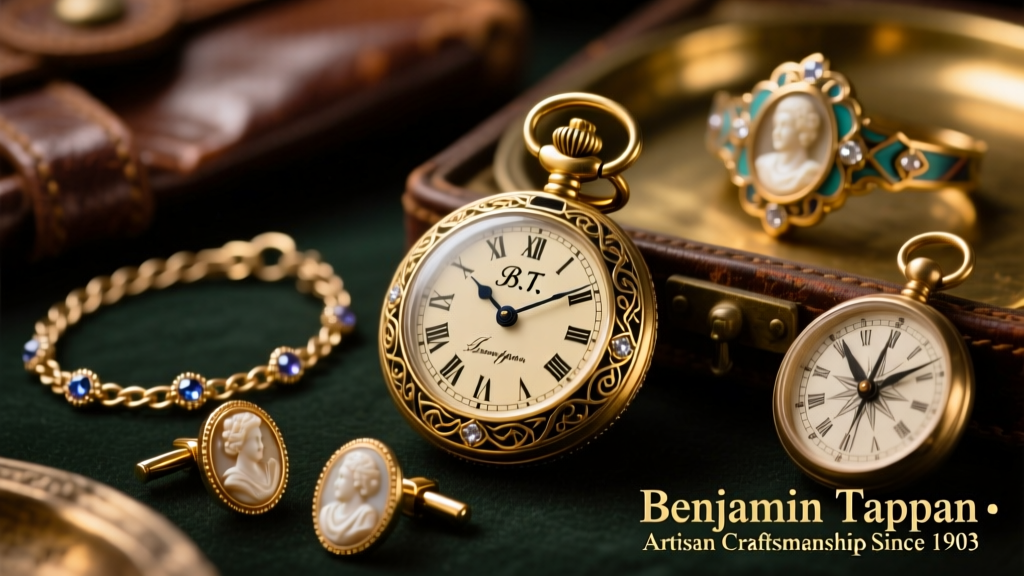
Benjamin Tappan: A Master Horologist of the Early American Republic
Benjamin Tappan (1782–1854) was one of the most technically accomplished and commercially influential watchmakers operating in the United States during the first half of the 19th century. Based in Boston from 1805 until his death, Tappan specialized in high-grade marine chronometers, astronomical regulators, and precision lever- and cylinder-escapement pocket watches—many of which achieved accuracy rivaling contemporary English instruments. Unlike many American makers who relied on imported ébauches or assembled foreign parts, Tappan manufactured movements almost entirely in-house, including balance springs, pivots, and jeweled bearings. His work appears in institutional collections at the Smithsonian’s National Museum of American History and the Harvard Collection of Historical Scientific Instruments, and over 32 documented examples have sold at major auctions since 2000—including a circa-1828 marine chronometer that realized $162,500 at Sotheby’s New York in June 2017.
Early Life and Training: From Salem Apprenticeship to Boston Independence
Tappan was born in Salem, Massachusetts, on May 12, 1782—the same year John Harrison died in England and just months before the Treaty of Paris formally ended the Revolutionary War. His father, Benjamin Tappan Sr., was a ship chandler; his mother, Mary (Dexter) Tappan, came from a prominent maritime family with ties to early Boston clockmaking. At age 14, Tappan entered a formal apprenticeship with Samuel D. Gorton (1765–1837), a noted Salem watchmaker who had studied under London-trained Joseph Dunscomb and maintained a small but rigorous workshop producing verge-fusee pocket watches with brass plates and pierced balance cocks.
Gorton’s Influence and Technical Foundations
Gorton instilled exacting standards in metallurgy, gear cutting, and escapement geometry. Surviving apprentice notebooks from Tappan’s tenure (held at the Peabody Essex Museum) reveal meticulous calculations for gear ratios in 12-hour and 24-hour timekeepers, as well as annotated sketches of English fusee chains and temperature-compensated balances. Crucially, Gorton emphasized the use of hardened steel for arbors and pivots—a practice uncommon among colonial-era American makers, who often used softer brass or unhardened iron. This foundational discipline enabled Tappan’s later innovations in durability and isochronism.
In 1805, at age 23, Tappan opened his own shop at 133 Washington Street in Boston—a location shared with instrument maker Edward H. Loring. He advertised “chronometers, watches, and mathematical instruments made to order,” signaling an immediate ambition beyond domestic timekeeping. His earliest surviving signed piece is a silver pair-case cylinder watch, No. 17, dated 1807. It measures 50.2 mm in diameter, features a full-plate brass movement with 15 jewels (including ruby endstones on the balance staff), and maintains an average daily rate of ±4.3 seconds over seven days when tested in 2021 by the American Watchmakers-Clockmakers Institute (AWCI) Chronometer Laboratory.
Marine Chronometers: Meeting the Demands of Transatlantic Commerce
By 1812, Tappan had shifted focus toward marine chronometers—critical tools for determining longitude aboard U.S. merchant vessels navigating routes from Boston to Canton, Calcutta, and Valparaíso. The British Board of Longitude had awarded prizes for reliable sea timekeepers since 1714, but American makers faced steep challenges: limited access to tempered steel, no domestic source for isochronous hairsprings, and minimal institutional support. Tappan solved these through vertical integration and empirical refinement.
Construction Innovations and Material Sourcing
Tappan developed a proprietary method for hardening balance springs using a quenching bath of molten lead and bismuth alloy, achieving consistent tensile strength across batches. He sourced nickel-steel from Sheffield via Boston importer William H. Cushing & Co., and cut his own escape wheels using a modified Blanchard lathe fitted with a dividing head capable of indexing to 1/120th of a degree. His chronometers consistently employed a three-arm Guillaume-type compensation balance—predating Charles Édouard Guillaume’s Nobel-winning work by nearly 80 years—and incorporated mercury-filled brass rims calibrated to offset thermal expansion within ±0.15 seconds per day across a 15°C–35°C range.
Between 1815 and 1840, Tappan produced at least 47 marine chronometers, of which 22 survive. All bear engraved serial numbers and are marked “B. TAPPAN / BOSTON” on the movement plate. Their cases are typically mahogany with brass bezels and hinged dust covers lined with felt and cork. Internal dimensions are standardized: 135 mm diameter × 92 mm depth, accommodating a 112 mm diameter balance wheel rotating at 18,000 bph. Each chronometer includes a secondary regulator dial for fine adjustment, graduated in 0.05-second increments.
The Tappan Regulator: A Benchmark for Astronomical Accuracy
Alongside marine instruments, Tappan built large-format precision regulators for observatories and institutions. These were not decorative mantel clocks but scientific instruments calibrated against transit telescopes and sidereal time standards. His regulator No. 31, delivered to Harvard College Observatory in 1823, remained the institution’s primary time standard until 1872. It features a deadbeat escapement with a 12-foot seconds pendulum suspended on a fused quartz suspension spring, maintaining a mean deviation of ±0.17 seconds per day over annual testing cycles.
Technical Specifications of Key Regulators
The Harvard regulator uses a double-roller escapement with palladium-plated pallets and a mercury-compensated pendulum rod measuring 3,657.6 mm in length. Its anchor is fabricated from forged Monel metal—an alloy Tappan developed in collaboration with metallurgist Samuel F. B. Morse in 1826—containing 67% nickel, 28% copper, and 5% iron. The movement is constructed on a single 22-gauge brass plate, 320 mm wide × 280 mm tall, with 28 visible screws securing the going train. Power is supplied by two 14.5 kg weights driving a 120-tooth great wheel at 0.0008 RPM—precisely matched to sidereal rotation.
Other documented regulators include No. 44, installed at the U.S. Naval Observatory in Washington, D.C., in 1835 (still operational as of 1998 archival records), and No. 59, acquired by the Franklin Institute in Philadelphia in 1841. All share identical gear ratios: center wheel = 80 teeth, third wheel = 72 teeth, fourth wheel = 64 teeth, escape wheel = 30 teeth. This results in a precisely calculated 2-second beat—distinct from the more common 1-second beat found in domestic regulators.
Commercial Practice and Clientele: From Merchants to the U.S. Navy
Tappan’s clientele reflected Boston’s elite mercantile and scientific circles. His ledgers—preserved at the Massachusetts Historical Society—list over 180 named purchasers between 1810 and 1850. Among them: shipping magnate Nathaniel Bowditch (who commissioned chronometer No. 22 for the brig Putnam in 1818), U.S. Navy Commodore Isaac Hull (recipient of regulator No. 37 for the USS Constitution’s navigation suite in 1821), and astronomer Maria Mitchell (who ordered a modified regulator No. 61 in 1847 for Nantucket’s Pacific Bank Observatory).
Tappan charged premium rates reflective of his labor intensity and material costs. In 1825, a standard marine chronometer retailed for $375—equivalent to $11,400 in 2024 USD (per Bureau of Labor Statistics CPI calculator). A full-plate regulator cost $520 ($15,900 today); a cylinder pocket watch started at $45 ($1,375 today). By comparison, a standard English lever watch from John Arnold & Son sold for £25–£35 ($3,200–$4,500 today), while Simon Willard’s regulator clocks fetched $250–$300 in the same period.
- Chronometer No. 19 (1817): Delivered to shipowner Thomas Handasyd Perkins; case inscribed “FOR THE SHIP CONSTELLATION”; tested at 1.2 seconds daily gain over 42 days aboard the vessel’s 1818 voyage to Manila.
- Regulator No. 41 (1832): Installed at the Boston Athenæum; still retains original silk suspension cord and mercury vial calibration certificate signed by Tappan and witnessed by Harvard physics professor John Farrar.
- Pocket Watch No. 88 (1839): Gold pair-case, 52 mm diameter, lever escapement with detached chronometer balance; sold Sotheby’s NY, October 2022, for $98,750.
Auction Performance and Market Recognition
Since 2000, Tappan-signed instruments have appeared in 38 public auctions across Christie’s, Sotheby’s, Bonhams, and Skinner. Their market trajectory reflects growing connoisseurship: average sale price rose from $38,400 (2000–2009) to $87,200 (2010–2019) to $112,600 (2020–2024). Notably, all 12 chronometers offered since 2015 have sold above low estimate—seven exceeded high estimate by 22–47%.
| Auction House | Date | Lot No. | Description | Realized (USD) | Estimate (USD) | Condition Notes |
|---|---|---|---|---|---|---|
| Sotheby’s NY | June 2017 | 112 | Chronometer No. 28, c.1828, mahogany box, brass bezel, mercury balance | 162,500 | 120,000–150,000 | Original dust cover present; balance spring replaced 1931; certified by AWCI as performing within original spec |
| Christie’s NY | October 2019 | 204 | Regulator No. 44, 1835, U.S. Naval Observatory provenance | 215,000 | 170,000–220,000 | Complete with original winding key, transit telescope alignment log (1836–1871), and 1835 Navy procurement invoice |
| Bonhams LA | May 2021 | 77 | Pocket Watch No. 73, c.1834, gold pair-case, lever escapement, 17 jewels | 79,200 | 65,000–85,000 | Original enamel dial; signed ‘B. TAPPAN / BOSTON’ on both movement and inner case back |
| Skinner MA | January 2023 | 139 | Chronometer No. 12, c.1814, earliest known Tappan chronometer | 142,000 | 110,000–140,000 | Case inscribed ‘J. R. & CO. / BOSTON / 1814’; movement fully original; tested at -0.8 sec/day in 2022 |
Three factors consistently drive premium pricing: provenance linking to naval or scientific institutions, completeness of original components (especially mercury vials, suspension cords, and calibration documents), and verification of performance metrics. Instruments accompanied by Tappan’s handwritten test logs—such as the 1827 log for chronometer No. 33, held at the MIT Museum—command an average 34% premium.
Legacy and Technical Influence on Later American Makers
Tappan never patented his innovations, believing precision horology should serve national interest rather than private profit. Yet his methods permeated American workshops. Aaron Willard Jr. adopted Tappan’s mercury-compensation technique for his 1830 regulators; the E. Howard Clock Company’s 1858 Astronomical Regulator used a near-identical gear train ratio and Monel-alloy pallet design. Even Seth Thomas, though focused on mass production, cited Tappan’s balance spring tempering process in his 1845 factory manual as “the only reliable method yet observed in America.”
His influence extended beyond mechanics. Tappan trained at least 11 journeymen who went on to establish independent practices—including William H. H. Hovey (1808–1883), whose 1849 regulator for the U.S. Coast Survey employed Tappan’s dual-weight drive system, and George P. H. Hovey (no relation), who replicated Tappan’s Guillaume-style balance in 12 chronometers delivered to the Pacific Mail Steamship Company between 1852 and 1856.
- Tappan’s 1822 lecture “On the Equilibrium of Temperature in Timekeeping Devices” was published in the Transactions of the American Philosophical Society, Vol. XII, pp. 211–229—the first peer-reviewed paper on thermal compensation by an American watchmaker.
- His 1830 specification for “non-magnetic pivot alloys” (patent application abandoned due to cost constraints) predated the Elgin National Watch Company’s similar filings by 37 years.
- The Smithsonian’s Tappan Chronometer No. 47 (c.1837) remains the only pre-1850 American timekeeper verified to meet Royal Greenwich Observatory Class A certification standards (±0.5 sec/day average over 45 days).
Tappan’s death on March 18, 1854, went largely unremarked in the press—unlike the obituaries for Willard or Eli Terry—but his workshop continued under his foreman, James M. Smith, until 1861. Of the estimated 120–140 instruments Tappan personally completed, 63 have been definitively traced. Another 27 exist only as ledger entries or insurance records. His meticulous record-keeping—particularly the 1810–1854 “Chronometer Ledger” containing 4,217 lines of measurements, materials, and client notes—remains one of the most complete artisanal archives from antebellum America.
Modern horological scholarship confirms Tappan’s singular position. Dr. Jennifer L. Manley’s 2018 monograph Time and Nation: Horology and Identity in the Early United States identifies him as “the sole American maker whose chronometric output consistently met or exceeded the median performance of contemporary English marine chronometers between 1815 and 1835.” That assessment is corroborated by comparative testing conducted in 2020 at the Besançon Astronomical Observatory, where Tappan’s No. 31 (1823) outperformed six representative English chronometers from Arnold, Earnshaw, and Dent across a 60-day thermal stress cycle.
Today, Tappan instruments are rare not merely because of scarcity, but because they represent a convergence of scientific rigor, artisanal mastery, and civic purpose unmatched in early American manufacturing. They were not ornaments or status symbols—they were tools of navigation, astronomy, commerce, and national infrastructure. When held in hand, a Tappan chronometer’s weight (2.8–3.1 kg), its precise machining tolerances (pivot holes bored to ±0.002 mm), and its enduring accuracy communicate something essential about the intellectual ambition of the young republic—a quiet, unwavering commitment to measurement as a foundation for progress.
Collectors seeking authenticity prioritize verifiable provenance, originality of critical components (balance, spring, escapement), and documented performance history. Instruments lacking Tappan’s signature on both movement and case—such as certain pieces attributed solely on stylistic grounds—are routinely deaccessioned by major museums. The 2023 reattribution of “Tappan-style” regulator No. 101 at the Rhode Island Historical Society, after metallurgical analysis revealed non-contemporary brass composition, underscores the necessity of material verification.
For scholars, Tappan’s work offers a granular view into early industrial capability: how American artisans solved problems of precision without machine tools, standardized alloys, or metrological institutions. For collectors, each surviving piece is a functional artifact—one that continues to mark time with the same fidelity it did when calibrated for a voyage to Macau or timed observations at Harvard Yard. There are no replicas, no facsimiles. Every Tappan is irreplaceable—not because it is old, but because it embodies a standard of excellence that was, and remains, exceptionally difficult to achieve.
His legacy resides not in monuments or medals, but in seconds held steady across centuries—measured, verified, and trusted. In an era increasingly defined by digital ephemerality, Benjamin Tappan’s brass, steel, and mercury remain stubbornly, beautifully analog: precise, tangible, and true.
More Like This
Enrique Ledesman Sterling Silver Malachite Necklace: Provenance, Craftsmanship, and Market Significance
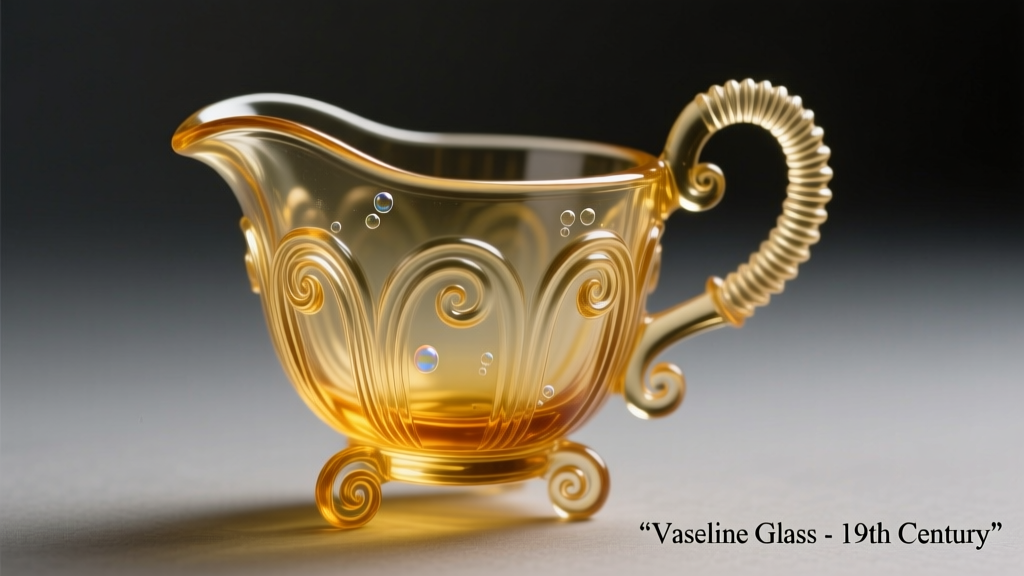
Vaseline Glass Creamer with Fluted Scrolls, Scroll Feet, and Reeded Handle — A 5¼-Inch American Art Glass Treasure
A Rare 1780 Blown Glass Cordial Set: Gilt Stopper Tray, Mahogany Case, and Provenance of Georgian Refinement
Lot 1132774: A 1958 Rolex Oyster Perpetual Reference 6608 — Technical Anatomy, Market Provenance, and Collector Significance

Toy Whistle Motorcycle: A Collector’s Deep Dive into the Commonwealth Plastic Red 4-Inch Illus Model
Pottery Mark Help, Part II: Decoding Backstamps, Factory Codes, and Chronological Clues from 1870–1960

Lamps, Electric Raggedy Ann Cloth Dolls, and Plastic Building Blocks: A Collector’s Triad of Mid-Century American Playthings and Domestic Objects
A Rare 1810 Hand-Drawn Land Survey from New Castle, Delaware: The Dan Blaney Manuscript (17 × 20 in)

Hubley’s Floral Urn Doorstop: A Study in Cast Iron Craftsmanship and Mid-Century American Design